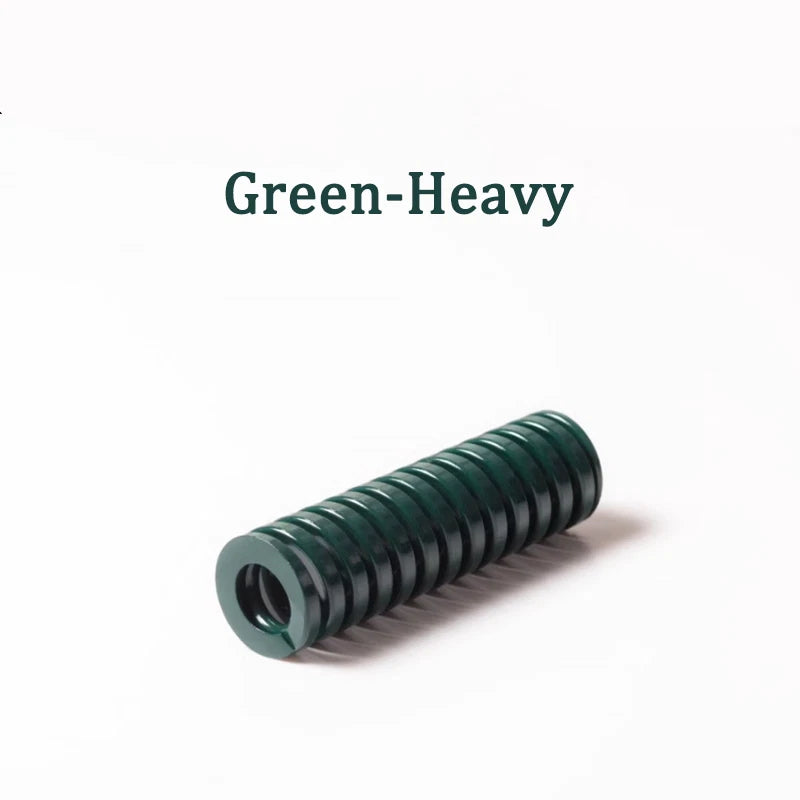
TF/TL/TM/TH/TB Heavy Duty Load Compression Spring Die Springs O.D:8mm L:20-70mm

No reviews

Price:
Sale price$3.82 USD
Stock:
In stock (500 units), ready to be shipped

Payment & Security

Ach Direct Debit Amazon American Express Apple Pay Bancontact BLIK Diners Club Discover EPS Google Pay iDEAL Wero JCB Maestro Mastercard Multibanco MobilePay PayPal Przelewy24 Shop Pay Twint Union Pay USDC Visa

Your payment information is processed securely. We do not store credit card details nor have access to your credit card information.

Limited Offer — Spend More, Save More
Spend $55+
Save $5
Spend $100+
Save $10
Spend $200+
Save $25
HomeDIYer DIY Expert Support

DIY Expert Support

Get fitment advice & recommendations

Mon–Fri  8:30 AM – 8:00 PM
24-Hour Fast Ship
Arrives in 3–14 Days
Worldwide Shipping
30-Day Returns
1 tree planted with every purchase

Description

M8 Die Springs — Heavy Duty Load Compression Springs for Stamping, Tooling & DIY Automation

When a standard coil spring fails under repeated cycling loads, your tooling pays the price — downtime, misalignment, and costly replacements. Engineers, machinists, and serious DIY makers who rely on consistent spring-back force need a die spring engineered to spec. These M8 die springs deliver reliable, repeatable compression force across four load grades, so you can match the spring to the job rather than compromise.

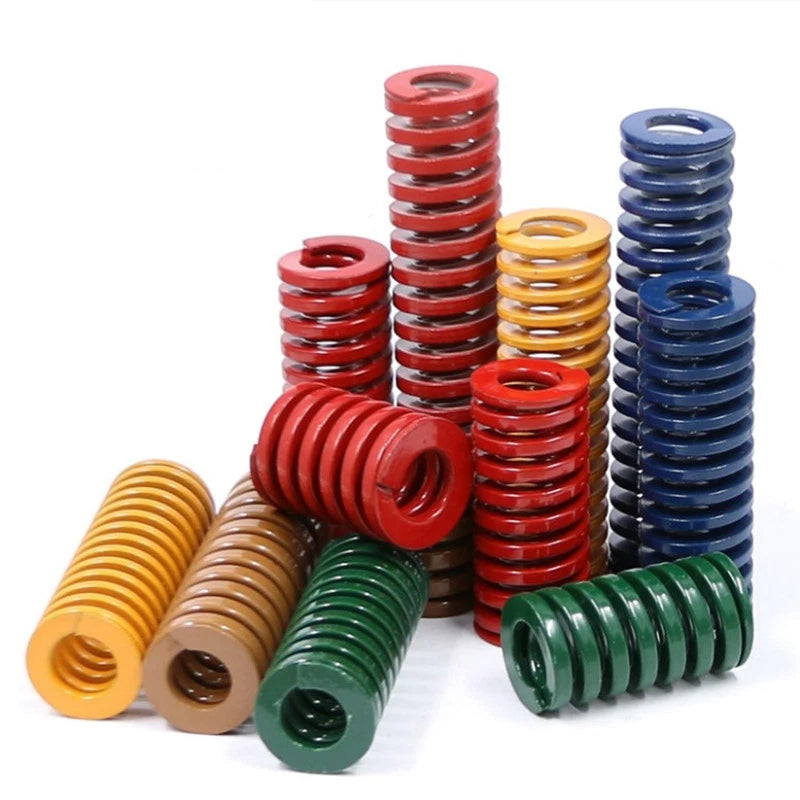
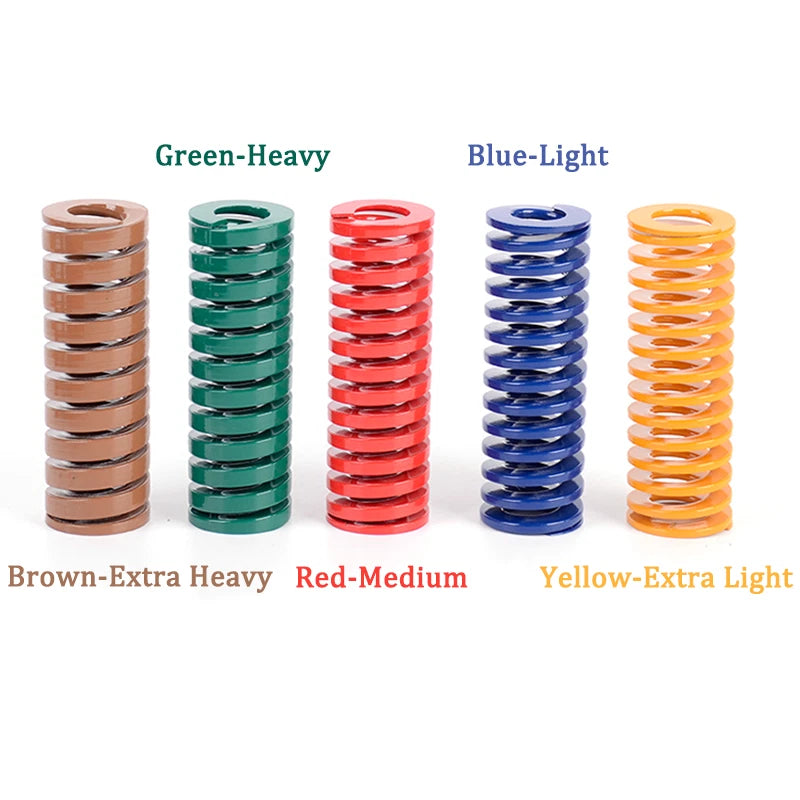
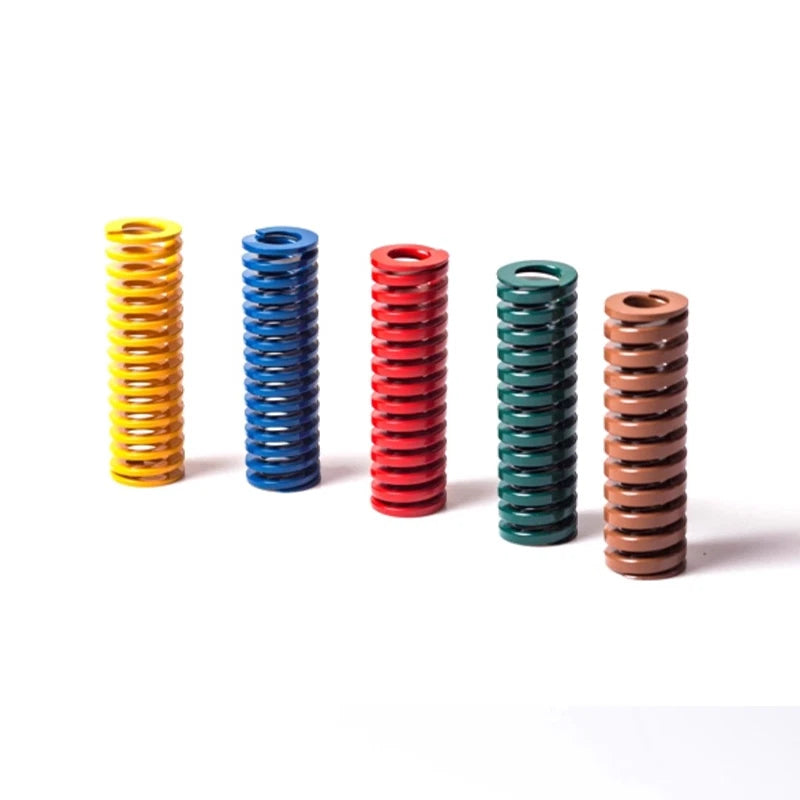
Each spring features an outer diameter of 8 mm (approximately 0.315 in) and is available in lengths ranging from 20 mm to 70 mm (roughly 0.79 in to 2.76 in). The color-coded body — Yellow (Extra Light), Blue (Light), Red (Medium), or Green (Heavy) — follows the ISO 10243 / JIS B 5012 color convention, making load-grade identification instant on the shop floor. Material is high-grade chromium-silicon alloy steel with a shot-peened surface for fatigue resistance.

Typical applications include injection mold stripper plates, progressive stamping dies, punch-and-die assemblies, fixture clamping systems, and compact DIY automation rigs where a precise, repeatable return force is required in a confined bore.

🔧 Compatibility: Fits standard 8 mm OD die spring pockets. Verify bore diameter and free length against your tooling drawing before ordering. Mix load grades within the same bore diameter to tune total spring force.

✅ Key Features of These M8 Die Springs

🎨 ISO Color-Coded Load Grades

Yellow = Extra Light, Blue = Light, Red = Medium, Green = Heavy. Instantly identify load grade at a glance — no guesswork on the shop floor.

📐 Precise 8 mm OD, 11 Lengths

Available from 20 mm to 70 mm free length in 5 mm increments, covering the most common die spring pocket depths in stamping and molding tooling.

⚙️ Chromium-Silicon Alloy Steel

Cr-Si steel construction provides higher fatigue life and heat resistance compared to standard carbon steel springs — suited for high-cycle tooling environments.

🔄 Shot-Peened Surface Finish

Shot peening induces compressive residual stress on the wire surface, extending fatigue life and reducing the risk of premature cracking under repeated deflection.

📦 Flexible Quantity Options

Order 1, 2, 3, 5, or 10 pieces per variant. Stock up for production runs or grab a single replacement spring for a quick repair — no minimum order required.

🏭 Broad Application Range

Designed for injection mold stripper plates, progressive stamping dies, punch-and-die sets, fixture clamps, and compact DIY automation frames requiring consistent return force.

📐 Technical Specifications — M8 Die Springs

Outer Diameter (OD) 8 mm (0.315 in)
Inner Diameter (ID) See variant options
Free Length Range 20 mm – 70 mm (0.79 in – 2.76 in)
Load Grades Available Extra Light (Yellow) / Light (Blue) / Medium (Red) / Heavy (Green)
Material Chromium-Silicon alloy steel
Surface Treatment Shot-peened
Color Coding Standard ISO 10243 / JIS B 5012
Spring Type Rectangular wire die spring (TF/TL/TM/TH/TB series)
Max Deflection Rate See variant options
Operating Temperature See variant options
Quantity per Order 1 / 2 / 3 / 5 / 10 pcs (select above)

❓ Frequently Asked Questions

How do I choose the right load grade (color) for my application?

Match the load grade to the force your tooling requires at a given deflection. Yellow (Extra Light) suits light-duty stripping or ejection tasks with minimal force. Blue (Light) works for moderate ejection and clamping. Red (Medium) is the most common choice for general stamping and molding. Green (Heavy) is for high-force applications such as heavy blanking or large-area stripper plates. If you are unsure, calculate the required spring force from your tooling drawing and compare it to the spring's load-deflection curve for the selected length.

What is the recommended maximum deflection for these die springs?

Die springs are typically rated for a maximum deflection of 25–30% of free length for dynamic (cyclic) applications and up to 40–45% for static applications. Exceeding the rated deflection significantly reduces fatigue life. Always design your tooling so the spring operates within the dynamic deflection limit for long service life. Refer to the specific load-deflection data for your chosen length and grade.

Are these springs compatible with standard die spring pockets?

Yes. With an outer diameter of 8 mm, these springs fit standard 8 mm OD die spring pockets as defined by ISO 10243 and JIS B 5012. Verify that your pocket bore is sized to accept an 8 mm OD spring with appropriate clearance (typically 0.1–0.3 mm radial clearance on the OD). The inner diameter should also be checked against your guide pin diameter to ensure the spring seats correctly without binding.

What material are these springs made from, and how does it affect performance?

These die springs are made from chromium-silicon (Cr-Si) alloy steel, which offers higher tensile strength, better fatigue resistance, and improved heat tolerance compared to standard carbon steel. The shot-peened surface further extends fatigue life by introducing compressive residual stress on the wire surface. This makes them suitable for high-cycle stamping and molding environments where standard springs would fail prematurely.

Can I use multiple springs together to increase total force?

Yes. Die springs can be used in parallel (side by side in separate pockets) to multiply total force, or you can select a heavier load grade. Do not nest springs inside each other unless specifically designed for that configuration, as this can cause uneven loading and premature failure. When using multiple springs in a stripper plate, ensure all springs are the same grade and free length to distribute force evenly across the plate.

How do I select the correct free length for my tooling?

The free length should be chosen so that the spring operates within its recommended deflection range during the full stroke of your tooling. Measure the available pocket depth and the required working stroke. The free length should be at least: pocket depth + working stroke + a safety margin (typically 10–15% of free length). For example, if your pocket is 30 mm deep and your stroke is 8 mm, a 45–50 mm free length spring would be a reasonable starting point, keeping deflection within the dynamic limit.

When should I replace a die spring?

Replace die springs if you notice a reduction in ejection or stripping force, visible cracking or corrosion on the spring body, a measurable reduction in free length (set loss greater than 3–5% of original free length), or after reaching the manufacturer's recommended cycle count for the deflection level used. Proactive replacement during scheduled tooling maintenance is recommended for high-volume production to avoid unplanned downtime.

🛒 Select your Type (load grade), Outer Diameter × Length, and Qty above, then add to cart.

You may also like

Recently viewed