
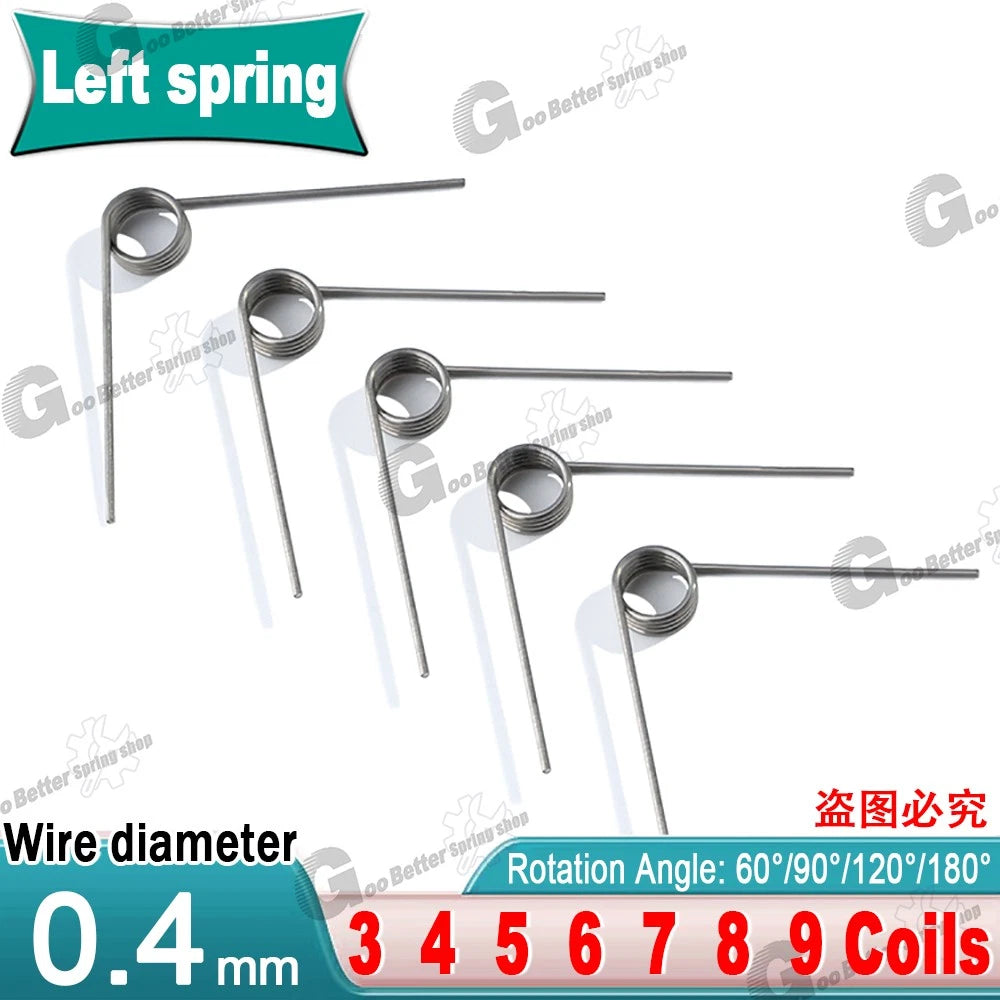

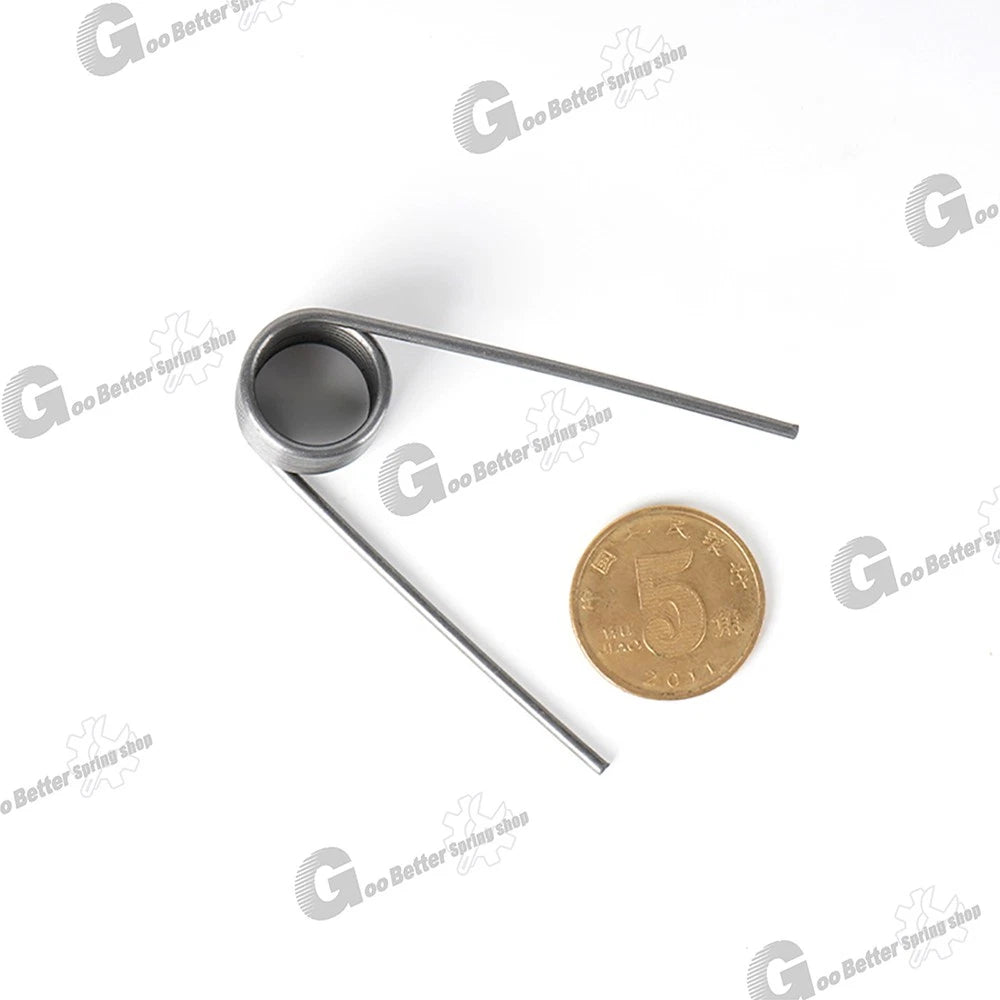
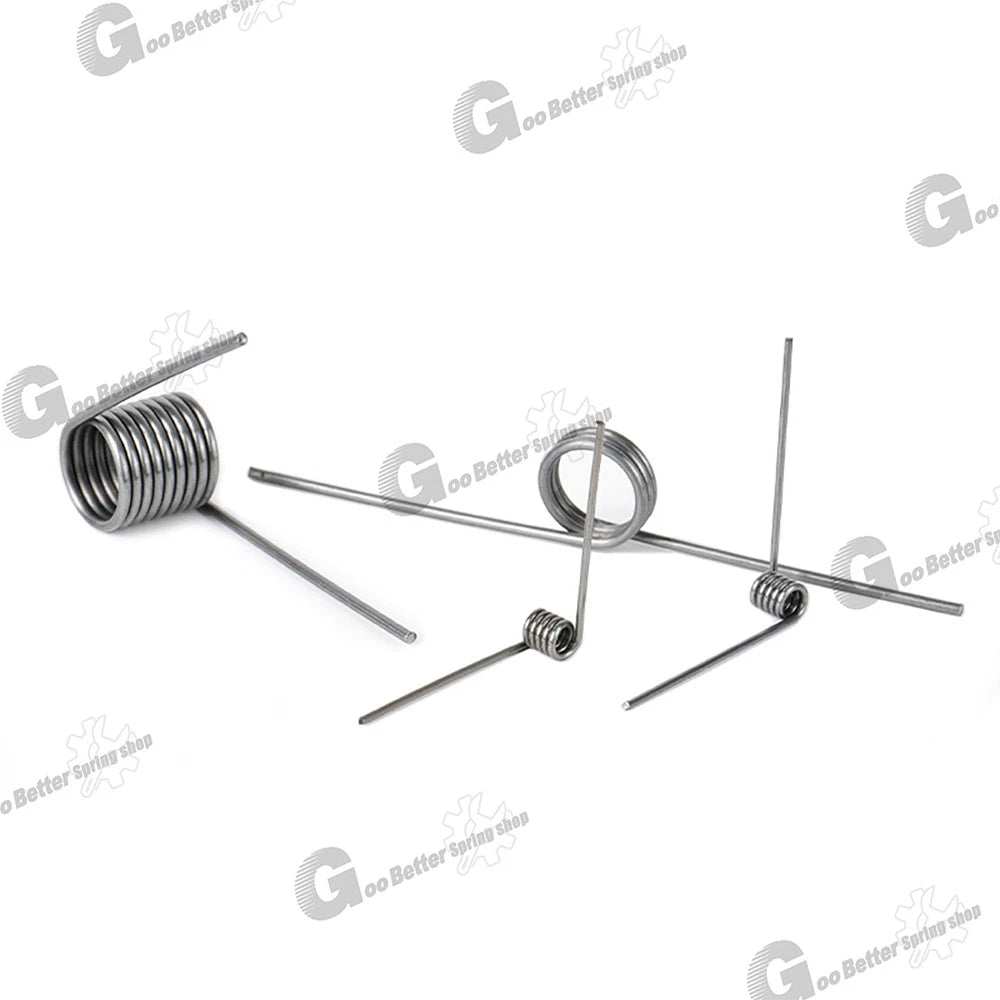
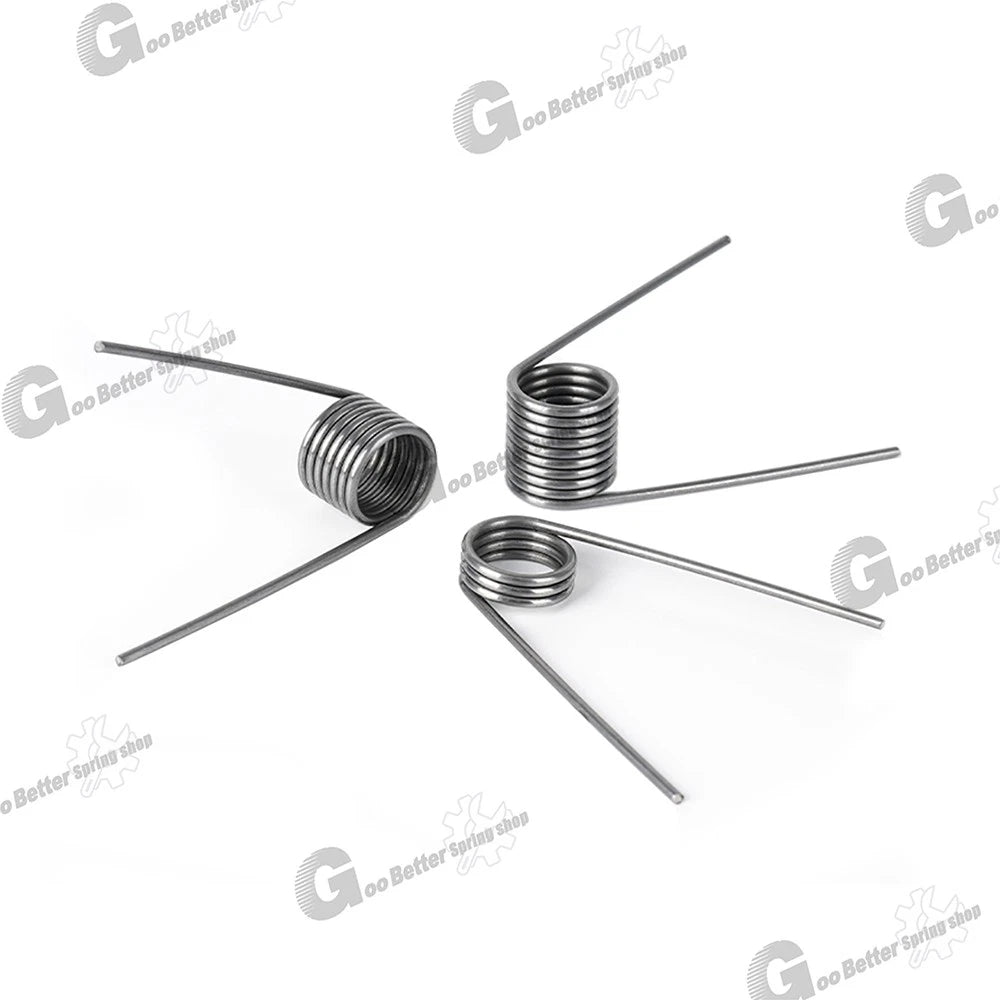
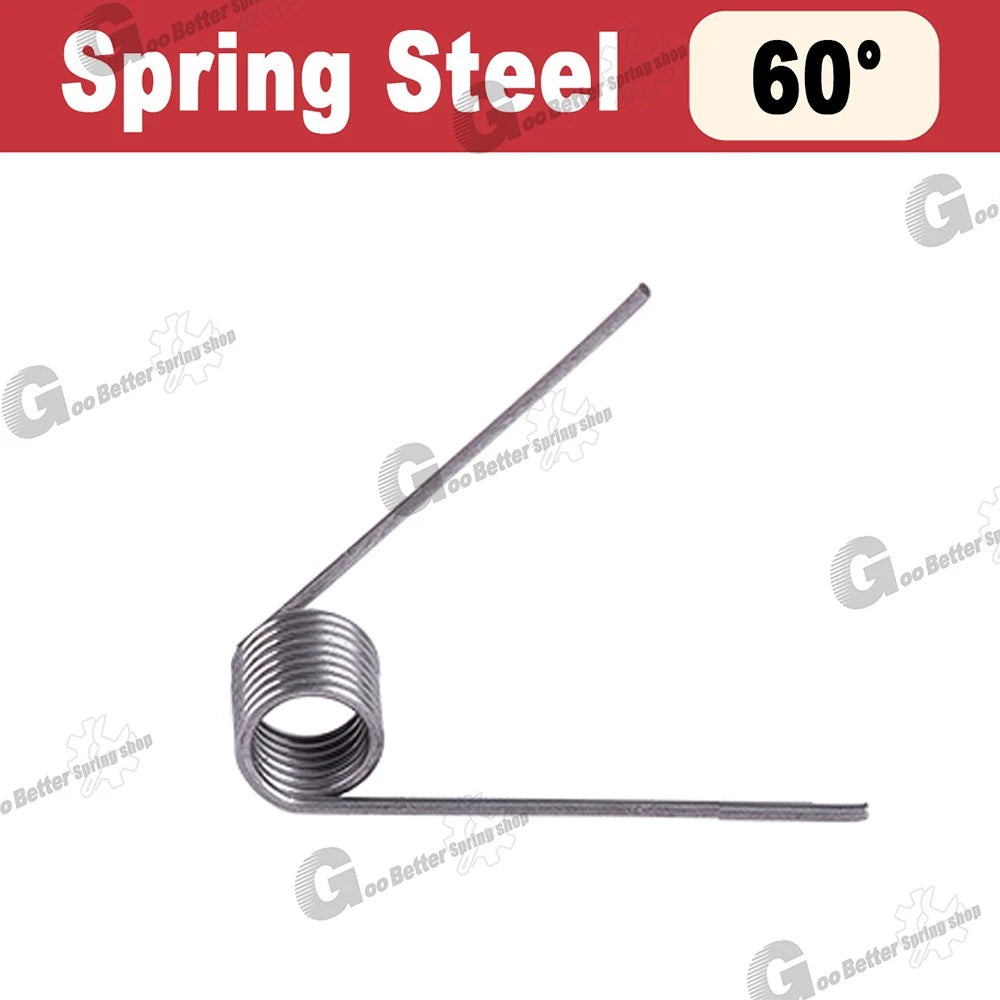
Torsion Spring 3-9 Coil (10 pcs), 0.4mm Wire dia, 3 ~ 6mm OD, Left spring Steel

No reviews

Price:
Sale price$4.61 USD
Stock:
In stock (500 units), ready to be shipped

Payment & Security

Ach Direct Debit Amazon American Express Apple Pay Bancontact BLIK Diners Club Discover EPS Google Pay iDEAL Wero JCB Maestro Mastercard Multibanco MobilePay PayPal Przelewy24 Shop Pay Twint Union Pay USDC Visa

Your payment information is processed securely. We do not store credit card details nor have access to your credit card information.

Limited Offer — Spend More, Save More
Spend $55+
Save $5
Spend $100+
Save $10
Spend $200+
Save $25
HomeDIYer DIY Expert Support

DIY Expert Support

Get fitment advice & recommendations

Mon–Fri  8:30 AM – 8:00 PM
24-Hour Fast Ship
Arrives in 3–14 Days
Worldwide Shipping
30-Day Returns
1 tree planted with every purchase

Description

Left-Hand Torsion Springs — Precision 0.4mm Wire, 3–6mm OD for Tight-Space Mechanisms

When a mechanism fails because a tiny torsion spring loses its tension or snaps under repeated cycling, finding an exact replacement can halt an entire project. Engineers, watchmakers, model builders, and electronics repair technicians who work with miniature assemblies need springs that hold their specified angle and return force consistently — not generic substitutes that introduce play or fatigue prematurely. These left-hand wound torsion springs are designed for that level of precision.

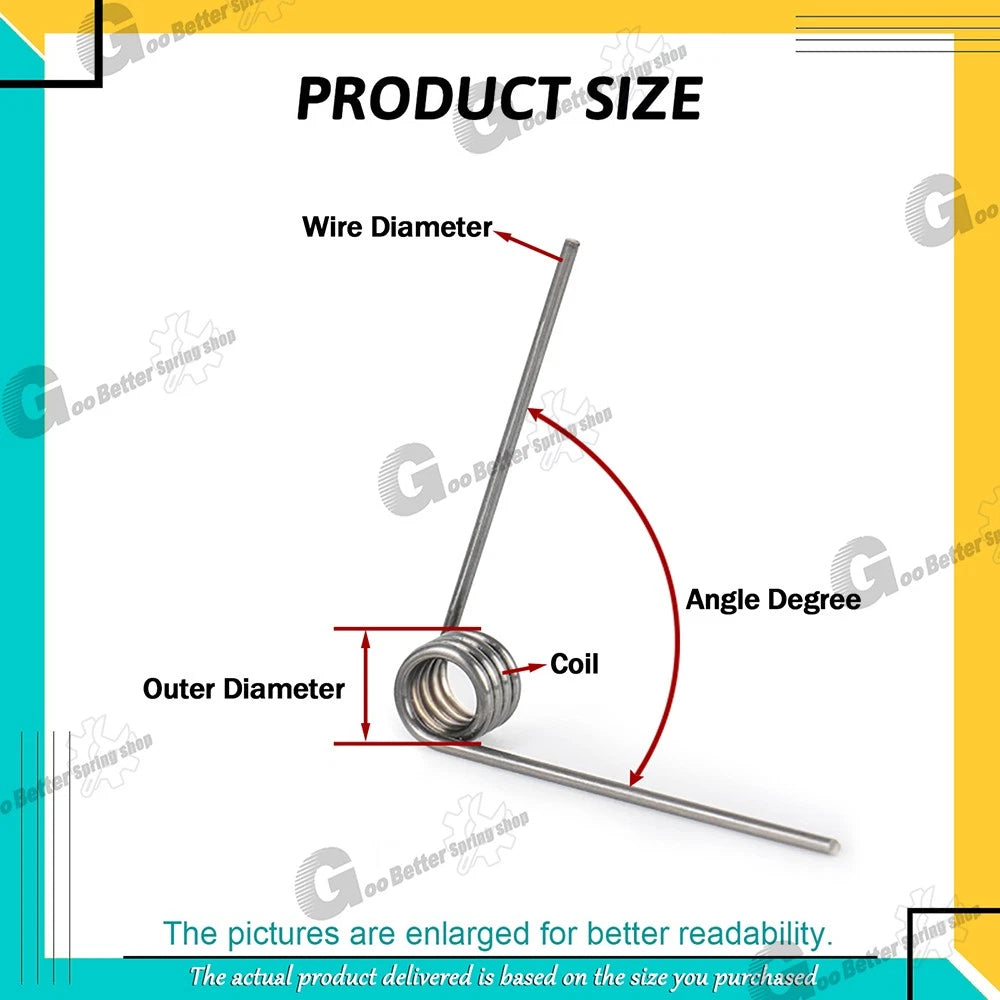
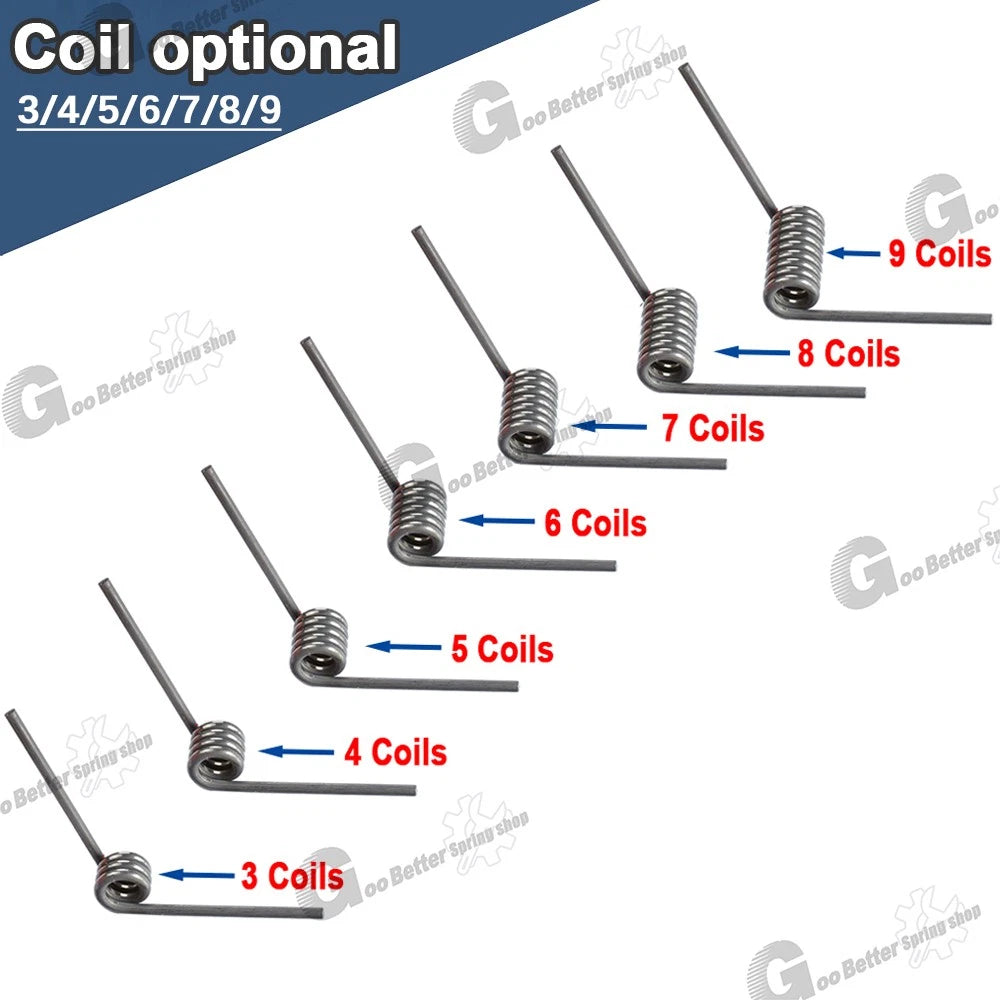
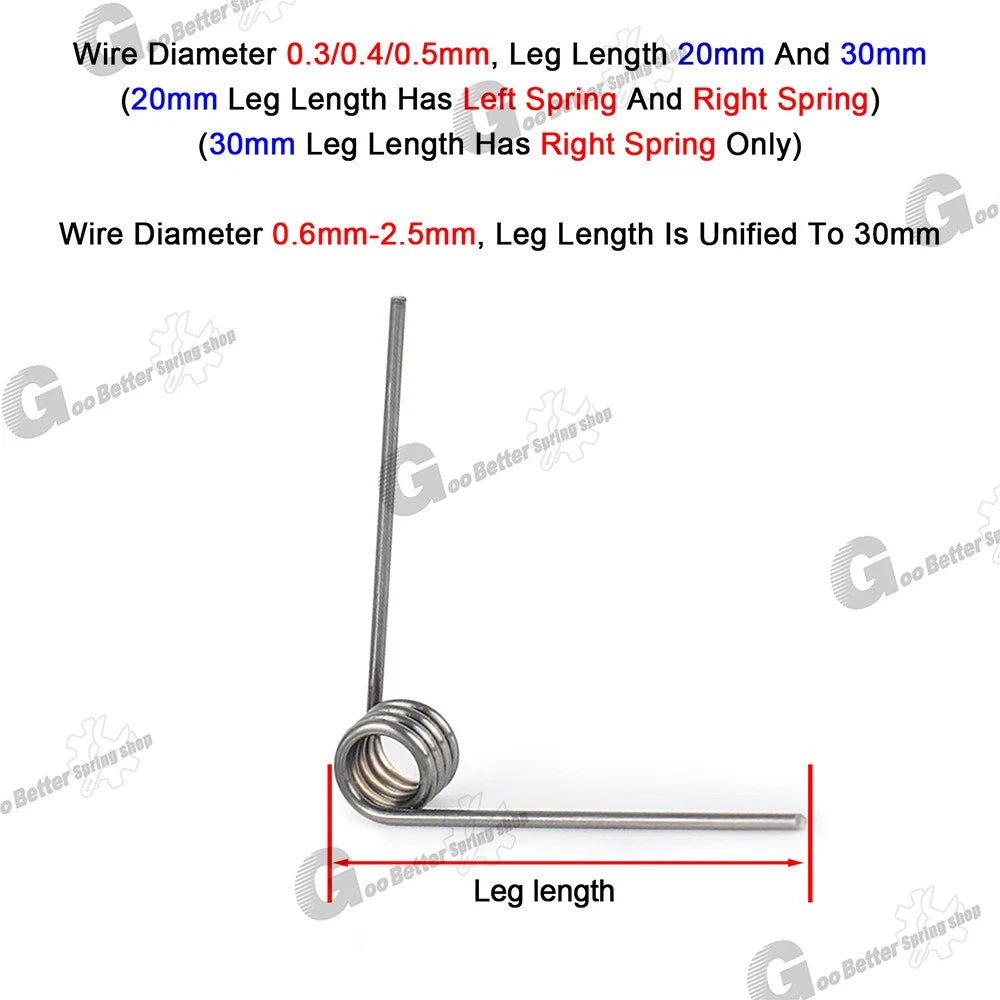
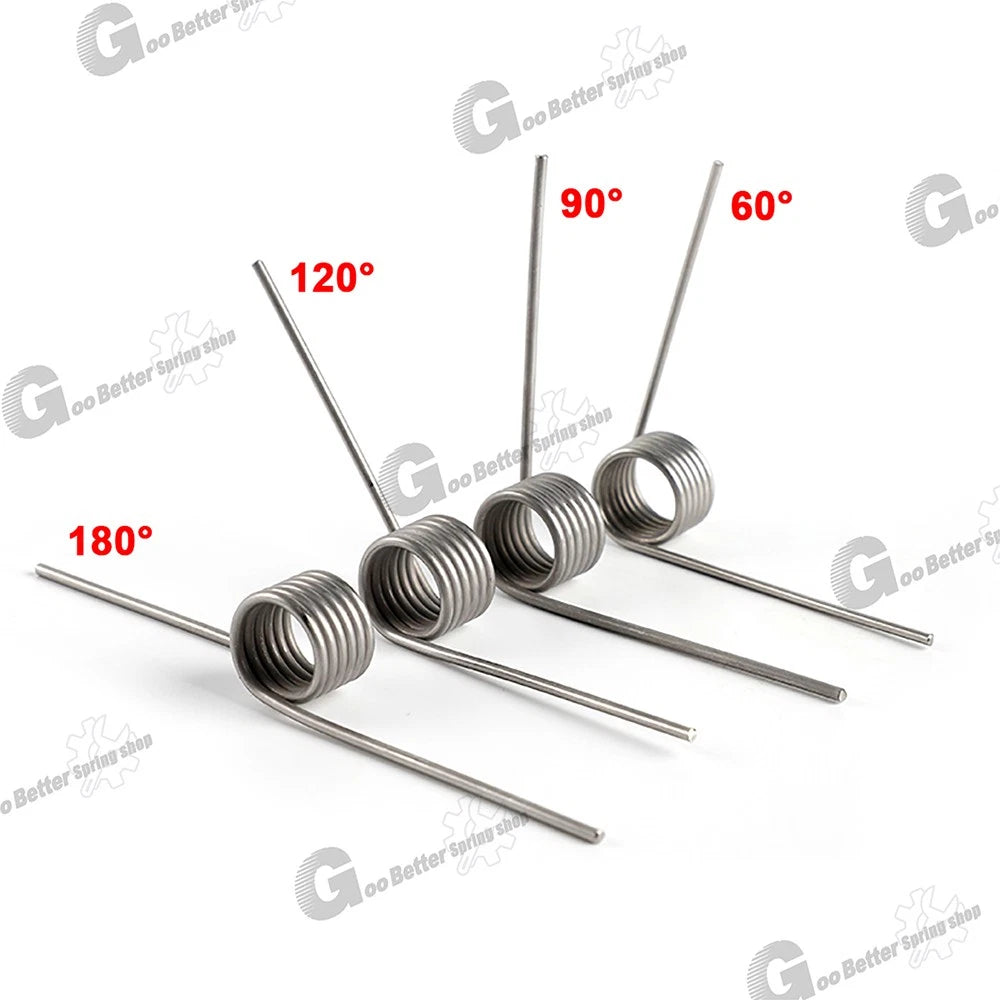
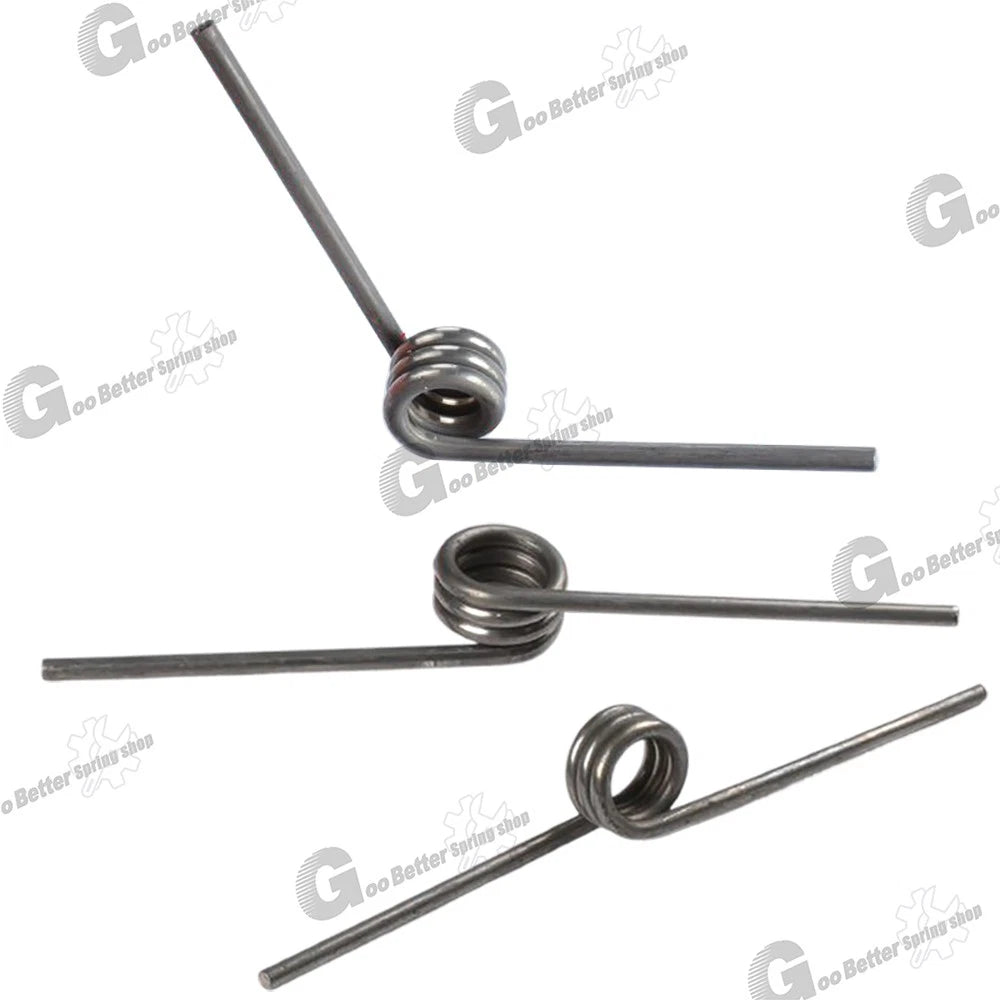
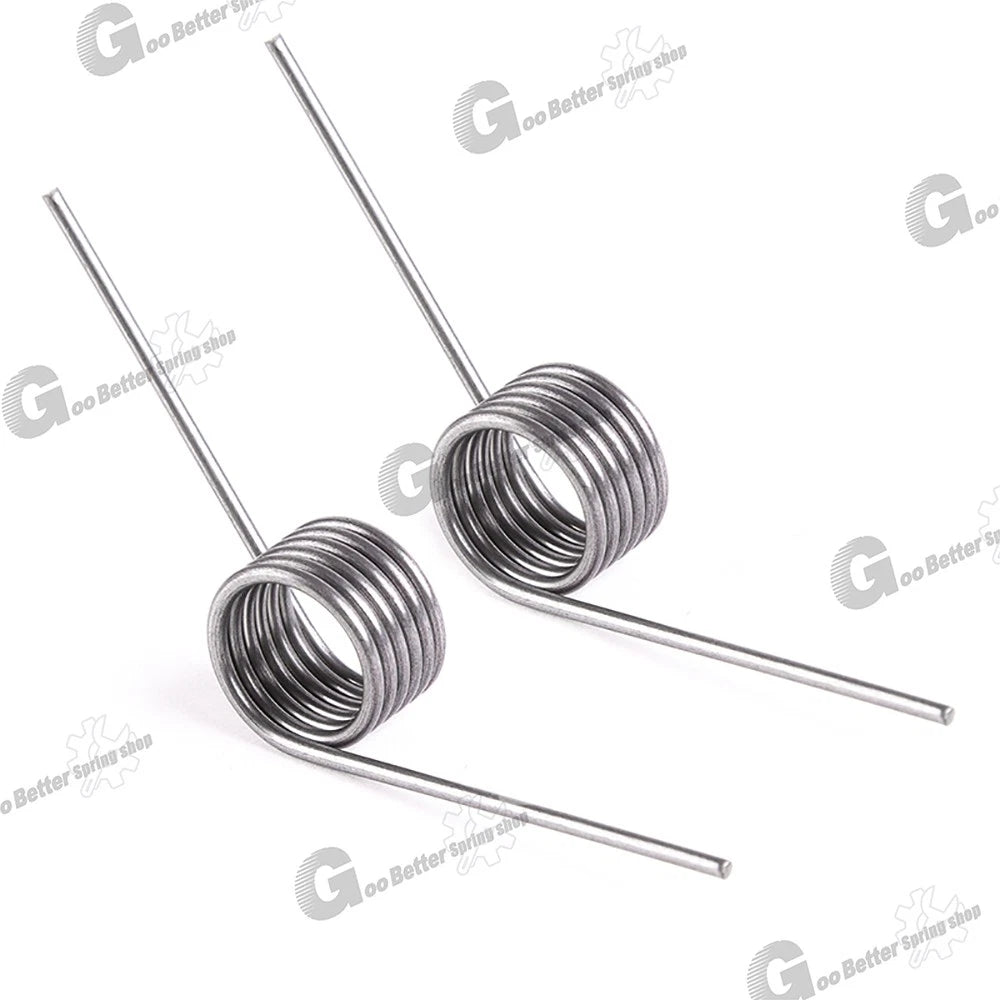
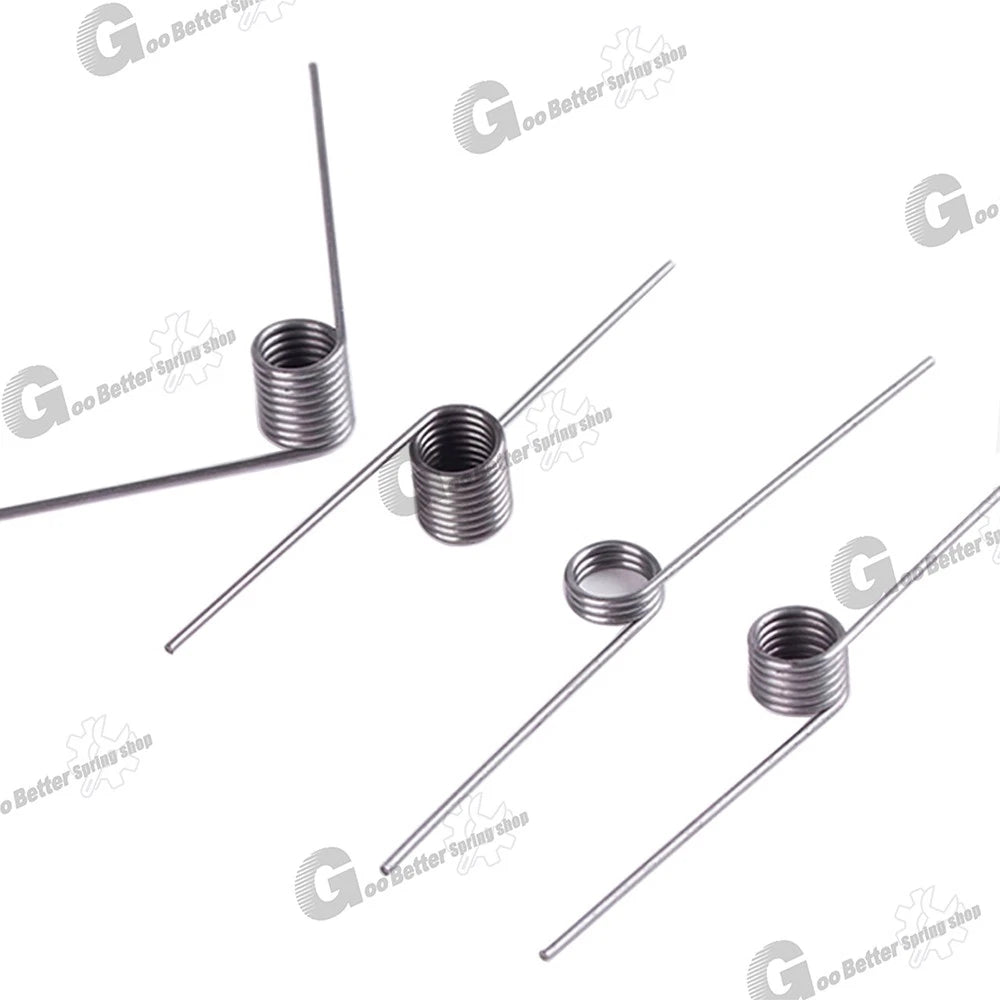
Each pack contains 10 springs made from spring steel wire with a diameter of 0.4 mm (approx. 0.016 in). Outer diameter options span 3 mm to 6 mm (approx. 0.118 in to 0.236 in), with coil counts from 3 to 9 and leg angles of 60°, 90°, 120°, or 180°. The left-hand winding direction means the spring tightens when rotated counter-clockwise — critical for applications where the load direction dictates winding orientation.

Typical use cases include miniature hinge return mechanisms in consumer electronics, precision instrument latches requiring a defined return angle, RC model control linkages needing consistent torque, and small appliance door-close assemblies where a right-hand spring would unwind under load.

⚙️ Compatibility: Suitable for shafts and pins with outer diameter smaller than the spring's inner diameter (ID = OD − 2 × wire dia). Verify shaft clearance before ordering. Left-hand winding only — not interchangeable with right-hand springs in directional applications.

✅ Key Features of These Left-Hand Torsion Springs

🔩
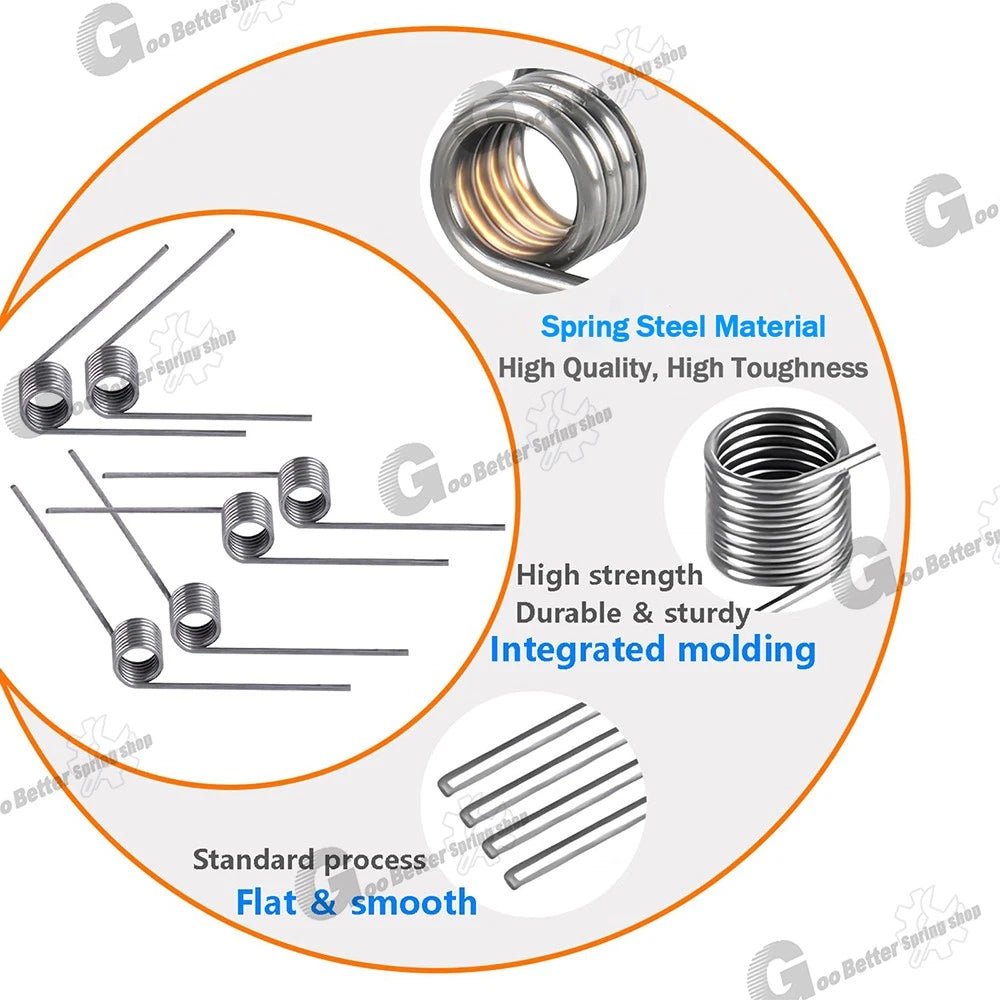
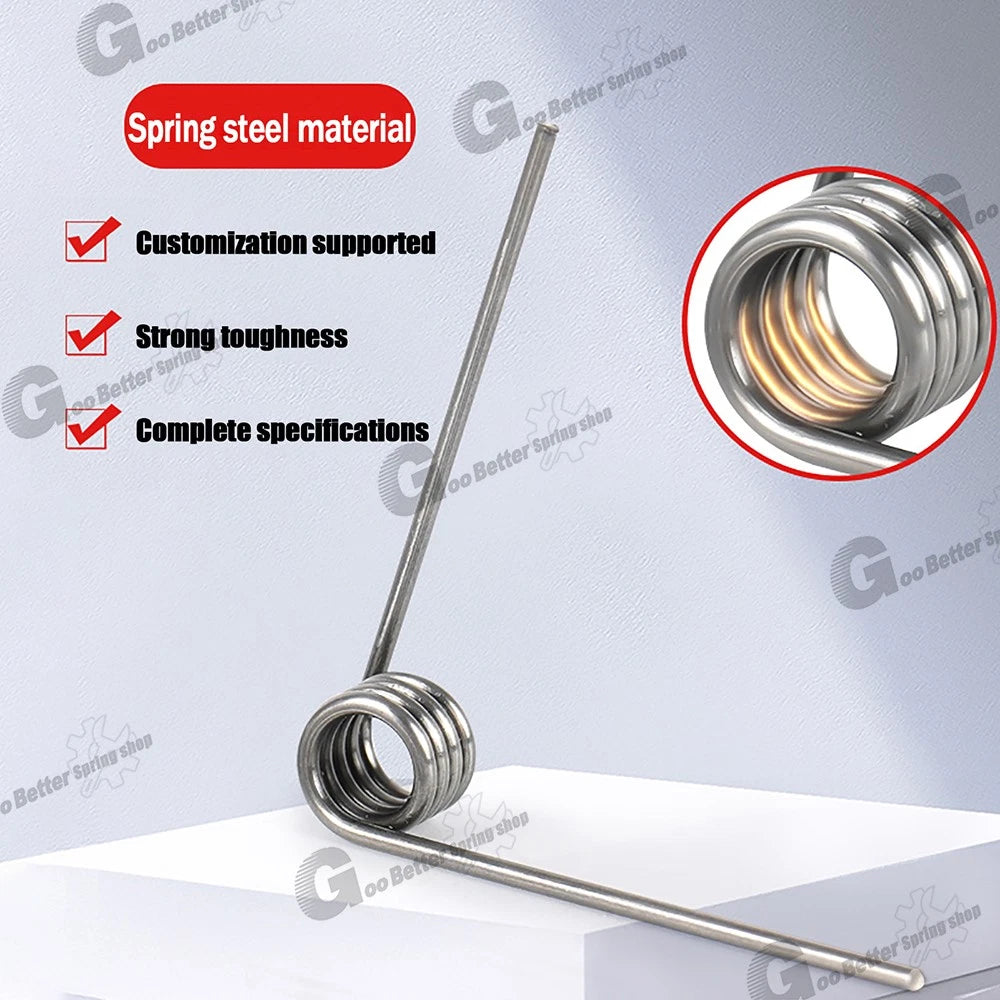
Spring Steel Construction

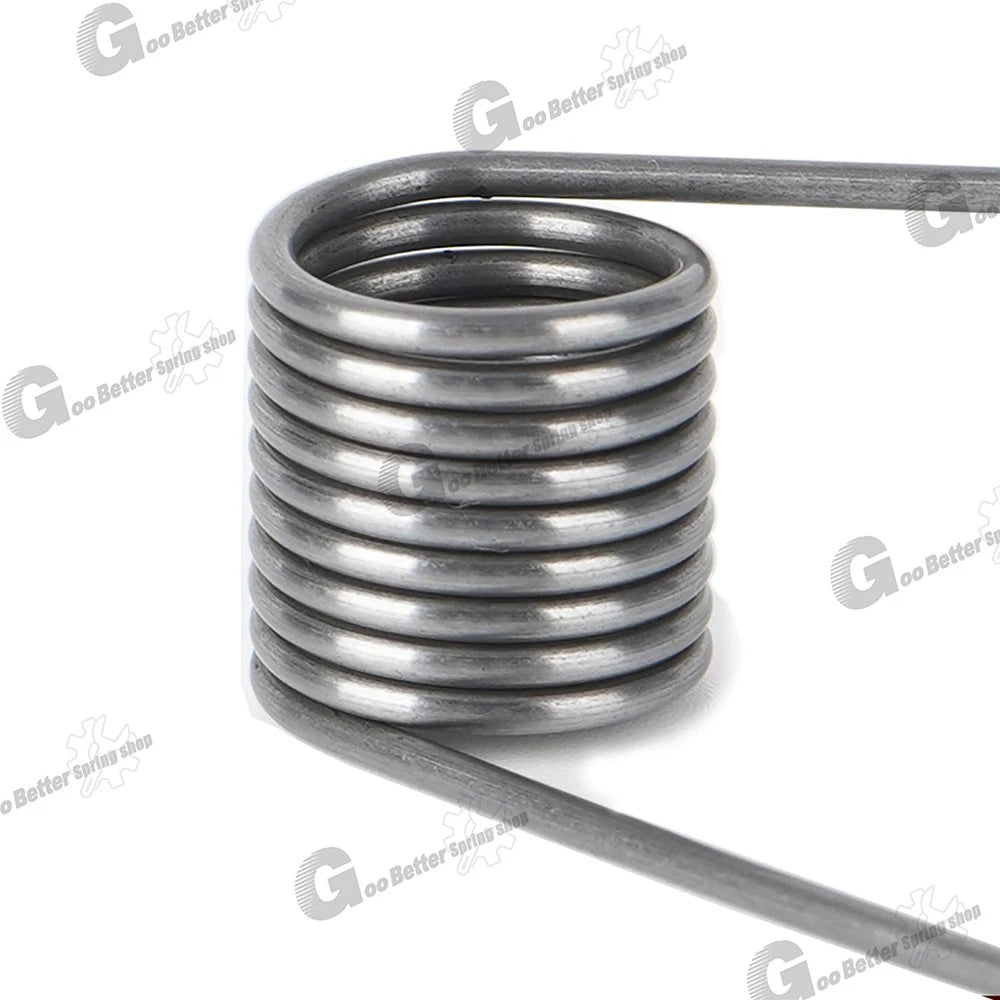
Formed from spring steel wire for reliable elastic return and resistance to set under repeated deflection cycles.

Left-Hand Winding

Counter-clockwise wound legs ensure the spring tightens correctly when torque is applied in the intended direction — essential for directional mechanisms.

📐
Wide Size Matrix

Seven OD options (3–6 mm) × seven coil counts (3–9) × four leg angles (60°/90°/120°/180°) give you 196 precise combinations in one product listing.

🎯
Defined Leg Angles

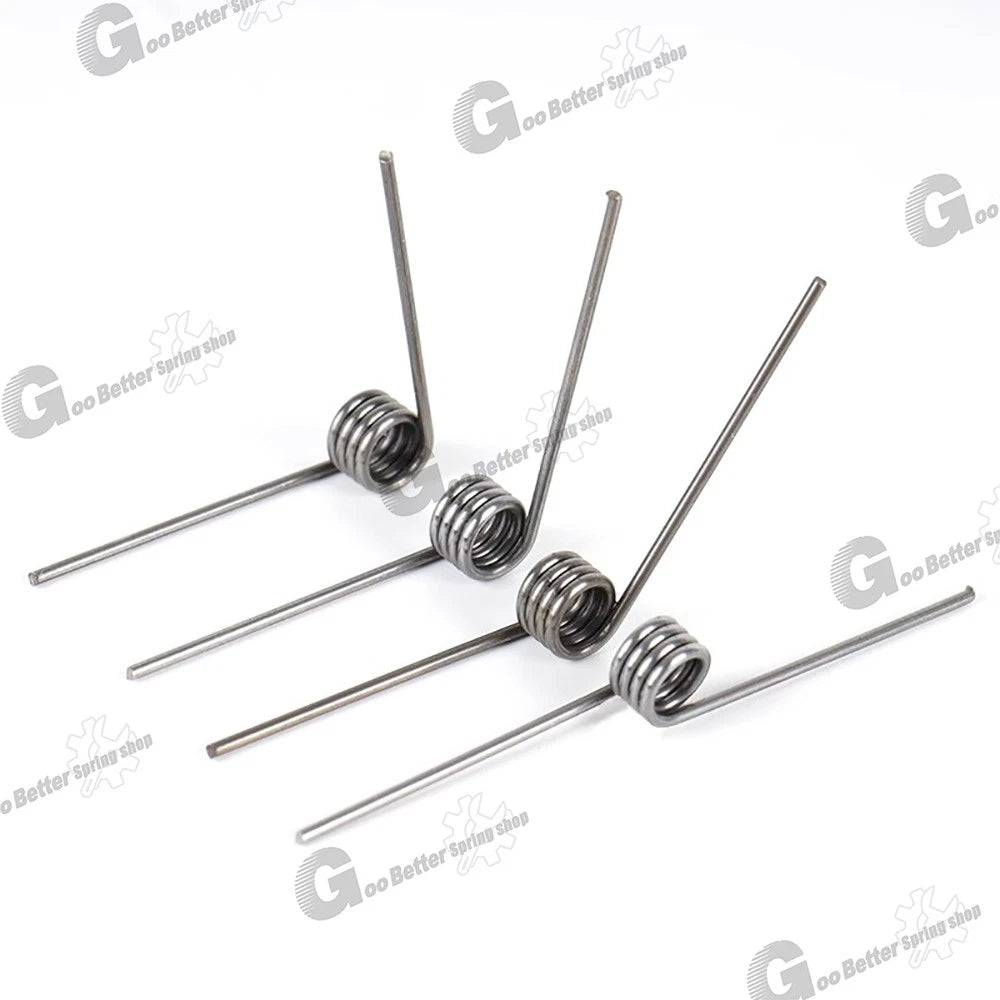
Legs are formed at 60°, 90°, 120°, or 180° to match your assembly geometry without bending or re-forming in the field.

📦
Pack of 10

Ten springs per order — enough for prototyping, small-batch production, or keeping spares on hand for maintenance and repair work.

🔬
Miniature Precision Format

0.4 mm wire diameter and 3–6 mm OD suit tight-clearance housings in electronics, instruments, and scale models where larger springs simply will not fit.

📐 Technical Specifications — Torsion Spring

Wire Diameter 0.4 mm (approx. 0.016 in)
Outer Diameter (OD) 3 mm / 3.5 mm / 4 mm / 4.5 mm / 5 mm / 5.5 mm / 6 mm
Inner Diameter (ID) OD − 0.8 mm (e.g., 3 mm OD → 2.2 mm ID)
Number of Coils 3 / 4 / 5 / 6 / 7 / 8 / 9
Leg Angle 60° / 90° / 120° / 180°
Winding Direction Left-hand (counter-clockwise)
Material Spring Steel
Surface Finish See variant options
Quantity per Pack 10 pcs
Operating Temperature See variant options

❓ Frequently Asked Questions

How do I choose the right OD and coil count for my application?

Start with the shaft or pin diameter your spring will wrap around — the spring's inner diameter (ID = OD − 0.8 mm for this 0.4 mm wire) must be slightly larger than the shaft for free rotation, or slightly smaller for a press fit. Then select the coil count based on the angular deflection range you need: more coils allow greater deflection before the spring reaches its elastic limit. Use the variant selector above to match both dimensions.

What does left-hand winding mean, and does it matter for my project?

Left-hand (LH) winding means the coils spiral counter-clockwise when viewed from the leg end. When torque is applied in the counter-clockwise direction, the spring tightens and stores energy. If your mechanism applies torque clockwise, you need a right-hand spring — using the wrong winding direction causes the spring to unwind and lose clamping force rather than resist the load. Always confirm the rotation direction of your mechanism before ordering.

How strong are these springs — what torque can they handle?

Exact torque values depend on the specific OD, coil count, and deflection angle of the variant you select. As a general guide, spring steel torsion springs with 0.4 mm wire and 3–6 mm OD are suited to light-duty miniature applications — think return mechanisms in small hinges, latches, and instrument linkages rather than heavy industrial loads. If you need precise torque figures for your variant, contact us to confirm before ordering.

Are these springs corrosion-resistant for outdoor or humid environments?

Spring steel provides good mechanical properties but has limited inherent corrosion resistance compared to stainless steel. For applications exposed to moisture, humidity, or mild chemicals, consider applying a light protective coating after installation, or contact us to ask about alternative material options. For dry indoor environments — electronics, instruments, models — spring steel performs reliably without additional treatment.

Which leg angle should I choose — 60°, 90°, 120°, or 180°?

The leg angle is the angle between the two straight legs of the spring in its free (unloaded) state. Choose the angle that matches your assembly geometry: 90° is the most common for right-angle bracket mounts, 180° suits inline or flat-plate configurations, while 60° and 120° fit angled housings. If your assembly requires a different angle, the legs can sometimes be carefully re-formed, but ordering the closest pre-formed angle minimises stress concentration at the bend.

Can I use these springs in a 3D-printed or plastic housing?

Yes — the small OD (3–6 mm) and light wire gauge make these springs well-suited to 3D-printed enclosures, injection-moulded plastic parts, and PCB-mounted assemblies. Ensure the spring pocket or boss diameter matches the spring OD within ±0.2 mm for a snug fit, and that the leg slots are deep enough to capture the legs at the correct pre-load angle.

How do I decide between 3 coils and 9 coils?

Fewer coils (3–4) produce a stiffer spring with higher torque per degree of deflection and a shorter body length — ideal when space is tight and you need a firm return force. More coils (7–9) create a softer spring that can deflect through a larger angle before reaching its stress limit, making them better for applications needing a gentle, progressive return over a wide sweep. Match the coil count to both your available axial length and the torque-deflection curve your mechanism requires.

🛒 Select your Wire dia * Outer dia, Number of coils, and Angle above, then add to cart.

You may also like

Recently viewed





