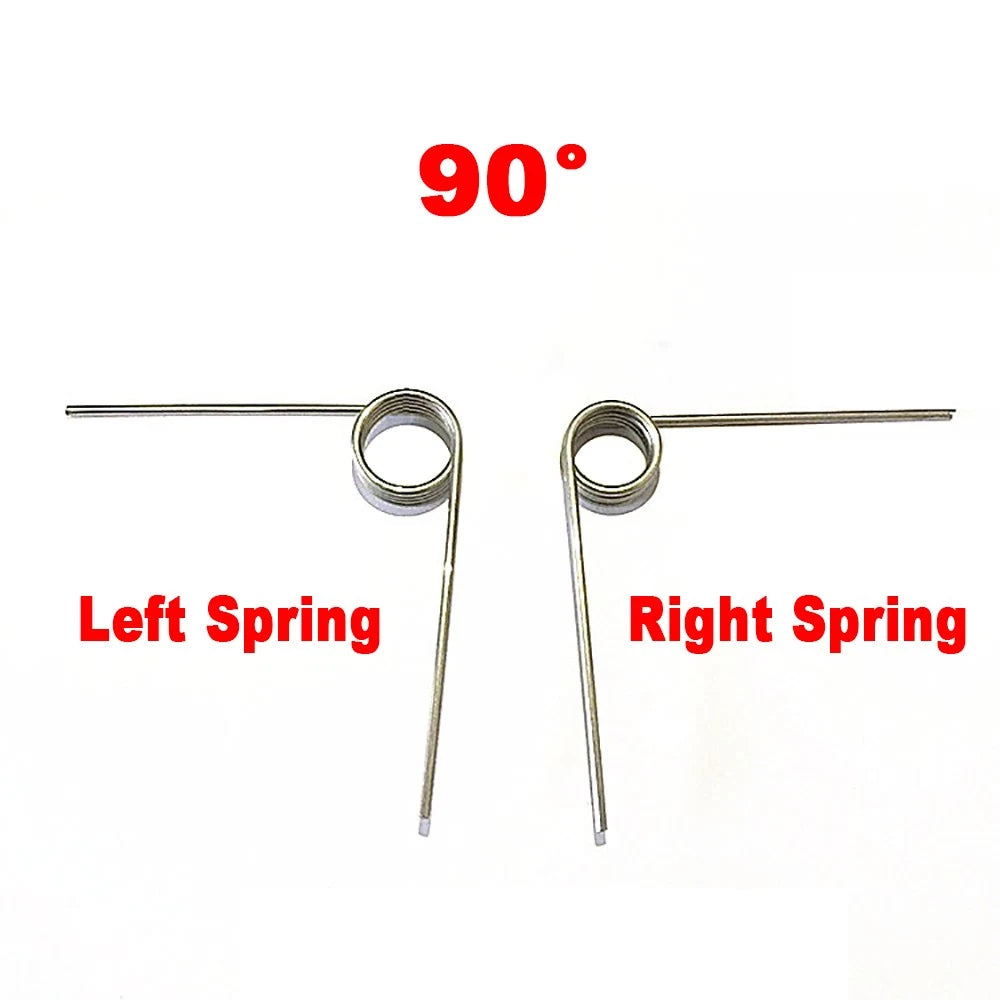
Torsion Spring Stainless Steel Spring Wiredia 1.2mm, Left & Right,Angle:45°-270°

No reviews

Price:
Sale price$7.32 USD
Stock:
In stock (500 units), ready to be shipped

Payment & Security

Ach Direct Debit Amazon American Express Apple Pay Bancontact BLIK Diners Club Discover EPS Google Pay iDEAL Wero JCB Maestro Mastercard Multibanco MobilePay PayPal Przelewy24 Shop Pay Twint Union Pay USDC Visa

Your payment information is processed securely. We do not store credit card details nor have access to your credit card information.

Limited Offer — Spend More, Save More
Spend $55+
Save $5
Spend $100+
Save $10
Spend $200+
Save $25
HomeDIYer DIY Expert Support

DIY Expert Support

Get fitment advice & recommendations

Mon–Fri  8:30 AM – 8:00 PM
24-Hour Fast Ship
Arrives in 3–14 Days
Worldwide Shipping
30-Day Returns
1 tree planted with every purchase

Description

Stainless Steel Torsion Springs — Precision-Wound for Reliable Rotational Force

When a hinge sticks, a door fails to return, or a mechanical assembly loses its snap, the culprit is almost always a worn or mismatched torsion spring. Engineers, makers, and repair technicians who need a dependable rotational spring in a compact form will find this stainless steel torsion spring series built to exacting tolerances for consistent performance across repeated cycles.

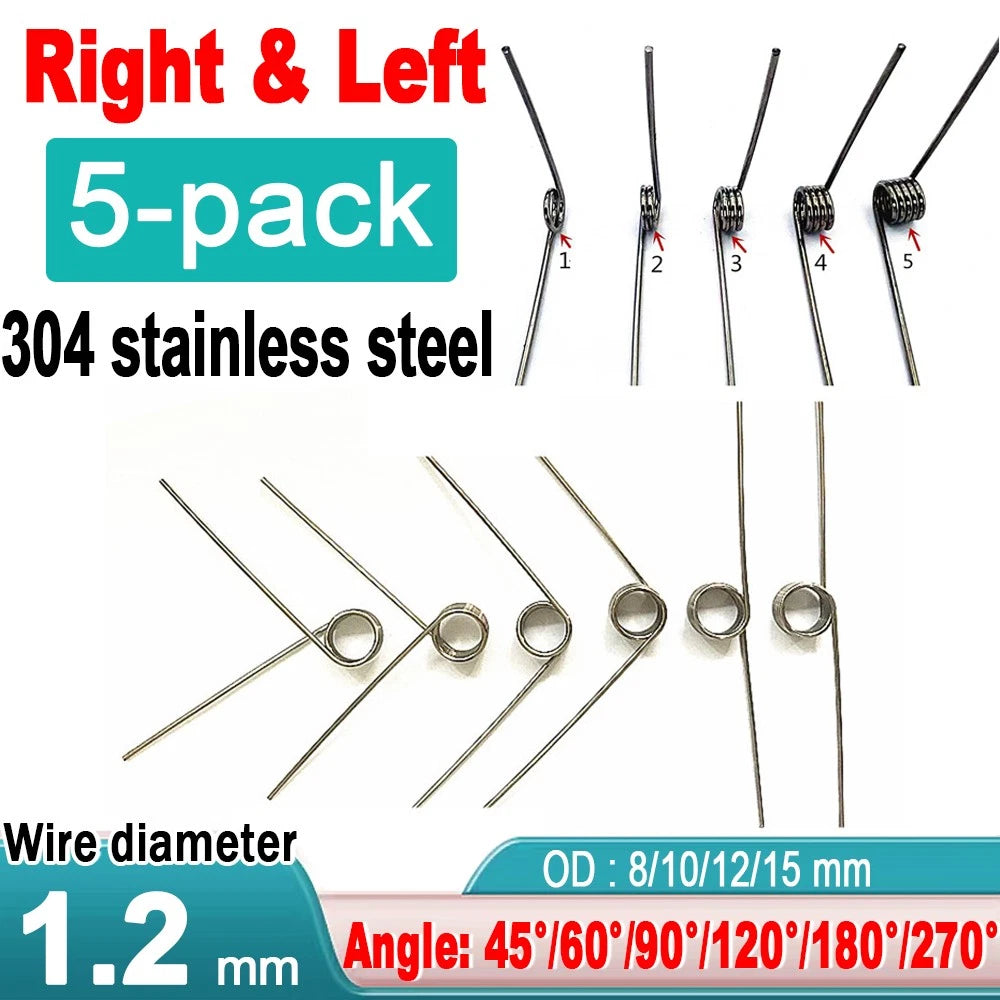
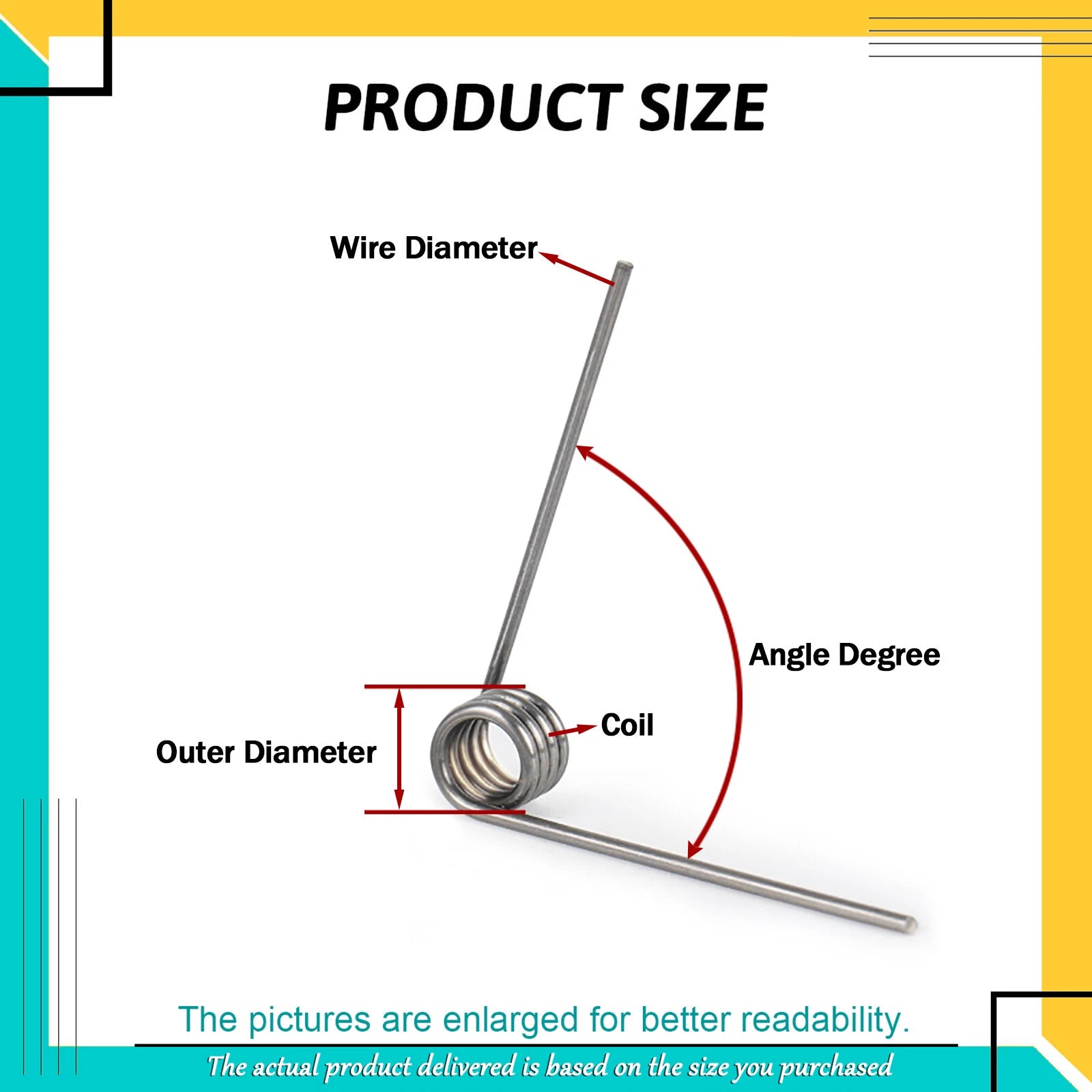
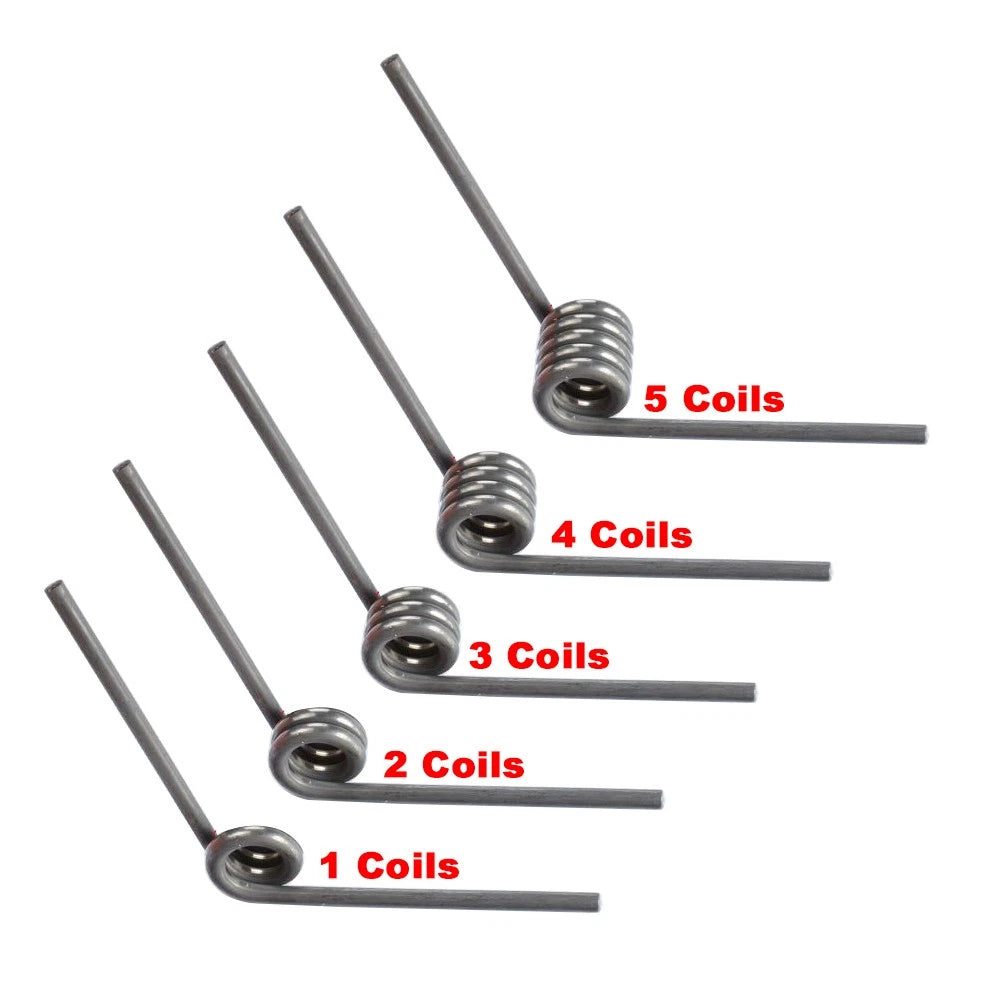
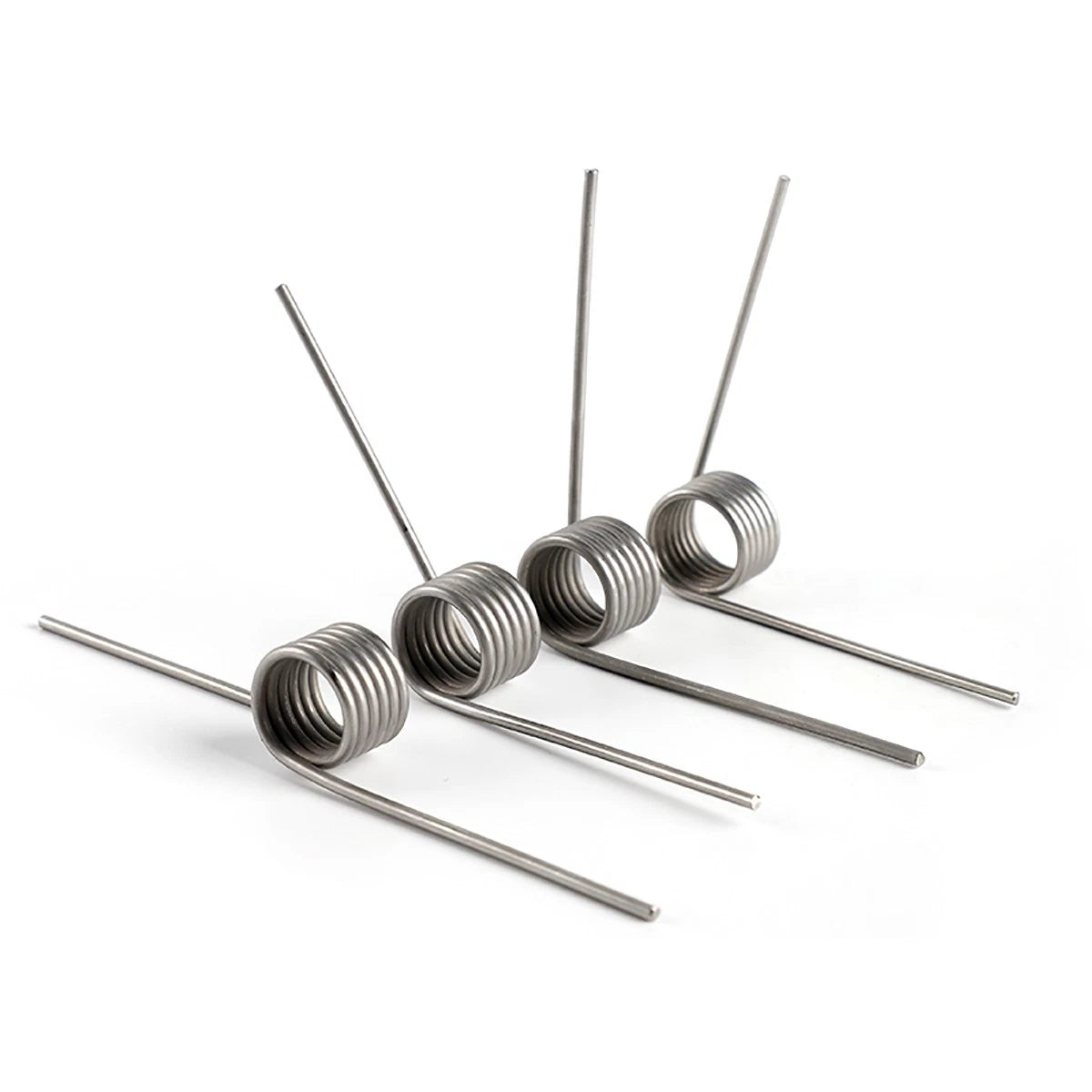
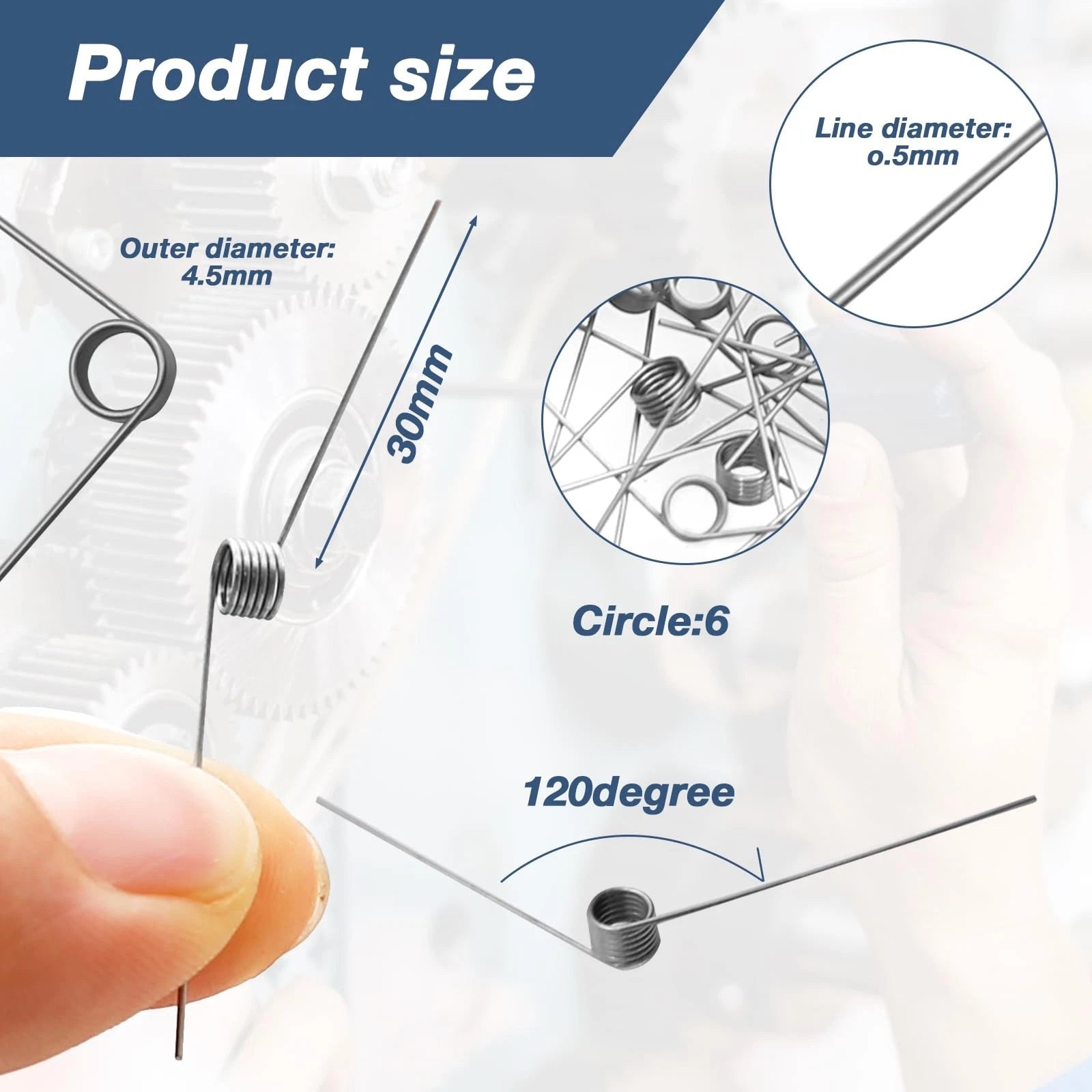
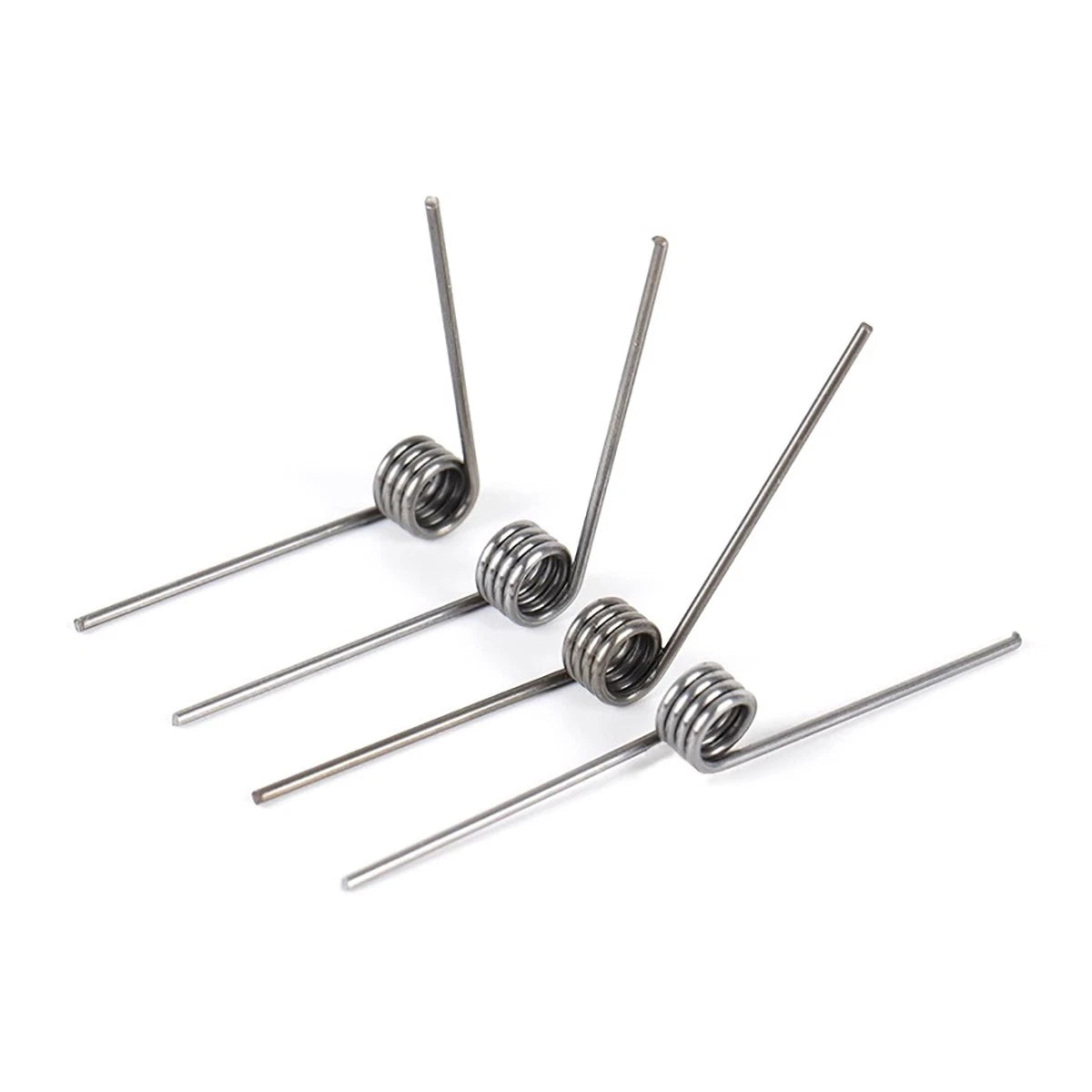
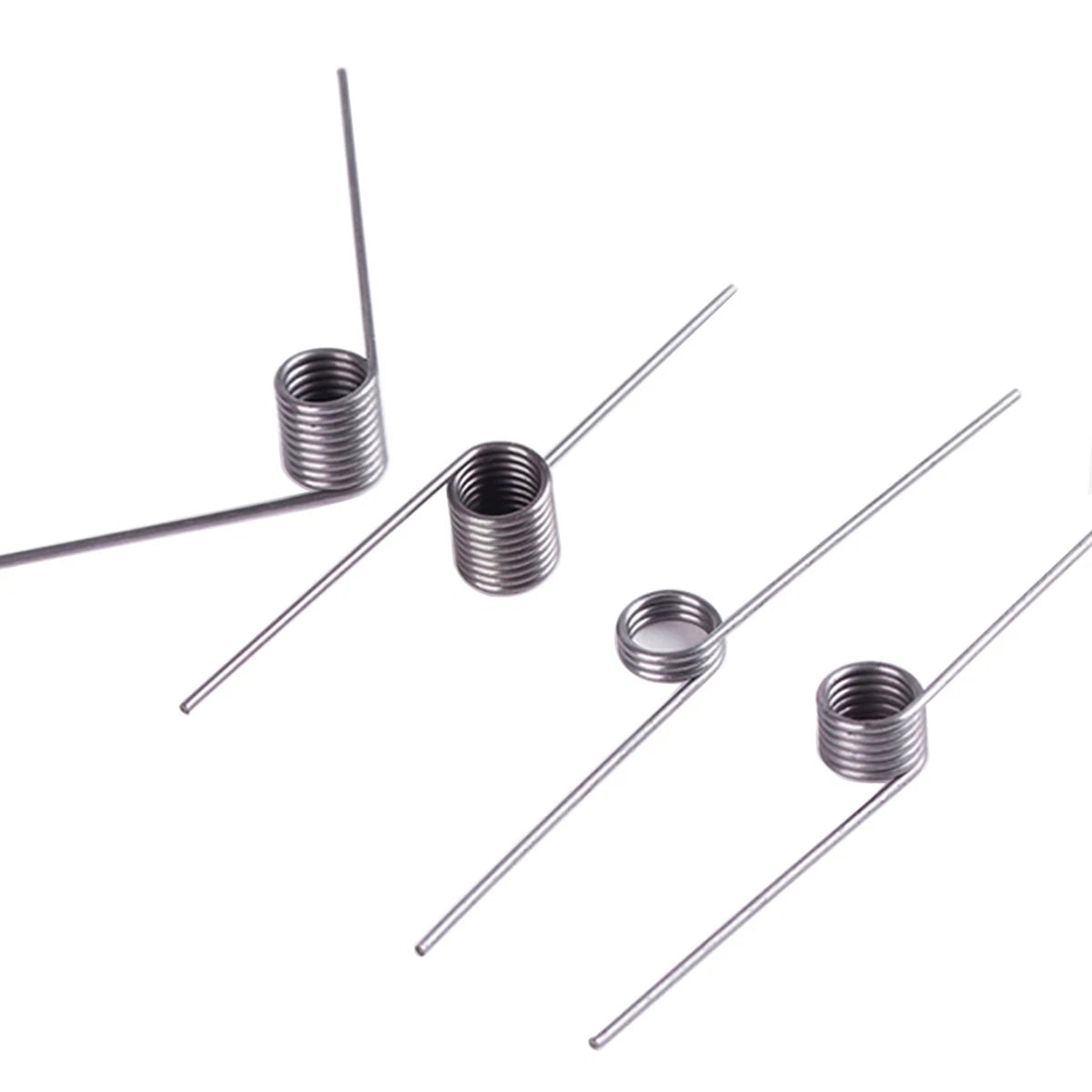
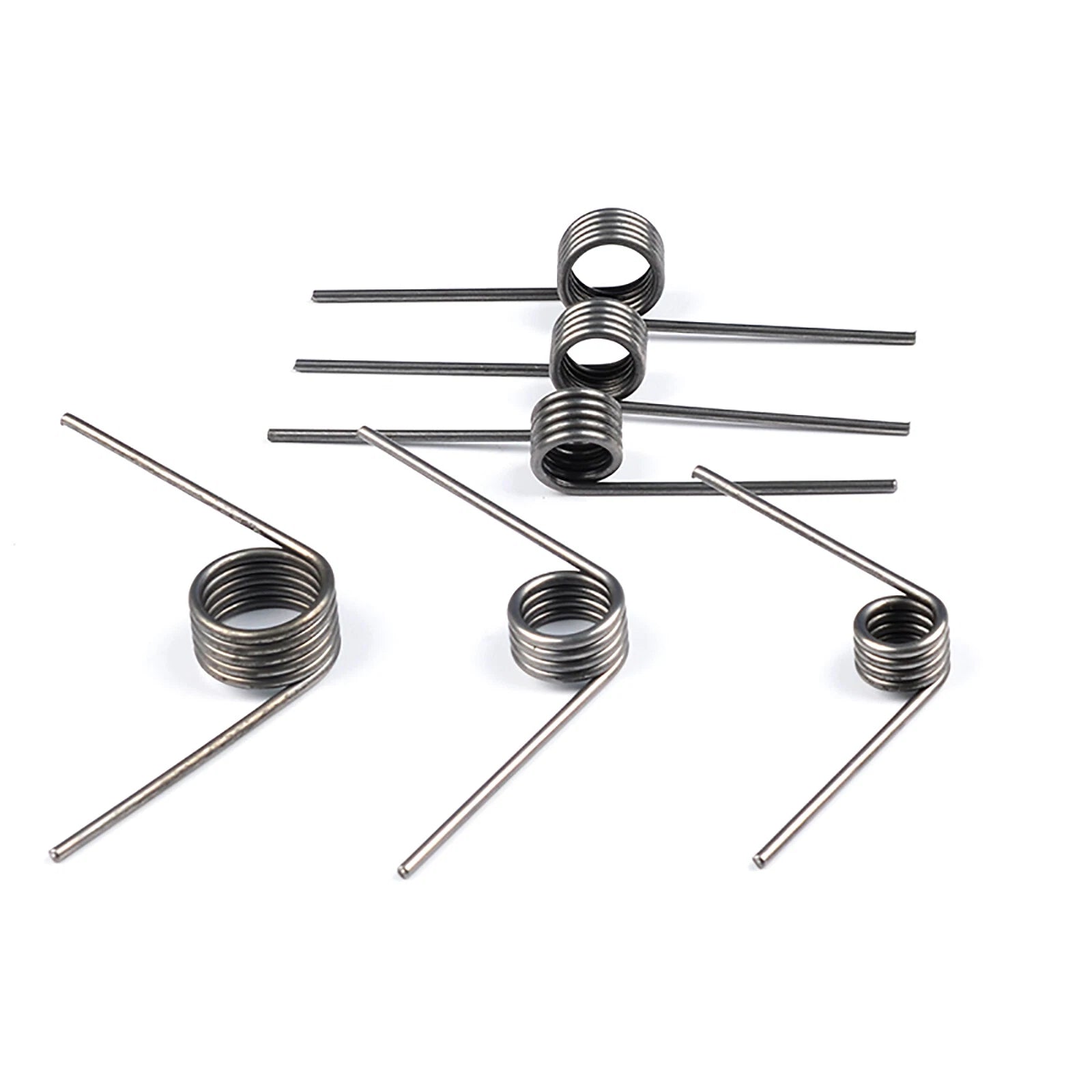
Each spring is wound from 1.2mm stainless steel wire with an outer diameter ranging from 8mm to 15mm (approximately 0.31" to 0.59"). The body length varies with coil count, from 1 coil to 5 coils, and the leg angle spans 45° to 270° in both left-hand (LH) and right-hand (RH) wind orientations. The stainless steel construction provides corrosion resistance suitable for indoor and light outdoor environments.

Typical applications include cabinet door return mechanisms, small appliance assemblies, electronic enclosure latches, DIY robotics and automation projects, and precision instrument housings where a compact torsion spring with a defined rotation angle is required.

⚙️ Compatibility: Suitable for shafts and mandrels sized to fit the selected inner diameter. Match wire diameter, outer diameter, coil count, and wind direction to your application before ordering.

✅ Key Features of These Stainless Steel Torsion Springs

🔩
1.2mm Wire Diameter
Consistent wire gauge across all variants for predictable spring rate and torque output in compact assemblies.
📐
Multiple Outer Diameters
Available in 8mm, 10mm, 12mm, and 15mm OD (0.31"–0.59") to fit a wide range of shaft and housing sizes.
🔄
Left & Right Wind Options
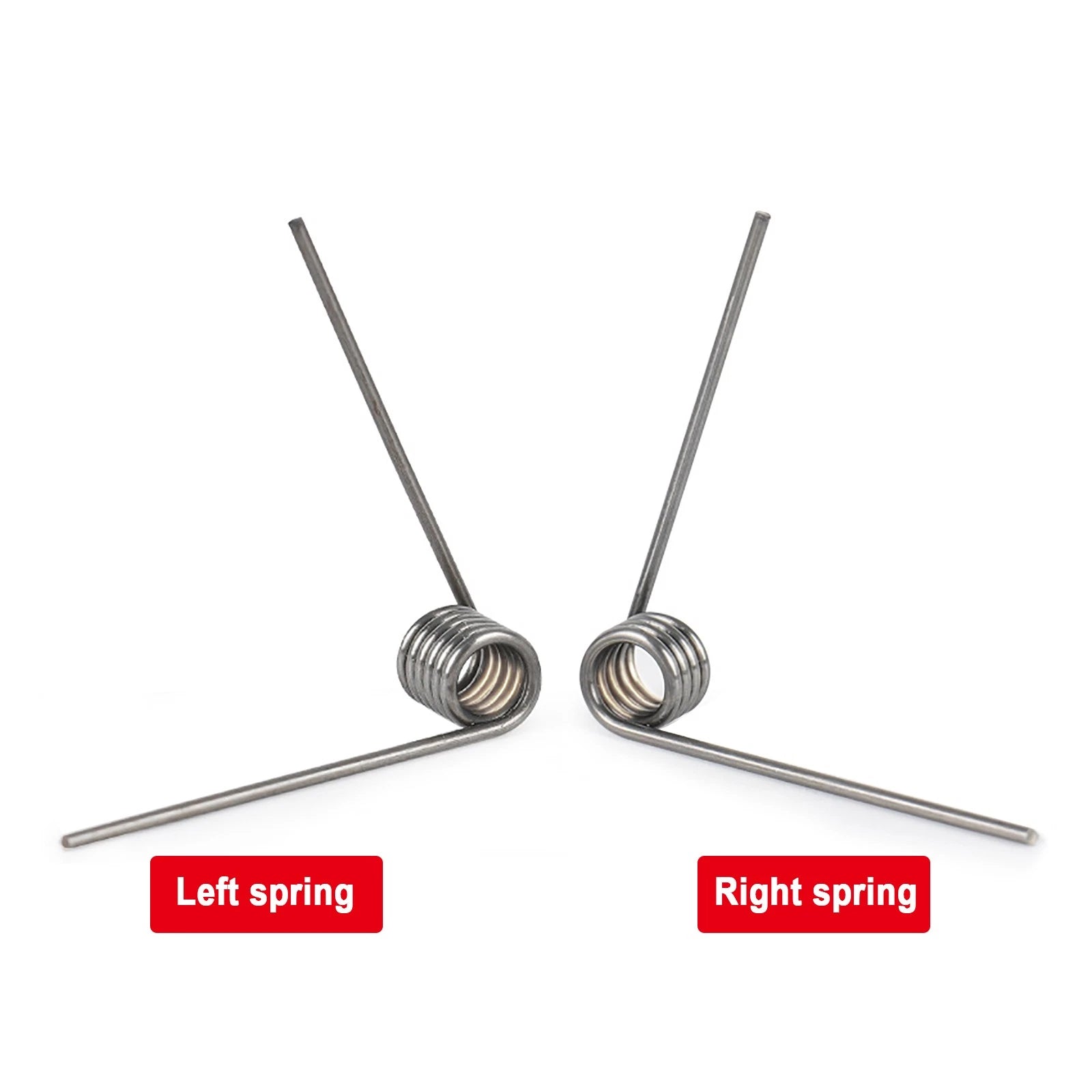
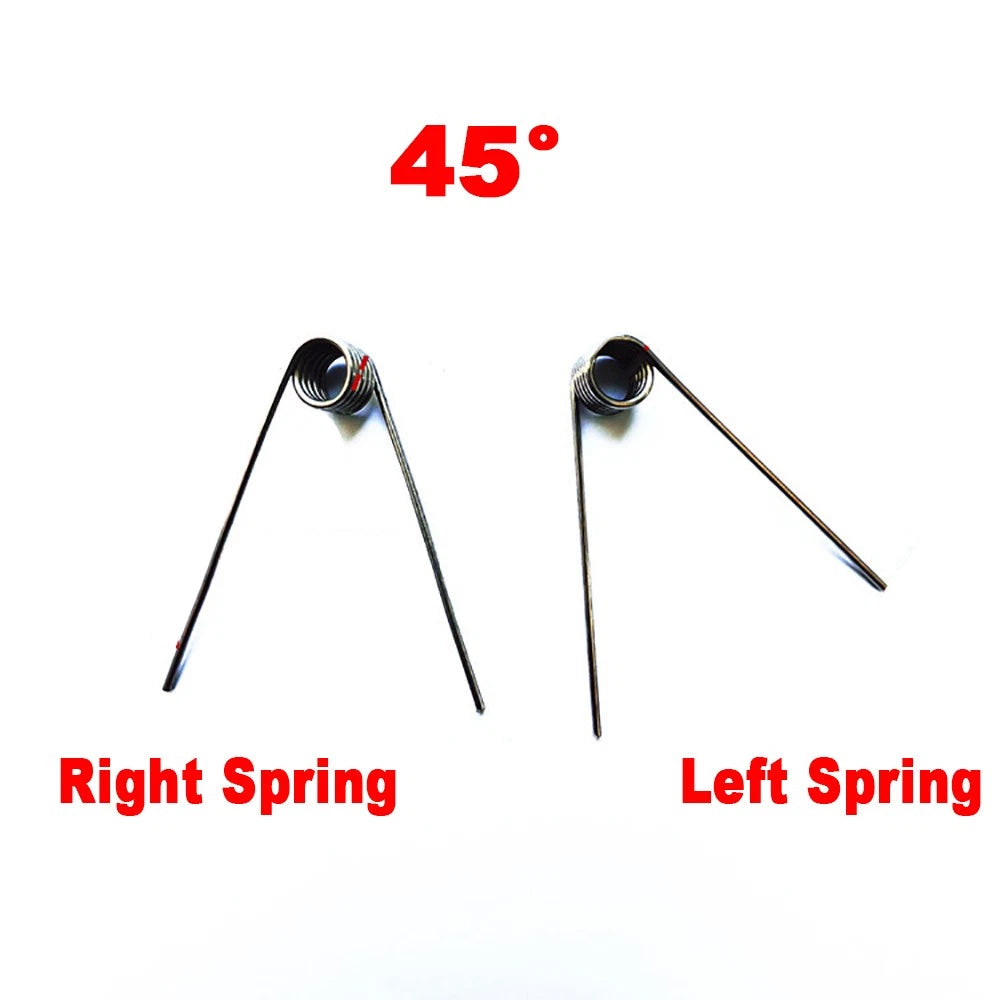
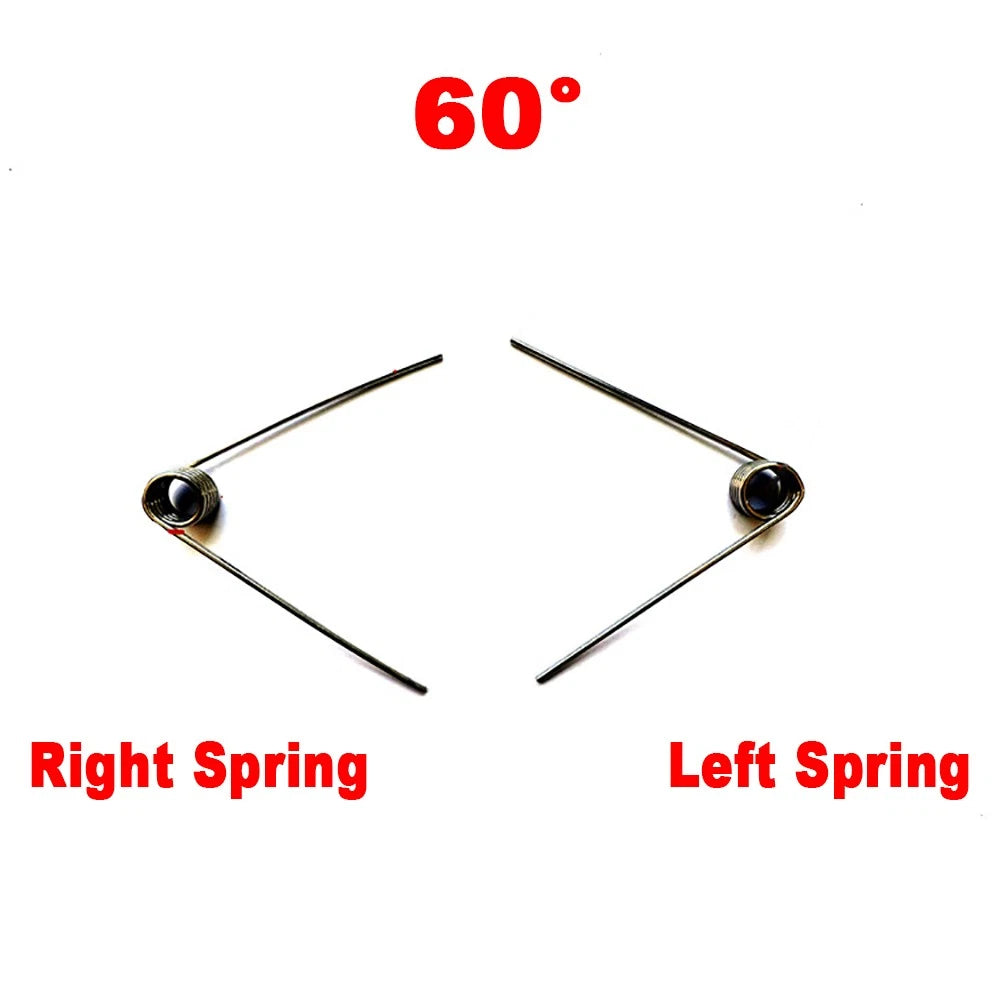
Both left-hand and right-hand wound springs available — select the correct wind direction for your mechanism's rotation.
📏
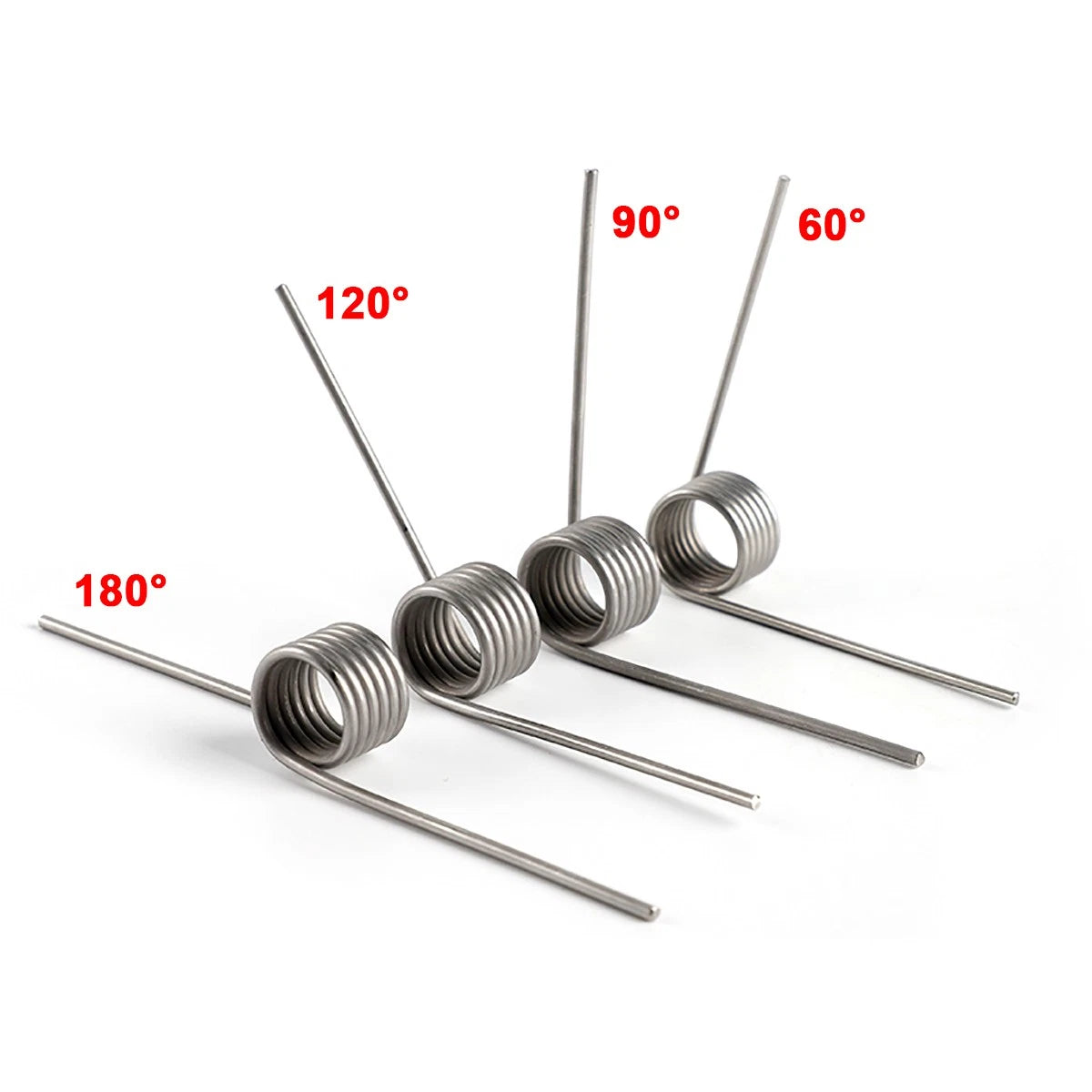
Leg Angles 45°–270°
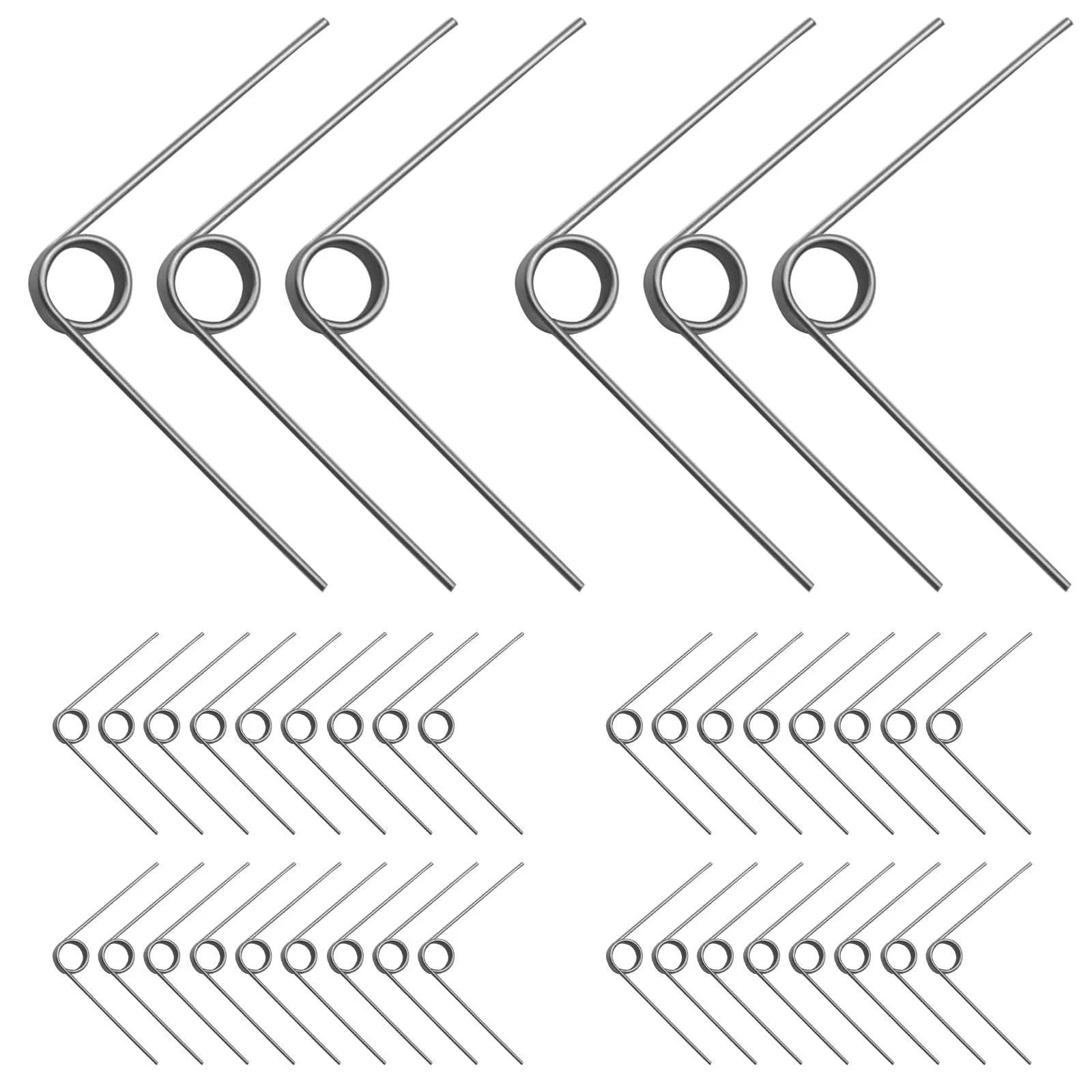
Six leg angle options (45°, 60°, 90°, 120°, 180°, 270°) allow precise fitment to your assembly geometry without bending.
🛡️
Stainless Steel Construction
Corrosion-resistant stainless steel wire resists rust and oxidation, extending service life in humid or light outdoor environments.
🔢
1–5 Coil Counts
Choose from 1 to 5 active coils to tune the spring's angular deflection range and torque characteristics for your specific load.

📐 Technical Specifications — Torsion Spring

Material Stainless Steel
Wire Diameter 1.2 mm (0.047")
Outer Diameter 8 mm / 10 mm / 12 mm / 15 mm (0.31" / 0.39" / 0.47" / 0.59")
Leg Angle 45° / 60° / 90° / 120° / 180° / 270°
Number of Coils 1 / 2 / 3 / 4 / 5
Wind Direction Left Spring (LH) / Right Spring (RH)
Spring Rate See variant options
Free Angle See variant options
Surface Finish Natural Stainless (no coating)
Recommended Shaft Diameter See variant options

❓ Frequently Asked Questions

How do I choose the correct outer diameter for my application?

Measure the shaft or mandrel your spring will wrap around. The spring's inner diameter (OD minus twice the wire diameter) should be slightly larger than the shaft diameter to allow free rotation. For example, a 1.2x8mm spring has an inner diameter of approximately 5.6mm (8mm − 2×1.2mm), suitable for shafts up to about 5mm.

What is the difference between left-hand and right-hand wind?

Wind direction determines which way the spring tightens when torque is applied. A left-hand (LH) spring tightens when rotated counterclockwise; a right-hand (RH) spring tightens when rotated clockwise. Always match the wind direction to the rotation direction of your mechanism to ensure the spring loads correctly rather than unwinding.

How does the number of coils affect spring performance?

More coils generally result in a lower spring rate (softer spring) and greater angular deflection capacity for the same wire and diameter. Fewer coils produce a stiffer spring with less total travel. Choose a higher coil count if you need a gentler return force over a wider angle, or fewer coils for a firmer, more compact spring.

Which leg angle should I select?

The leg angle is the angle between the two straight legs of the spring in its free (unloaded) state. Select the angle that matches your assembly's geometry so the legs seat correctly against their stops without pre-stressing the spring beyond its design range. Common choices: 90° for right-angle brackets, 180° for flat-mounted hinges, 270° for over-center mechanisms.

Is stainless steel suitable for outdoor or humid environments?

Stainless steel offers good corrosion resistance for indoor and light outdoor use, including humid workshops, enclosures, and covered outdoor fixtures. For harsh marine or chemical environments, verify the specific stainless grade meets your corrosion requirements. These springs are not coated, so the natural stainless surface is the only protection.

Can I use these springs in high-temperature applications?

Standard stainless steel torsion springs are suitable for typical ambient temperatures found in most mechanical and DIY applications. For elevated-temperature environments (above approximately 150°C / 300°F), the spring rate may change and the material may lose temper over time. Contact us to confirm suitability for your specific temperature range.

How do I confirm I am ordering the correct spring for my replacement?

Measure your existing spring's wire diameter, outer diameter, number of active coils, leg angle, and wind direction. Cross-reference each measurement with the variant options above. If you are unsure, photograph the spring next to a ruler and contact us — we are happy to help identify the correct replacement.

🛒 Select your Angle, Wire dia × Outer dia, and Number of Coils & Rotation Angle above, then add to cart.

You may also like

Recently viewed