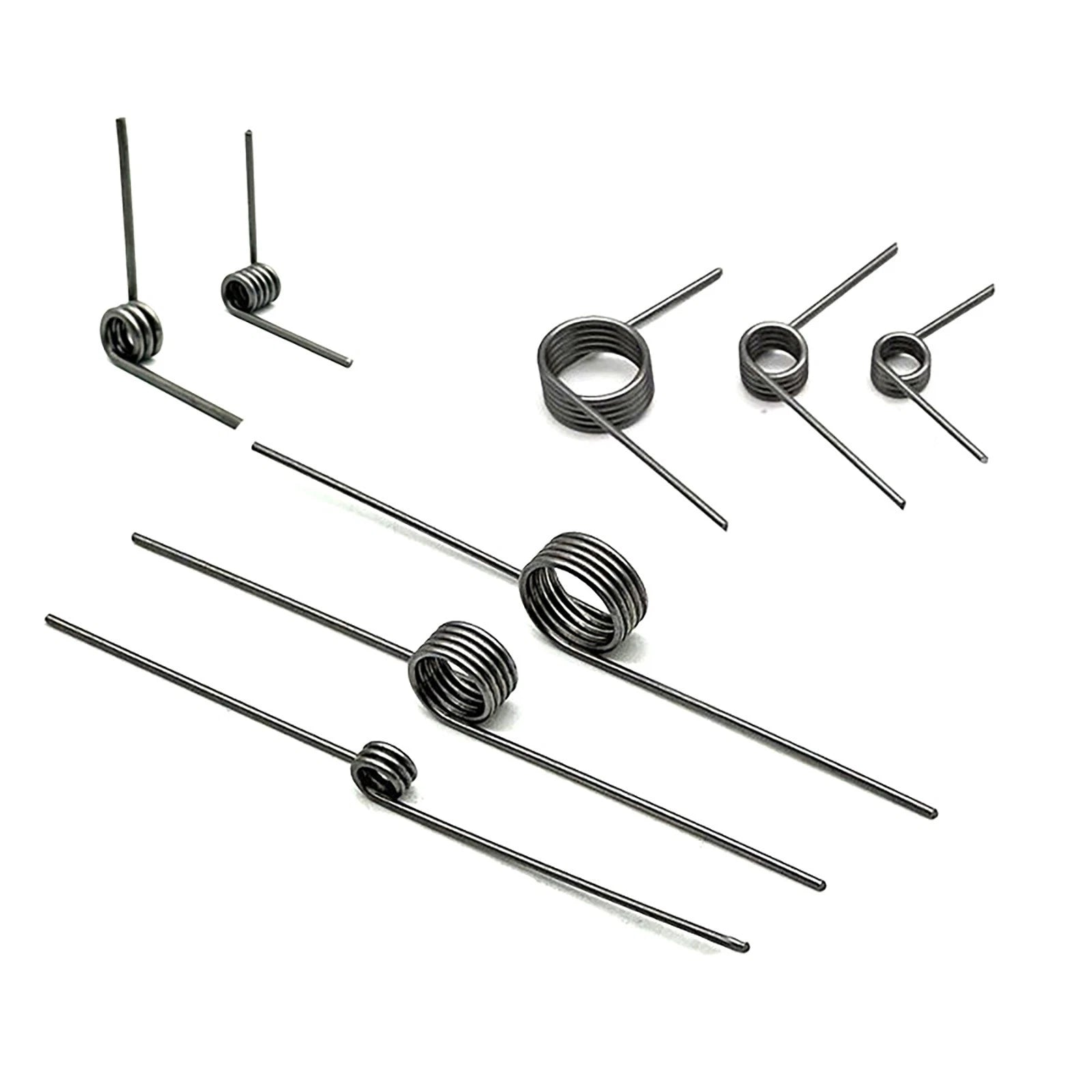
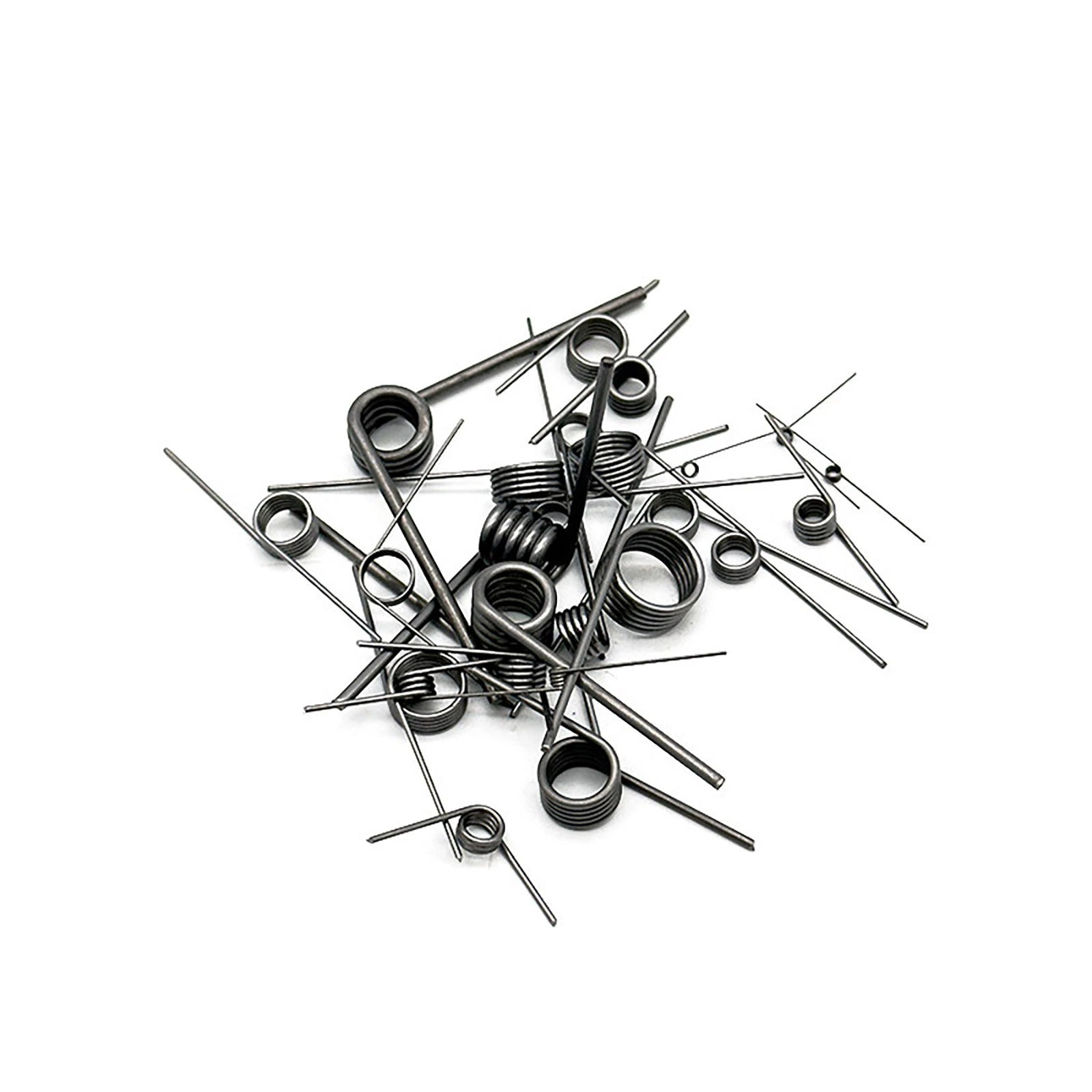
Schenkelfeder Drehfeder Torsionsfeder Federstahl 90 180 Grad Rückholfeder DIY

No reviews

Price:
Sale price$3.11 USD
Stock:
In stock (500 units), ready to be shipped

Payment & Security

Ach Direct Debit Amazon American Express Apple Pay Bancontact BLIK Diners Club Discover EPS Google Pay iDEAL Wero JCB Maestro Mastercard Multibanco MobilePay PayPal Przelewy24 Shop Pay Twint Union Pay USDC Visa

Your payment information is processed securely. We do not store credit card details nor have access to your credit card information.

Limited Offer — Spend More, Save More
Spend $55+
Save $5
Spend $100+
Save $10
Spend $200+
Save $25
HomeDIYer DIY Expert Support

DIY Expert Support

Get fitment advice & recommendations

Mon–Fri  8:30 AM – 8:00 PM
24-Hour Fast Ship
Arrives in 3–14 Days
Worldwide Shipping
30-Day Returns
1 tree planted with every purchase

Description

Torsion Spring Steel Coil — Precision Return Springs for DIY Mechanisms

When a hinge creaks, a latch fails to snap back, or a mechanism loses its return force, the culprit is almost always a worn or incorrectly sized torsion spring. Hobbyists, makers, and repair technicians who need exact angular return force — without ordering custom parts — will find this range of steel torsion springs indispensable.

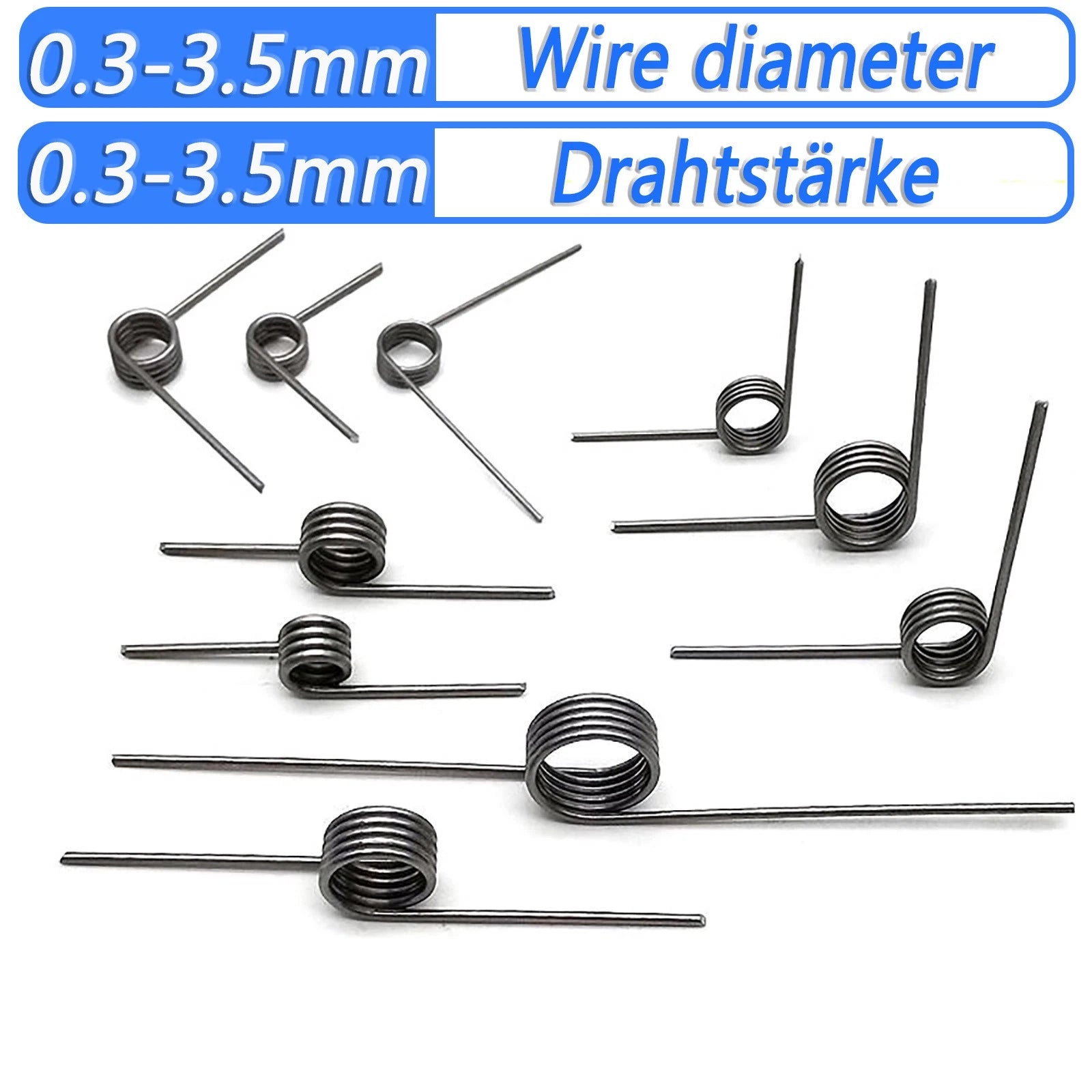
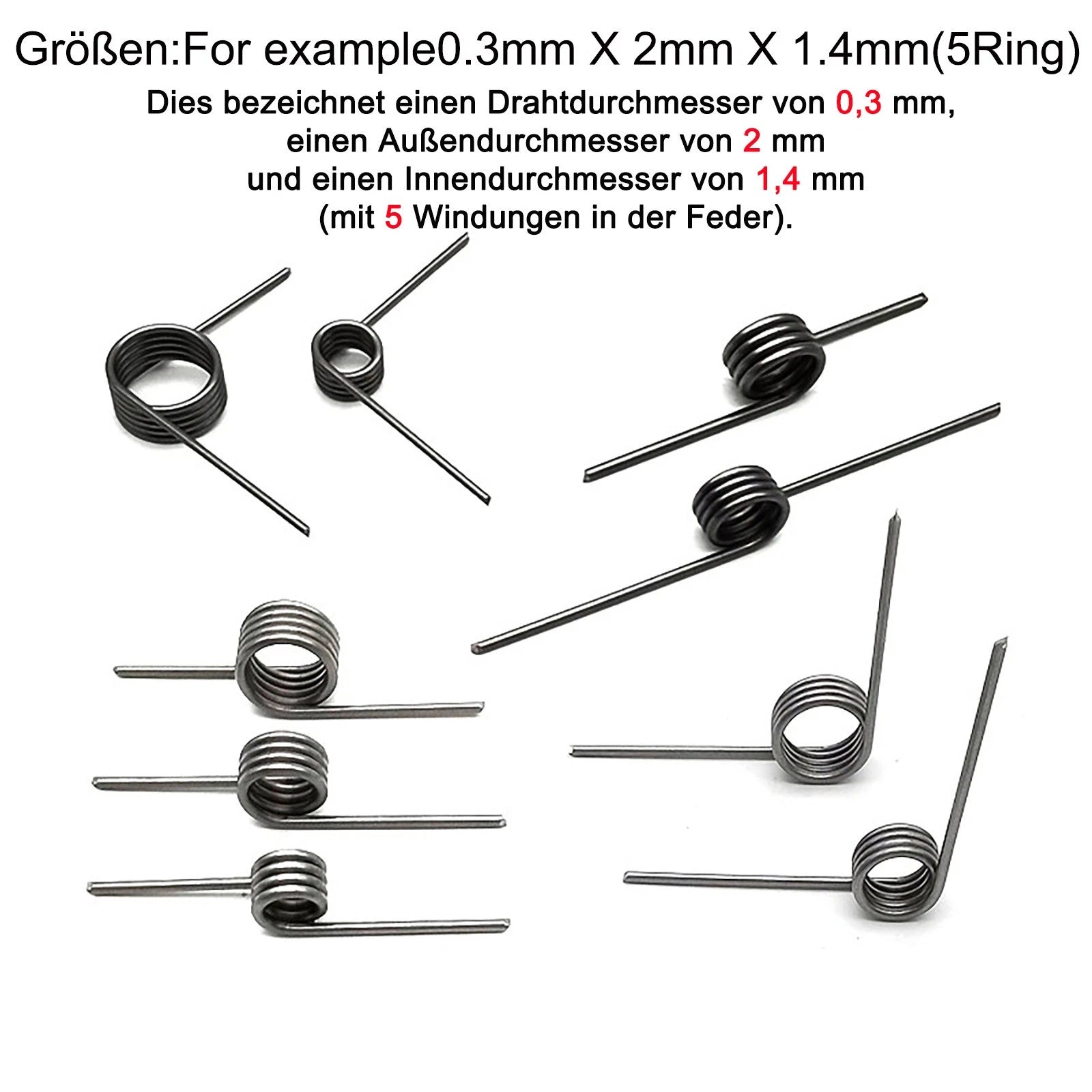
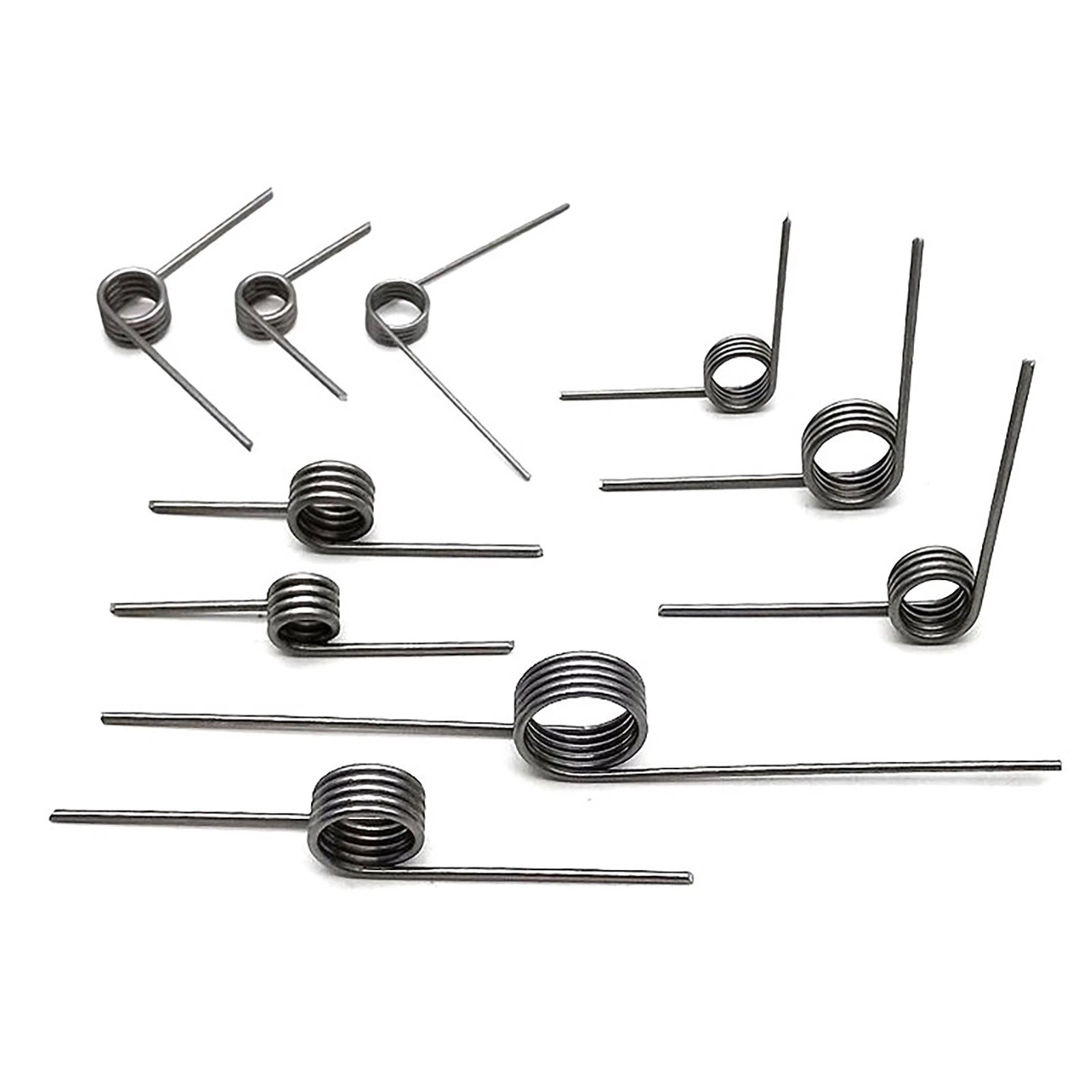
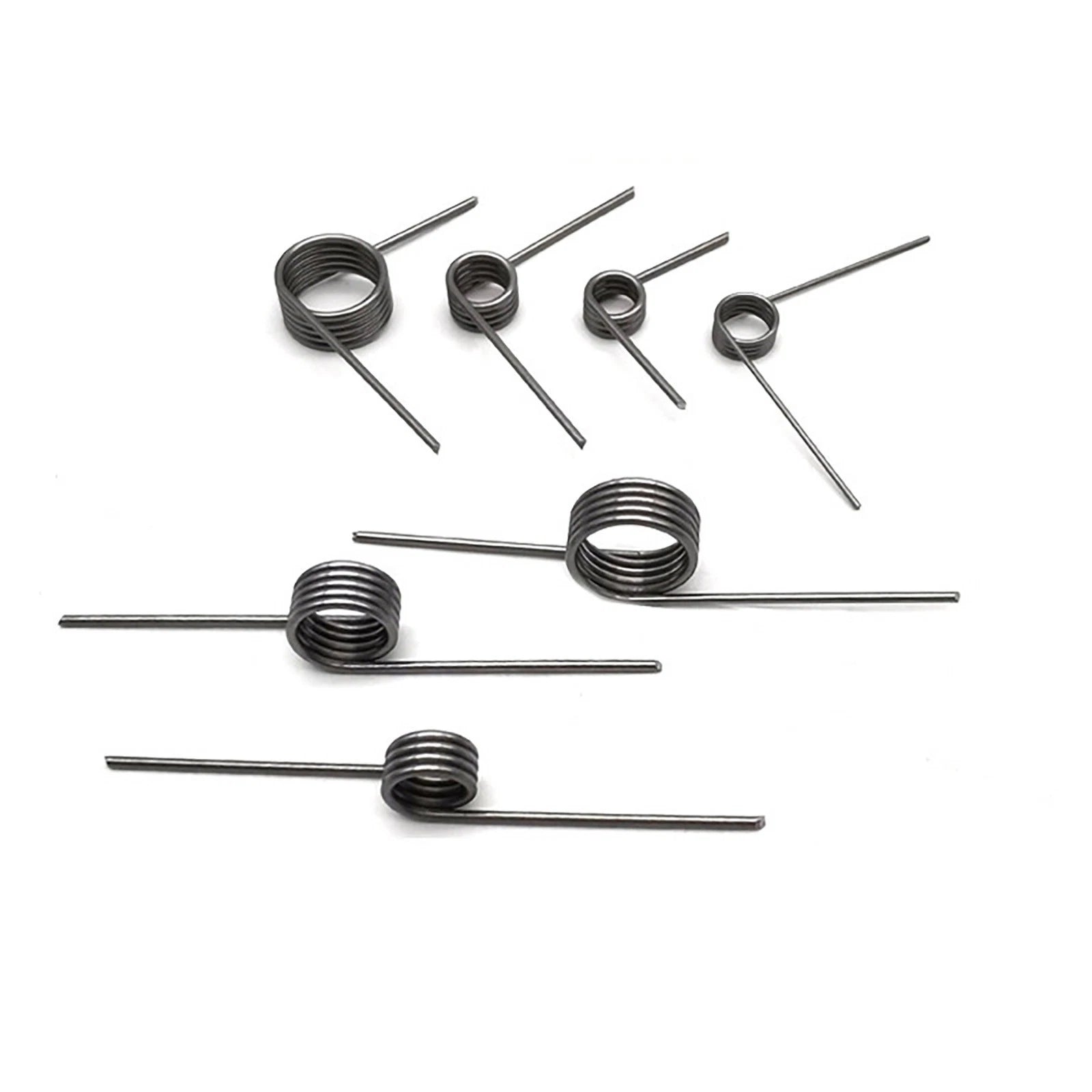
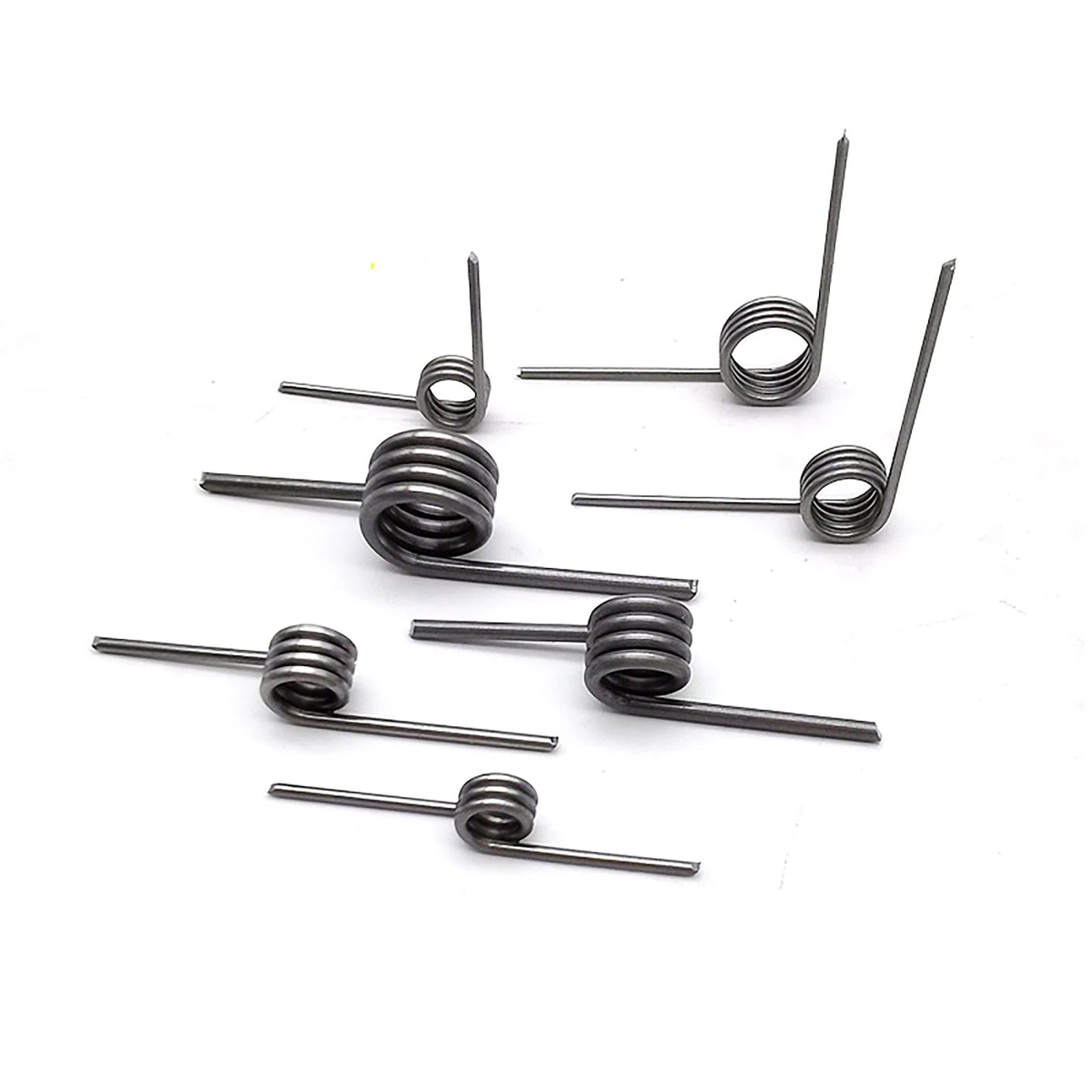
Each torsion spring is formed from spring steel wire ranging from 0.3 mm to 3.5 mm in diameter, with outer diameters spanning approximately 2 mm to 25 mm (roughly 0.08 in to 0.98 in). Coil counts vary from 1 to 9 rings depending on the selected size. Available in 80°, 90°, 130°, 135°, 140°, and 180° leg angles, sold in packs of 3 or 5 pieces.

Typical applications include DIY cabinet hinges requiring a 90° return spring, small appliance latch mechanisms needing a 180° torsion spring, model engineering and robotics projects calling for a miniature coil return spring, and repair work on clocks, tools, or precision instruments where a specific wire-diameter torsion spring is required.

🔧 Compatibility: Suitable for shafts and pins matching the inner diameter of the selected size. Verify inner diameter (ID) against your shaft before ordering. Leg angle must match your mechanism's required deflection.

✅ Key Features of These Torsion Spring Steel Coil Return Springs

🌀
Wide Size Range

Wire diameter 0.3–3.5 mm, outer diameter 2–25 mm — covers micro to medium-duty DIY applications in a single listing.

📐
Multiple Leg Angles

Available in 80°, 90°, 130°, 135°, 140°, and 180° configurations to match your mechanism's exact deflection requirement.

⚙️
Spring Steel Construction

Formed from spring steel wire for consistent elastic return force and resistance to permanent deformation under repeated cycling.

🔩
Flexible Coil Counts

Ring counts from 1 to 9 per variant — more coils provide greater angular travel and softer torque characteristics for delicate assemblies.

📦
Pack Options: 3 or 5 Pieces

Choose a 3-piece or 5-piece pack to suit your project quantity — ideal for prototyping, repair stock, or small-batch production.

🛠️
DIY & Repair Friendly

Compact form factor and precise dimensions make these springs easy to install in hinges, latches, clamps, and mechanical return mechanisms without special tooling.

📐 Technical Specifications — Torsion Spring

Spring Type Torsion / Return Spring (Schenkelfeder)
Material Spring Steel
Wire Diameter Range 0.3 mm – 3.5 mm (0.012 in – 0.138 in)
Outer Diameter Range 2 mm – 25 mm (0.08 in – 0.98 in)
Inner Diameter Range See variant options
Coil / Ring Count 1 – 9 rings (varies by size)
Leg Angle Options 80°, 90°, 130°, 135°, 140°, 180°
Pack Quantity 3 pieces or 5 pieces (select above)
Finish See variant options
Recommended Use Hinges, latches, clamps, DIY mechanisms, model engineering

❓ Frequently Asked Questions

How do I choose the right size torsion spring for my project?

Match three key dimensions: wire diameter (determines torque strength), outer diameter (must clear your housing), and inner diameter (must fit over your shaft or pin). Then select the leg angle that matches your mechanism's required deflection — 90° for right-angle returns, 180° for straight-through returns, etc.

What leg angle should I choose — 90°, 180°, or another option?

The leg angle is the angle between the two straight arms of the spring at rest. Choose 90° if your mechanism needs a quarter-turn return, 180° if the arms need to be parallel (straight), and 80°, 130°, 135°, or 140° for specific intermediate deflection requirements. Measure the angle your mechanism naturally holds when unloaded.

How strong are these torsion springs?

Torque strength increases with wire diameter and decreases with outer diameter and coil count. Thicker wire (e.g., 2–3.5 mm) provides significantly more return force than fine wire (0.3–0.5 mm). For light-duty applications such as small hinges or latches, 0.3–0.8 mm wire is typically sufficient. For heavier mechanisms, select 1.4 mm wire or above.

Are these springs corrosion resistant?

These springs are made from spring steel, which offers good mechanical properties but moderate corrosion resistance. For indoor or dry environments they perform reliably. For outdoor or humid applications, consider applying a light coat of oil or grease after installation to extend service life.

Can I use these springs in both clockwise and counterclockwise configurations?

Torsion springs are typically wound in a specific direction (left-hand or right-hand). The winding direction affects which way the spring resists deflection. Please check the product images and confirm the winding direction matches your application before ordering. If you are unsure, contact us to confirm.

What is the difference between 3-piece and 5-piece packs?

Both packs contain identical springs — the only difference is quantity. The 5-piece pack is suited for projects requiring spares or small-batch repairs. The 3-piece pack is ideal for single-unit repairs or prototyping where fewer springs are needed.

How do I install a torsion spring in a hinge or latch?

Slide the spring coil over the hinge pin or shaft so the inner diameter fits snugly without binding. Position one leg against a fixed surface and the other against the moving part. Deflect the spring to the required angle and secure both legs. No special tools are required for most DIY installations — needle-nose pliers are sufficient for small wire diameters.

🛒 Select your angle, size, and quantity above, then add to cart.

You may also like

Recently viewed