🎻 Product Overview
A misaligned or fallen sound post can dramatically affect the tone, projection, and playability of a violin, cello, or bass. Repositioning it without the right tools is frustrating at best and risky at worst — the wrong approach can scratch the interior finish, damage the top, or leave the post in a position that chokes the instrument's resonance.
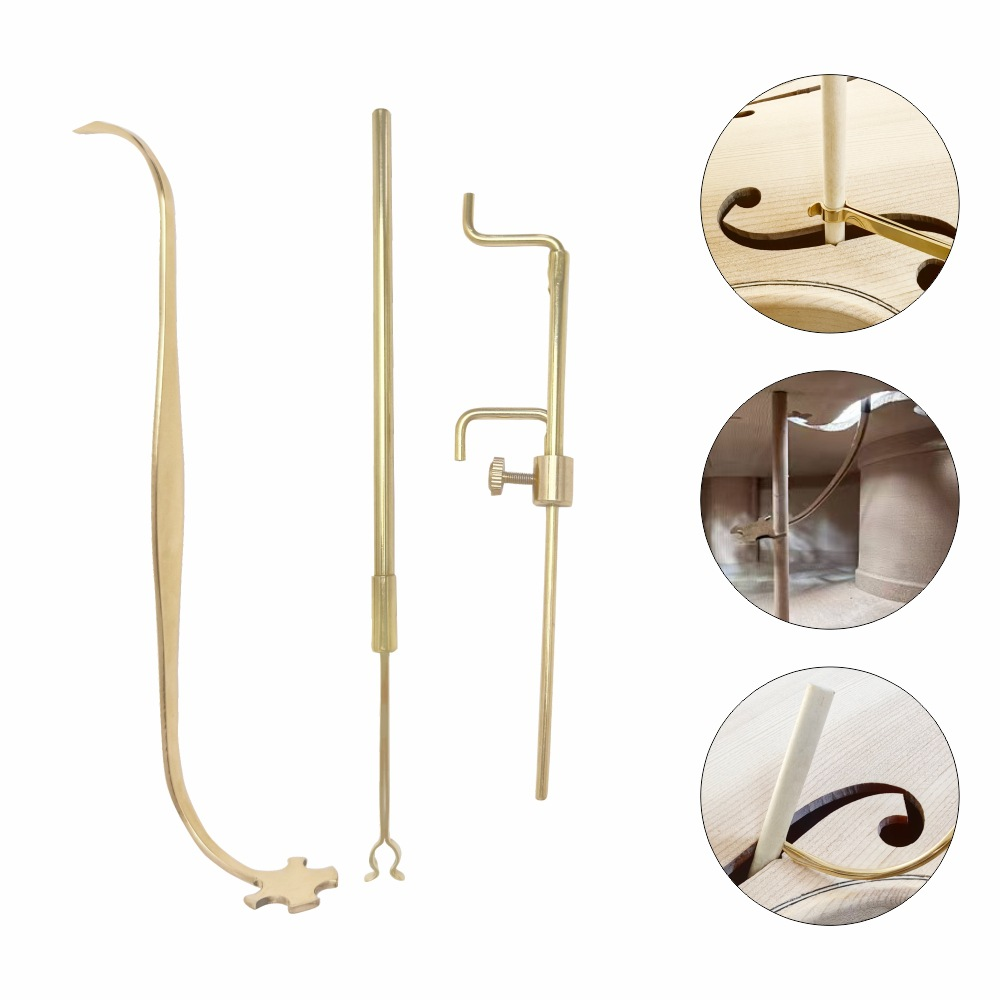
This sound post tool set gives you the precision instruments needed to set, adjust, and measure the sound post correctly. Available in 15 configurations across violin, cello, and bass sizes — including individual setters, clips, measuring rulers, and complete three-piece sets — each tool is built from brass or quality steel for durability and reliable performance. Whether you're a working luthier, a repair technician, or a serious player who handles their own maintenance, this set covers the job. 🔧
✅ Why String Players & Repair Techs Choose This Set
- ✔ Restore Tone & Projection
Proper sound post placement directly affects how your instrument resonates. The right tools help you get it positioned correctly the first time.
- ✔ Protect the Interior Finish
Purpose-built setters and clips are designed to grip and maneuver the post without scratching the instrument's interior wood surfaces.
- ✔ Precise Measurement
The included measuring rulers let you verify post position and height against standard reference points — no guesswork.
- ✔ Covers Violin, Cello & Bass
Separate sizing options for each instrument type ensure the tool fits the f-hole and interior dimensions correctly.
- ✔ Durable Brass Construction
Brass tools resist corrosion and hold their shape under repeated use — built for long-term workshop reliability.
- ✔ Complete Set Options Available
The three-piece sets include setter, clip, and ruler together — everything you need for a full sound post adjustment in one purchase.
🔧 Common Problem → Solution
Problem: The sound post has fallen inside the instrument and you can't reposition it without the right tool.
Solution: The sound post setter (bow/spoon style) is designed to reach through the f-hole, grip the post, and guide it back into position with control and precision.
Problem: You've set the post but it keeps shifting or won't stay upright during adjustment.
Solution: The sound post clip holds the post steady while you fine-tune its position, preventing it from tipping or falling during the process.
Problem: You're not sure if the post is in the correct position relative to the bridge foot.
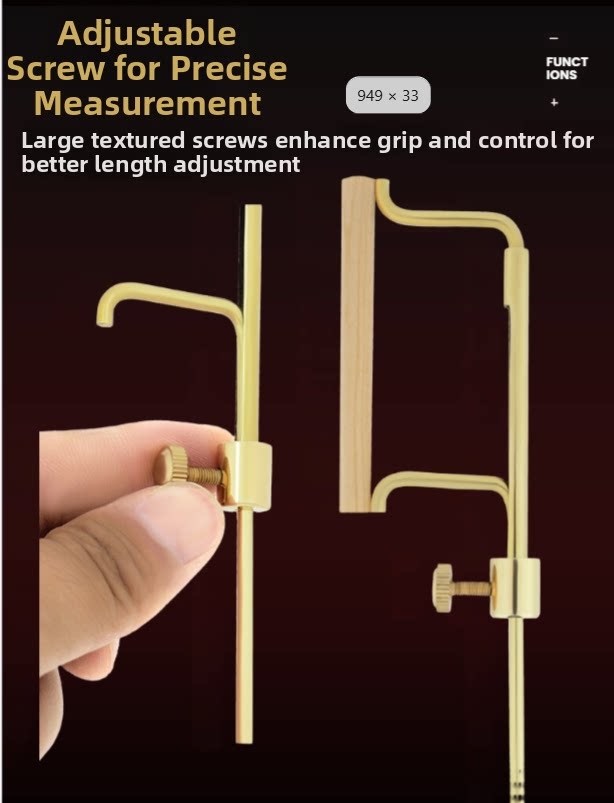
Solution: The measuring ruler lets you verify the post's distance from the bridge foot and confirm it's within standard placement range for your instrument size.
Problem: You work on multiple instrument sizes and need tools that fit each one properly.
Solution: This set offers separate violin, cello, and bass configurations — each sized for the specific f-hole dimensions and interior clearance of that instrument.
🎻 Instrument Compatibility
Works With:
- ✔ Violin (all standard sizes)
- ✔ Cello
- ✔ Double Bass / Upright Bass
Select the correct instrument size when choosing your variant. Violin, cello, and bass tools are not interchangeable due to differences in f-hole size and interior dimensions.
📋 Key Features
- 15 configurations: individual setter, clip, and ruler options plus complete 3-piece sets for violin, cello, and bass
- Brass construction on clip and setter models for durability and corrosion resistance
- Sound post setter (bow/spoon style) designed to reach through the f-hole and grip the post securely
- Sound post clip stabilizes the post during repositioning to prevent tipping
- Measuring ruler for verifying post position relative to bridge foot — standard luthier reference tool
- Instrument-specific sizing for violin, cello, and double bass
- Compact tools that store easily in a repair kit or instrument case
📖 How to Use
Step 1 — Select the correct tool set for your instrument (violin, cello, or bass). Using the wrong size risks damaging the f-hole edges or losing control of the post inside the body.
Step 2 — If the sound post has fallen, use the setter (bow or spoon style) to reach through the f-hole, engage the post, and guide it upright into approximate position near the treble foot of the bridge.
Step 3 — Use the sound post clip to hold the post steady while you make fine adjustments to its angle and position.
Step 4 — Use the measuring ruler to verify the post's distance from the bridge foot. Standard placement is typically just behind the treble foot — refer to your instrument's setup specifications for exact reference.
Step 5 — Once positioned correctly, carefully remove the tools through the f-hole. Check that the post is standing upright and making full contact with both the top and back plates before stringing up.
📐 Product Specifications
| Spec |
Details |
| Variants Available |
15 options — individual setter, clip, ruler, and 3-piece sets for violin, cello, and bass |
| Material |
Brass (clip and setter models); steel (ruler models) |
| Compatibility |
Violin / Cello / Double Bass (select correct size at checkout) |
| Package Includes |
1 tool or 3-piece set depending on variant selected |
| Use |
Sound post setting, stabilizing, and position measurement |
🎯 Perfect For
- 🎻 Luthiers and instrument repair technicians
- 🎻 Violin, cello, and bass players who handle their own maintenance
- 🎻 Music teachers maintaining student instruments
- 🎻 Orchestra program coordinators managing instrument fleets
- 🎻 Music stores offering in-house string instrument repair
- 🎻 Serious students learning instrument setup and repair
❓ FAQ
Q: Is this suitable for someone who has never set a sound post before?
A: Sound post work requires patience and care. These tools make the process more manageable, but we recommend researching the technique thoroughly or practicing on a student-grade instrument before working on a valued one. The measuring ruler is especially helpful for beginners to verify correct placement.
Q: Will these tools scratch the interior of my instrument?
A: The tools are designed to grip and maneuver the post without contacting the instrument's interior wood surfaces unnecessarily. Using the correct size for your instrument and working slowly reduces the risk of contact marks.
Q: Which variant should I choose for a 4/4 violin?
A: Select any of the [Violin] options. For a complete setup, the [Violin] Three-piece set of sound column tools includes the setter, clip, and ruler together.
Q: Are the violin and cello tools interchangeable?
A: No. Each size is designed for the specific f-hole dimensions and interior clearance of that instrument. Using the wrong size risks damaging the f-hole edges or losing control of the post.
Q: What is the difference between the setter (bow) and the setter (spoon)?
A: The bow-style setter uses a hook end to engage the post from the side, while the spoon-style uses a cupped end to support the post from below. Both are effective — choice often comes down to personal preference and the specific position of the fallen post.
Q: How do I know if the sound post is in the right position after setting it?
A: Use the measuring ruler to check the post's distance from the treble foot of the bridge. Standard placement is typically 2–3 mm behind the bridge foot for violin. Consult a luthier reference guide for cello and bass specifications.
Q: How durable are the brass tools with regular workshop use?
A: Brass resists corrosion and holds its shape well under normal use. These tools are built for repeated use in a repair setting. Avoid dropping or bending the setter tips, as precision at the working end is important for controlled post manipulation.