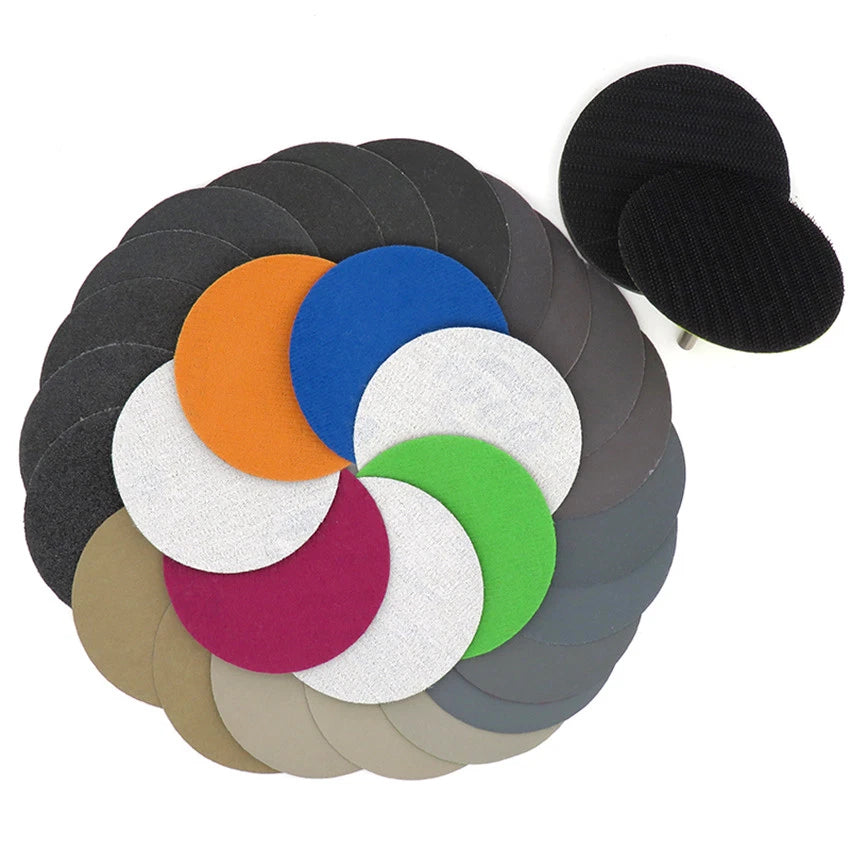
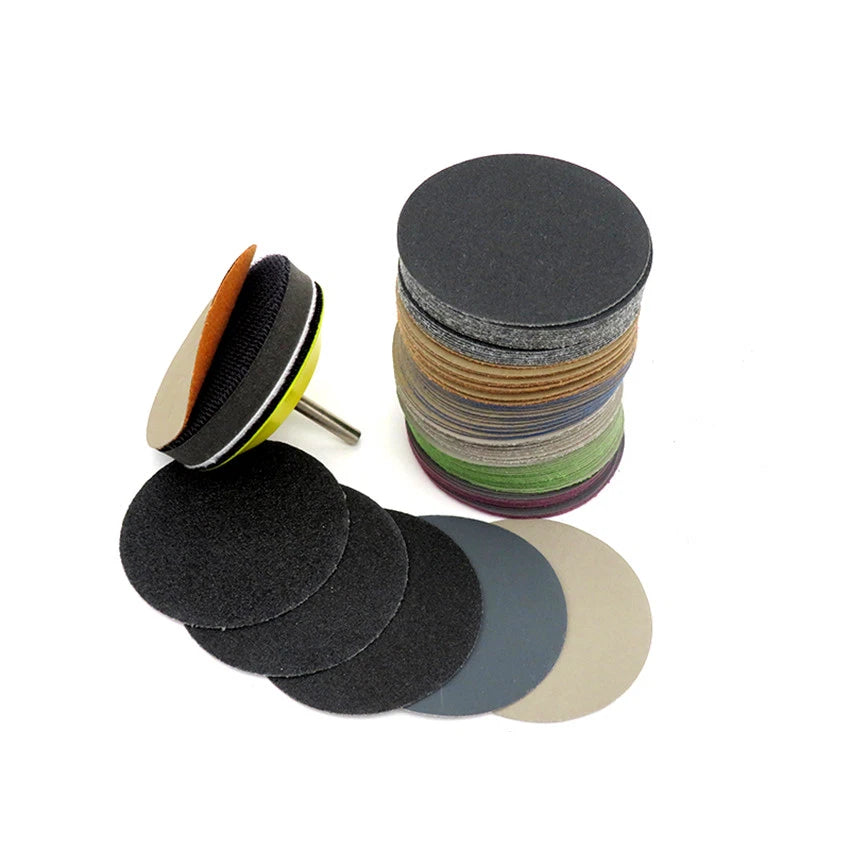
Wet & Dry Hook & Loop Sanding Discs – 50/75/100mm Silicon Carbide 60–10000 Grit
Whether you‘re stripping rust off a steel beam, correcting orange peel on a fresh clear coat, or chasing a mirror finish on stone, abrasive quality is the difference between a job done fast and a job done right. These silicon carbide hook-and-loop sanding discs are built on a tough, waterproof latex paper backing that laughs off water and solvents, letting you switch from aggressive dry stock removal to delicate wet polishing without swapping products. Available in three popular sizes (2"/50mm, 3"/75mm, 4"/100mm) and a colossal grit range from 60 all the way to 10000, this one series covers everything from coarse metal grinding to a nano-fine mirror polish on automotive surfaces, wood, plastics, and beyond. The hook-and-loop back grips securely to any velcro backing pad and makes grit changes a breeze, saving you time and money on the bench or in the shop.
🔧 Key Features of Silicon Carbide Sanding Discs
-
Premium Silicon Carbide Grit: Harder and sharper than aluminum oxide, this abrasive stays sharp and cuts fast on metal, paint, stone, glass, and composites. Ideal for both high-pressure grinding and fine finishing.
-
Wet & Dry Waterproof Backing: The latex paper base is fully sealed to withstand water, lubricants, and solvents without wrinkling or tearing—perfect for color sanding and body shop use.
-
Complete Grit Range (60–10000): Coarse (60–180) for stripping and shaping; medium (240–600) for surface prep; fine (800–1500) for scratches removal; ultra-fine (2000–10000) for mirror polishing.
-
Three Practical Diameters: Choose 50mm for detail sanders, 75mm for compact orbitals, or 100mm for larger backing pads—all fit standard hook-and-loop systems perfectly.
-
Strong Hook & Loop Attachment: Firmly grips the sander pad during high-speed rotation, yet peels off cleanly for instant grit changes. No slipping, no adhesive residue.
-
Durable Latex Paper Construction: The tough yet flexible latex-impregnated paper resists tearing, edge wear, and heat, giving you a longer disc life and consistent surface finish.
-
Broad Material Compatibility: Effective on wood, steel, aluminum, automotive paint, primer, plastic, composites, and even stone or ceramic—ideal for auto body repair, woodworking, and metalworking shops.
-
Versatile Tool Compatibility: Works with random orbital sanders, detail sanders, air tools, rotary tools, and electric drills with hook-and-loop backing pads (pads sold separately).
📋 Specifications of Wet & Dry Sandpaper Pads
| Available Diameters |
2 inch (50mm), 3 inch (75mm), 4 inch (100mm) |
| Grit Range |
60, 80, 100, 120, 150, 180, 240, 320, 400, 600, 800, 1000, 1500, 2000, 2500, 3000, 4000, 5000, 7000, 10000 |
| Abrasive Material |
Silicon Carbide |
| Backing Material |
Latex Paper (Waterproof) |
| Attachment |
Hook & Loop (Velcro-style) |
| Application |
Wet and dry sanding, grinding, polishing, surface finishing |
| Compatible Tools |
Random orbital sanders, detail sanders, air tools, rotary tools, drills with hook pads |
| Suitable Materials |
Metal, wood, automotive paint, plastic, stone, composite, primer |
| Package |
Sold individually (select diameter and grit from dropdown) |
❓ Wet & Dry Silicon Carbide Disc FAQ – Answers You Need
- 1. Why choose silicon carbide over aluminum oxide for wet sanding?
- Silicon carbide grains are harder and sharper, which means they cut faster with less pressure. They are the preferred abrasive for wet sanding automotive clear coats, gelcoat, stone, and glass because they remain sharp even when saturated with water, and they produce a much finer, more consistent scratch pattern for polishing.
- 2. Can I use these larger discs on a palm sander or just by hand?
- They work with any 50mm, 75mm, or 100mm hook-and-loop backing pad. If you have a palm sander with a matching pad size, the disc will mount directly. You can also use them by hand, especially the finer grits, for spot sanding or finishing small areas.
- 3. How do I keep the grit number straight when I have multiple discs?
- The discs are not color-coded in this listing, so we recommend storing them in clearly marked bags or using a grit identification system (like a fine-tip marker on the back edge of the disc). You can also purchase separate grits in bulk and label each container for easy access.
- 4. Are the backing pads included with the discs?
- No, the listing is for the sanding discs only. If you need matching 50mm, 75mm, or 100mm hook-and-loop backing pads, they are available separately in our store. Simply search for the size you need or contact us for assistance.
- 5. Will the latex paper backing hold up to heavy pressure on metal?
- Absolutely. The latex-impregnated paper is specifically engineered to resist tearing and heat generated during aggressive metal grinding. It remains flexible enough to follow contours while being tough enough to endure the friction and pressure of stock removal.
- 6. What grit progression do you recommend for restoring old wood furniture?
- Start with 80 or 100 grit to remove old finish and level surfaces. Move to 120–180 grit for smoothing, then 240–320 grit for a furniture-grade surface. If you're applying a clear finish, follow up with 400–600 grit between coats. The fine grits above 1000 can be used for a final cutting of the clear coat before polishing.