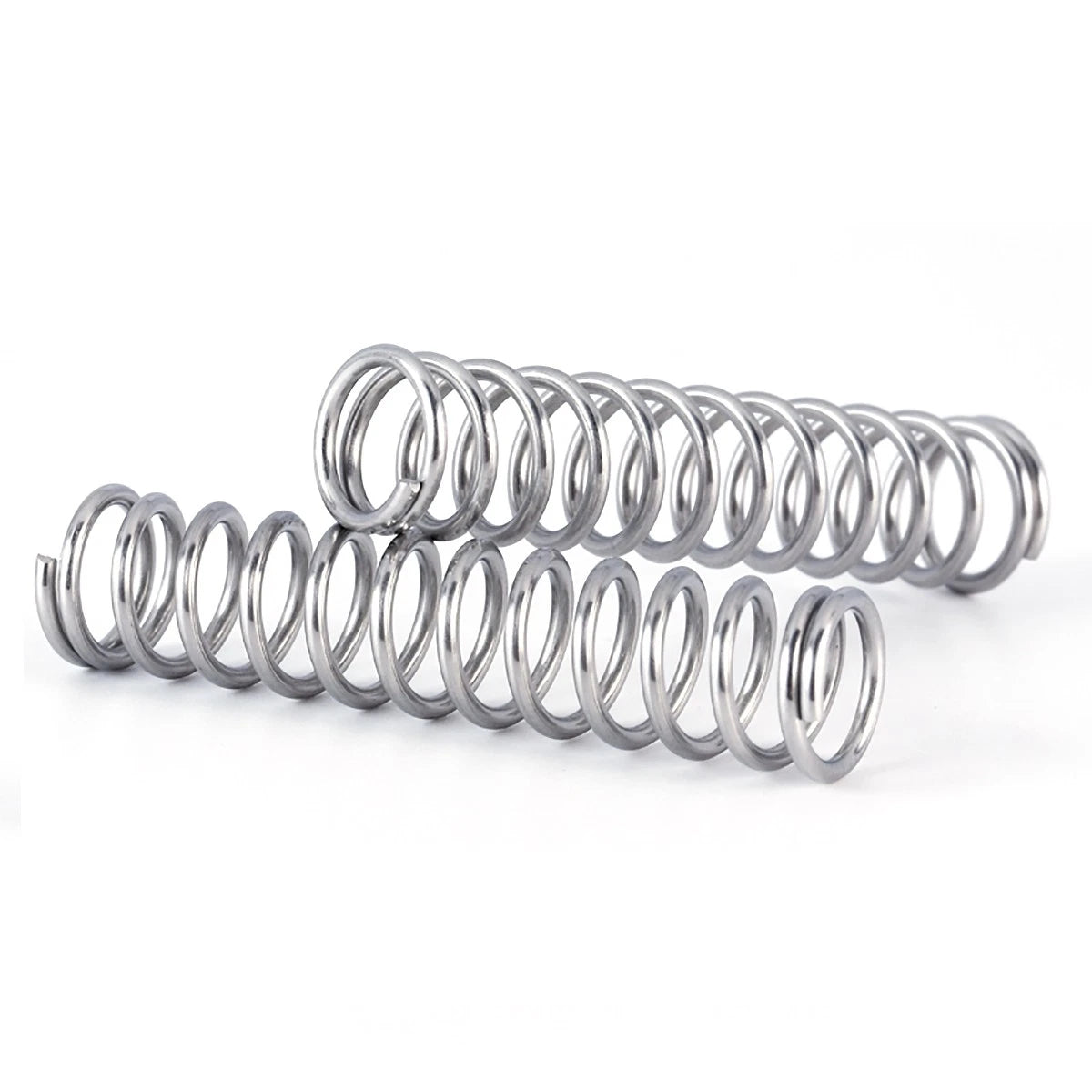

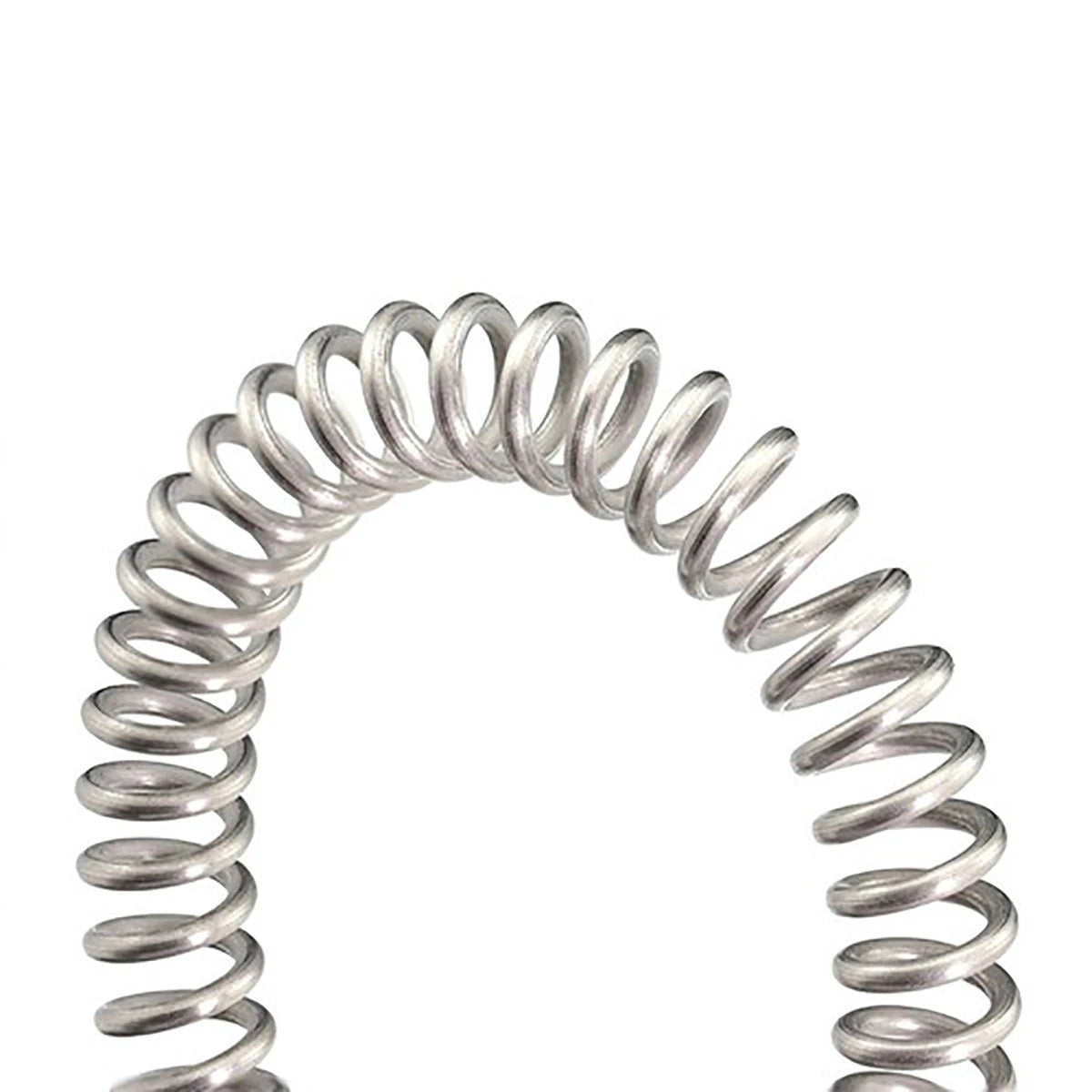
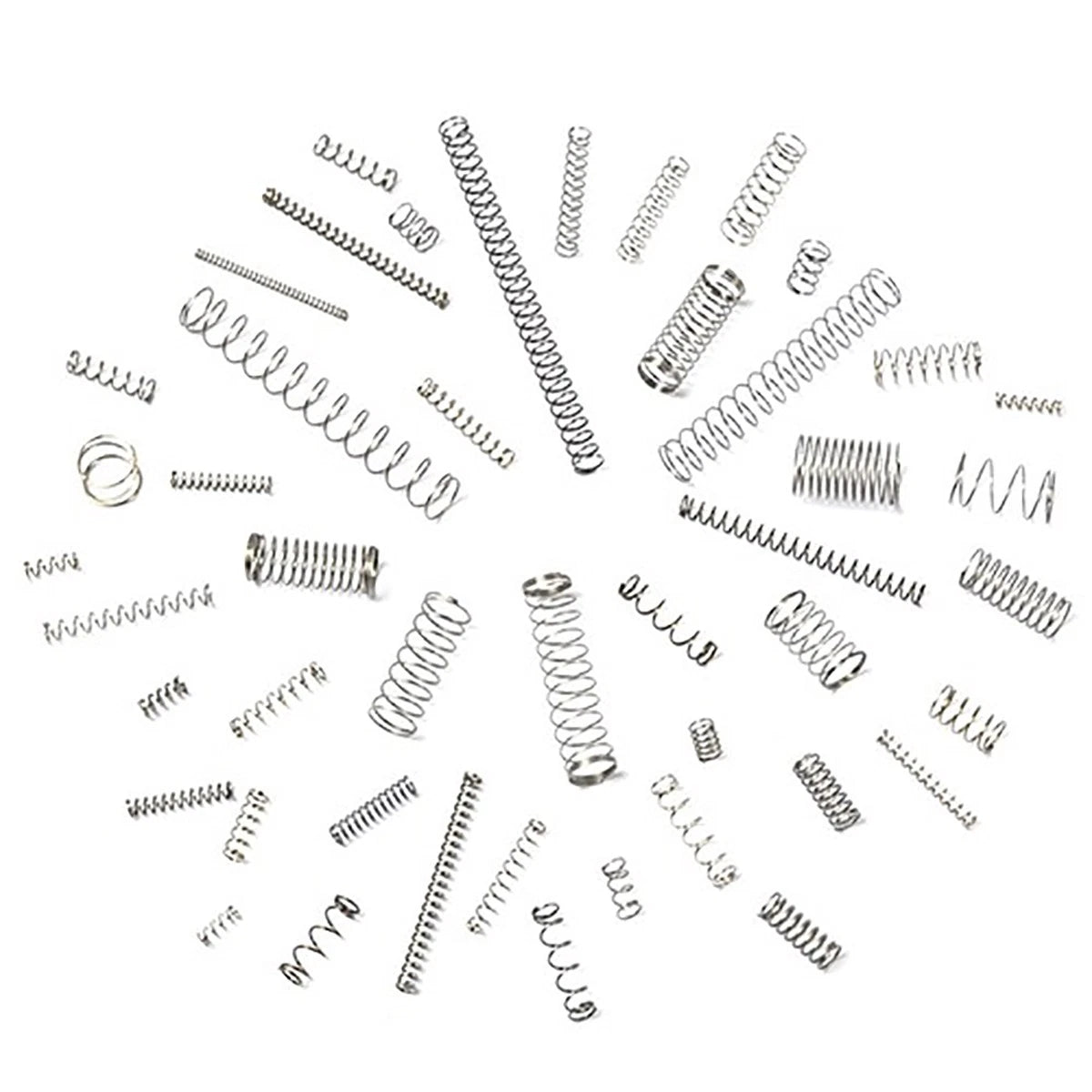
Wire Dia 0.5mm 0.6mm 0.7mm Compression Springs Stainless Small Pressure Spring

No reviews

Price:
Sale price$9.23 USD
Stock:
In stock (500 units), ready to be shipped

Payment & Security

Ach Direct Debit Amazon American Express Apple Pay Bancontact BLIK Diners Club Discover EPS Google Pay iDEAL Wero JCB Maestro Mastercard Multibanco MobilePay PayPal Przelewy24 Shop Pay Twint Union Pay USDC Visa

Your payment information is processed securely. We do not store credit card details nor have access to your credit card information.

Limited Offer — Spend More, Save More
Spend $55+
Save $5
Spend $100+
Save $10
Spend $200+
Save $25
HomeDIYer DIY Expert Support

DIY Expert Support

Get fitment advice & recommendations

Mon–Fri  8:30 AM – 8:00 PM
24-Hour Fast Ship
Arrives in 3–14 Days
Worldwide Shipping
30-Day Returns
1 tree planted with every purchase

Description

Stainless Steel Compression Springs — Precision Small-Diameter Pressure Springs for DIY & Mechanical Projects

When a standard spring simply won't fit, makers, engineers, and hobbyists need a reliable source for small-diameter compression springs that deliver consistent force without taking up precious space. Whether you're building a custom PCB fixture, repairing a precision instrument, or prototyping a miniature mechanism, finding the right wire diameter, outer diameter, and free length in one place is rarely easy.

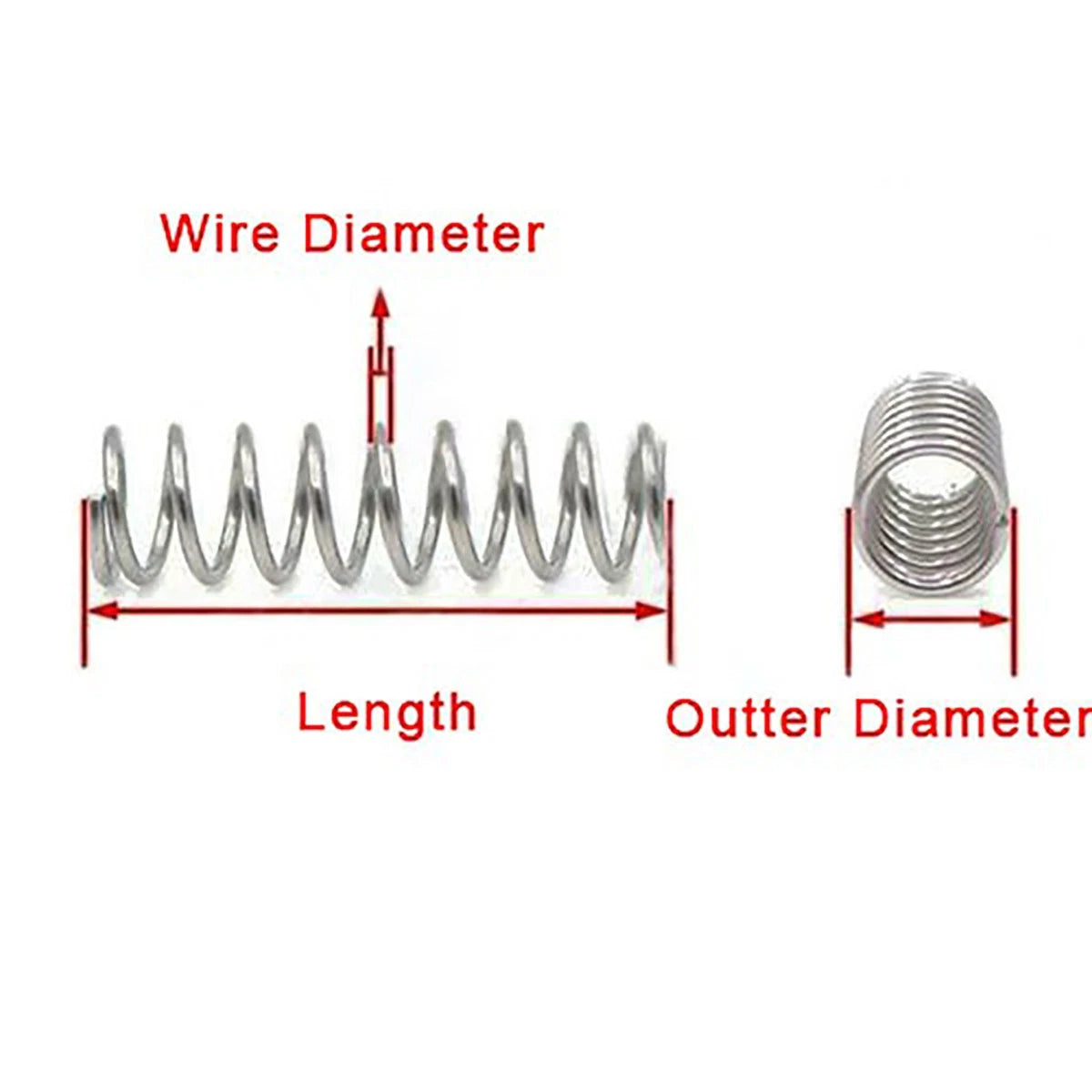
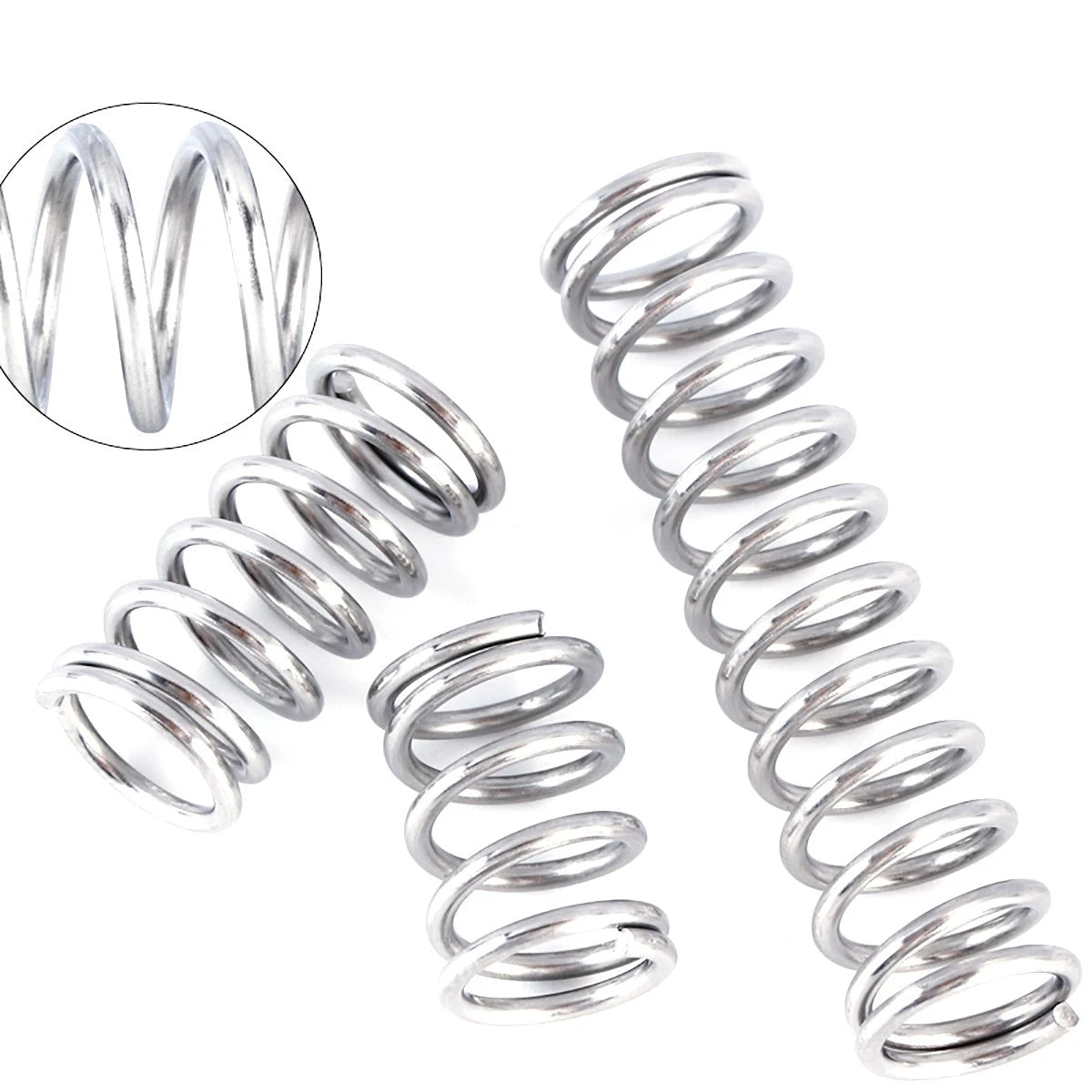
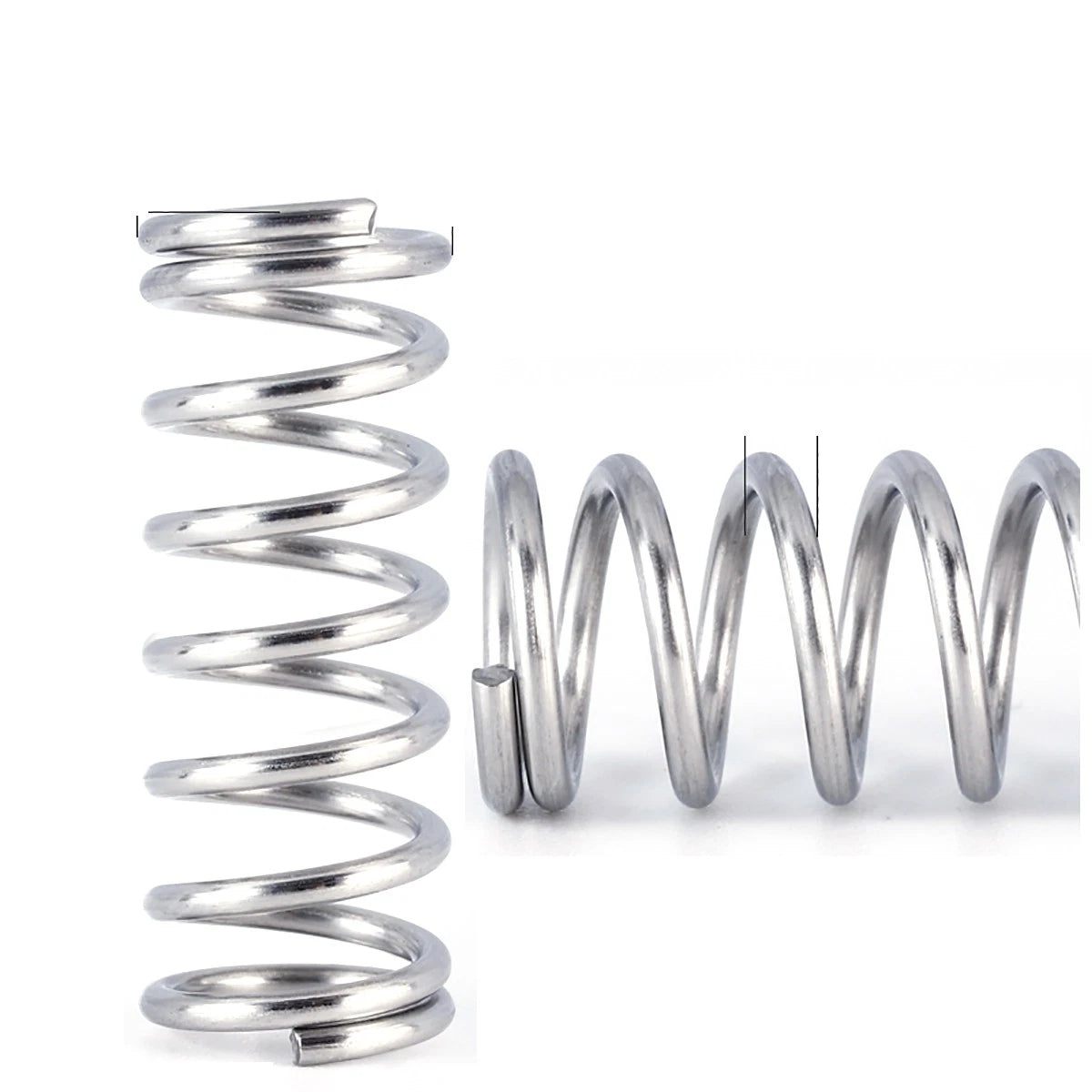
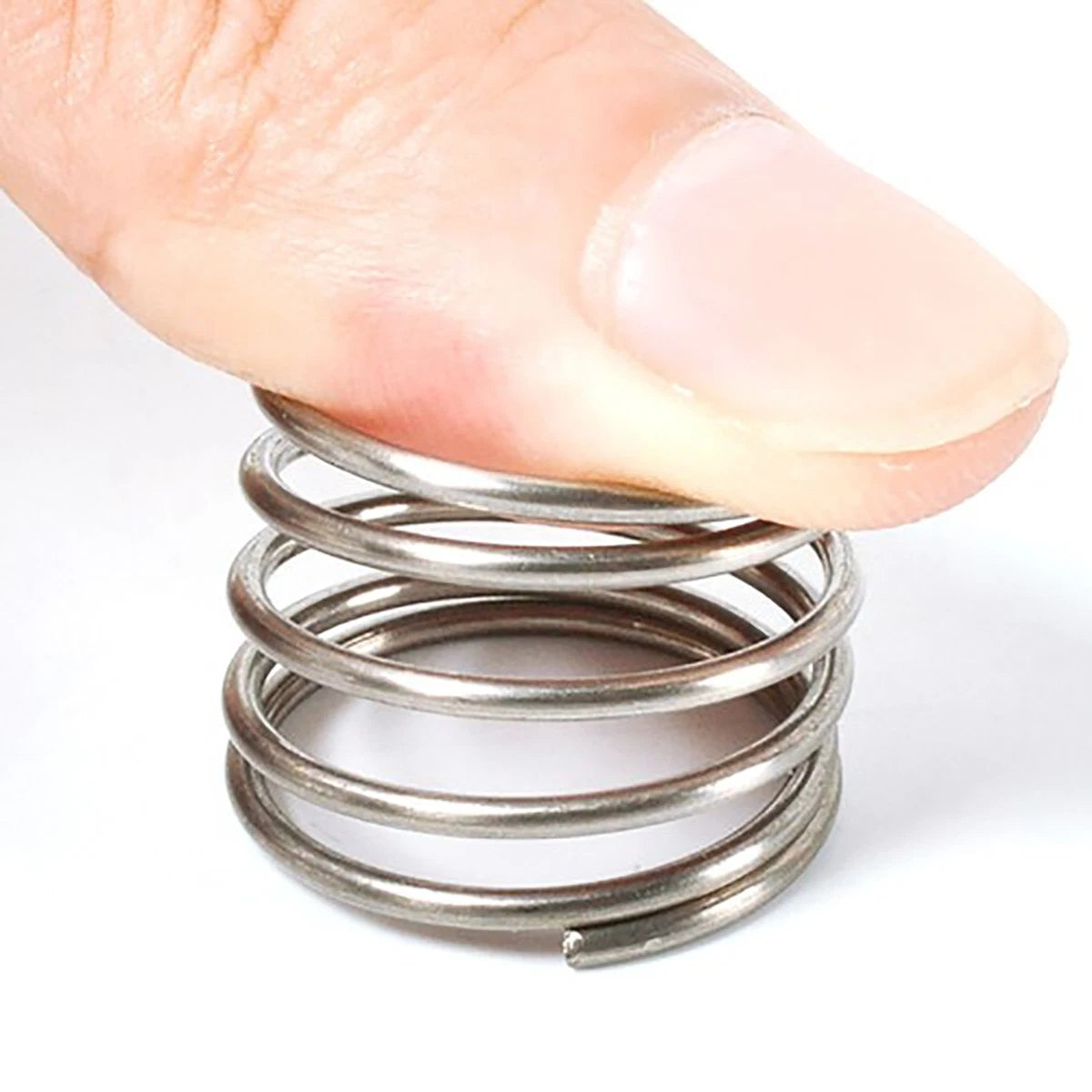
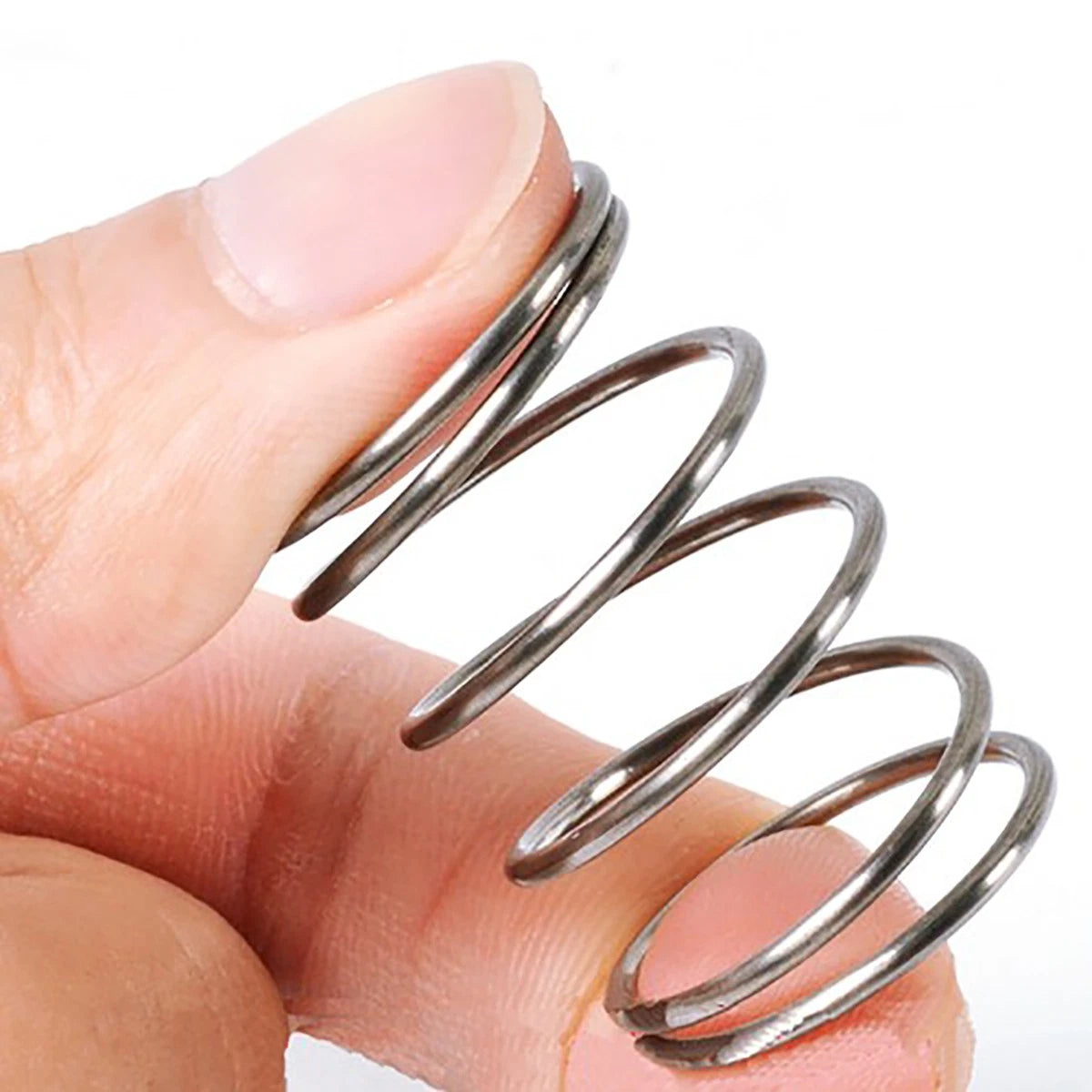
These compression springs are wound from stainless steel wire in three wire diameters — 0.5 mm (~0.020 in), 0.6 mm (~0.024 in), and 0.7 mm (~0.028 in) — with outer diameters ranging from approximately 3 mm to 12 mm (~0.12–0.47 in) and free lengths from 5 mm to 305 mm (~0.20–12.0 in). Each spring features closed and ground ends for stable seating and consistent load distribution across the full compression range.

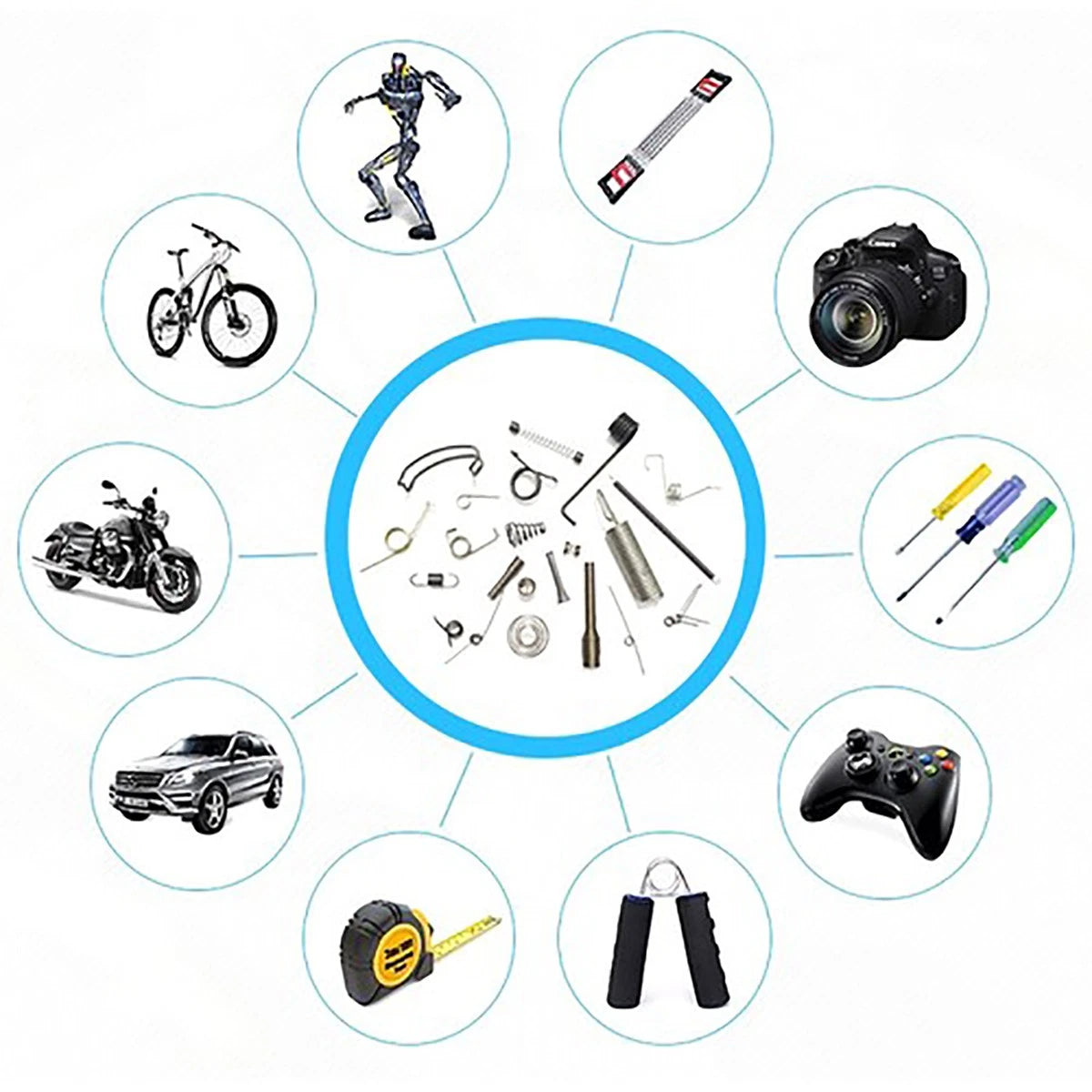
Typical use cases include small compression springs for electronics enclosures and switch mechanisms, miniature pressure springs for pen clickers and retractable tools, stainless steel springs for corrosion-prone environments such as outdoor sensors and marine instruments, and precision coil springs for 3D printer extruder assemblies and CNC fixtures.

⚙️ Compatibility: Suitable for applications requiring wire dia 0.5 mm, 0.6 mm, or 0.7 mm springs. Select the correct outer diameter and free length to match your housing bore and travel requirements. See variant options for full size combinations.

✅ Key Features of These Stainless Steel Compression Springs

🔩 Three Wire Diameter Options

Available in 0.5 mm, 0.6 mm, and 0.7 mm wire diameters to match a wide range of load and space requirements in compact mechanisms.

📏 Wide Size Matrix

Outer diameters from ~3 mm to 12 mm and free lengths from 5 mm to 305 mm give you precise control over spring rate and travel without custom fabrication.

🛡️ Stainless Steel Construction

Wound from stainless steel wire for resistance to oxidation and mild corrosion, making these springs suitable for humid, outdoor, and light chemical environments.

⚖️ Closed & Ground Ends

Closed and ground end coils provide a flat, stable seating surface that reduces lateral deflection and ensures repeatable load characteristics across cycles.

📦 Flexible Pack Quantities

Order in packs of 1, 2, 5, or 10 pieces depending on your project scale — ideal for prototyping single units or stocking a small workshop.

🔬 Precision-Wound Coils

Consistent coil pitch and wire diameter tolerance across the spring body ensure predictable deflection behavior for measurement, sensing, and actuation tasks.

📐 Technical Specifications — Compression Springs

Material Stainless Steel
Wire Diameter 0.5 mm / 0.6 mm / 0.7 mm (See variant options)
Outer Diameter (OD) 3 mm – 12 mm (See variant options)
Free Length 5 mm – 305 mm (See variant options)
End Type Closed and Ground
Spring Type Compression
Coil Direction Right-hand (typical)
Surface Finish Natural stainless (uncoated)
Pack Quantity 1 / 2 / 5 / 10 pcs (See variant options)
Weight See variant options

❓ Frequently Asked Questions

How do I choose the right wire diameter for my application?

Wire diameter directly affects spring stiffness (spring rate). A thicker wire (0.7 mm) produces a stiffer spring that resists compression more strongly, while a thinner wire (0.5 mm) yields a softer spring with lower load capacity. Match the wire diameter to your required load and deflection: if you need a gentle return force for a light switch or pen mechanism, start with 0.5 mm; for moderate clamping or latching forces, try 0.6 mm or 0.7 mm.

What is the difference between outer diameter and inner diameter for these springs?

The outer diameter (OD) listed in the variant name is the overall coil diameter measured from the outside of the wire on one side to the outside of the wire on the opposite side. The inner diameter (ID) is approximately OD minus twice the wire diameter. For example, a 0.6 mm wire / 6 mm OD spring has an ID of roughly 4.8 mm. Use the OD to check clearance inside a bore, and the ID to check clearance over a guide rod.

Are these springs strong enough for repeated cycling without fatigue failure?

Stainless steel compression springs of this size are designed for light-to-moderate duty cycling. For best fatigue life, avoid compressing the spring beyond its solid height (coil bind) and keep operating deflection within 70–80% of the available travel. Exact cycle life depends on load magnitude, deflection range, and operating environment. For high-cycle industrial applications, consult a spring engineer for a fatigue analysis.

Will these springs rust or corrode in outdoor or humid environments?

These springs are wound from stainless steel, which provides good resistance to atmospheric oxidation and mild moisture exposure. They are suitable for outdoor sensors, marine instrument housings, and humid workshop environments. However, stainless steel is not fully immune to corrosion in highly aggressive chemical environments (e.g., chloride-rich saltwater immersion or strong acids). For such conditions, consider additional protective coatings or alternative alloys.

How do I select the correct free length for my design?

The free length is the uncompressed length of the spring. To select the right free length, first determine the installed (pre-load) length and the fully compressed (working) length your design requires. The free length should be longer than the installed length so the spring exerts a pre-load force, and longer than the solid height (number of coils × wire diameter) to allow travel. A common rule of thumb: free length ≈ installed length + required travel + a small safety margin.

Can I use these springs in 3D printer extruders or CNC fixtures?

Yes. Small stainless steel compression springs are widely used in 3D printer extruder idler arms, bed-leveling assemblies, and CNC workholding fixtures. Select a wire diameter and OD that fit your existing spring pocket or guide rod, and choose a free length that provides the pre-load force your design requires. The 0.5–0.7 mm wire diameter range is particularly suited to compact extruder and sensor spring seats.

How many pieces do I receive per order?

Pack quantity is a selectable variant option. Depending on the size selected, packs of 1, 2, 5, or 10 pieces are available. Larger packs offer a lower per-piece cost and are useful for stocking a workshop or building multiple units of the same design.

🛒 Select your size (Wire Dia × Outer Dia × Length) and quantity above, then add to cart.

You may also like

Recently viewed