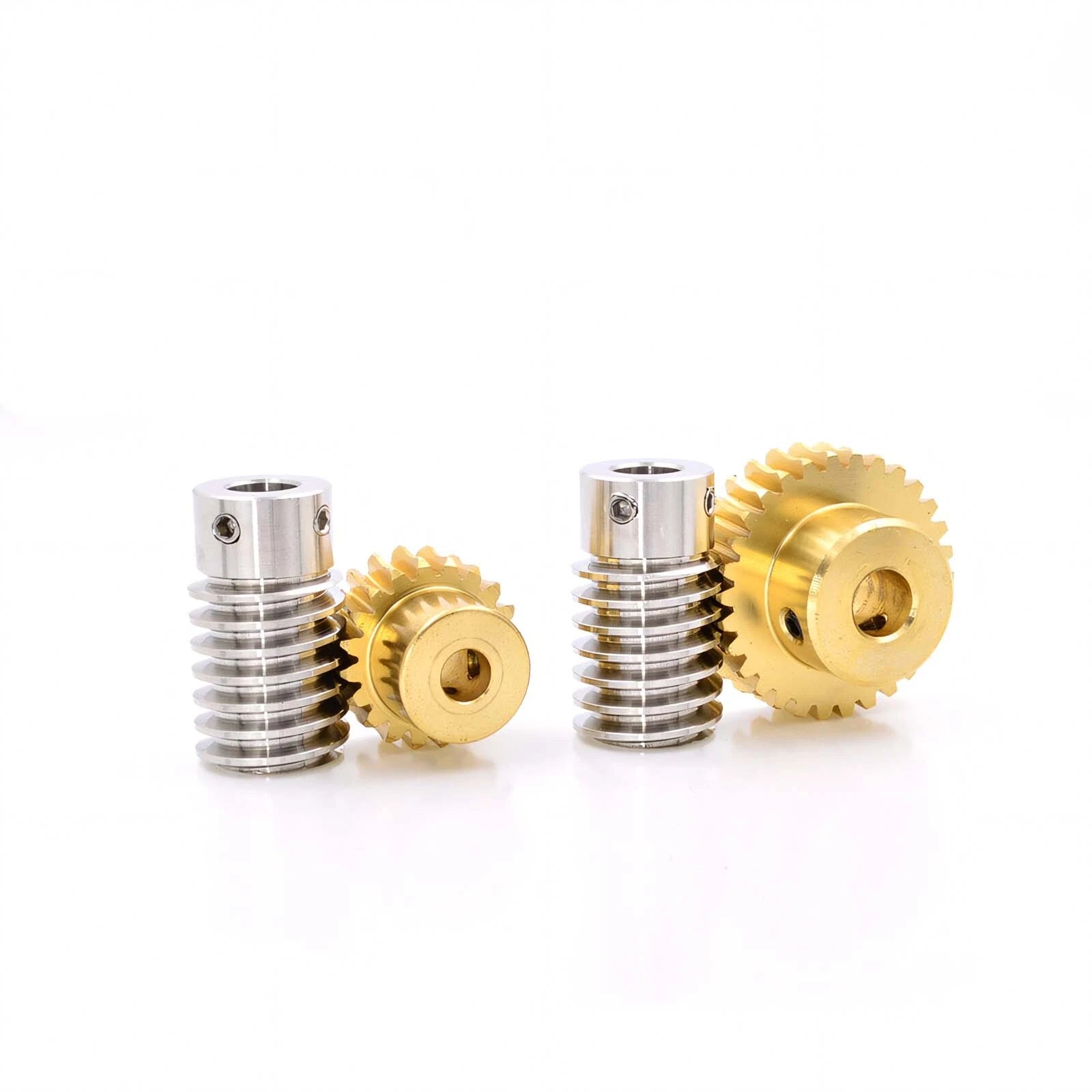
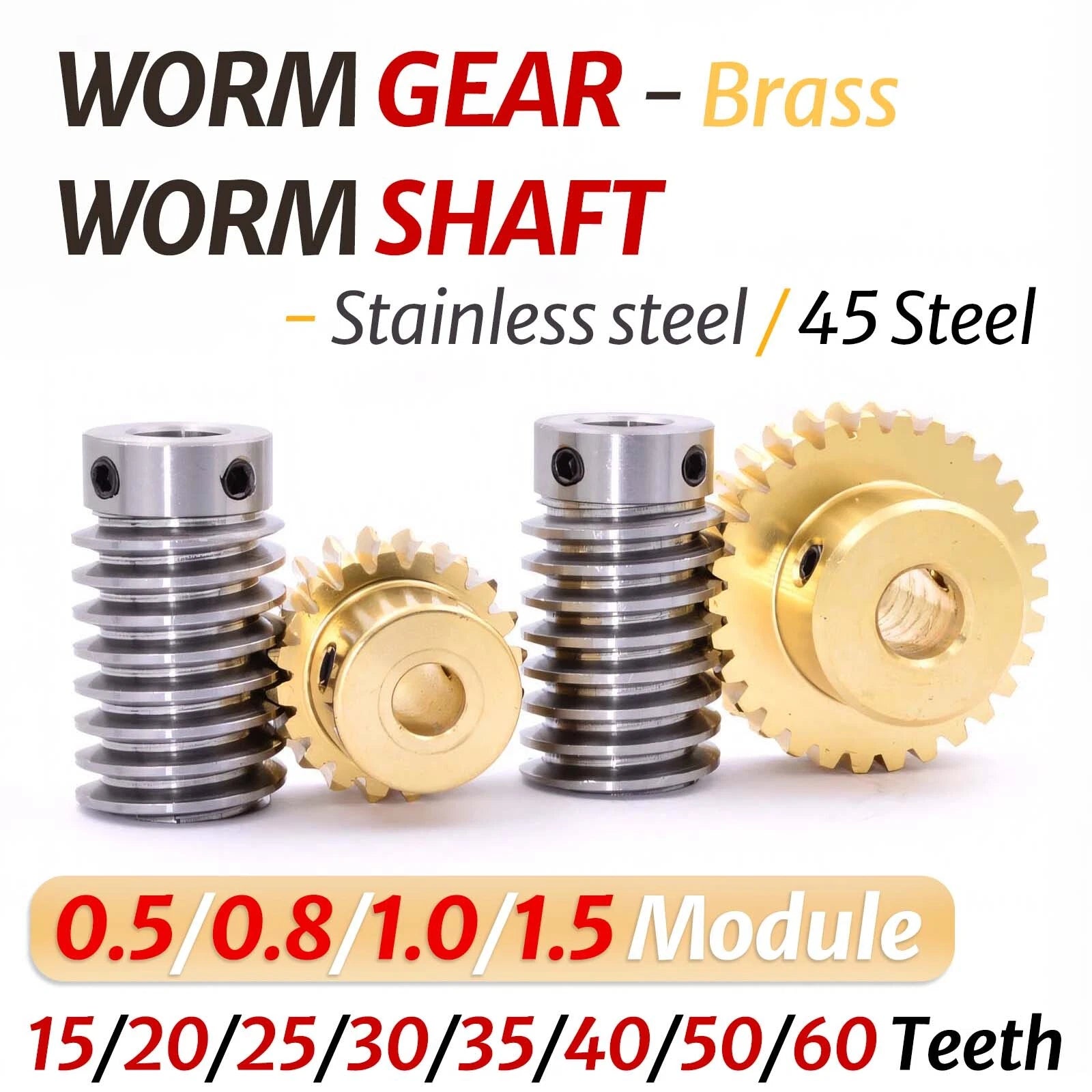
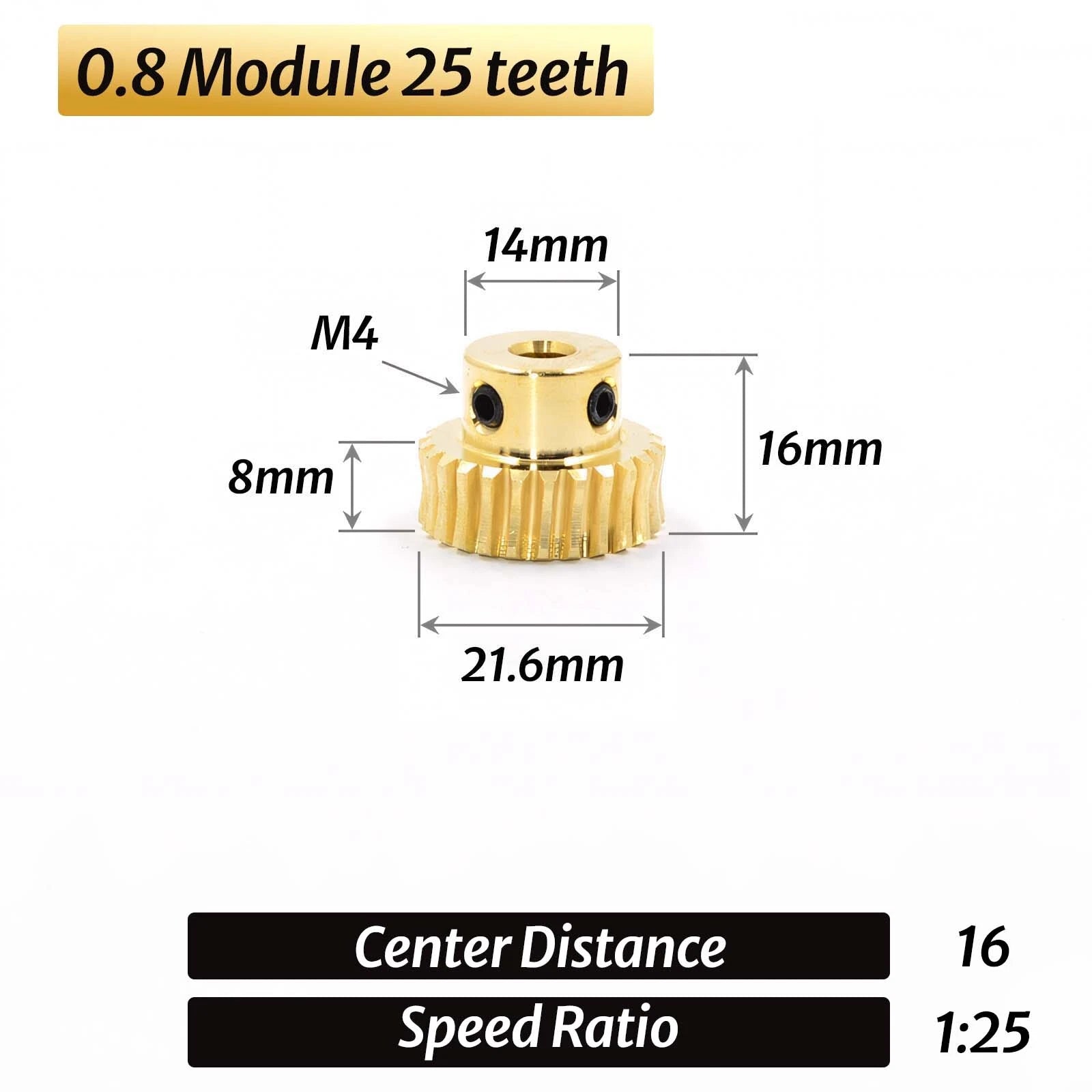
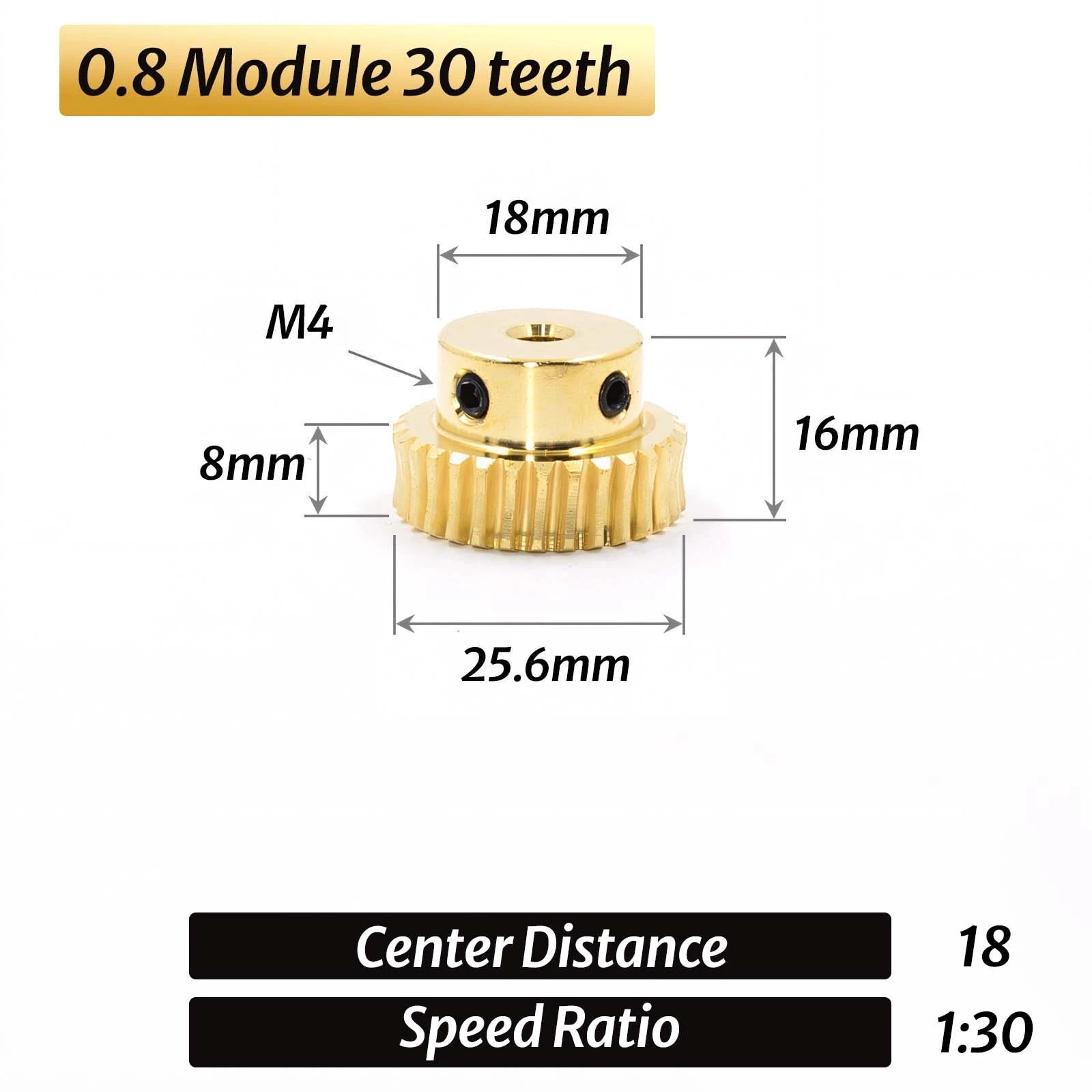
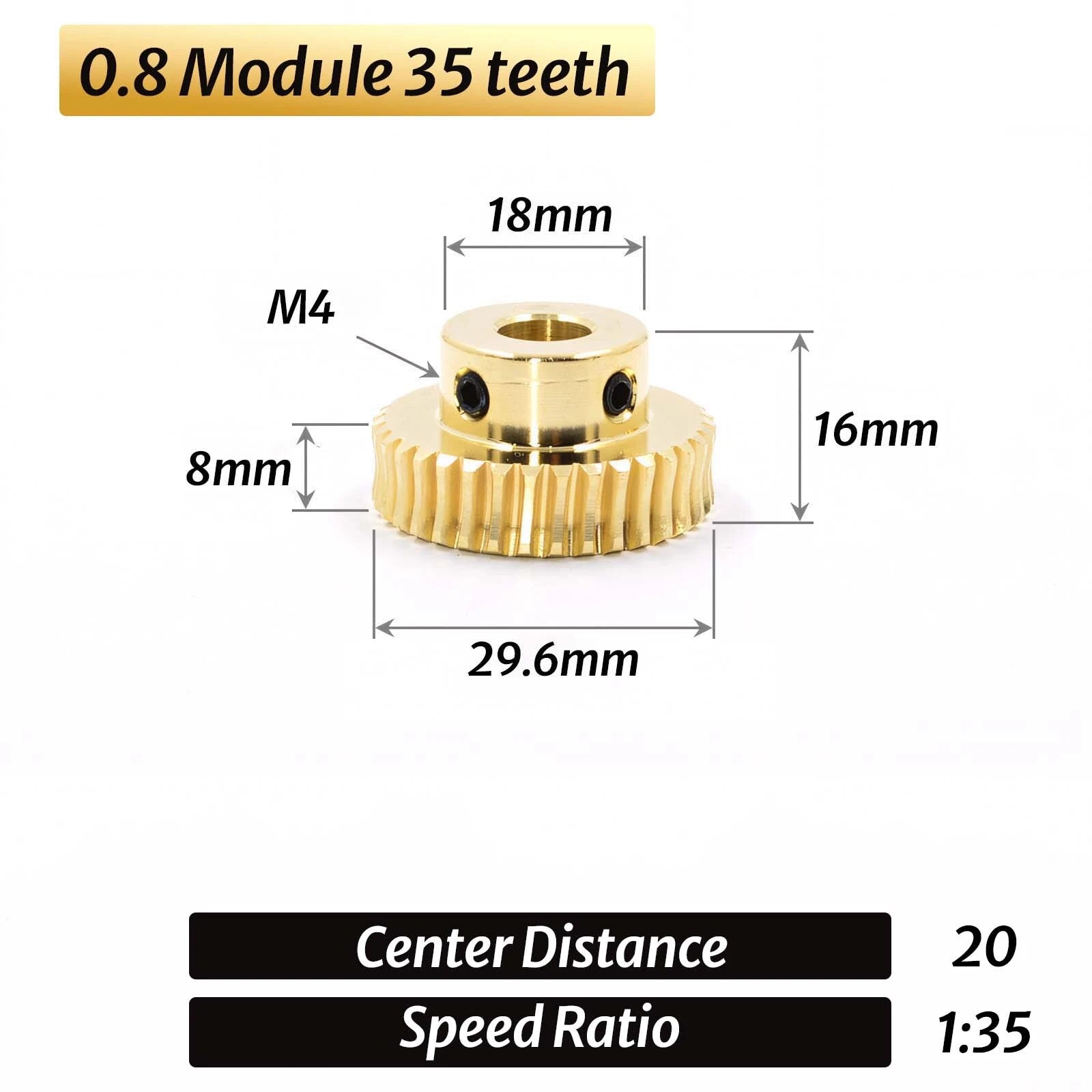
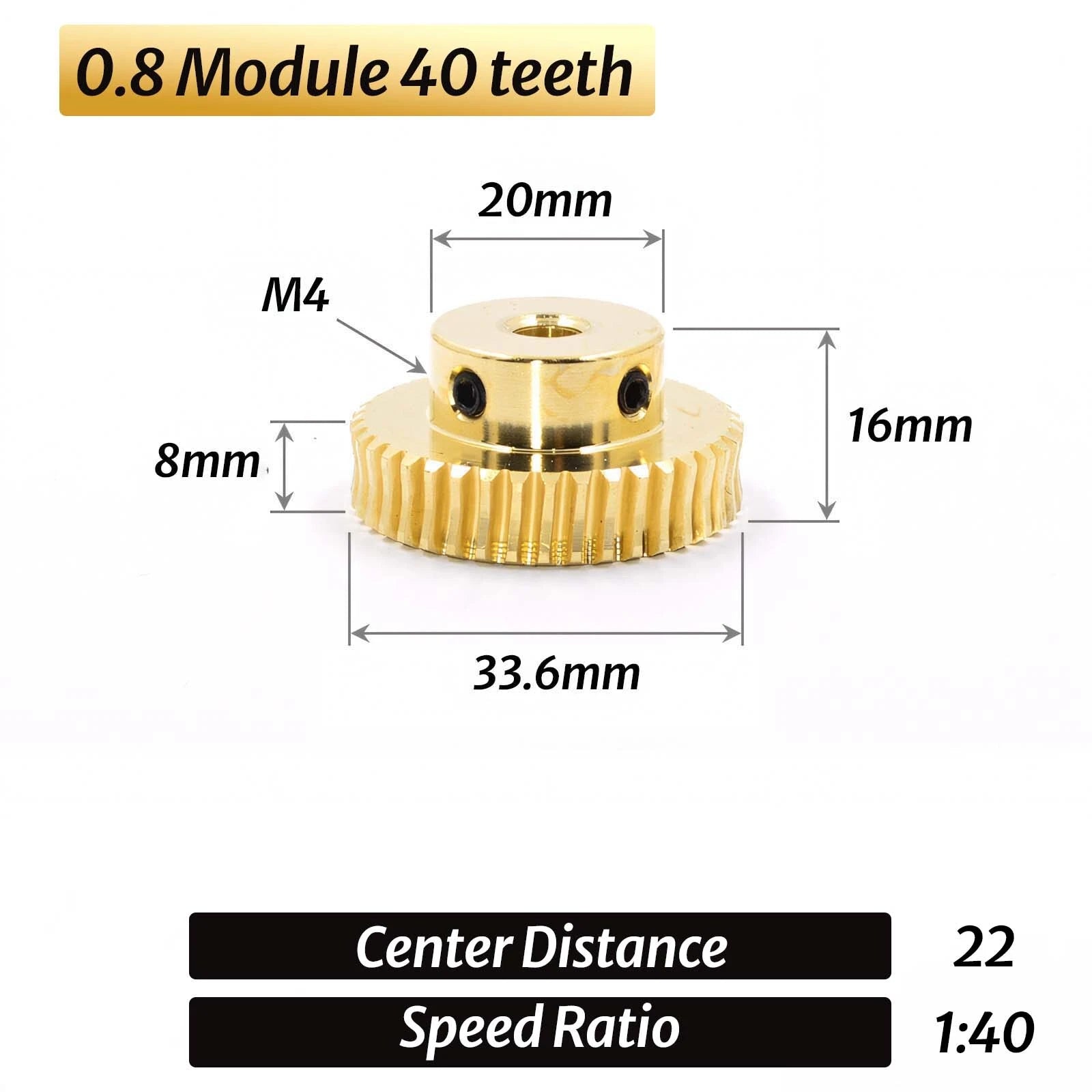
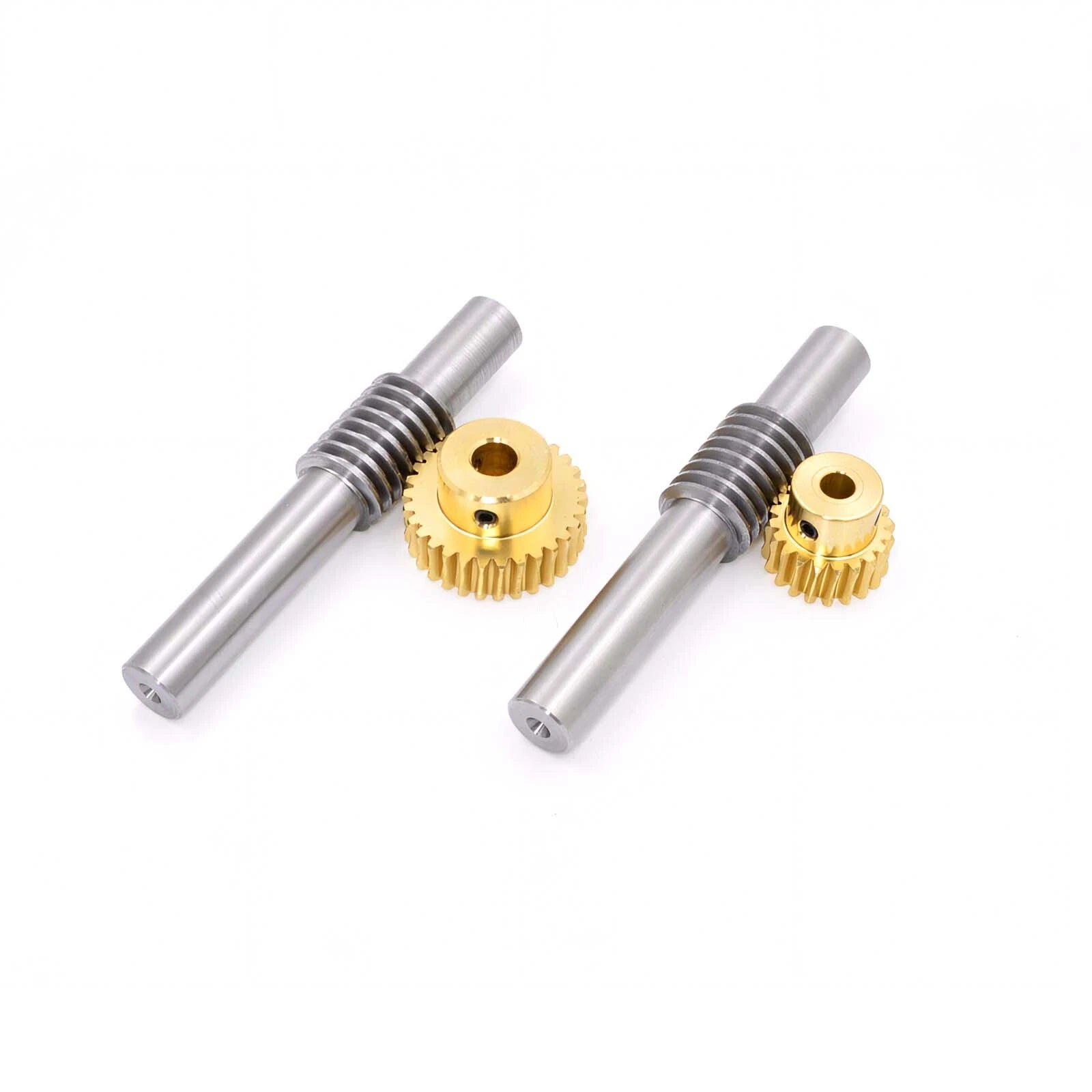
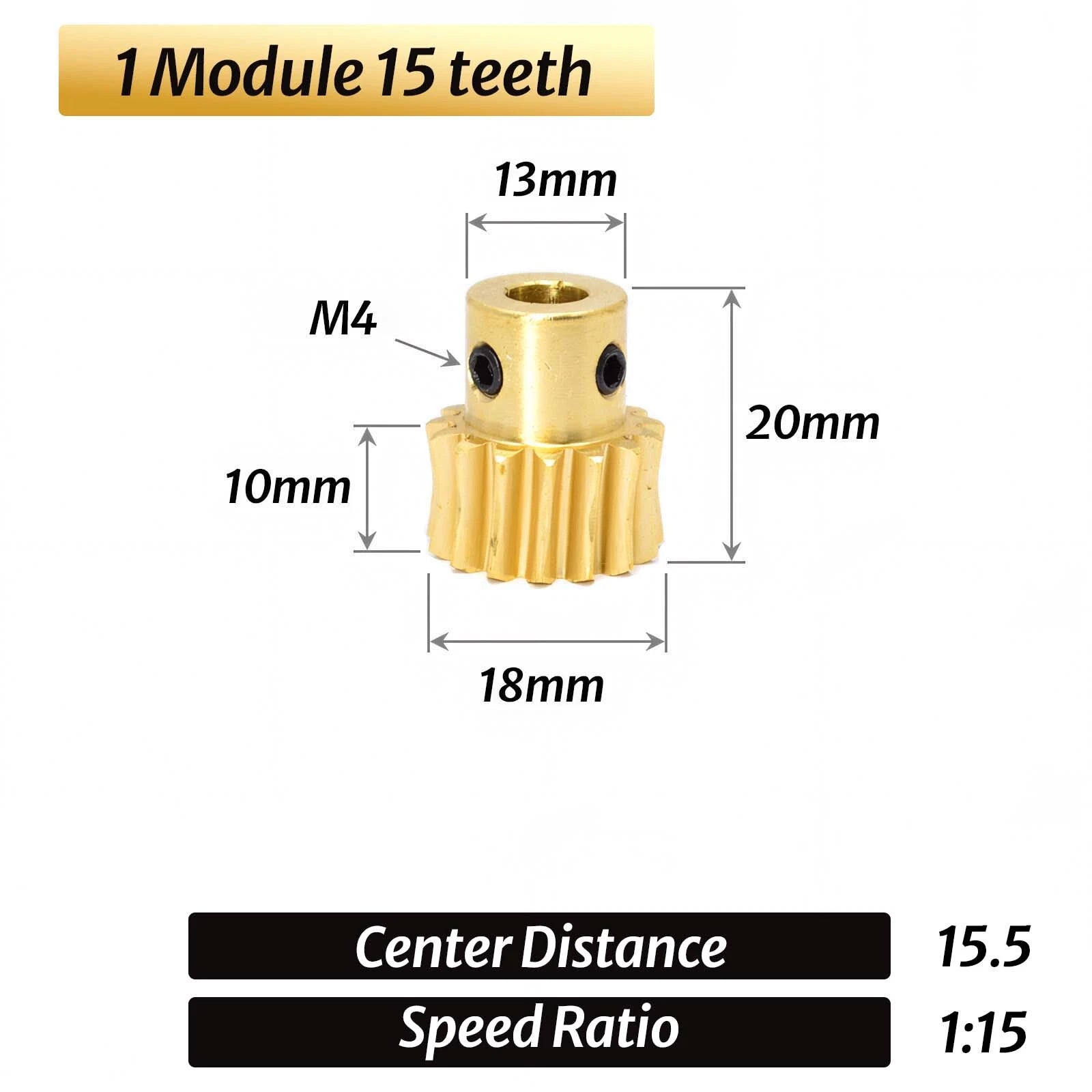
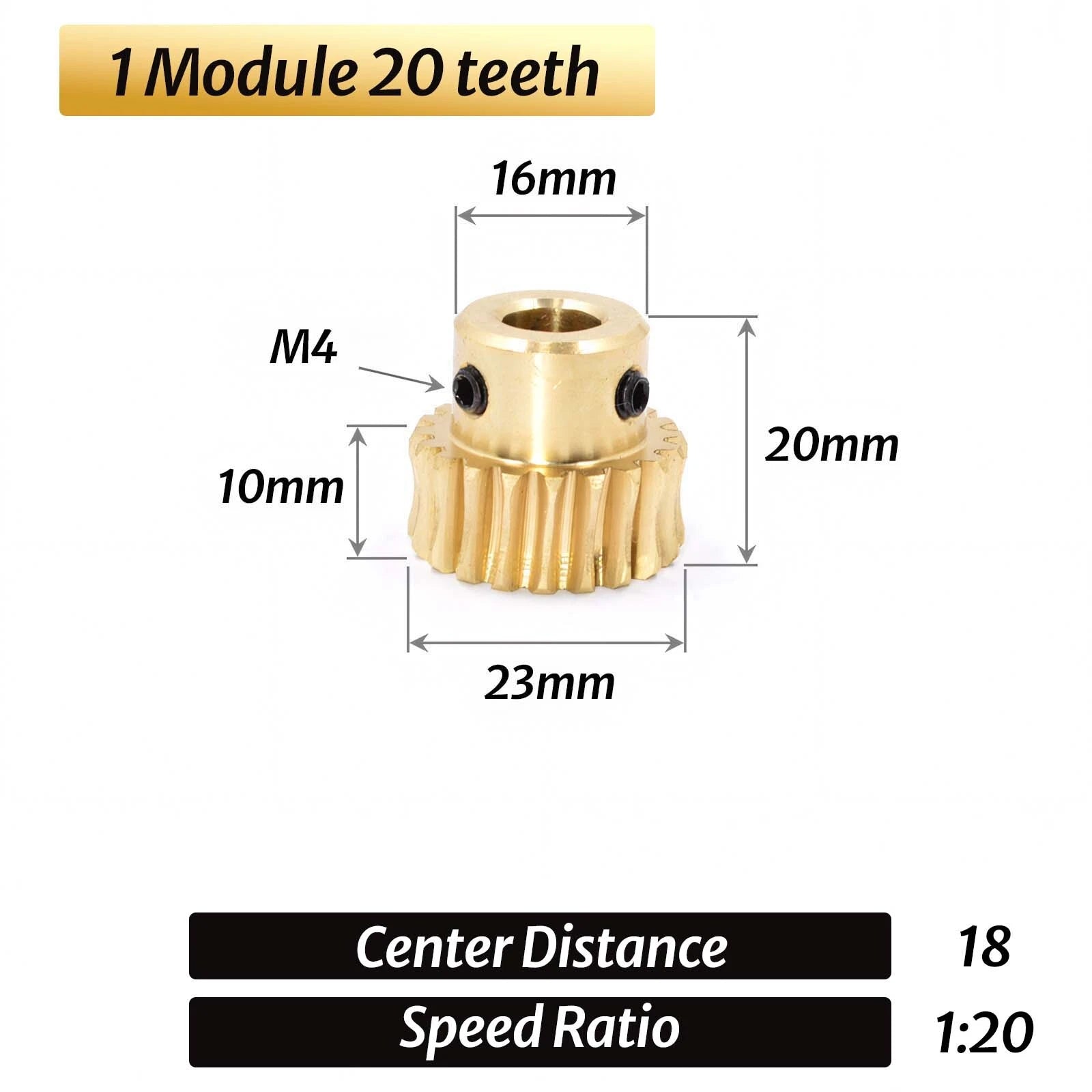
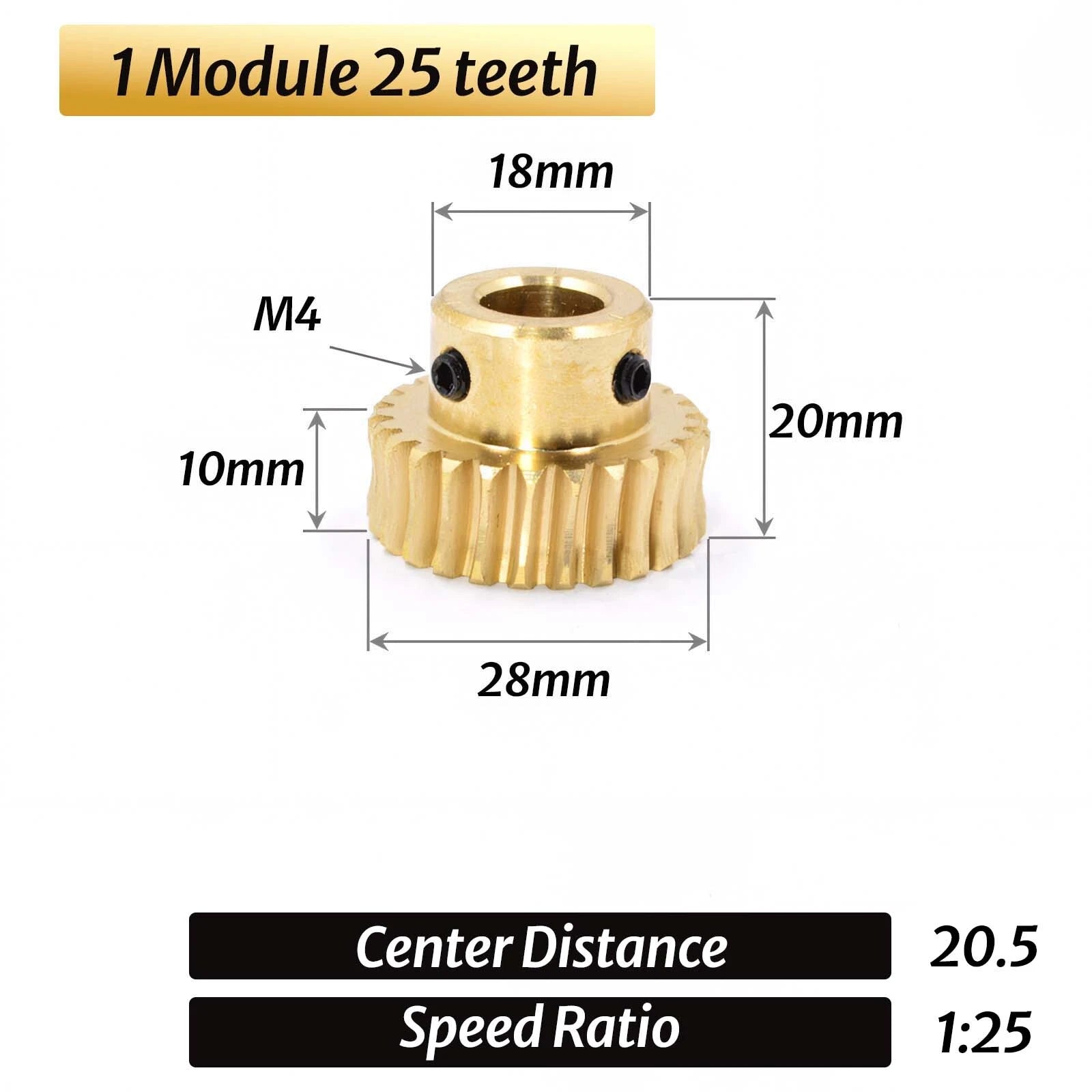
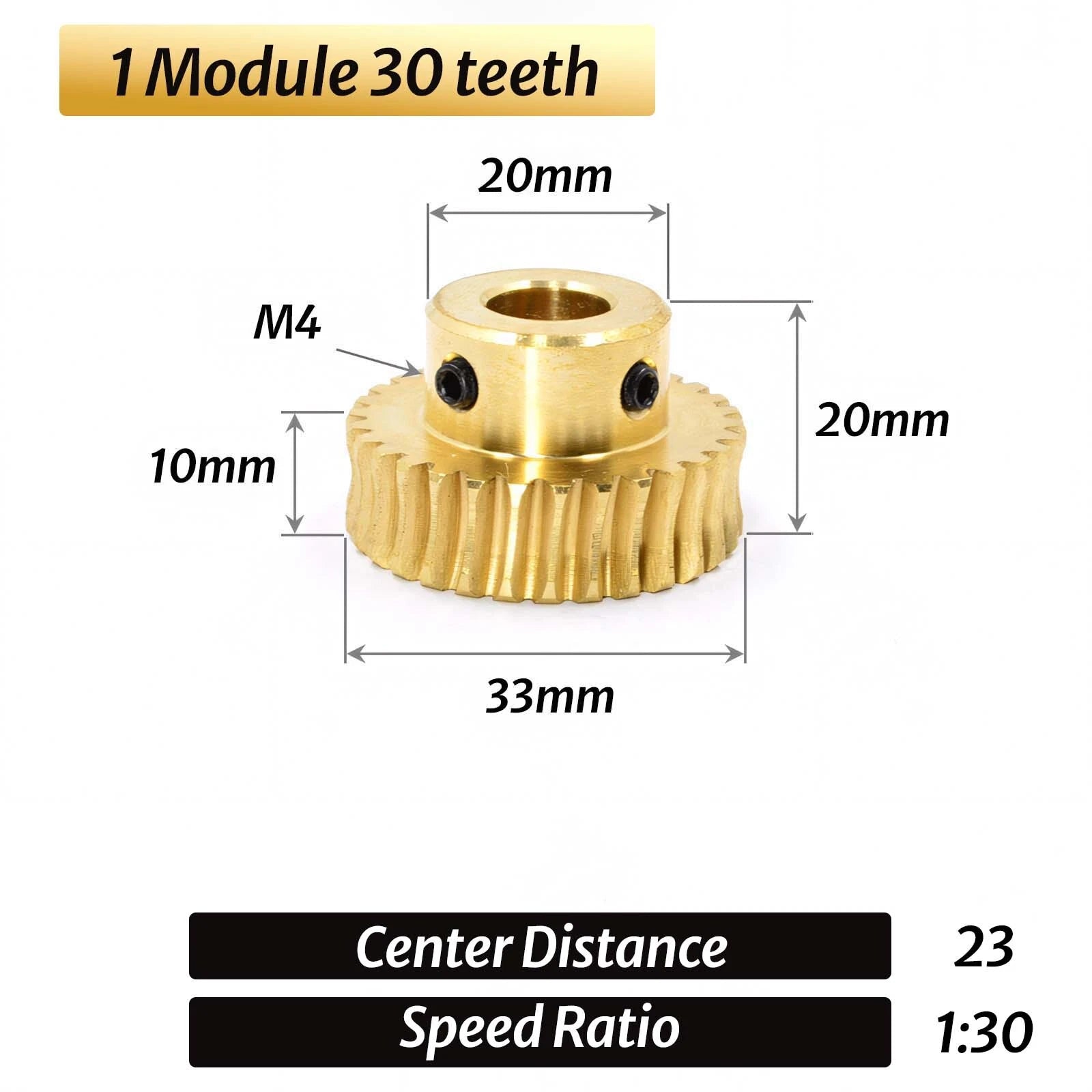
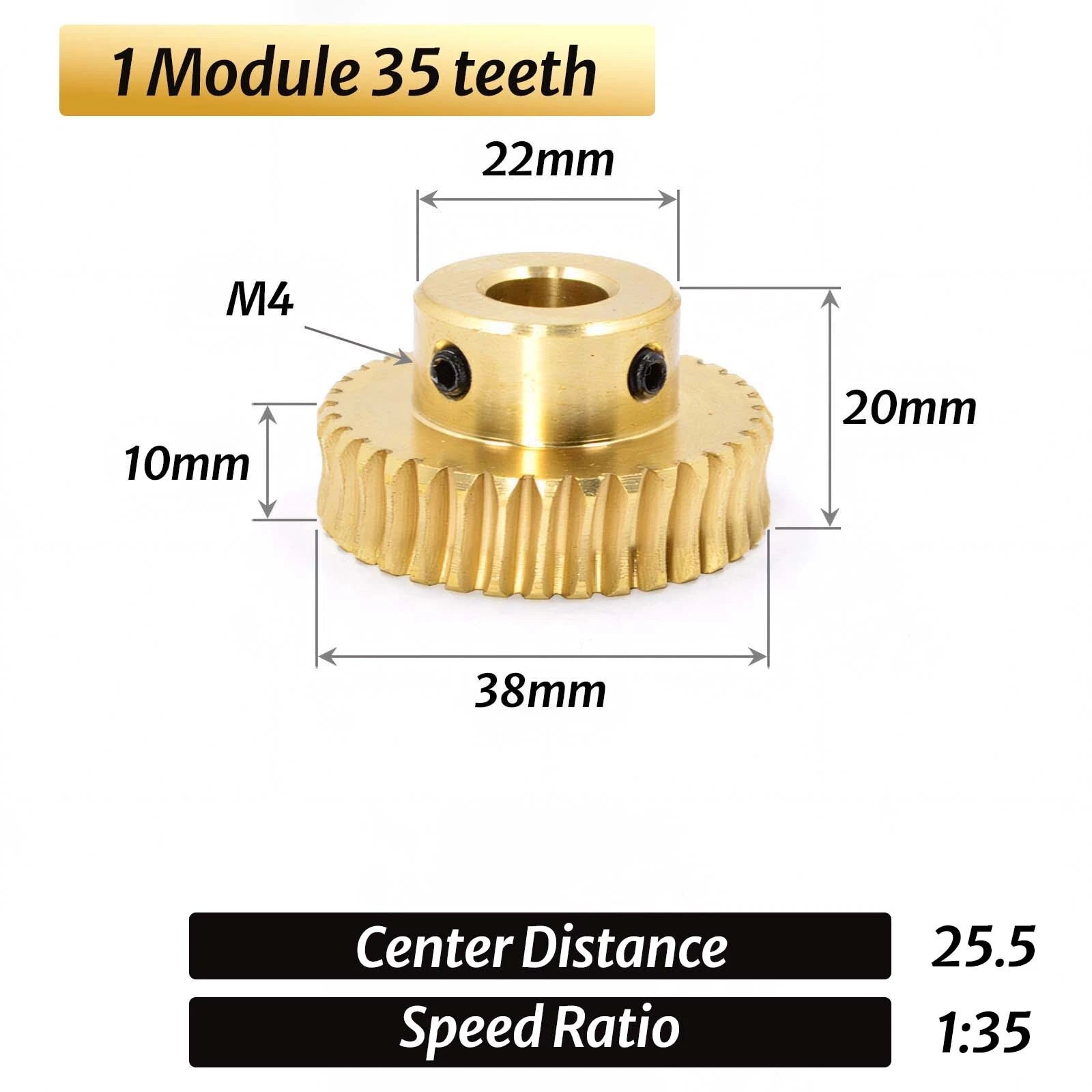
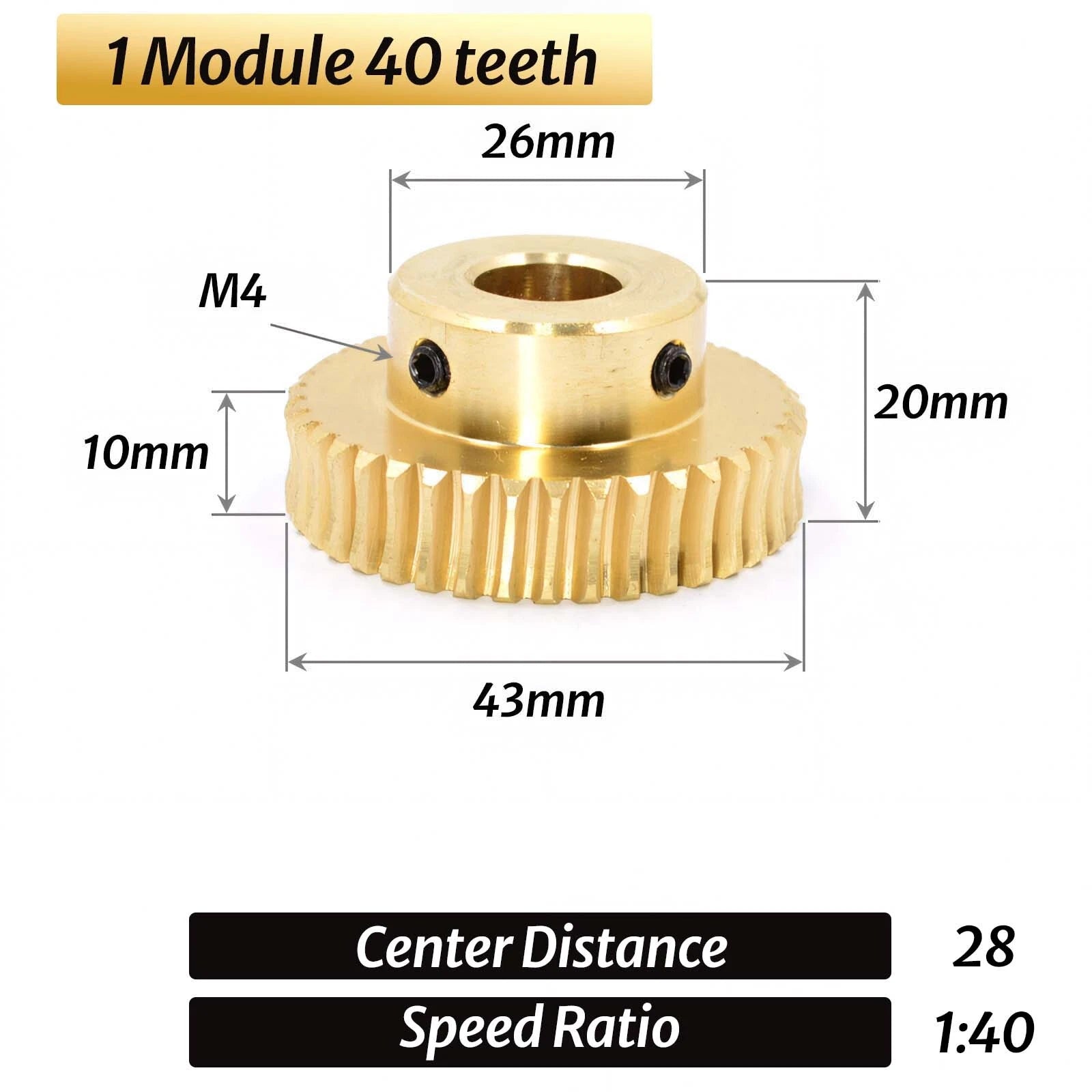
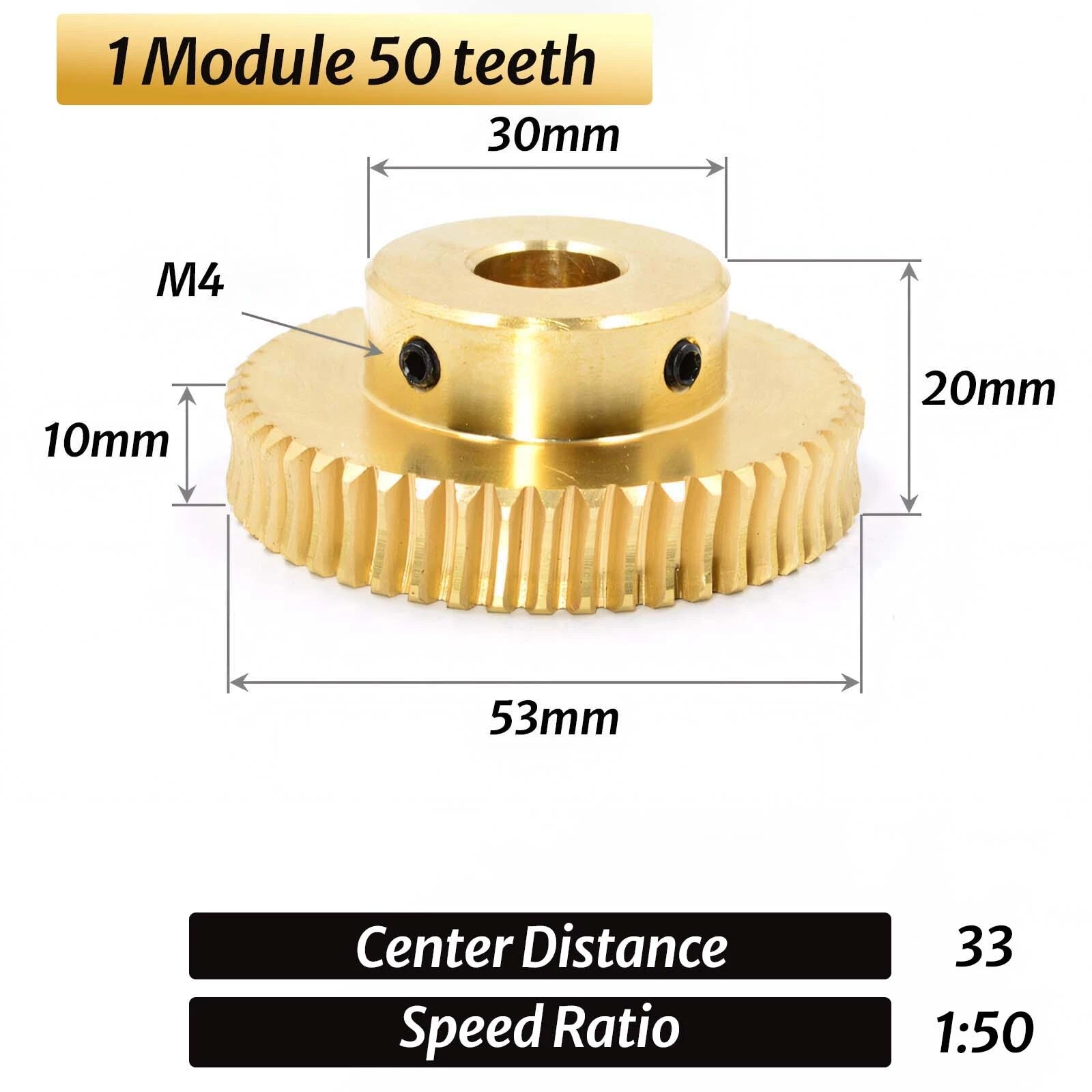
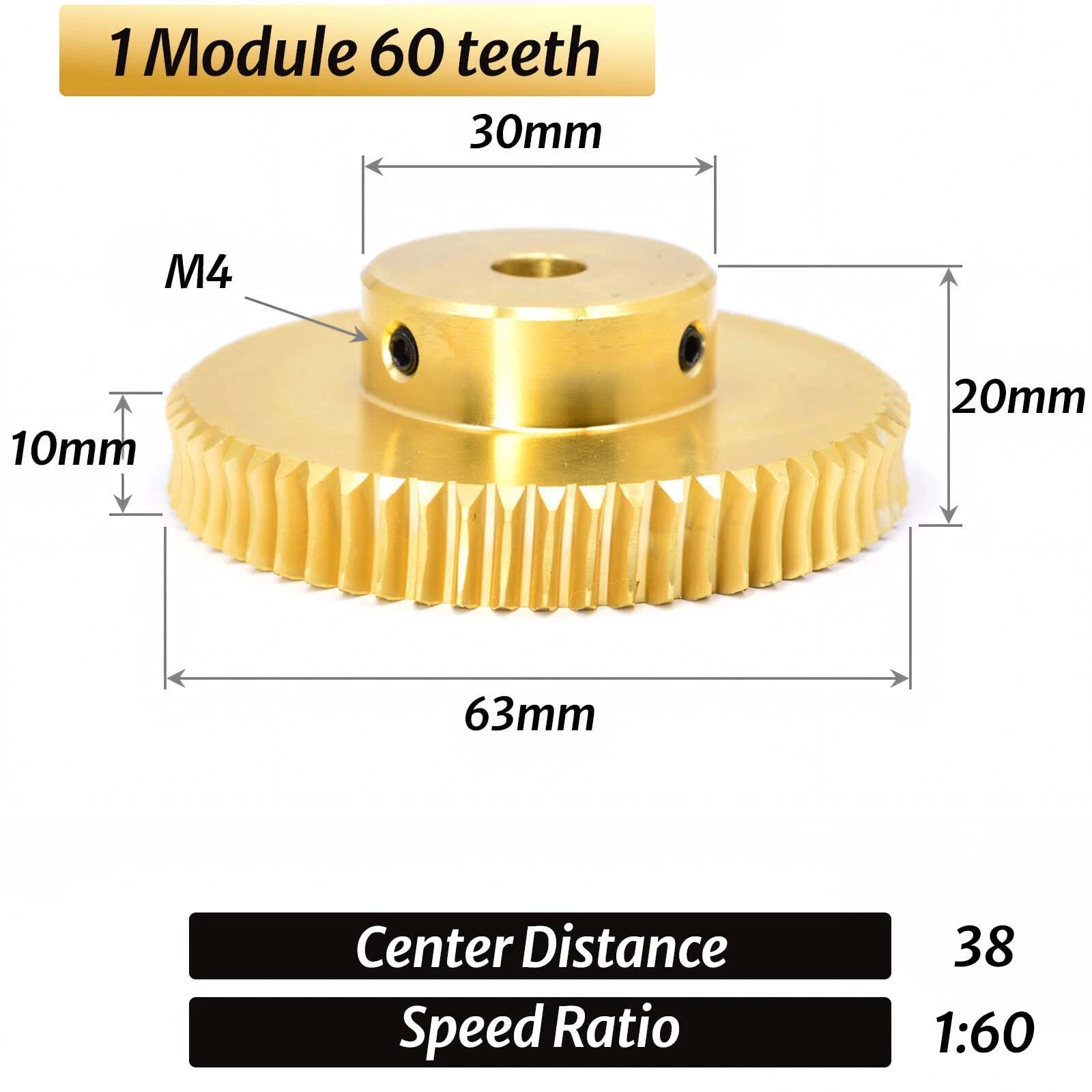
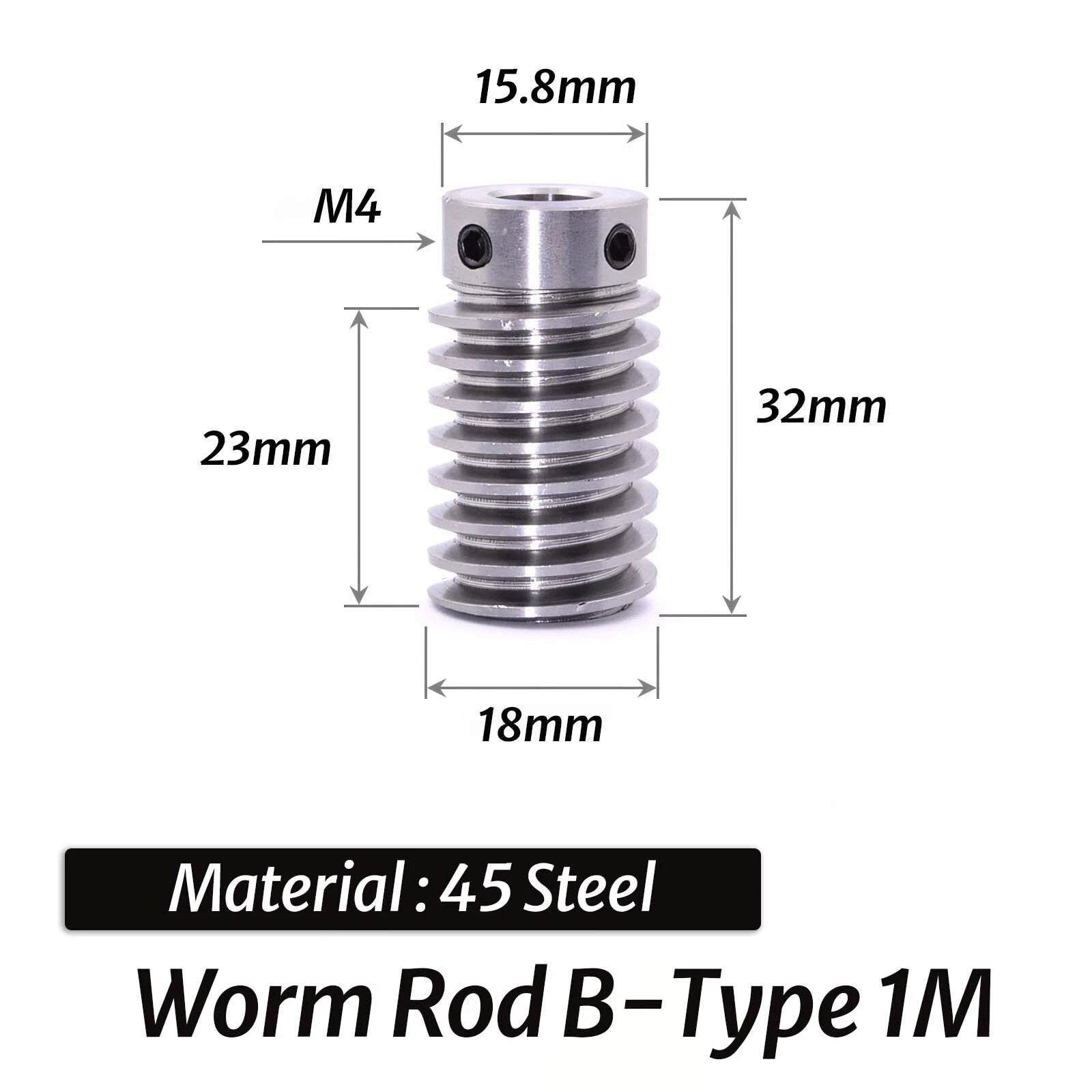
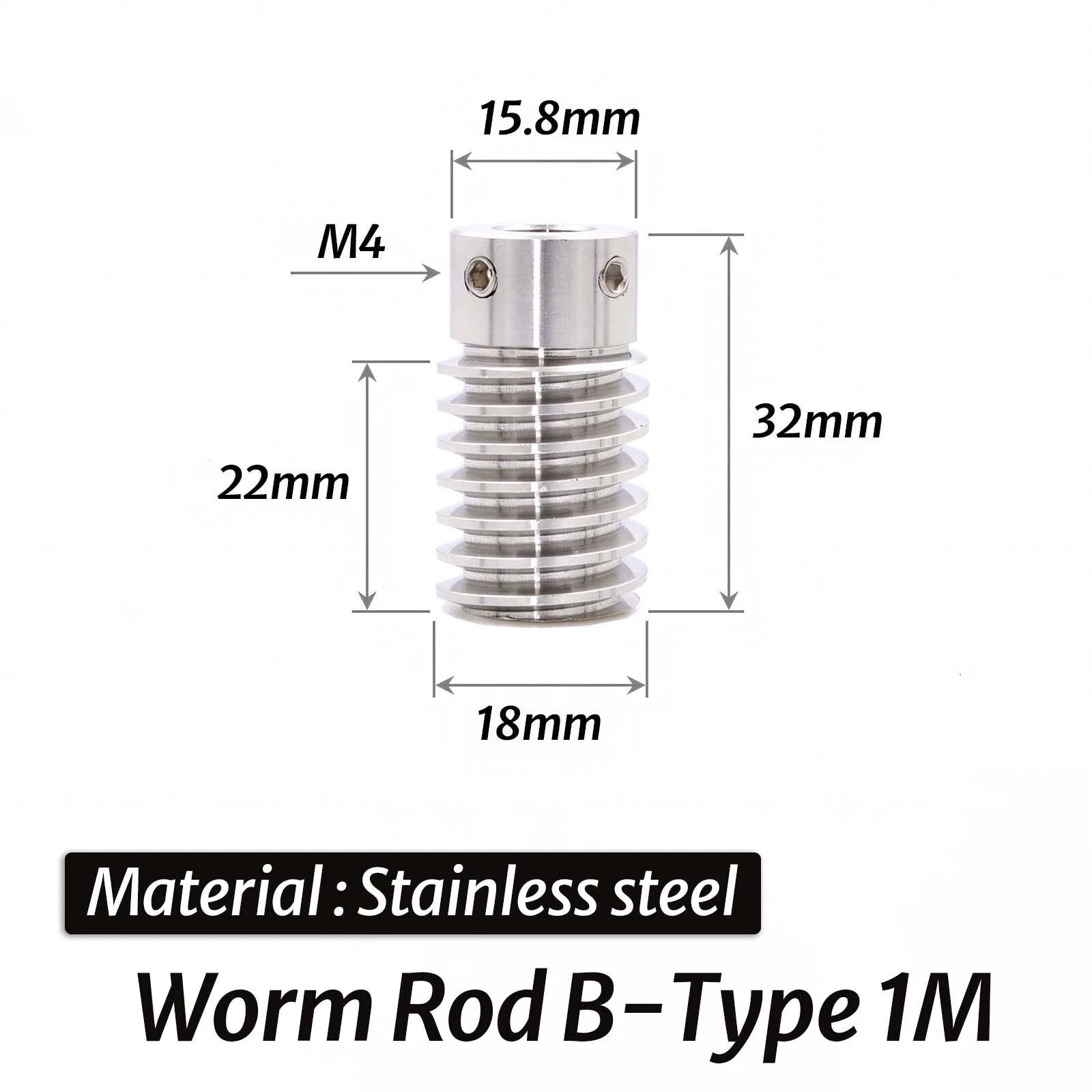
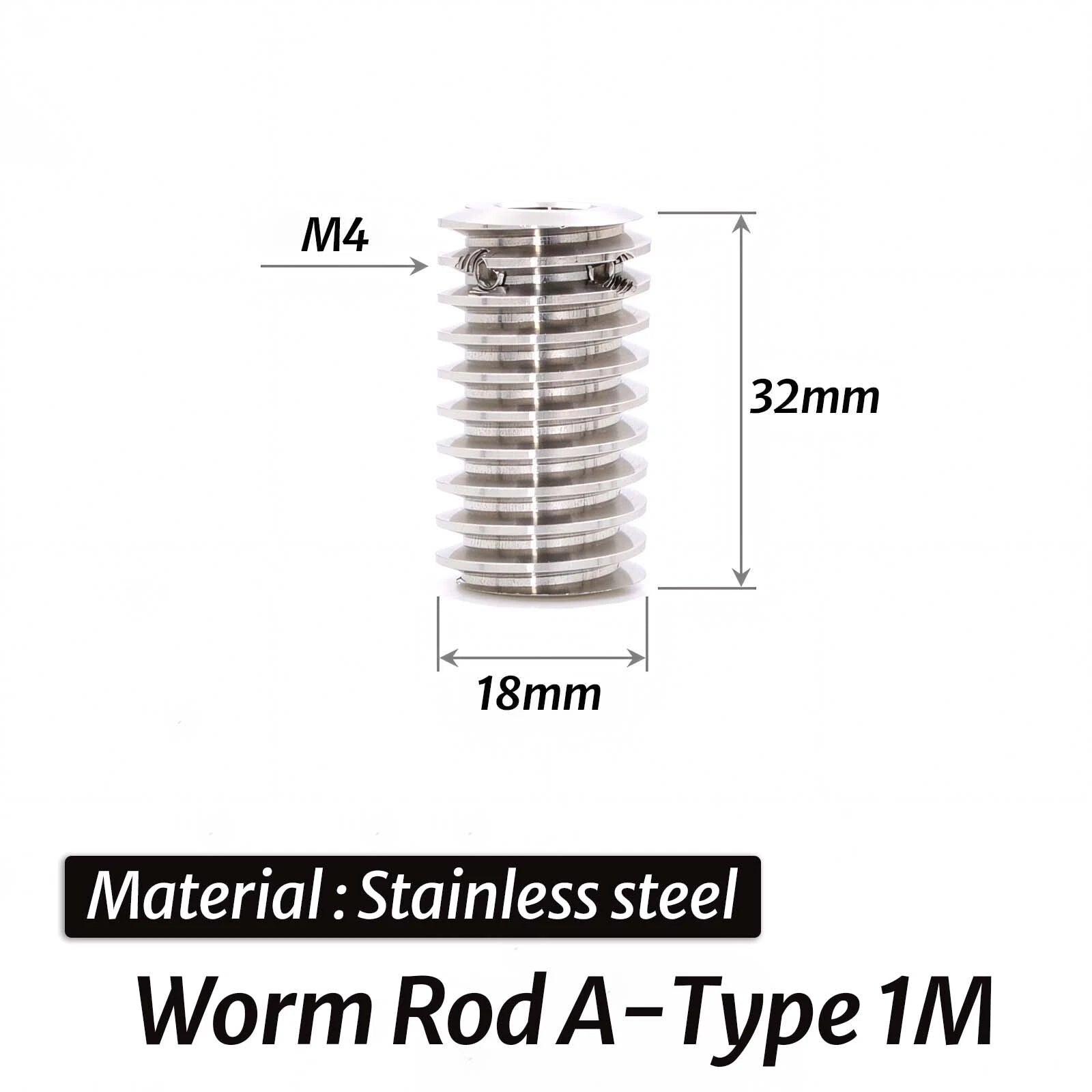
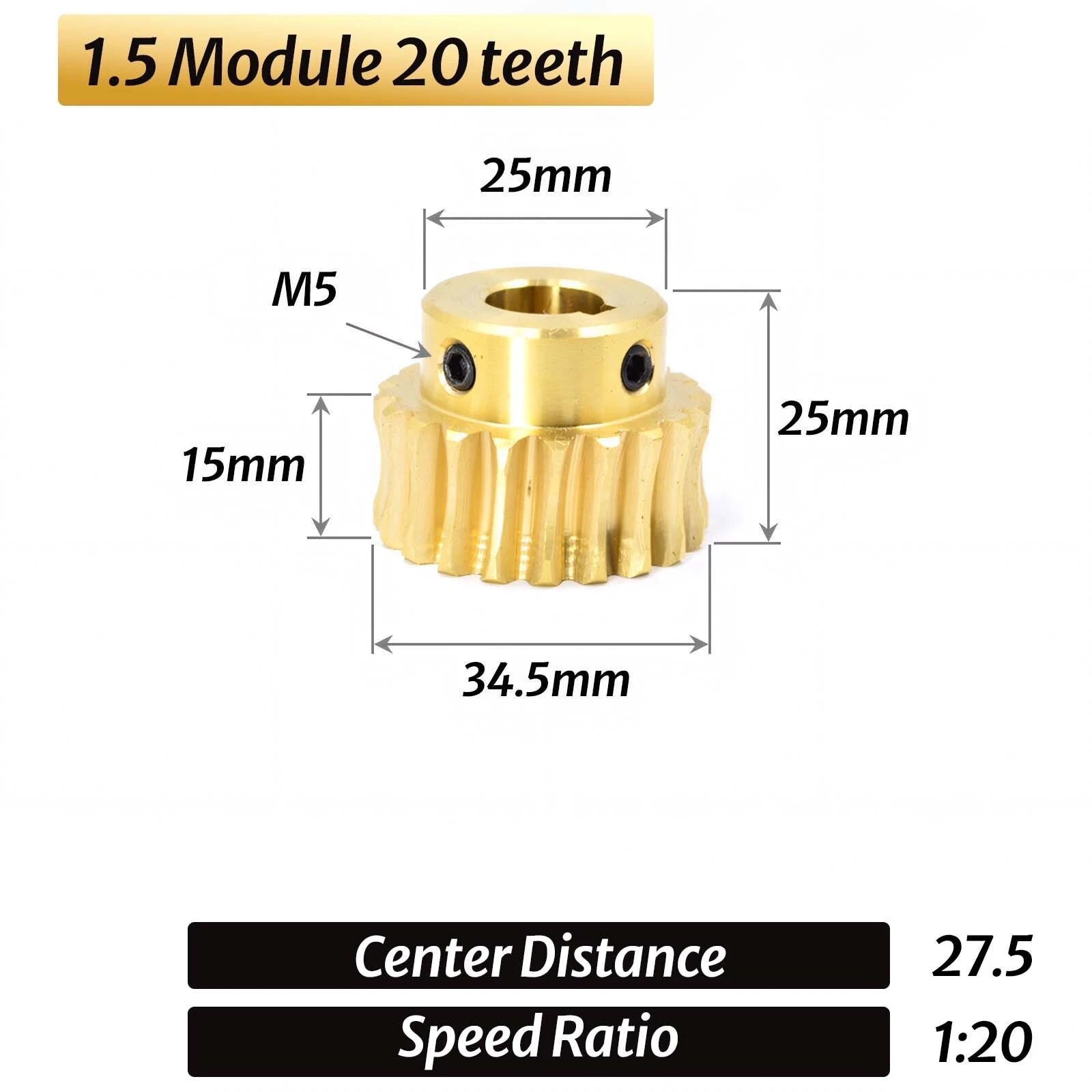
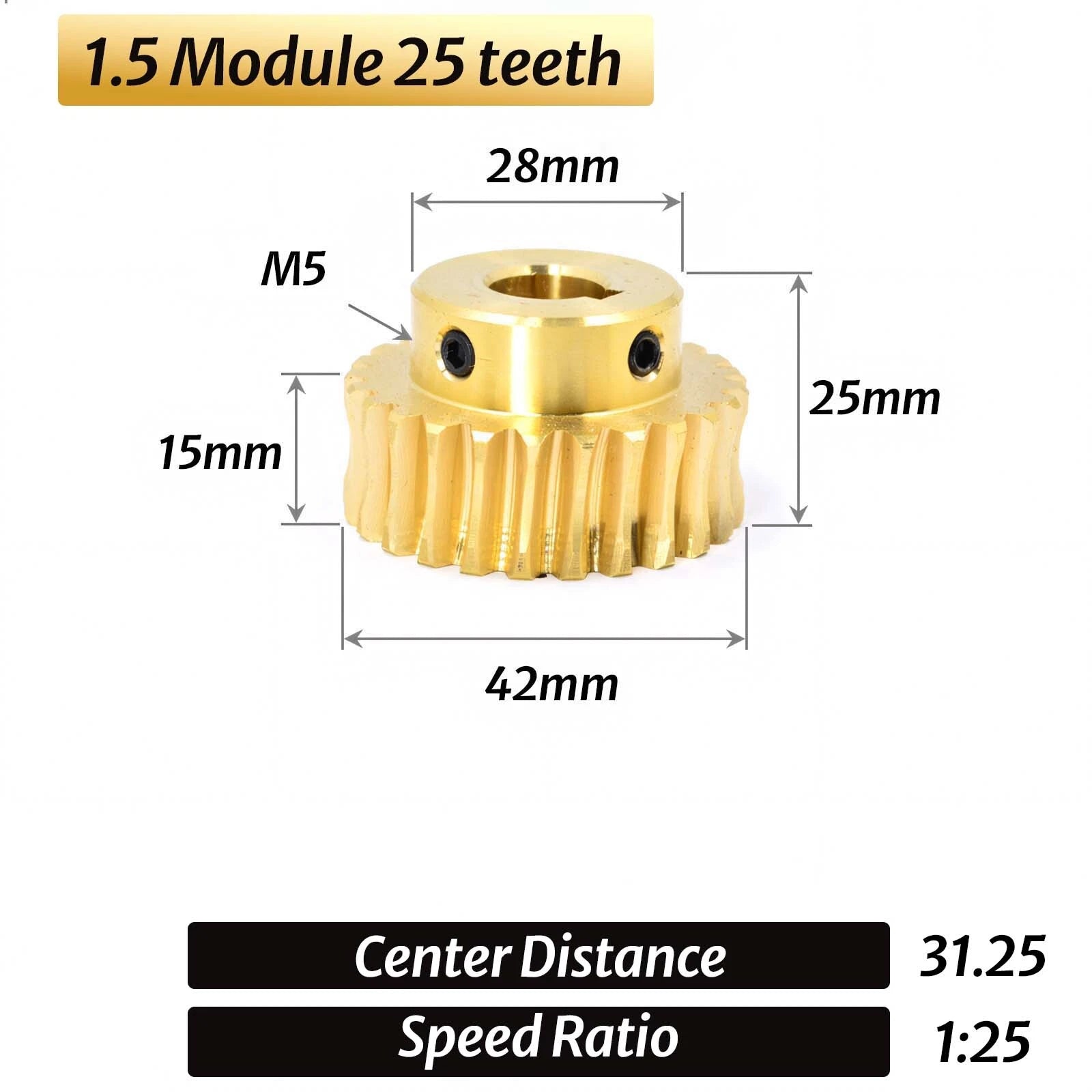
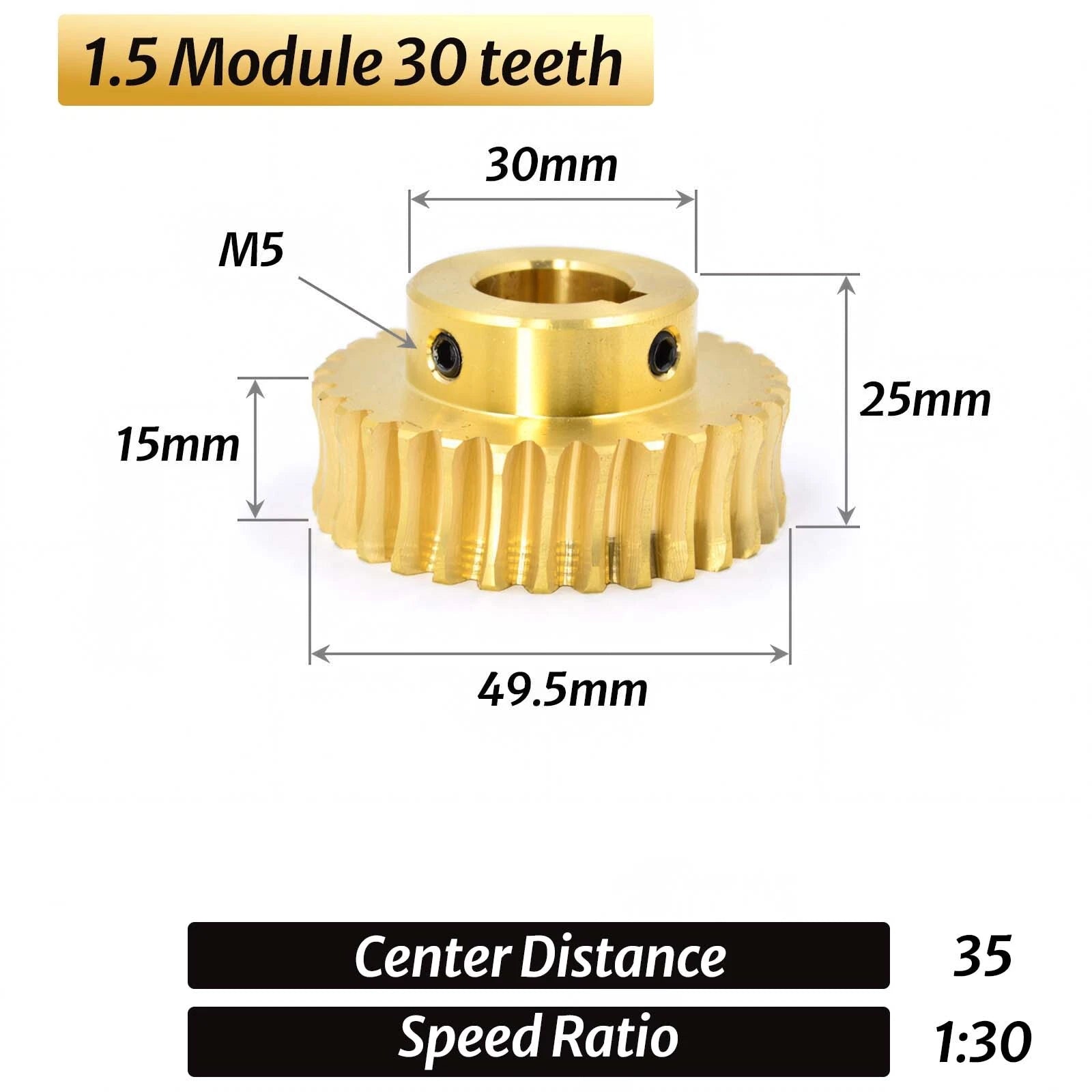
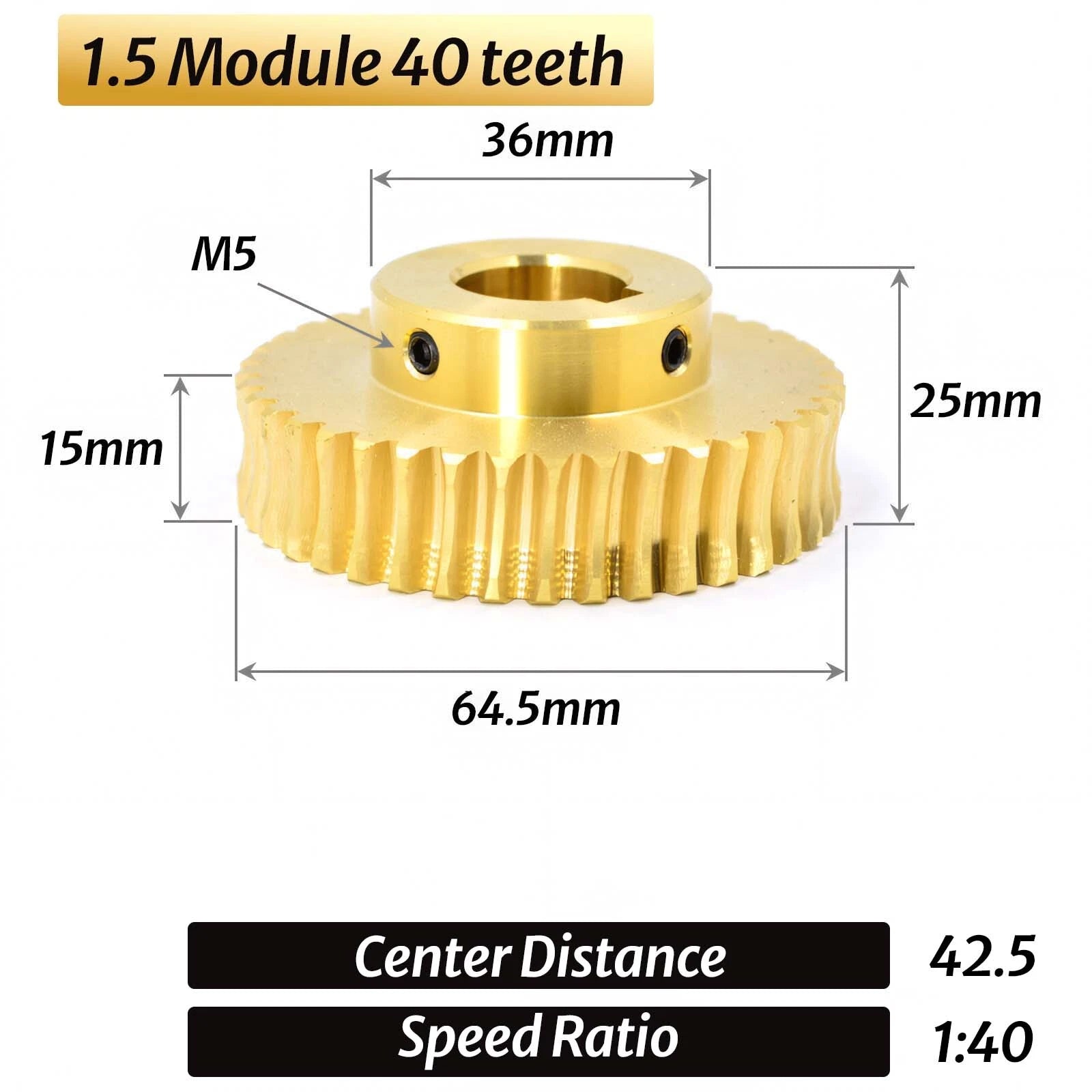
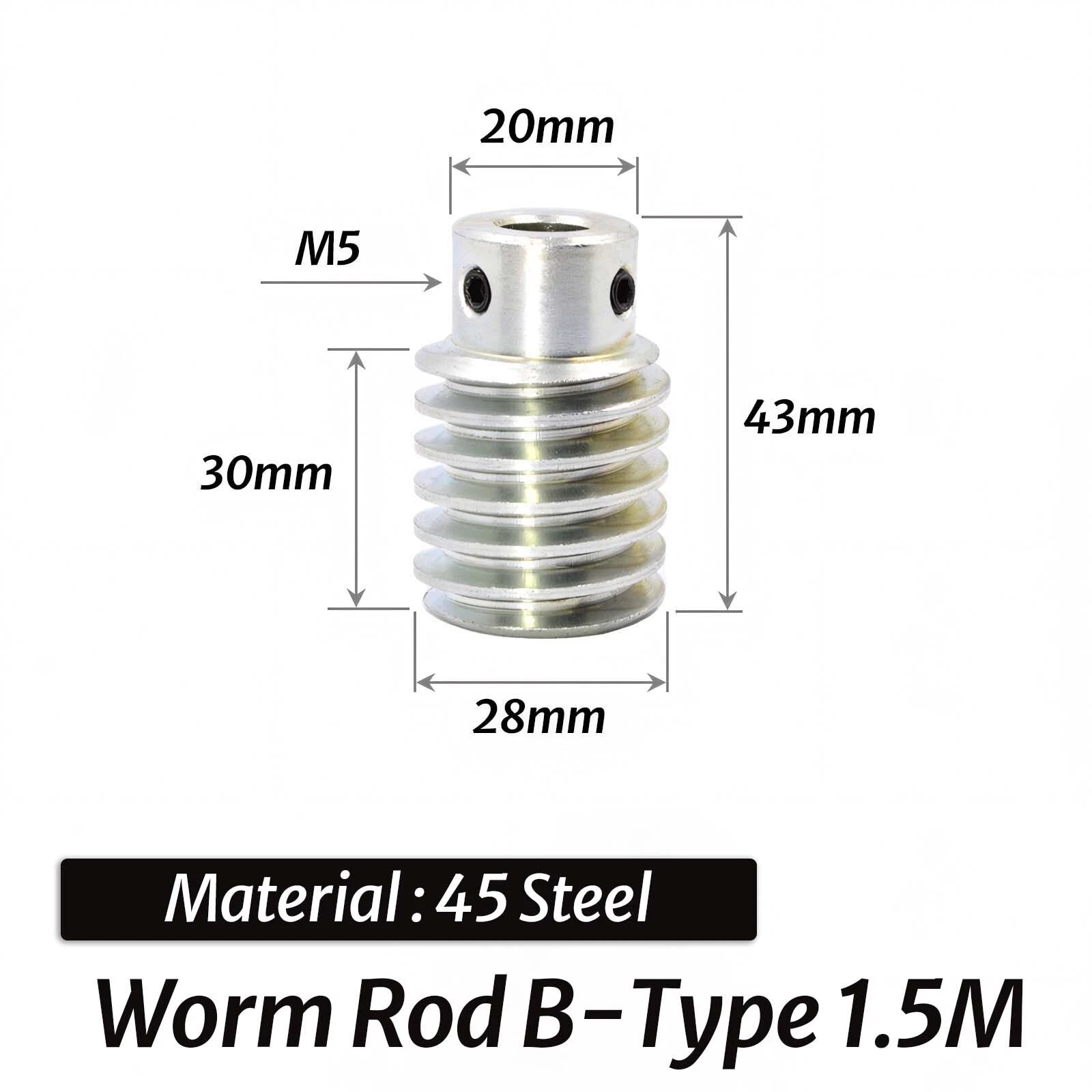
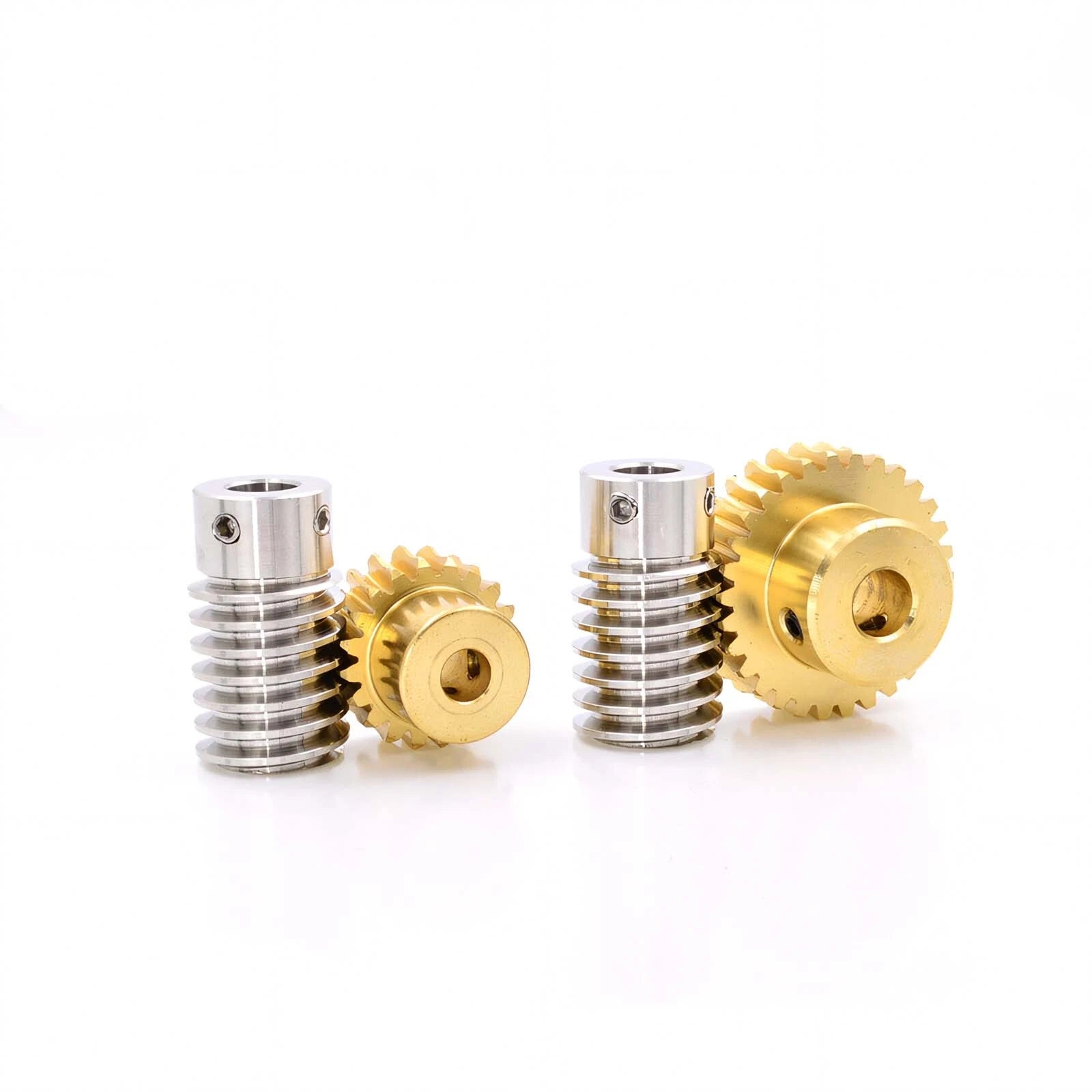
0.5/0.8/1/1.5 Module 20T to 60T Gear Copper Worm Wheel Gear & Worm Gear Shaft

No reviews

Price:
Sale price$6.36 USD
Stock:
In stock (500 units), ready to be shipped

Payment & Security

Ach Direct Debit Amazon American Express Apple Pay Bancontact BLIK Diners Club Discover EPS Google Pay iDEAL Wero JCB Maestro Mastercard Multibanco MobilePay PayPal Przelewy24 Shop Pay Twint Union Pay USDC Visa

Your payment information is processed securely. We do not store credit card details nor have access to your credit card information.

Limited Offer — Spend More, Save More
Spend $55+
Save $5
Spend $100+
Save $10
Spend $200+
Save $25
HomeDIYer DIY Expert Support

DIY Expert Support

Get fitment advice & recommendations

Mon–Fri  8:30 AM – 8:00 PM
24-Hour Fast Ship
Arrives in 3–14 Days
Worldwide Shipping
30-Day Returns
1 tree planted with every purchase

Description

Worm Wheel Gear & Worm Gear Shaft — Precision Drive Components for Robotics and Automation

When your project demands a compact, high-ratio speed reduction that fits in a tight space, a mismatched or poorly machined worm gear set becomes the weakest link in your entire drivetrain. Engineers, robotics builders, and DIY automation enthusiasts who need reliable, repeatable torque transmission require components machined to consistent tolerances — not guesswork.

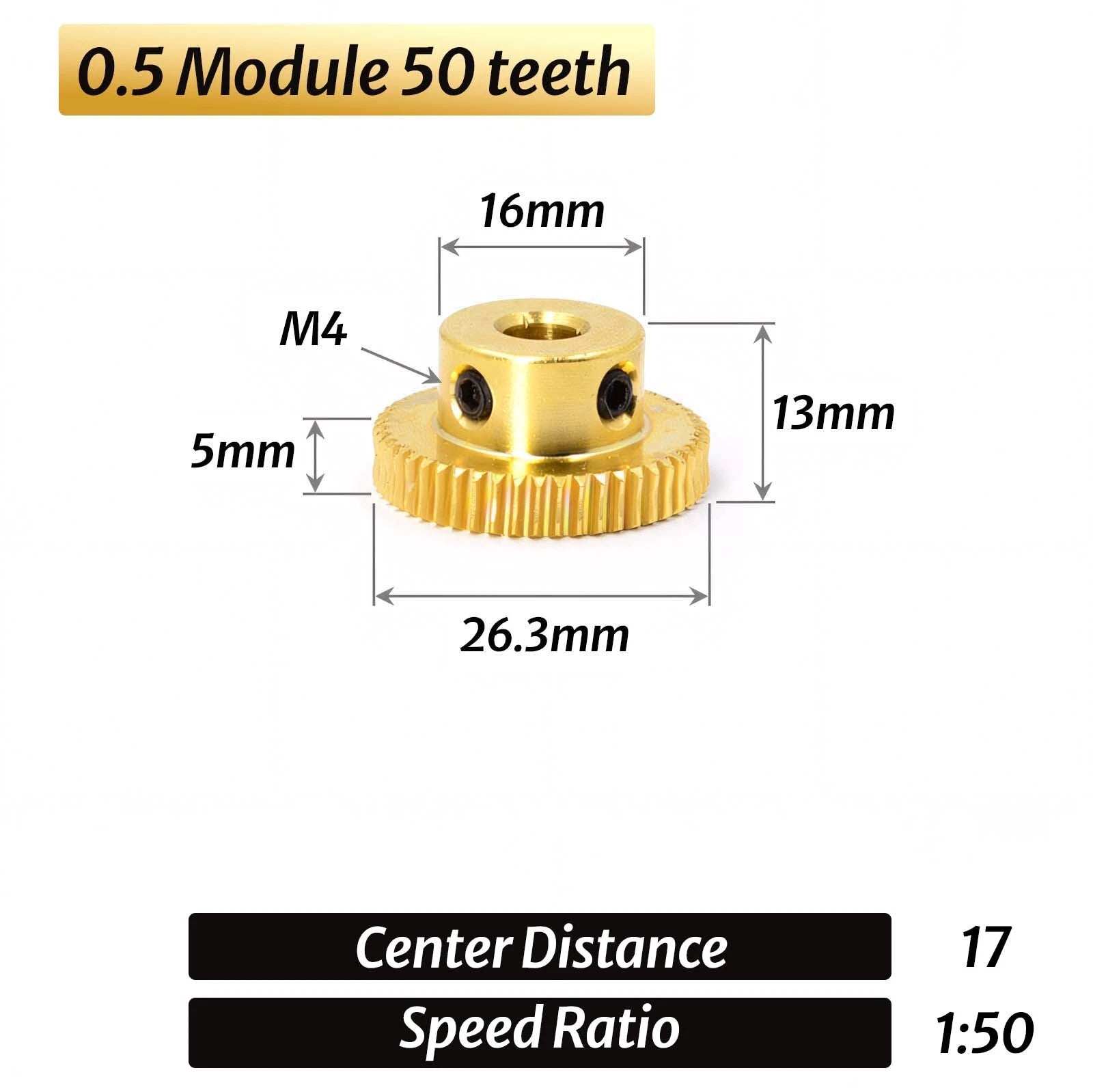
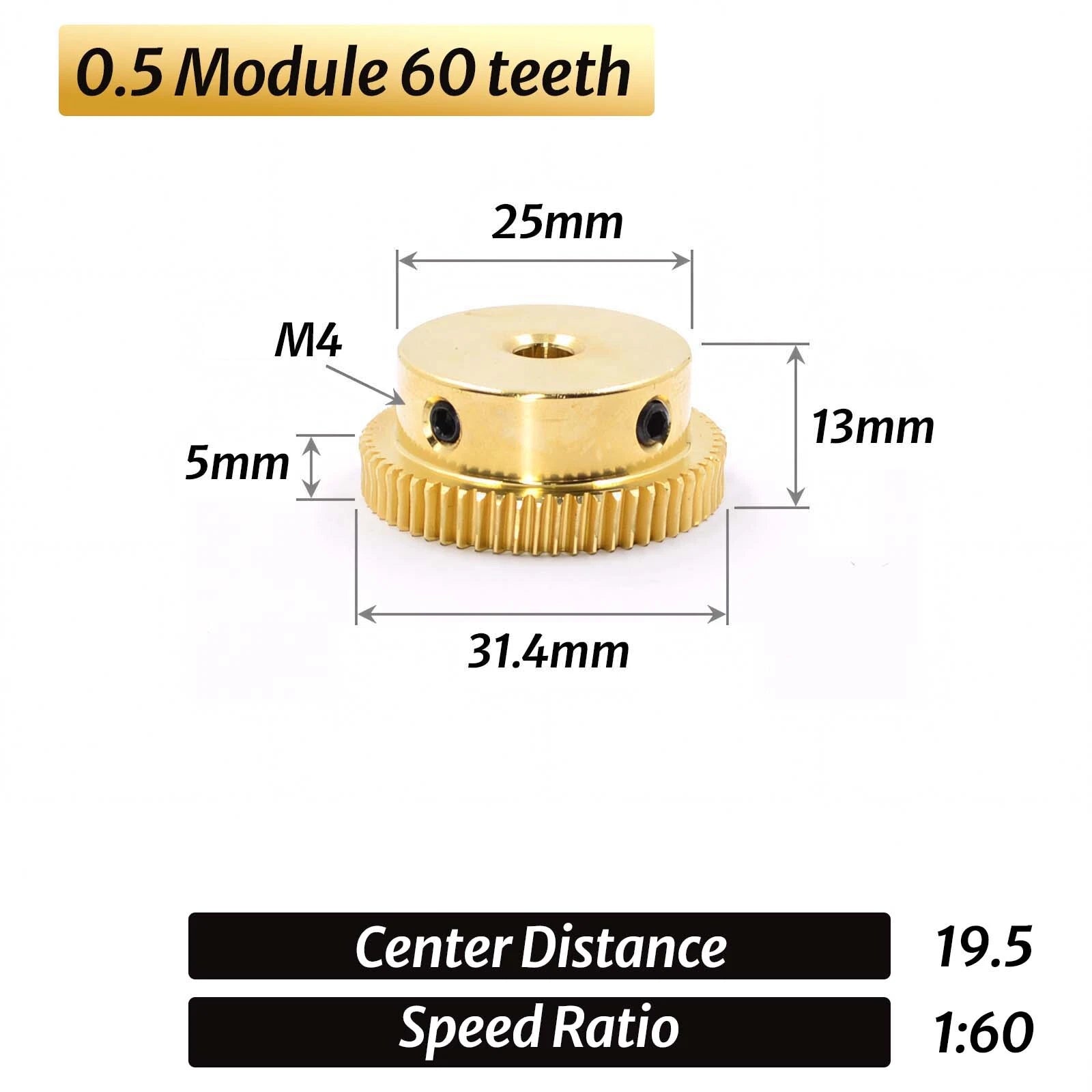
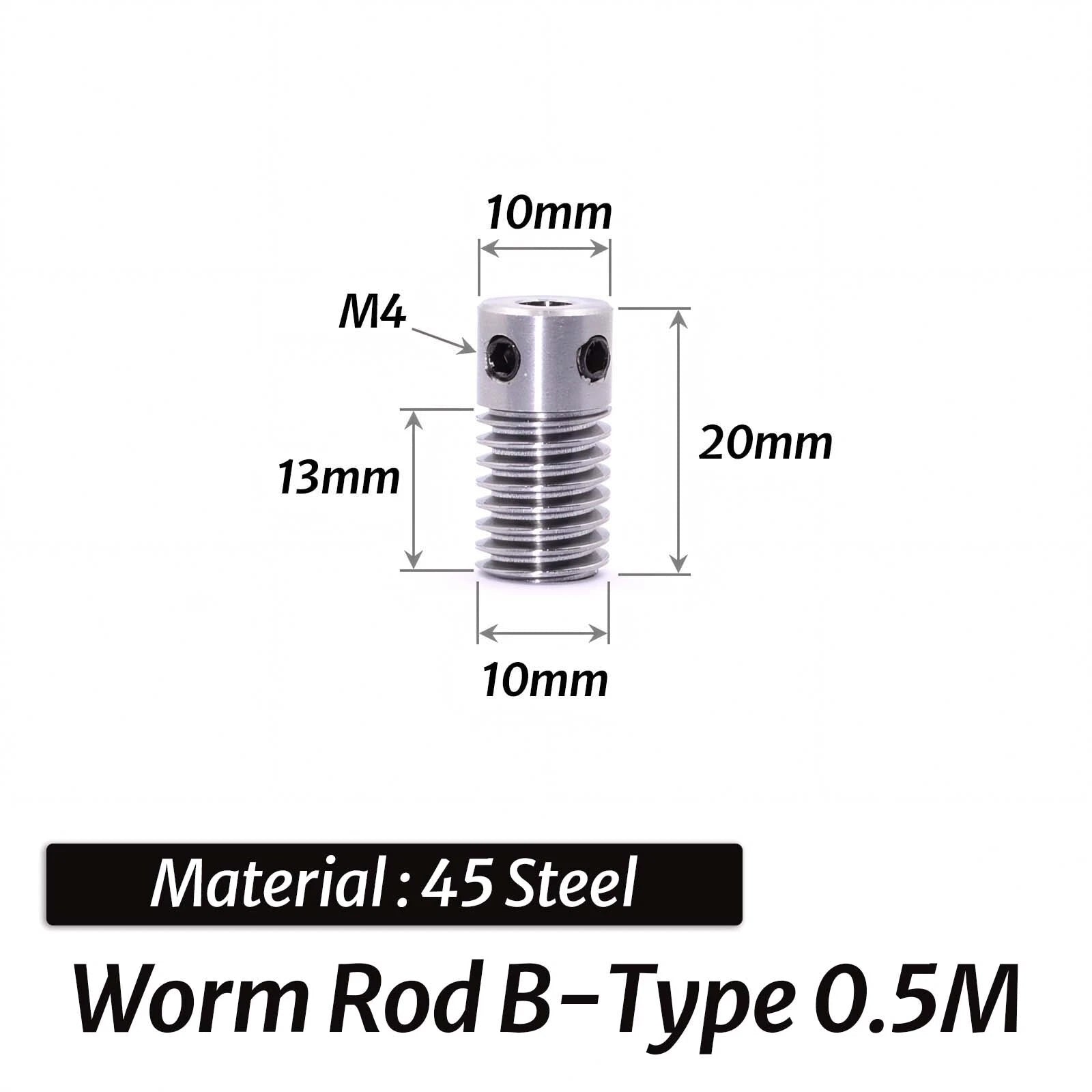
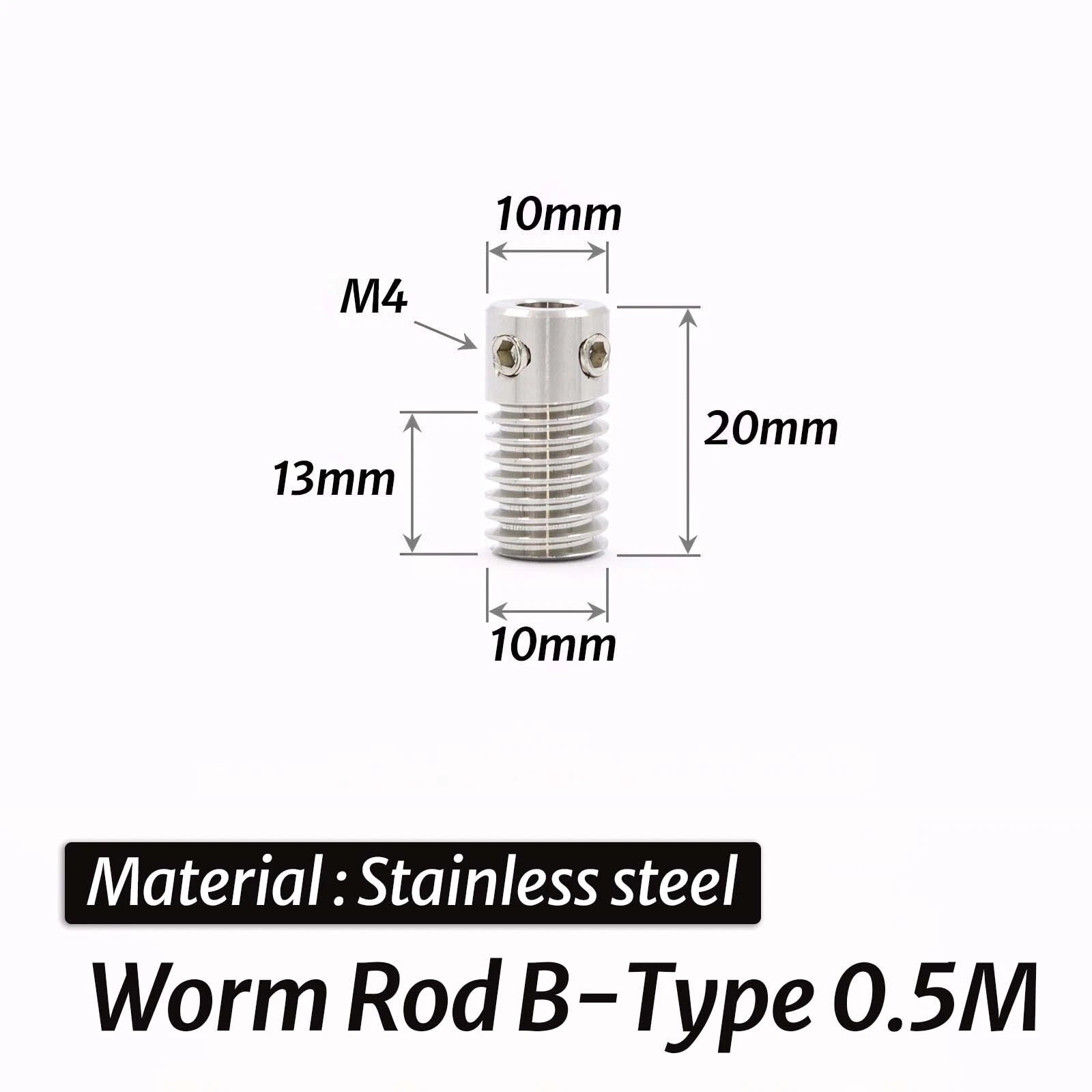
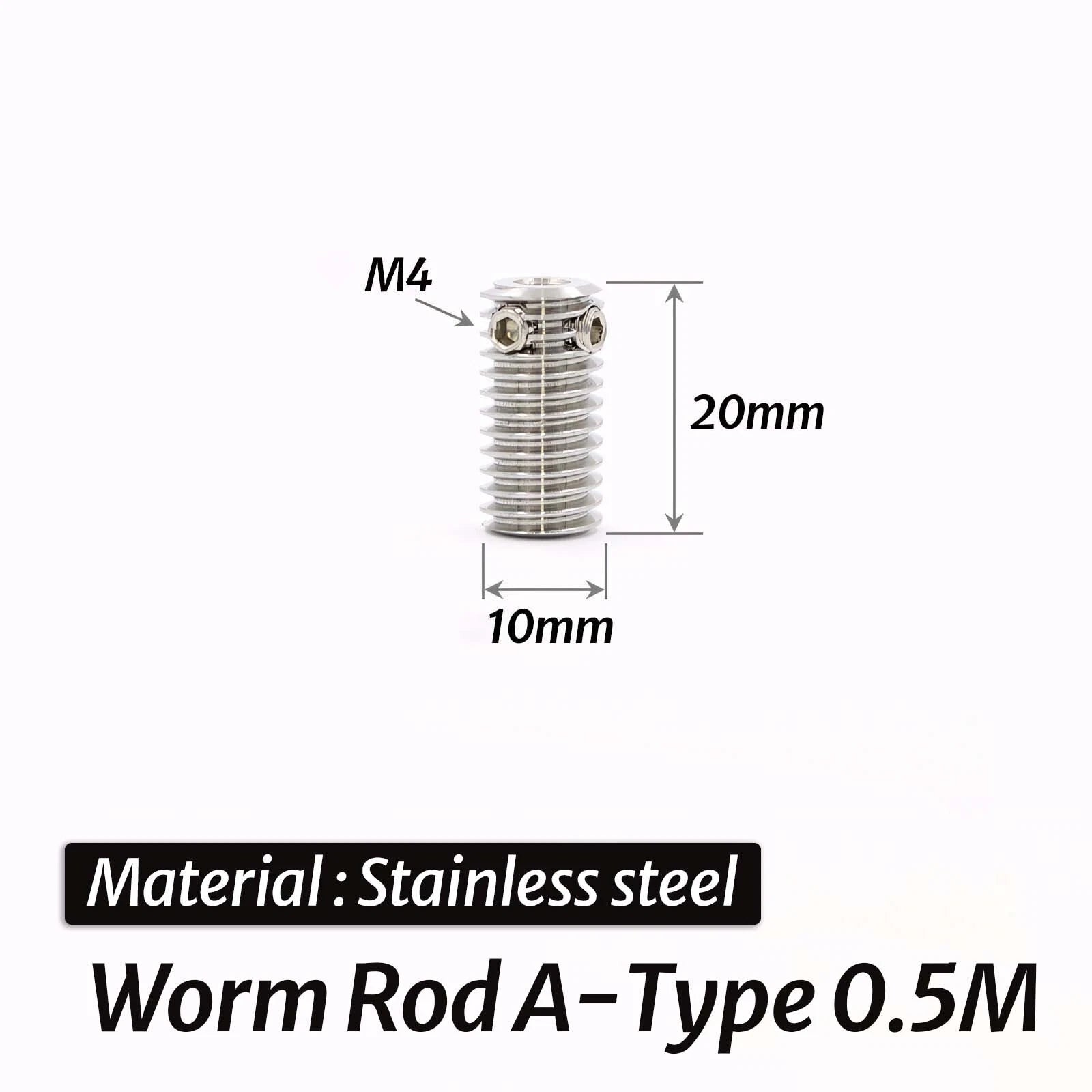
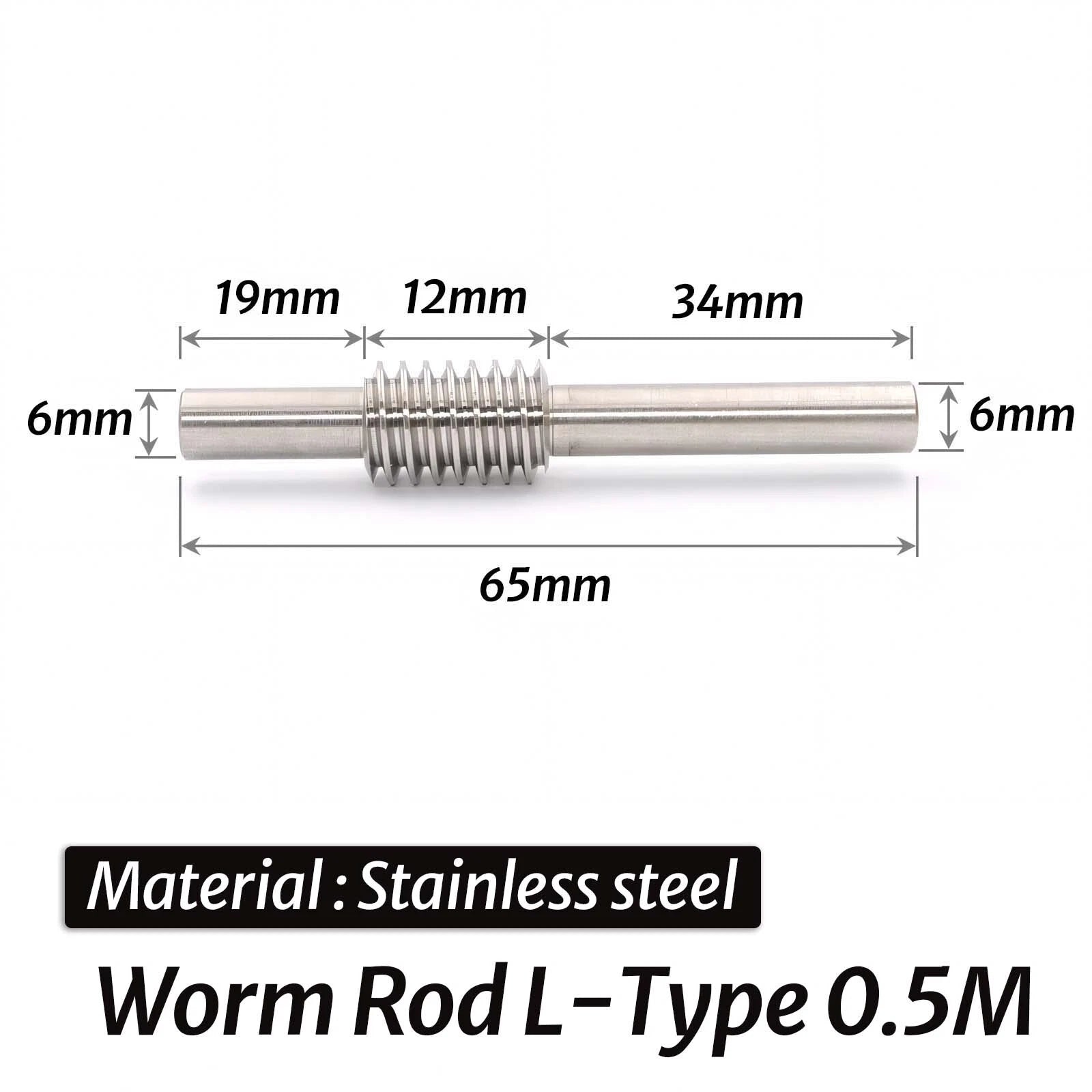
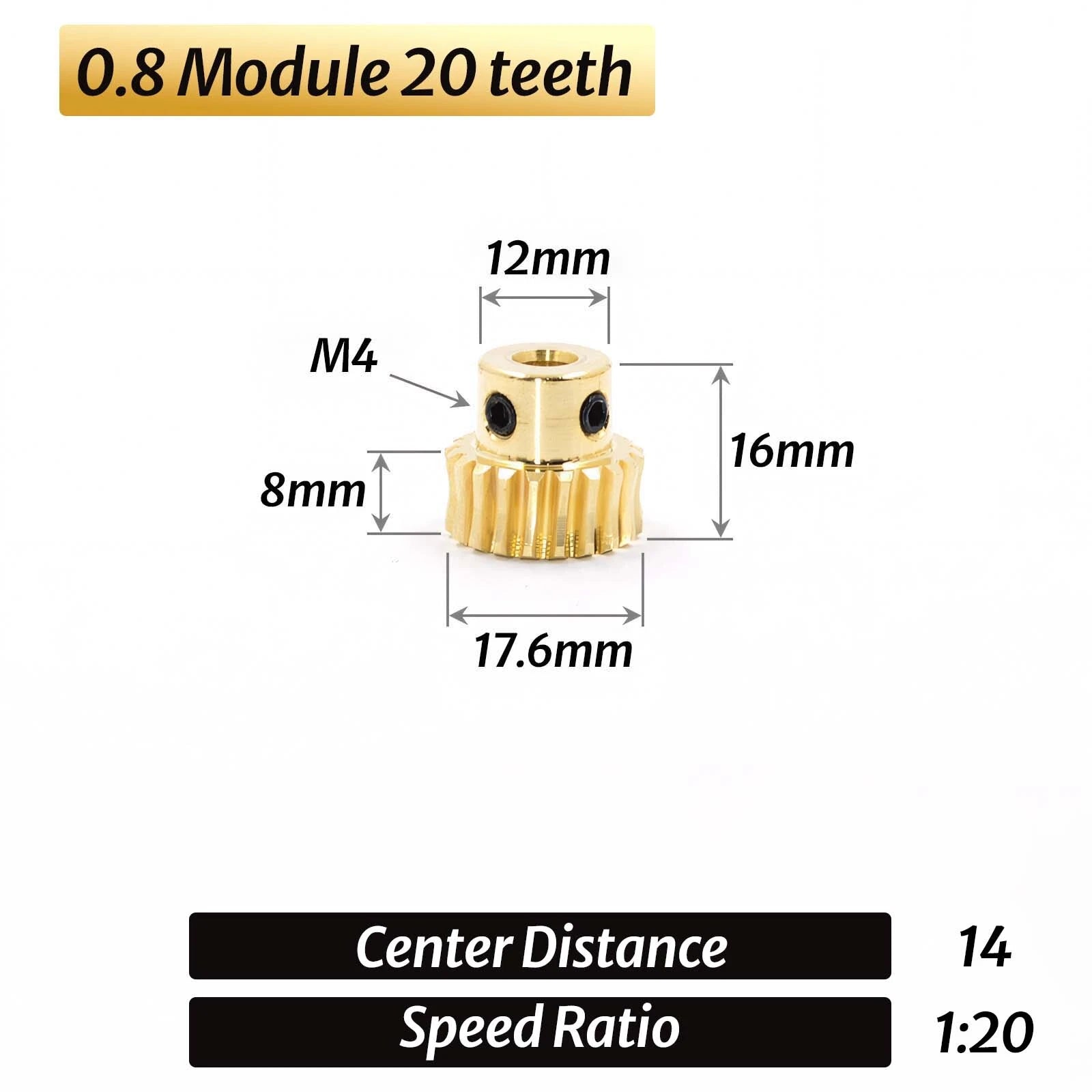
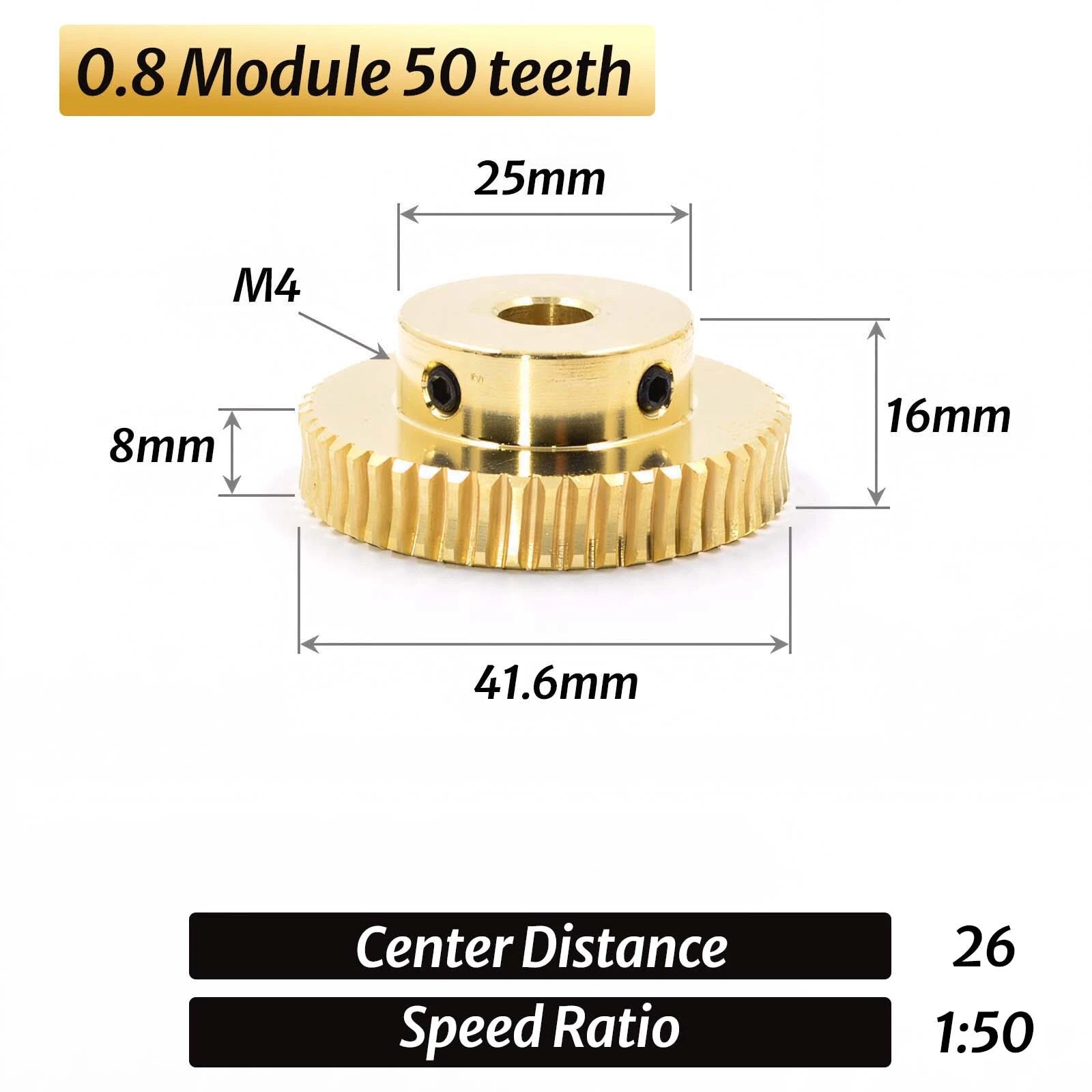
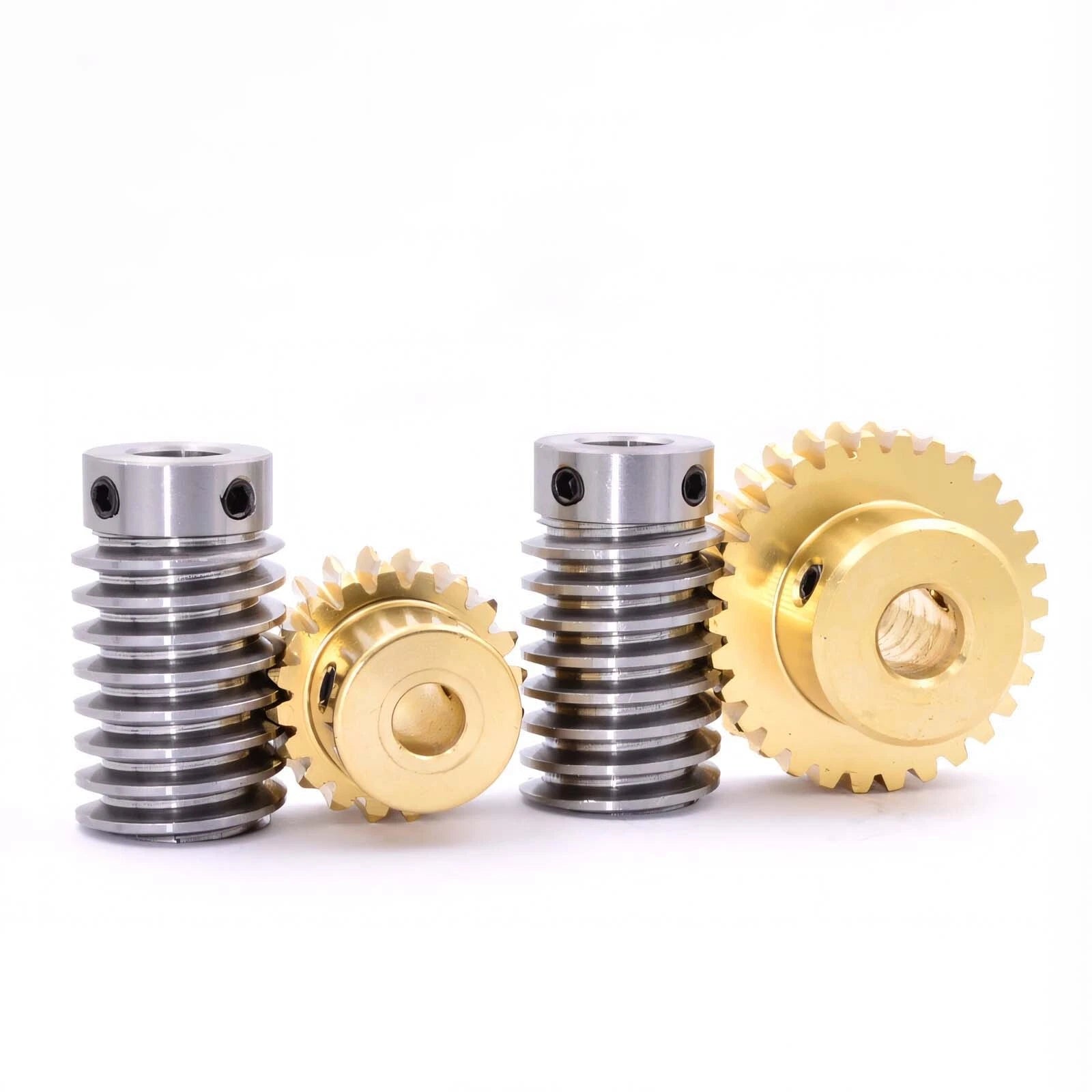
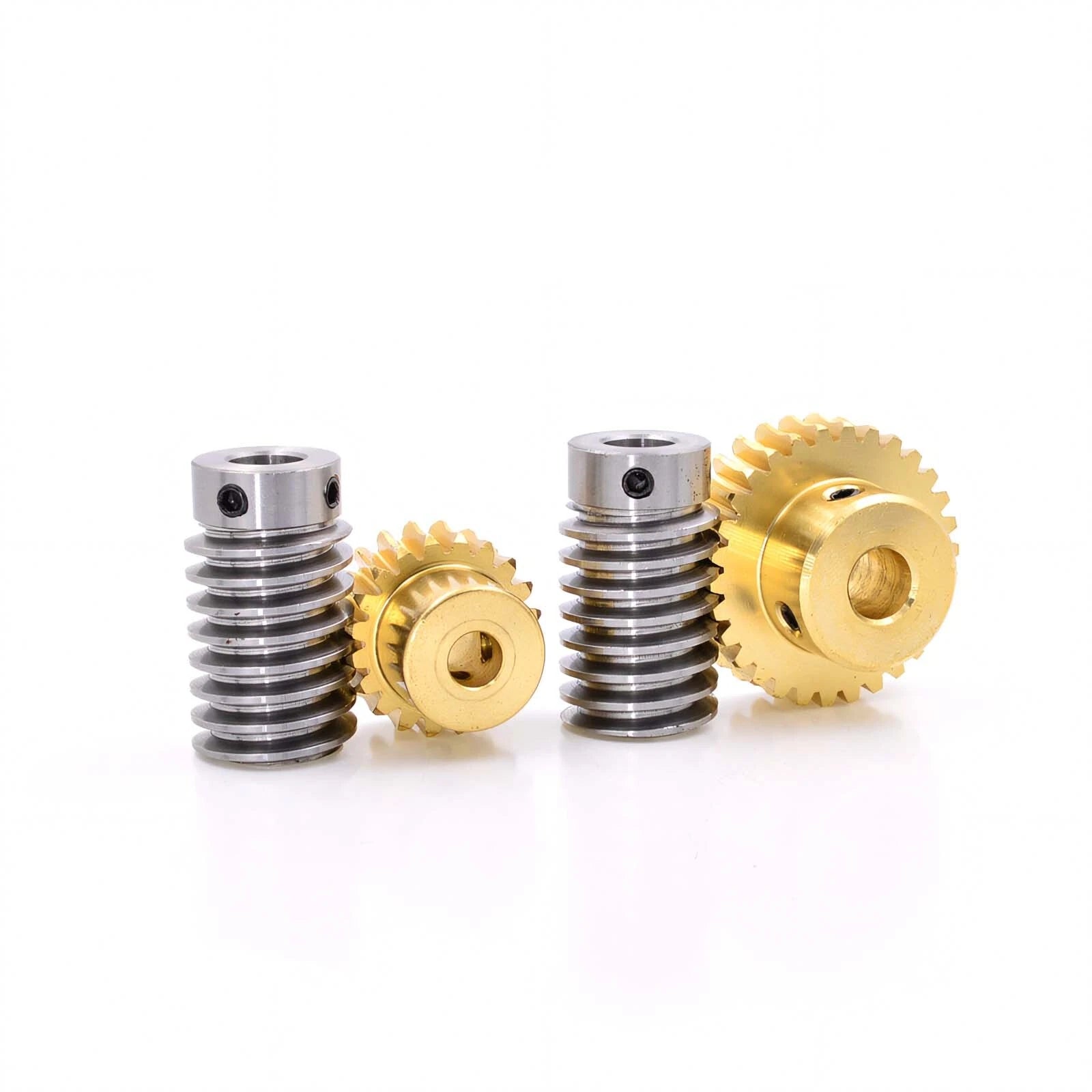
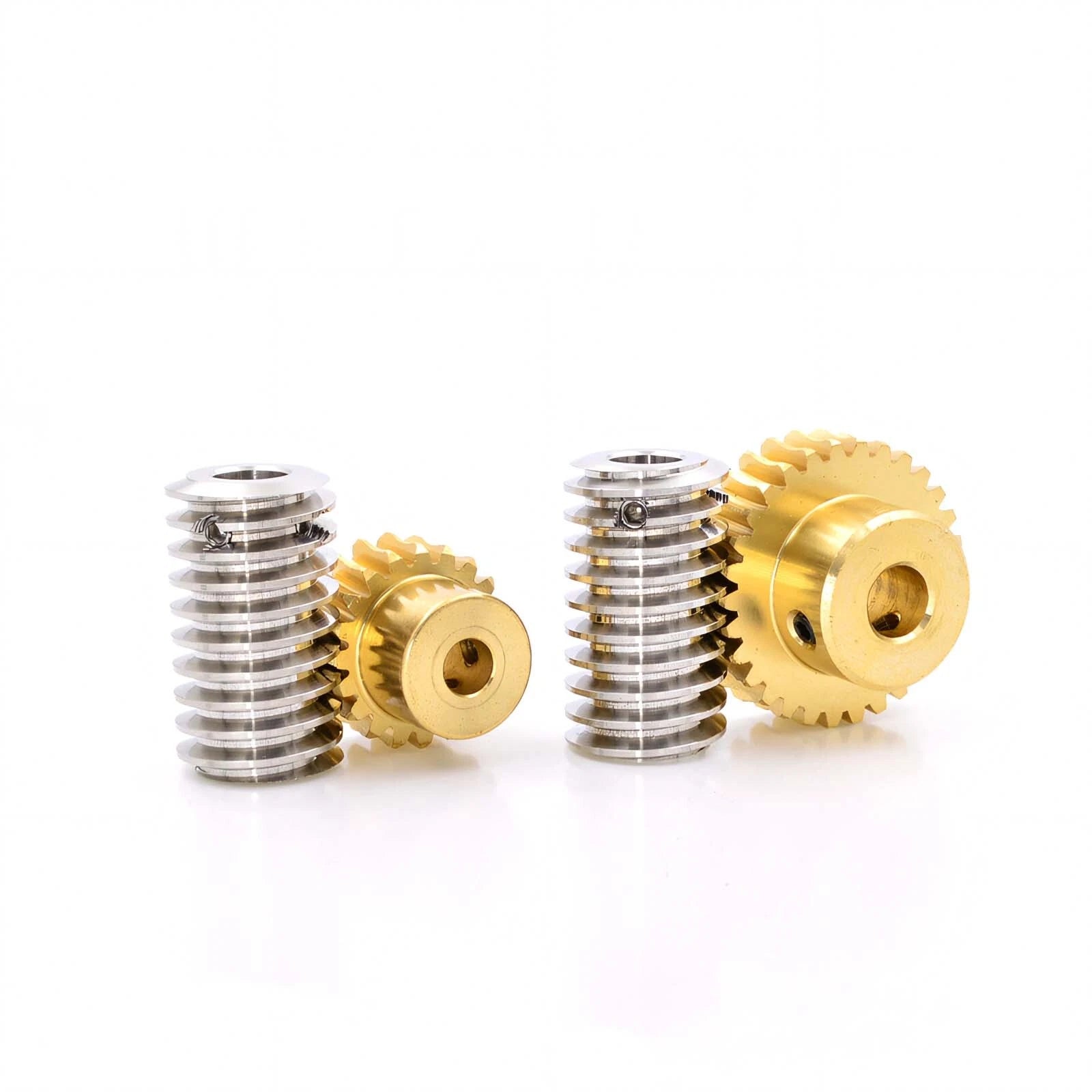
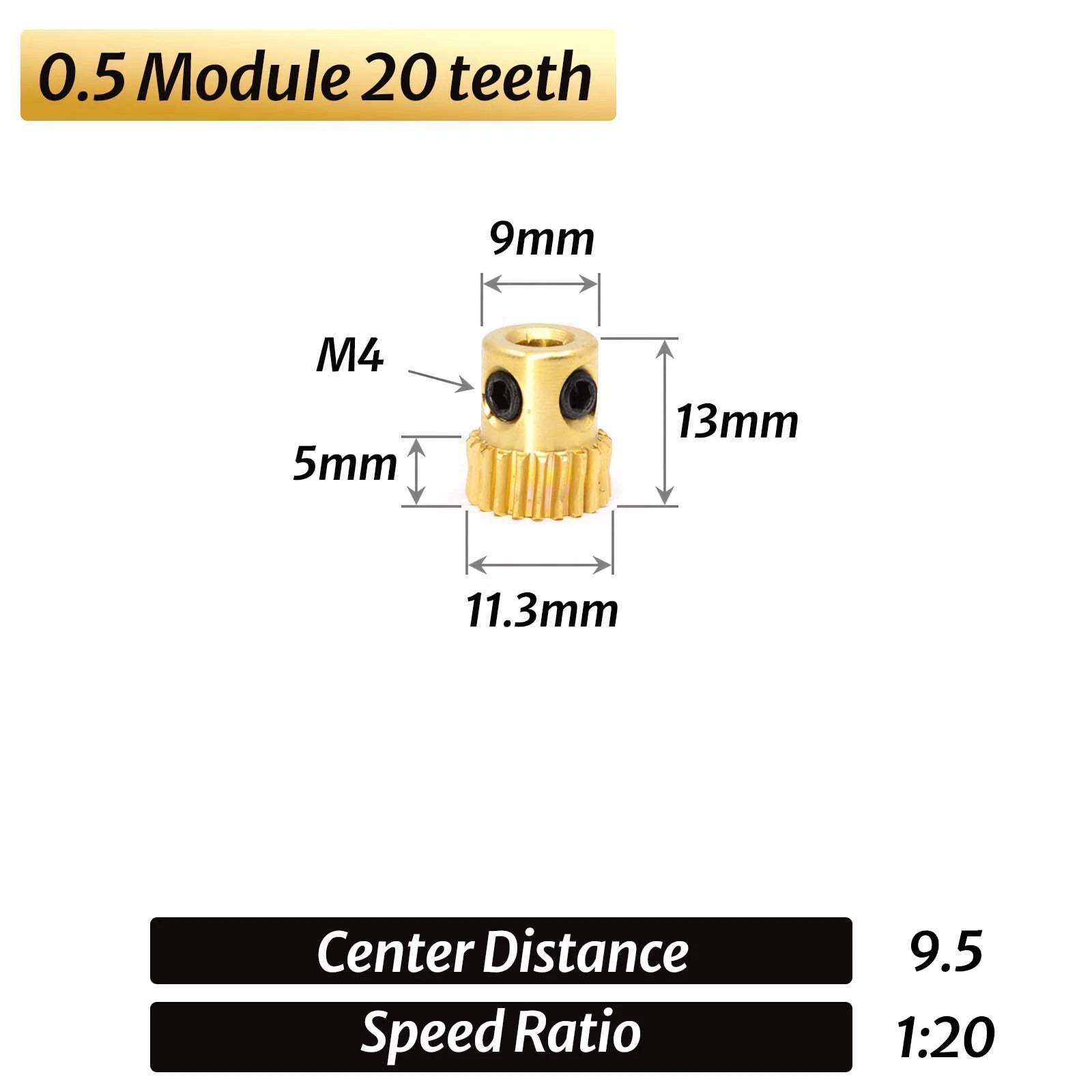
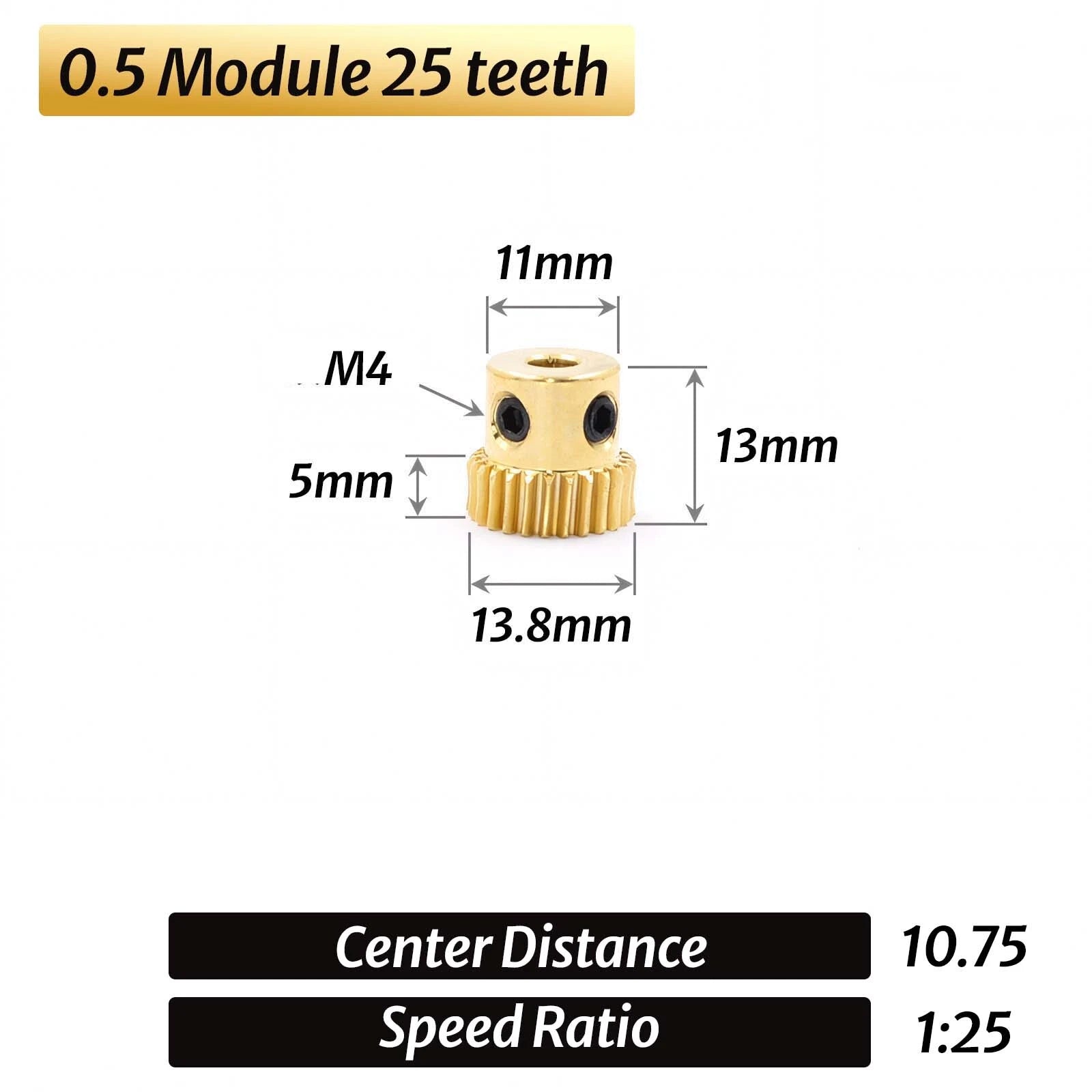
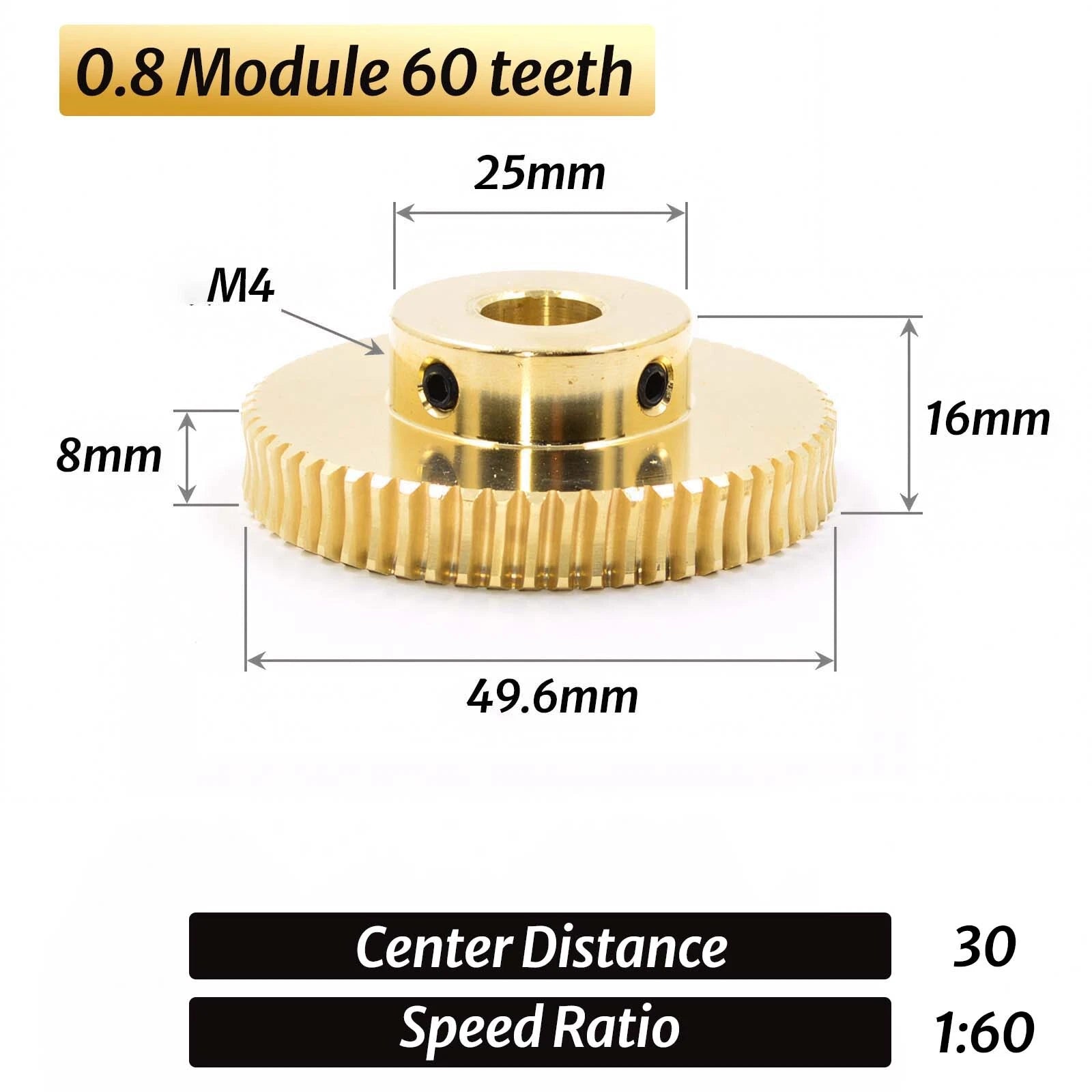
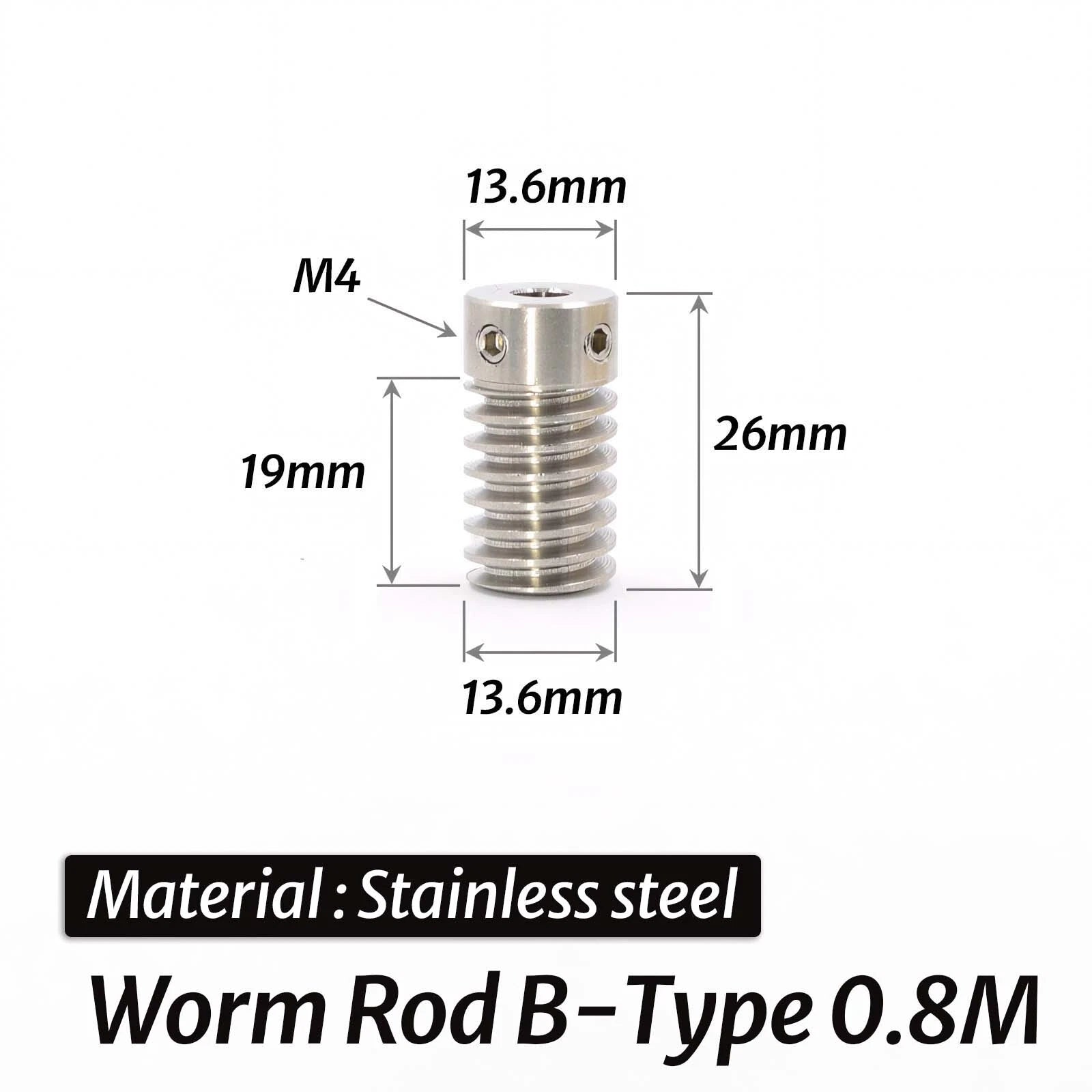
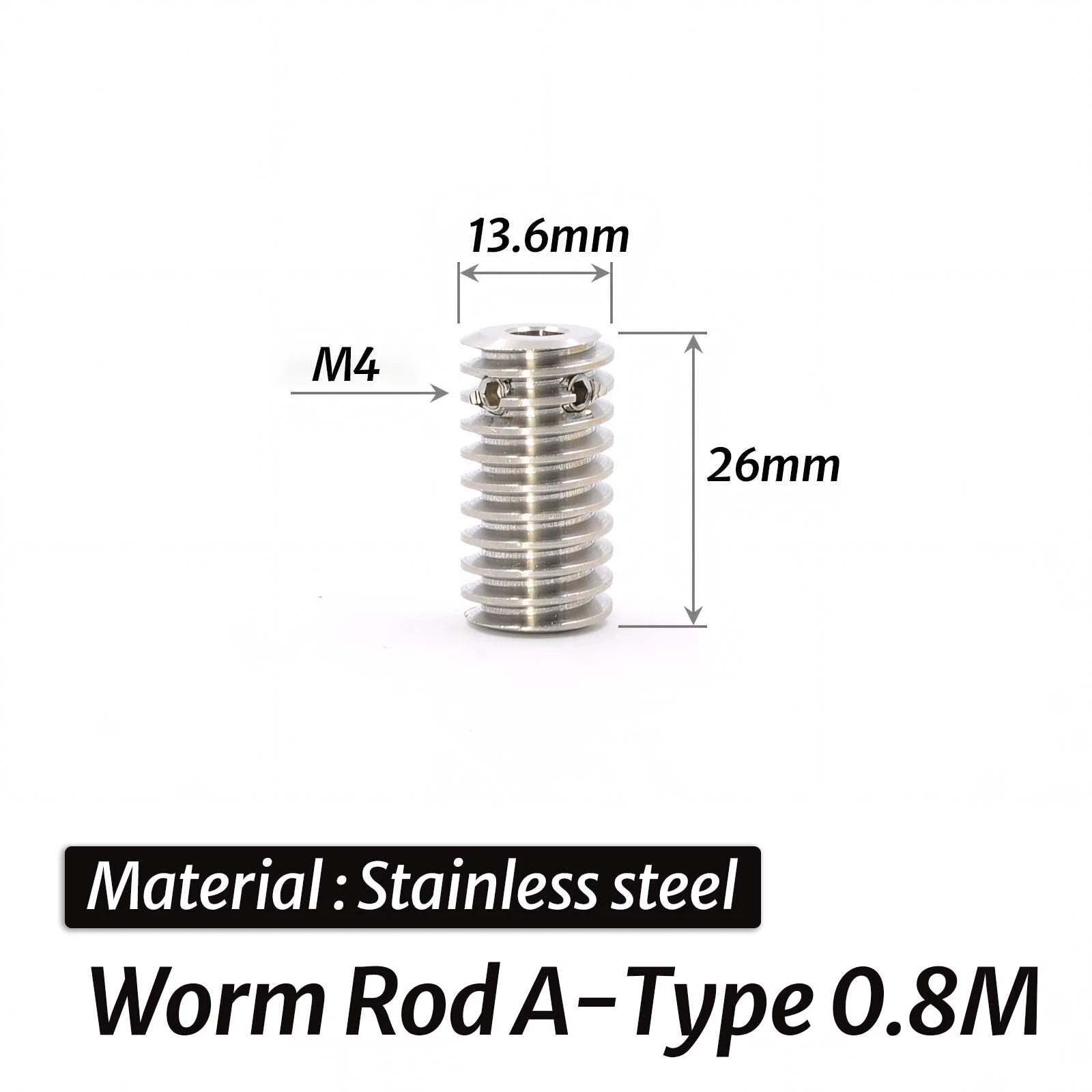
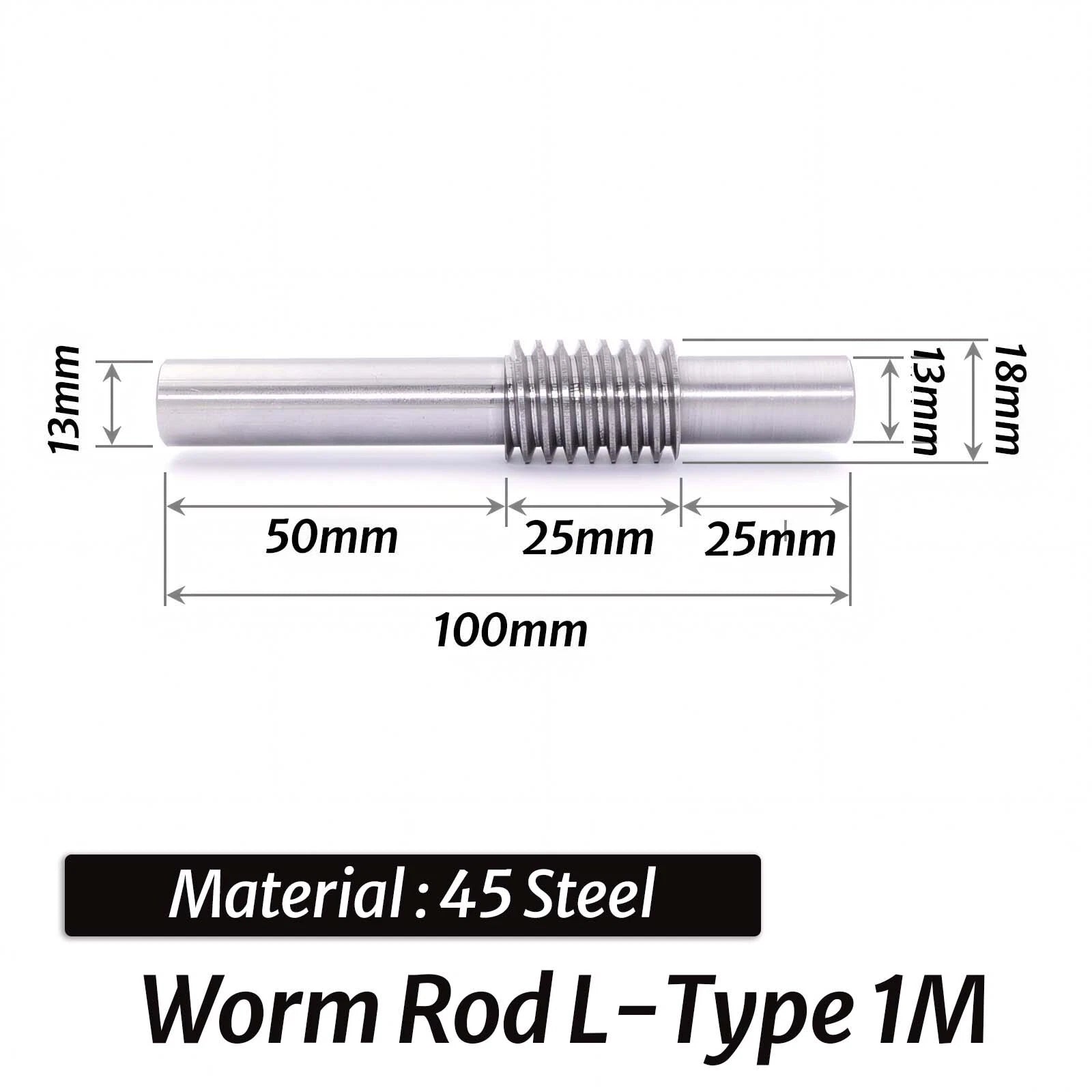
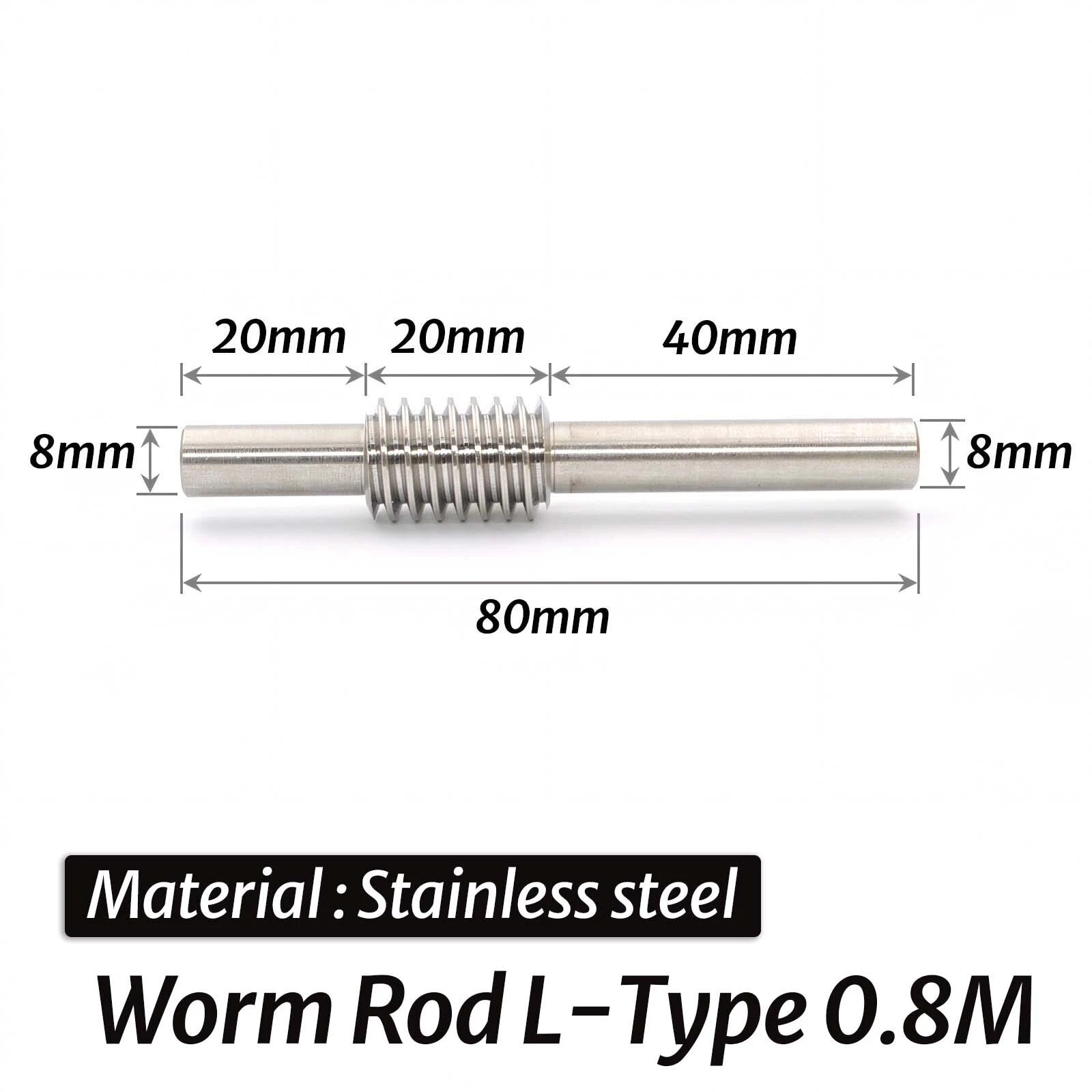
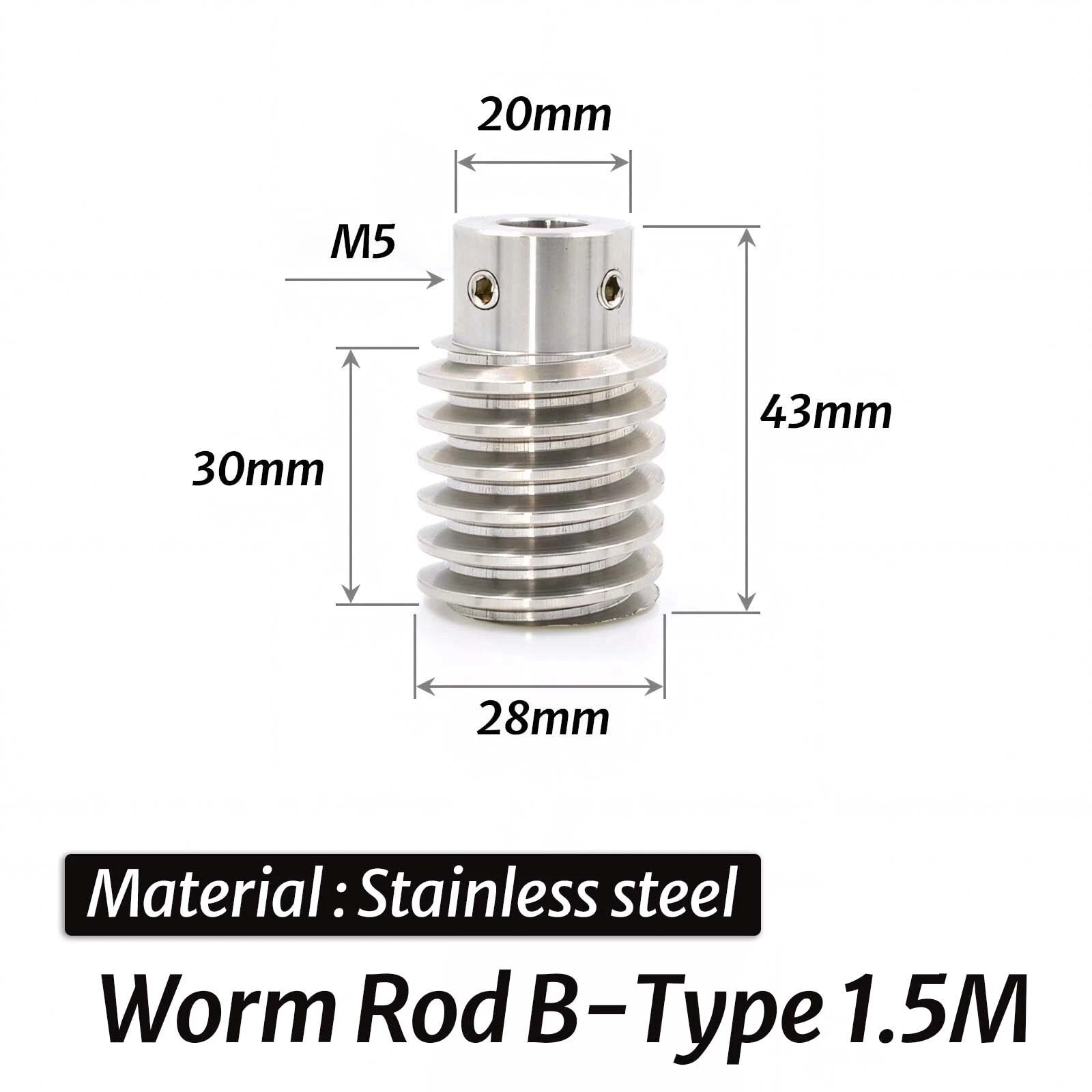
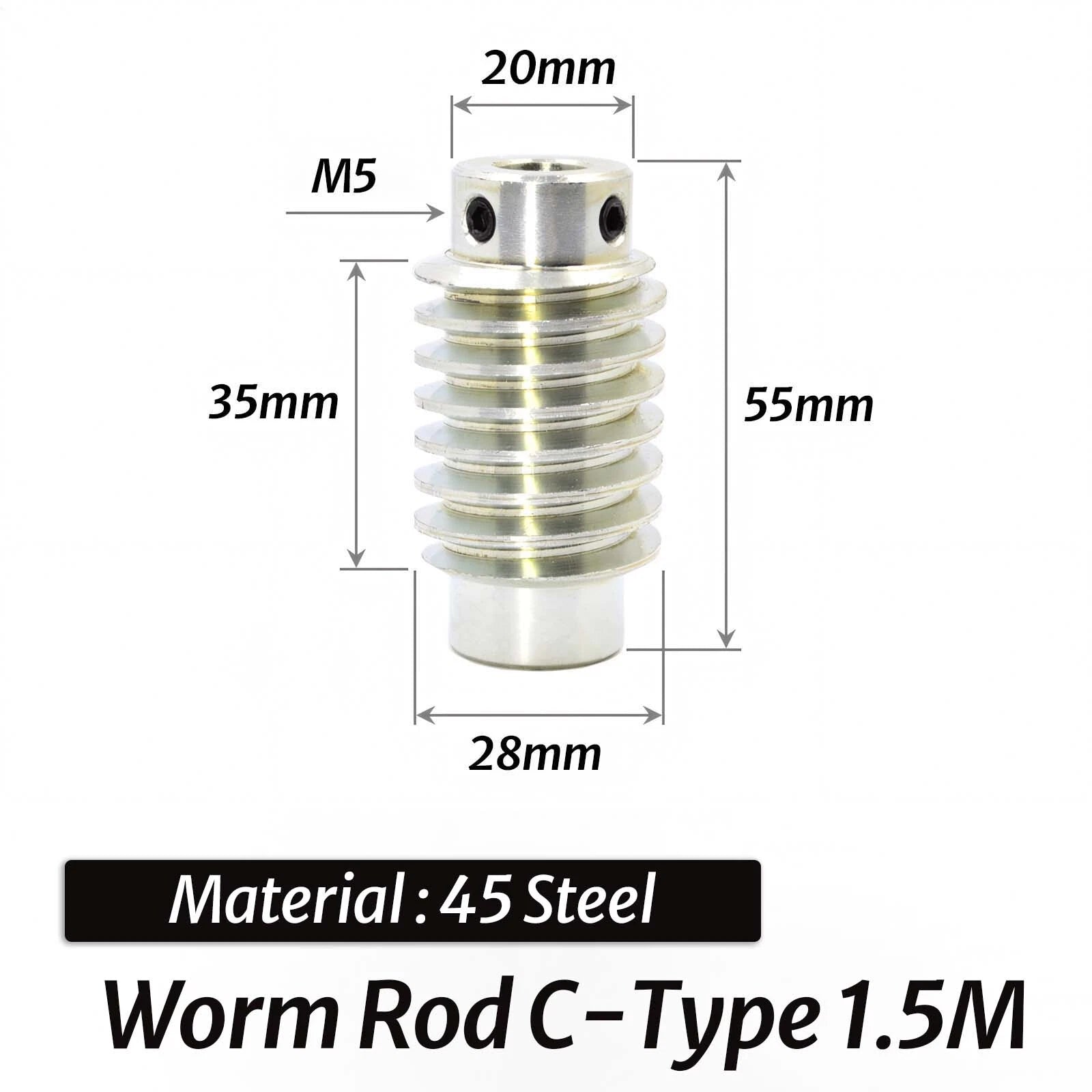
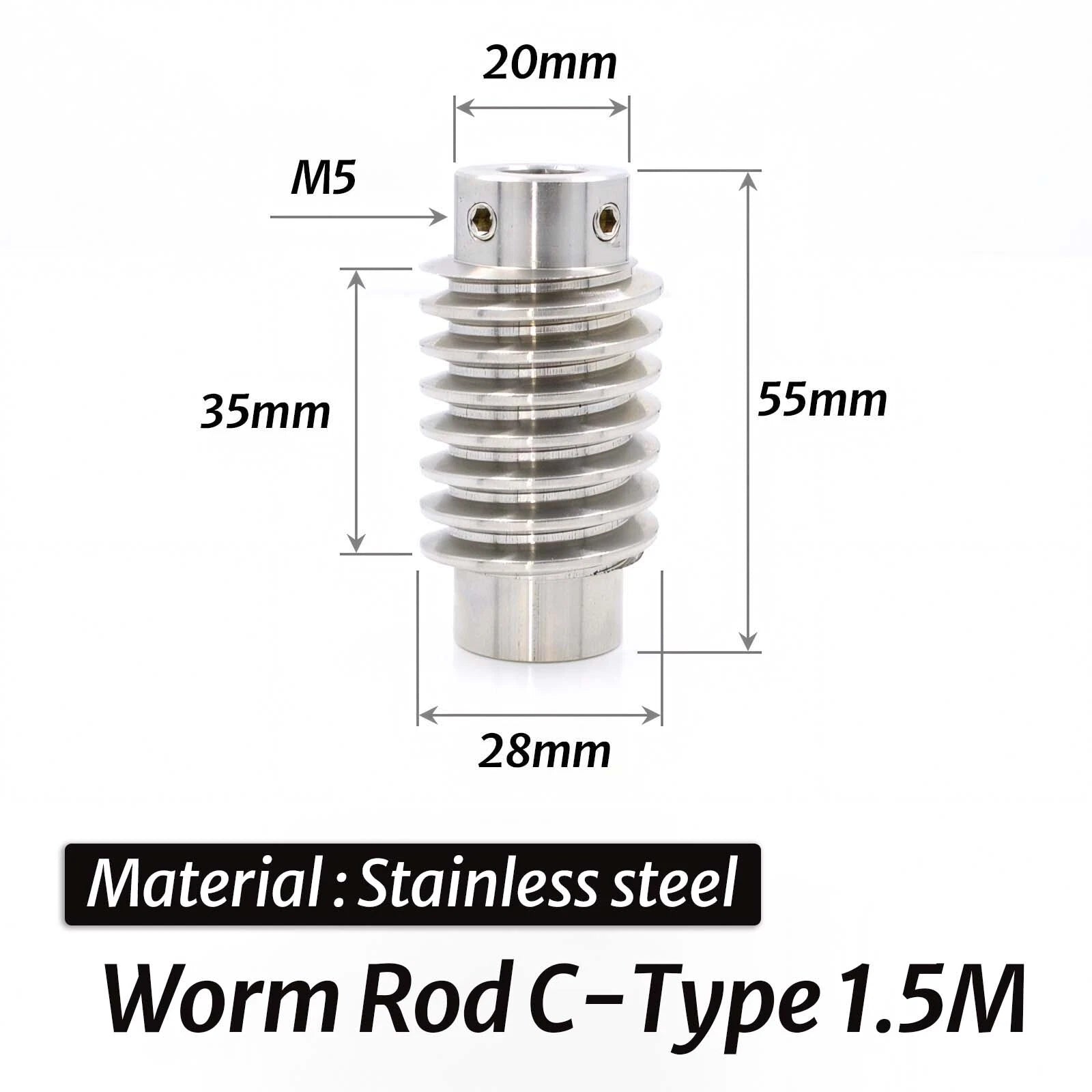
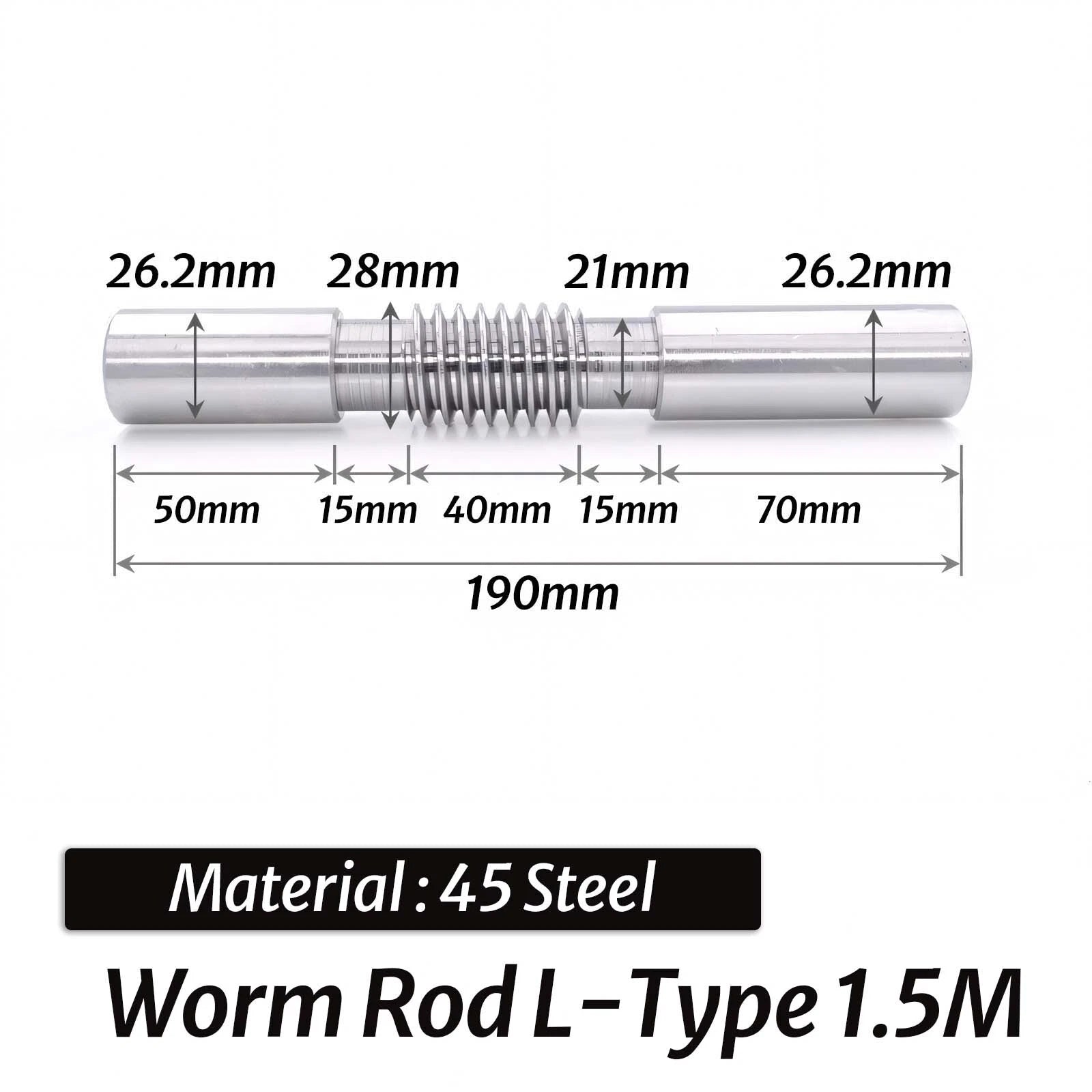
This worm gear set pairs a worm wheel (gear) with a matching worm rod (shaft) in your choice of module (0.5M, 0.8M, 1M, or 1.5M), tooth count (20T to 60T), bore diameter (4 mm / 0.16 in to 20 mm / 0.79 in), and material (brass, 45 steel, or stainless steel). Worm rods are available in A-Type, B-Type, C-Type, and L-Type configurations to suit different mounting and coupling requirements.

Typical applications include small-scale robotic joint actuators with worm gear reduction, DIY CNC rotary axis drives using 1M or 1.5M module worm sets, and compact conveyor or indexing table mechanisms where a self-locking worm gear shaft prevents back-driving under load.

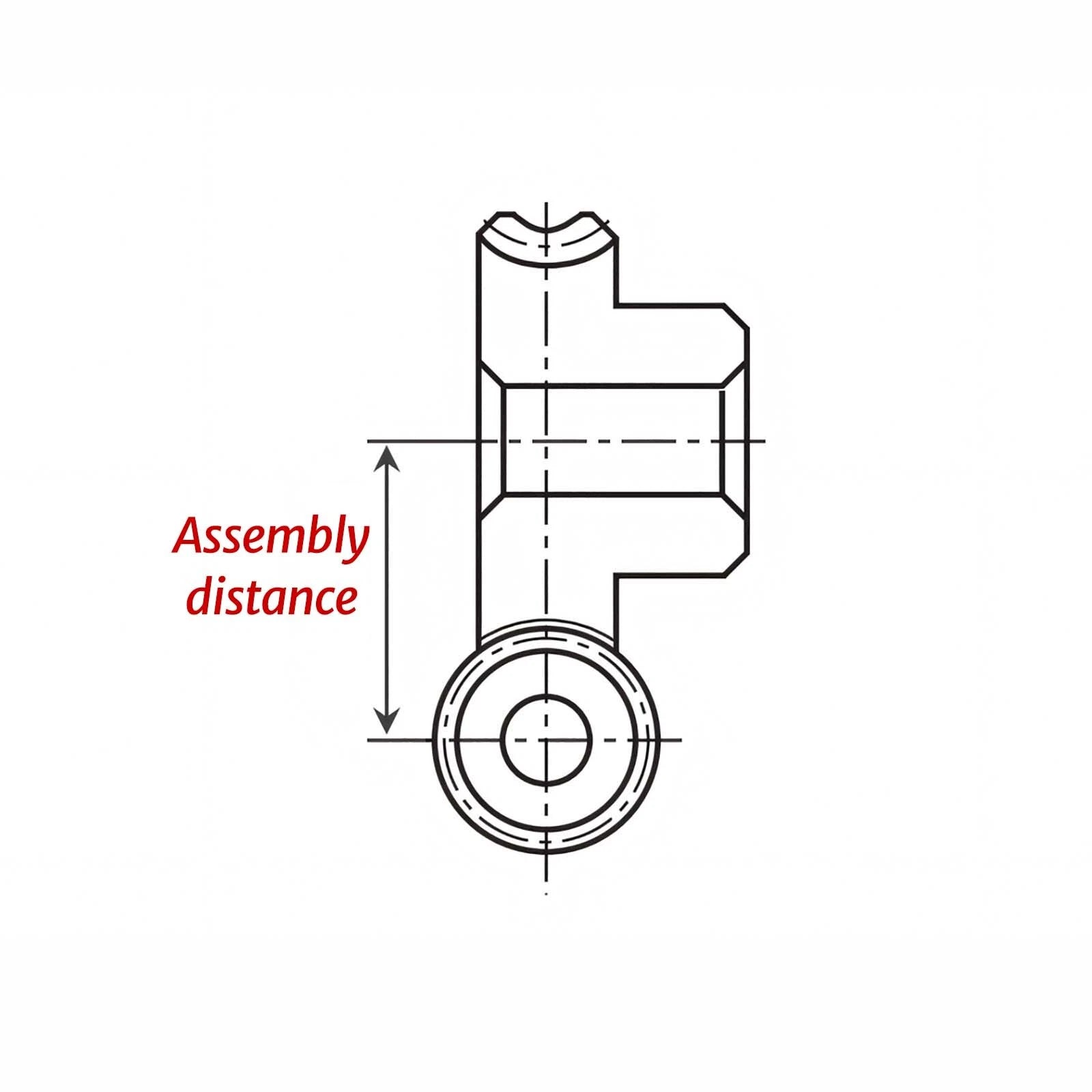
⚙️ Compatibility: Designed for use with matching module worm rods and worm wheels of the same module (0.5M, 0.8M, 1M, or 1.5M). Bore sizes range from 4 mm to 20 mm with keyway options on larger bores. Verify your shaft diameter and keyway spec before ordering.

✅ Key Features of These Worm Wheel Gear & Worm Gear Shaft Sets

🔩
Multi-Module Selection

Available in 0.5M, 0.8M, 1M, and 1.5M modules with tooth counts from 20T to 60T, giving you precise gear ratio control from approximately 20:1 to 60:1 in a single-stage worm drive.

🥇
Three Material Options

Choose brass for low-noise, corrosion-resistant operation; 45 steel for higher load capacity in dry environments; or stainless steel for moisture-exposed or food-adjacent applications requiring oxidation resistance.

📐
Wide Bore Range

Bore diameters from 4 mm (0.16 in) to 20 mm (0.79 in), including keyway variants (e.g., 12 mm / 4×2 mm, 14 mm / 5×2.5 mm, 18 mm / 6×3 mm) for positive shaft locking without set-screw slip.

🔄
Multiple Rod Configurations

Worm rods come in A-Type (standard), B-Type (extended), C-Type (flanged), and L-Type (long shaft) to match different housing and coupling layouts without custom machining.

🛡️
Self-Locking Drive Geometry

Low lead-angle worm geometry provides inherent back-drive resistance, keeping your load position stable when power is removed — ideal for lifting, indexing, and positioning mechanisms.

🔧
Drop-In Replacement Sizing

Standard module and bore dimensions follow metric gear conventions, making these sets compatible with common worm gearbox housings and motor shaft sizes used in robotics and automation platforms.

📐 Technical Specifications — Worm Wheel Gear & Worm Gear Shaft

Module 0.5M / 0.8M / 1M / 1.5M
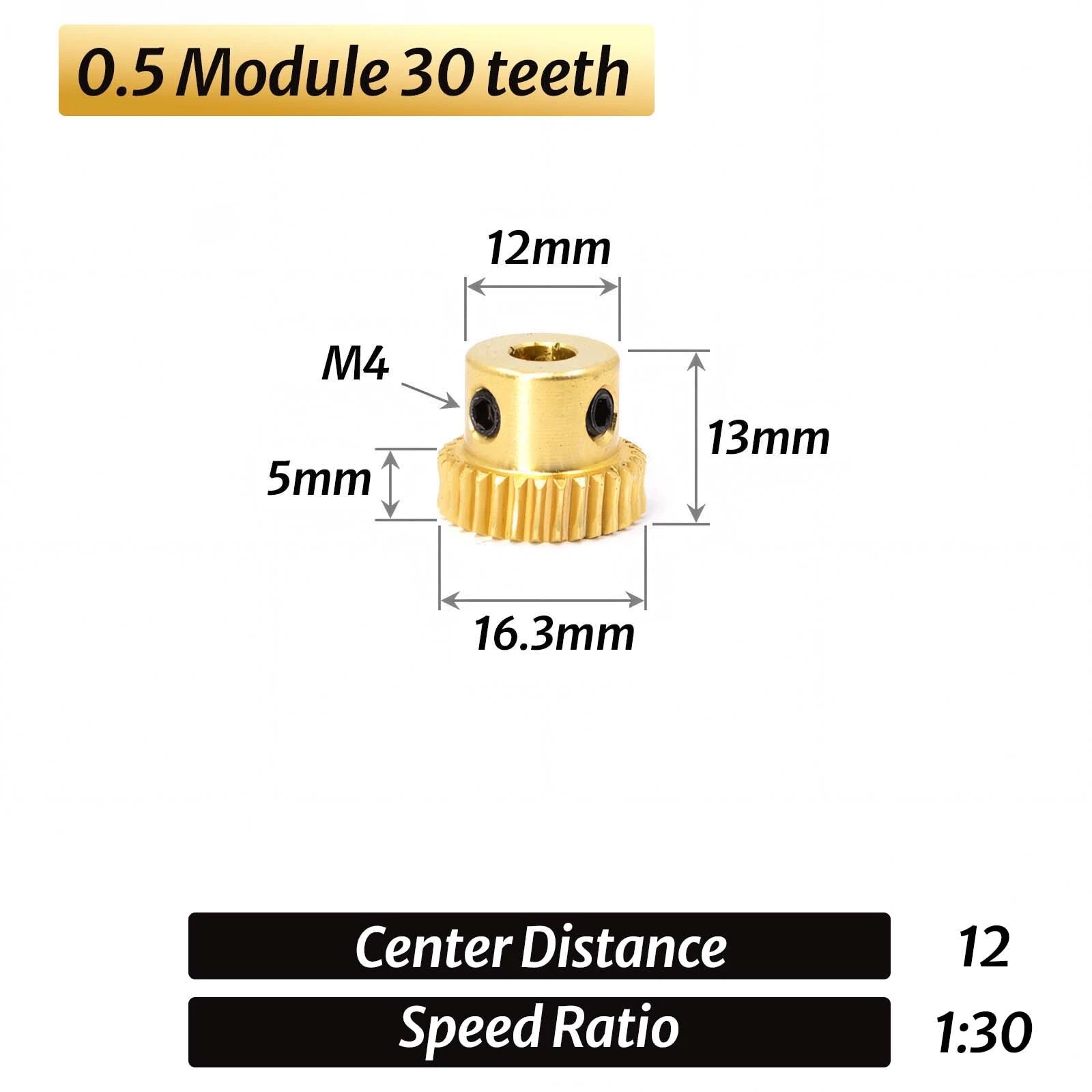
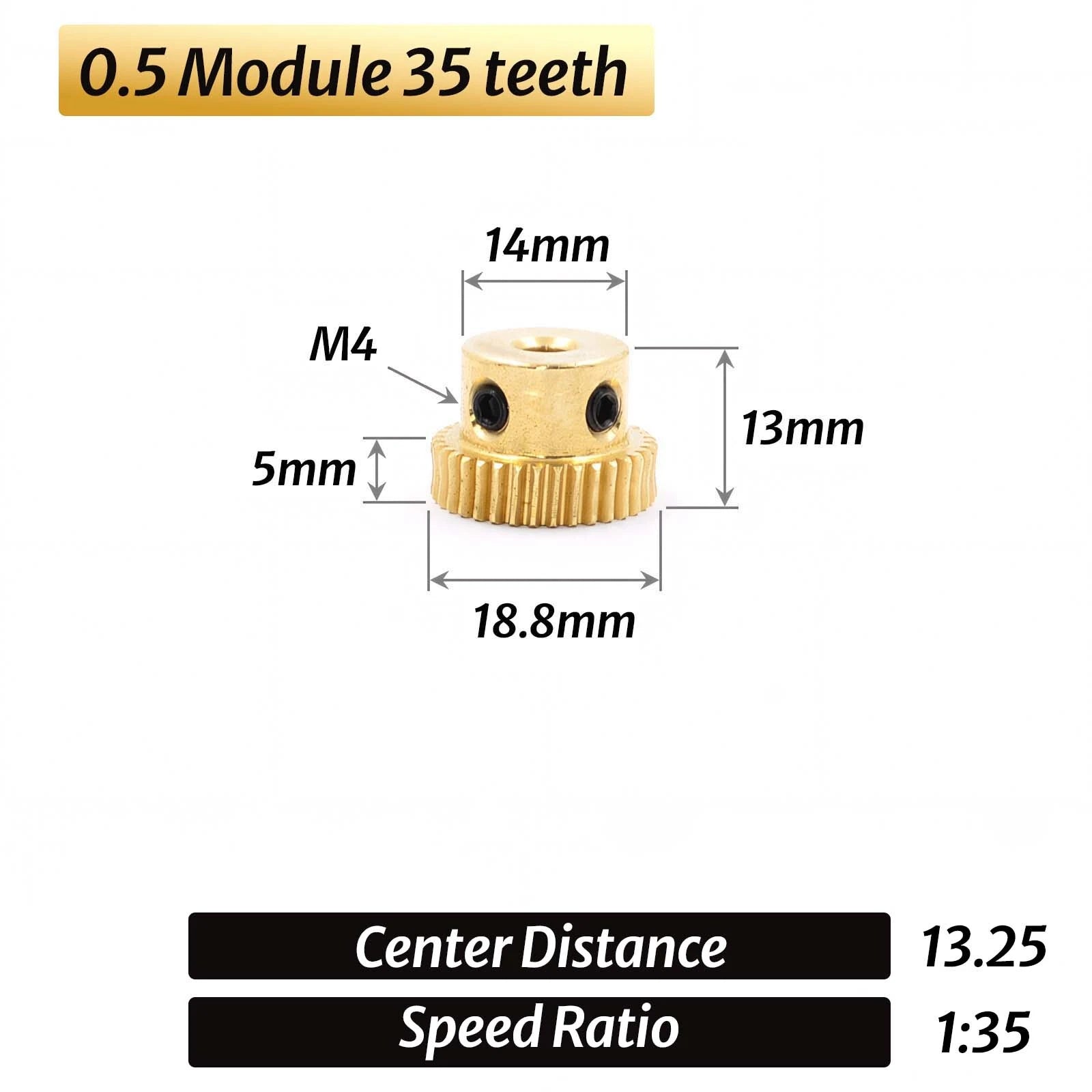
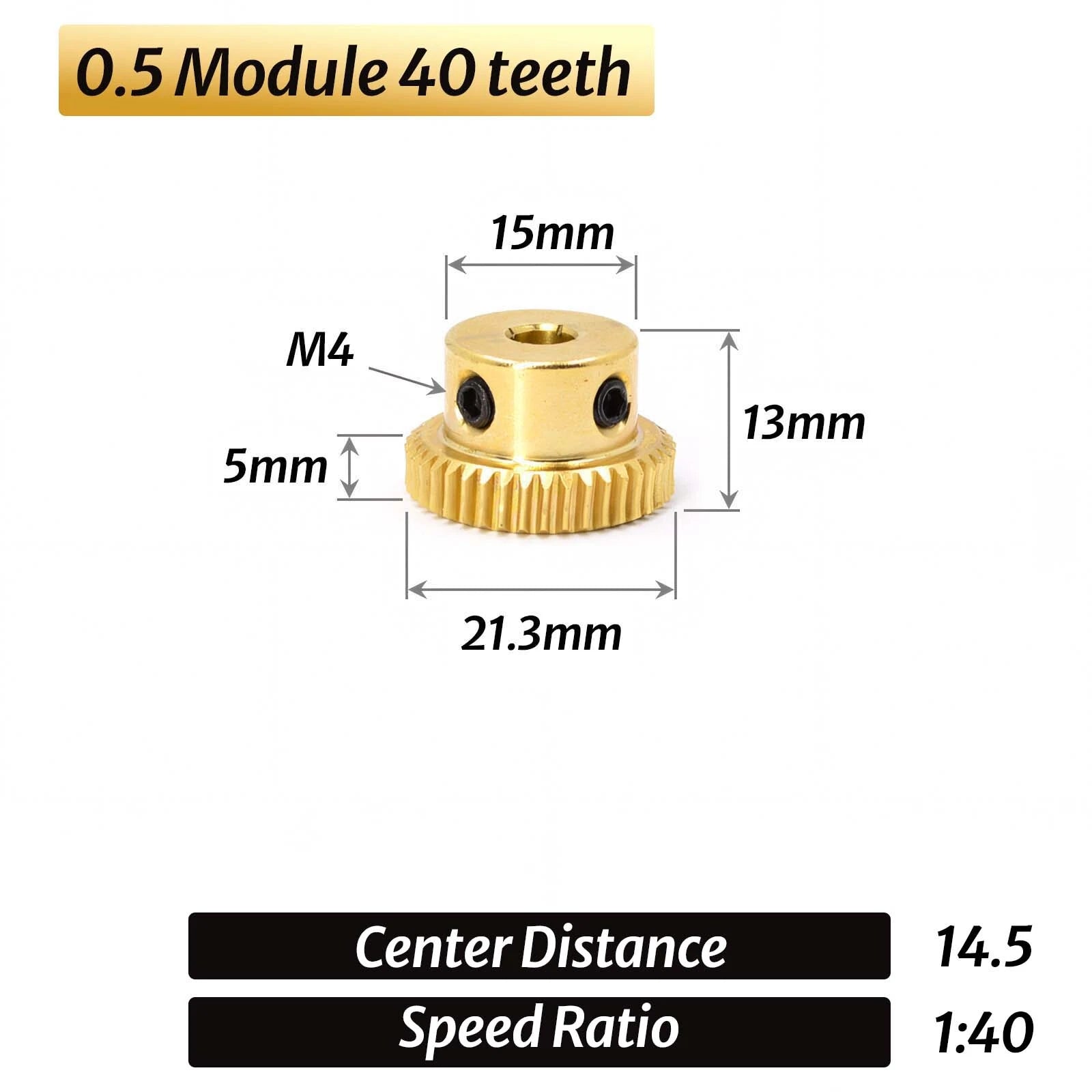
Tooth Count (Worm Wheel) 20T, 25T, 30T, 35T, 40T, 50T, 60T (varies by module)
Bore Diameter 4 mm – 20 mm (see variant options for keyway specs)
Worm Rod Types A-Type, B-Type, C-Type, L-Type
Material — Worm Wheel Brass
Material — Worm Rod 45 Steel / Stainless Steel
Pressure Angle See variant options
Lead Angle See variant options
Surface Finish See variant options
Outer Diameter (Worm Wheel) See variant options
Face Width See variant options
Shaft Diameter (Worm Rod) See variant options
Overall Length (Worm Rod) See variant options
Quantity per Order 1 piece (gear or rod, as selected)

❓ Frequently Asked Questions

How do I choose the right module for my application?

The module determines the tooth size and load capacity. Smaller modules (0.5M, 0.8M) suit light-duty, compact mechanisms such as camera pan-tilt heads or small robotic joints. Larger modules (1M, 1.5M) handle higher torque loads in conveyor drives, indexing tables, and motorized stages. Match the module of the worm wheel and worm rod — mixing modules will result in no mesh.

What gear ratio does a worm gear set provide?

The gear ratio equals the number of teeth on the worm wheel divided by the number of starts on the worm rod. For a single-start worm rod paired with a 30T worm wheel, the ratio is 30:1. This means the output shaft turns once for every 30 input shaft revolutions, providing significant speed reduction and torque multiplication in a compact package.

Which material should I choose — brass, 45 steel, or stainless steel?

Brass worm wheels offer low friction, quiet operation, and good corrosion resistance, making them the most common choice for general-purpose and indoor applications. 45 steel worm rods provide higher tensile strength for heavier loads in dry environments. Stainless steel is recommended for humid, wet, or corrosive environments where oxidation resistance is critical, such as outdoor equipment or washdown-duty machinery.

What does the bore keyway specification mean (e.g., 12mm / 4×2mm)?

The bore keyway notation indicates the bore diameter followed by the keyway width × depth. For example, "12mm / 4×2mm" means the bore is 12 mm in diameter with a 4 mm wide by 2 mm deep keyway slot. This keyway accepts a matching key on your shaft to transmit torque without relying solely on a set screw, which is important for high-torque or reversing-load applications. Verify your shaft's keyway dimensions before selecting a bore variant.

Is this worm gear set self-locking?

Worm gear sets with a low lead angle (typically single-start worms at small modules) exhibit self-locking behavior, meaning the output load cannot back-drive the input. This is useful for lifting, positioning, and indexing applications where you need the load to hold position when the motor is off. However, self-locking efficiency is lower than non-locking configurations, so factor this into your power budget. Confirm the lead angle of your selected variant if back-drive prevention is a critical requirement.

What is the difference between A-Type, B-Type, C-Type, and L-Type worm rods?

The type designation refers to the shaft configuration of the worm rod. A-Type features a standard straight shaft on both ends for direct coupling. B-Type has an extended shaft on one end for use with longer housings or dual-bearing support. C-Type includes a flanged end for face-mounting to a gearbox housing. L-Type is a long-shaft variant designed for applications requiring extended reach or where the worm must span a wider housing. Select the type that matches your gearbox housing or mounting arrangement.

Can I use this worm gear set with a stepper or servo motor?

Yes. These worm gear sets are commonly paired with NEMA 17 or NEMA 23 stepper motors and small servo motors in robotics and CNC applications. Ensure the worm rod bore matches your motor shaft diameter, and use a keyway bore variant or set-screw collar for secure coupling. For high-cycle or high-speed stepper applications, brass worm wheels with stainless steel rods are recommended to minimize wear.

🛒 Select your module, tooth count, bore size, and material above, then add to cart.

You may also like

Recently viewed