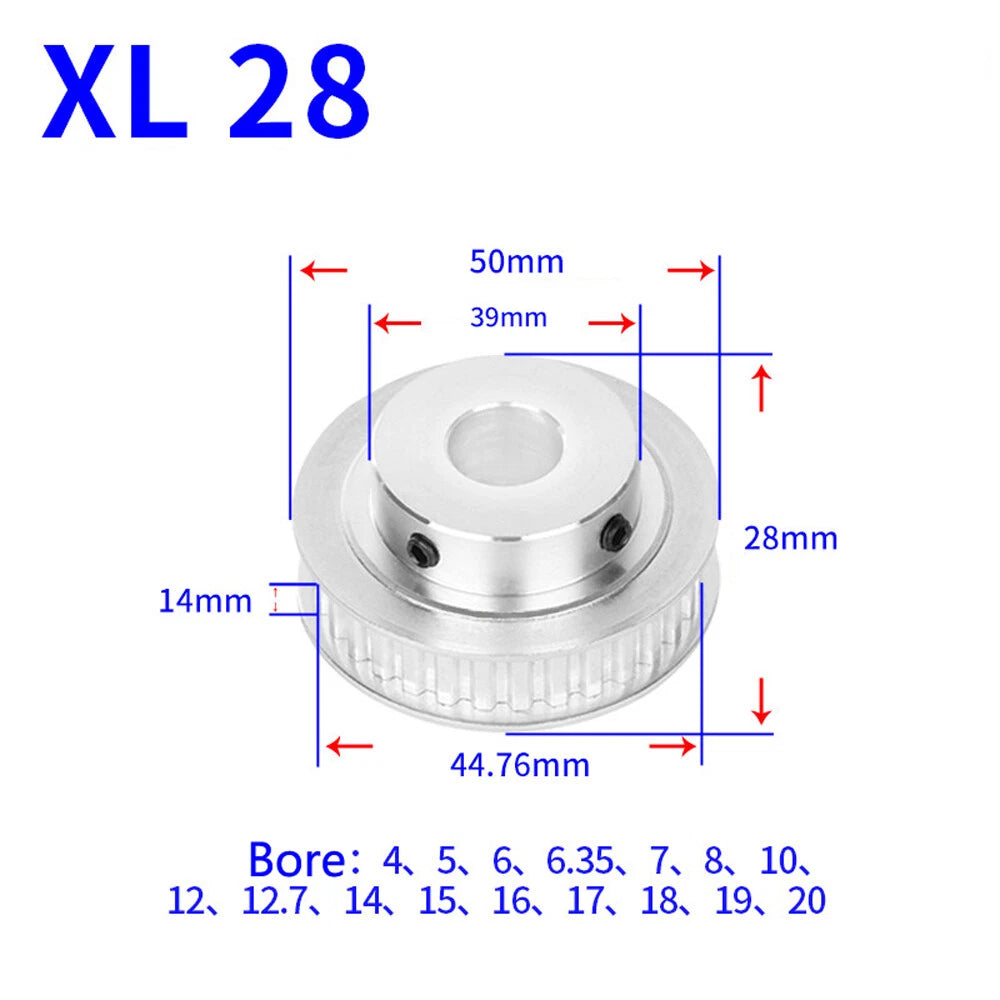
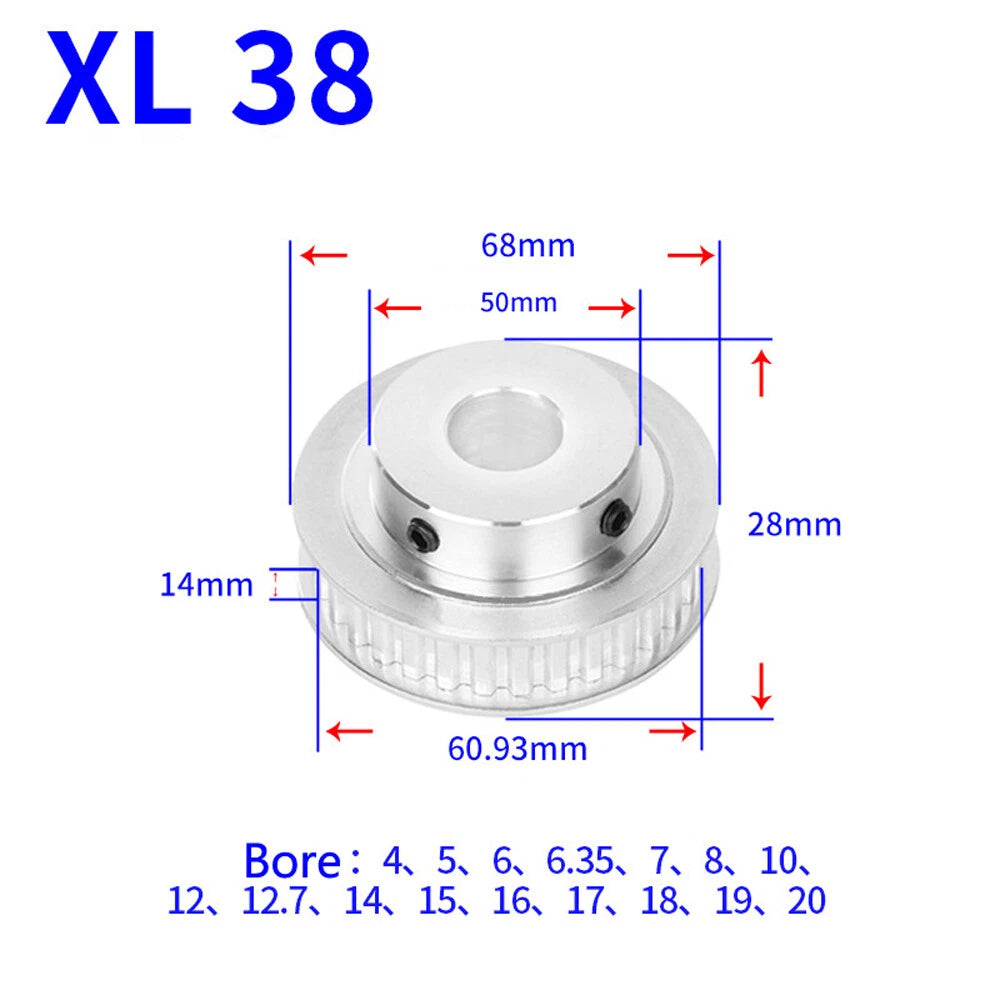
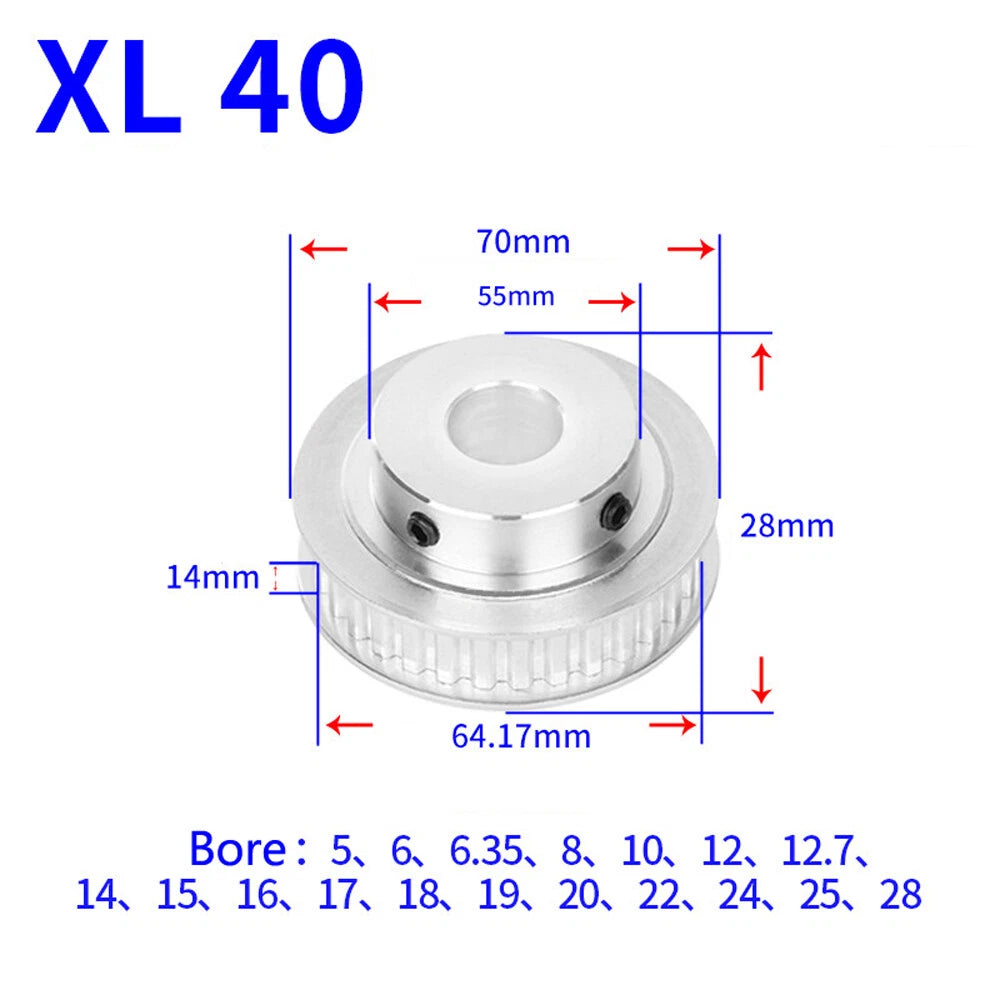
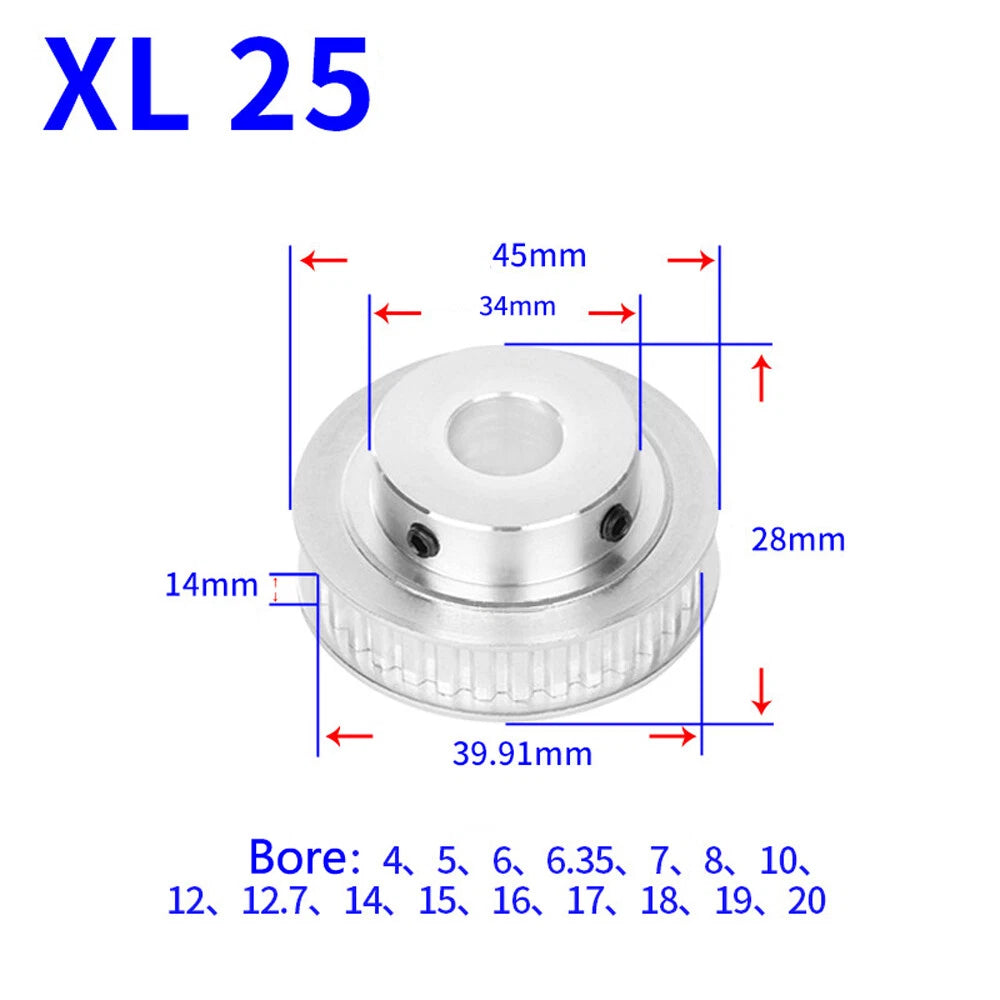
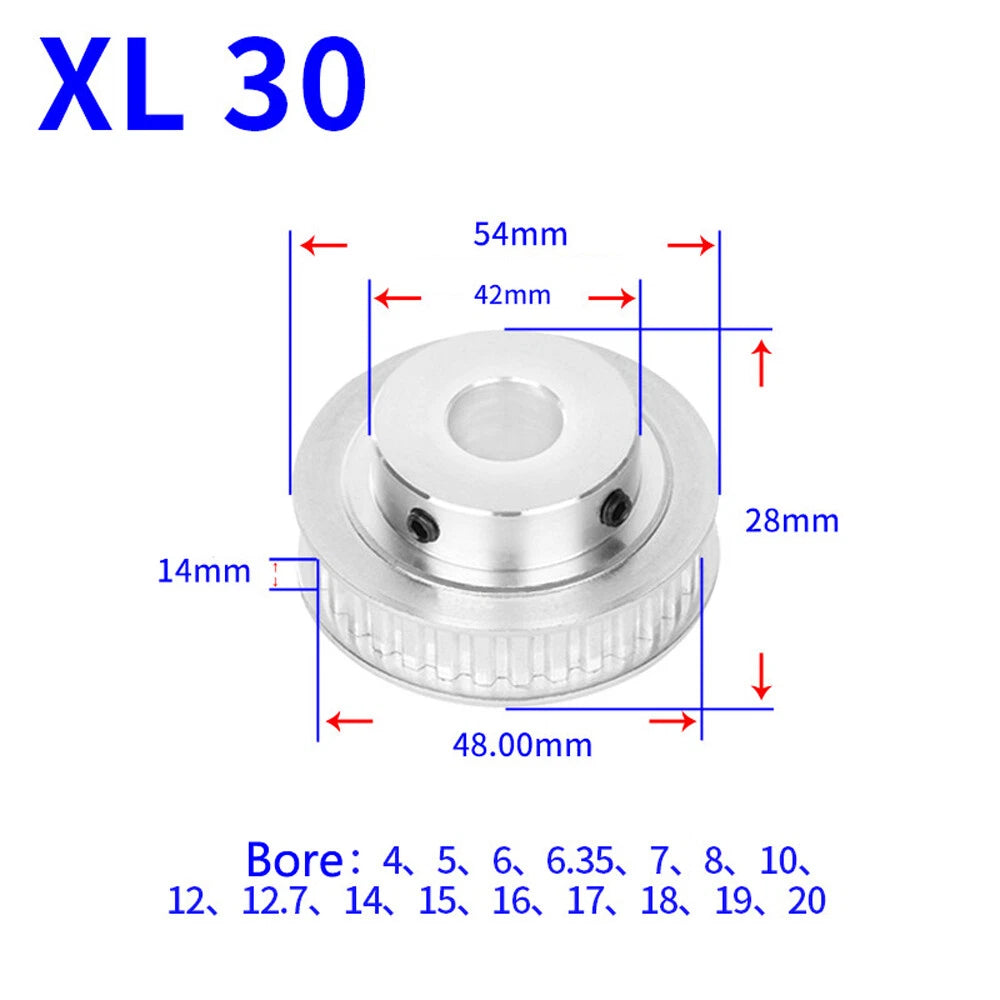
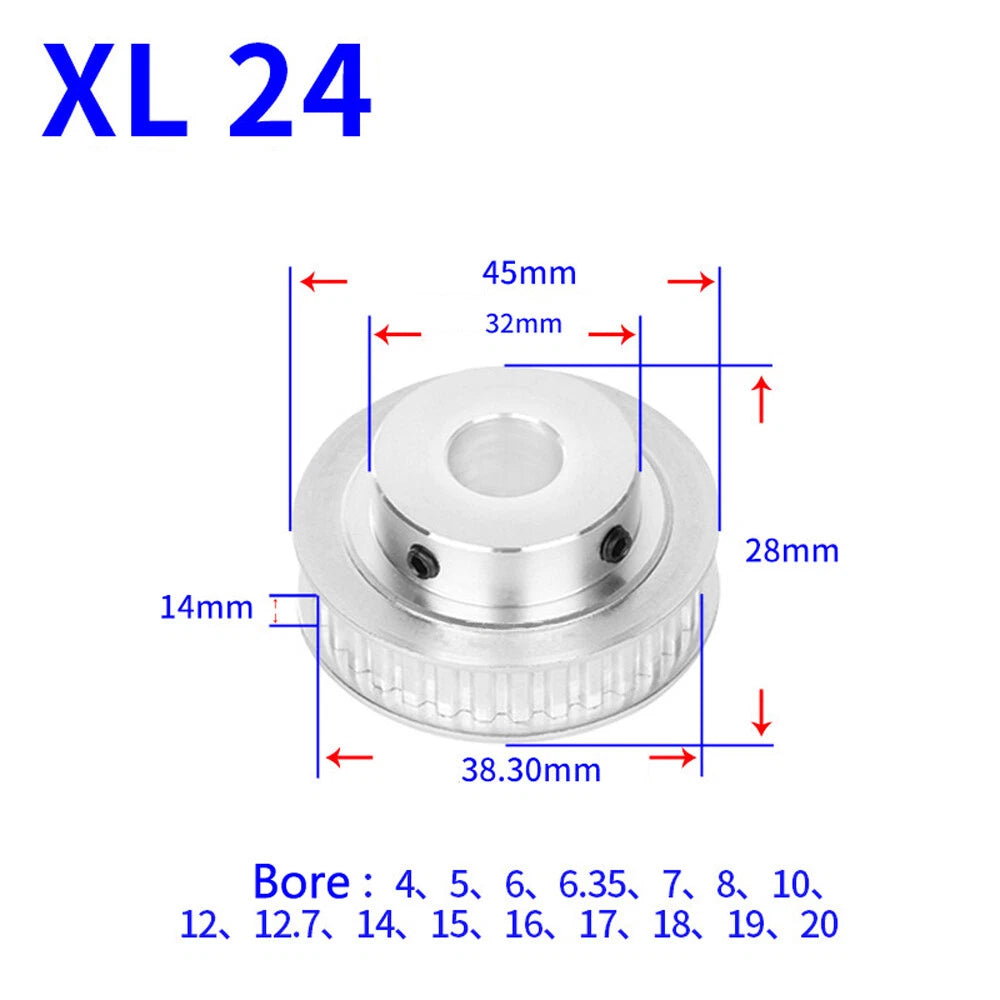
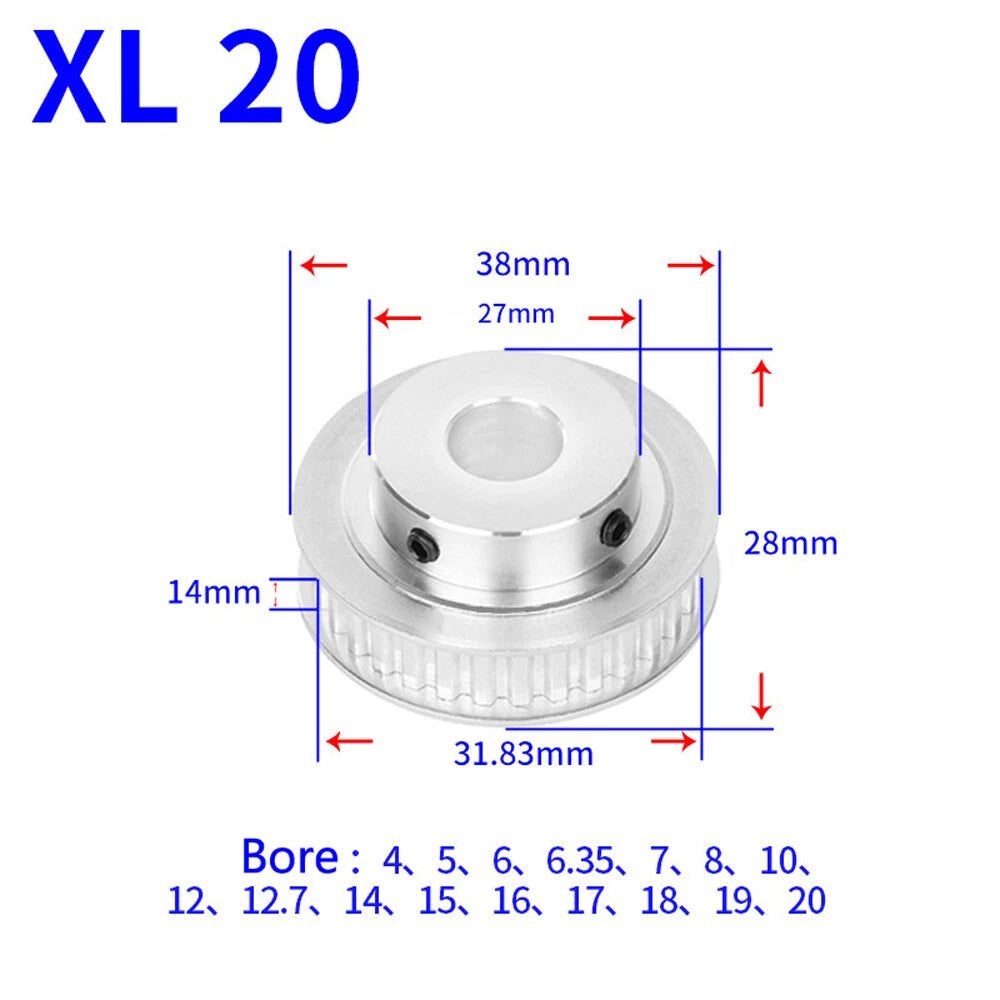
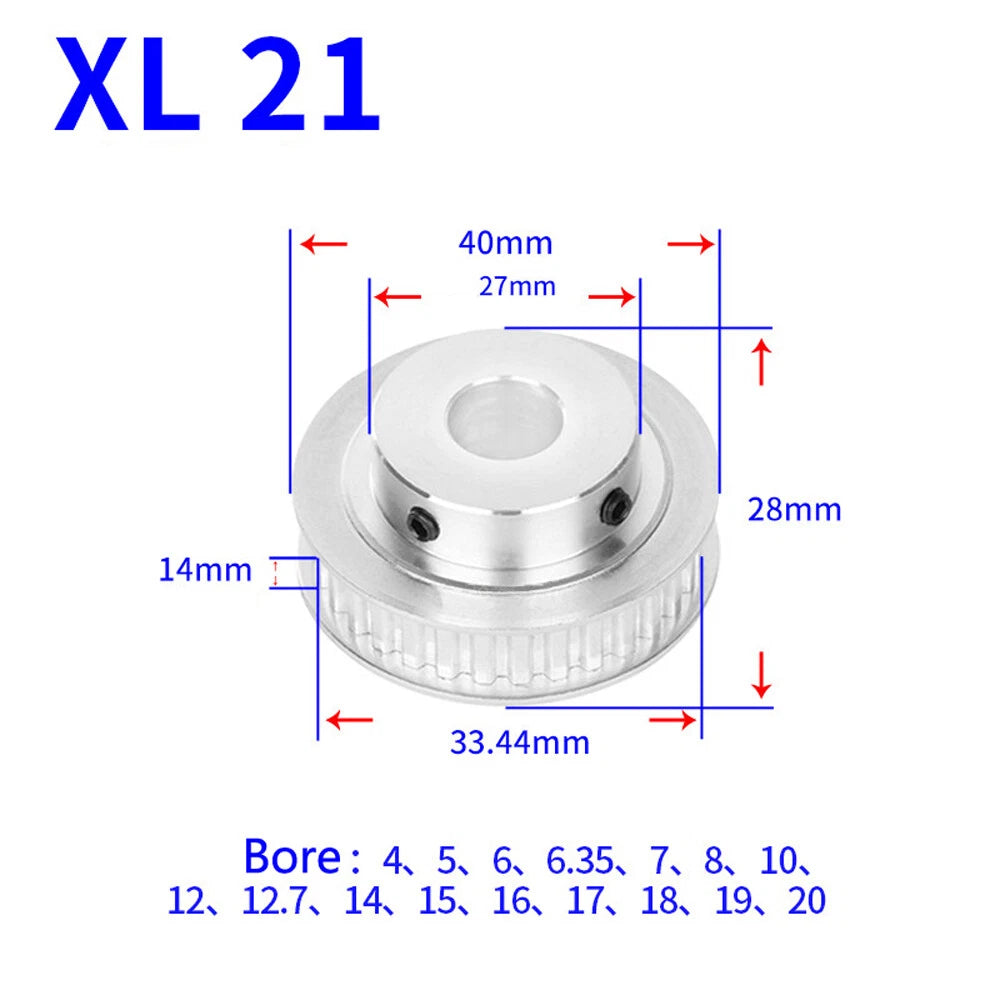
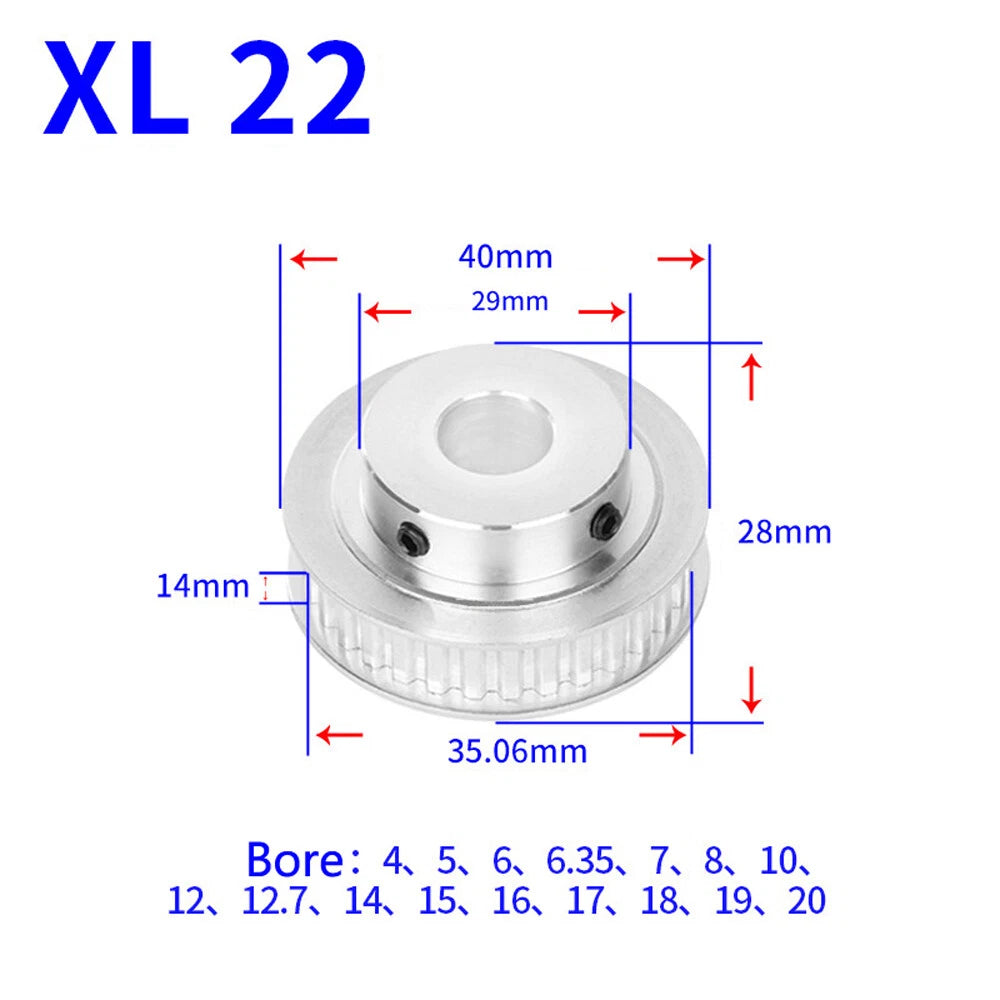
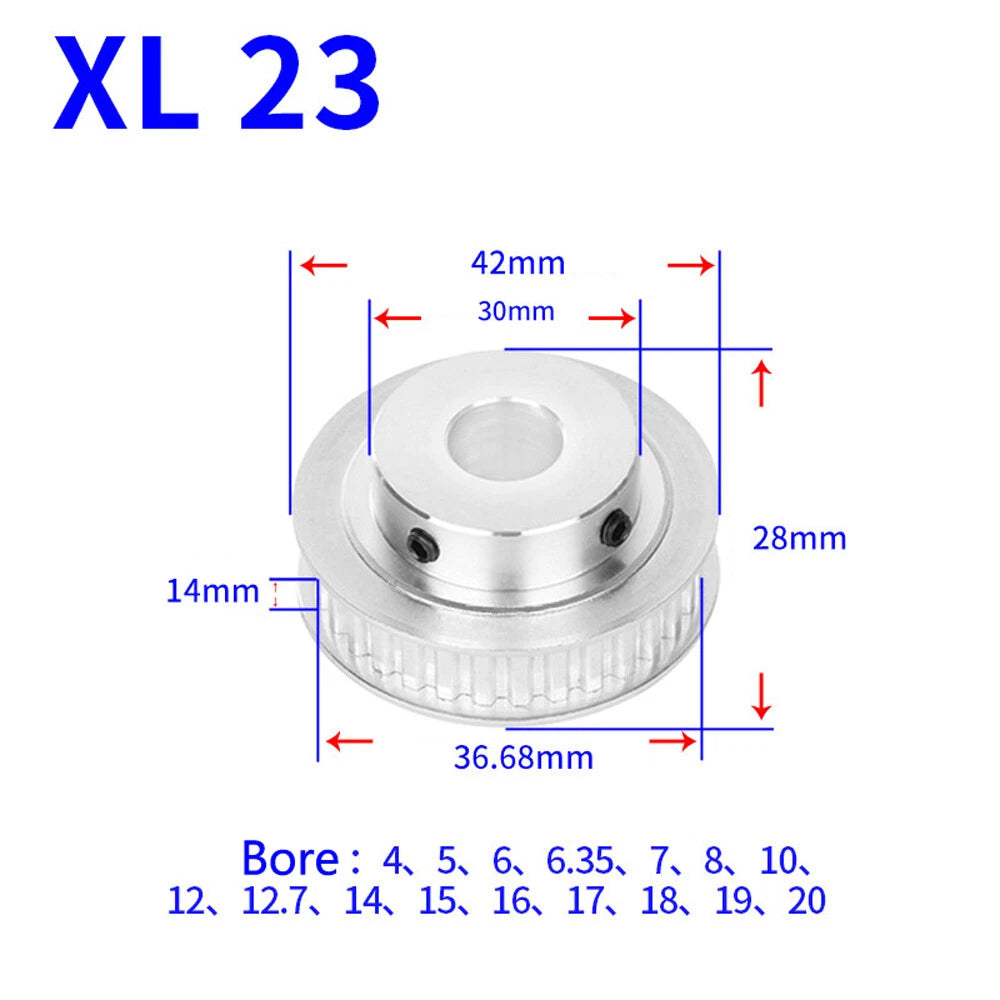
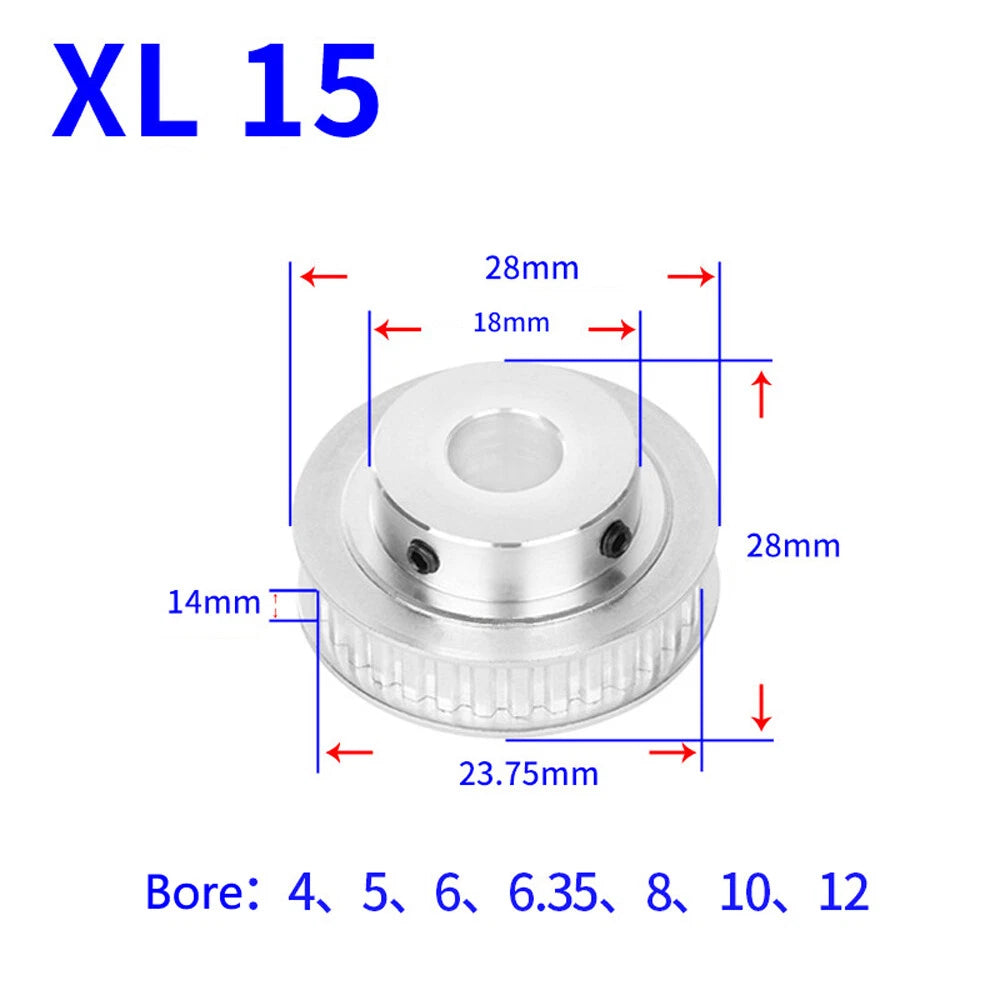
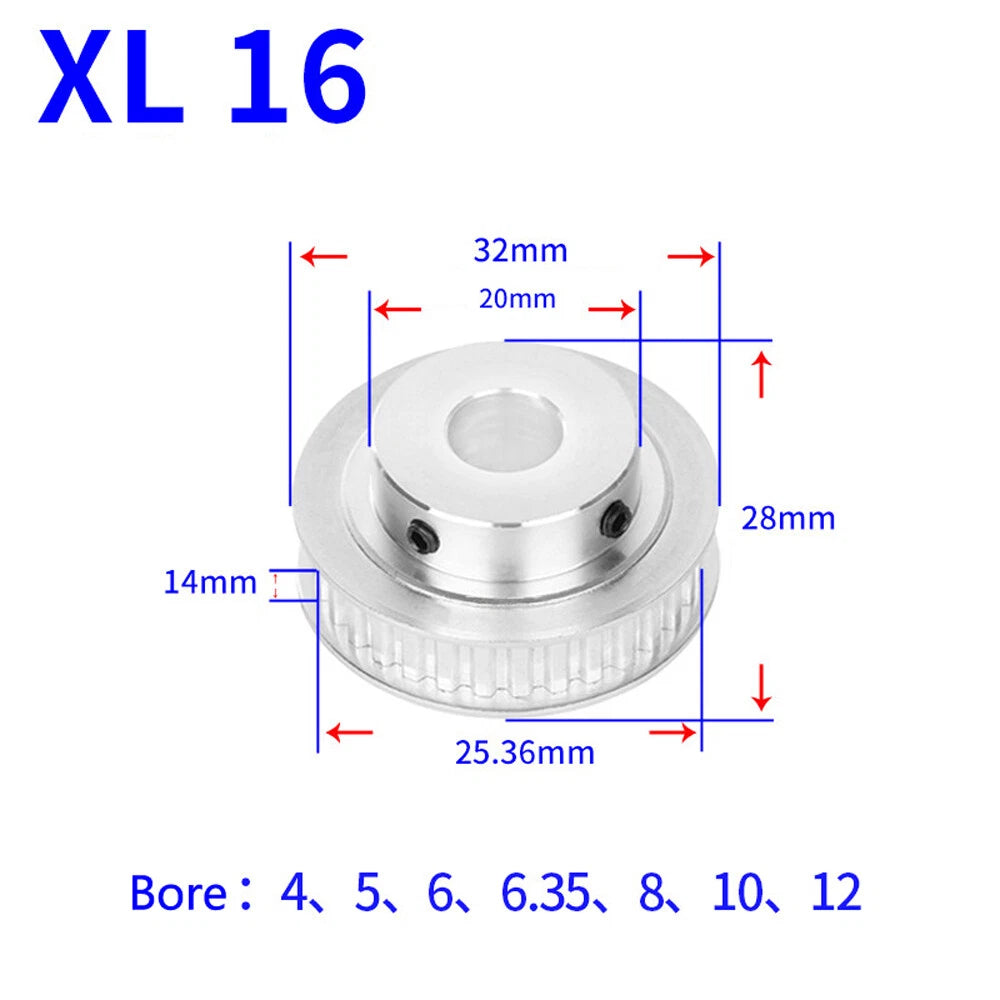
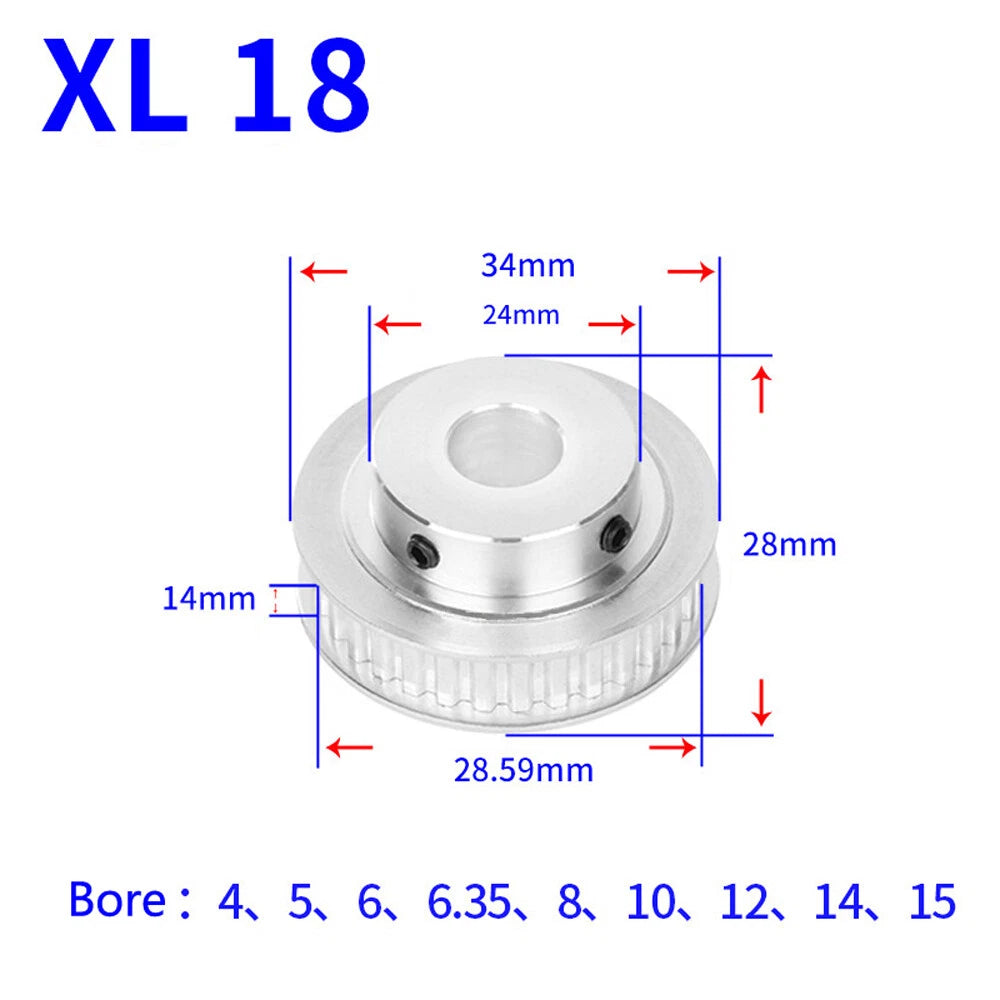
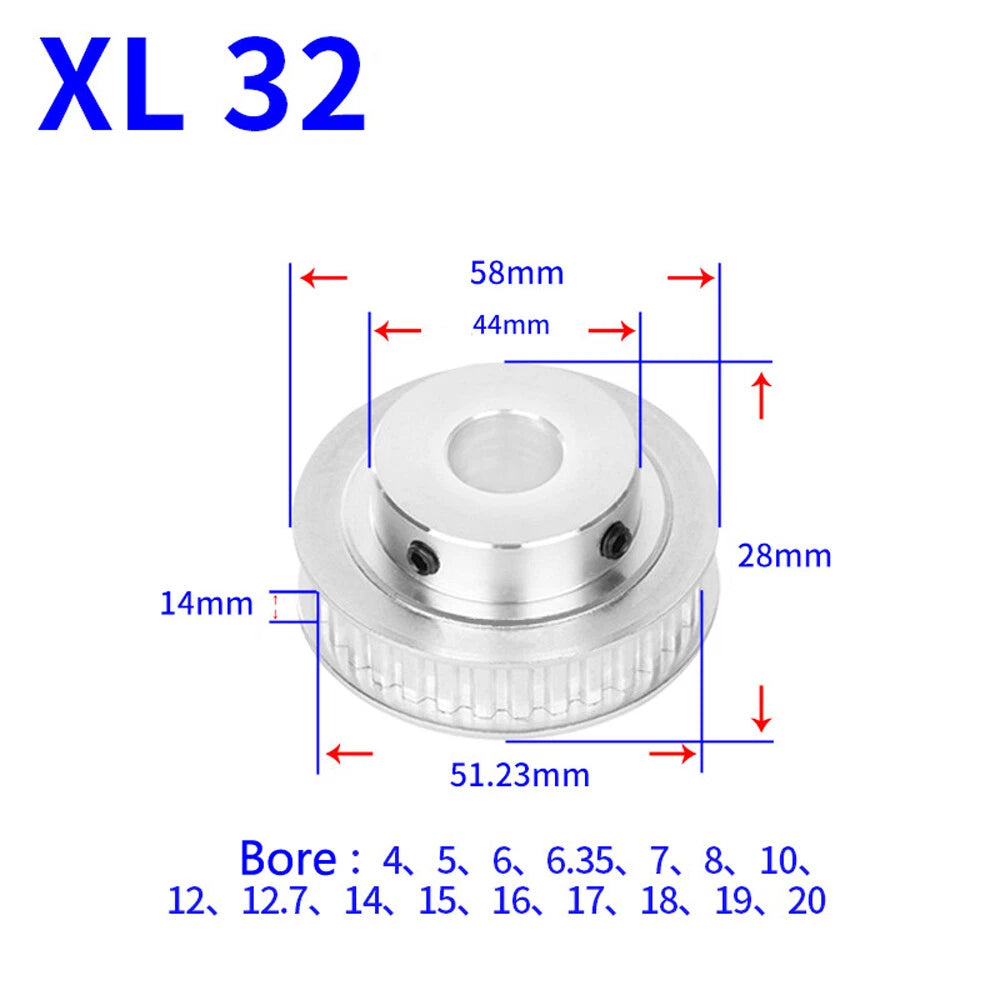
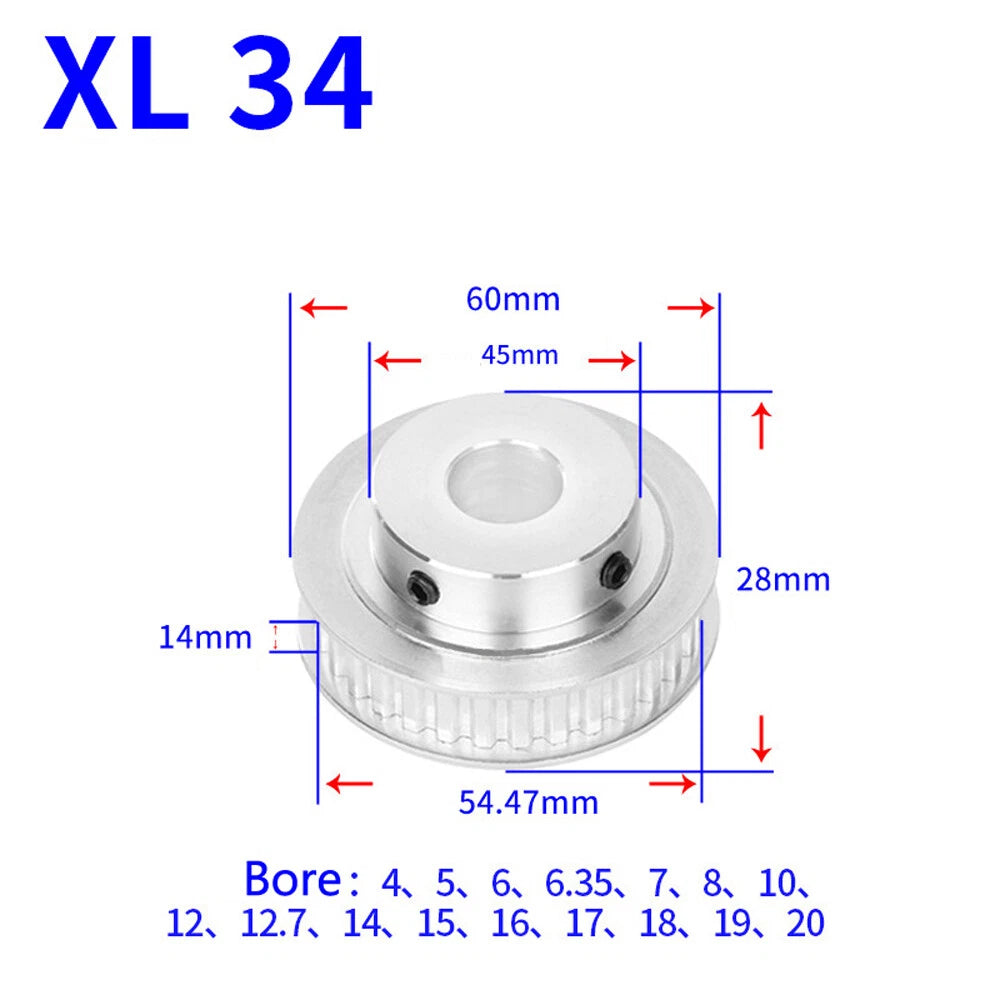
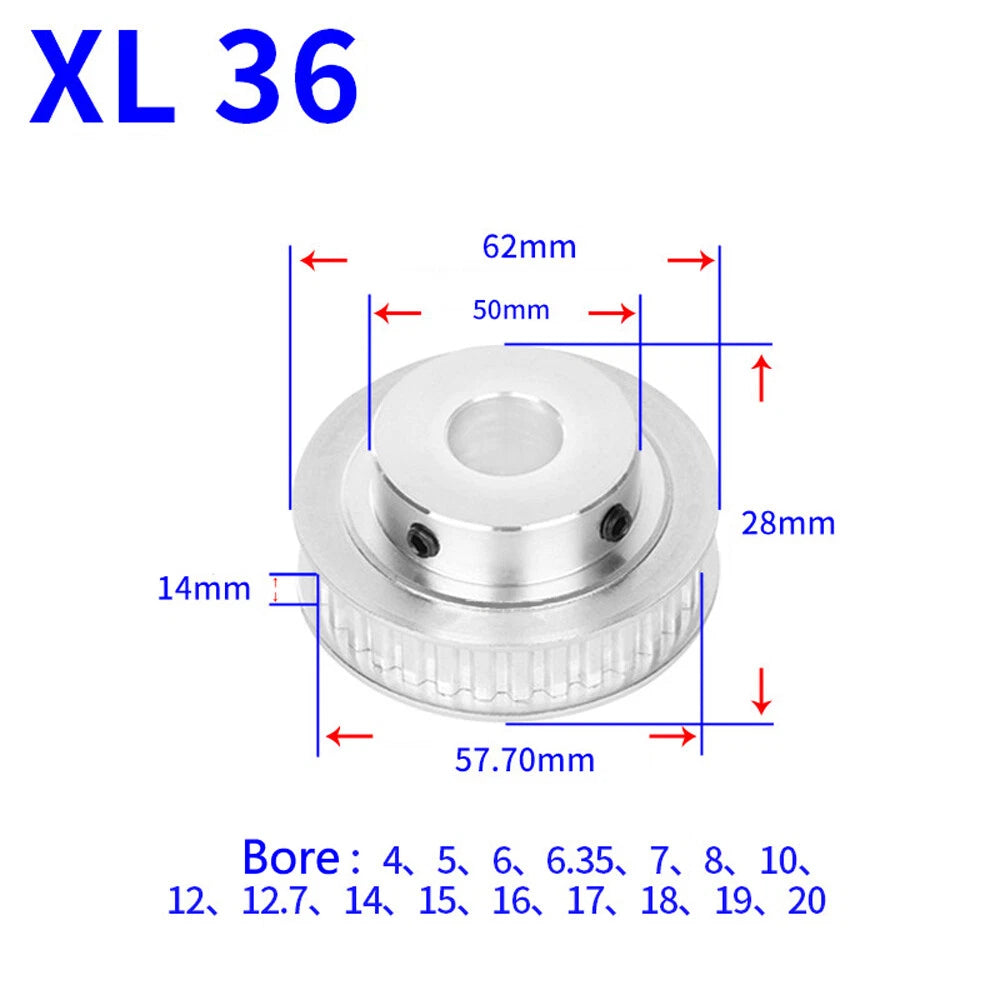
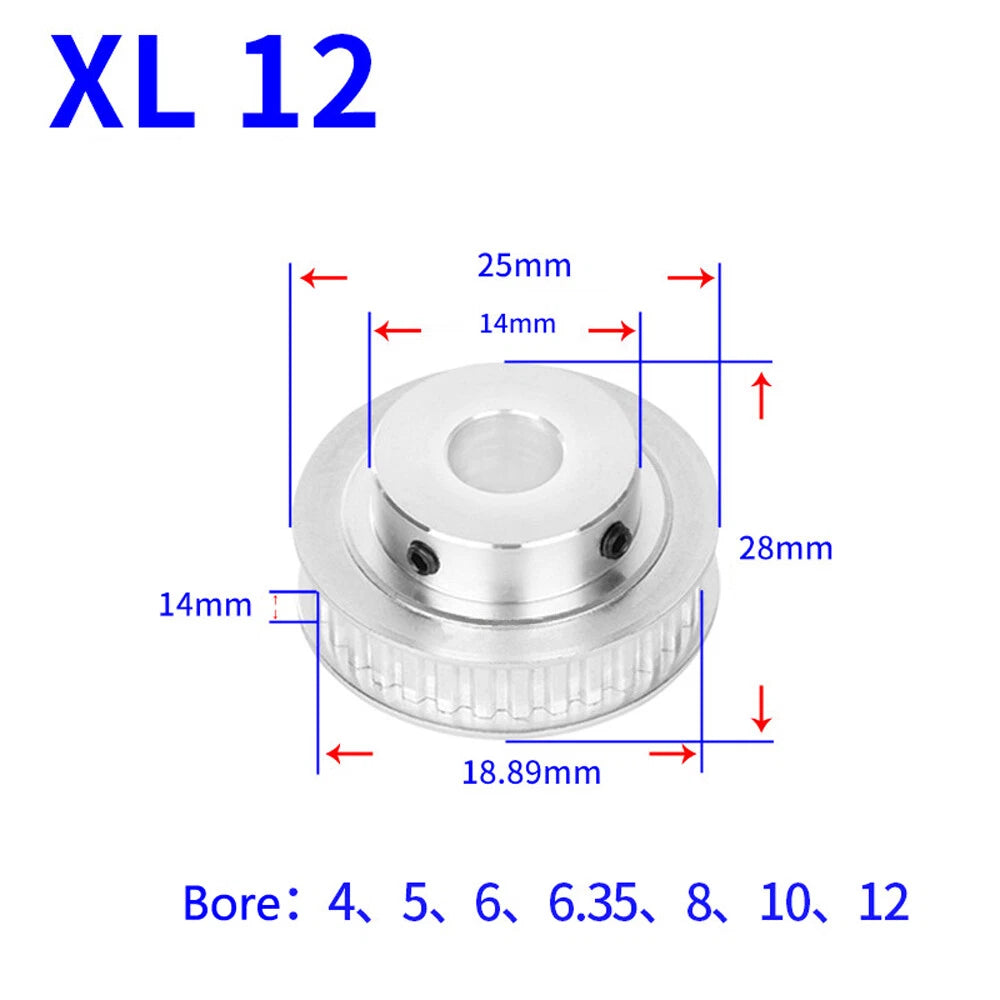
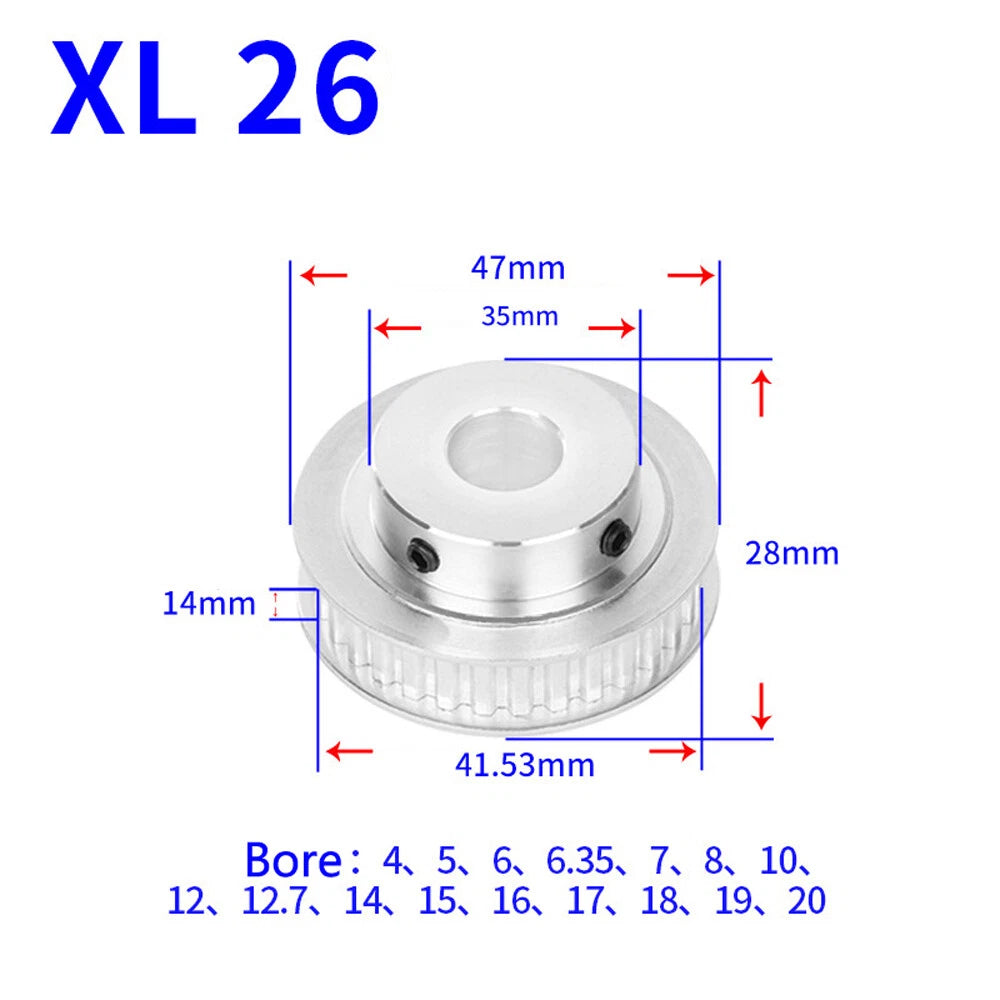
XL 10-40Teeth Timing Belt Pulley Pitch 5.08mm With Step Drive Pulleys Width 14mm

No reviews

Price:
Sale price$3.36 USD
Stock:
In stock (500 units), ready to be shipped

Payment & Security

Ach Direct Debit Amazon American Express Apple Pay Bancontact BLIK Diners Club Discover EPS Google Pay iDEAL Wero JCB Maestro Mastercard Multibanco MobilePay PayPal Przelewy24 Shop Pay Twint Union Pay USDC Visa

Your payment information is processed securely. We do not store credit card details nor have access to your credit card information.

Limited Offer — Spend More, Save More
Spend $55+
Save $5
Spend $100+
Save $10
Spend $200+
Save $25
HomeDIYer DIY Expert Support

DIY Expert Support

Get fitment advice & recommendations

Mon–Fri  8:30 AM – 8:00 PM
24-Hour Fast Ship
Arrives in 3–14 Days
Worldwide Shipping
30-Day Returns
1 tree planted with every purchase

Description

XL Timing Belt Pulley 5.08mm Pitch — Precision Step Drive for CNC & Automation

When your CNC router, 3D printer, or automation rig demands slip-free synchronous motion, a mismatched or worn pulley becomes the weakest link in the entire drivetrain. Engineers, makers, and machine builders who need reliable XL-series timing belt pulleys will find this range covers the most common tooth counts and bore sizes in a single listing — eliminating the frustration of sourcing multiple SKUs.

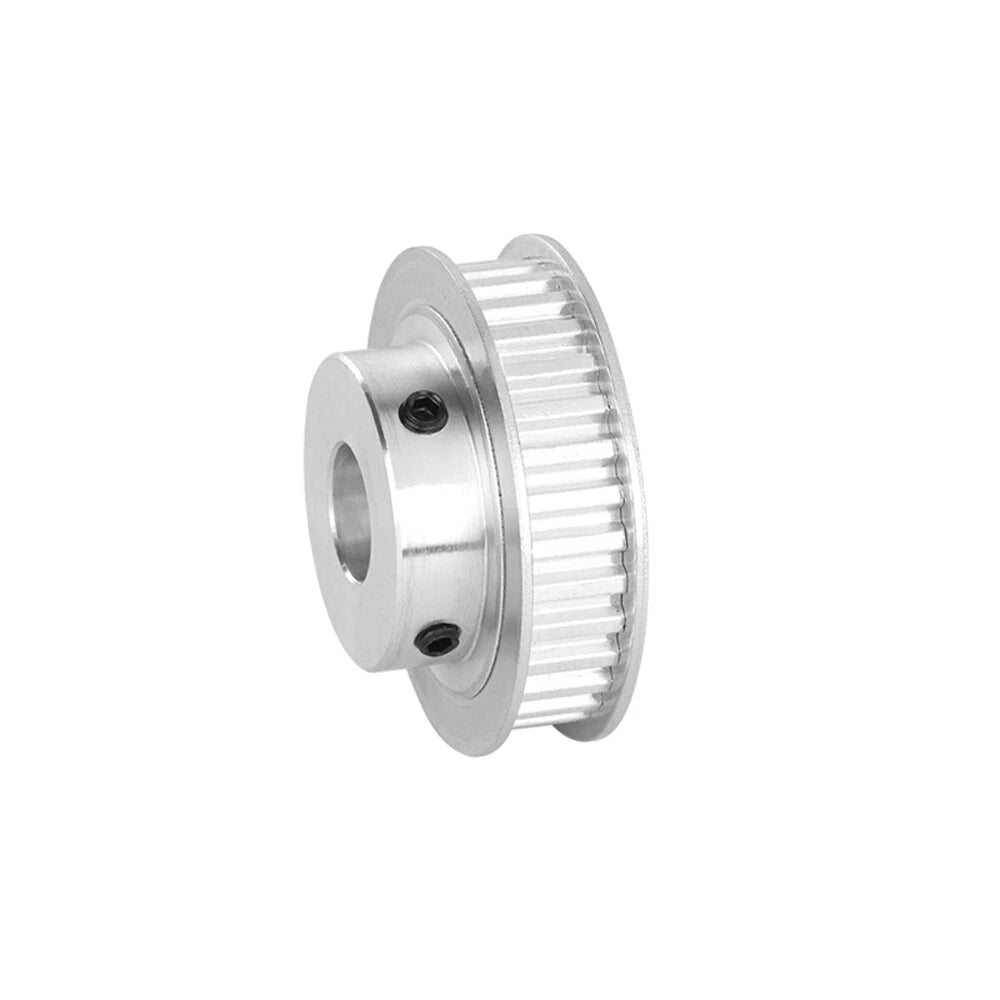
These XL timing belt pulleys feature a stepped bore hub design machined from aluminum alloy, with an anodized or natural finish depending on the variant. The belt-contact surface is precision-cut to the XL tooth profile (pitch 5.08 mm / 0.200 in), and the pulley body accommodates a 14 mm (0.55 in) wide XL timing belt. Tooth counts range from 10 T to 40 T; bore options span 4 mm to 28 mm (0.157 in – 1.102 in) to suit common motor and shaft diameters.

Typical use cases include XL belt drive systems for DIY CNC routers and laser cutters, stepper-motor drive stages in 3D printers and pick-and-place machines, and synchronous power transmission in robotics joints and conveyor prototypes — anywhere a compact, low-backlash XL pulley with a step hub is required.

⚙️ Compatible with: XL-series timing belts, 14 mm belt width, 5.08 mm (0.200 in) pitch — verify tooth count and bore before ordering.

✅ Key Features of These XL Timing Belt Pulleys

🦷
Wide Tooth-Count Range

Available from XL10T through XL40T, covering gear ratios from 1:1 up to 4:1 within a single product family — no need to source separate listings for each tooth count.

🔩
Step Bore Hub Design

The stepped hub allows the pulley to seat flush against a shaft shoulder or collar, reducing axial float and improving concentricity compared to plain-bore pulleys.

📐
Precision XL Tooth Profile

Tooth geometry is machined to the XL standard (5.08 mm pitch / 0.200 in), ensuring positive engagement with standard XL timing belts and minimising tooth-jump under load.

🏗️
Aluminum Alloy Construction

Lightweight aluminum body keeps rotational inertia low — critical for high-acceleration stepper and servo applications — while providing adequate strength for typical DIY and light-industrial loads.

📏
Broad Bore Selection

Bore options from 4 mm to 28 mm (including 6.35 mm / ¼ in and 12.7 mm / ½ in imperial sizes) accommodate NEMA stepper shafts, hobby servo shafts, and standard metric motor shafts without custom machining.

🔄
14 mm Belt Width Compatibility

The 14 mm groove width matches standard XL-14 timing belts, a widely stocked size that balances torque capacity with compact machine footprint for desktop CNC and robotics builds.

📐 Technical Specifications — XL Timing Belt Pulley

Belt Type XL (Extra Light)
Pitch 5.08 mm (0.200 in)
Number of Teeth 10 T – 40 T (see variant options)
Belt Width 14 mm (0.55 in)
Bore Diameter 4 mm – 28 mm (see variant options)
Hub Style Step bore with set-screw flat
Material Aluminum alloy
Finish See variant options
Flange See variant options
Outside Diameter See variant options
Hub Length See variant options
Quantity per Order 1 piece

❓ Frequently Asked Questions

How do I choose the right number of teeth for my application?

The tooth count determines the pitch diameter and, combined with the mating pulley, sets your drive ratio. For a 2:1 reduction pair a 20 T driving pulley with a 40 T driven pulley. For 1:1 direct drive, use matching tooth counts on both sides. As a reference, pitch diameter ≈ (teeth × 5.08 mm) ÷ π.

Which bore size should I select for a NEMA 17 stepper motor?

NEMA 17 stepper motors typically have a 5 mm output shaft. Select the 5 mm bore variant. If your motor has a D-cut shaft, ensure the set-screw flat on the pulley hub aligns with the flat on the shaft for a secure grip.

Are these pulleys compatible with standard XL timing belts from other brands?

Yes. These pulleys conform to the XL tooth profile standard (5.08 mm pitch), so they are interchangeable with XL timing belts from any manufacturer that follows the same standard. Verify that your belt is also rated for 14 mm width to match the pulley groove.

What load or torque can these aluminum pulleys handle?

Aluminum XL pulleys are well-suited for light-to-medium duty applications such as desktop CNC machines, 3D printers, and small robotics. Maximum torque depends on belt tension, tooth count, and shaft fit. For heavy industrial loads exceeding the capacity of aluminum, consider steel pulleys. Contact us to confirm suitability for your specific torque requirement.

Do I need a flanged pulley, and do these include flanges?

Flanges help keep the belt tracking on the pulley, especially on the driving side or in applications with misalignment. Flange configuration varies by variant — please check the product images or contact us to confirm whether a specific tooth-count/bore combination includes flanges.

Can I use the 6.35 mm bore variant with a ¼-inch imperial shaft?

Yes. 6.35 mm is the metric equivalent of ¼ inch (0.250 in), so the 6.35 mm bore variant is designed for ¼-inch shafts. Similarly, the 12.7 mm bore variant fits ½-inch shafts. Always verify the shaft diameter with a caliper before ordering.

How do I secure the pulley to the shaft?

The step bore hub includes a set-screw (grub screw) that tightens against the shaft or a D-flat. Tighten the set screw with the appropriate hex key after positioning the pulley at the correct axial location. For high-torque applications, a shaft key or D-cut shaft is recommended for additional security.

🛒 Select your Number of Teeth and Bore size above, then add to cart.


You may also like

Recently viewed