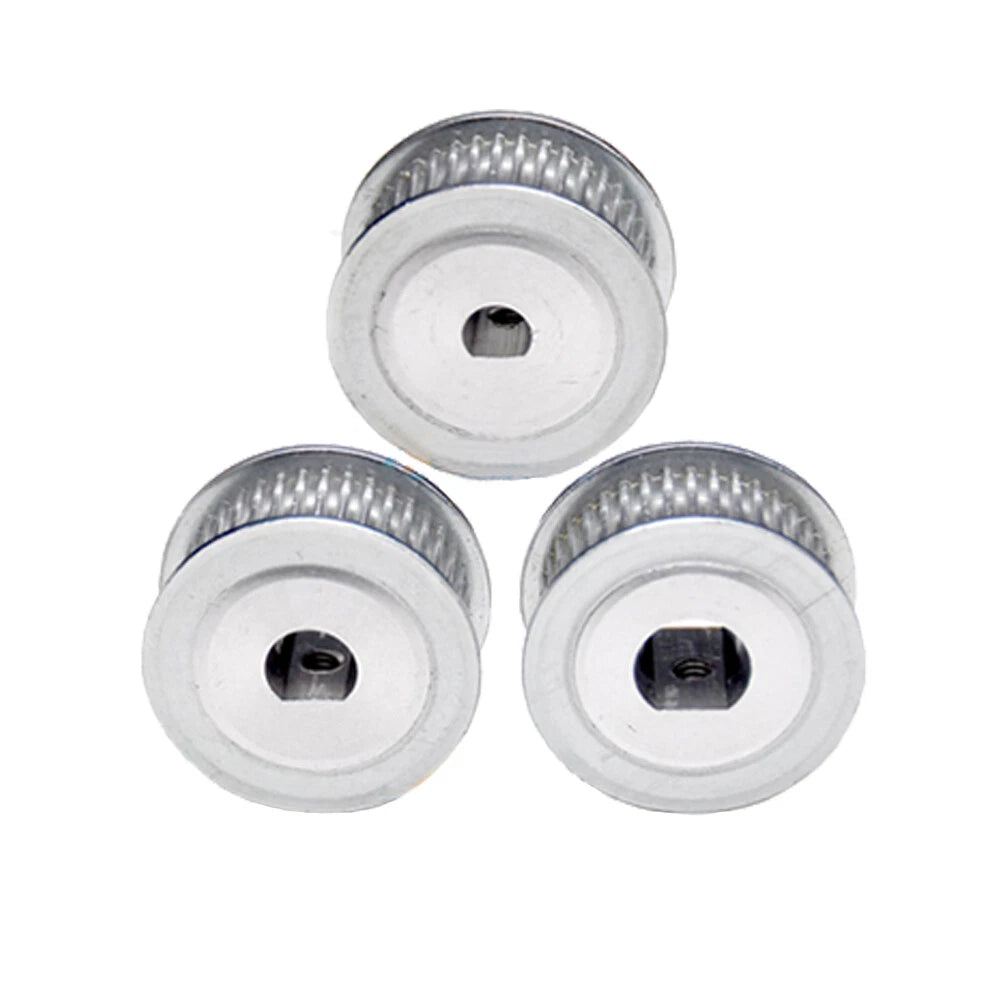
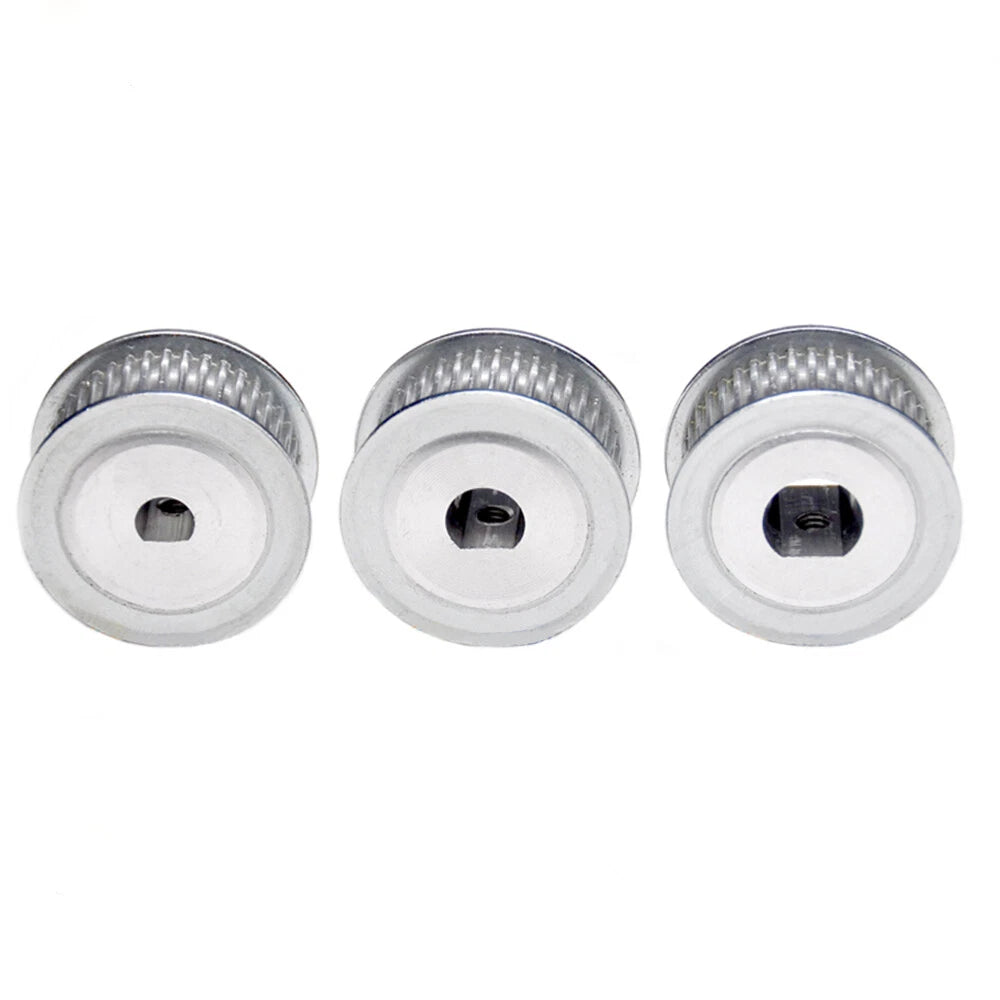
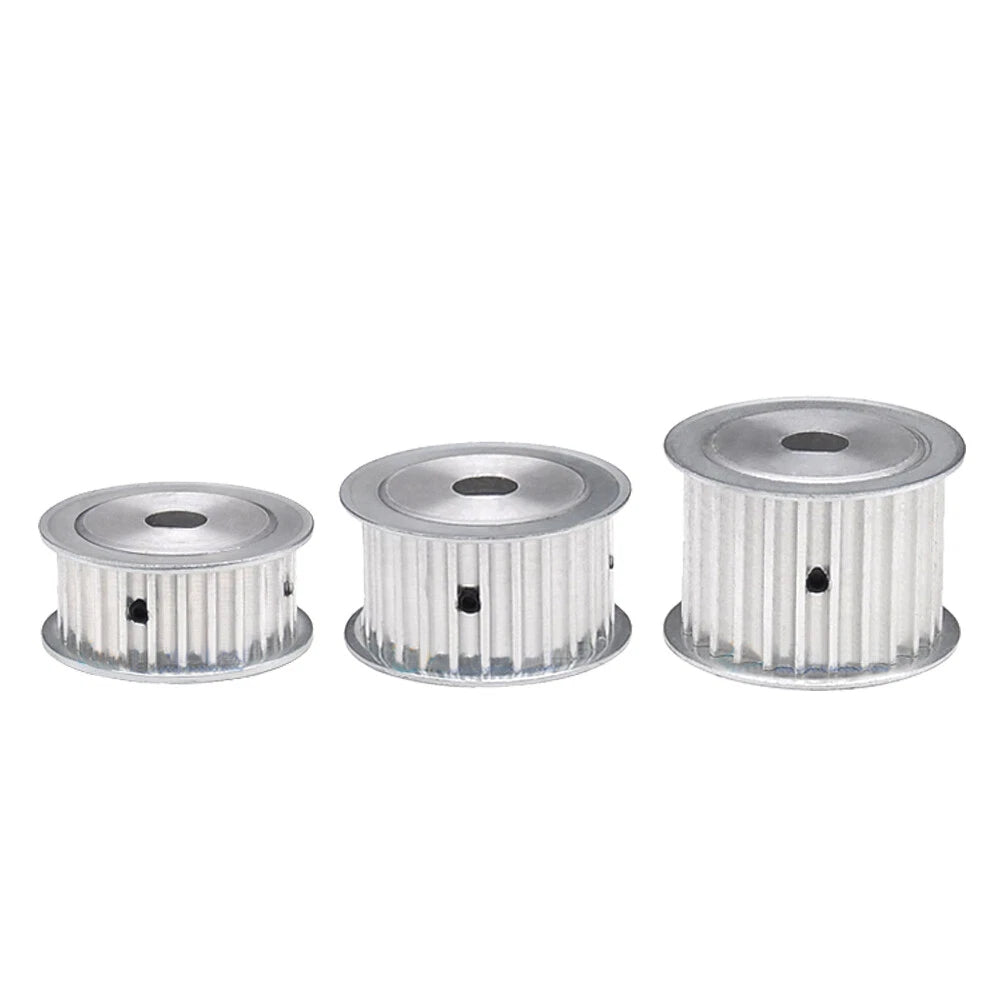
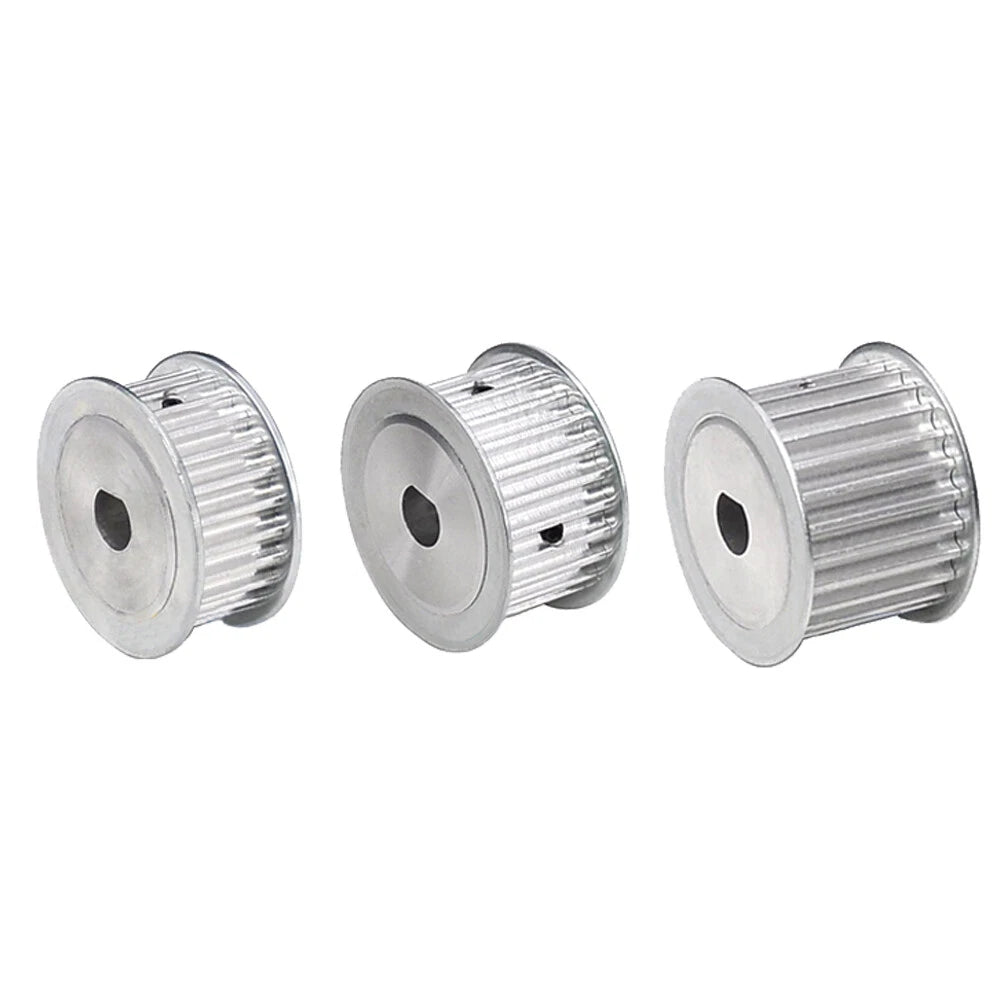
XL,3M,5M Timing Belt Pulleys D Bore Various 10T-40T for 10mm-25mm wide Belts CNC

No reviews

Price:
Sale price$12.76 USD
Stock:
In stock (500 units), ready to be shipped

Payment & Security

Ach Direct Debit Amazon American Express Apple Pay Bancontact BLIK Diners Club Discover EPS Google Pay iDEAL Wero JCB Maestro Mastercard Multibanco MobilePay PayPal Przelewy24 Shop Pay Twint Union Pay USDC Visa

Your payment information is processed securely. We do not store credit card details nor have access to your credit card information.

Limited Offer — Spend More, Save More
Spend $55+
Save $5
Spend $100+
Save $10
Spend $200+
Save $25
HomeDIYer DIY Expert Support

DIY Expert Support

Get fitment advice & recommendations

Mon–Fri  8:30 AM – 8:00 PM
24-Hour Fast Ship
Arrives in 3–14 Days
Worldwide Shipping
30-Day Returns
1 tree planted with every purchase

Description

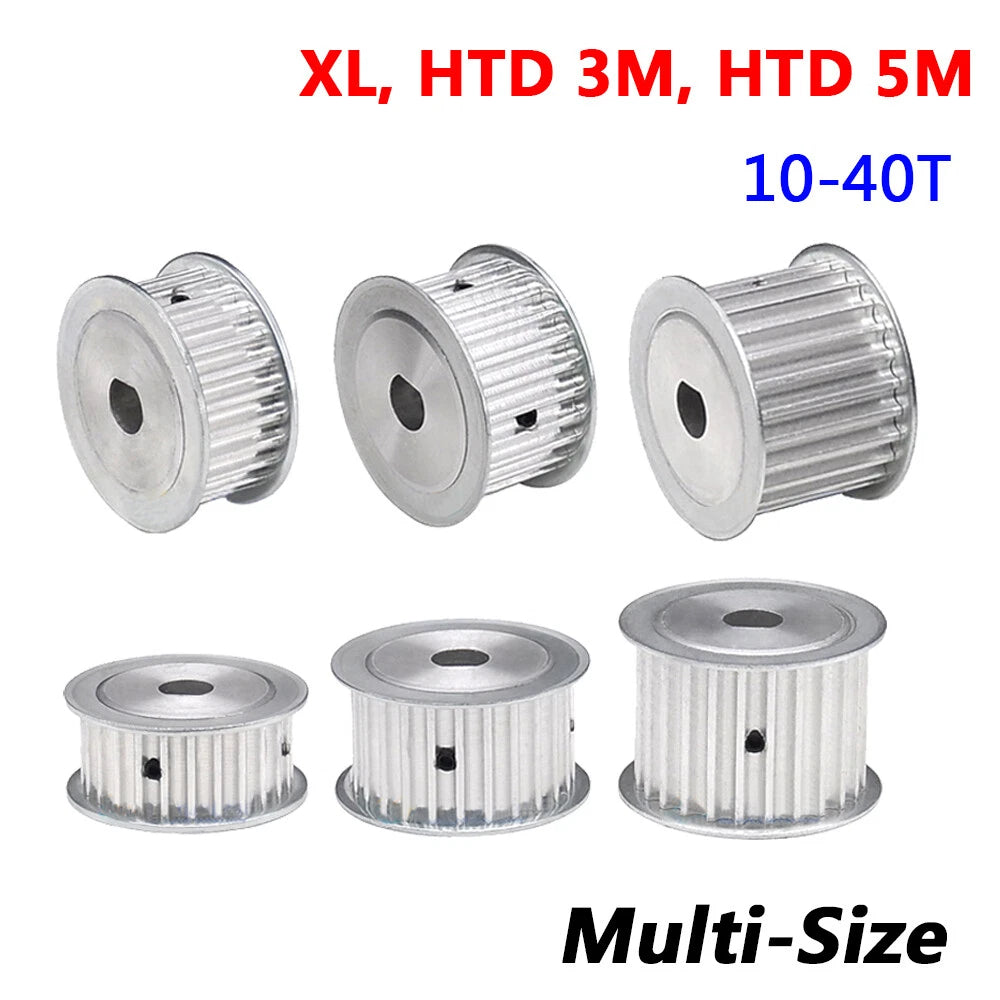
XL, 3M & 5M Timing Belt Pulleys with D Bore — Precision Drive for CNC & DIY Automation

When your CNC router, 3D printer, or linear actuator demands repeatable, slip-free motion, a mismatched or loose-bore pulley is the first thing that breaks your build. Makers, engineers, and workshop hobbyists who need a reliable drop-in timing pulley — without machining a custom bore — will find exactly what they need here.

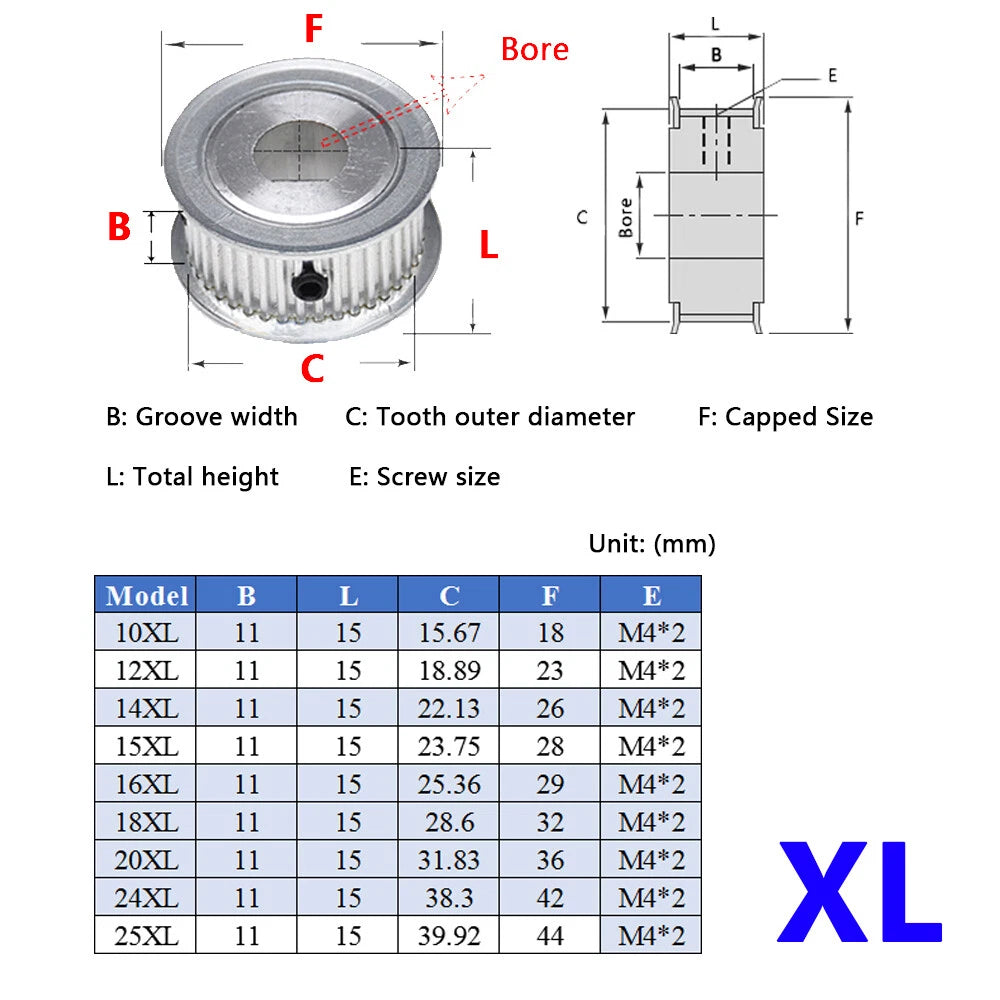
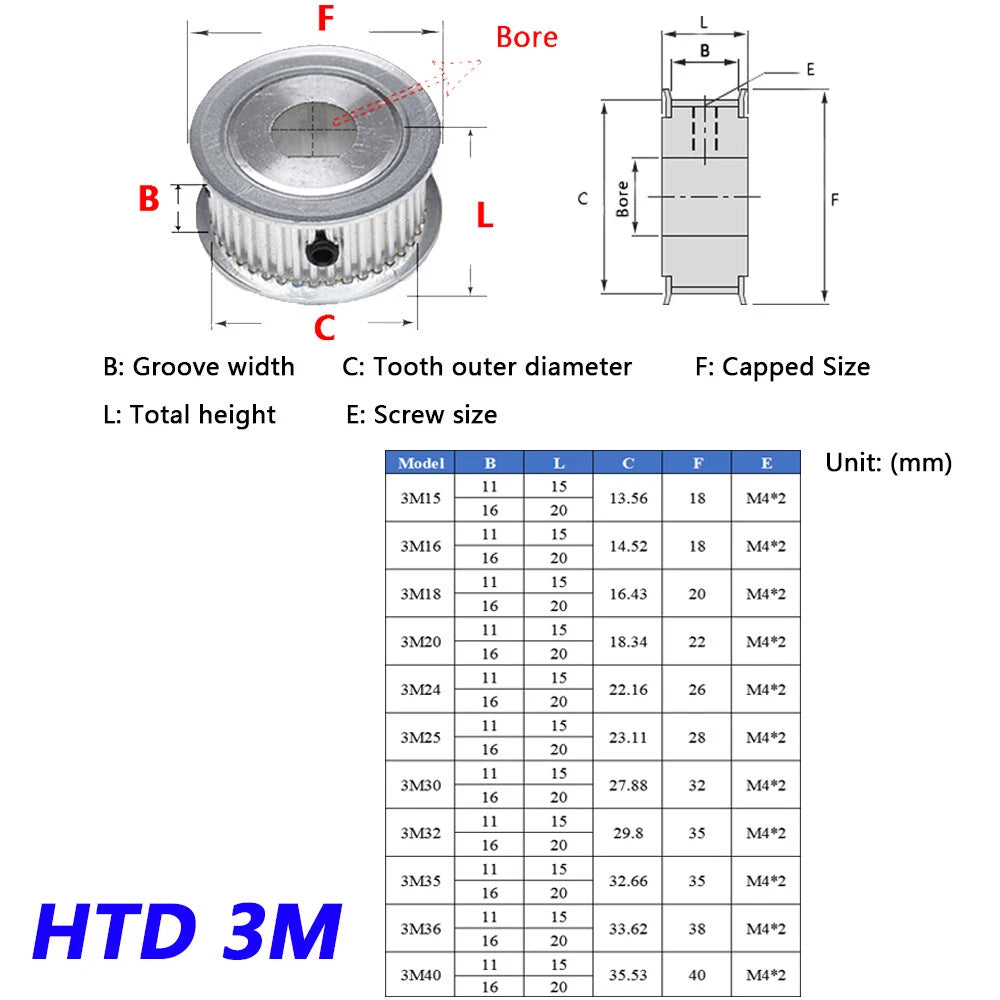
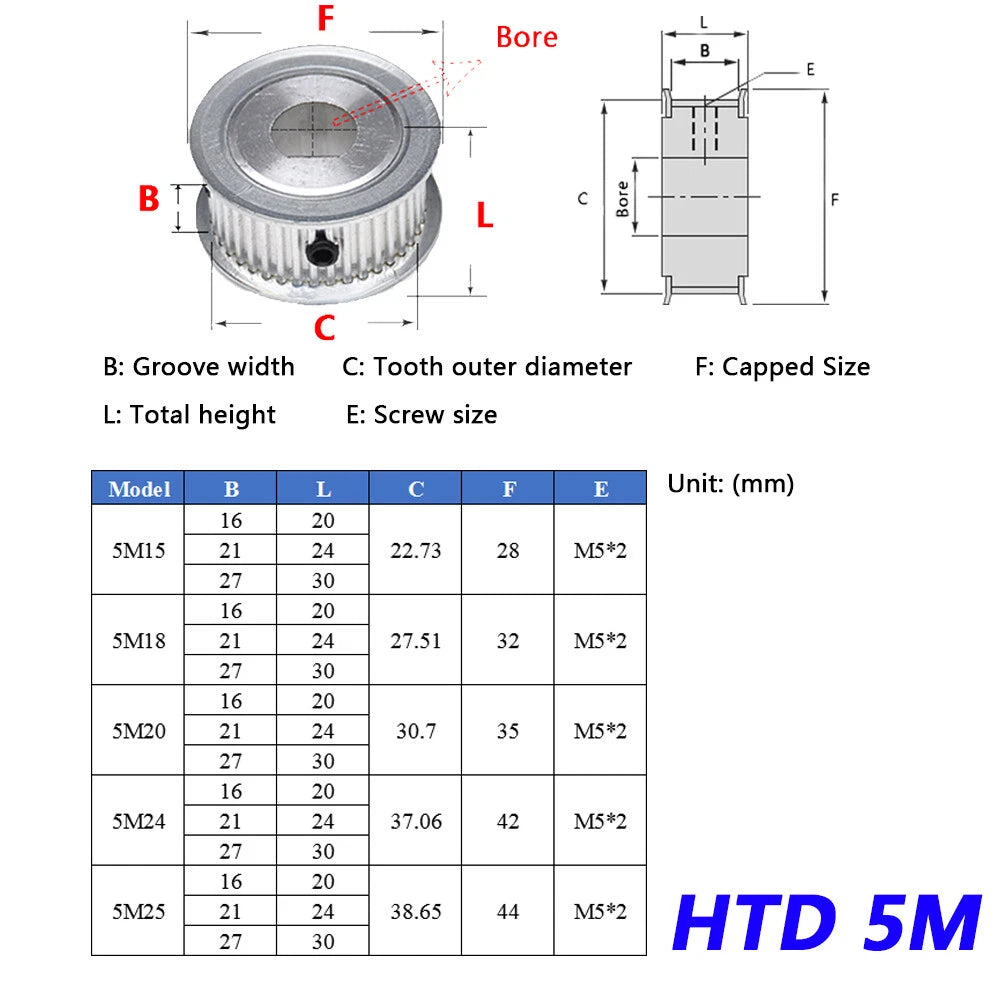
These timing belt pulleys are available in three belt profile families: XL (extra-light, 5.08 mm pitch), 3M (3 mm pitch), and 5M (5 mm pitch). Each pulley features a D-shaped bore (flat-side shaft bore) that locks onto D-shaft motors and stepper shafts without set screws slipping. Tooth counts range from 10T to 40T, and bore diameters span approximately 5 mm to 10 mm (0.20 in to 0.39 in), with applicable belt widths from 10 mm to 25 mm (0.39 in to 0.98 in) depending on the selected variant.

Typical use cases include CNC router X/Y axis drives using XL-profile pulleys, 3D printer extruder and motion systems using 3M GT2-compatible pulleys, and light industrial conveyor or pick-and-place automation using 5M pulleys with wider belt widths up to 25 mm.

⚙️ Compatibility: XL profile fits standard XL timing belts (5.08 mm pitch) · 3M fits 3 mm pitch GT/HTD belts · 5M fits 5 mm pitch HTD belts · D bore fits D-shaft stepper and servo motors · Belt width must match selected variant

✅ Key Features of These XL 3M 5M Timing Belt Pulleys

🔩 D-Bore Shaft Interface

Flat-side D bore prevents rotational slippage on D-shaft motors — no set screw required for positive engagement.

📐 Three Belt Profile Families

XL (5.08 mm pitch), 3M (3 mm pitch), and 5M (5 mm pitch) profiles in one listing — choose the model that matches your belt.

🦷 Wide Tooth Count Range

10T through 40T available, letting you dial in your drive ratio for speed or torque without changing your motor.

📏 Multiple Belt Width Options

Variants cover 10 mm, 15 mm, 20 mm, and 25 mm belt widths — select the width that matches your existing belt.

Consistent Tooth Profile

Machined tooth geometry maintains consistent pitch engagement, reducing belt skip and vibration in high-cycle applications.

🔄 Broad Application Compatibility

Suitable for CNC routers, 3D printers, laser cutters, linear actuators, and light conveyor systems requiring synchronous drive.

📐 Technical Specifications — XL 3M 5M Timing Belt Pulleys

Belt Profile XL (5.08 mm pitch), 3M (3 mm pitch), 5M (5 mm pitch)
Tooth Count (T) 10T, 12T, 14T, 15T, 16T, 18T, 20T, 24T, 25T, 30T, 32T, 35T, 36T, 40T
Bore Type D bore (flat-side shaft bore)
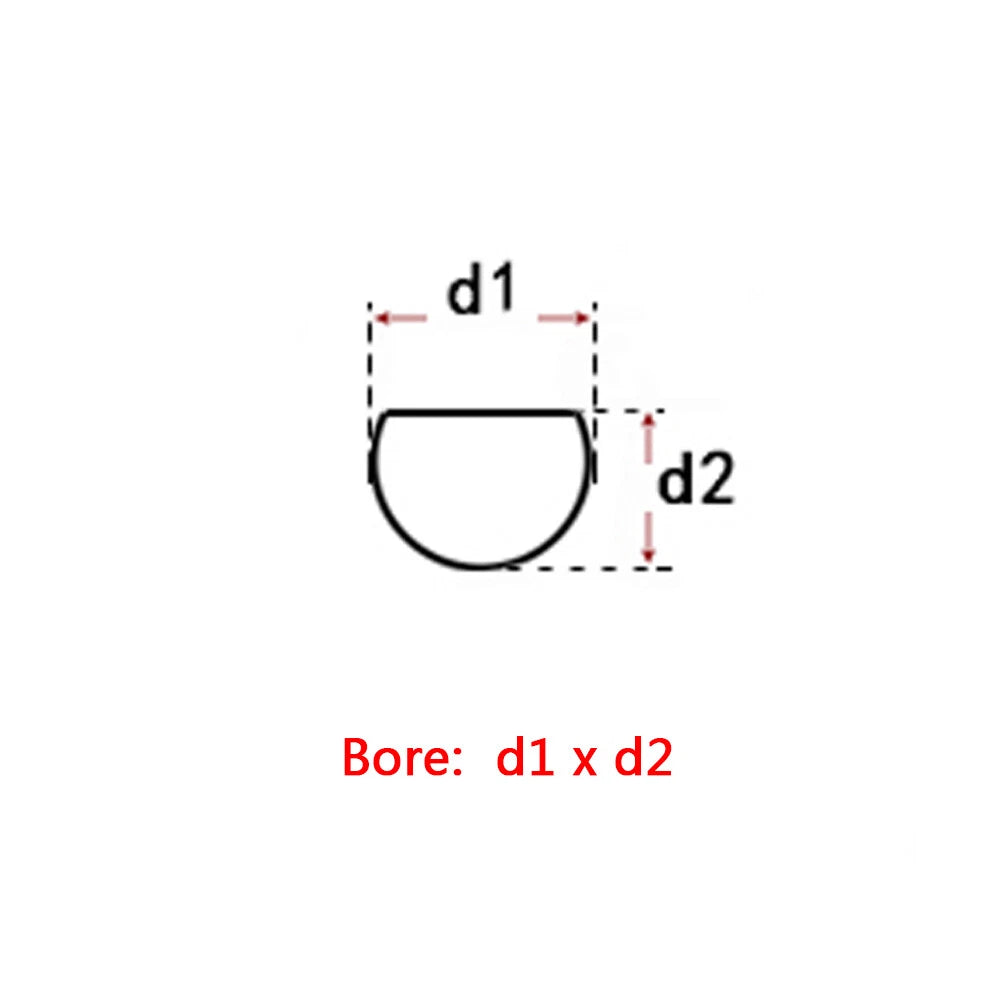
Bore Diameter (d1) 5 mm, 6 mm, 8 mm, 10 mm (see variant options)
Bore Flat Depth (d2) 4.5 mm, 5 mm, 5.5 mm, 7 mm, 7.5 mm, 9 mm (see variant options)
Applicable Belt Width 10 mm, 15 mm, 20 mm, 25 mm (see variant options)
Material See variant options
Finish See variant options
Weight See variant options

❓ Frequently Asked Questions

How do I choose the right model (XL, 3M, or 5M)?

Match the model to your belt's pitch. XL belts have a 5.08 mm tooth pitch and are common in older CNC and printer designs. 3M belts have a 3 mm pitch and are widely used in modern 3D printers and compact motion systems. 5M belts have a 5 mm pitch and are suited for higher-torque or wider-belt applications. Check your existing belt's markings or measure the distance between tooth centers.

How do I select the correct tooth count?

Tooth count determines your drive ratio. A lower tooth count (e.g., 10T or 12T) on the motor pulley gives more torque and less speed; a higher count (e.g., 36T or 40T) gives more speed and less torque. For a 1:1 ratio, use the same tooth count on both driver and driven pulleys. Calculate your desired ratio by dividing the driven pulley teeth by the driver pulley teeth.

What does the D bore mean and how do I measure my shaft?

A D bore has a circular cross-section with one flat side, matching the flat on a D-shaft motor output. To measure your shaft, use calipers to measure the full diameter (d1) and the distance from the flat to the opposite edge (d2). Select the variant whose d1 × d2 values match your shaft. A correct fit should slide on with light hand pressure and have no rotational play.

Will this pulley work with my belt width?

Each variant specifies the applicable belt width (10 mm, 15 mm, 20 mm, or 25 mm). The pulley flange width is matched to that belt width. Using a belt narrower than the pulley is generally acceptable; using a belt wider than the pulley will cause the belt to ride over the flanges and skip. Always match or go narrower than the listed belt width.

Are these pulleys compatible with GT2 or HTD belt profiles?

The 3M variants are dimensionally compatible with 3M GT2-style belts commonly used in 3D printers. The 5M variants are compatible with 5M HTD belts. XL variants use the standard XL trapezoidal tooth profile. If your belt is labeled GT2 with 3 mm pitch, select a 3M model. If your belt is labeled HTD 5M, select a 5M model. Always verify pitch and tooth profile before ordering.

How do I decide between a 10 mm and a 25 mm wide belt setup?

Wider belts carry more load and resist stretching better under tension, making them suitable for heavier gantries or higher-force applications. Narrower belts (10 mm) are lighter and work well for low-mass print heads or laser carriages. If you are building a CNC router cutting wood or aluminum, a 15–25 mm belt width is recommended. For a 3D printer or laser engraver, 10 mm is typically sufficient.

What is the corrosion resistance of these pulleys?

Corrosion resistance depends on the material and finish of the specific variant. For environments with moisture or mild chemicals, look for variants with an anodized or coated finish. For indoor dry workshop use, standard machined aluminum or steel variants are suitable. Contact us to confirm the material and finish for your selected variant before ordering if corrosion resistance is a critical requirement.

🛒 Select your Model, tooth count, and bore size above, then add to cart.

You may also like

Recently viewed