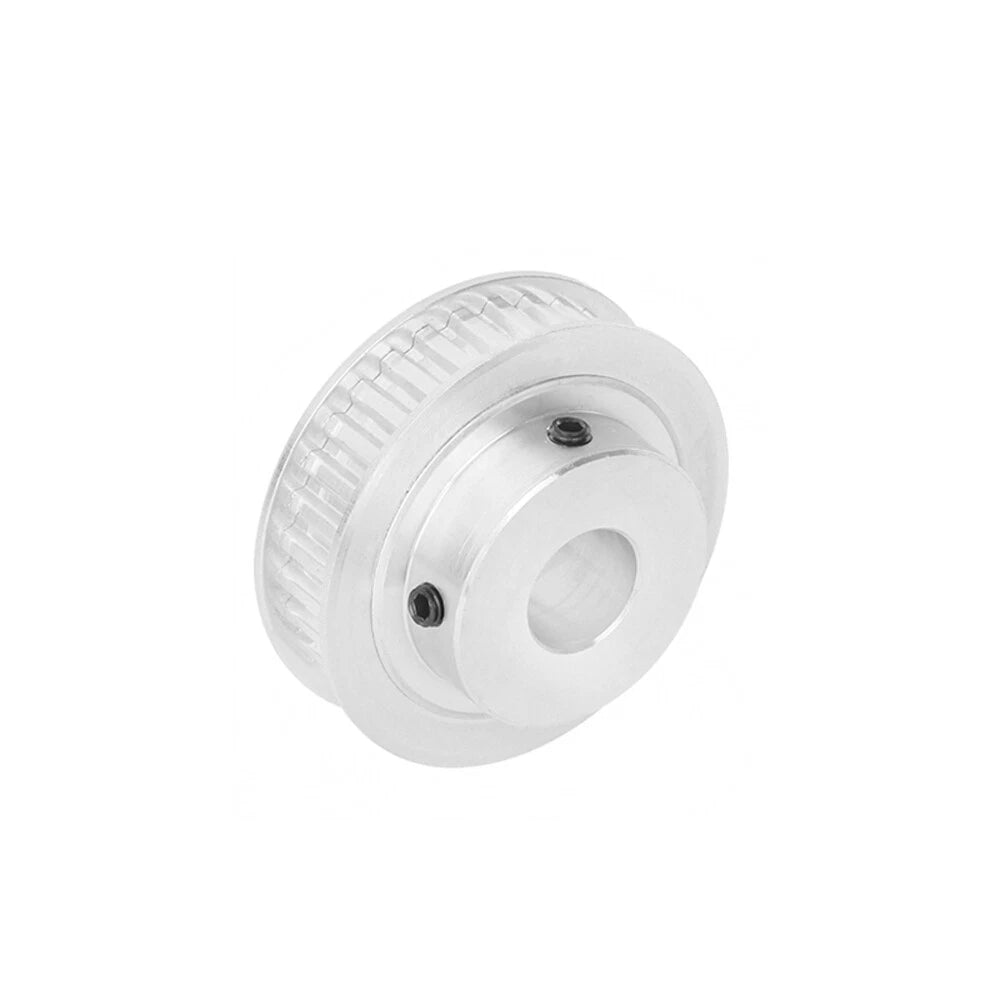
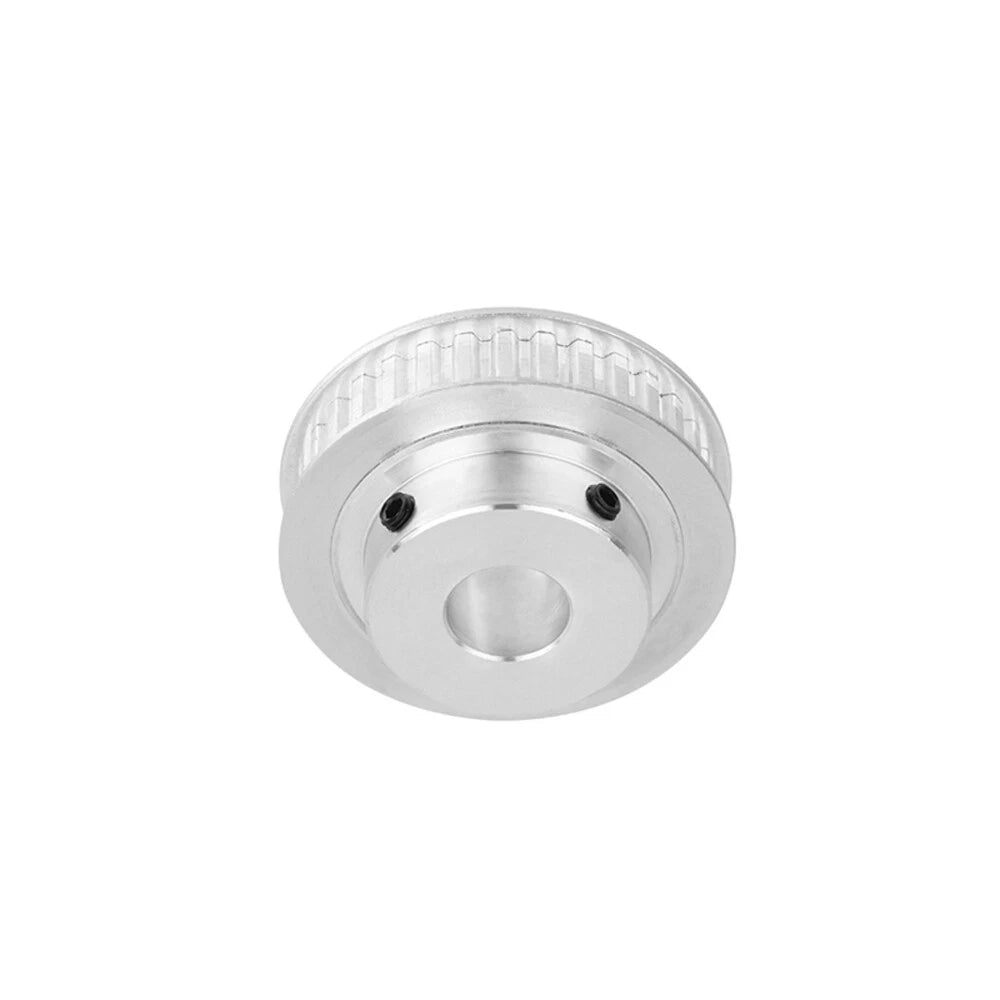
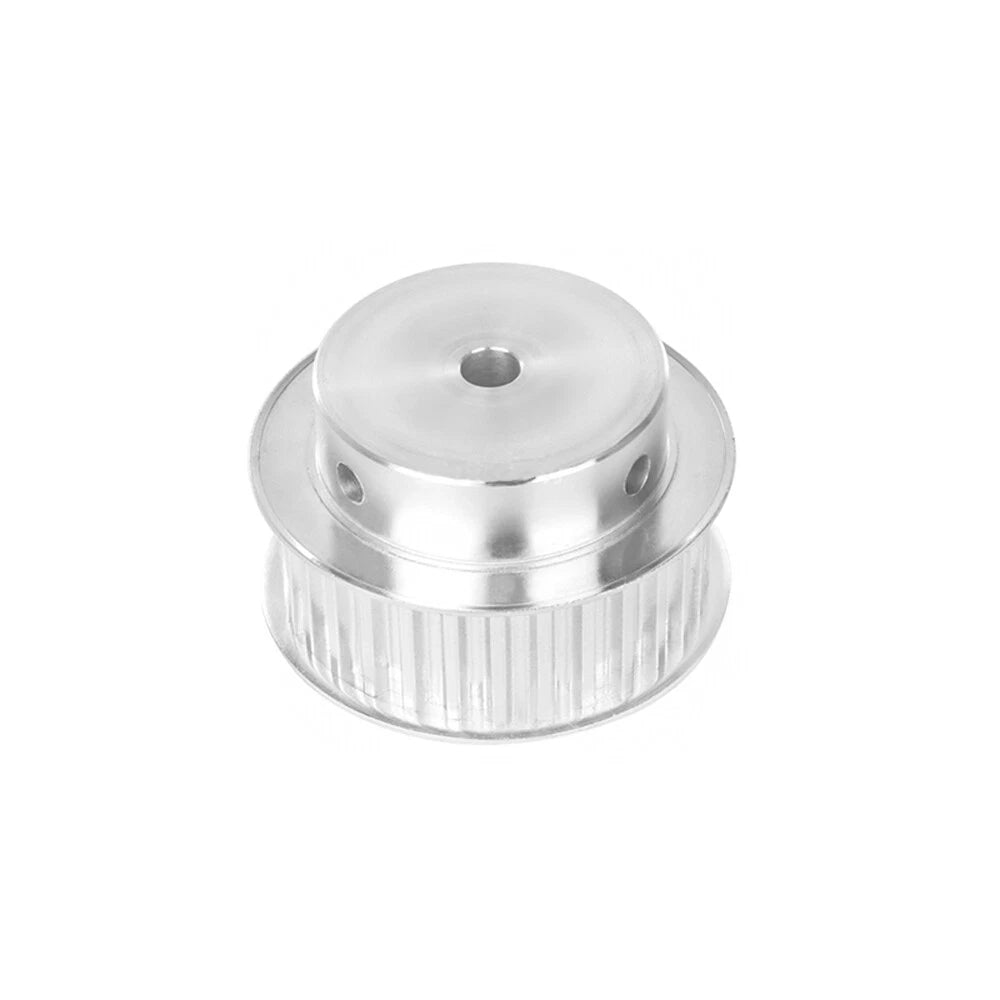
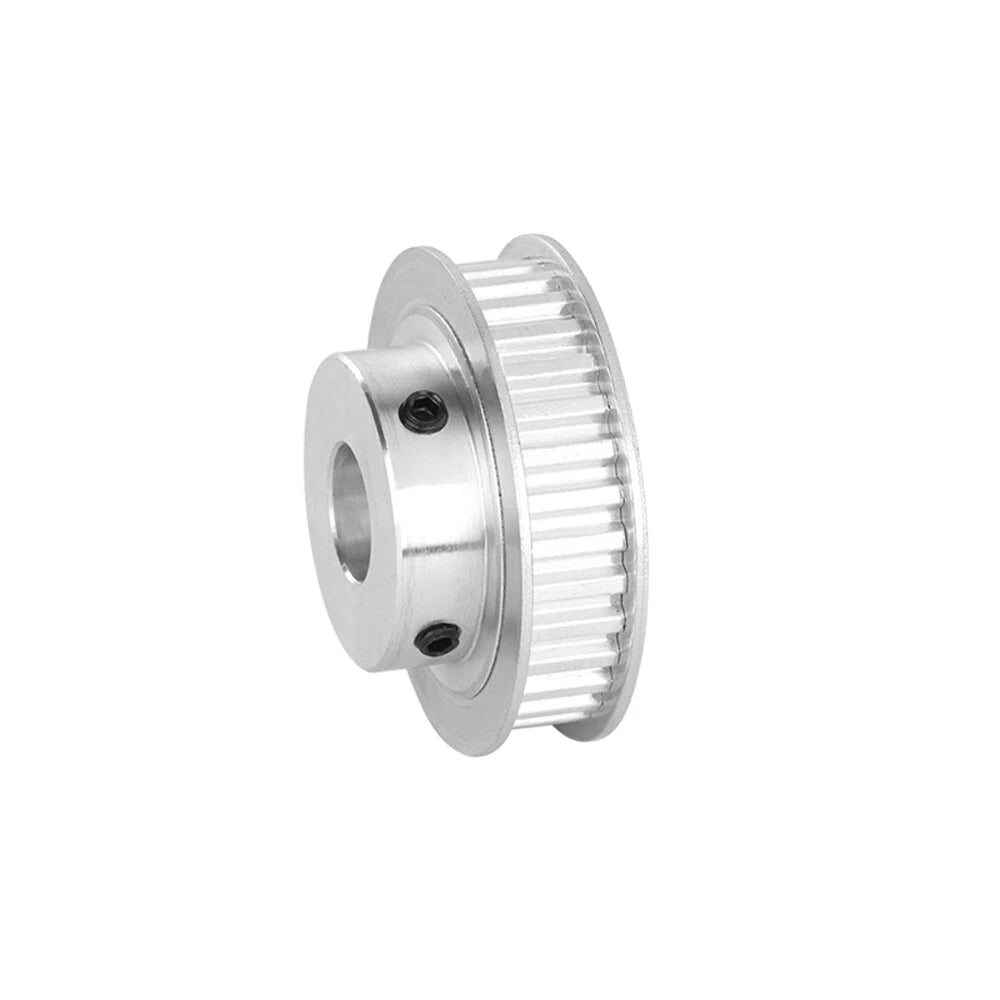
XL 60-120Teeth Timing Belt Pulley Pitch 5.08mm With Step Drive Pulley Width 11mm

No reviews

Price:
Sale price$36.65 USD
Stock:
In stock (500 units), ready to be shipped

Payment & Security

Ach Direct Debit Amazon American Express Apple Pay Bancontact BLIK Diners Club Discover EPS Google Pay iDEAL Wero JCB Maestro Mastercard Multibanco MobilePay PayPal Przelewy24 Shop Pay Twint Union Pay USDC Visa

Your payment information is processed securely. We do not store credit card details nor have access to your credit card information.

Limited Offer — Spend More, Save More
Spend $55+
Save $5
Spend $100+
Save $10
Spend $200+
Save $25
HomeDIYer DIY Expert Support

DIY Expert Support

Get fitment advice & recommendations

Mon–Fri  8:30 AM – 8:00 PM
24-Hour Fast Ship
Arrives in 3–14 Days
Worldwide Shipping
30-Day Returns
1 tree planted with every purchase

Description

XL Timing Belt Pulley 60–120T — Precision Step Drive for CNC & Automation

When your CNC router, 3D printer, or motion-control rig demands repeatable, slip-free power transfer, a mismatched or worn pulley becomes the weakest link in the entire drivetrain. Engineers and makers who build or upgrade belt-driven machines need a pulley that holds tight tolerances across every cycle — and that's exactly where these XL timing belt pulleys deliver.

Each pulley in this listing is machined to the XL (Extra Light) tooth profile with a 5.08 mm (0.200 in) pitch and a 11 mm (0.43 in) belt-contact width. Tooth counts span 60 T through 120 T (XL60T, XL70T, XL72T, XL80T, XL100T, XL120T), and bore options range from 5 mm to 15 mm (0.20 in – 0.59 in) to suit a wide range of shaft diameters. The stepped hub design provides a positive axial stop for set-screw retention.

Typical use cases include CNC router X/Y axis drives where consistent tooth engagement prevents positioning drift, desktop laser-cutter carriage systems that require low-backlash motion, and robotics joint actuators where compact pulley geometry keeps the assembly envelope tight. Long-tail search terms that describe this part: XL series 60-tooth timing pulley 5mm bore, 80-tooth XL belt pulley 10mm bore CNC, 120-tooth XL pulley step hub 12mm shaft.

⚙️ Compatible with standard XL-profile (5.08 mm pitch) synchronous timing belts, 11 mm width. Verify shaft diameter against selected bore before ordering.

✅ Key Features of These XL Timing Belt Pulleys

🦷 XL Tooth Profile — 5.08 mm Pitch

Conforms to the industry-standard XL synchronous belt profile, ensuring positive engagement and zero-slip torque transfer across the full tooth count range (60 T – 120 T).

📐 Stepped Hub with Set-Screw Retention

The integrated step hub provides a positive axial shoulder so the pulley seats consistently on the shaft. A set-screw flat (or through-bore) locks the pulley against rotation under load.

🔩 Wide Bore Selection — 5 mm to 15 mm

Seven bore sizes (5, 6, 8, 10, 12, 14, 15 mm) cover the most common stepper-motor and servo-motor shaft diameters used in CNC and robotics applications.

📏 11 mm Belt-Contact Width

Matched to standard 11 mm wide XL timing belts, keeping lateral belt tracking stable and reducing edge wear during continuous-duty operation.

⚖️ Six Tooth-Count Options

Choose from XL60T, XL70T, XL72T, XL80T, XL100T, or XL120T to dial in your exact drive ratio without resorting to custom machining.

🔄 Drop-In Replacement Geometry

Outer diameter and hub dimensions follow standard XL pulley conventions, making these a direct swap for worn or undersized pulleys in existing belt-drive assemblies.

📐 Technical Specifications — XL Timing Belt Pulley

Belt Profile XL (Extra Light)
Pitch 5.08 mm (0.200 in)
Number of Teeth 60T / 70T / 72T / 80T / 100T / 120T
Belt Width 11 mm (0.43 in)
Bore Diameter 5 / 6 / 8 / 10 / 12 / 14 / 15 mm
Hub Style Step drive (flanged hub)
Outer Diameter See variant options
Material See variant options
Finish See variant options
Quantity per Order 1 piece
Weight See variant options

❓ Frequently Asked Questions

How do I choose the right tooth count for my application?

The tooth count determines the pulley's pitch diameter and, combined with your motor pulley, sets the drive ratio. A higher tooth count (e.g., XL120T) gives a larger pitch diameter and a lower speed ratio, while a lower count (e.g., XL60T) produces a smaller diameter and higher speed ratio. Calculate your required ratio first, then select the tooth count that achieves it with standard belt lengths.

Which bore size should I select for a NEMA 17 stepper motor?

NEMA 17 stepper motors typically have a 5 mm output shaft. Select the 5 mm bore variant. If your motor has a D-cut shaft, ensure the set-screw flat aligns with the flat on the shaft for secure retention.

Are these pulleys compatible with standard XL timing belts from other brands?

Yes. These pulleys conform to the industry-standard XL tooth profile (5.08 mm pitch, 40° tooth angle). They are interchangeable with XL-profile belts from any manufacturer, provided the belt width matches the 11 mm pulley face width.

How strong is the set-screw connection — will it slip under load?

The stepped hub design seats the pulley axially, and the set-screw bears against the shaft flat or OD to resist rotation. For high-torque or reversing loads, apply a small amount of thread-locking compound to the set-screw and ensure the shaft flat (if present) is aligned with the screw. For very high torque, consider a keyed bore variant or a shaft collar as a secondary retention measure.

Will these pulleys corrode in a humid or outdoor environment?

Corrosion resistance depends on the material and finish of the specific variant. If your application involves moisture exposure, contact us to confirm the surface treatment before ordering. For demanding environments, consider applying a light machine oil or corrosion-inhibiting coating after installation.

Can I use an XL60T pulley as a driver and an XL120T as a driven pulley to achieve a 2:1 reduction?

Yes. Pairing an XL60T driver with an XL120T driven pulley gives a 2:1 speed reduction (and 2× torque multiplication). Both pulleys share the same 5.08 mm pitch and 11 mm belt width, so a standard XL belt of the appropriate length will span both without modification.

What is the difference between XL70T and XL72T — why are both offered?

XL70T (70 teeth) and XL72T (72 teeth) have slightly different pitch diameters: approximately 113.2 mm and 116.4 mm respectively. The XL72T is commonly used in applications where a specific belt length or center distance requires a tooth count divisible by common belt tooth increments. Choose based on your calculated center distance and belt length requirements.

🛒 Select your Number of Teeth and Bore above, then add to cart.


You may also like

Recently viewed