XL Idler Timing Pulley Double Side Bearing Timing Belt For Width 11mm - 16mm

No reviews

Price:
Sale price$2.98 USD
Stock:
In stock (500 units), ready to be shipped

Payment & Security

Ach Direct Debit Amazon American Express Apple Pay Bancontact BLIK Diners Club Discover EPS Google Pay iDEAL Wero JCB Maestro Mastercard Multibanco MobilePay PayPal Przelewy24 Shop Pay Twint Union Pay USDC Visa

Your payment information is processed securely. We do not store credit card details nor have access to your credit card information.

Limited Offer — Spend More, Save More
Spend $55+
Save $5
Spend $100+
Save $10
Spend $200+
Save $25
HomeDIYer DIY Expert Support

DIY Expert Support

Get fitment advice & recommendations

Mon–Fri  8:30 AM – 8:00 PM
24-Hour Fast Ship
Arrives in 3–14 Days
Worldwide Shipping
30-Day Returns
1 tree planted with every purchase

Description

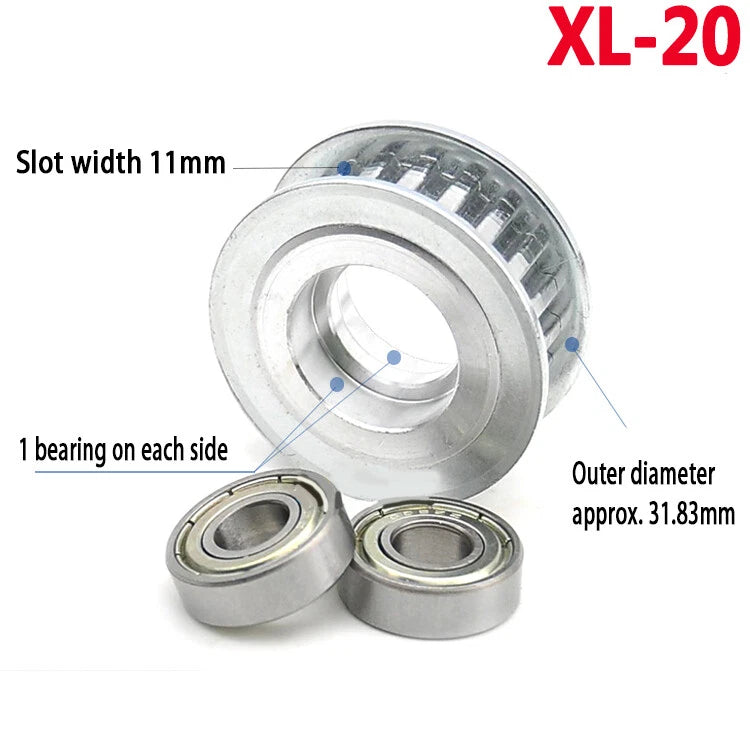
XL Idler Timing Pulley with Double-Side Bearing — Smooth, Slip-Free Belt Guidance

When a misaligned or slipping timing belt derails your CNC router, 3D printer, or automation rig mid-run, the culprit is often a poorly supported idler. Engineers, makers, and machine builders who demand consistent belt tension and zero lateral drift need an idler pulley that stays true under load — and that's exactly what this XL idler timing pulley is built for.

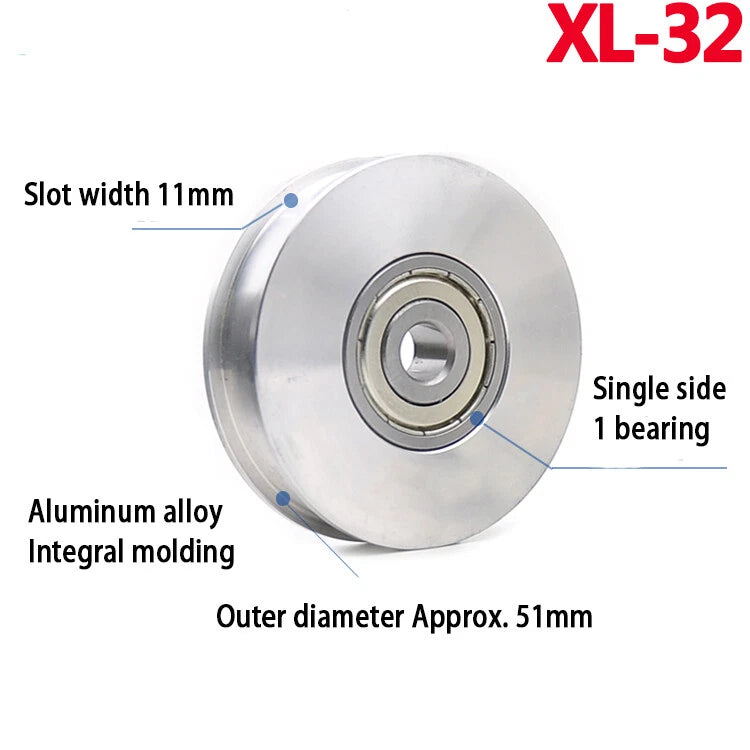
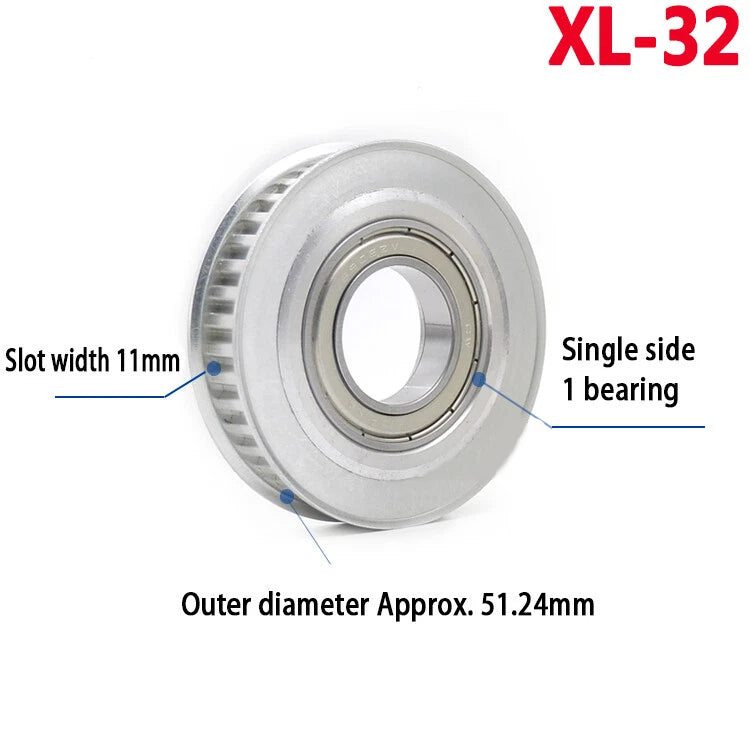
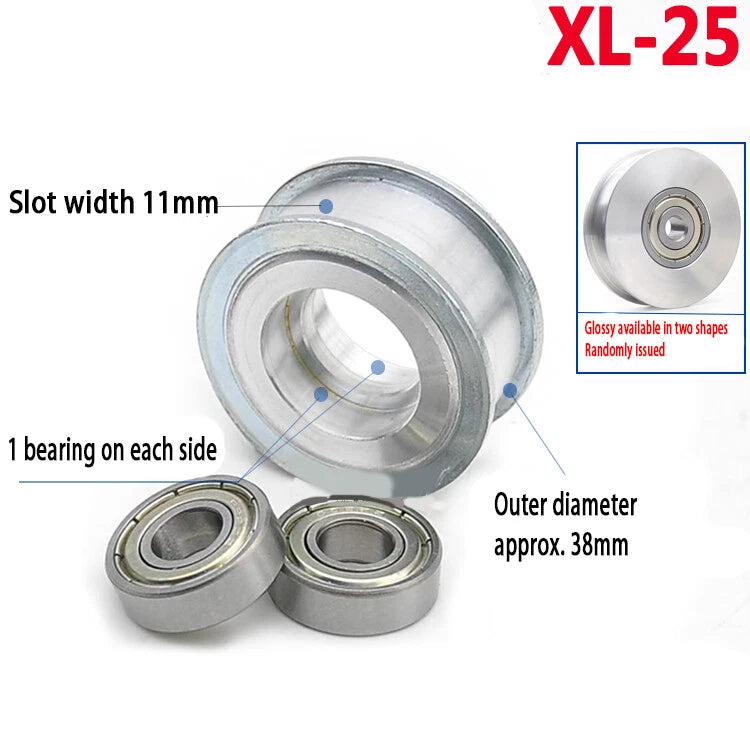
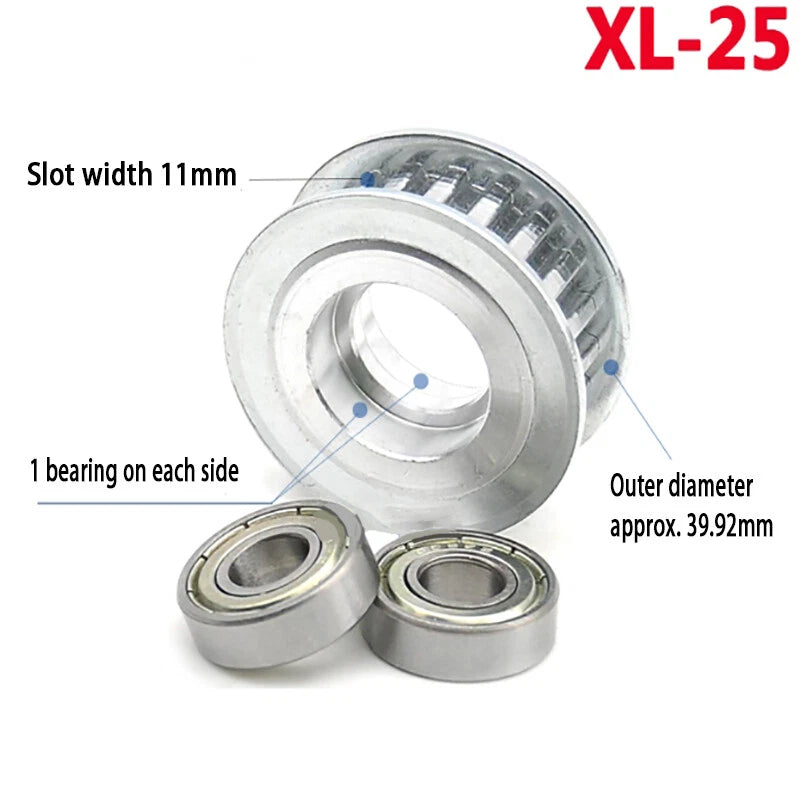
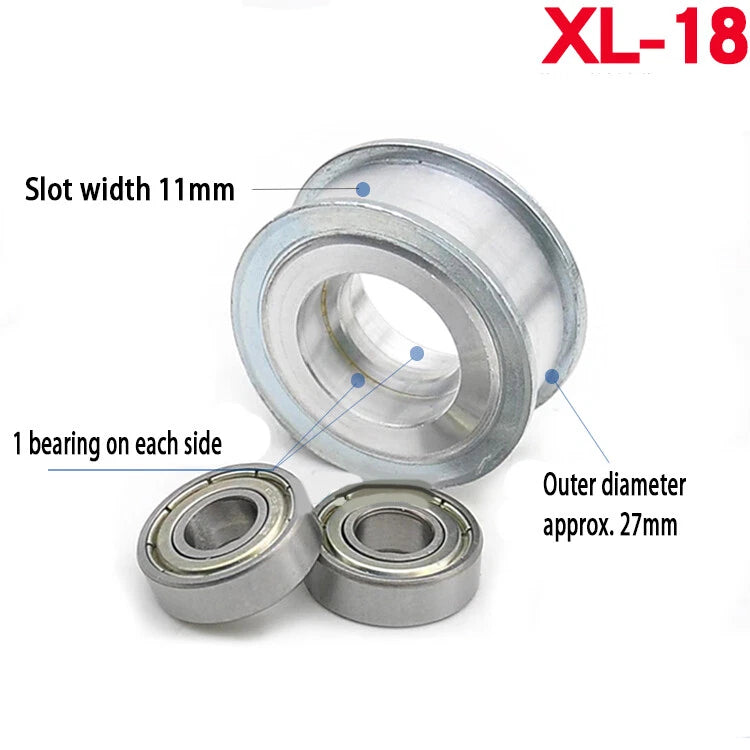
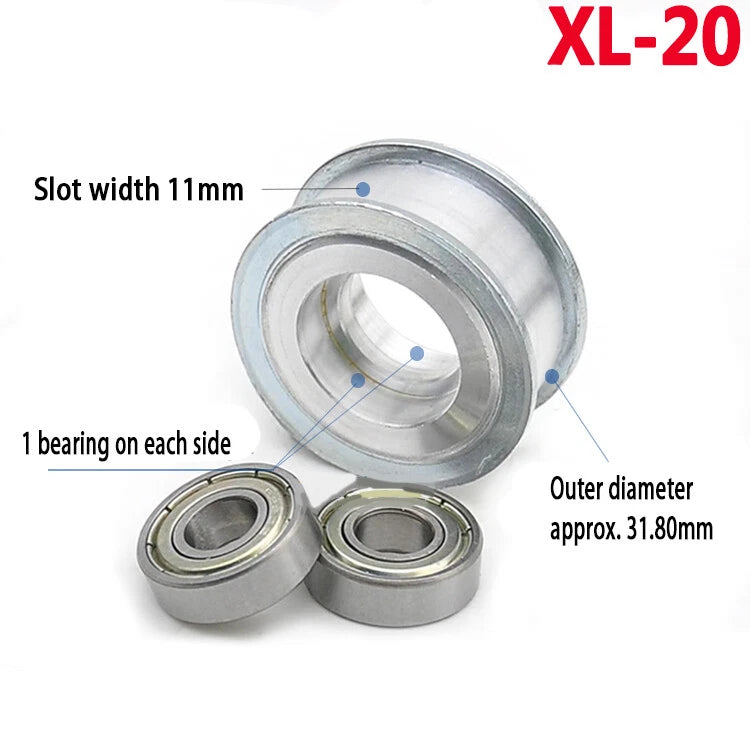
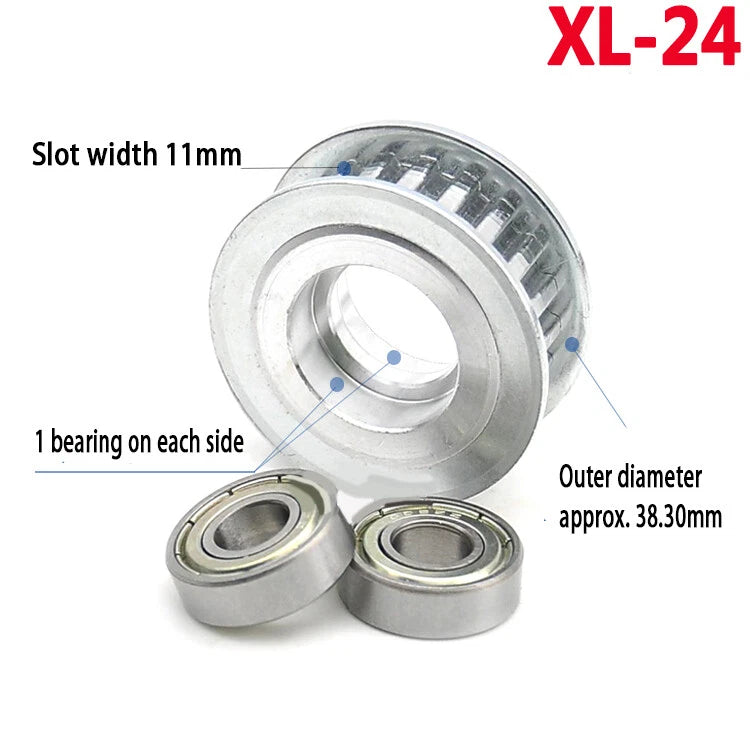
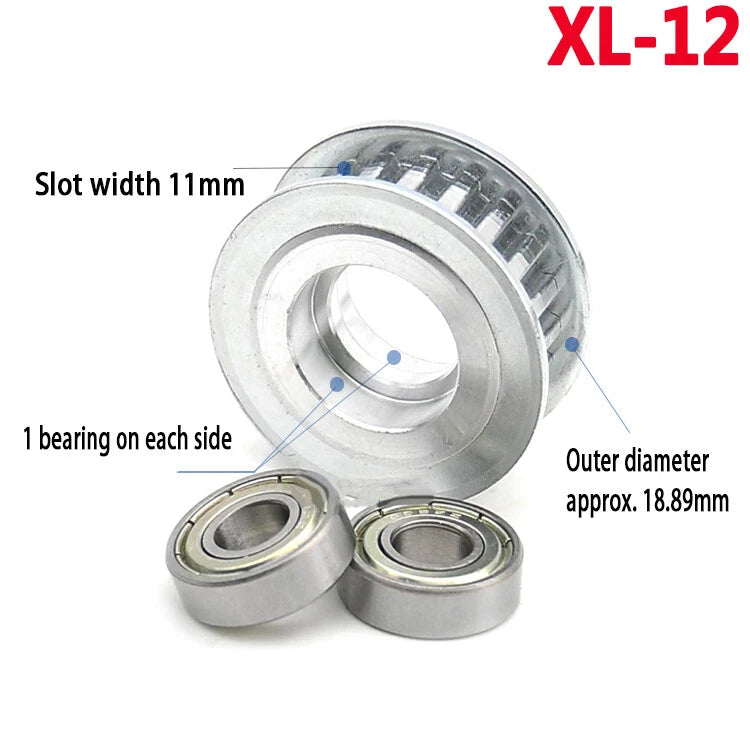
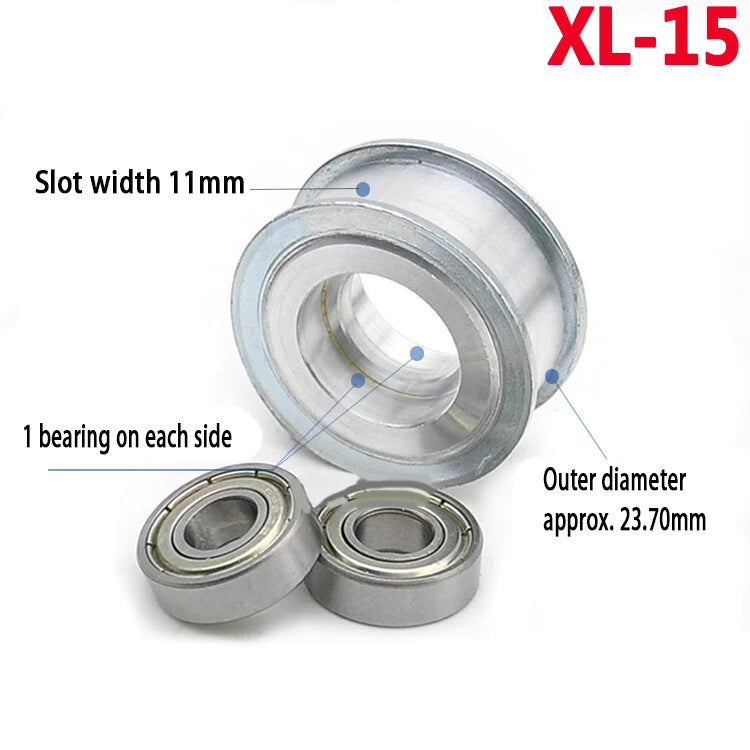
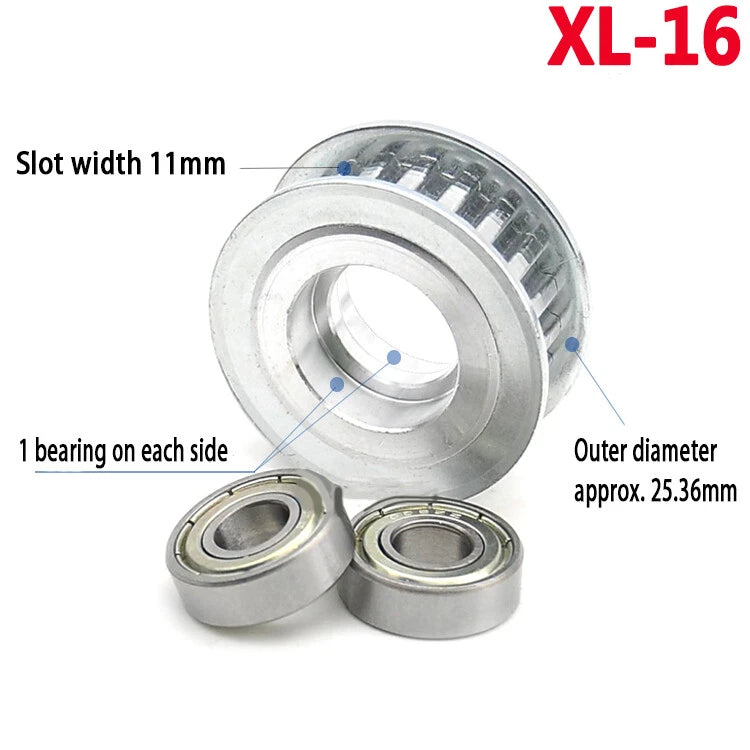
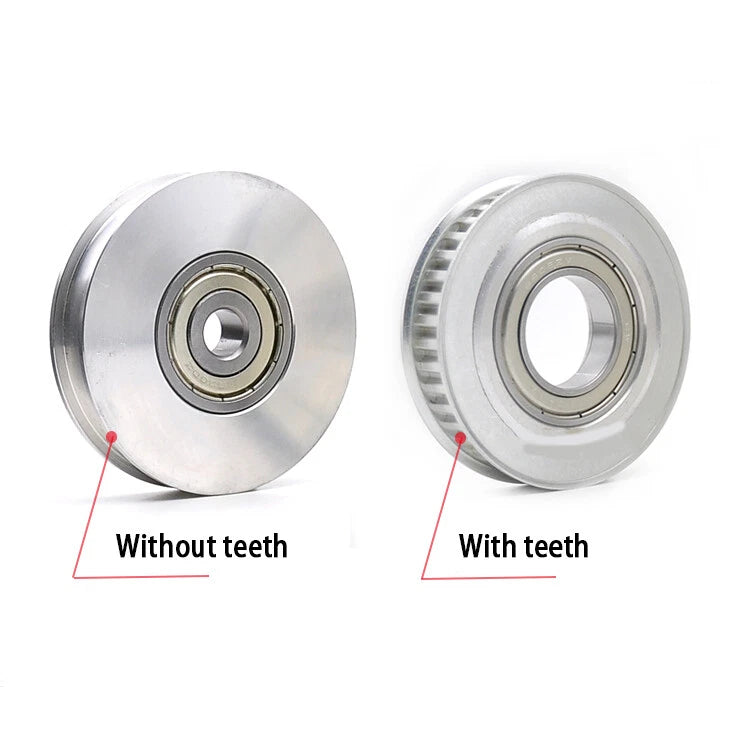
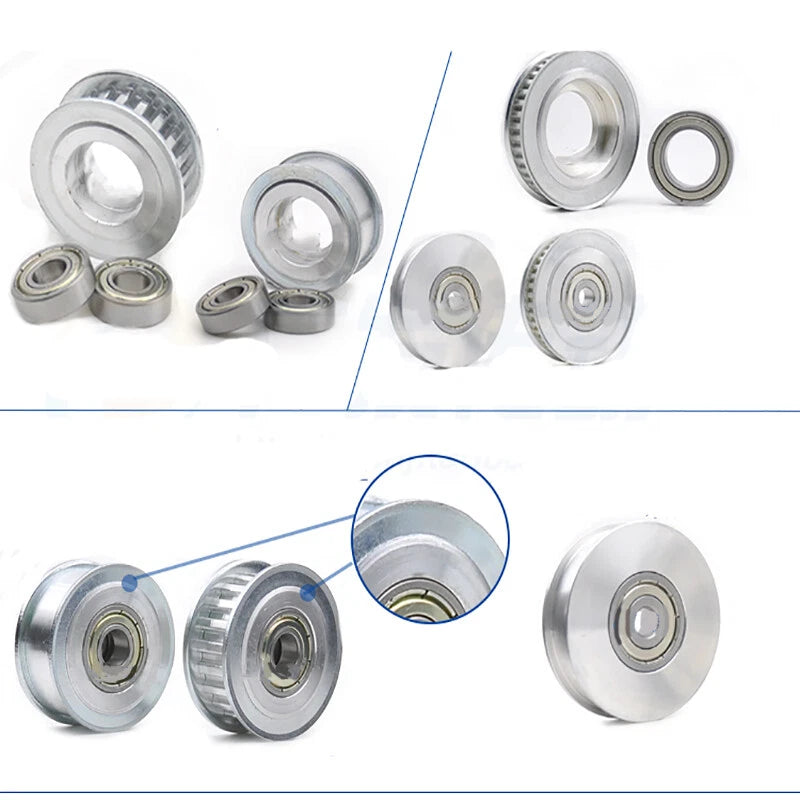
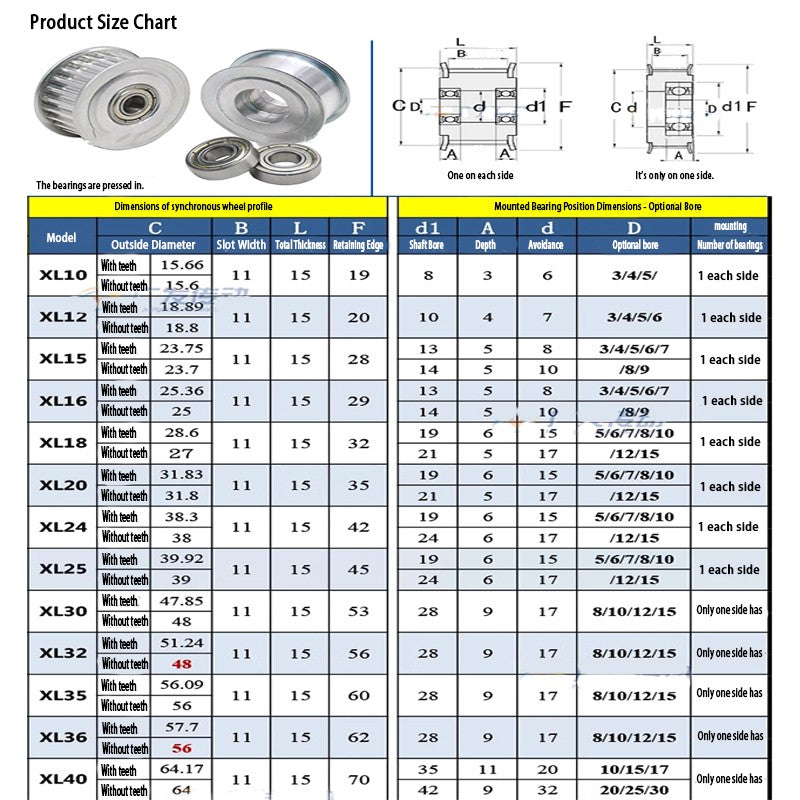
This idler timing pulley features a double-side bearing design, machined to XL pitch (5.08 mm / 0.200 in) standards. The pulley body is typically fabricated from aluminum alloy, with the integrated bearings providing smooth, low-friction rotation. Available in tooth counts from 12T to 40T and bore diameters from 3 mm (0.12 in) to 30 mm (1.18 in), with applicable belt widths of 10 mm, 15 mm, and 20 mm. Both toothed (with teeth) and smooth (without teeth) rim styles are offered to suit different belt-routing requirements.

Typical use cases include XL timing belt tensioning in desktop CNC machines and laser cutters, idler routing in RepRap and cartesian 3D printer motion systems, and belt-driven axis guides in pick-and-place robotics and conveyor automation. Long-tail search terms this product addresses: XL idler pulley with bearing, double flange timing belt idler, 5.08mm pitch idler sprocket.

⚙️ Compatible with XL pitch (5.08 mm) timing belts. Belt widths supported: 10 mm, 15 mm, and 20 mm depending on variant selected.

✅ Key Features of These XL Idler Timing Pulleys

🔩Double-Side Bearing
Integrated dual bearings on both faces deliver smooth, low-friction rotation and reduce lateral belt wander under continuous load.
📐XL Pitch Standard
Machined to XL pitch (5.08 mm / 0.200 in) for direct compatibility with standard XL timing belts used across CNC, 3D printing, and automation.
🎯Wide Tooth Count Range
Available from 12T to 40T, letting you match the pulley diameter precisely to your belt path geometry and wrap angle requirements.
🔧Multiple Bore Sizes
Bore diameters from 3 mm to 30 mm accommodate a broad range of shaft sizes — select your bore and belt width together as a single variant option.
↔️Toothed or Smooth Rim
Choose the "With teeth" style for positive belt engagement or "Without teeth" for a smooth idler surface that guides the belt's flat back face.
🏗️Rigid Aluminum Alloy Body
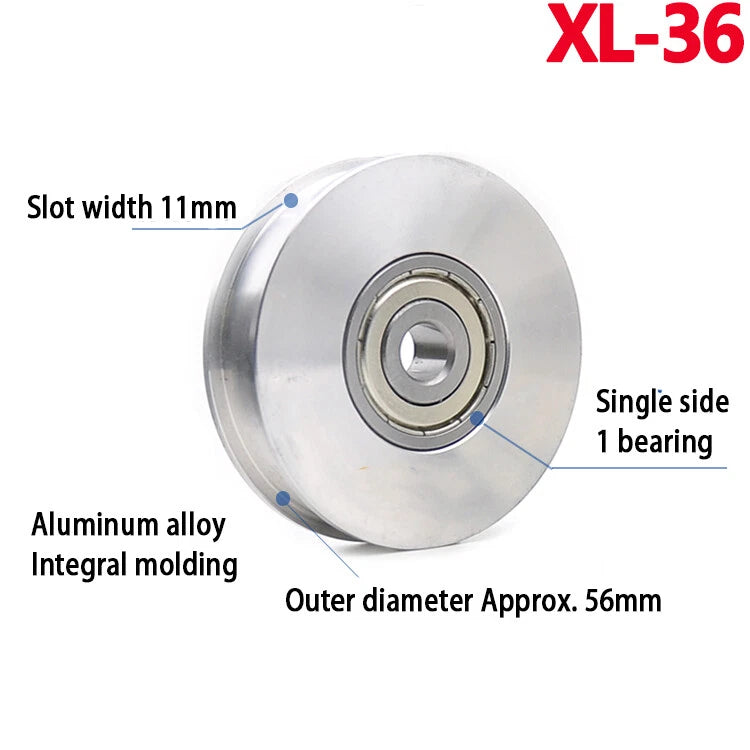
The pulley body is typically constructed from aluminum alloy, offering a favorable strength-to-weight ratio and dimensional stability across operating temperatures.

📐 Technical Specifications — XL Idler Timing Pulley

Pitch XL — 5.08 mm (0.200 in)
Tooth Count (Models) 12T, 15T, 16T, 18T, 20T, 24T, 25T, 30T, 32T, 35T, 36T, 40T
Rim Style With teeth / Without teeth
Bore Diameter 3 mm – 30 mm (see variant options)
Applicable Belt Width 10 mm, 15 mm, 20 mm (see variant options)
Bearing Type Double-side bearing (integrated)
Body Material Aluminum alloy (typical)
Flange See variant options
Weight See variant options

❓ Frequently Asked Questions

How do I choose the right tooth count for my application?

The tooth count determines the pulley's pitch diameter. A higher tooth count (e.g., 30T–40T) gives a larger diameter and a gentler belt wrap angle, which reduces belt stress at the idler. For tight spaces, a smaller count (12T–16T) keeps the footprint compact. Match the tooth count to your belt path geometry and the minimum bend radius specified for your belt.

What is the difference between "With teeth" and "Without teeth" styles?

The "With teeth" variant engages the belt's tooth profile directly, providing positive drive or positive tracking. The "Without teeth" (smooth rim) variant contacts the flat back face of the belt and is used purely as a tensioner or guide idler where you do not want the pulley to drive the belt. Choose based on which face of the belt will contact the pulley in your design.

How do I select the correct bore diameter?

The bore diameter must match your shaft or axle diameter. Measure your shaft with calipers and select the bore size equal to or slightly larger than your shaft (a light interference or clearance fit is typical). The bore and applicable belt width are combined into a single variant option (e.g., "8mm & 10mm" means 8 mm bore, 10 mm belt width).

Are these pulleys strong enough for continuous-duty CNC or automation use?

The aluminum alloy body and integrated double-side bearings are suited for the moderate radial loads typical of XL belt idler applications in CNC routers, laser cutters, and light automation. For very high-speed or heavy-load industrial drives, verify that the bearing load rating and pulley material meet your specific duty cycle requirements before ordering.

Will this pulley resist corrosion in humid or outdoor environments?

Aluminum alloy naturally forms a protective oxide layer that provides moderate corrosion resistance in typical indoor and light-humidity environments. For prolonged outdoor exposure or chemically aggressive environments, consider applying an additional protective coating or selecting a stainless-steel shaft and hardware to complement the pulley.

Can I use this idler pulley with belts wider than the listed applicable width?

No — the pulley flange and groove width are sized for the belt width specified in the variant. Using a wider belt risks the belt riding over the flange or tracking incorrectly, which can cause premature belt wear or belt derailment. Always match the belt width to the variant's listed applicable belt width.

What shaft retention method is recommended?

These pulleys are designed to be mounted on a fixed idler shaft (bolt or shoulder bolt) with the bearing inner race clamped between washers and a nut, or retained by a circlip. The specific retention method depends on your machine's frame design. Contact us to confirm if you need guidance on a specific mounting configuration.

🛒 Select your Models/Teeth, Style, and Bore Diameter & Belt Width above, then add to cart.


You may also like

Recently viewed