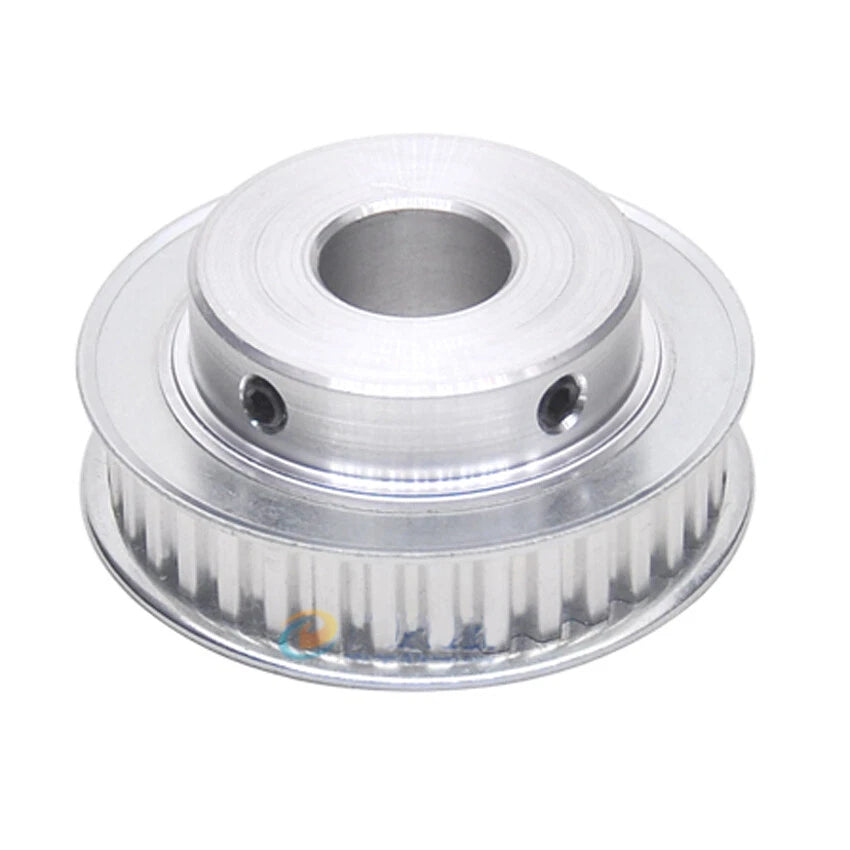
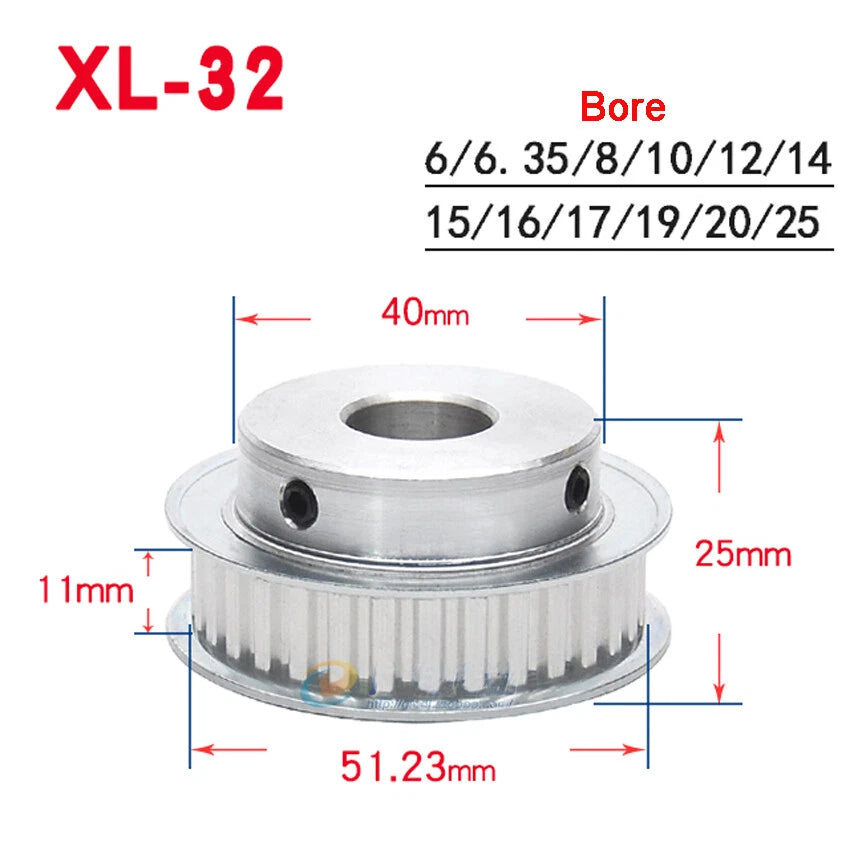
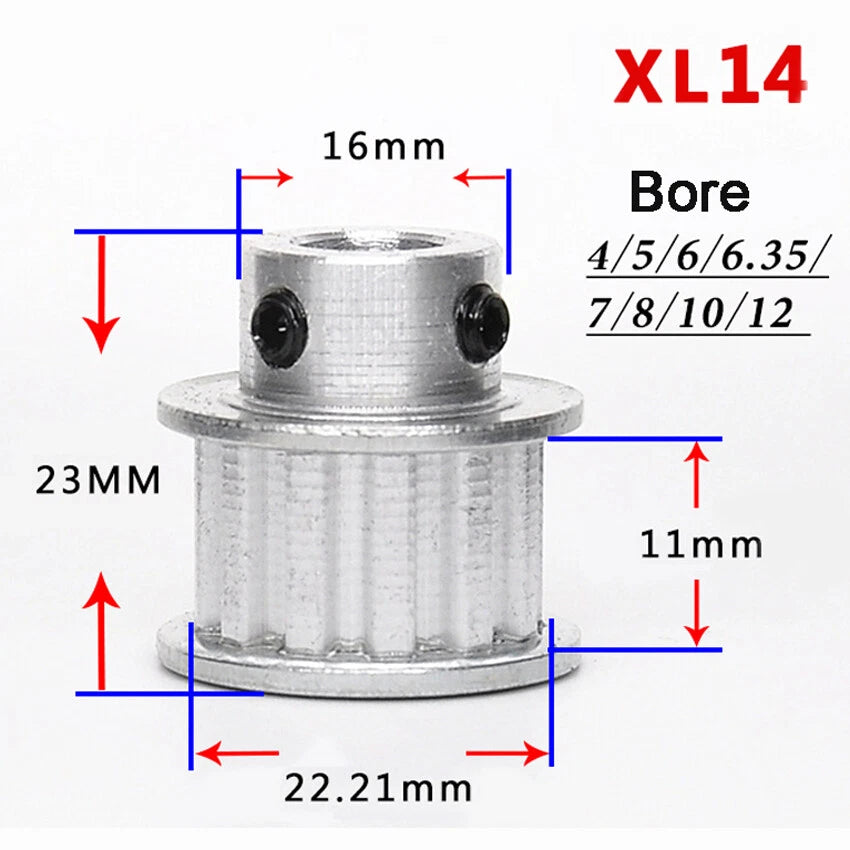
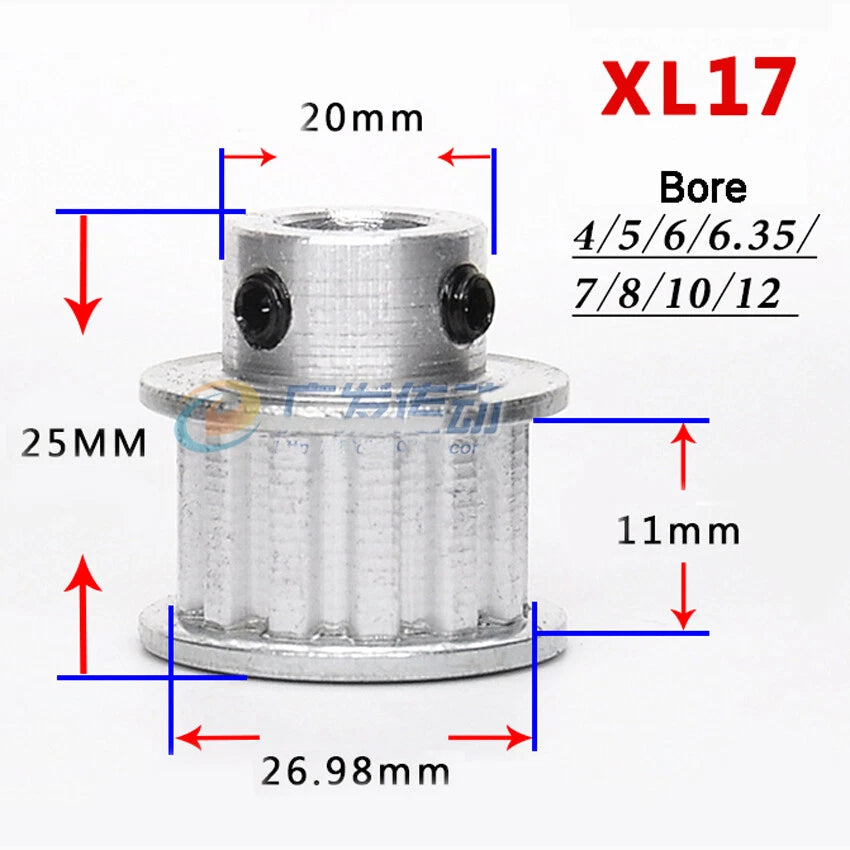
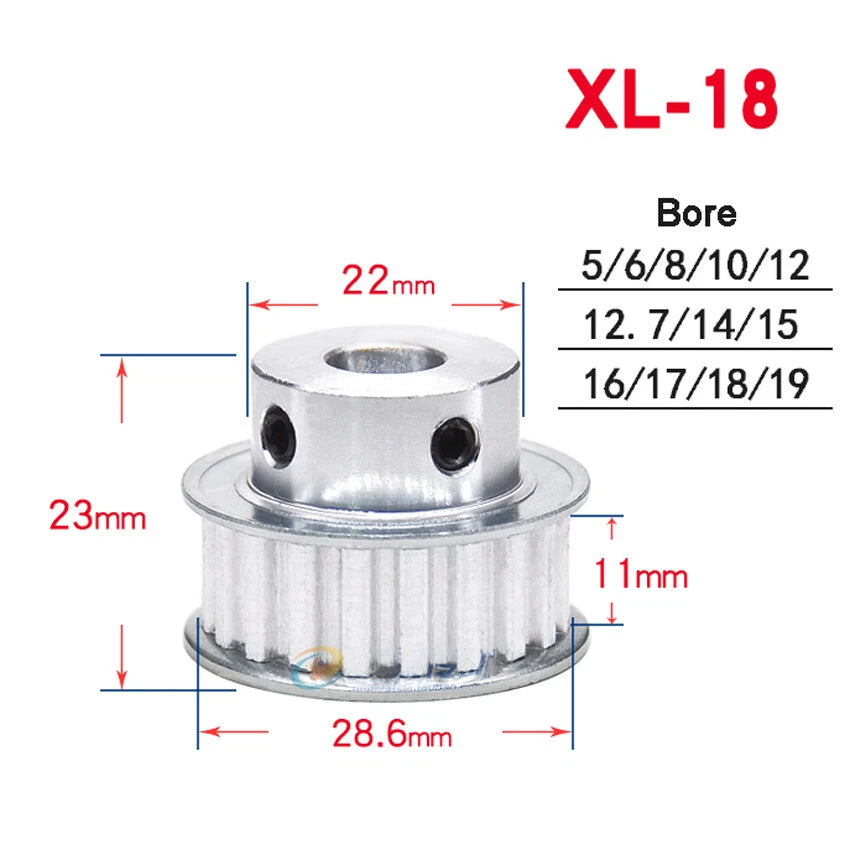
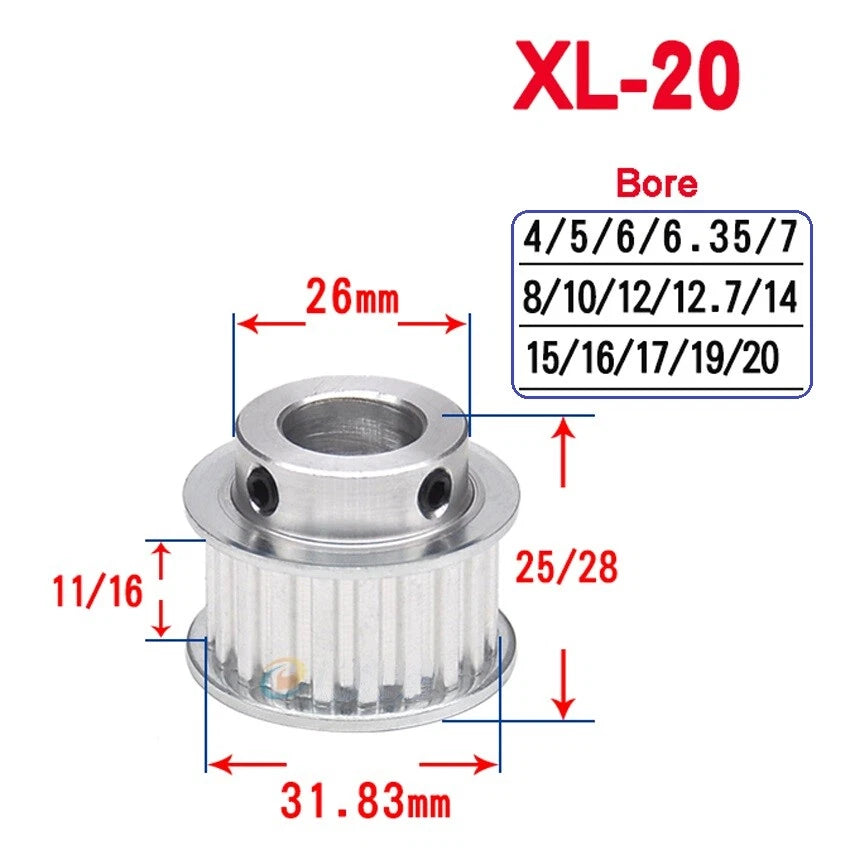
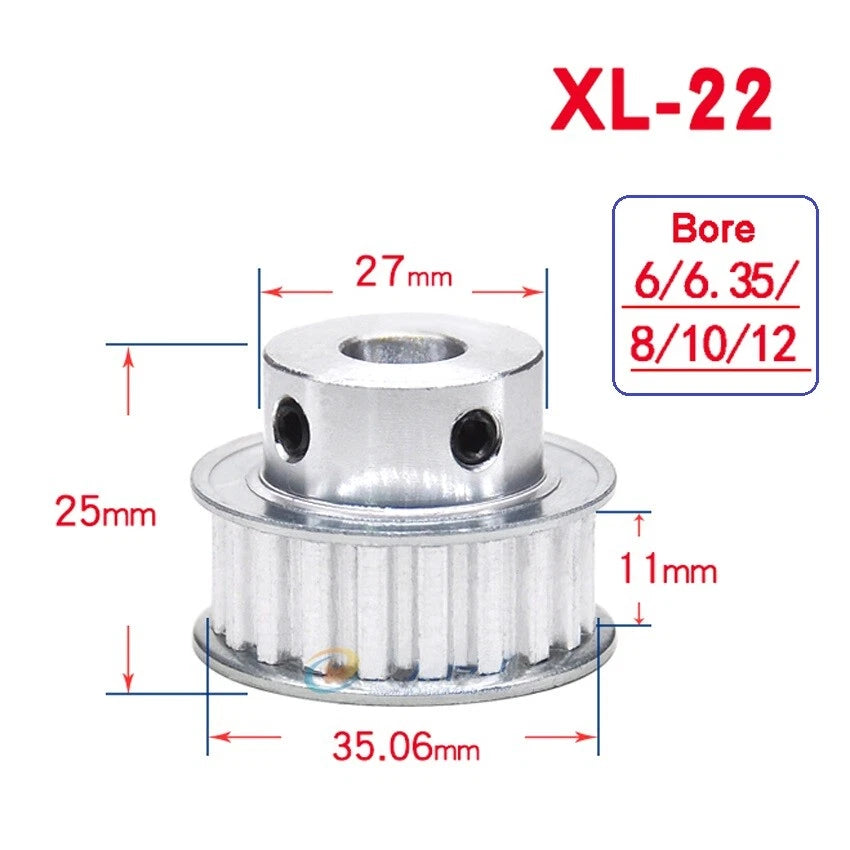
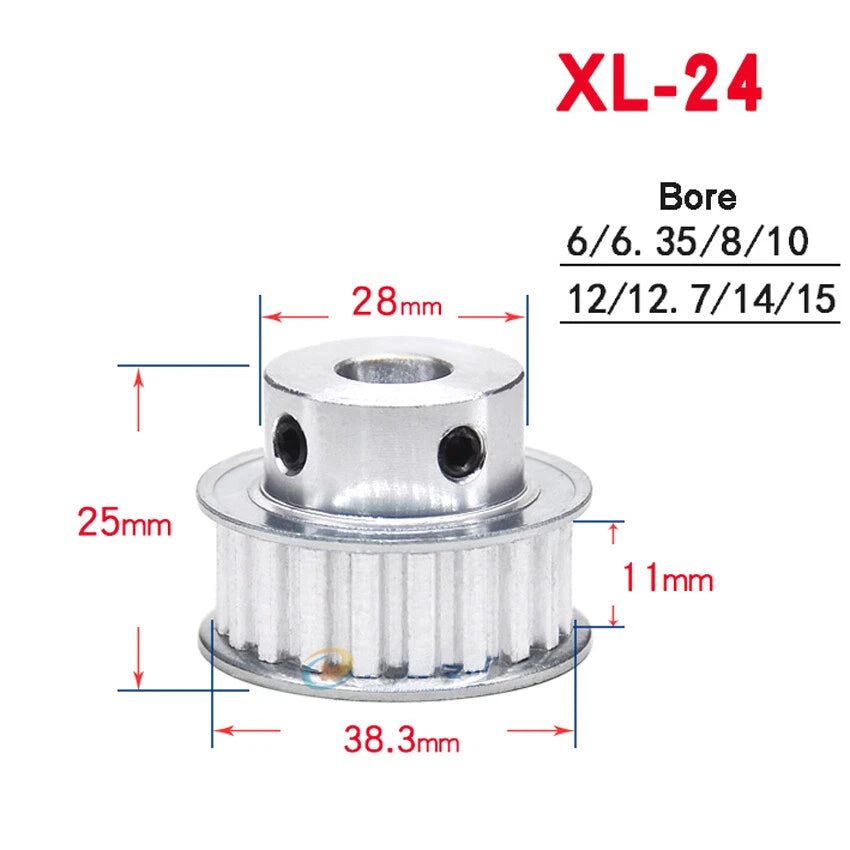
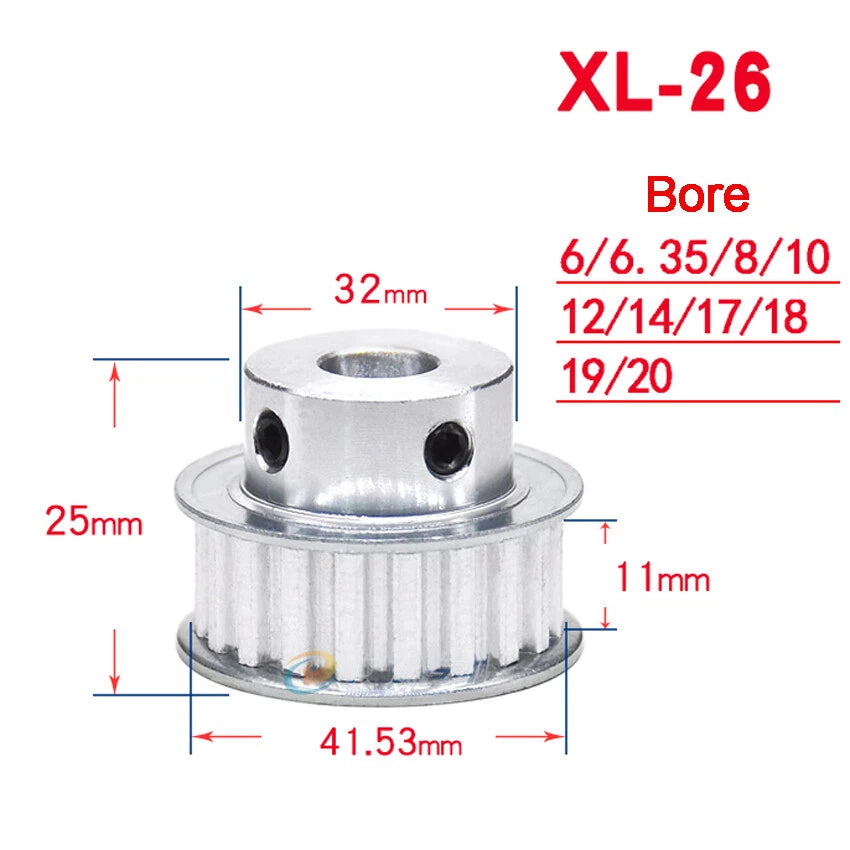
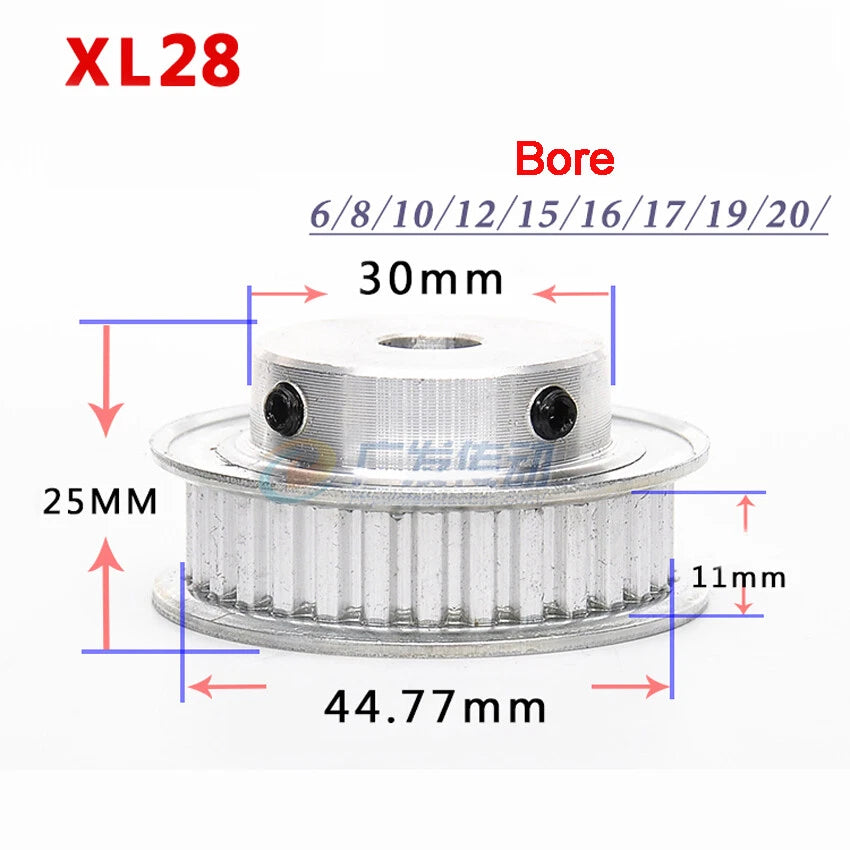
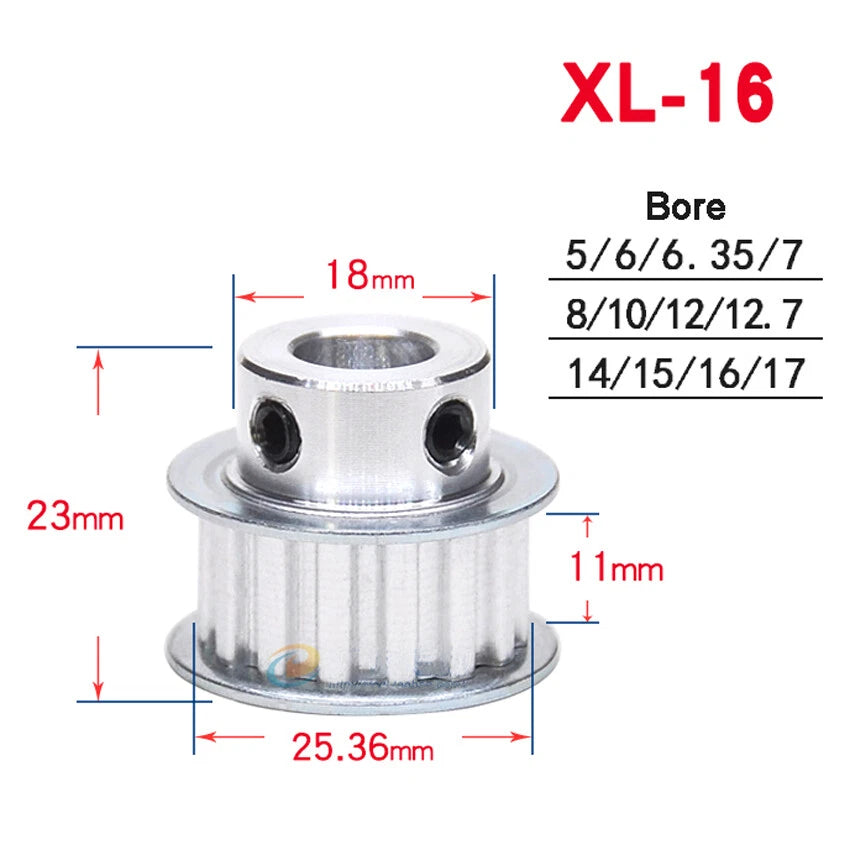
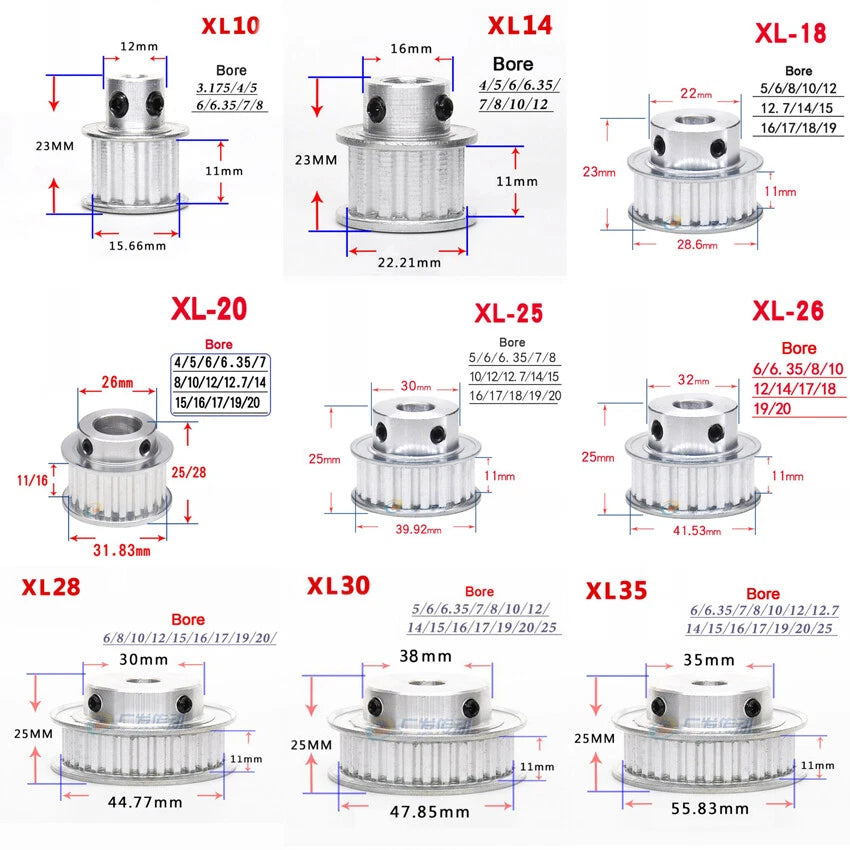
XL10T-35T Timing Belt Pulley Pitch 5.08mm With Step Drive Pulleys Width 11/16mm

No reviews

Price:
Sale price$3.29 USD
Stock:
In stock (500 units), ready to be shipped

Payment & Security

Ach Direct Debit Amazon American Express Apple Pay Bancontact BLIK Diners Club Discover EPS Google Pay iDEAL Wero JCB Maestro Mastercard Multibanco MobilePay PayPal Przelewy24 Shop Pay Twint Union Pay USDC Visa

Your payment information is processed securely. We do not store credit card details nor have access to your credit card information.

Limited Offer — Spend More, Save More
Spend $55+
Save $5
Spend $100+
Save $10
Spend $200+
Save $25
HomeDIYer DIY Expert Support

DIY Expert Support

Get fitment advice & recommendations

Mon–Fri  8:30 AM – 8:00 PM
24-Hour Fast Ship
Arrives in 3–14 Days
Worldwide Shipping
30-Day Returns
1 tree planted with every purchase

Description

XL Timing Belt Pulley 5.08mm Pitch — Precision Step Drive for CNC, 3D Printers & Robotics

When your motion-control build demands repeatable, slip-free power transmission, a mismatched or low-tolerance pulley becomes the weakest link in the chain. Engineers, makers, and workshop builders working on CNC routers, 3D printers, laser cutters, and robotic arms need pulleys that hold tight tolerances across every cycle. This XL-series timing belt pulley series is designed for exactly that audience — anyone who cannot afford positional drift or belt skip in a precision drive system.

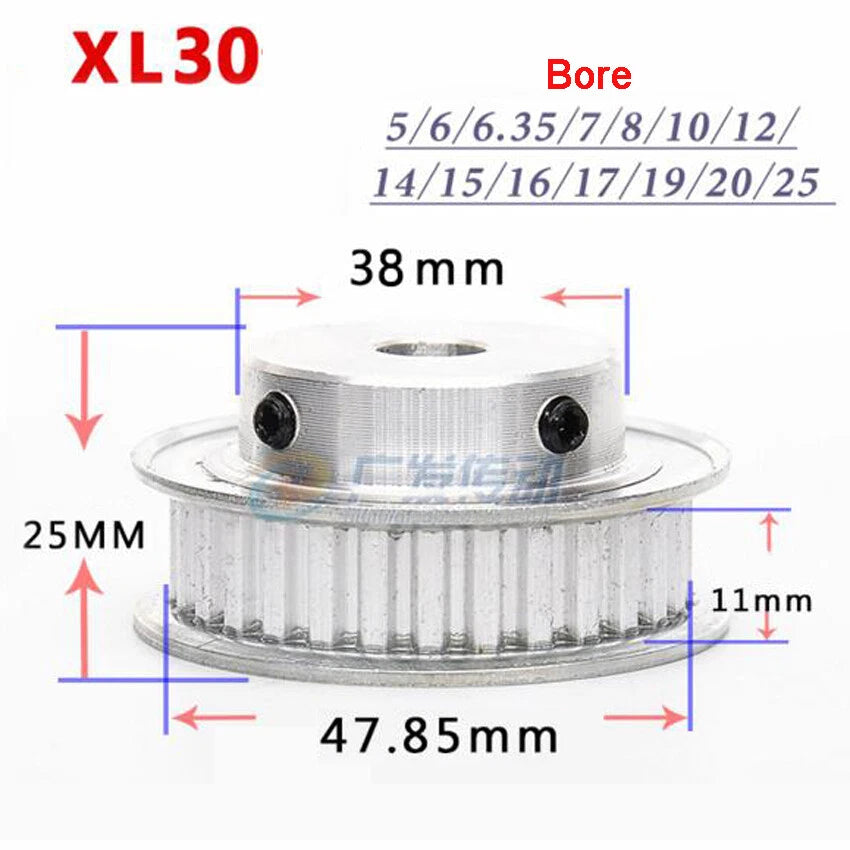
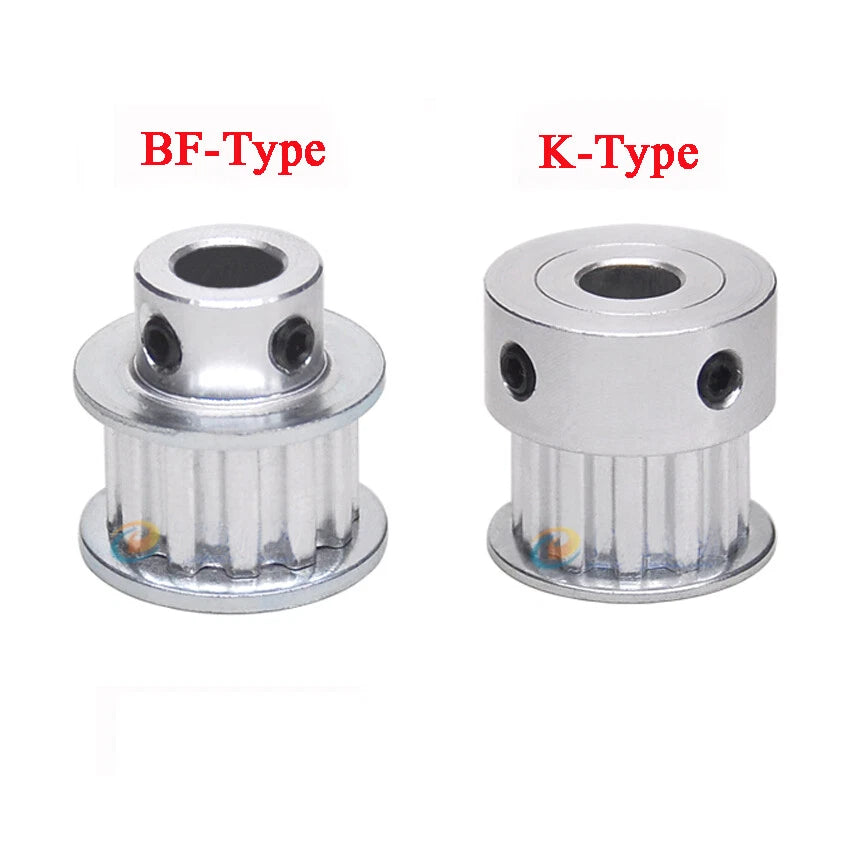
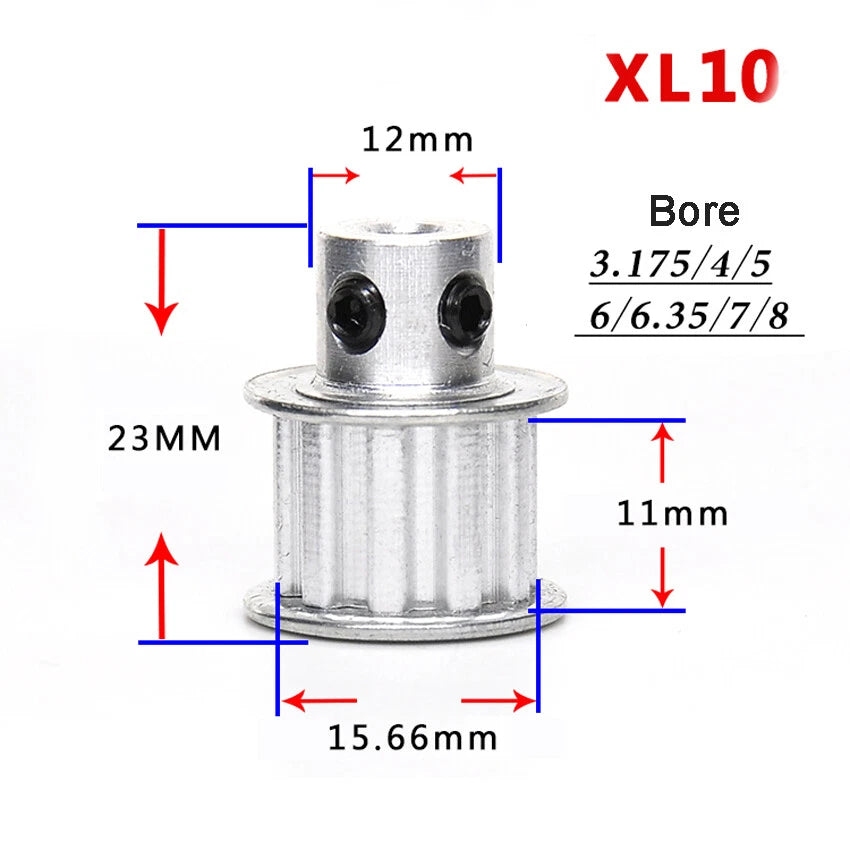
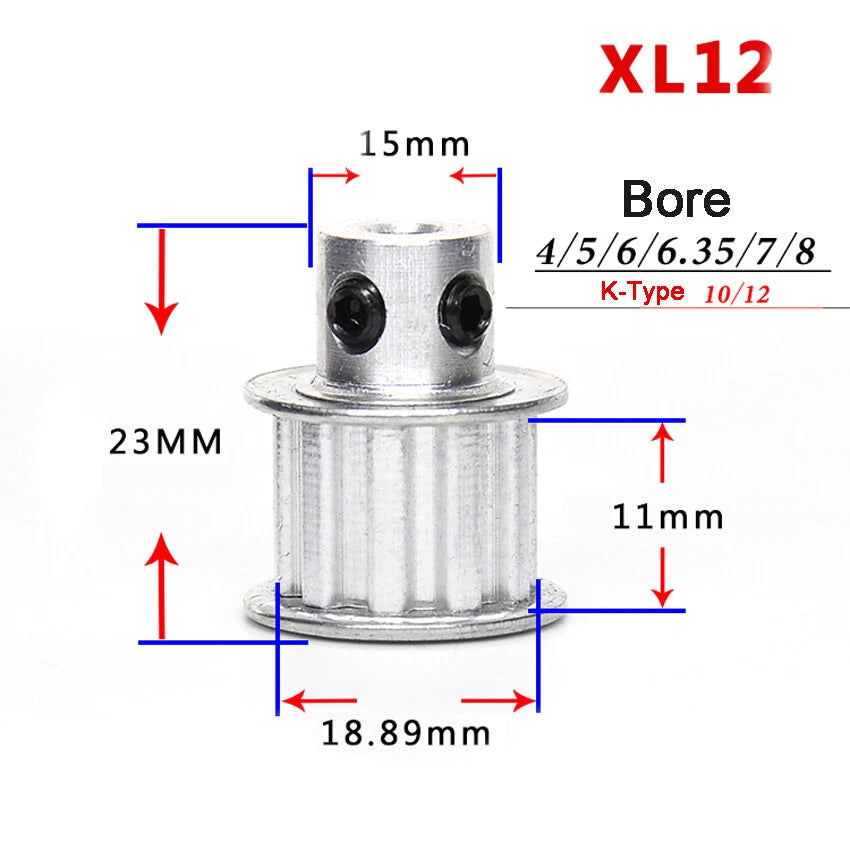
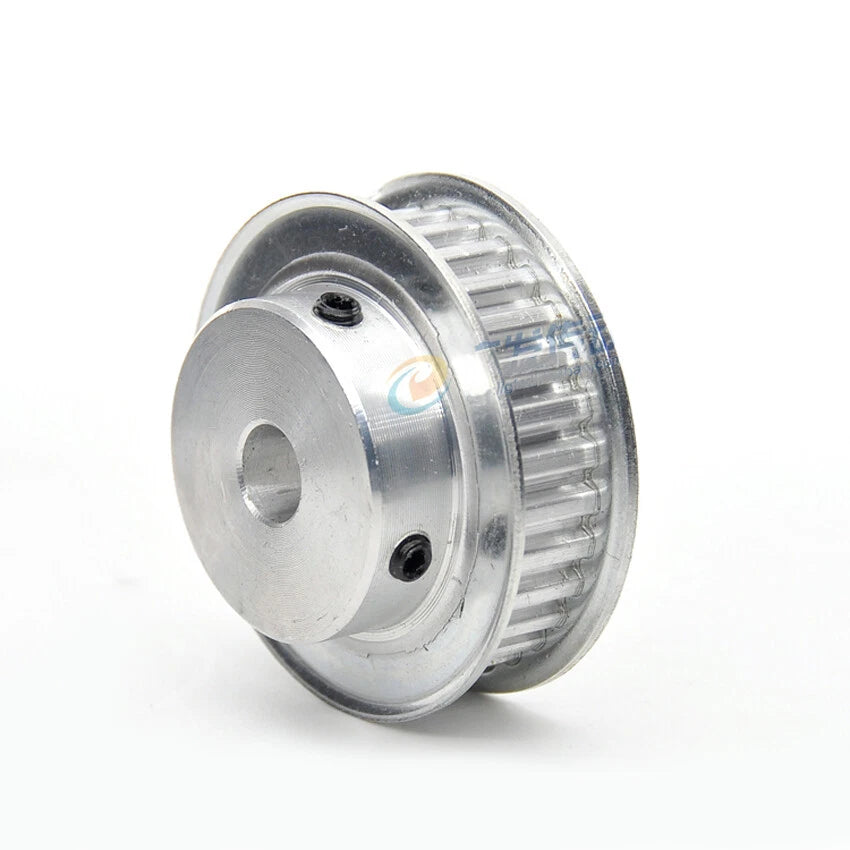
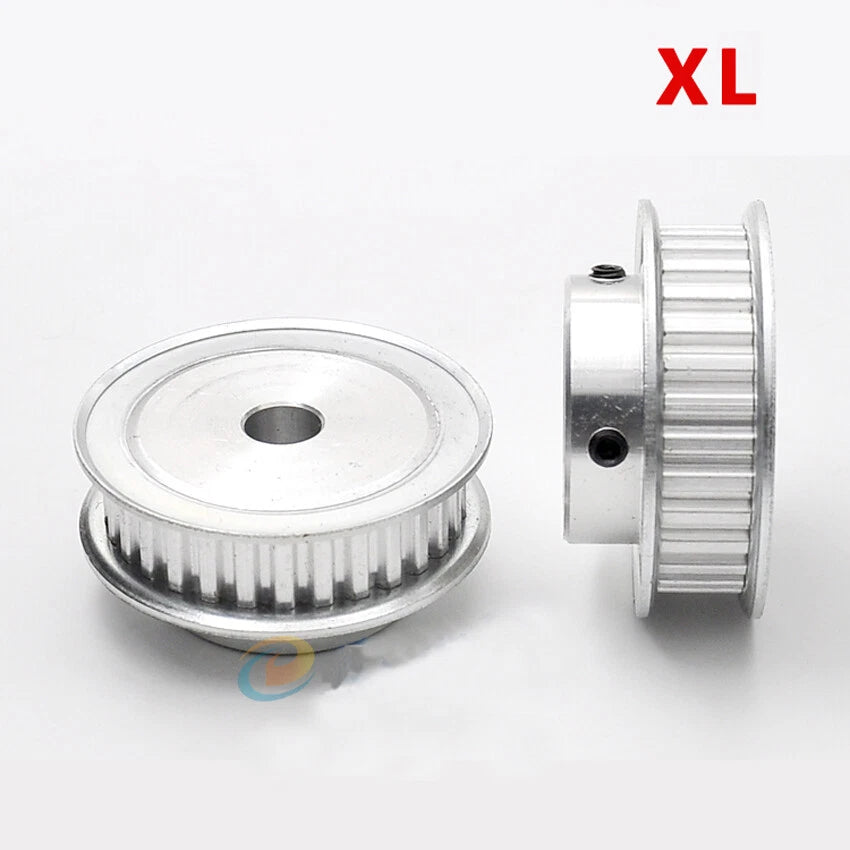
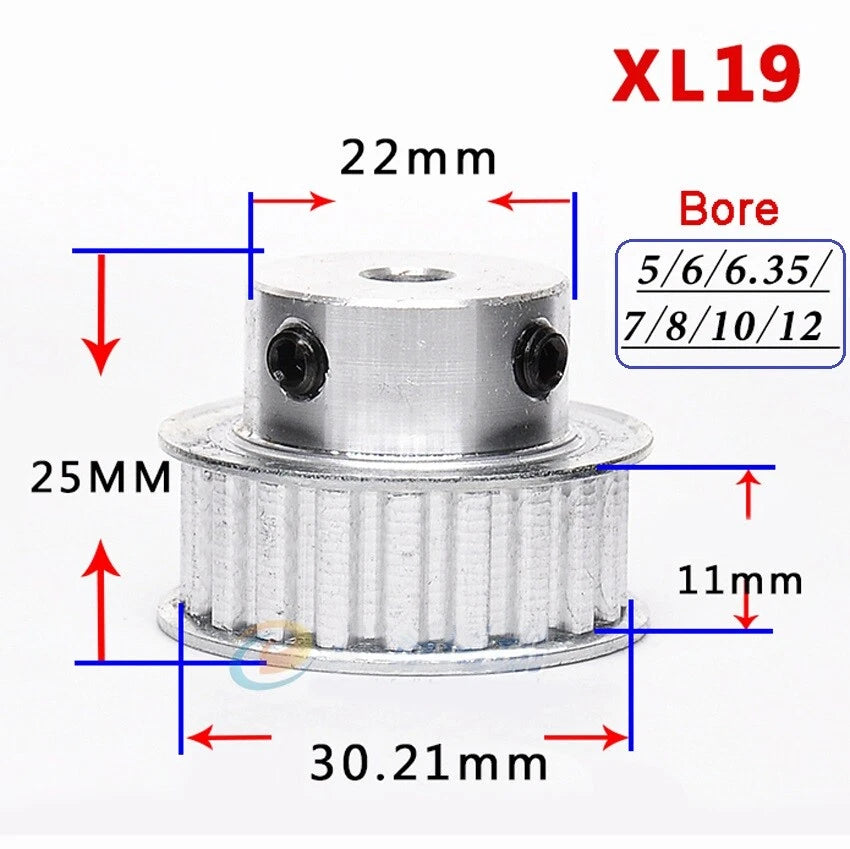
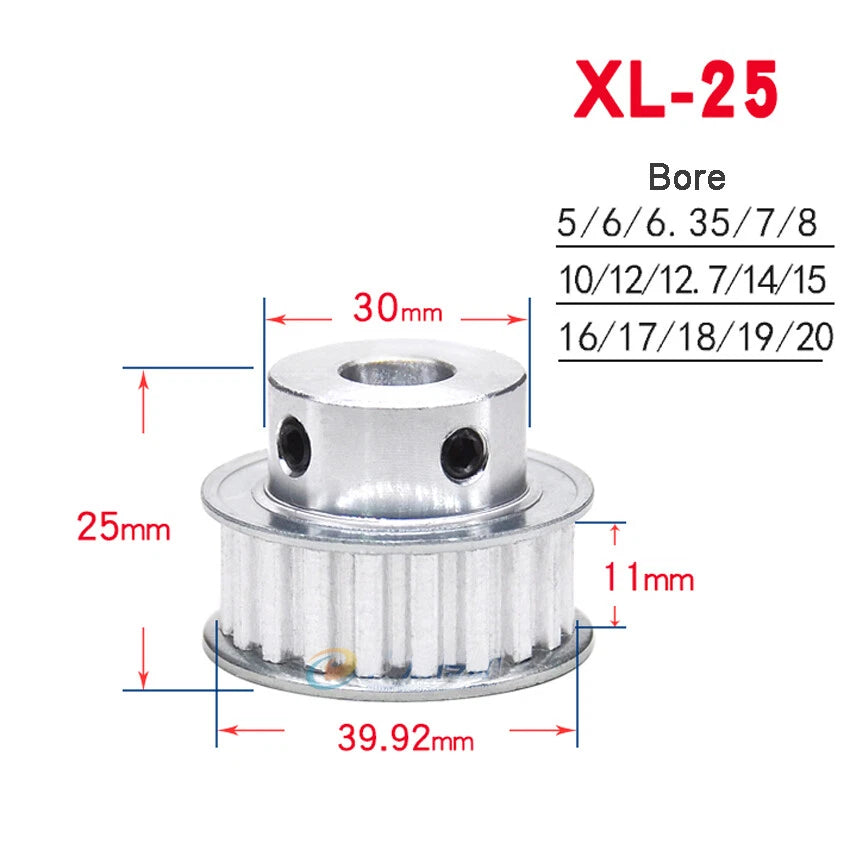
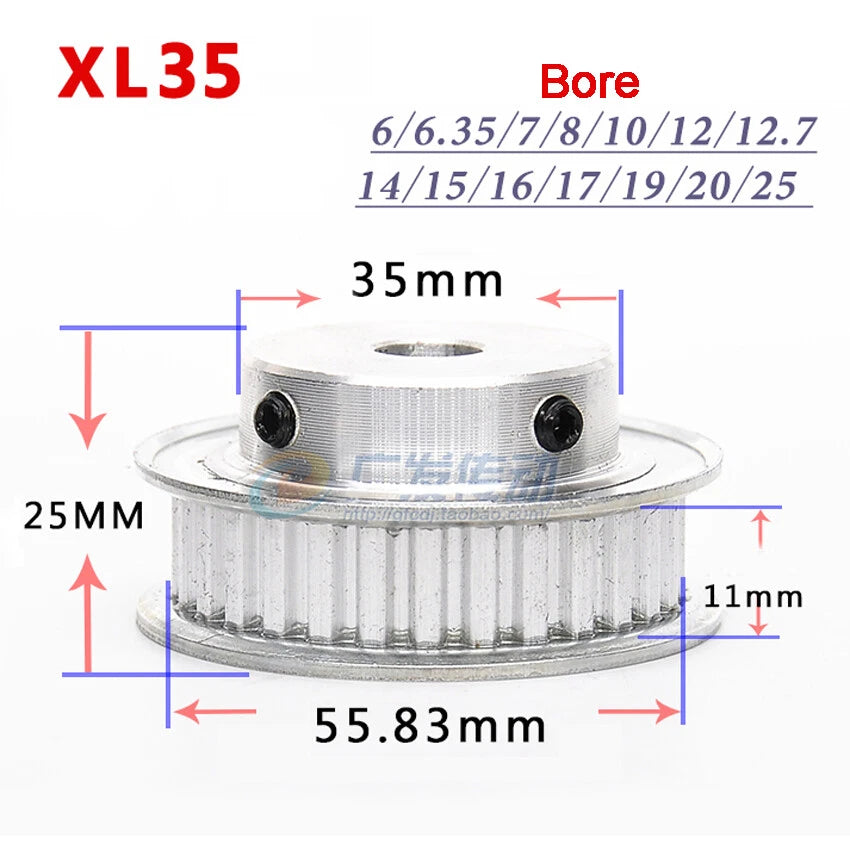
These XL timing belt pulleys feature a 5.08 mm (0.200 in) pitch, tooth counts ranging from 10T to 35T, and are available in two hub styles: BF-Type (flanged, with set-screw bore) and K-Type (keyway-ready hub). Tooth width options are 11 mm (~0.433 in) and 16 mm (~0.630 in). Bore sizes span from 3.175 mm (1/8 in) to 25 mm (~0.984 in), covering the most common motor shaft diameters used in hobby and light-industrial motion systems. The pulleys are machined from aluminum alloy, with a natural or anodized finish depending on variant.

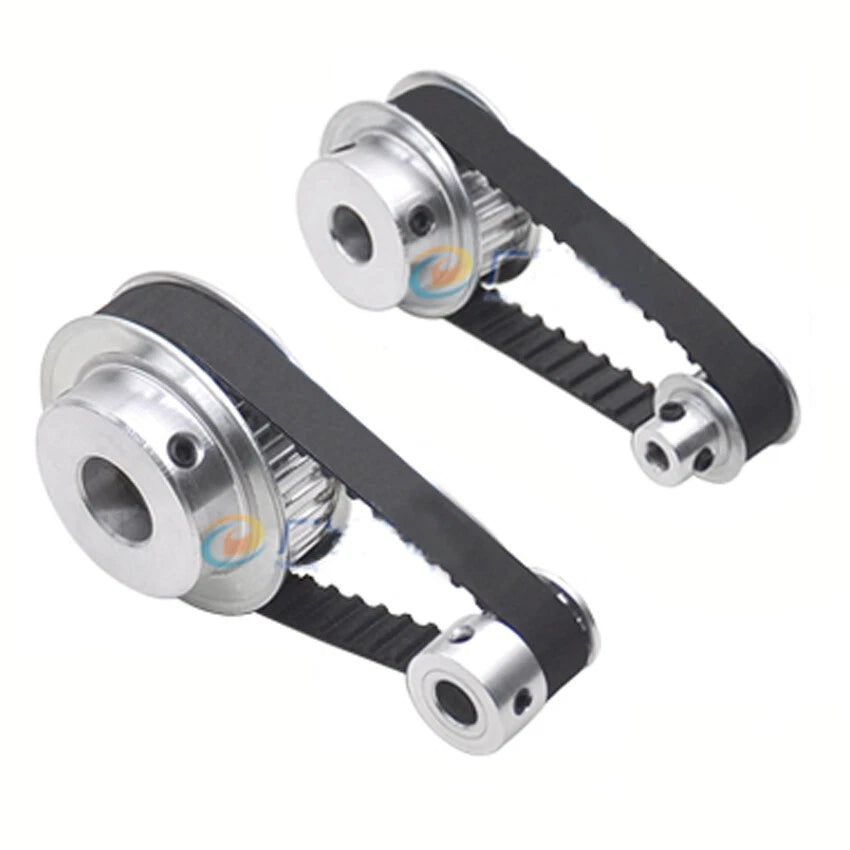
Typical use cases include XL belt drive systems for CNC router X/Y axes, extruder and Z-axis drives on FDM 3D printers, stepper-motor-driven conveyor stages, and servo-driven robotic joint assemblies. Long-tail applications include DIY pick-and-place machines, laser engraver gantries, and automated camera slider rigs — anywhere an XL-pitch synchronous belt is already specified.

⚙️ Compatible with: Standard XL-profile timing belts (5.08 mm / 0.200 in pitch) — 11 mm and 16 mm belt widths. Verify bore diameter and hub type (BF or K) before ordering.

✅ Key Features of These XL Timing Belt Pulleys

🔩 Wide Tooth Count Range (10T–35T)

Choose from 10 to 35 teeth to dial in your exact gear ratio and belt speed for any XL-pitch drive system.

🎯 Dual Hub Styles: BF-Type & K-Type

BF-Type offers a flanged hub with set-screw bore retention; K-Type provides a keyway slot for positive torque coupling on higher-load shafts.

📐 Broad Bore Selection (3.175–25 mm)

Bore options from 3.175 mm (1/8 in) to 25 mm (~1 in) accommodate NEMA 17, NEMA 23, and common servo motor shaft sizes without custom machining.

📏 Two Tooth Width Options: 11 mm & 16 mm

Match the pulley tooth width to your belt width — 11 mm for compact drives, 16 mm for higher-torque or wider-belt applications.

Aluminum Alloy Construction

Lightweight yet rigid aluminum alloy body keeps rotational inertia low while maintaining dimensional stability under continuous cycling loads.

🔄 Standard XL-Profile Tooth Form

Fully interchangeable with any standard XL timing belt — no proprietary belt required. Drop-in replacement for existing XL-pitch drive systems.

📐 Technical Specifications — XL Timing Belt Pulleys

Belt Profile XL (Extra Light)
Pitch 5.08 mm (0.200 in)
Tooth Count 10T, 12T, 14T, 16T, 17T, 18T, 19T, 20T, 22T, 24T, 25T, 26T, 28T, 30T, 32T, 35T
Hub Style BF-Type (flanged + set screw) / K-Type (keyway)
Tooth Width 11 mm / 16 mm
Bore Diameter 3.175 mm, 4 mm, 5 mm, 6 mm, 6.35 mm, 7 mm, 8 mm, 10 mm, 12 mm, 12.7 mm, 14 mm, 15 mm, 16 mm, 17 mm, 18 mm, 19 mm, 20 mm, 22 mm, 25 mm
Material Aluminum alloy
Finish See variant options
Flange BF-Type: flanged both sides; K-Type: see variant options
Set Screw BF-Type: included; K-Type: see variant options
Quantity per Order 1 pc

❓ Frequently Asked Questions

How do I choose the right tooth count (10T vs 35T) for my drive system?

Tooth count determines your pulley pitch diameter and, combined with your motor pulley, sets the drive ratio. A smaller tooth count (e.g., 10T) gives a smaller pitch diameter and higher belt speed per motor revolution; a larger count (e.g., 35T) gives a larger pitch diameter and more torque multiplication. Match the tooth count to your required linear speed, torque, and belt length. For CNC and 3D printer axes, 16T–20T on the motor side paired with a matching or larger driven pulley is common.

What is the difference between BF-Type and K-Type hubs?

BF-Type (Blind Flange) pulleys have a flanged hub with a through-bore and one or two set screws to clamp onto the motor shaft. They are the most common choice for stepper and servo motors in CNC and 3D printer applications. K-Type pulleys feature a keyway slot in the bore, which provides a positive mechanical key for higher-torque applications where set-screw retention alone may slip. Choose K-Type when your motor shaft has a matching keyway and you need reliable torque transfer under load.

Which bore size should I select for a NEMA 17 or NEMA 23 stepper motor?

Standard NEMA 17 stepper motors typically have a 5 mm output shaft — select the 5 mm bore variant. NEMA 23 motors commonly use an 8 mm shaft — select the 8 mm bore. Some NEMA 23 motors ship with a 6.35 mm (1/4 in) shaft, so verify your motor's datasheet before ordering. For servo motors or other shaft sizes, measure the shaft diameter directly and match to the available bore options listed above.

Are these pulleys compatible with standard XL timing belts from other brands?

Yes. These pulleys conform to the standard XL timing belt profile with a 5.08 mm (0.200 in) pitch and standard tooth geometry. They are fully interchangeable with XL-profile belts from any manufacturer — Gates, Bando, SDP/SI, and generic suppliers. Ensure your belt width matches the pulley tooth width (11 mm or 16 mm) for proper tracking and load distribution.

How strong are aluminum timing belt pulleys — can they handle continuous duty?

Aluminum alloy pulleys are well-suited for light-to-medium duty continuous operation typical of CNC routers, 3D printers, laser engravers, and similar machines. The XL belt profile is rated for moderate torque loads. For very high torque or shock-load applications, verify that the belt tension and tooth engagement (number of teeth in mesh) are within the belt manufacturer's rated limits. Aluminum pulleys are not recommended for heavy industrial drives where steel pulleys would be specified.

Do I need to worry about corrosion with aluminum pulleys in my application?

Aluminum alloy naturally forms a thin oxide layer that provides good corrosion resistance in typical indoor workshop and laboratory environments. For applications exposed to moisture, cutting fluids, or mild chemicals, the natural oxide layer is generally sufficient. If your environment is highly corrosive (salt spray, strong acids or bases), consider additional protective coatings or consult the finish specification for your chosen variant.

Can I use these pulleys as a direct replacement for existing XL pulleys in my machine?

Yes, provided you match three parameters: (1) tooth count — must be identical to the pulley being replaced; (2) bore diameter — must match your motor or driven shaft; (3) hub style — BF-Type or K-Type must match your shaft retention method. Tooth width (11 mm or 16 mm) should also match your existing belt width. If all three match, these are drop-in replacements with no modification required.

🛒 Select your Types & Shape, Tooth width, and Bore & Amount above, then add to cart.


You may also like

Recently viewed