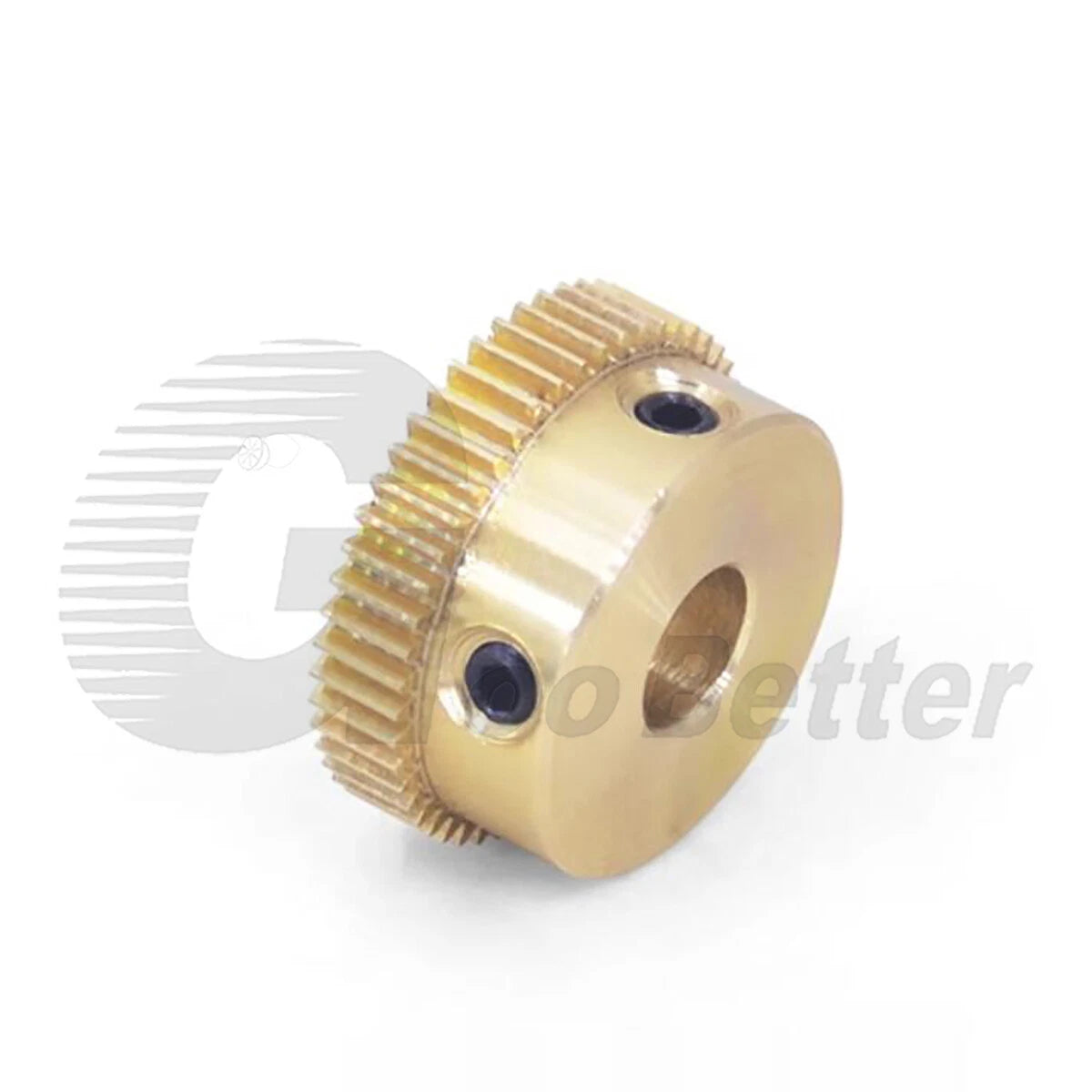
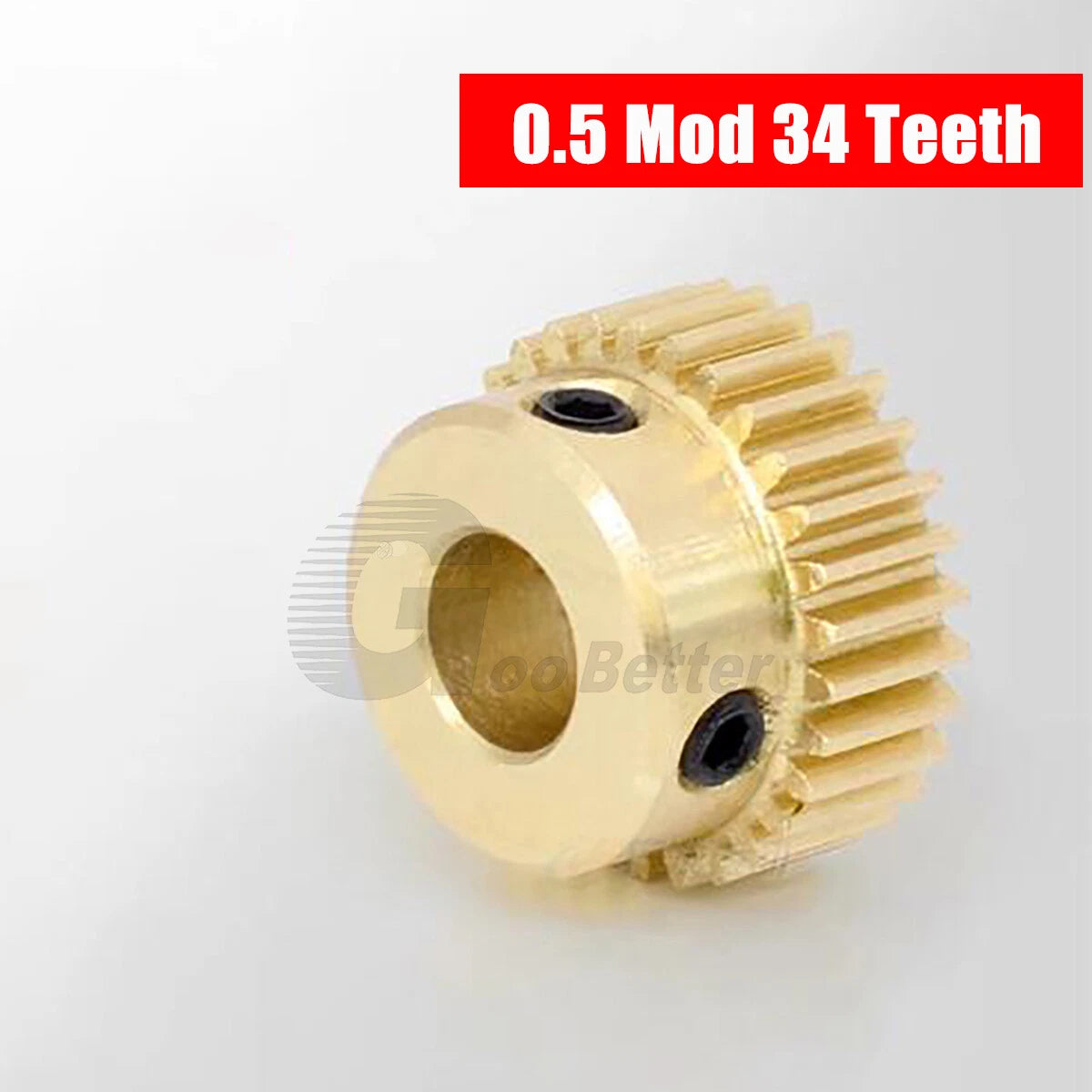
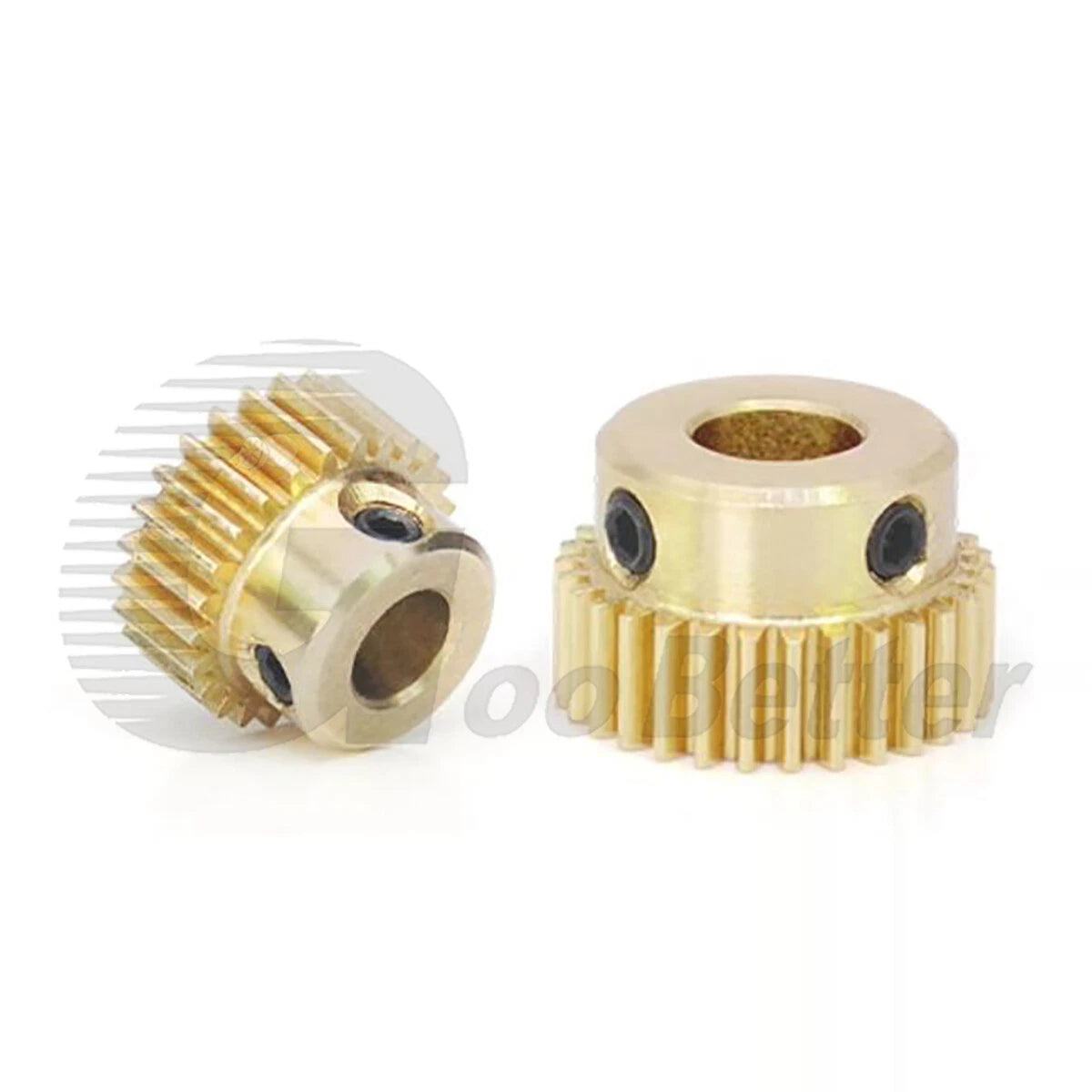
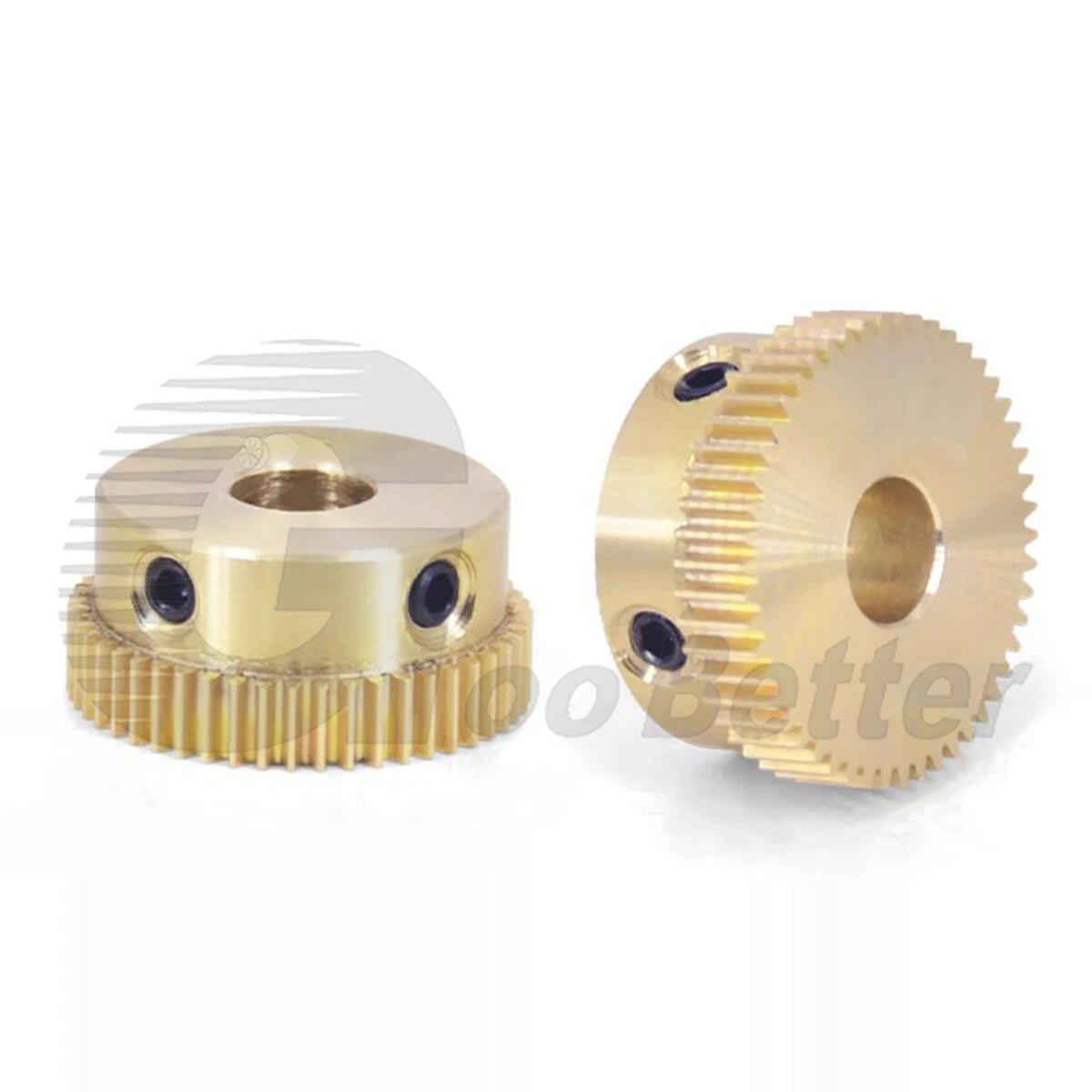
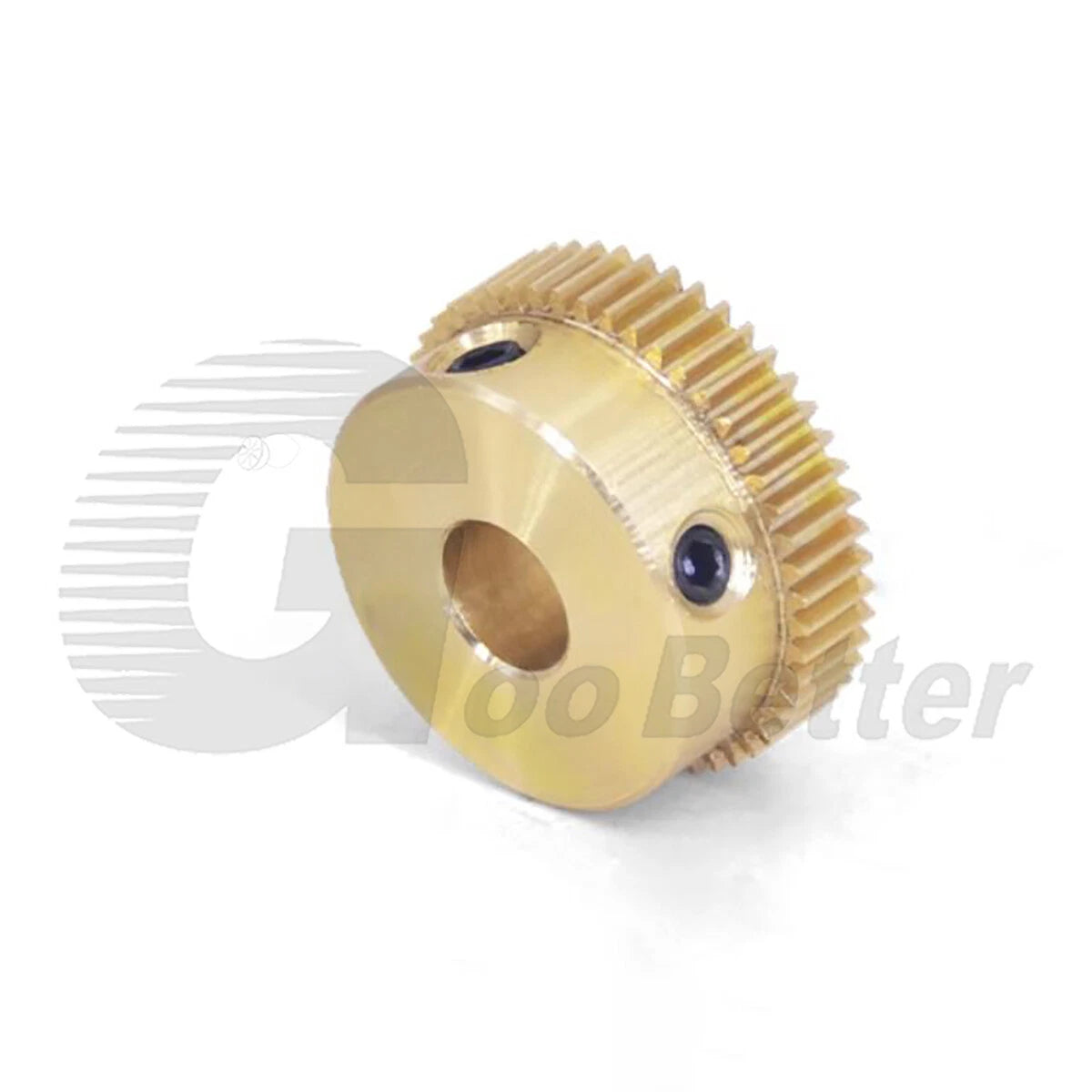
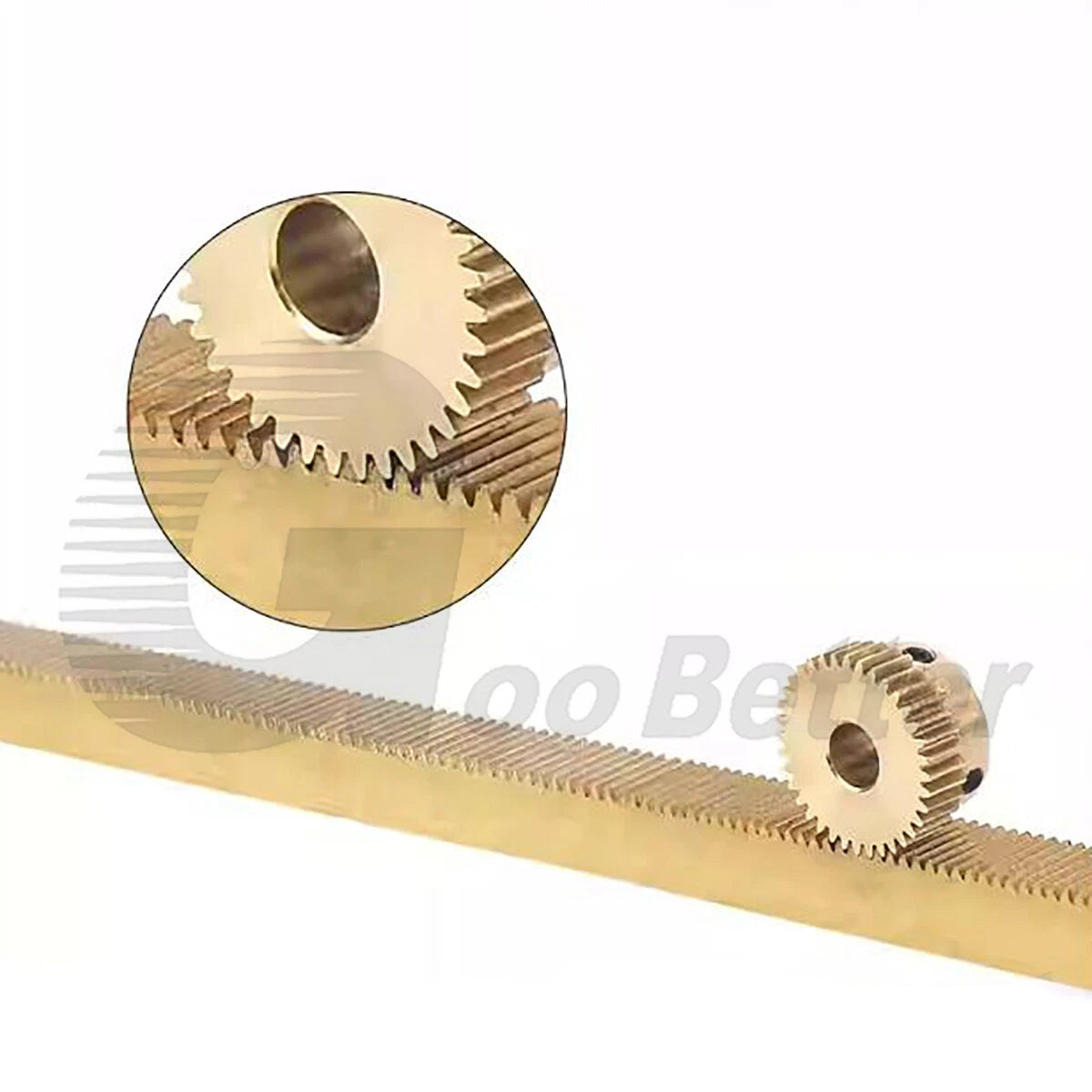
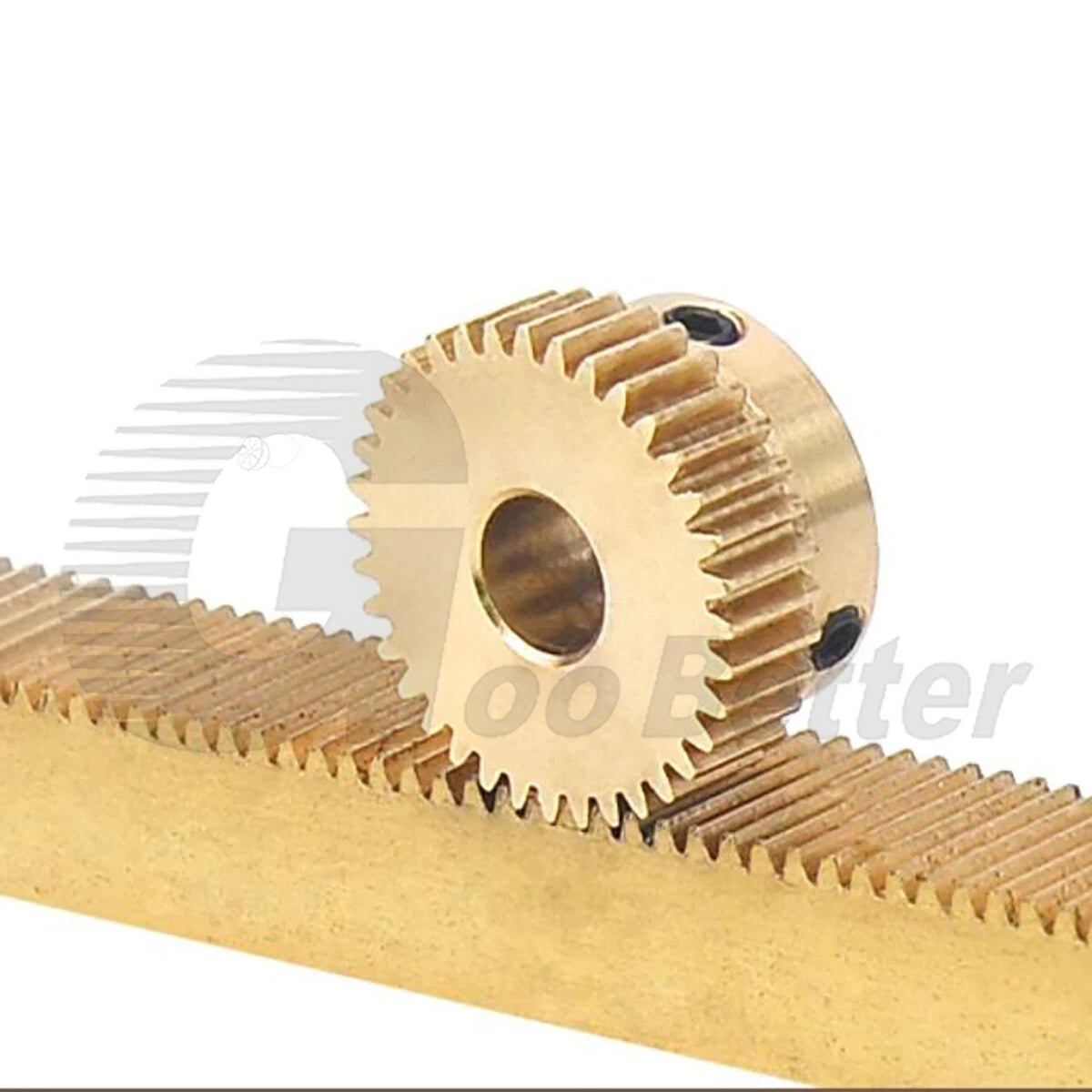
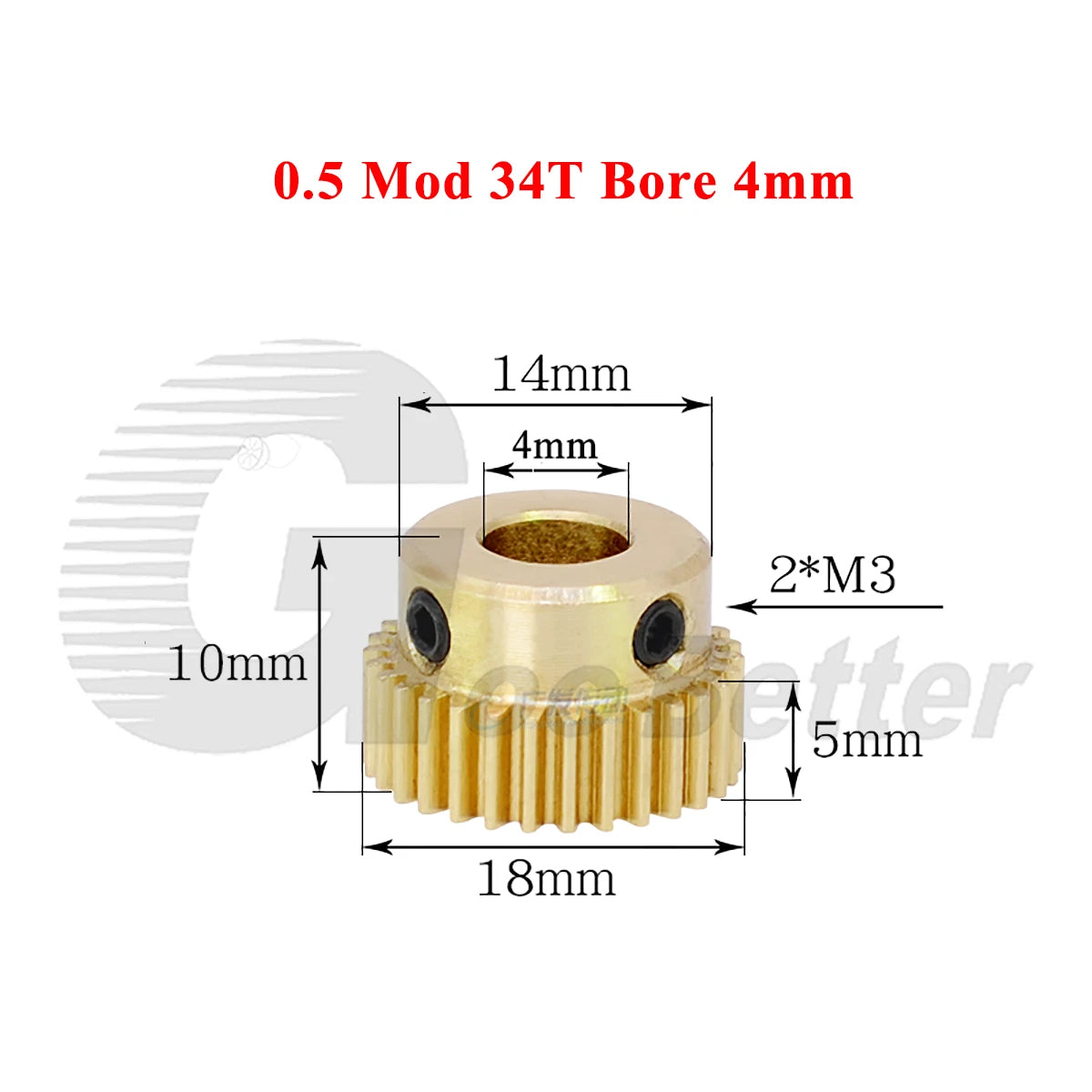
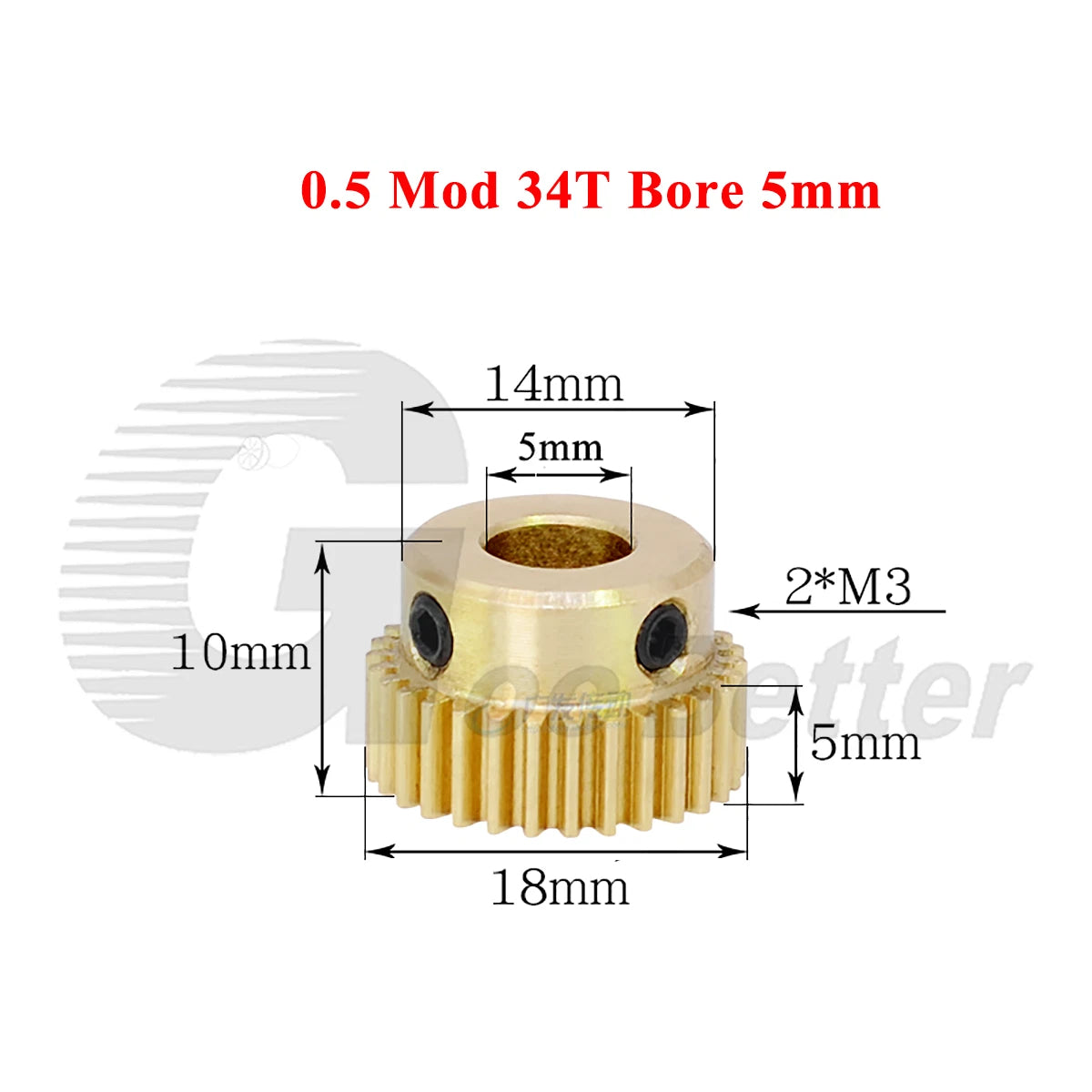
0.5 Mod Brass Spur Gear 34 Teeth Bore 4~10mm Motor Gear Transmission Pinion Gear

No reviews

Price:
Sale price$9.13 USD
Stock:
In stock (500 units), ready to be shipped

Payment & Security

Ach Direct Debit Amazon American Express Apple Pay Bancontact BLIK Diners Club Discover EPS Google Pay iDEAL Wero JCB Maestro Mastercard Multibanco MobilePay PayPal Przelewy24 Shop Pay Twint Union Pay USDC Visa

Your payment information is processed securely. We do not store credit card details nor have access to your credit card information.

Limited Offer — Spend More, Save More
Spend $55+
Save $5
Spend $100+
Save $10
Spend $200+
Save $25
HomeDIYer DIY Expert Support

DIY Expert Support

Get fitment advice & recommendations

Mon–Fri  8:30 AM – 8:00 PM
24-Hour Fast Ship
Arrives in 3–14 Days
Worldwide Shipping
30-Day Returns
1 tree planted with every purchase

Description

0.5 Mod Brass Spur Gear 34T — Precision Pinion Gear for Motor Drives

When your motor shaft needs a reliable, low-backlash mesh partner, undersized or poorly machined gears cause slippage, noise, and premature wear that stalls your entire project. Hobbyists building RC vehicles, robotics engineers prototyping drive trains, and small-machine designers all need a gear they can trust to hold tolerance run after run.

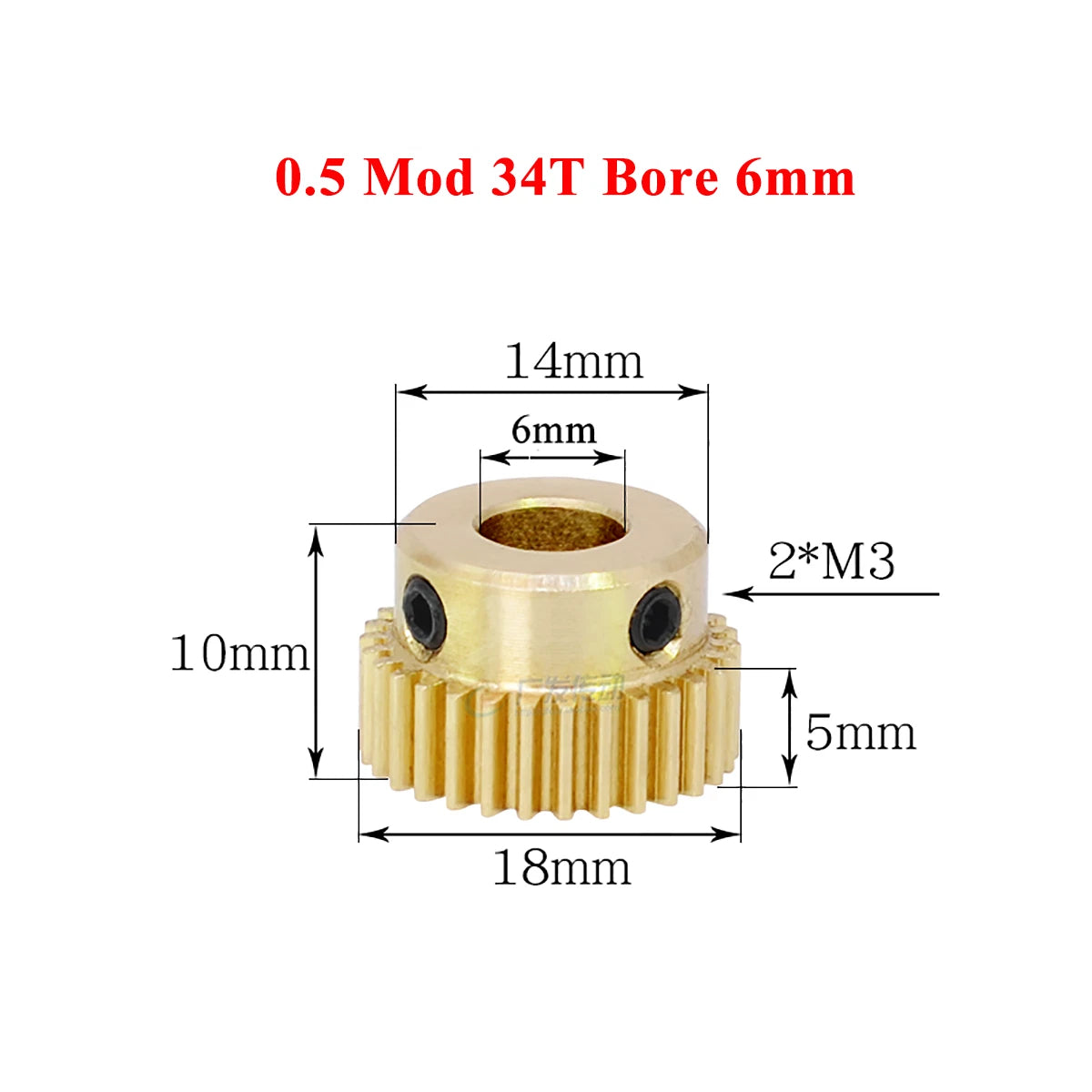
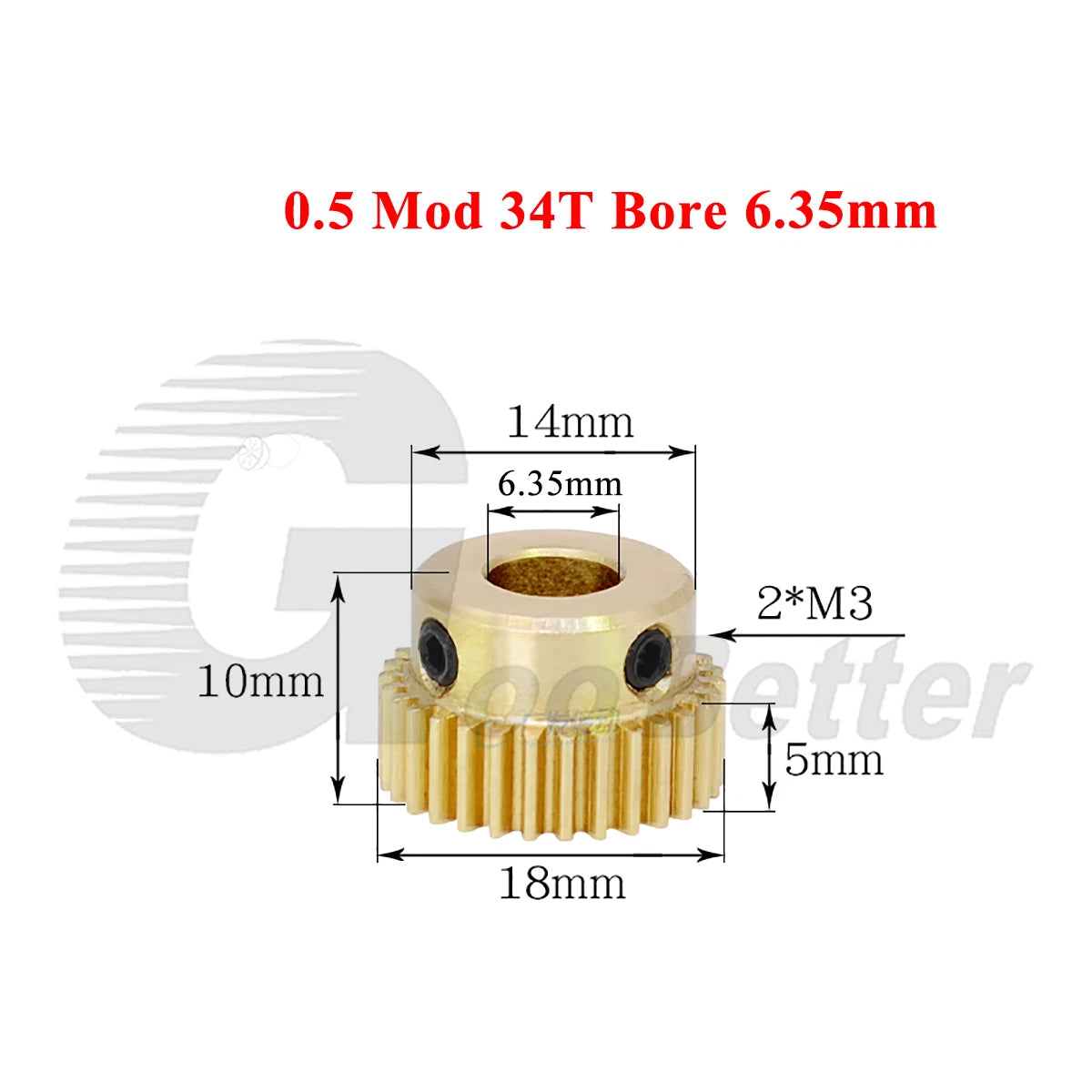
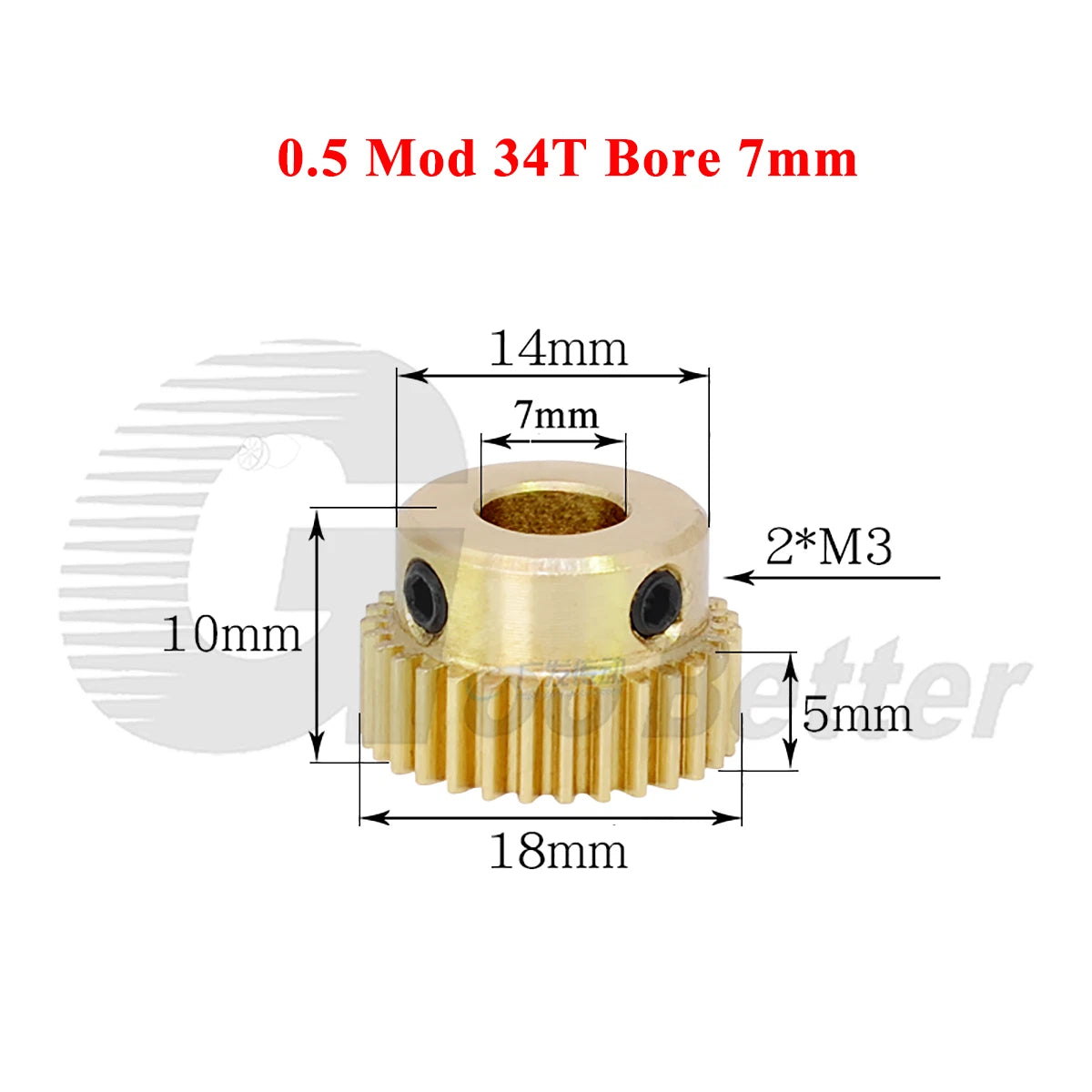
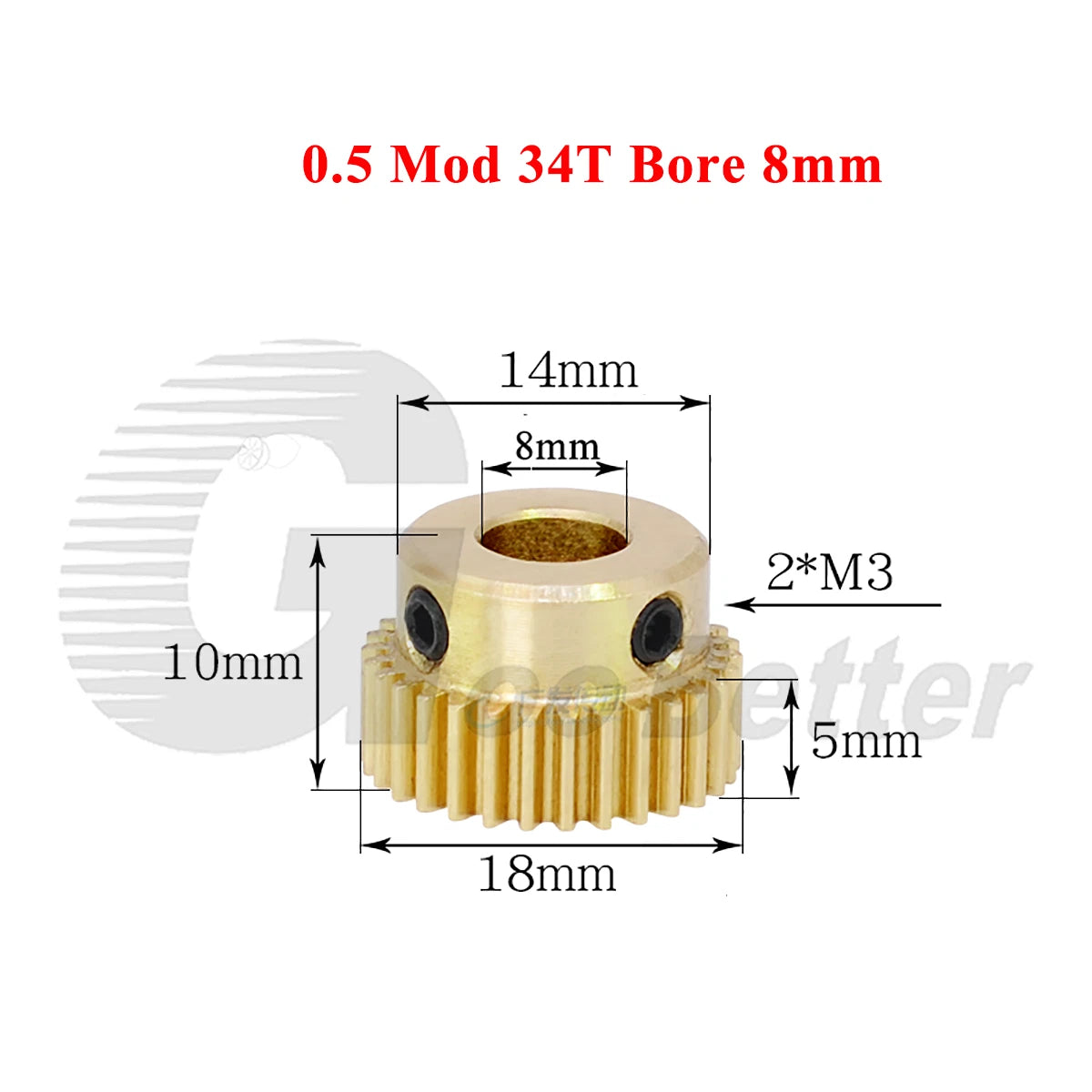
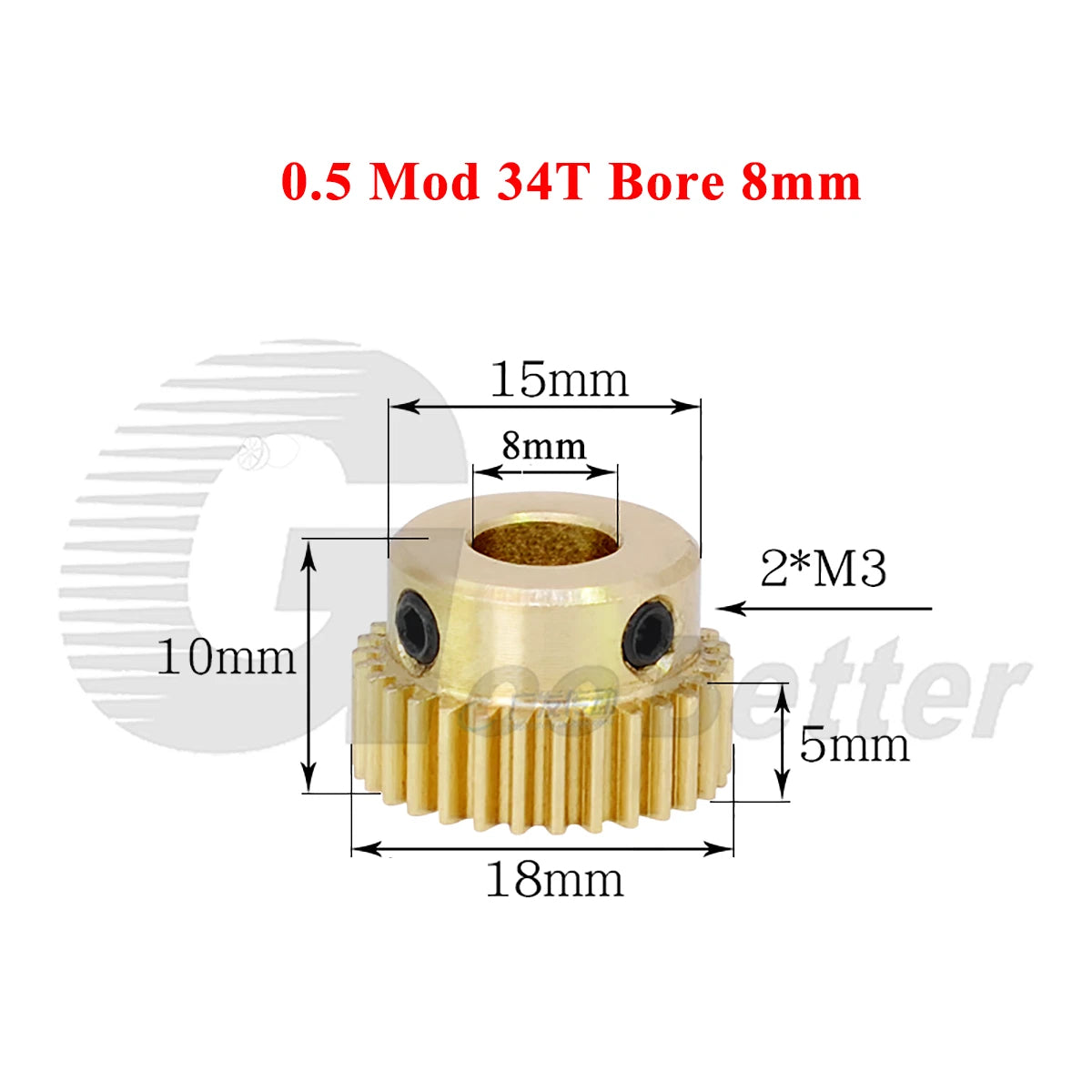
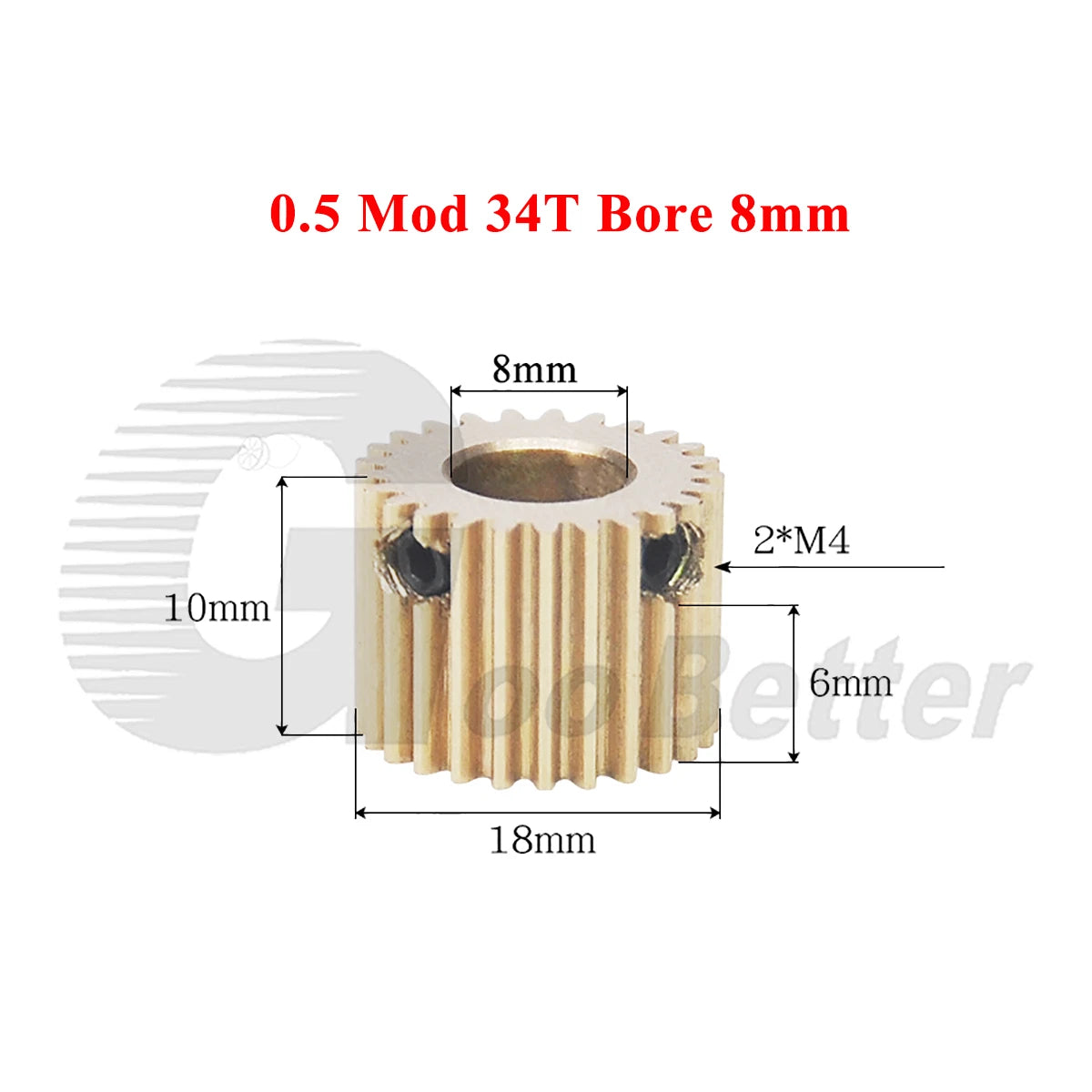
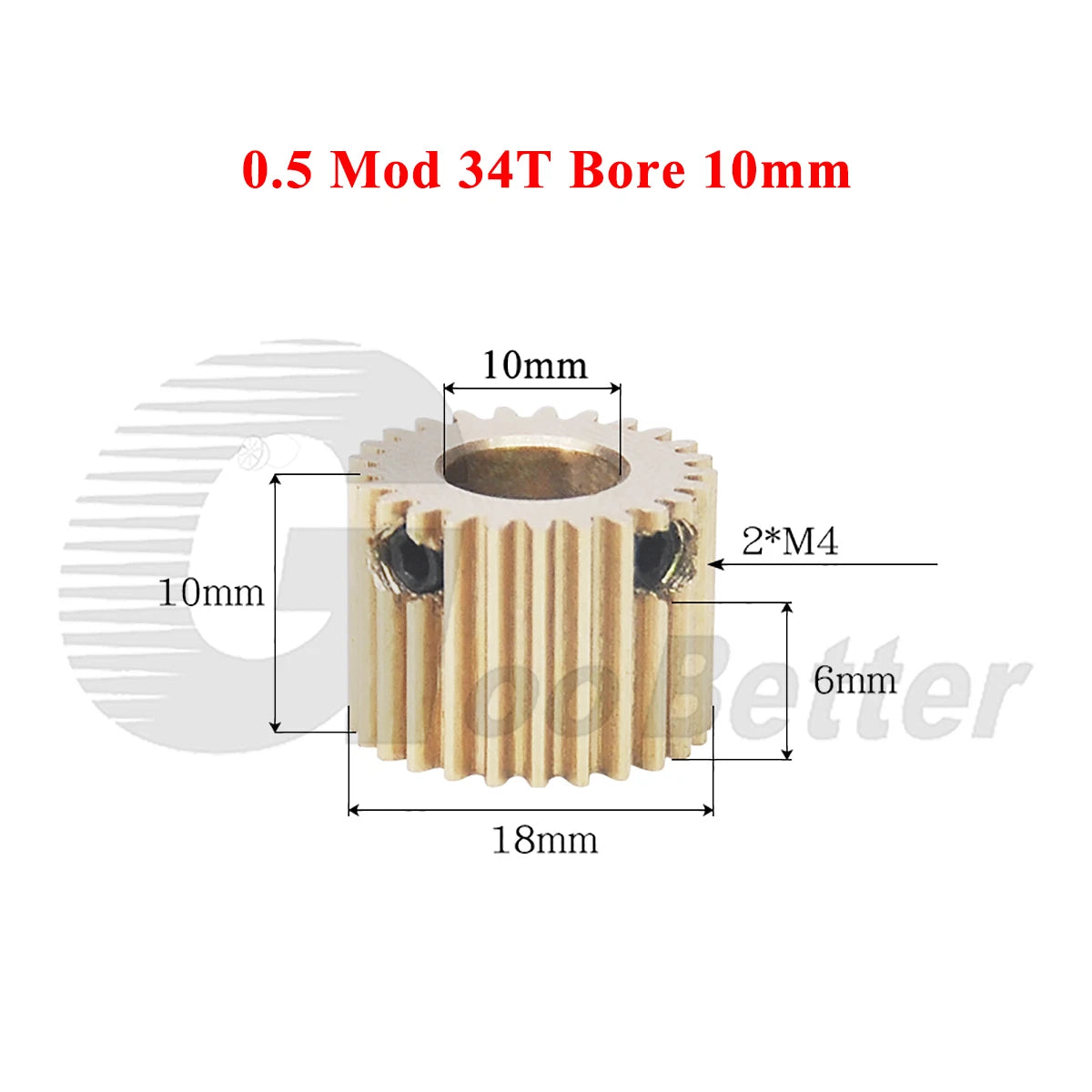
This 0.5 module brass spur gear features 34 teeth machined to DIN/JIS gear standards. The body is solid brass, offering a balance of machinability, corrosion resistance, and moderate strength. Bore options span 4 mm to 10 mm (approximately 5/32 in to 25/64 in), with select variants including a stepped bore (14 mm or 15 mm step) for shaft-shoulder registration. Outer diameter is approximately 17.5 mm (≈ 0.69 in); face width is typically 5–8 mm depending on bore variant.

Typical use cases include: pairing with 0.5 mod motor pinions in RC car steering and drive systems; building compact gear reduction stages in desktop CNC or 3D printer extruder assemblies; and integrating into educational robotics kits where a 34-tooth brass spur gear provides a known, repeatable gear ratio for torque-speed calculations.

⚙️ Compatible with all 0.5 Module (Mod 0.5) mating gears and racks. Verify bore diameter matches your motor or shaft before ordering.

✅ Key Features of These 0.5 Mod Brass Spur Gears

🔩 Solid Brass Construction — Machines cleanly, resists corrosion in humid or lightly oiled environments, and runs quietly against steel or plastic mating gears.
📐 34 Teeth, 0.5 Module — Consistent tooth profile ensures smooth mesh with any standard Mod 0.5 gear or rack, minimizing backlash in precision drive applications.
🎯 Wide Bore Range (4–10 mm) — Nine bore size options from 4 mm to 10 mm cover the most common hobby motor and stepper motor shaft diameters without custom machining.
🔧 Stepped Bore Variants Available — Select 8 mm bore variants include a 14 mm or 15 mm shoulder step for positive axial location on stepped shafts, eliminating the need for separate shaft collars.
📦 Flexible Pack Quantities — Available in 1, 2, 5, or 10-piece packs so you can order exactly what your build requires, from single prototypes to small production runs.
⚖️ Compact, Lightweight Profile — At approximately 17.5 mm OD and a slim face width, these gears fit into tight motor bays and compact gearbox housings where space is at a premium.

📐 Technical Specifications — 0.5 Mod Brass Spur Gear

Module 0.5
Number of Teeth 34T
Pitch Diameter 17 mm (0.669 in)
Outer Diameter (approx.) 18 mm (0.709 in)
Bore Diameter See variant options (4 / 5 / 6 / 6.35 / 7 / 8 / 10 mm)
Face Width See variant options
Step Bore Shoulder 14 mm or 15 mm (select 8 mm bore variants only)
Material Brass
Pressure Angle 20°
Gear Standard DIN / JIS Mod 0.5
Finish Natural brass (uncoated)
Pack Quantity See variant options (1 / 2 / 5 / 10 PCS)

❓ Frequently Asked Questions

How do I choose the right bore size for my motor shaft?

Measure your motor or drive shaft diameter with calipers. Common hobby motor shafts are 3 mm, 4 mm, 5 mm, or 6 mm; stepper motors often use 5 mm or 6.35 mm (1/4 in) shafts. Select the bore that matches your shaft exactly — a loose fit will cause slippage under load. If your shaft is between sizes, choose the smaller bore and carefully ream or hone to final dimension.

What is the difference between the standard 8 mm bore and the stepped 8 mm bore variants?

The standard 8 mm bore runs straight through the gear hub. The stepped variants (8 mm bore with 14 mm step or 15 mm step) have a larger-diameter shoulder machined into one face of the hub. This shoulder registers against a shaft step or bearing face, providing positive axial positioning without a separate collar or circlip. Choose the stepped variant when your shaft has a matching shoulder diameter of 14 mm or 15 mm.

Will this gear mesh with my existing 0.5 module plastic or steel gears?

Yes. Module is a universal tooth-size standard — any two gears of the same module and pressure angle will mesh correctly regardless of material. This 0.5 Mod 34T brass gear will mesh with 0.5 Mod plastic, steel, or aluminum gears and racks. Confirm the mating gear is also 20° pressure angle (the most common standard) for optimal tooth contact.

How strong is brass compared to steel for this application?

Brass has a tensile strength of approximately 300–500 MPa depending on alloy, compared to 400–800 MPa for common carbon steel. For light-duty applications — RC vehicles, robotics, small automation, and educational projects — brass provides more than adequate strength while offering superior machinability, lower noise, and natural corrosion resistance. For high-torque or high-cycle industrial drives, consider steel alternatives.

Does brass corrode, and do I need to lubricate these gears?

Brass is naturally corrosion-resistant in most indoor and lightly humid environments and will not rust. For best performance and longevity, apply a light machine oil or white lithium grease to the tooth faces, especially in continuous-duty applications. Avoid heavy greases that can attract abrasive particles in dusty environments.

What gear ratio will I get pairing this 34T gear with a common motor pinion?

Gear ratio = driven teeth ÷ driver teeth. Pairing this 34T gear with a 17T motor pinion gives a 2:1 reduction (torque doubles, speed halves). With a 10T pinion the ratio is 3.4:1; with a 8T pinion it is 4.25:1. Use these ratios to calculate output RPM and torque for your specific motor and load requirements.

Can I order a single piece to test fit before buying in bulk?

Yes. The 1 PCS pack option is available for every bore size, allowing you to verify fit, mesh quality, and dimensional accuracy before committing to a 5 or 10-piece order. Multi-piece packs offer a lower per-unit cost for production or replacement stock.

🛒 Select your bore size and pack quantity above, then add to cart.

You may also like

Recently viewed