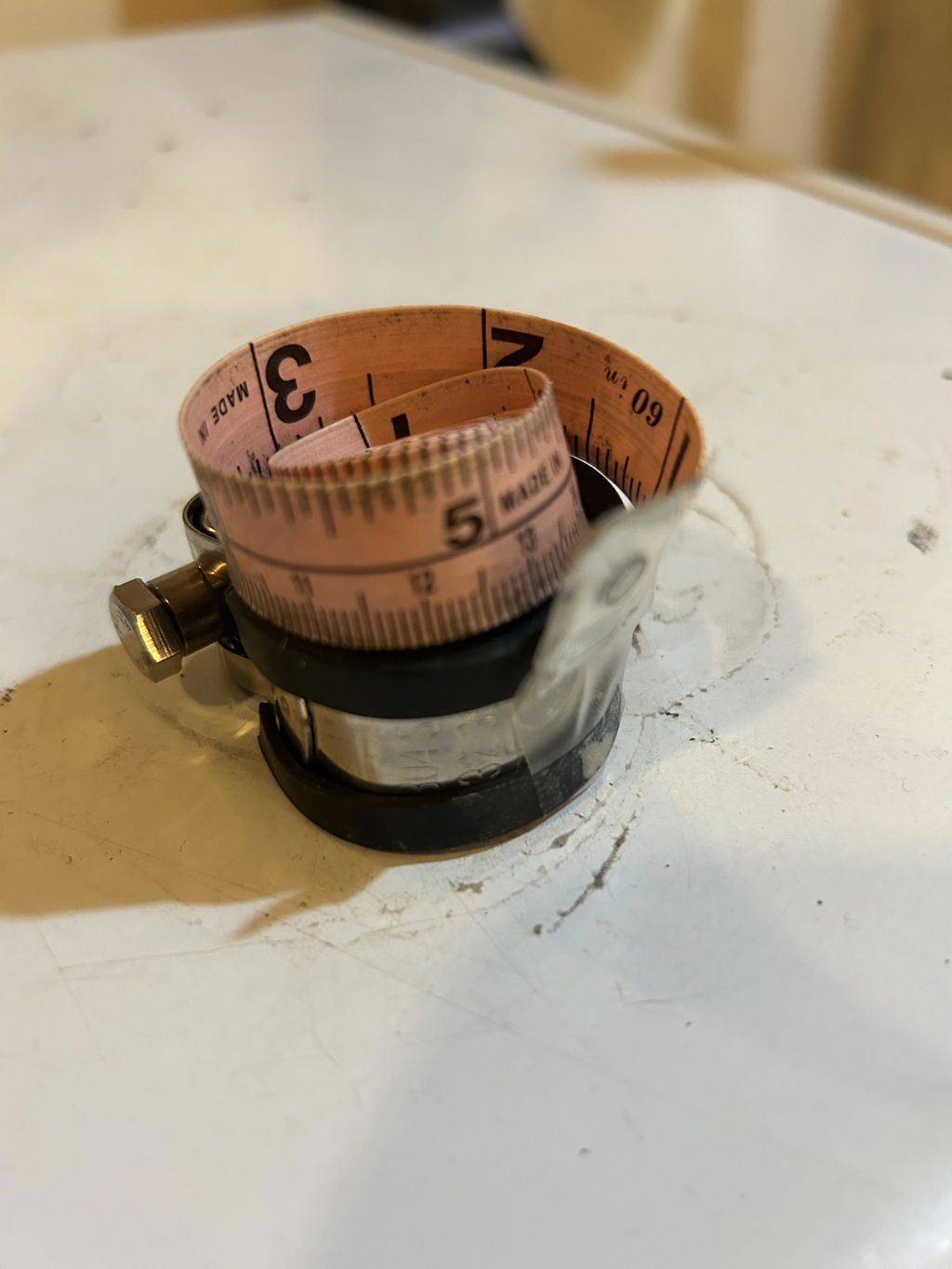
The chain is fine...but I ordered the wrong size. Nine links of the chain I ordered equals six of the size I wanted. My error...
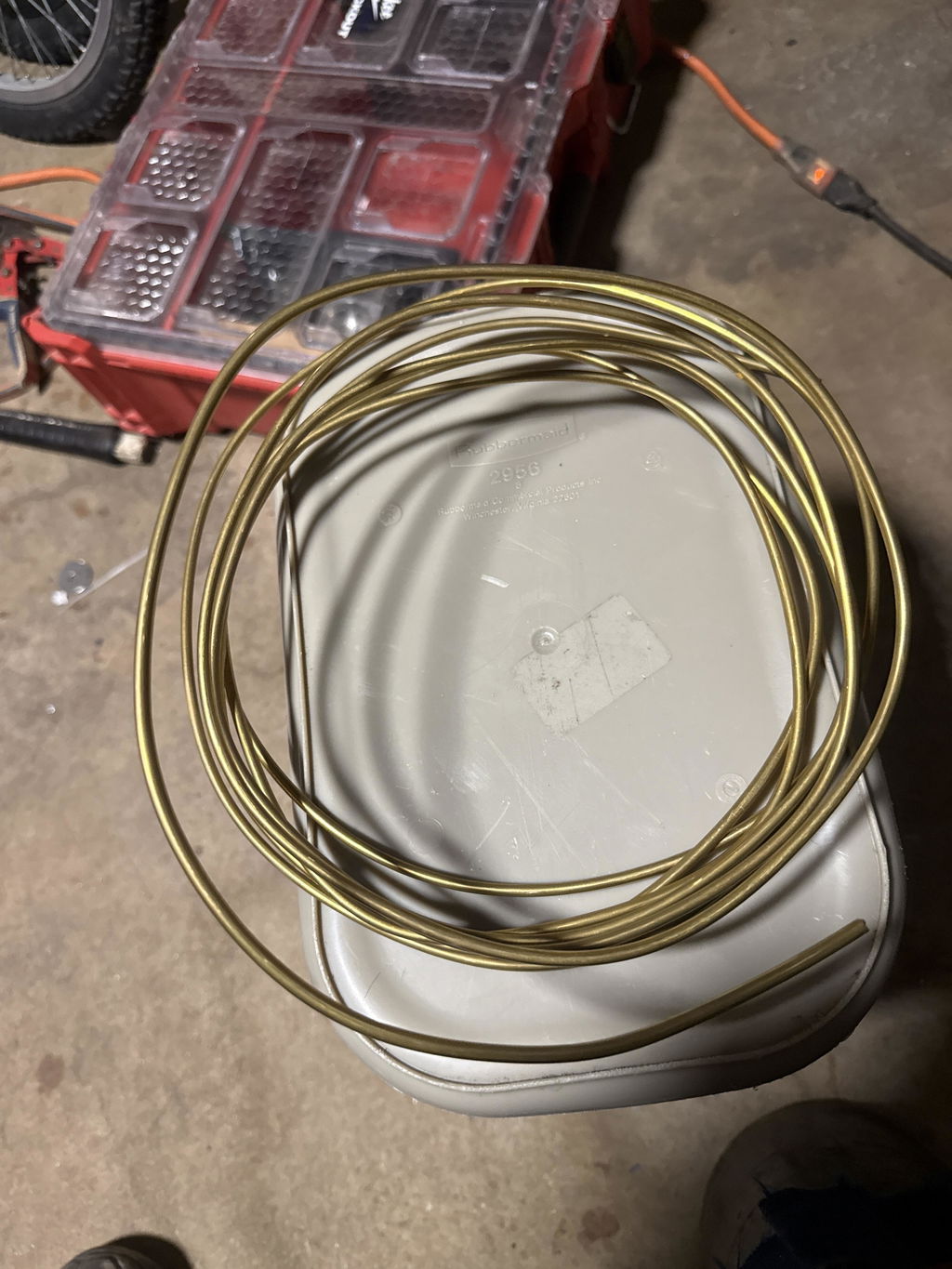
How can I straighten out the springs? I can't use them coil uo as is.
Your payment information is processed securely. We do not store credit card details nor have access to your credit card information.
Get fitment advice & recommendations
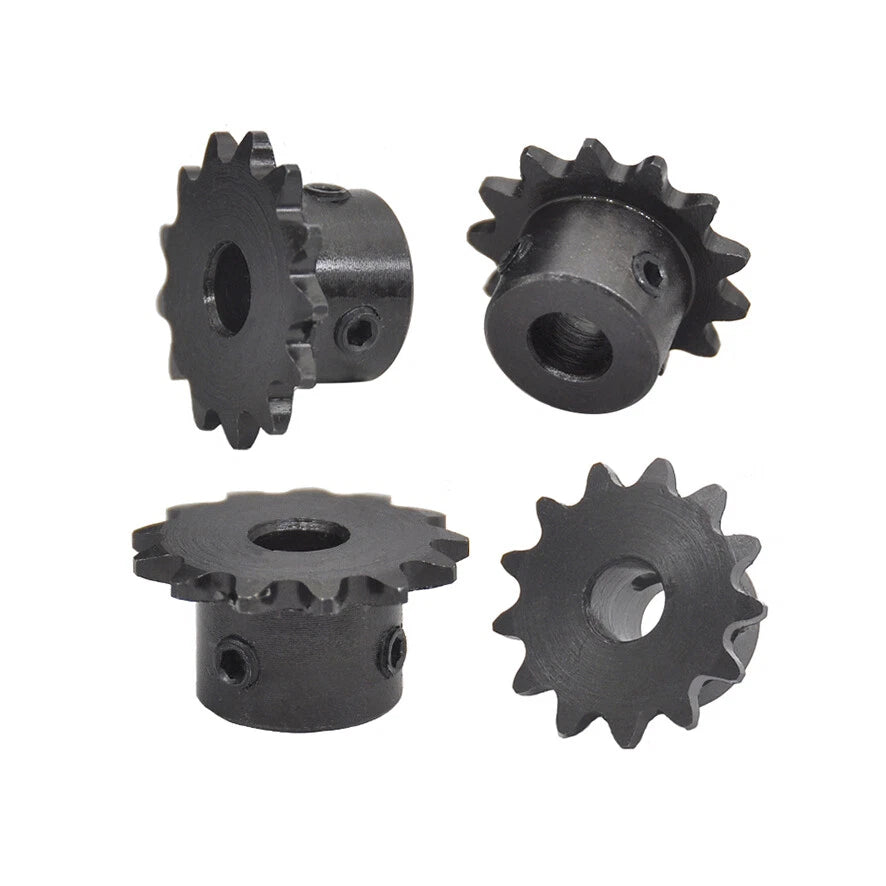
When a worn or undersized sprocket causes chain skip, misalignment, or premature chain wear in your small-pitch drive system, finding an exact-fit replacement is critical. These 04C roller chain sprockets are designed for engineers, makers, and repair technicians who need a reliable, dimensionally accurate sprocket for ISO 04C (1/4" pitch) chain applications.
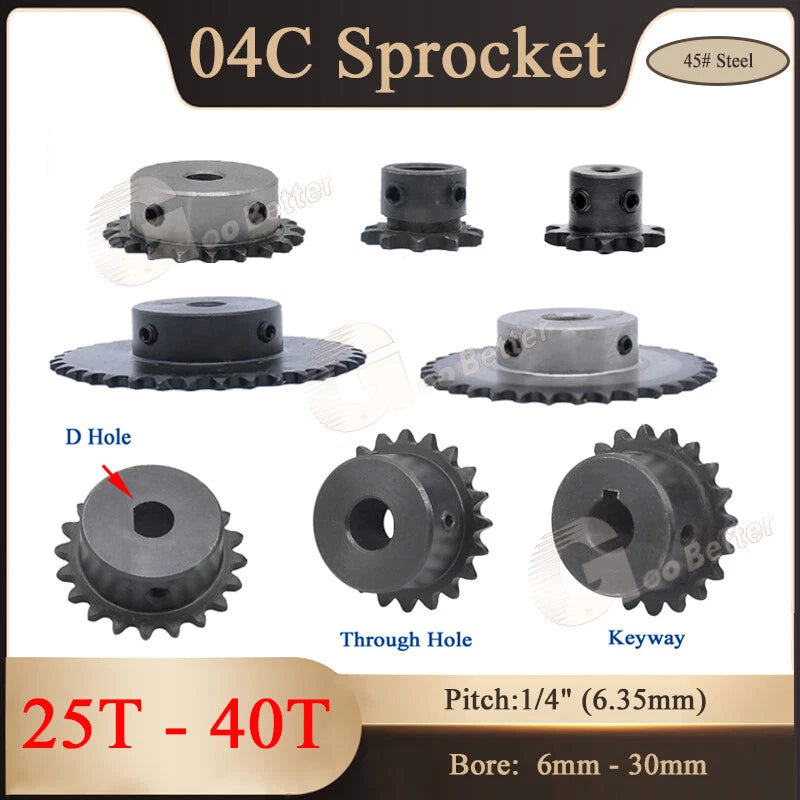
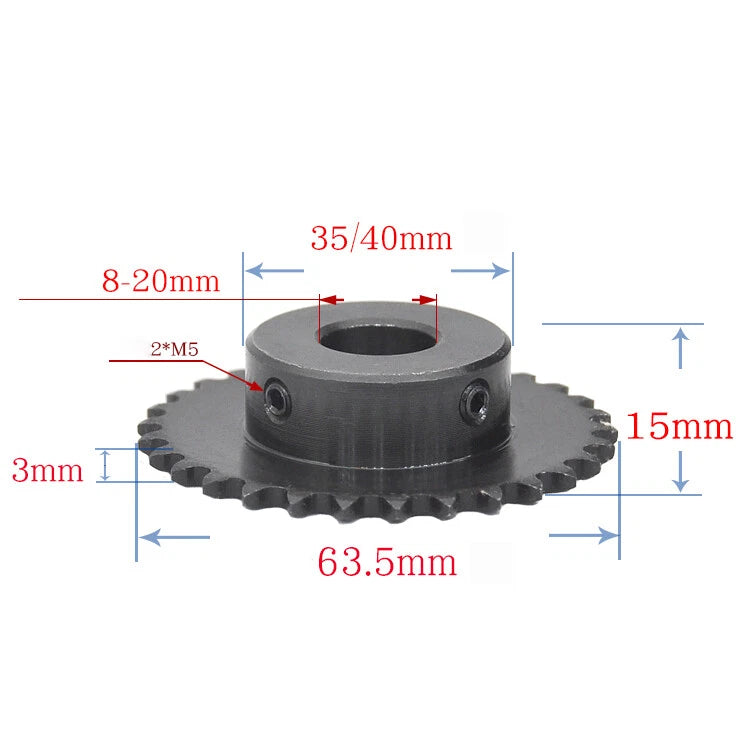
Each sprocket is machined from steel and covers a tooth range of 25T to 40T, with bore diameters spanning 6 mm (0.24 in) to 30 mm (1.18 in). Three bore configurations are available: through hole (plain bore), keyway bore, and D-hole bore, with keyway dimensions ranging from 3×1.4 mm up to 8×3.3 mm depending on bore size. The chain pitch is 6.35 mm (1/4 in), conforming to ISO 04C standards.
Typical use cases include small conveyor drives requiring a 04C chain sprocket replacement, robotics and automation rigs using 1/4-inch pitch roller chain, go-kart or mini-bike reduction drives needing a compact steel sprocket wheel, and DIY power transmission projects where a keyway or D-hole bore sprocket is required for positive shaft engagement.
Engineered to match ISO 04C roller chain with a 6.35 mm (1/4") pitch for accurate meshing and smooth power transfer in compact drive systems.
Choose from through hole (plain bore), keyway bore, or D-hole bore to match your shaft and torque-transmission requirements without additional machining.
Available in 25T to 40T tooth counts and bore diameters from 6 mm to 30 mm, covering a broad range of gear-ratio and shaft-size combinations.
Machined from steel for durability under cyclic loading, suitable for continuous-duty conveyor, robotics, and mechanical drive applications.
Keyway sprockets include correctly sized keyway slots (3×1.4 mm through 8×3.3 mm) that correspond to standard shaft key sizes for each bore diameter.
Dimensionally consistent with ISO 04C sprocket standards, making these a direct replacement for worn sprockets in existing 1/4" pitch chain drive assemblies.
| Chain Standard | ISO 04C |
|---|---|
| Chain Pitch | 6.35 mm (1/4 in) |
| Number of Teeth | 25T, 26T, 27T, 28T, 29T, 30T, 32T, 33T, 35T, 36T, 38T, 40T |
| Bore Type | Through Hole / Keyway / D Hole |
| Bore Diameter Range | 6 mm – 30 mm (0.24 in – 1.18 in) |
| Keyway Dimensions | See variant options (3×1.4 mm to 8×3.3 mm depending on bore) |
| Material | Steel |
| Surface Finish | See variant options |
| Hub Style | See variant options |
| Outer Diameter | See variant options |
| Hub Length | See variant options |
The tooth count determines your drive ratio. Divide the driven sprocket teeth by the driver sprocket teeth to get the reduction ratio. For example, a 40T driven sprocket paired with a 25T driver gives a 1.6:1 reduction. Select tooth counts that achieve your target output speed or torque based on your motor or input shaft RPM.
A through hole (plain bore) sprocket has a smooth cylindrical bore — you secure it with a set screw or press fit. A keyway bore includes a rectangular slot that accepts a standard key for positive, non-slip torque transmission. A D hole bore has one flat side machined into the bore, matching a D-shaft for simple, tool-free alignment. Choose based on your shaft type and the torque load you need to transmit.
Keyway dimensions are matched to bore size per standard engineering practice. As a general guide: 8–10 mm bores use a 3×1.4 mm key; 10–12 mm bores may use 4×1.8 mm; 12–17 mm bores typically use 5×2.3 mm; 18 mm and above use 6×2.8 mm or 8×3.3 mm. The exact keyway for each variant is listed in the variant name. Always verify against your shaft key before ordering.
ISO 04C and ANSI 25 chain share the same 6.35 mm (1/4") pitch, so these sprockets are generally interchangeable with ANSI 25 chain. However, roller diameter and inner link width can vary slightly between standards. Confirm your chain's roller diameter and inner width match the sprocket tooth profile before use.
Use a digital caliper to measure the outer diameter of your shaft at the point where the sprocket will be mounted. Select the bore variant that matches your shaft diameter exactly. For keyway variants, also measure the key width and height on your shaft to confirm the keyway slot dimensions match.
Maximum RPM and load capacity depend on the specific tooth count, bore size, and application conditions (lubrication, alignment, shock loading). As a conservative reference, small-pitch 04C sprockets in well-lubricated, aligned drives typically handle moderate continuous loads. For critical or high-speed applications, contact us to confirm suitability for your specific duty cycle.
Roller chain drives perform best with regular lubrication to reduce wear on both the chain and sprocket teeth. For light-duty or intermittent applications, dry operation may be acceptable for short periods, but it will accelerate wear. For continuous-duty applications, apply a suitable chain lubricant at regular intervals to extend service life.