The chain is fine...but I ordered the wrong size. Nine links of the chain I ordered equals six of the size I wanted. My error...
How can I straighten out the springs? I can't use them coil uo as is.
Your payment information is processed securely. We do not store credit card details nor have access to your credit card information.
Get fitment advice & recommendations
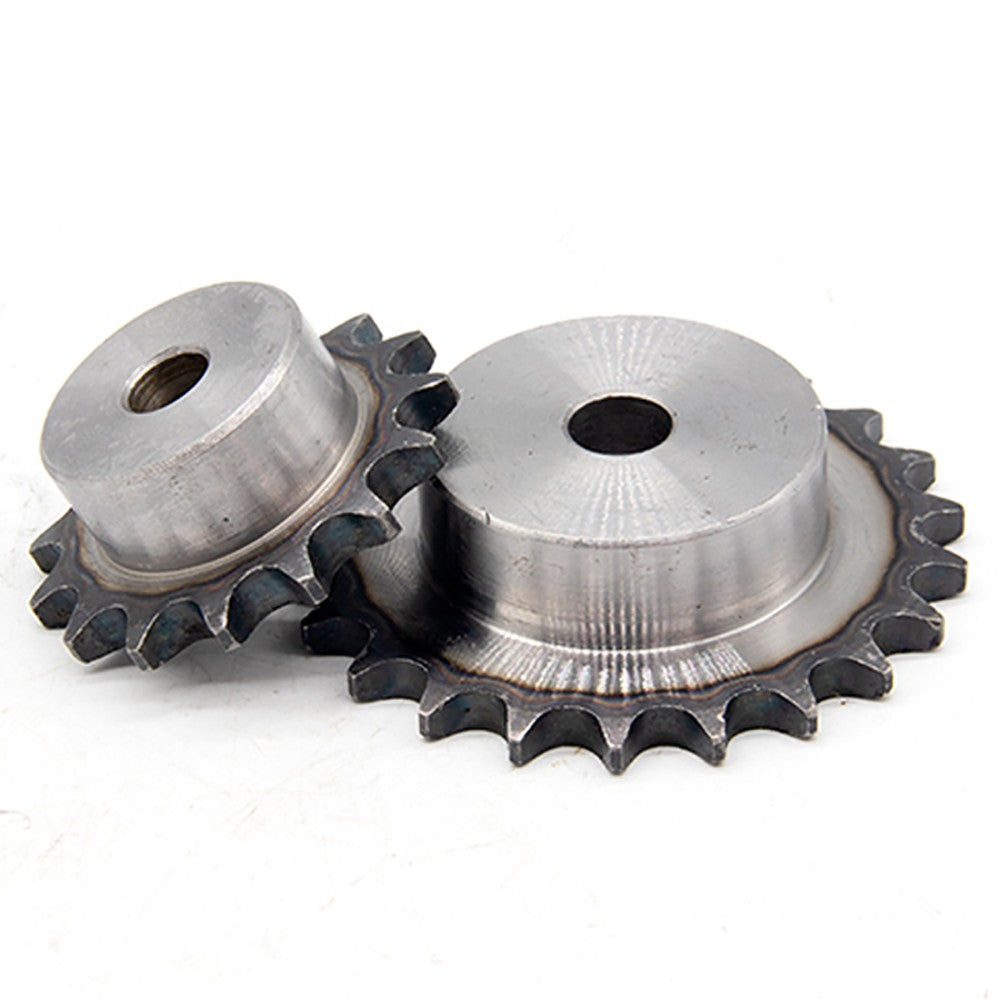
When a worn or mismatched sprocket causes chain skip, premature wear, or unexpected downtime, finding an exact-fit replacement becomes urgent. Whether you are a maker building a custom drive system, a technician maintaining conveyor equipment, or a cyclist upgrading a vintage bike, this 05B roller chain sprocket wheel gives you a direct-fit solution across a wide tooth range without the lead time of custom machining.
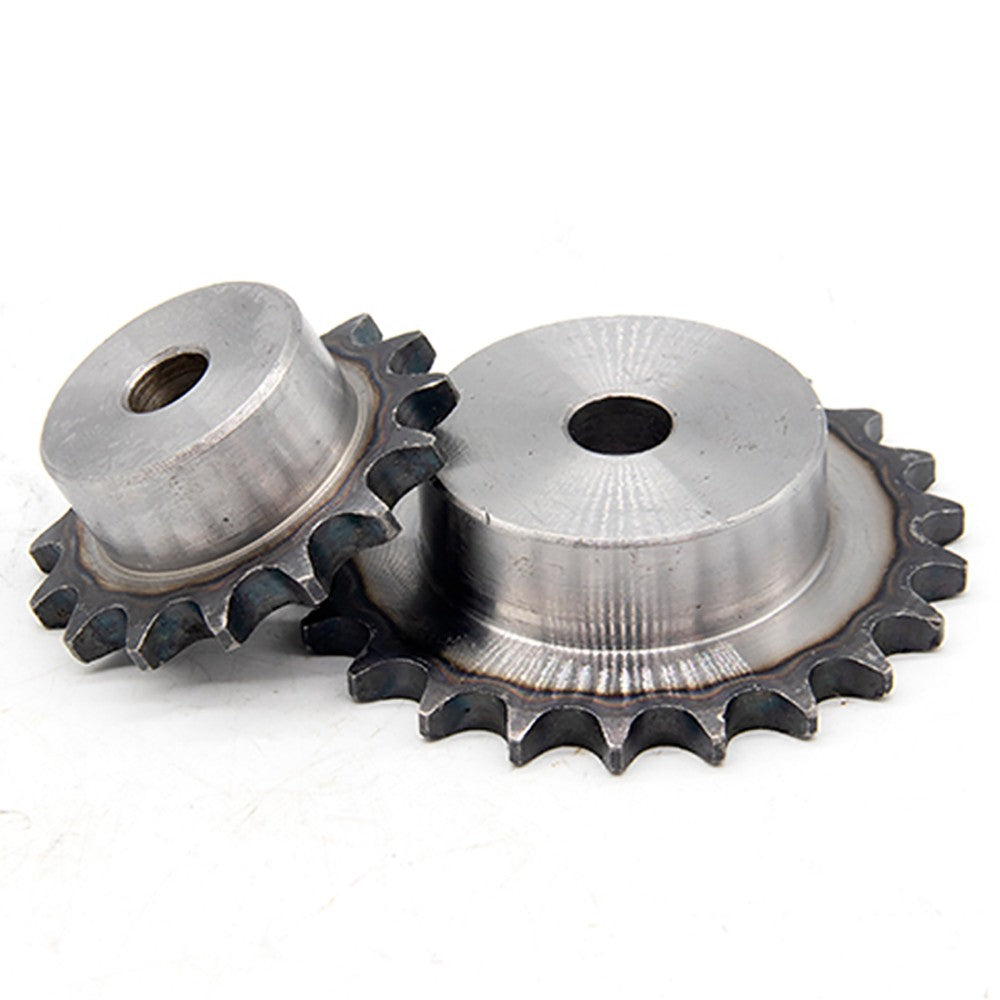
Each sprocket is machined from carbon steel and features a process hole (pilot bore) hub ready for secondary boring or keying to your shaft diameter. The 05B standard specifies an 8mm pitch (5/16 in) and is compatible with simplex 05B roller chain. Tooth counts span 10 to 40 teeth, with outer diameters ranging from approximately 28mm (1.10 in) for the 10-tooth variant up to approximately 104mm (4.09 in) for the 40-tooth variant.
Typical applications include small conveyor drives and indexing tables, go-kart and mini-bike final drives requiring a replacement 05B sprocket, DIY automation rigs and CNC axis drives using 8mm pitch roller chain, and light agricultural or garden machinery chain drive repairs.
| Chain Standard | ISO 05B / DIN 8187 Simplex |
|---|---|
| Chain Pitch | 8mm (5/16 in) |
| Roller Diameter | 3mm (0.118 in) |
| Inner Plate Width | 2.31mm (0.091 in) |
| Tooth Count Range | 10 – 40 Teeth (see variant options) |
| Hub Type | Process Hole (Pilot Bore) |
| Bore Diameter | See variant options |
| Outer Diameter | See variant options |
| Hub Length | See variant options |
| Material | Carbon Steel |
| Finish | See variant options |
| Weight | See variant options |
Your drive ratio equals the driven sprocket teeth divided by the driver sprocket teeth. For example, pairing a 10-tooth driver with a 20-tooth driven sprocket gives a 2:1 reduction. Decide your target output speed or torque, then select the tooth combination that achieves it. Larger tooth counts on the driven side reduce speed and increase torque; smaller counts do the opposite.
This sprocket is designed for ISO 05B simplex roller chain with an 8mm (5/16 in) pitch, 3mm roller diameter, and 2.31mm inner plate width. Do not use with 05B duplex or triplex chain, or with ANSI #35 chain — the pitch is similar but the roller and plate dimensions differ and will cause premature wear.
All variants ship with a pilot bore (process hole) hub. The pilot bore is intentionally undersized so you can bore it out on a lathe to match your exact shaft diameter. You can also add a keyway or set-screw flat. Check the variant listing for the minimum and maximum bore range before ordering to confirm your shaft size is achievable.
The base material is carbon steel, which offers good mechanical strength but moderate corrosion resistance. For outdoor, humid, or wash-down environments, apply a chain lubricant regularly and consider a protective coating after machining. If your application demands higher corrosion resistance, contact us to confirm whether a treated or alternative-material variant is available.
Before boring, confirm three things: (1) your chain is ISO 05B simplex with 8mm pitch; (2) the tooth count matches your required drive ratio; (3) the outer diameter of the sprocket clears any guards or frame members in your assembly. Outer diameter increases with tooth count — refer to the variant specifications or contact us for dimensional drawings.
Yes. The 05B standard is widely used on small-displacement go-karts, mini-bikes, and some vintage or specialty bicycles that run 5/16 in pitch chain. Verify your existing chain pitch with a ruler or chain checker tool before ordering. For standard modern bicycles using 1/2 in pitch chain, this sprocket is not compatible.
A finished bore sprocket is pre-machined to a specific shaft diameter and is ready to install. A process hole (pilot bore) sprocket has a smaller-than-final bore and requires secondary machining to reach your target shaft size. Process hole sprockets are more versatile because one part number covers many shaft sizes, but they require access to a lathe or machine shop for final boring.