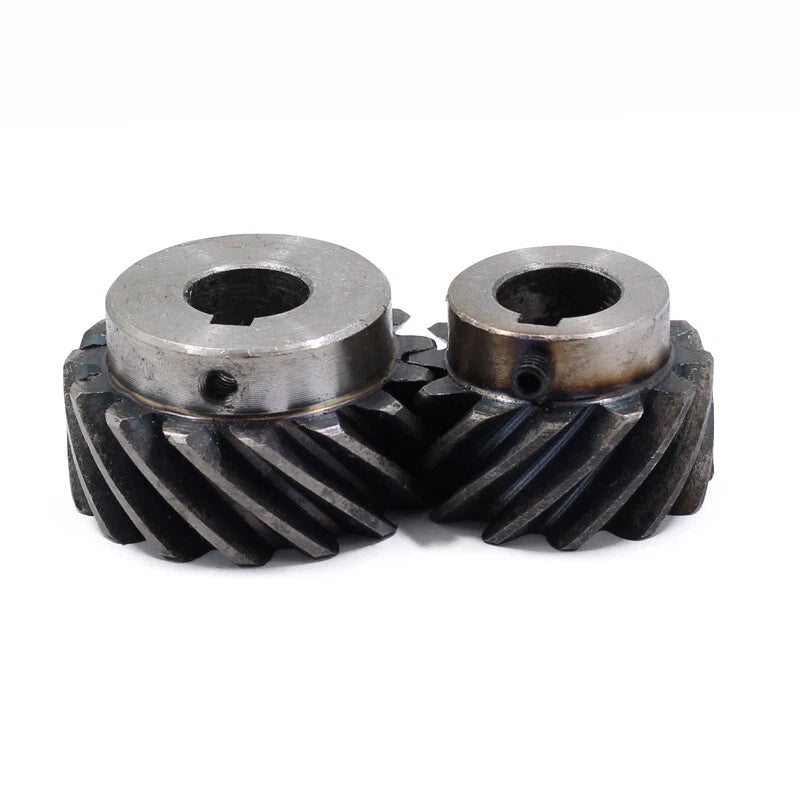
1/2/3 Mod Helical Gear With Step 45° Left Right Spiral Motor Transmission Gear

No reviews

Price:
Sale price$4.47 USD
Stock:
In stock (500 units), ready to be shipped

Payment & Security

Ach Direct Debit Amazon American Express Apple Pay Bancontact BLIK Diners Club Discover EPS Google Pay iDEAL Wero JCB Maestro Mastercard Multibanco MobilePay PayPal Przelewy24 Shop Pay Twint Union Pay USDC Visa

Your payment information is processed securely. We do not store credit card details nor have access to your credit card information.

Limited Offer — Spend More, Save More
Spend $55+
Save $5
Spend $100+
Save $10
Spend $200+
Save $25
HomeDIYer DIY Expert Support

DIY Expert Support

Get fitment advice & recommendations

Mon–Fri  8:30 AM – 8:00 PM
24-Hour Fast Ship
Arrives in 3–14 Days
Worldwide Shipping
30-Day Returns
1 tree planted with every purchase

Description

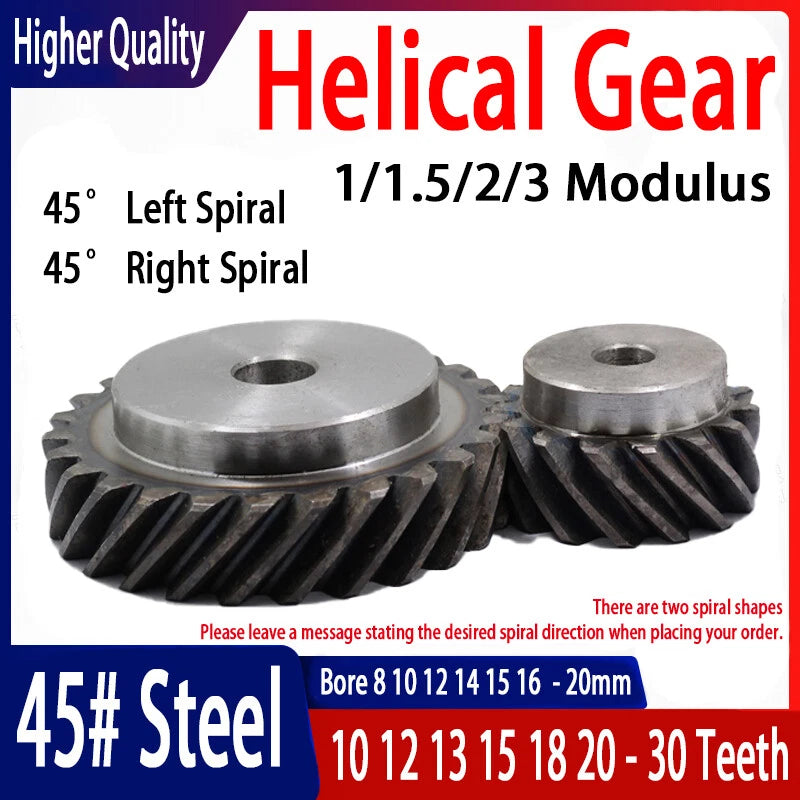
1/2/3 Mod Helical Gear — Precision 45° Spiral for Motor Transmission Drives

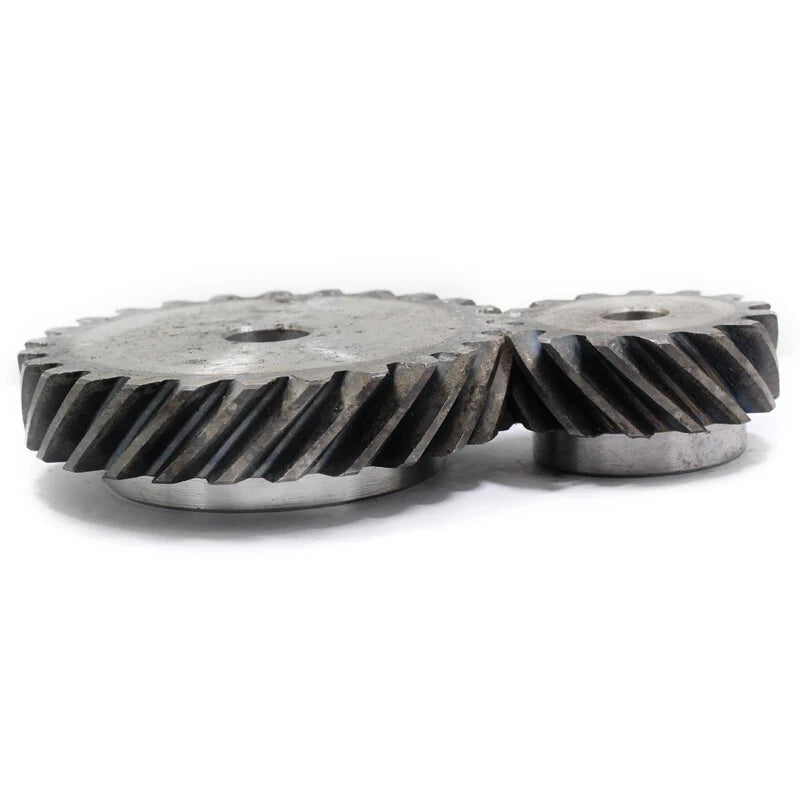
When spur gears generate too much noise or vibration for your application, engineers and makers turn to helical gears for smoother, quieter power transfer. These 45° helical gears are designed for builders working on CNC routers, robotic joints, motorized actuators, and custom drive trains who need reliable torque transmission without the chatter of straight-cut teeth.

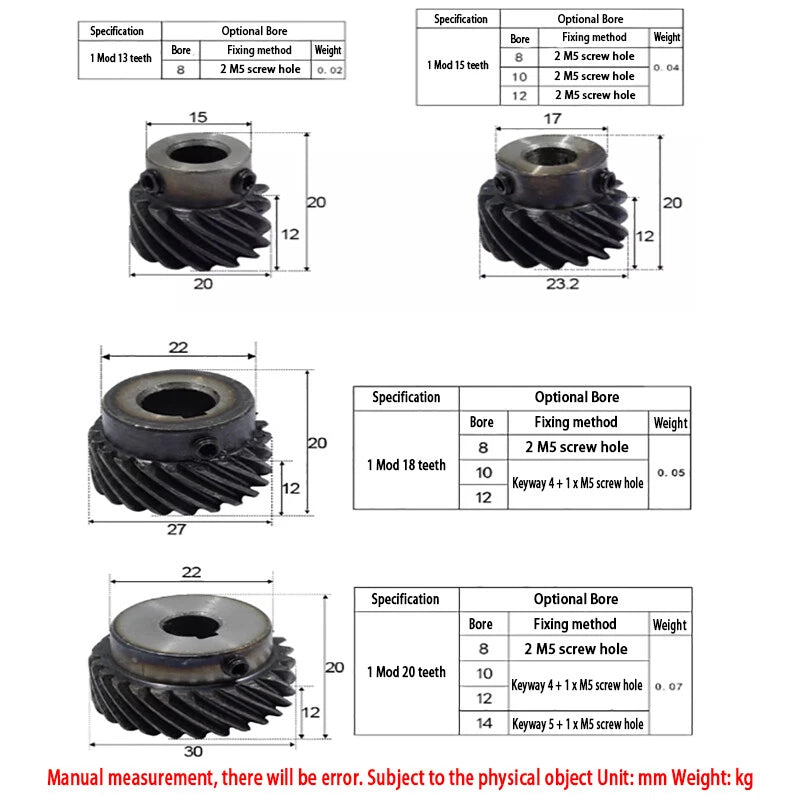
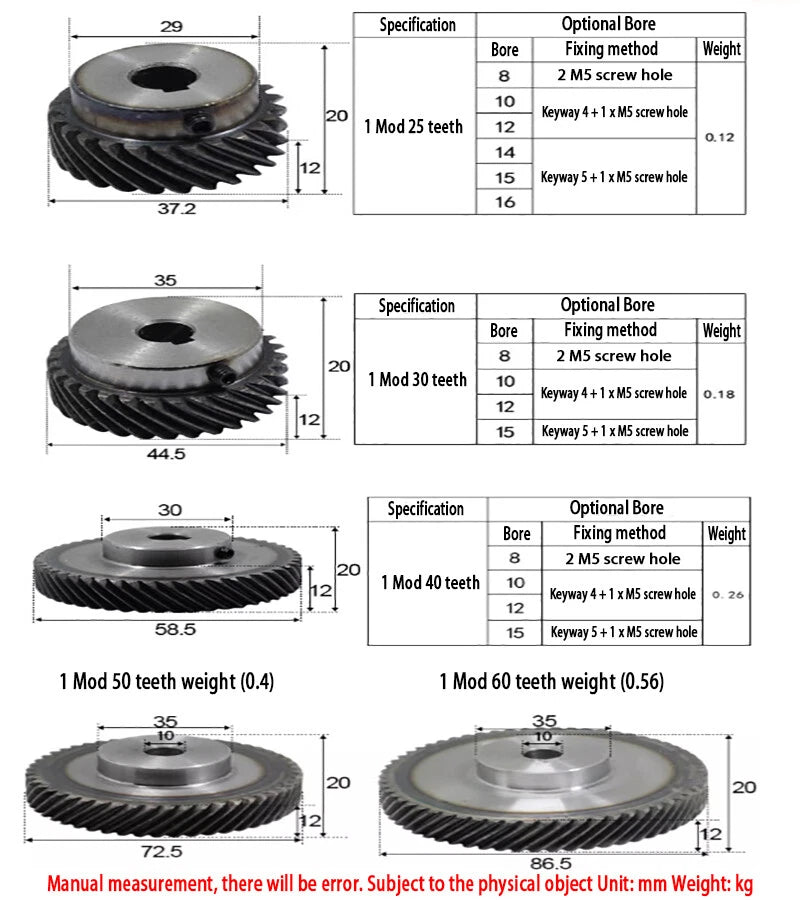
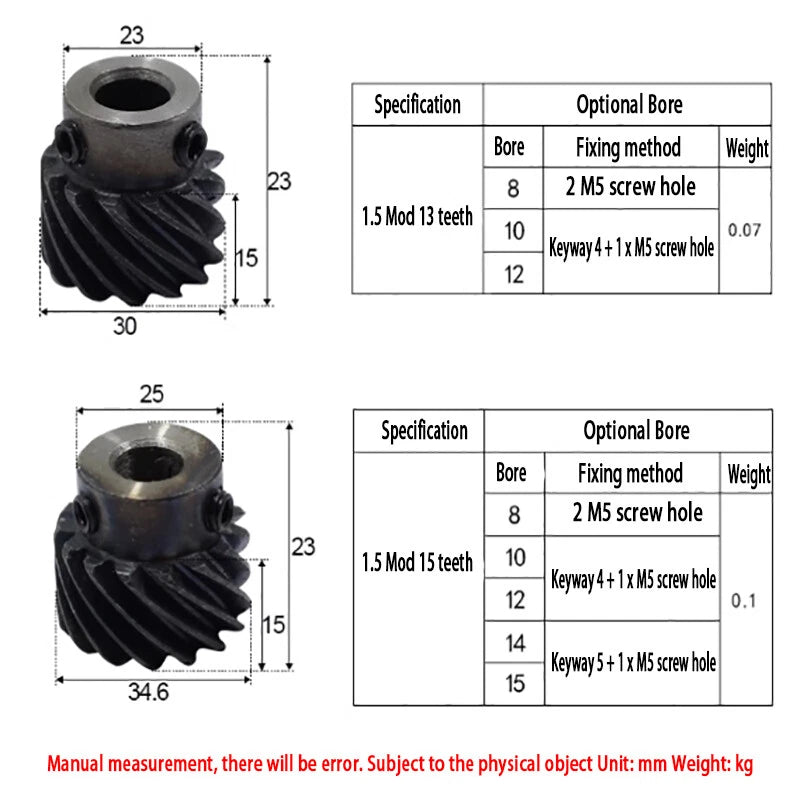
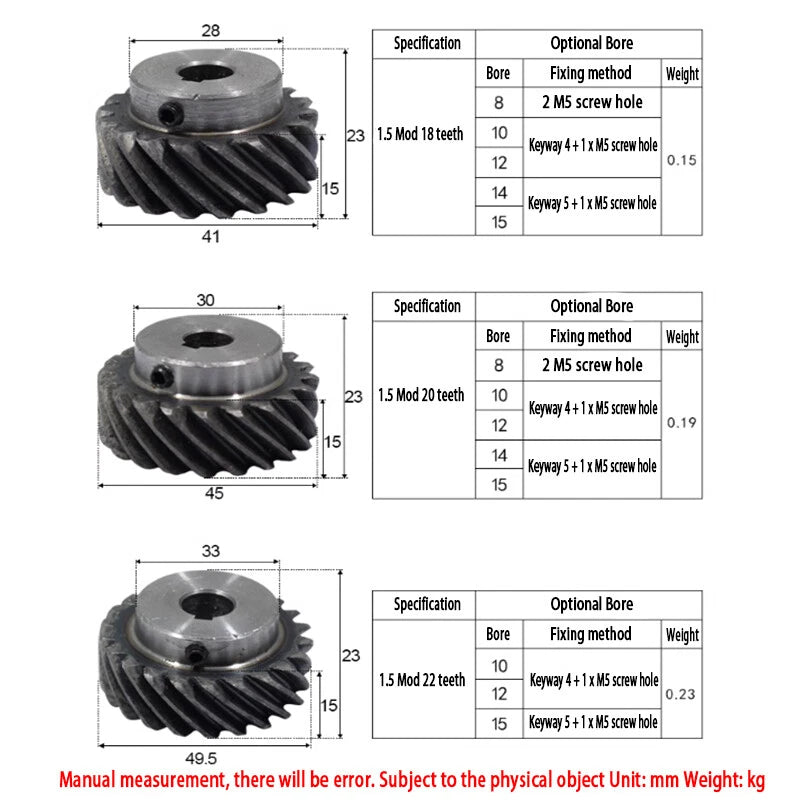
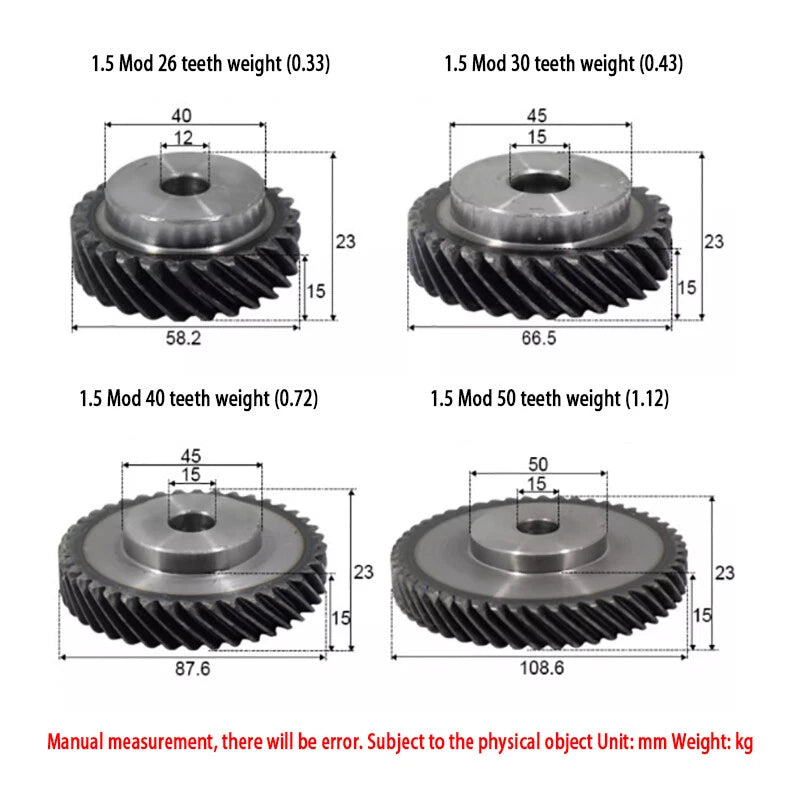
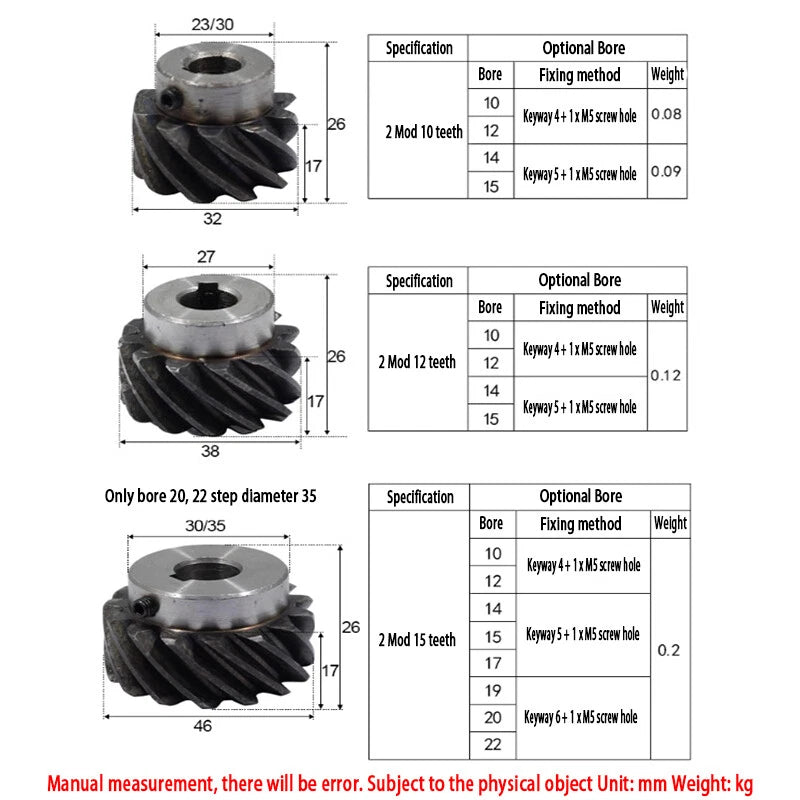
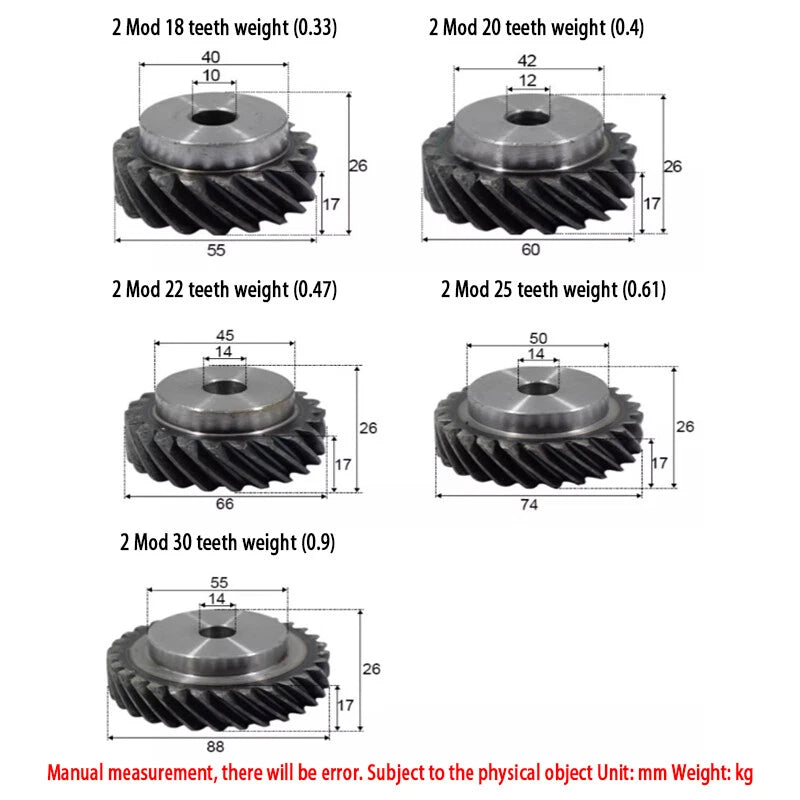
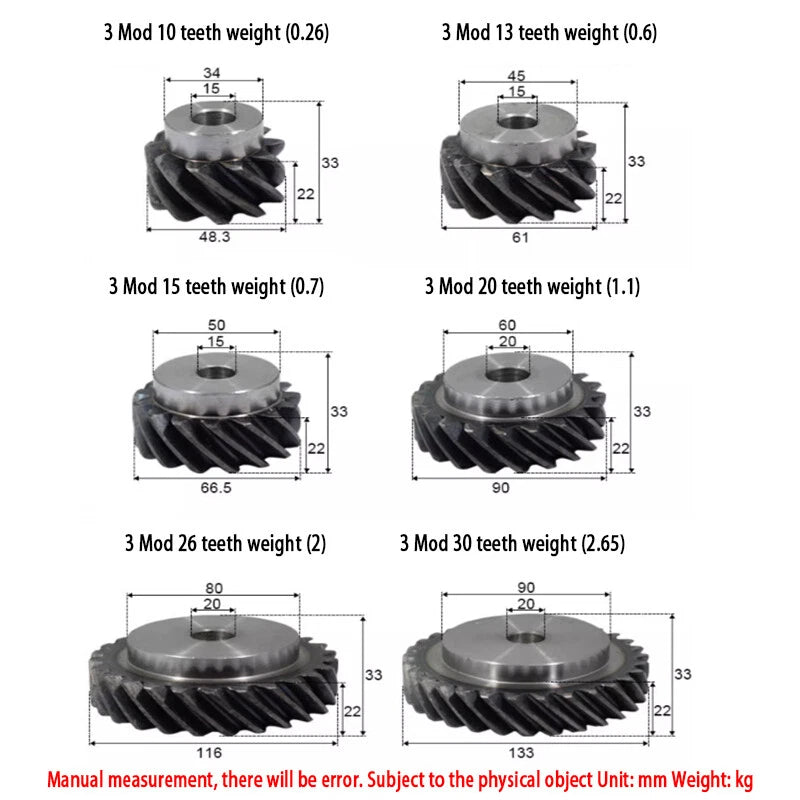
Each gear is machined from carbon steel with a stepped bore hub, available in Modulus 1, 1.5, 2, and 3. Tooth counts range from 10 to 60 teeth, and bore diameters span 8 mm (0.31 in) to 20 mm (0.79 in). The 45° helix angle is available in both left-hand and right-hand spiral orientations to suit paired-gear assemblies.

Typical use cases include CNC axis drives requiring low-backlash helical gear sets, robotic arm joint reduction stages using paired left/right spiral gears, and custom motor transmission gearboxes for 3D printers, automation rigs, and DIY electric vehicles.

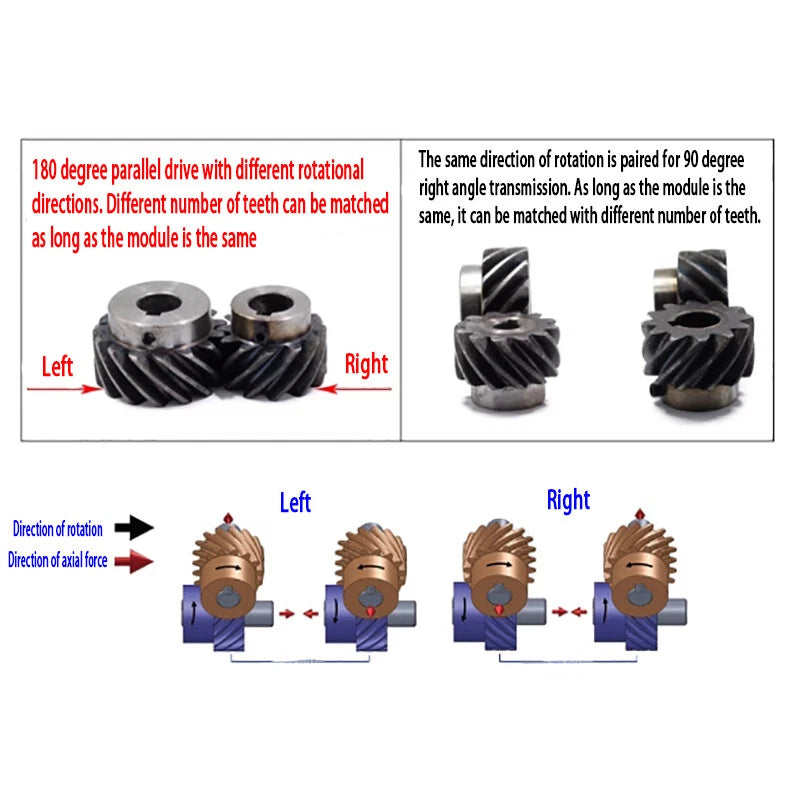
⚙️ Compatibility: Designed to mesh with same-modulus helical gears of opposite helix hand (left pairs with right). Verify modulus, pressure angle (typically 20°), and bore diameter before ordering. Step hub accommodates standard shaft keyways.

✅ Key Features of These Helical Transmission Gears

  • 🔩45° Helix Angle — Left & Right Hand Available
    Paired left/right spiral orientation allows proper meshing in counter-rotating gear sets, reducing axial thrust imbalance when used as a matched pair.
  • ⚙️Multi-Modulus Selection: 1 / 1.5 / 2 / 3
    Four modulus options cover a wide range of torque and speed requirements — from compact M1 gears for light-duty robotics to robust M3 gears for heavy motor drives.
  • 📐Stepped Bore Hub Design
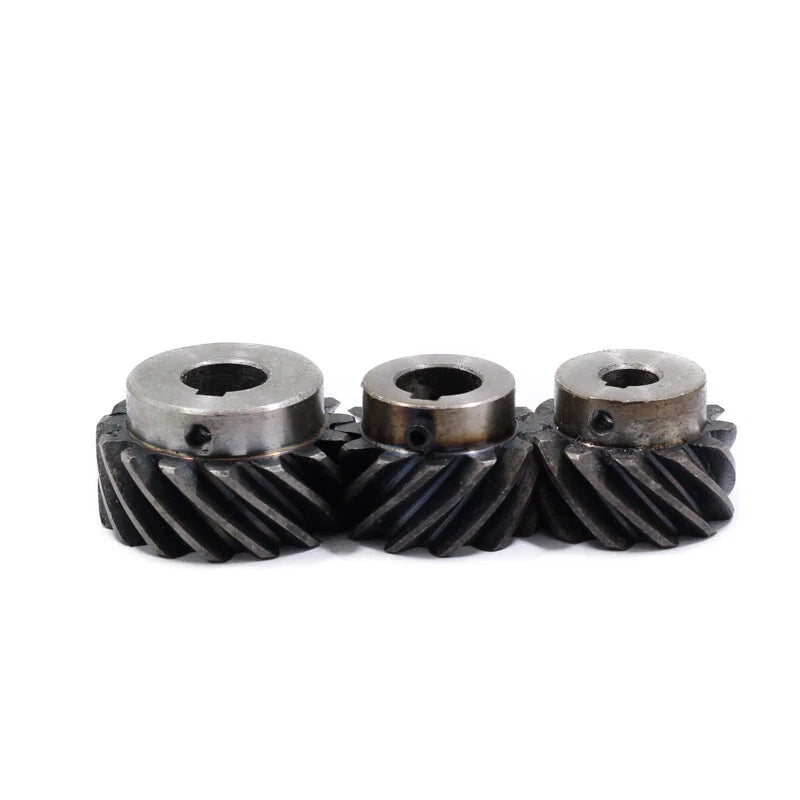
    The integrated step hub provides a positive axial stop for shaft positioning, simplifying assembly and improving concentricity on motor output shafts.
  • 🛡️Carbon Steel Construction
    Machined from carbon steel for the strength and wear resistance needed in continuous-duty drive applications, including CNC feed axes and motorized gantries.
  • 📏Wide Tooth Count Range: 10–60 Teeth
    Select from 10 to 60 teeth to dial in your gear ratio. Larger tooth counts suit low-speed, high-torque stages; smaller counts work for high-speed reduction inputs.
  • 🔧Multiple Bore Sizes: 8 mm to 20 mm
    Bore options from 8 mm to 20 mm (0.31–0.79 in) accommodate common motor shaft diameters used in NEMA stepper motors, servo motors, and DC gear motors.

📐 Technical Specifications — Helical Transmission Gear

Modulus Options 1 / 1.5 / 2 / 3
Helix Angle 45°
Spiral Direction Left-hand / Right-hand (see variant options)
Tooth Count See variant options (10–60 teeth)
Bore Diameter See variant options (8–20 mm / 0.31–0.79 in)
Hub Style Stepped bore hub
Material Carbon steel
Pressure Angle 20° (typical)
Finish See variant options
Quantity per Order 1 PCS

❓ Frequently Asked Questions

How do I choose the right modulus for my application?

Modulus determines the tooth size and load capacity. Modulus 1 suits light-duty robotics and small mechanisms. Modulus 1.5 and 2 cover mid-range CNC and automation drives. Modulus 3 is suited for heavy motor transmission with higher torque demands. Match the modulus to your mating gear — mismatched moduli will not mesh correctly.

Do I need a left-hand and right-hand gear to mesh together?

Yes. Helical gears on parallel shafts must be of opposite hand — a left-hand gear meshes with a right-hand gear of the same modulus and helix angle. If you are replacing a single gear in an existing assembly, identify the hand of the existing gear before ordering.

What bore size should I select for my motor shaft?

Measure your motor shaft diameter precisely. Common NEMA 17 stepper shafts are 5 mm, NEMA 23 are typically 6.35 mm or 8 mm, and servo motors vary from 8 mm to 20 mm. Select the bore that matches or is closest to your shaft — a keyway or set screw can be used to secure the gear on the shaft.

Are these gears strong enough for continuous-duty CNC use?

Carbon steel helical gears at 45° helix angle provide good load distribution across multiple teeth simultaneously, making them well-suited for continuous-duty CNC axis drives at moderate speeds and loads. For very high-speed or high-load applications, verify the specific modulus and tooth count against your torque and speed requirements.

Will these gears corrode if used in a humid or outdoor environment?

Carbon steel is susceptible to surface oxidation in humid or wet environments. For outdoor or high-humidity applications, apply a light machine oil or grease to the gear teeth and bore, or consider a protective coating. Regular lubrication will extend service life significantly.

How do I calculate the gear ratio for my drive system?

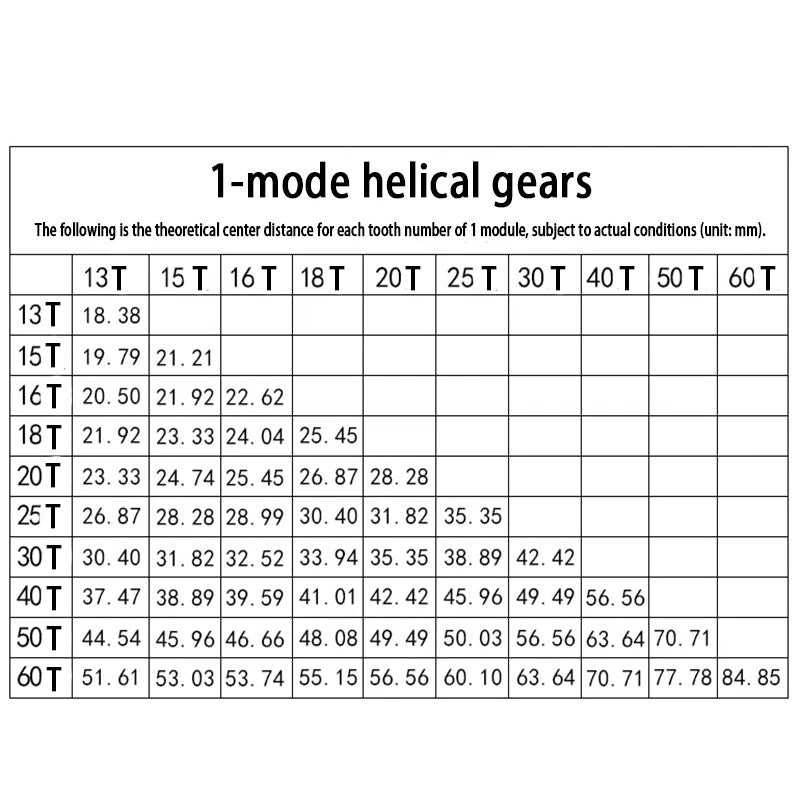
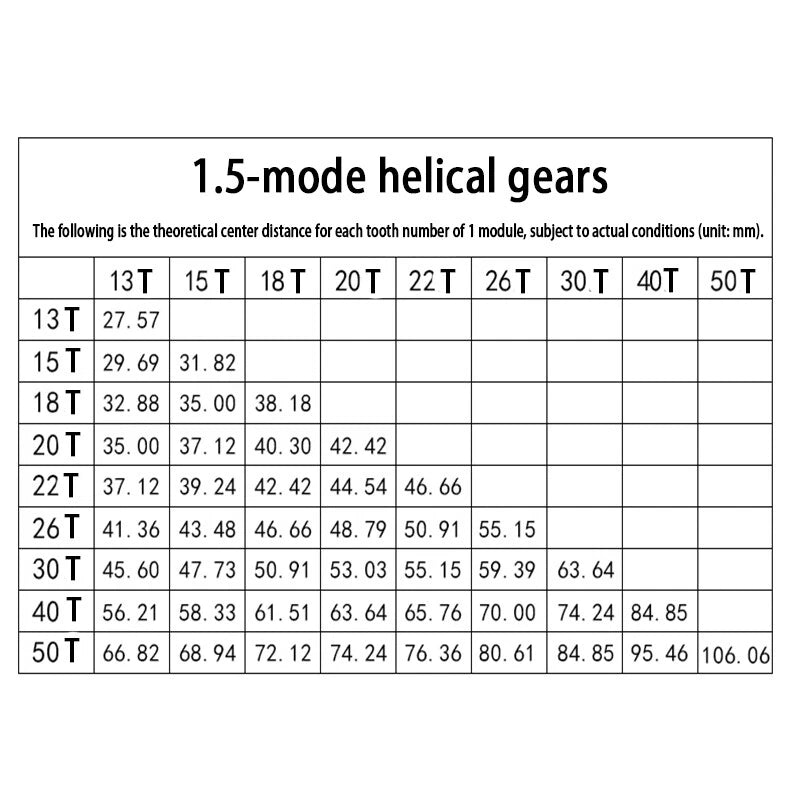
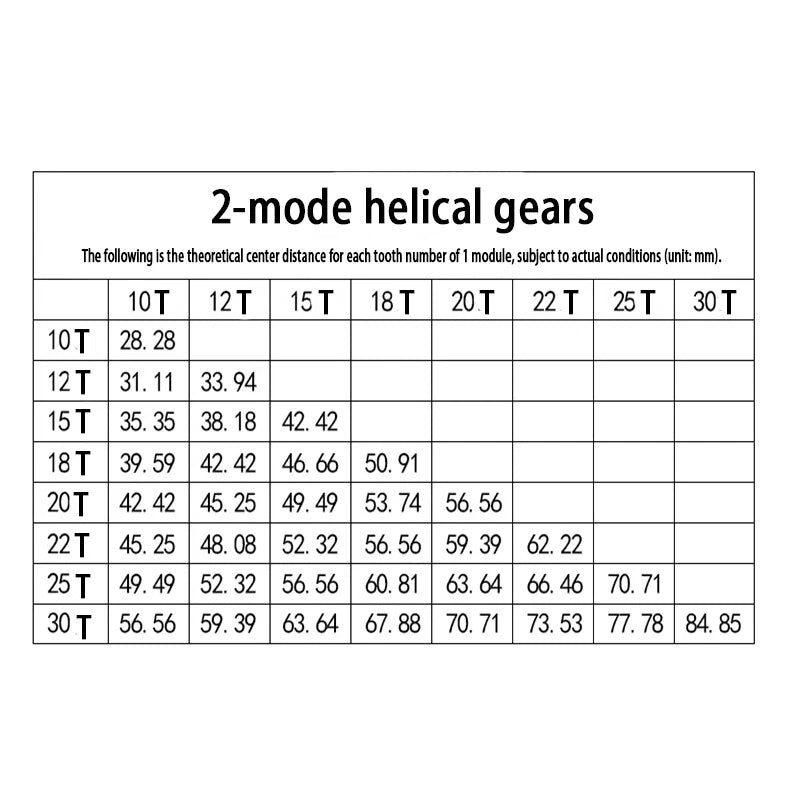
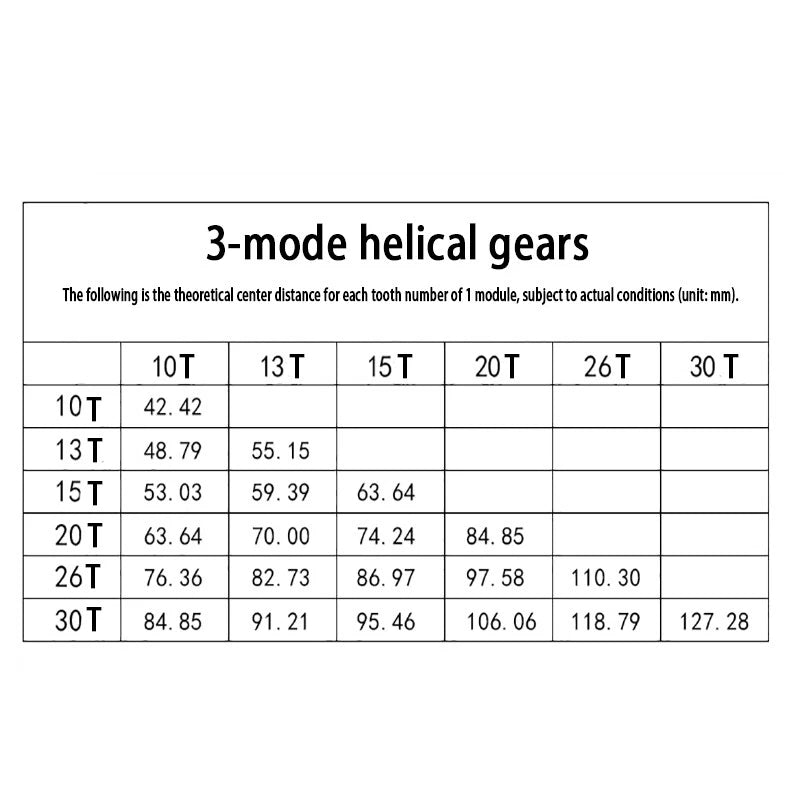
Gear ratio = number of teeth on driven gear ÷ number of teeth on driving gear. For example, a 30-tooth driven gear paired with a 15-tooth driving gear gives a 2:1 reduction ratio. The center distance between shafts = (teeth of gear 1 + teeth of gear 2) × modulus ÷ 2.

Can I use these gears with a standard keyway shaft?

The stepped bore hub is designed to accommodate standard shaft fits. Whether a keyway slot is pre-cut depends on the specific variant — Contact us to confirm keyway availability for your selected bore size. A set screw arrangement is a common alternative for securing the gear to the shaft.

🛒 Select your Modulus, Teeth count, and Bore size above, then add to cart.

You may also like

Recently viewed