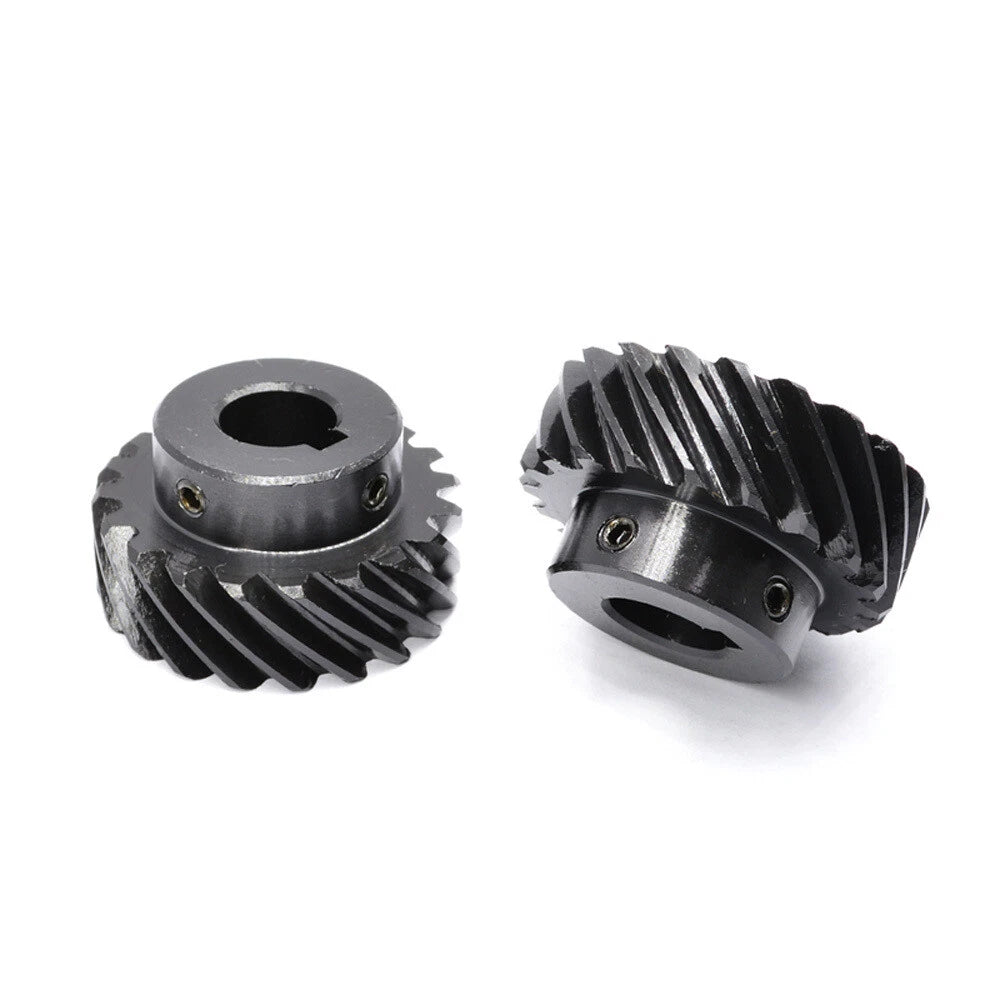
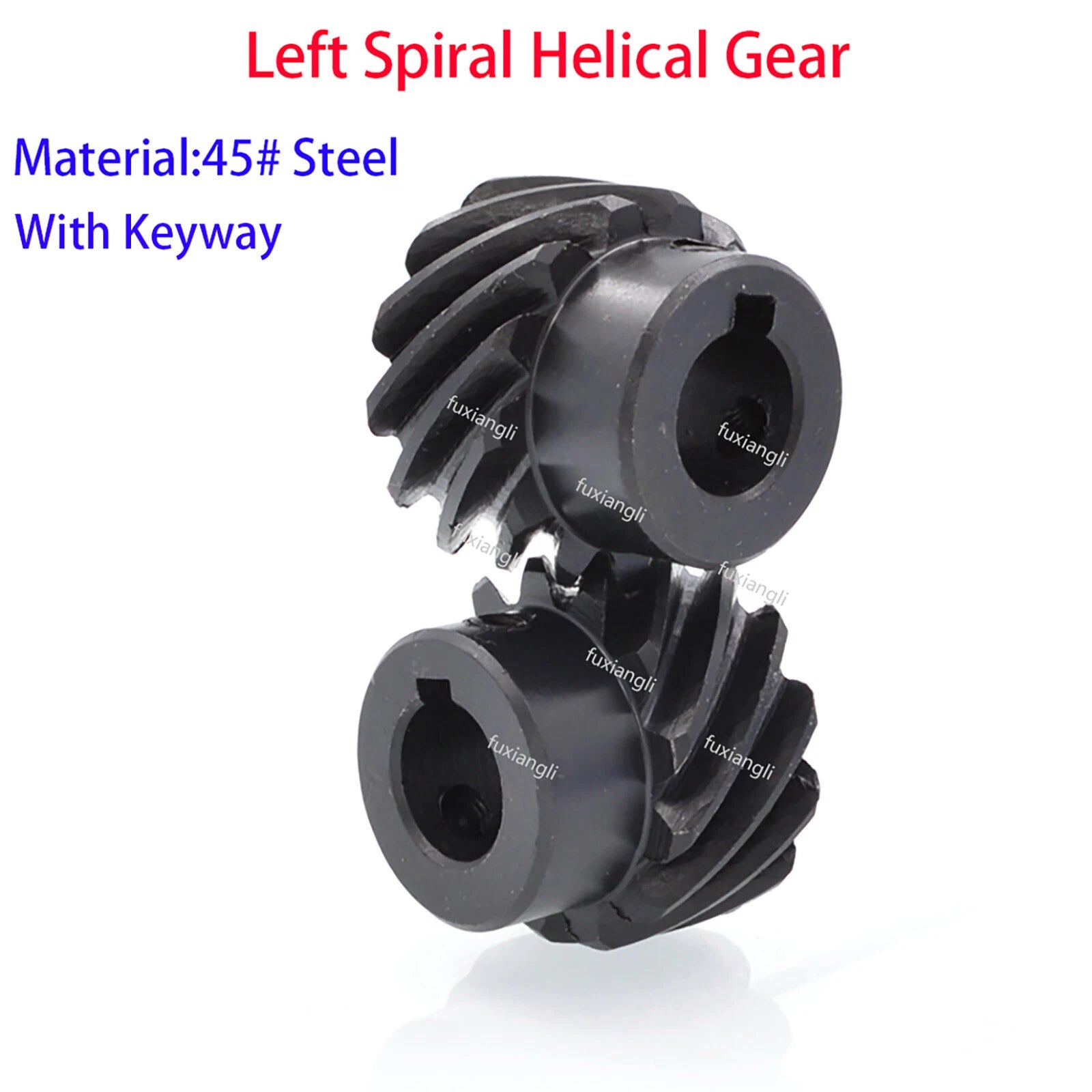
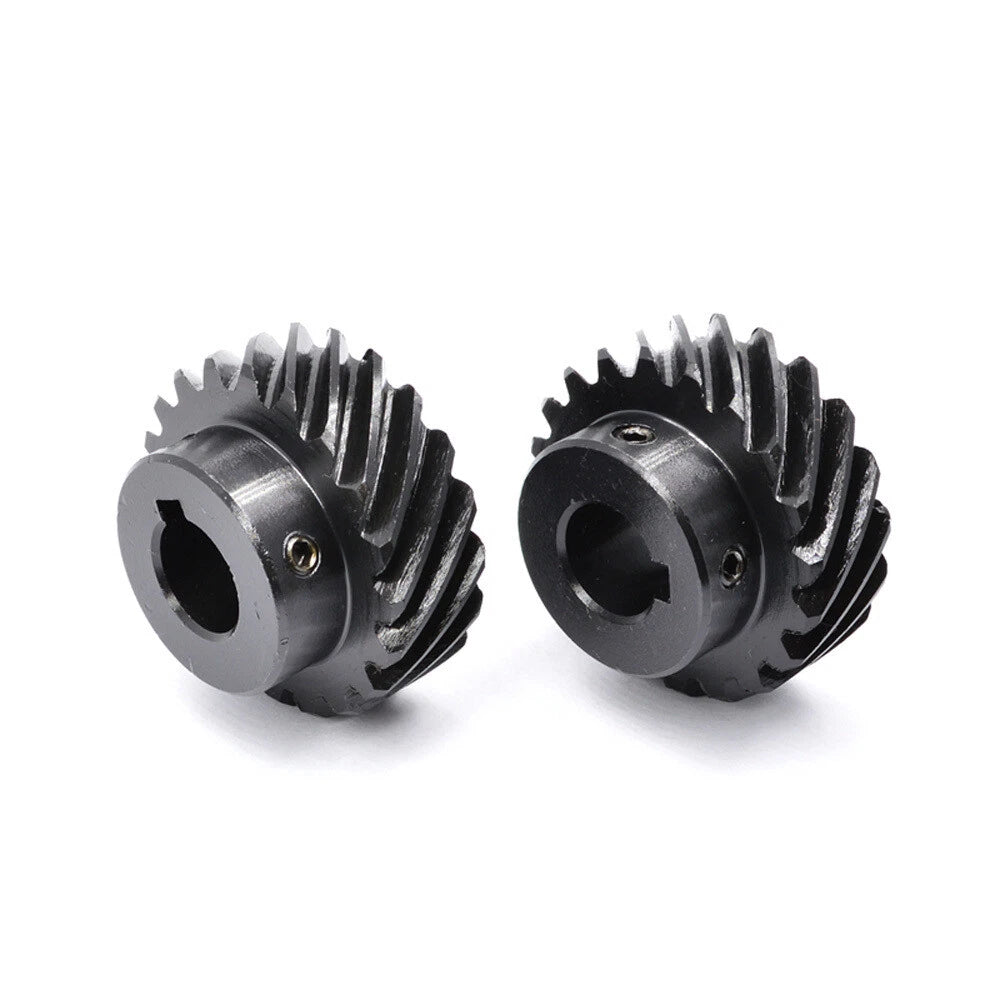
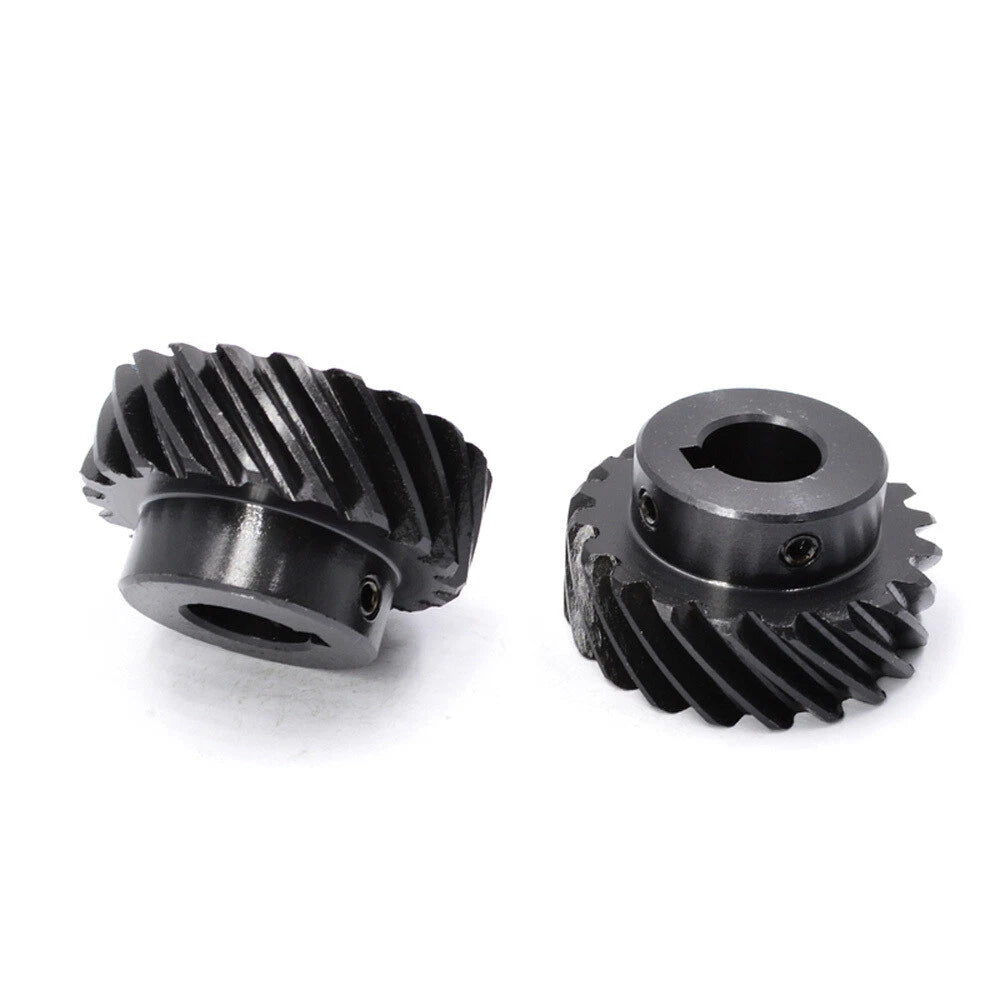
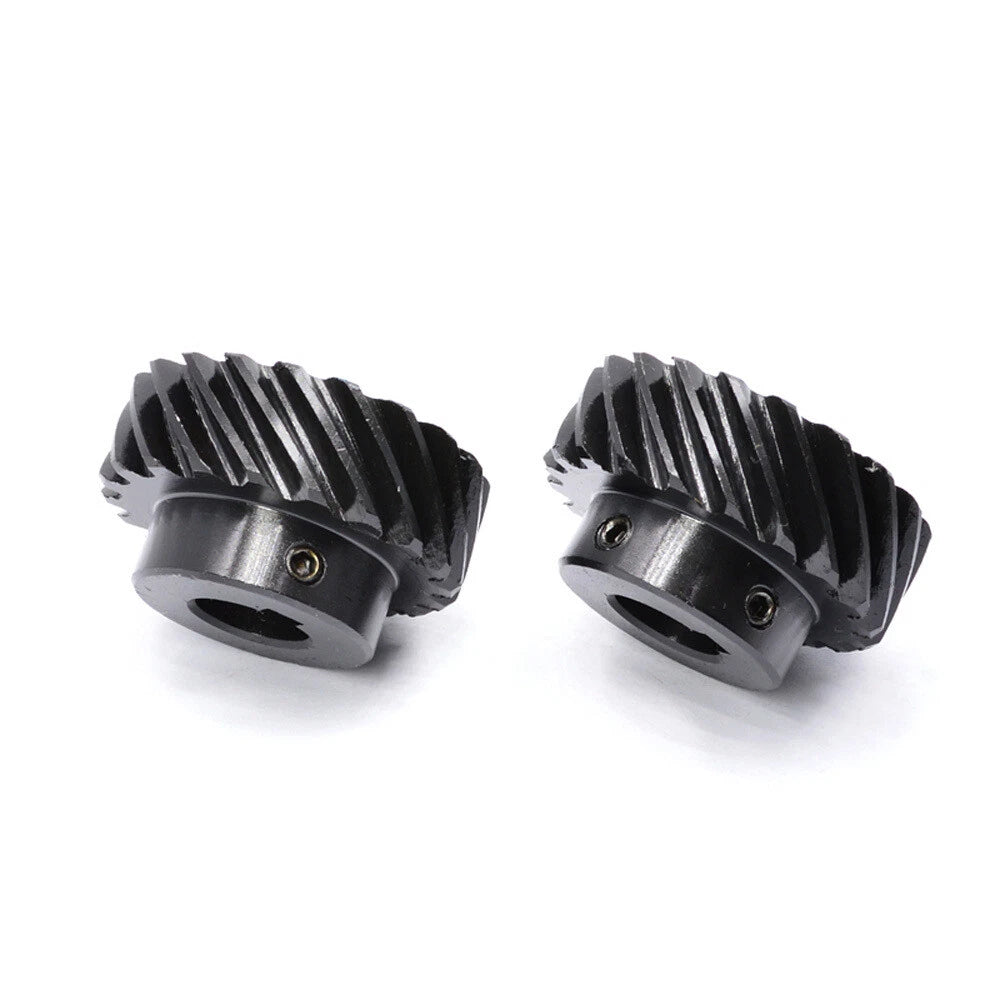
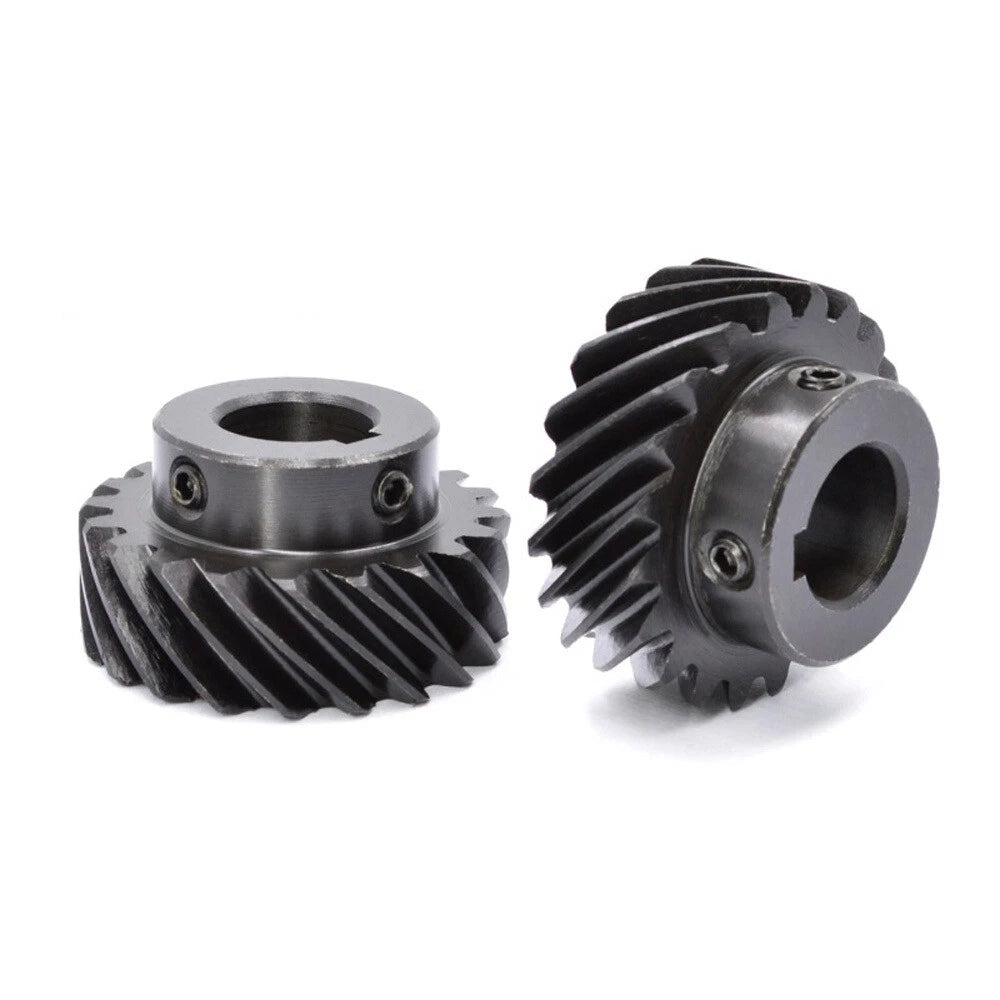
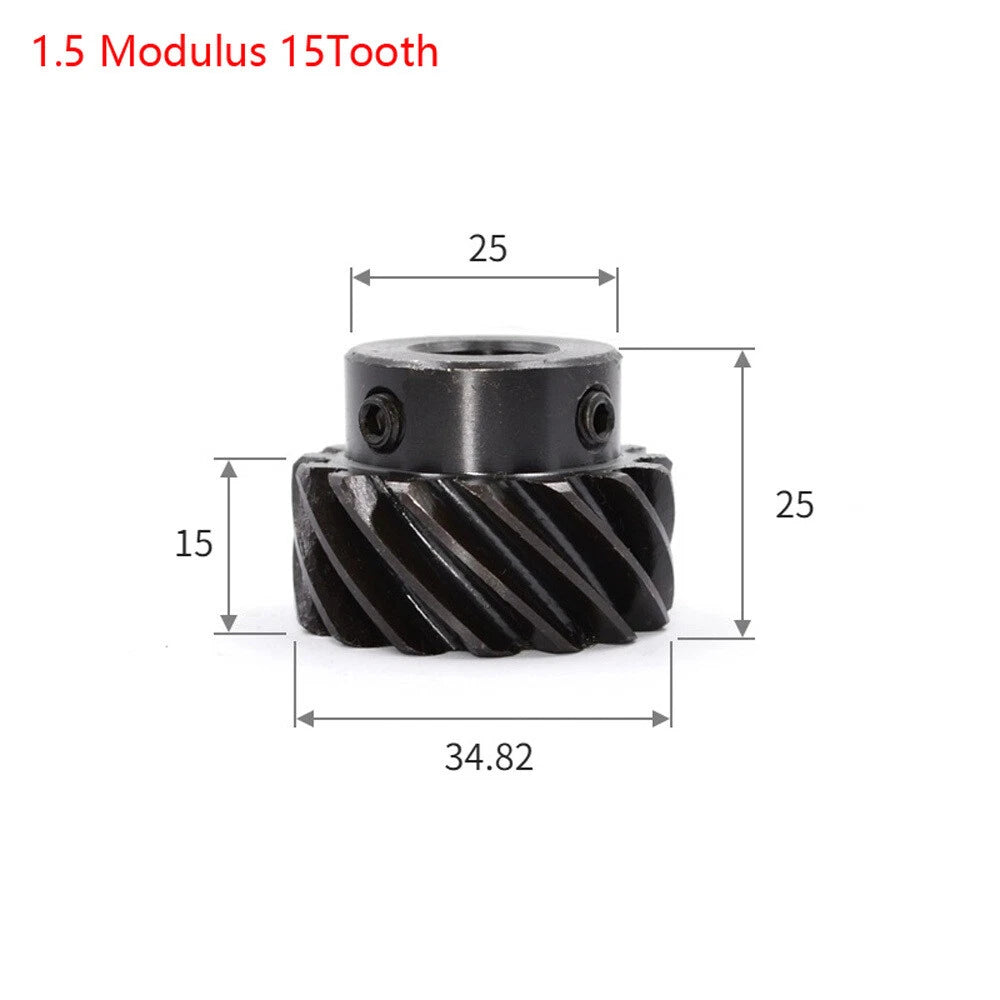
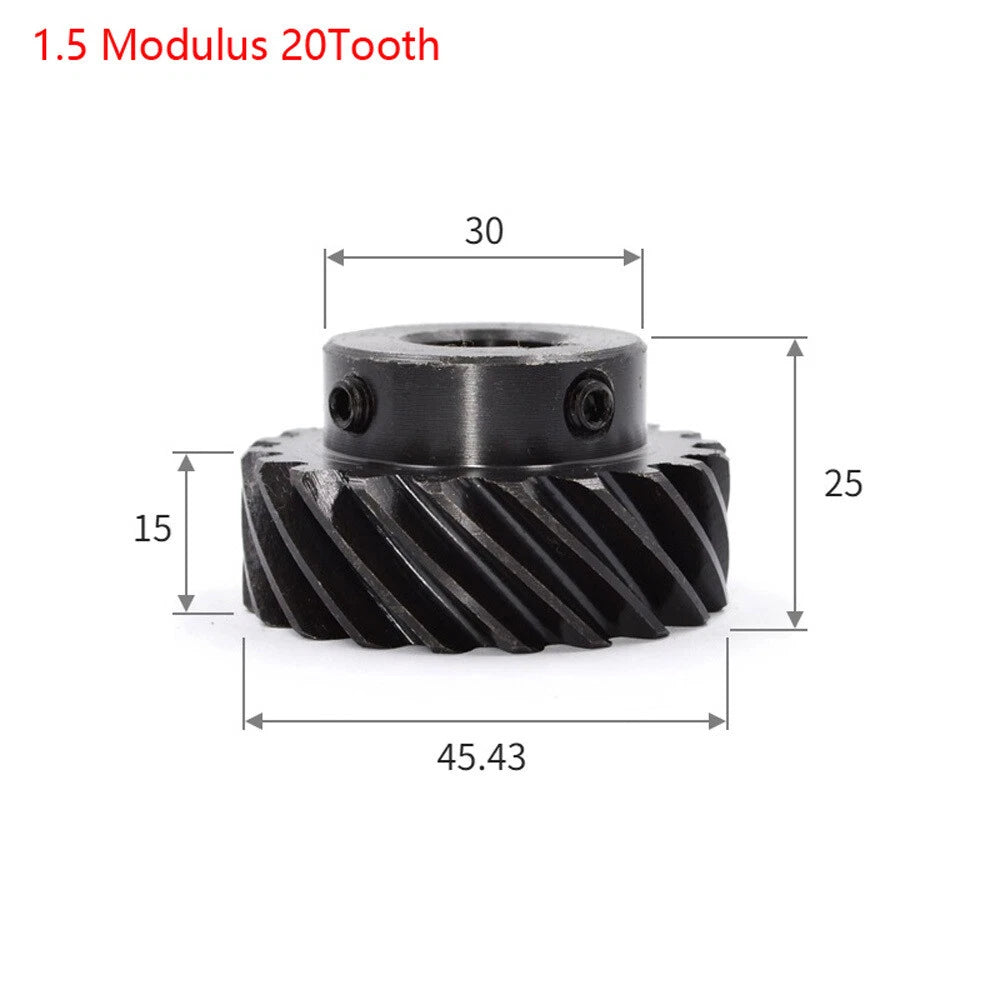
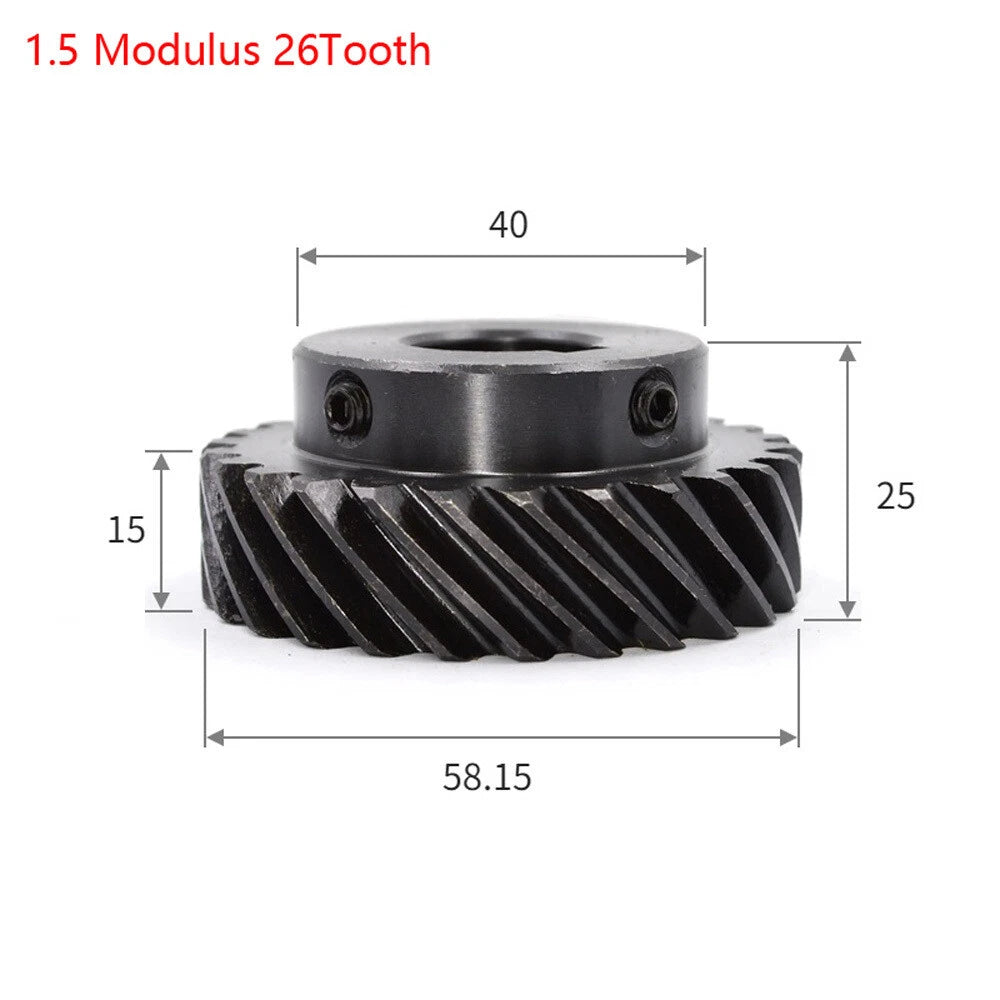
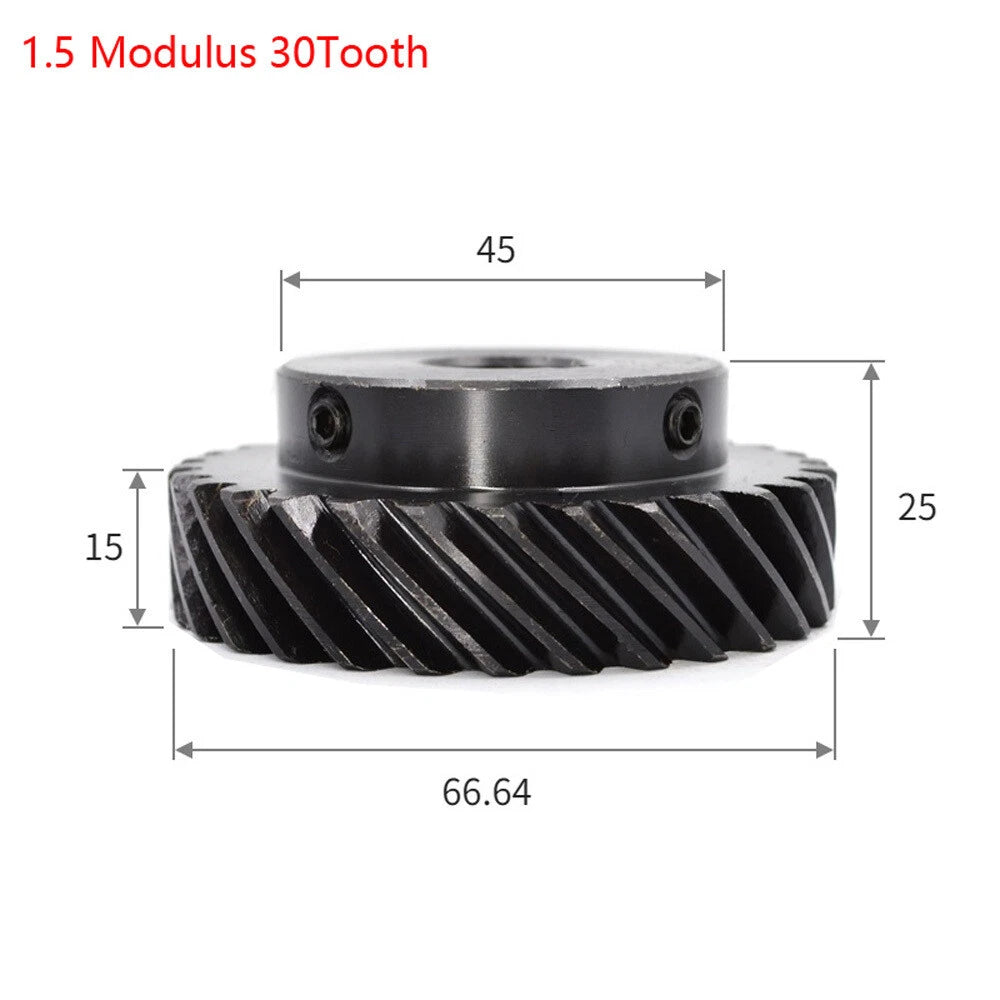
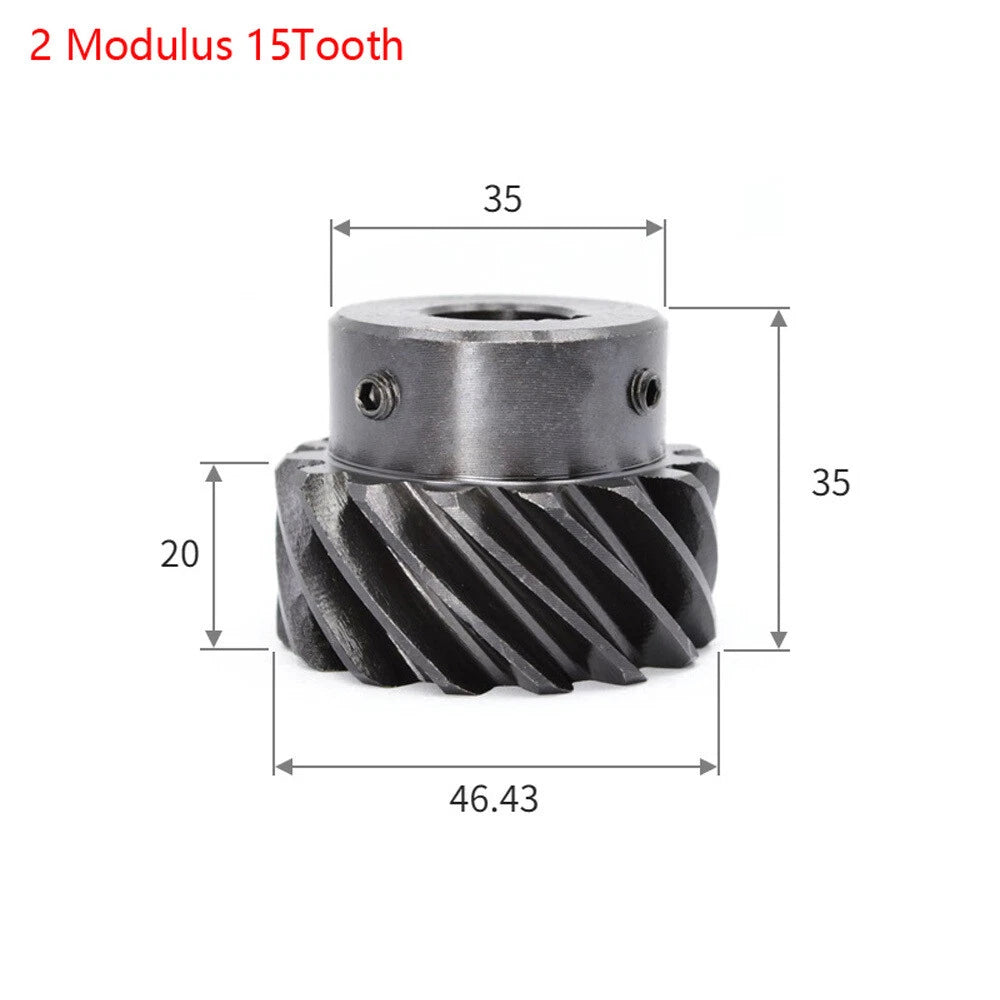
1.5/2 Modulus Helical Gears With Step/Keyway Left Spiral Motor Transmission Gear

No reviews

Price:
Sale price$17.65 USD
Stock:
In stock (500 units), ready to be shipped

Payment & Security

Ach Direct Debit Amazon American Express Apple Pay Bancontact BLIK Diners Club Discover EPS Google Pay iDEAL Wero JCB Maestro Mastercard Multibanco MobilePay PayPal Przelewy24 Shop Pay Twint Union Pay USDC Visa

Your payment information is processed securely. We do not store credit card details nor have access to your credit card information.

Limited Offer — Spend More, Save More
Spend $55+
Save $5
Spend $100+
Save $10
Spend $200+
Save $25
HomeDIYer DIY Expert Support

DIY Expert Support

Get fitment advice & recommendations

Mon–Fri  8:30 AM – 8:00 PM
24-Hour Fast Ship
Arrives in 3–14 Days
Worldwide Shipping
30-Day Returns
1 tree planted with every purchase

Description

Left Spiral Helical Gears for Smooth, Quiet Motor Transmission

When your CNC router, robotic arm, or motorized drive system demands low-noise, vibration-reduced power transfer, standard spur gears often fall short. Engineers and makers who need reliable torque transmission with gradual tooth engagement turn to left-spiral helical gears — and this range covers the most common modulus and tooth-count combinations in a single listing.

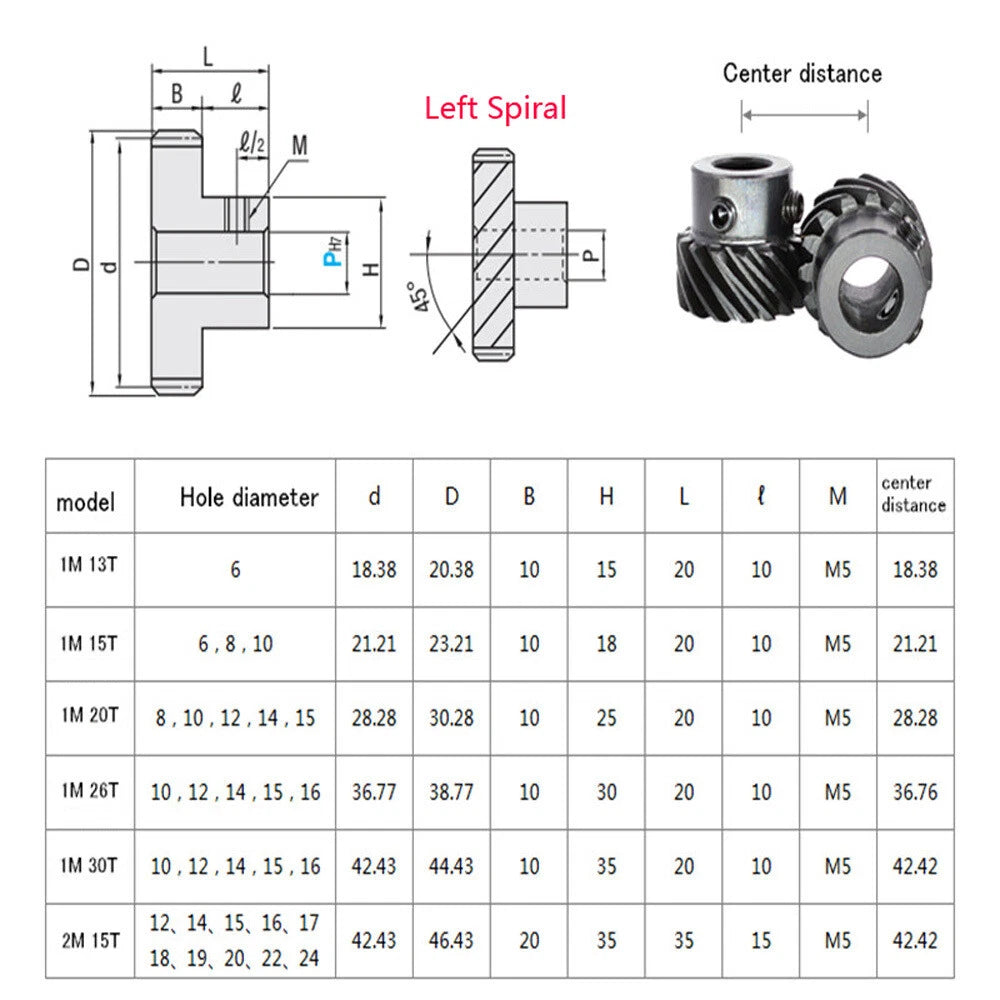
These helical gears are machined from steel and feature a step/keyway bore design for secure shaft mounting. Available in 1.5 modulus (13, 15, 20, 26, and 30 teeth) and 2 modulus (15 teeth), with bore diameters ranging from 10 mm (~0.39 in) to 25 mm (~0.98 in). Keyway dimensions scale with bore size: 4×2 mm, 5×2.5 mm, 6×3 mm, or 8×3.5 mm, ensuring a positive key fit without slippage.

Typical applications include CNC machine Z-axis drives, stepper and servo motor gearboxes, conveyor reduction stages, and DIY automation projects requiring left-hand helix pairing with a matching right-spiral counterpart. The stepped bore profile also suits shaft-collar assemblies where axial positioning is critical.

⚙️ Compatibility: Designed to mesh with matching right-spiral helical gears of the same modulus and pressure angle (typically 20°). Confirm helix angle and center distance before ordering. Bore diameter and keyway must match your shaft specification — see variant options for available combinations.

✅ Key Features of These Left Spiral Helical Gears

🔩 Step/Keyway Bore Design
Integrated keyway slot (4×2 mm up to 8×3.5 mm depending on bore) locks the gear to the shaft, preventing rotational slip under load without additional set screws.
🌀 Left-Hand Helix Angle
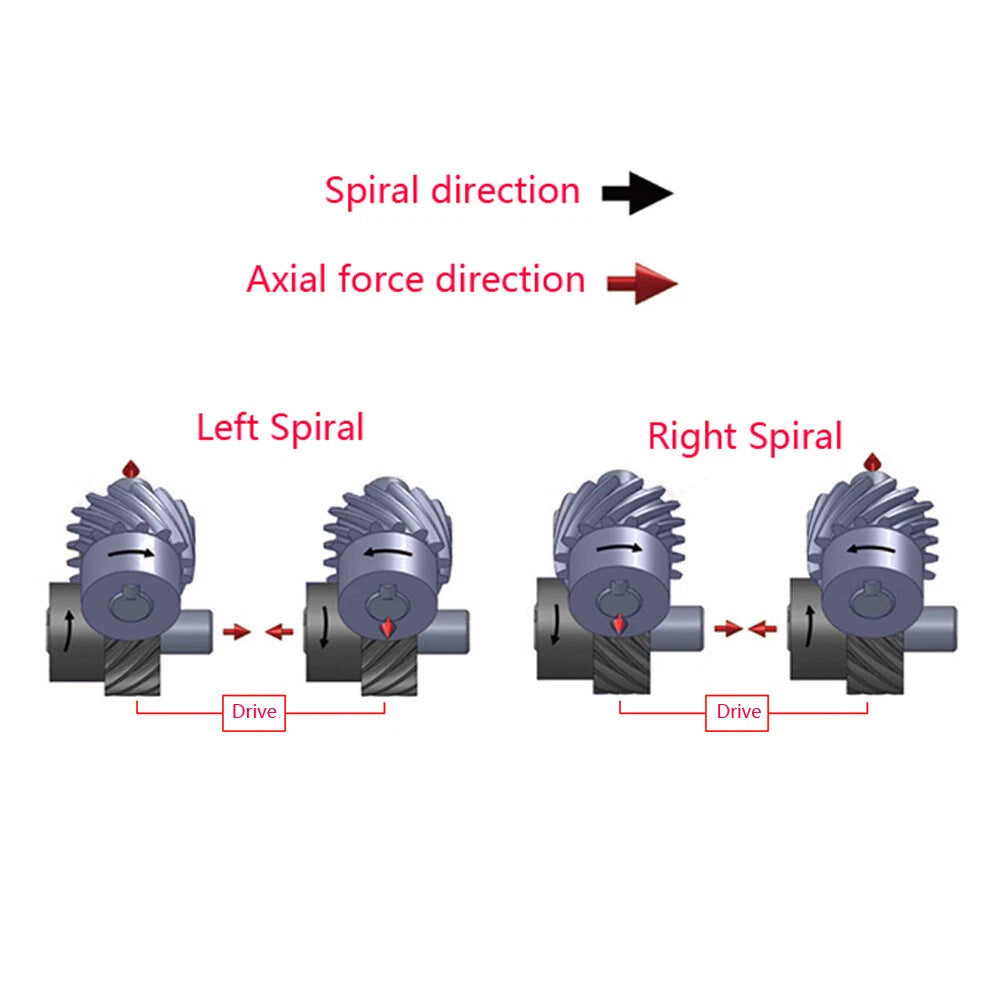
Left-spiral tooth geometry produces axial thrust in the direction suited for pairing with right-spiral gears, enabling smooth, gradual tooth engagement that reduces impact noise versus straight-cut spur gears.
📐 Multiple Modulus & Tooth Counts
Choose 1.5 modulus in 13, 15, 20, 26, or 30 teeth, or 2 modulus in 15 teeth — covering a wide range of gear ratios and center distances for diverse drive configurations.
🎯 Wide Bore Range (10–25 mm)
Bore options from 10 mm to 25 mm accommodate common stepper motor shafts, servo output shafts, and standard metric shaft stock, reducing the need for custom adapters.
🏗️ Steel Construction
Machined from steel for the load-bearing strength required in motor transmission and automation applications, with surface finish suited for moderate-speed, moderate-load duty cycles.
🔄 Drop-In Replacement Geometry
Standard metric modulus sizing means these gears are dimensionally interchangeable with other metric helical gears of the same modulus, simplifying repairs and upgrades on existing machinery.

📐 Technical Specifications — Helical Gears

Modulus 1.5 / 2 (see variant options)
Tooth Count 13T, 15T, 20T, 26T, 30T (1.5M); 15T (2M)
Helix Direction Left spiral
Pressure Angle 20° (standard metric)
Bore Diameter 10 / 12 / 14 / 15 / 16 / 17 / 18 / 19 / 20 / 22 / 24 / 25 mm
Keyway Dimensions 4×2 mm / 5×2.5 mm / 6×3 mm / 8×3.5 mm (matched to bore)
Material Steel
Bore Type Step bore with keyway
Quantity per Pack 1 pc
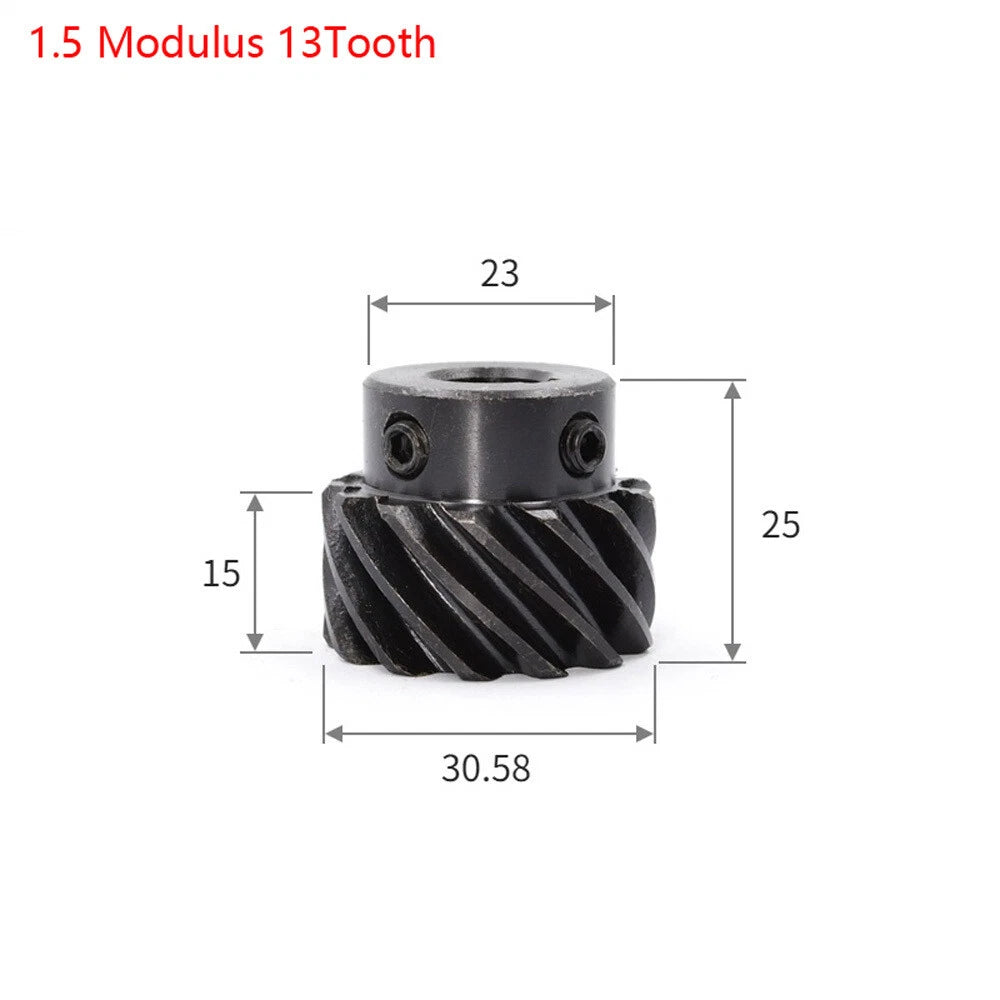
Outer Diameter See variant options
Face Width See variant options
Weight See variant options

❓ Frequently Asked Questions

How do I choose the right modulus and tooth count for my application?

Modulus determines the size of each tooth — a higher modulus means larger, stronger teeth suited for higher torque. For light-duty CNC or robotics, 1.5 modulus is common. For heavier loads or larger shaft diameters, 2 modulus provides more tooth strength. Tooth count, combined with the mating gear's tooth count, sets your gear ratio. Divide the driven gear teeth by the driving gear teeth to get the ratio.

What bore diameter and keyway should I select?

Match the bore diameter to your shaft's outer diameter. The keyway dimensions are pre-matched to the bore in each variant (e.g., a 10 mm or 12 mm bore uses a 4×2 mm keyway; a 24–25 mm bore uses an 8×3.5 mm keyway). Measure your shaft carefully and confirm the keyway slot on your shaft matches the listed keyway size before ordering.

Can I use this left-spiral gear on its own, or does it need a matching gear?

Helical gears must be paired with a mating gear of the same modulus and complementary helix direction. A left-spiral gear meshes with a right-spiral gear on parallel shafts. Using two left-spiral gears together on parallel shafts is not correct and will result in improper meshing. Confirm your mating gear's helix direction before purchasing.

How strong are these gears — what load can they handle?

These steel helical gears are suited for moderate-load, moderate-speed motor transmission applications typical in CNC machines, robotics, and DIY automation. Exact load ratings depend on operating speed, lubrication, and center distance accuracy. For heavy industrial duty cycles with continuous high torque, consult a gear engineer to verify suitability.

Are these gears corrosion-resistant?

These gears are machined from steel and do not include a corrosion-resistant coating unless otherwise specified. For environments with moisture or mild chemicals, applying a light machine oil or grease during installation will help protect the tooth surfaces. For highly corrosive environments, consider stainless steel or coated alternatives.

What is the difference between the step bore and a standard through bore?

A step bore features a shoulder inside the bore that allows the gear to be positioned axially on a shaft at a defined depth, which is useful when precise axial location is needed. Combined with the keyway, it provides both rotational and axial retention. A standard through bore has no shoulder and relies entirely on set screws or collars for axial positioning.

Do I need to lubricate these gears during operation?

Yes, lubrication is recommended for all steel helical gear applications to reduce wear and heat buildup. Apply a suitable gear grease or machine oil to the tooth faces at installation. For enclosed gearboxes, an oil bath is ideal. For open drives, periodic re-greasing based on operating hours and environment is advised.

🛒 Select your modulus, tooth count, bore diameter, and keyway above, then add to cart.

You may also like

Recently viewed