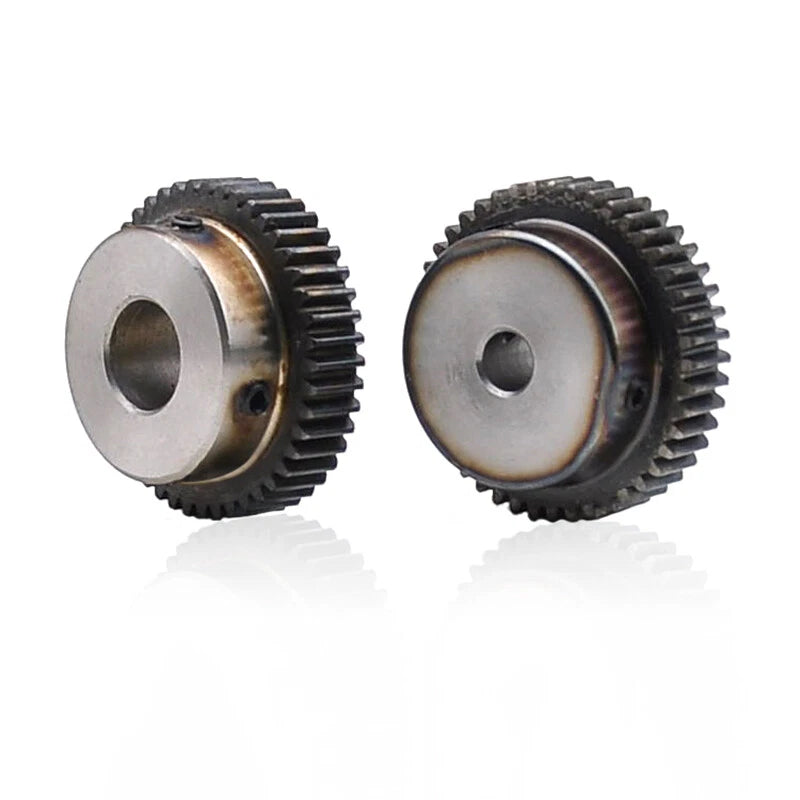
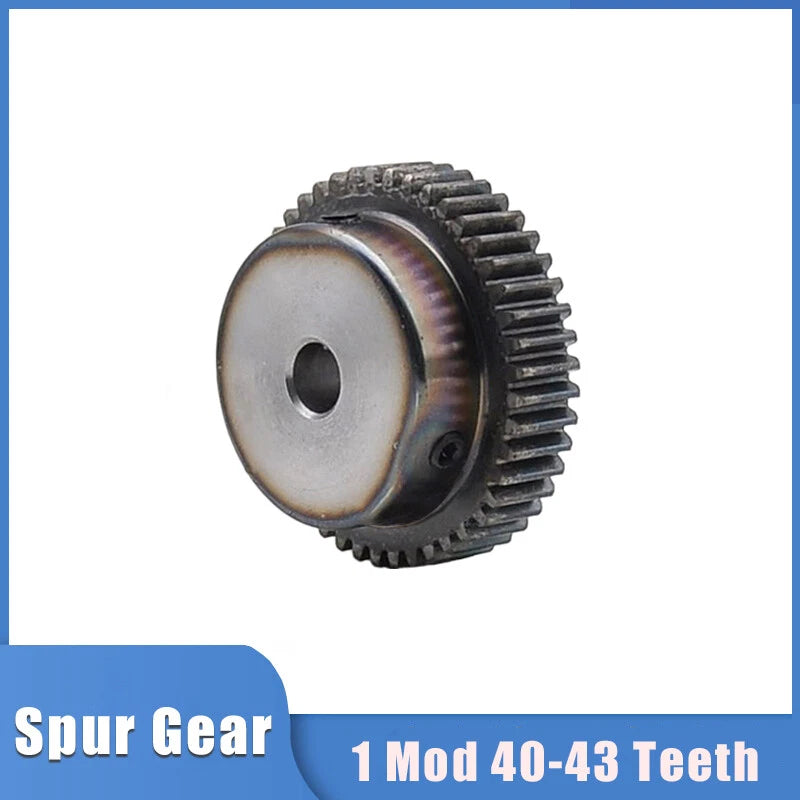
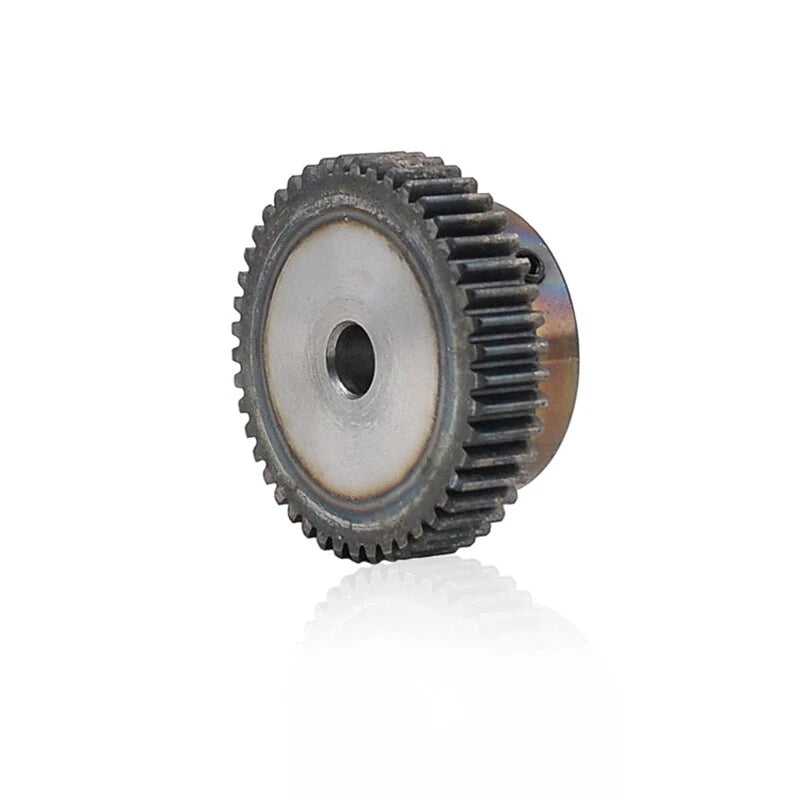
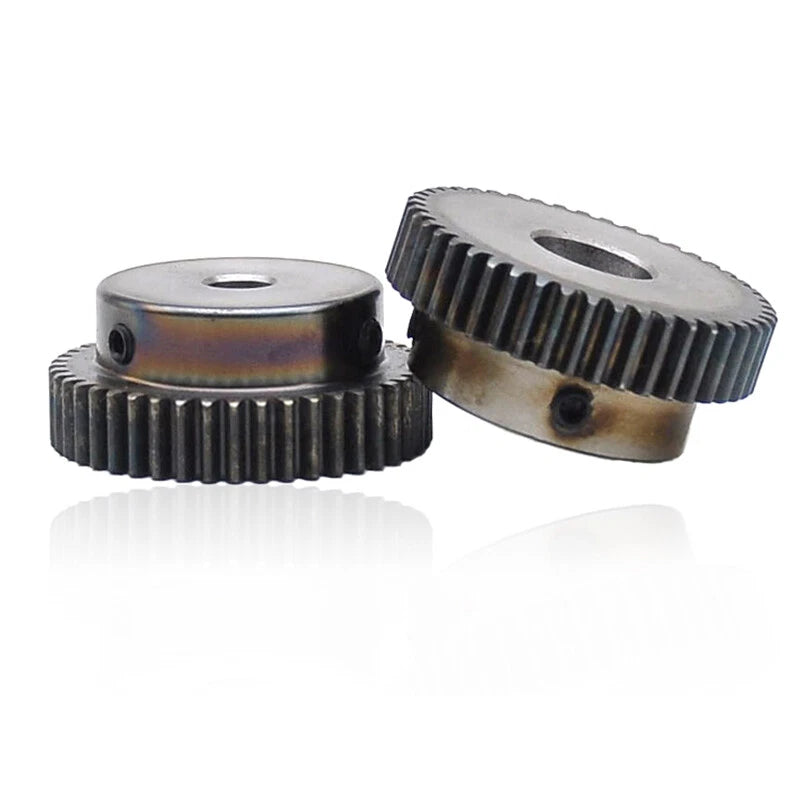
1 Mod 40-43 Teeth Spur Gears Transmission Gear With Step Motor Pinion Gears

No reviews

Price:
Sale price$18.54 USD
Stock:
In stock (500 units), ready to be shipped

Payment & Security

Ach Direct Debit Amazon American Express Apple Pay Bancontact BLIK Diners Club Discover EPS Google Pay iDEAL Wero JCB Maestro Mastercard Multibanco MobilePay PayPal Przelewy24 Shop Pay Twint Union Pay USDC Visa

Your payment information is processed securely. We do not store credit card details nor have access to your credit card information.

Limited Offer — Spend More, Save More
Spend $55+
Save $5
Spend $100+
Save $10
Spend $200+
Save $25
HomeDIYer DIY Expert Support

DIY Expert Support

Get fitment advice & recommendations

Mon–Fri  8:30 AM – 8:00 PM
24-Hour Fast Ship
Arrives in 3–14 Days
Worldwide Shipping
30-Day Returns
1 tree planted with every purchase

Description

1 Mod 40–43 Tooth Spur Gears — Reliable Transmission for DIY Automation Builds

When your CNC router, 3D printer, or stepper-motor drive train demands a gear that meshes cleanly and holds its position under load, an undersized or poorly bored pinion becomes the weakest link in the whole system. These 1 Module spur gears are engineered for makers, small-workshop builders, and automation hobbyists who need a drop-in transmission component that mates directly with standard 1M rack-and-pinion or gear-train assemblies without custom machining.

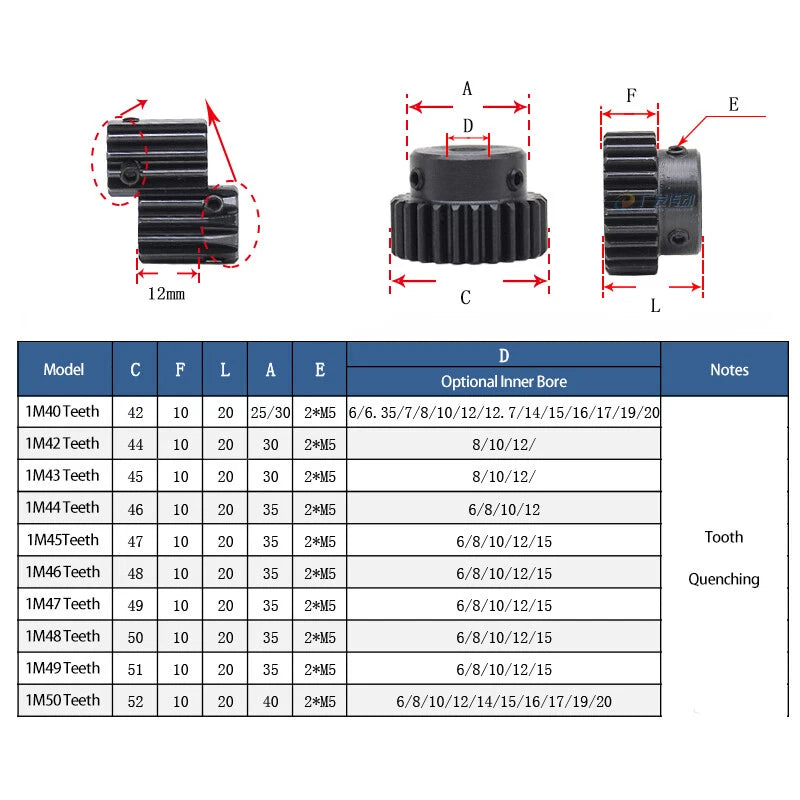
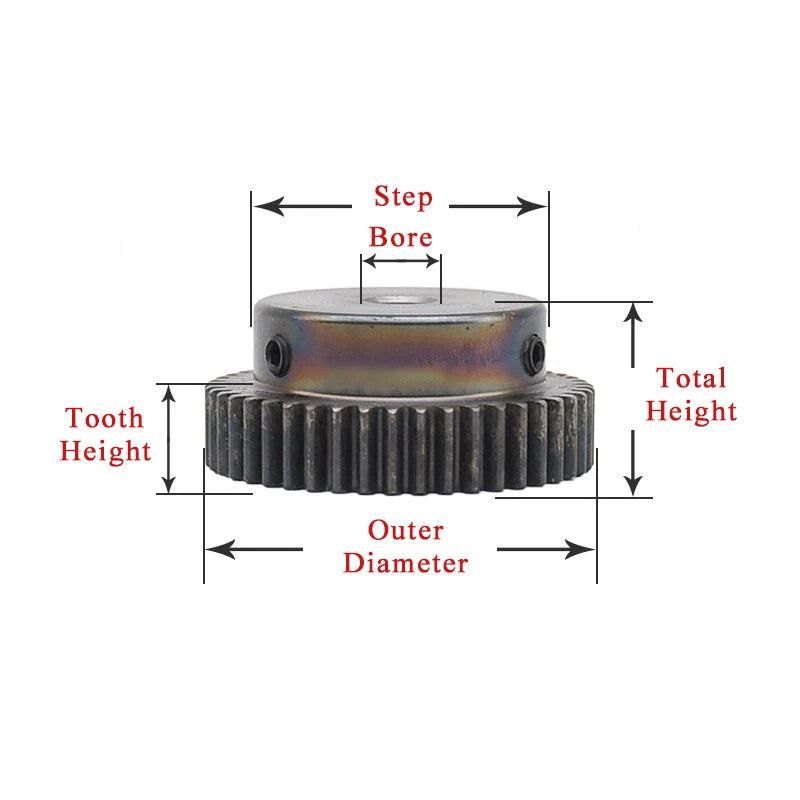
Each gear is offered in three tooth counts — 40T, 42T, and 43T — and is available in Blue Nylon (lightweight, low-noise) or Stainless Steel (corrosion-resistant, higher load capacity). Bore diameters span 6 mm (0.24 in) to 25 mm (0.98 in), with plain round, keyway (3×1.4 mm, 4×1.8 mm, 5×2.3 mm, 6×2.8 mm), D-bore, and step-bore configurations to suit a wide range of motor shaft styles. Outer diameter is approximately 42–45 mm (1.65–1.77 in) depending on tooth count; face width is typically 10–15 mm (0.39–0.59 in).

Typical use cases include stepper-motor pinion drives for DIY CNC gantries, rack-and-pinion linear actuators for automated sliding gates, and gear-reduction stages in small robotic arms — anywhere a compact 1 Mod spur gear with a precise bore fit is required.

⚙️ Compatibility: Designed for standard Module 1 (1M) gear systems. Meshes with 1M racks, pinions, and mating spur gears. Verify shaft diameter and keyway dimensions against your motor spec before ordering.

✅ Key Features of These 1 Mod Spur Gears

🦷
Three Tooth-Count Options

Choose 40T, 42T, or 43T to fine-tune your gear ratio without changing the module pitch — ideal for stepper-motor pinion gear ratio adjustments.

🔩
Multiple Bore Styles

Round, keyway (3×1.4 mm / 4×1.8 mm / 5×2.3 mm / 6×2.8 mm), D-bore, and step-bore variants cover virtually every motor shaft configuration from 6 mm to 25 mm.

🧱
Blue Nylon or Stainless Steel

Blue Nylon gears run quietly and resist corrosion in light-duty applications; Stainless Steel gears handle higher torque and harsher environments.

📐
Standard 1M Module Pitch

Fully interchangeable with any Module 1 rack, worm, or mating spur gear — no custom tooling or profile grinding required.

📦
Single or 5-Pack Quantities

Order 1 pcs for prototyping or 5 pcs for production runs and spare-parts inventory — both options ship in the same variant matrix.

🔧
Drop-In Fit for Common Stepper Shafts

Bore options include NEMA 17 (5 mm), NEMA 23 (6.35 mm / 8 mm), and larger servo shafts up to 25 mm, making these gears a direct fit for most DIY automation motor shafts.

📐 Technical Specifications — 1 Mod Spur Gears

Module 1M (Module 1)
Tooth Count 40T / 42T / 43T (see variant options)
Material Blue Nylon / Stainless Steel / See variant options
Bore Type Round, Keyway, D-Bore, Step Bore (see variant options)
Bore Diameter Range 6 mm – 25 mm (0.24 in – 0.98 in)
Keyway Sizes Available 3×1.4 mm, 4×1.8 mm, 5×2.3 mm, 6×2.8 mm
Outer Diameter (approx.) 42–45 mm (1.65–1.77 in) depending on tooth count
Face Width (approx.) 10–15 mm (0.39–0.59 in)
Pressure Angle 20°
Packing Quantity 1 pcs / 5 pcs (see variant options)

❓ Frequently Asked Questions

How do I choose between 40T, 42T, and 43T?

The tooth count determines your gear ratio when paired with a pinion or rack. A higher tooth count on the driven gear produces more torque and lower speed; a lower count gives higher speed. For most NEMA 17/23 stepper-motor CNC builds, 40T is the most common starting point. Choose 42T or 43T if you need a slightly different ratio without swapping the mating gear.

Which bore type should I select for my stepper motor?

Check your motor's shaft diameter and flat (if any). A plain round bore suits shafts held by a set screw. A D-bore matches shafts with a flat cut (common on NEMA 17 motors). A keyway bore is used when the shaft has a machined key slot for positive torque transfer. Step bores allow the gear to seat at a specific depth on a stepped shaft.

What is the difference between Blue Nylon and Stainless Steel versions?

Blue Nylon gears are lighter, run with less noise, and are self-lubricating — ideal for light-duty automation, 3D printers, and low-torque applications. Stainless Steel gears offer significantly higher load capacity, better dimensional stability under heat, and corrosion resistance for outdoor or wet environments. Stainless Steel variants are priced higher due to material and machining costs.

Are these gears compatible with standard 1M racks and pinions?

Yes. All gears in this listing follow the Module 1 (1M) standard, meaning they will mesh correctly with any other 1M-rated rack, pinion, or spur gear regardless of brand, as long as the pressure angle is 20°. Always confirm the mating gear's module and pressure angle before ordering.

How strong are these gears under continuous load?

Load capacity depends on material and bore fit. Stainless Steel variants handle significantly higher continuous torque than Blue Nylon. For precise load ratings, refer to your application's torque requirements and compare against standard 1M gear load tables. Keyway and D-bore configurations provide better torque transfer than plain round bores with set screws alone.

Do these gears require lubrication?

Blue Nylon gears are inherently self-lubricating and typically run dry in light-duty applications. Stainless Steel gears benefit from a light application of grease or gear oil, especially under continuous or high-speed operation, to reduce wear and heat buildup.

Can I use these gears outdoors or in humid environments?

Stainless Steel variants are suitable for humid or mildly corrosive environments. Blue Nylon gears resist moisture well but may absorb small amounts of water over time, which can slightly affect dimensional tolerances. For fully outdoor or submerged applications, Stainless Steel is the recommended choice.

🛒 Select your tooth count, bore size, and packing quantity above, then add to cart.

You may also like

Recently viewed