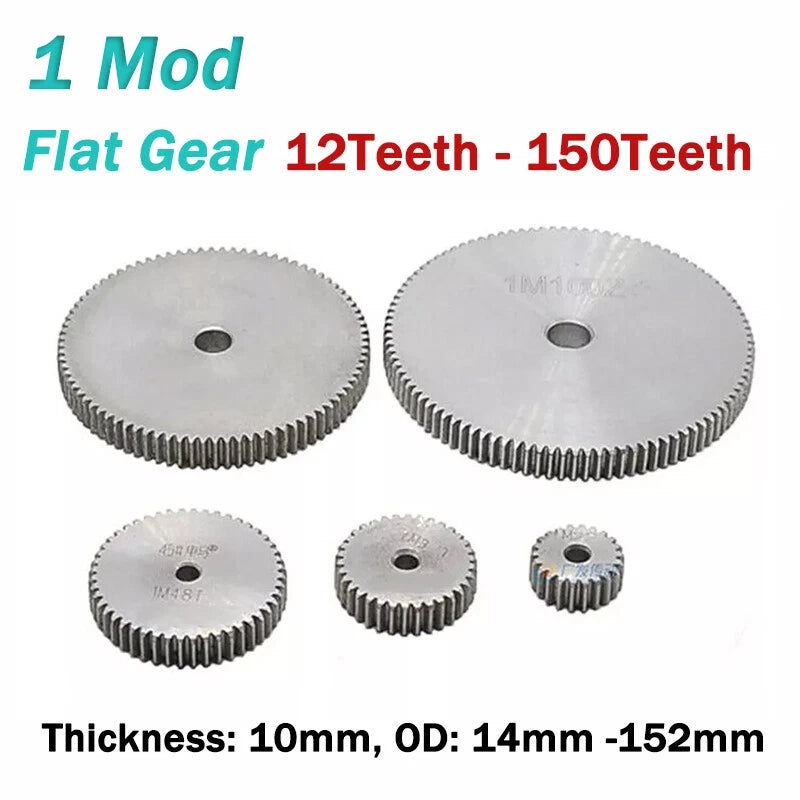
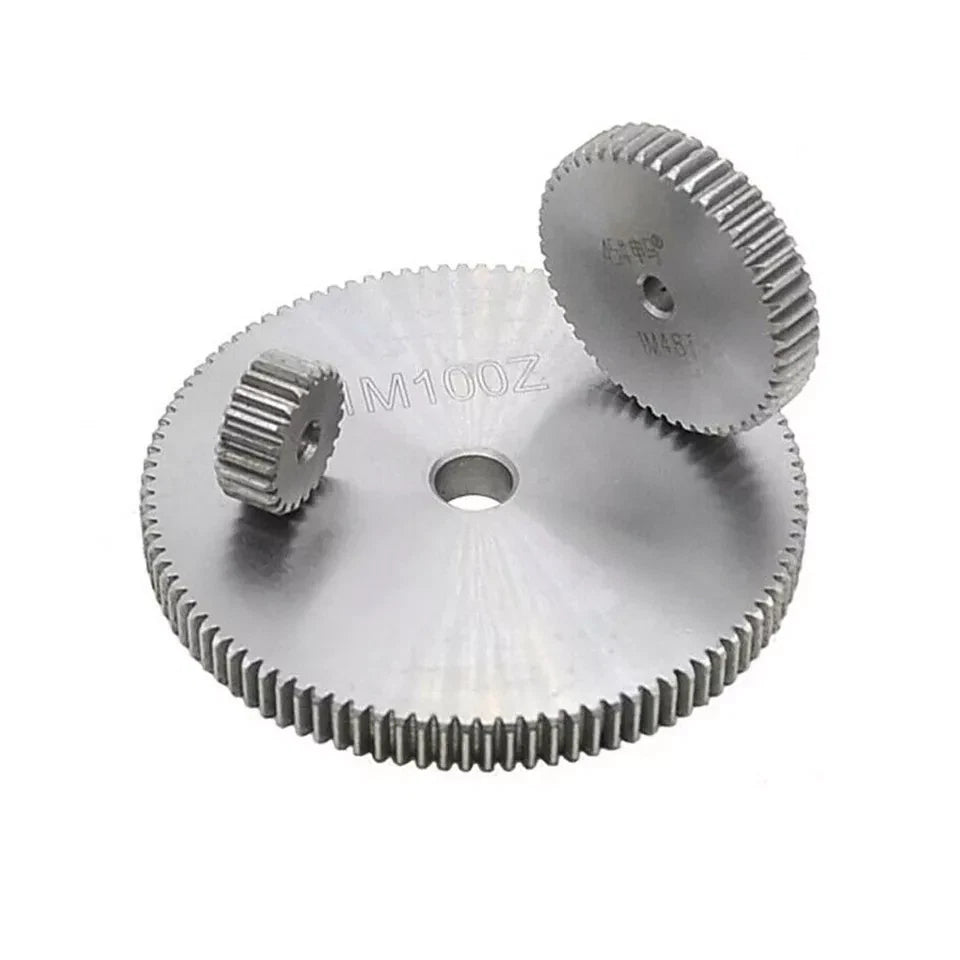
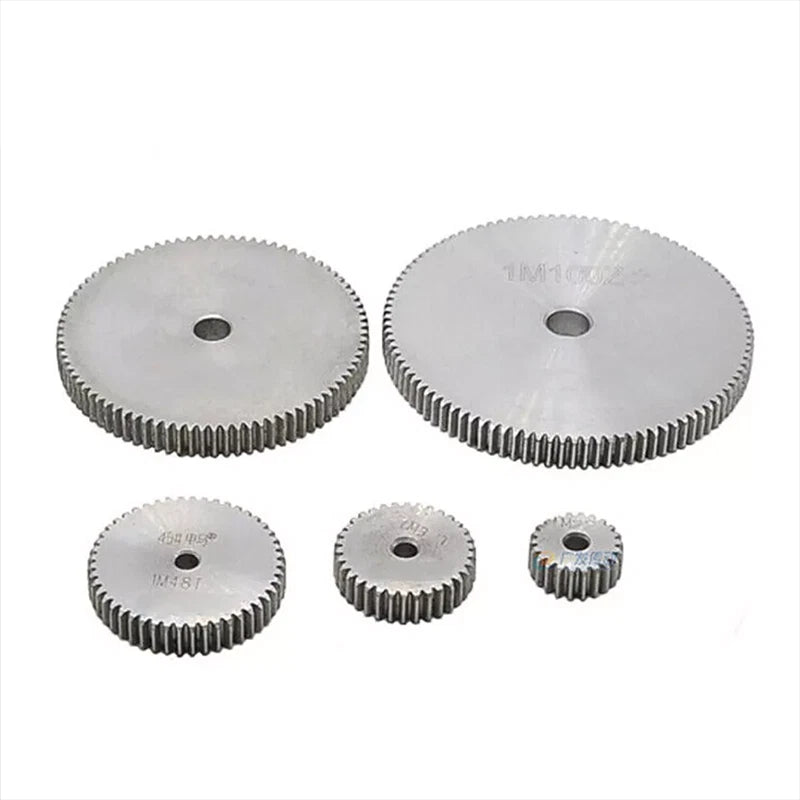
1 Module 12-150 Teeth Spur Gear Thickness 10mm OD 14-152mm Flat Gear Pinion Gear

No reviews

Price:
Sale price$4.56 USD
Stock:
In stock (500 units), ready to be shipped

Payment & Security

Ach Direct Debit Amazon American Express Apple Pay Bancontact BLIK Diners Club Discover EPS Google Pay iDEAL Wero JCB Maestro Mastercard Multibanco MobilePay PayPal Przelewy24 Shop Pay Twint Union Pay USDC Visa

Your payment information is processed securely. We do not store credit card details nor have access to your credit card information.

Limited Offer — Spend More, Save More
Spend $55+
Save $5
Spend $100+
Save $10
Spend $200+
Save $25
HomeDIYer DIY Expert Support

DIY Expert Support

Get fitment advice & recommendations

Mon–Fri  8:30 AM – 8:00 PM
24-Hour Fast Ship
Arrives in 3–14 Days
Worldwide Shipping
30-Day Returns
1 tree planted with every purchase

Description

Module 1 Spur Gear — Precision Pinion Gear for CNC, Robotics & Automation

When a motion-control project stalls because a gear slips, strips, or simply doesn't mesh cleanly, the root cause is almost always a mismatch in module or tooth count. Makers, engineers, and small-shop fabricators who build CNC routers, robotic arms, conveyor systems, and DIY automation rigs need a reliable, dimensionally consistent spur gear they can drop into a design without re-engineering the whole drivetrain.

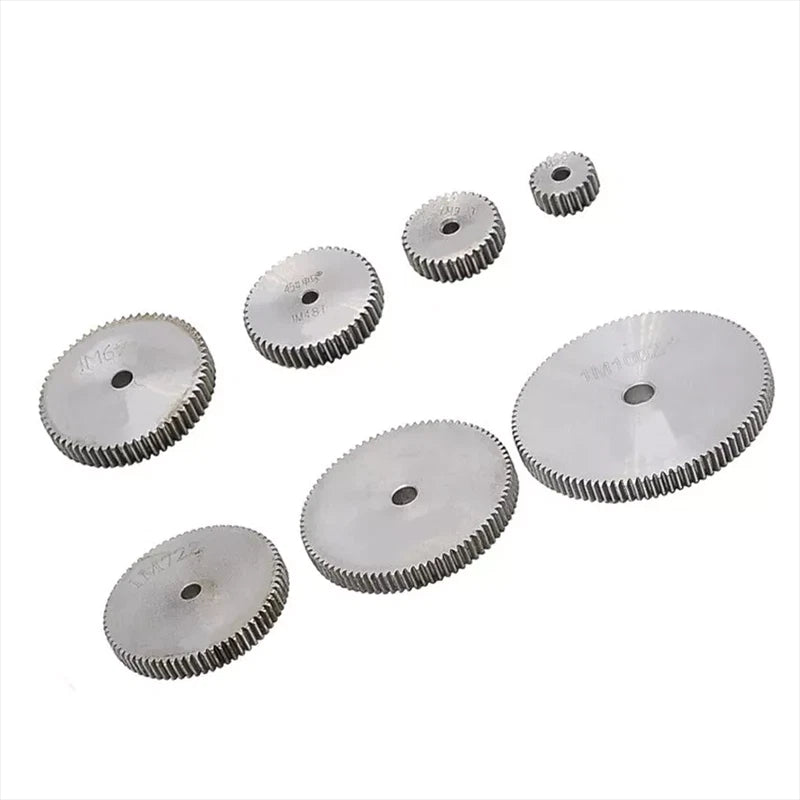
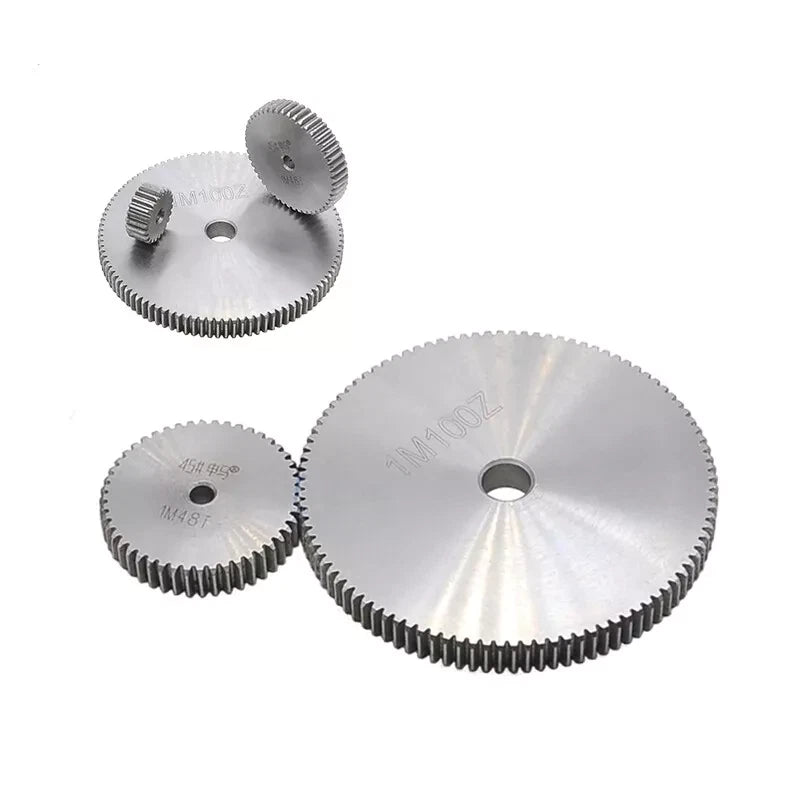
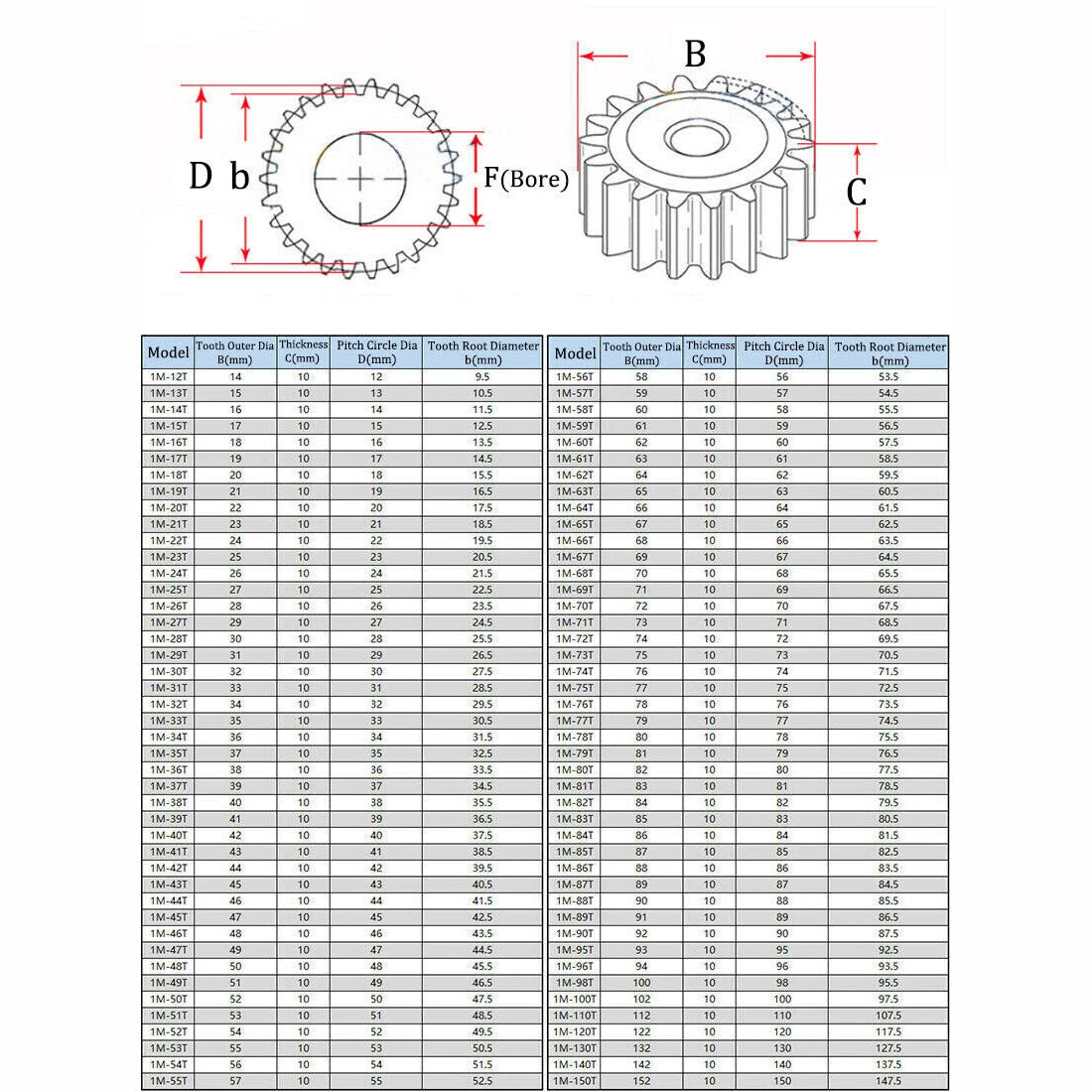
These Module 1 spur gears are machined from durable metal stock with a uniform face width (thickness) of 10 mm (0.39 in). The tooth count spans 12 to 150 teeth, giving outer diameters from 14 mm (0.55 in) up to 152 mm (5.98 in). Each gear follows the standard Module 1 tooth profile, so any two gears in this series mesh together without modification.

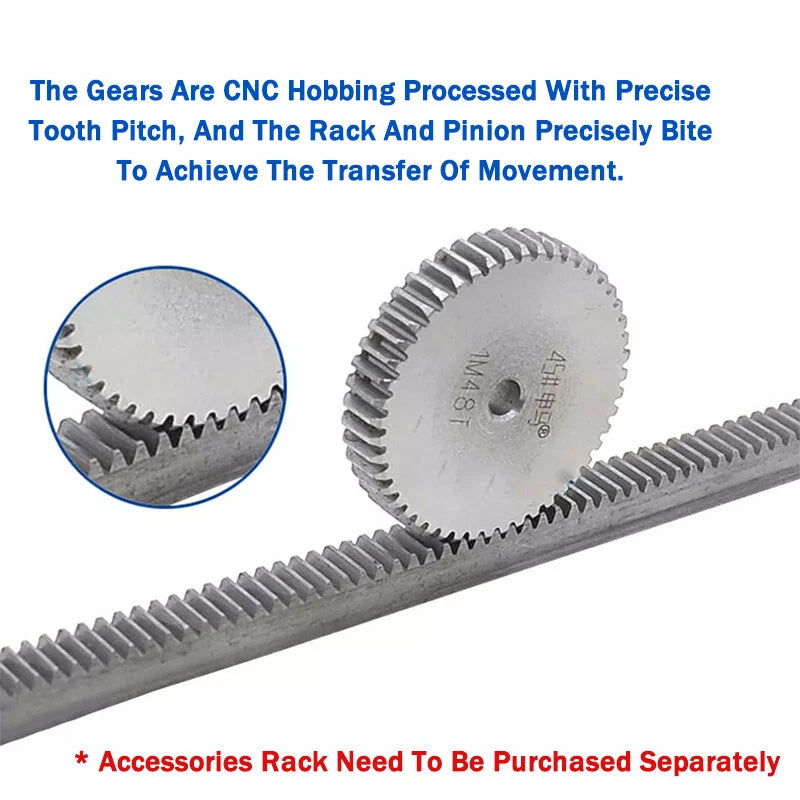
Typical use cases include rack-and-pinion linear drives for CNC gantries, gear-reduction stages in robotic joint actuators, and speed-matching assemblies in small conveyor or feeder mechanisms — anywhere a compact, interchangeable spur gear with a known module is required.

⚙️ Compatibility: Meshes with any Module 1 (Mod 1) spur gear, rack, or pinion. Verify bore diameter and keyway requirements against your shaft before ordering.

✅ Key Features of These Module 1 Spur Gears

📐
Wide Tooth-Count Range

12 to 150 teeth in a single product family — cover small pinion drives up to large reduction stages without switching suppliers.

📏
Consistent 10 mm Face Width

Uniform 10 mm (0.39 in) thickness across all tooth counts ensures predictable load distribution and straightforward stack-up calculations.

🔩
Standard Module 1 Tooth Profile

Full compliance with the Module 1 standard means direct interchangeability with any Mod 1 gear, rack, or worm in your existing assembly.

🔄
Spur (Flat) Gear Geometry

Straight-cut teeth transmit torque efficiently along parallel shafts with no axial thrust load — ideal for compact, low-noise drive stages.

🏭
Machined for Dimensional Accuracy

Tooth pitch and outer diameter are held to tight tolerances so gears mesh smoothly from the first rotation without manual fitting or lapping.

📦
Single-Piece or Multi-Pack Options

Available in 1 Pcs per order — mix and match tooth counts to build a complete gear train in one purchase.

📐 Technical Specifications — Module 1 Spur Gear

Module 1 (Mod 1)
Tooth Count Range 12 – 150 Teeth (see variant options)
Outer Diameter Range 14 mm – 152 mm (0.55 in – 5.98 in)
Face Width (Thickness) 10 mm (0.39 in)
Gear Type Spur Gear (Flat / Straight-Cut)
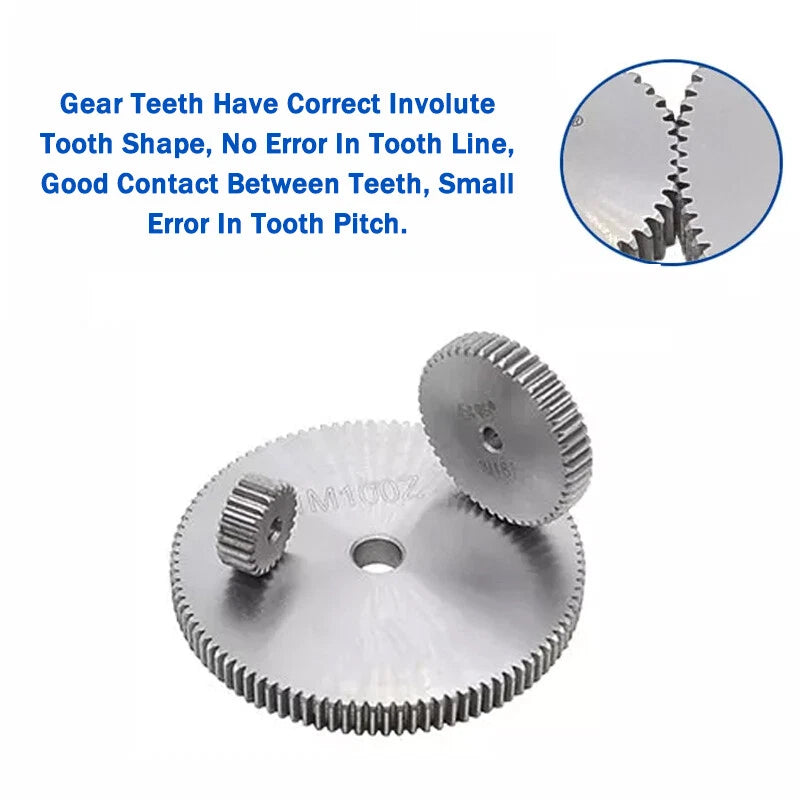
Tooth Profile Standard Module 1 involute
Bore Diameter See variant options
Material See variant options
Surface Finish See variant options
Pressure Angle 20°
Quantity per Order 1 Pcs

❓ Frequently Asked Questions

How do I choose the right tooth count for my application?

The tooth count determines the gear ratio and the outer diameter. For a given gear ratio, divide the driven gear teeth by the driver gear teeth. For example, a 60-tooth gear driven by a 20-tooth pinion gives a 3:1 reduction. Use the outer diameter values (OD = (Teeth + 2) × Module) to confirm the gears physically fit within your housing or frame.

Will these gears mesh with my existing Module 1 rack or pinion?

Yes. Any two gears sharing the same module and pressure angle mesh correctly. These gears use a standard Module 1, 20° pressure angle involute profile, so they are directly interchangeable with any other Mod 1 component — racks, pinions, or other spur gears — regardless of brand.

What is the bore diameter, and can I modify it?

Bore diameter varies by tooth count. Please refer to the variant detail or contact us to confirm the bore size for your selected tooth count. The bore can typically be enlarged by a machinist to fit a specific shaft diameter, but this should be done carefully to maintain concentricity.

How much torque can these spur gears handle?

Torque capacity depends on the material, tooth count, face width, and operating speed. The 10 mm face width is suited to light-to-medium duty applications such as CNC router axes, robotic joints, and small conveyor drives. For heavy industrial loads or continuous high-speed operation, contact us to confirm suitability before ordering.

Are these gears corrosion-resistant? Can I use them outdoors?

Corrosion resistance depends on the material and surface finish of the specific variant. For outdoor or humid environments, look for variants with a zinc-plated, black-oxide, or stainless finish. If you are unsure which variant suits your environment, contact us to confirm before ordering.

Can I use multiple gears from this series together to build a gear train?

Absolutely. Because all gears in this series share the same Module 1 standard, you can combine any tooth counts to create multi-stage gear trains. Simply ensure the center distance between each pair of meshing gears equals half the sum of their pitch diameters: C = (T1 + T2) / 2 × Module.

What is the difference between a spur gear and a helical gear for my CNC build?

Spur gears have straight-cut teeth parallel to the shaft axis. They are simpler to source, easier to align, and produce no axial thrust — making them the standard choice for most CNC router and 3D-printer motion systems. Helical gears run more quietly under high speed but introduce axial loads that require thrust bearings. For typical DIY CNC and robotics applications, Module 1 spur gears are the practical and cost-effective choice.

🛒 Select your Modulus & Teeth count above, then add to cart.

You may also like

Recently viewed