The chain is fine...but I ordered the wrong size. Nine links of the chain I ordered equals six of the size I wanted. My error...
How can I straighten out the springs? I can't use them coil uo as is.
Your payment information is processed securely. We do not store credit card details nor have access to your credit card information.
Get fitment advice & recommendations
When your chain drive slips, skips, or wears unevenly, the culprit is almost always a mismatched or worn sprocket. Makers, hobbyists, and small-machine builders who rely on ANSI 10A (#50) roller chain need a sprocket that holds tight tolerances and stays true under load — without hunting down industrial suppliers or paying industrial prices.
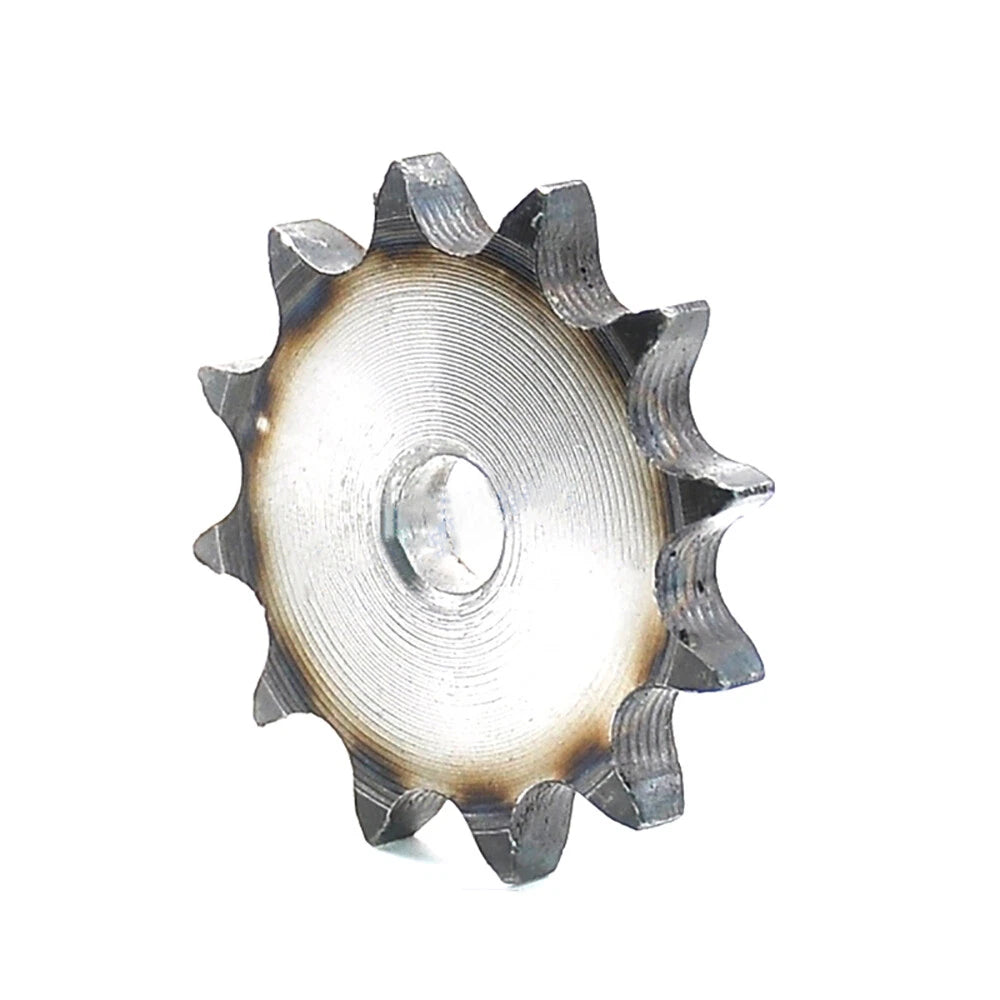
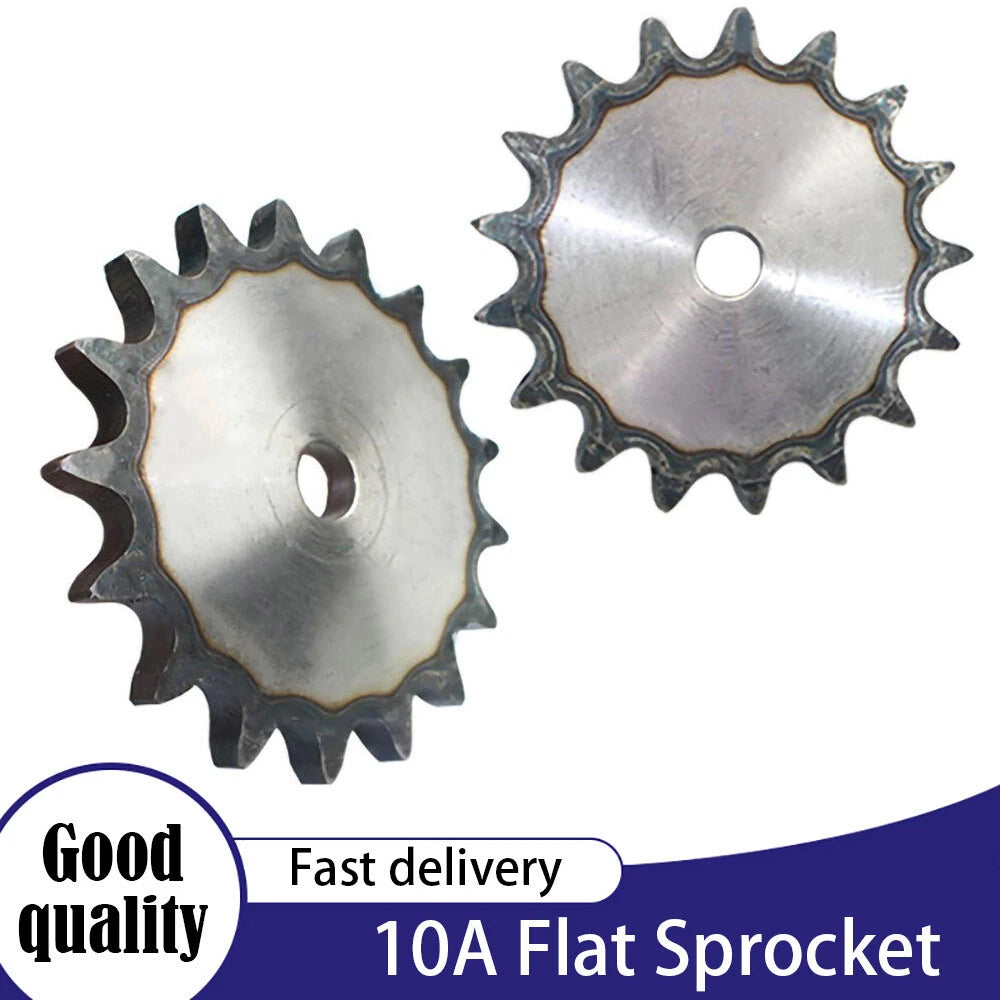
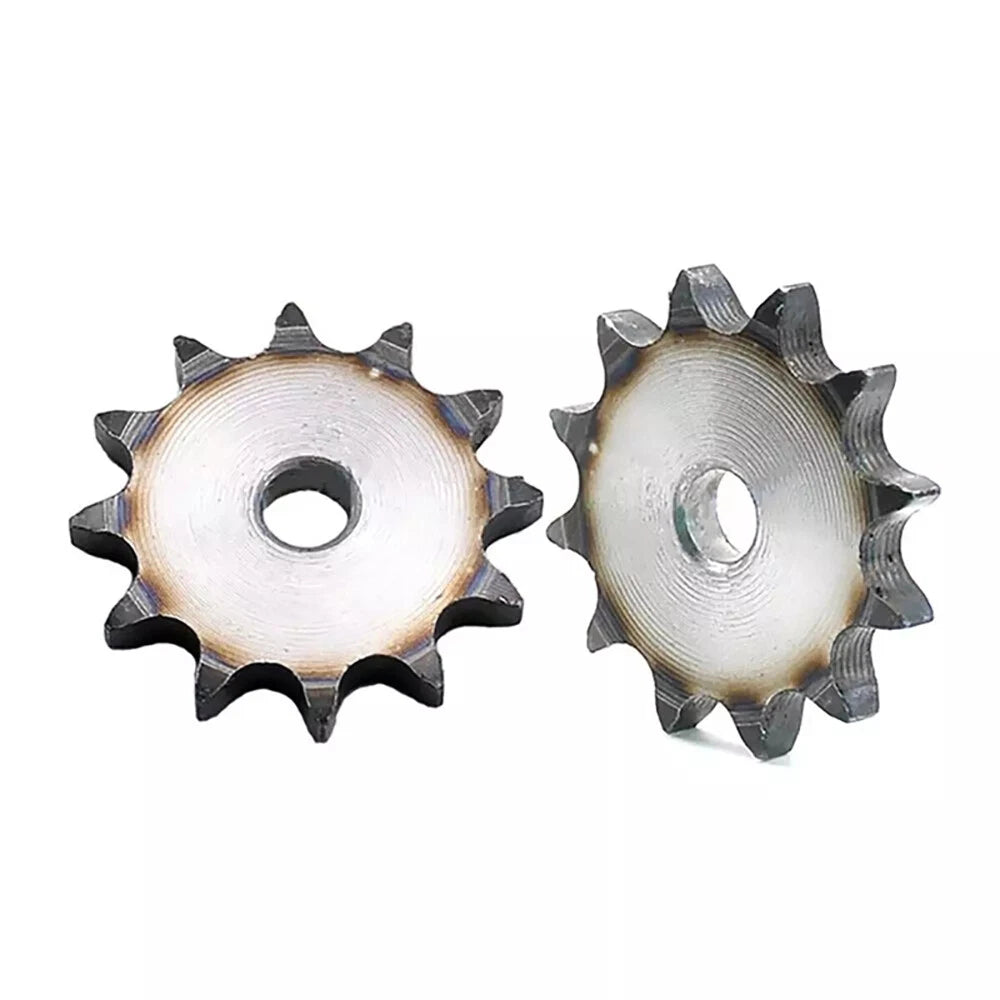
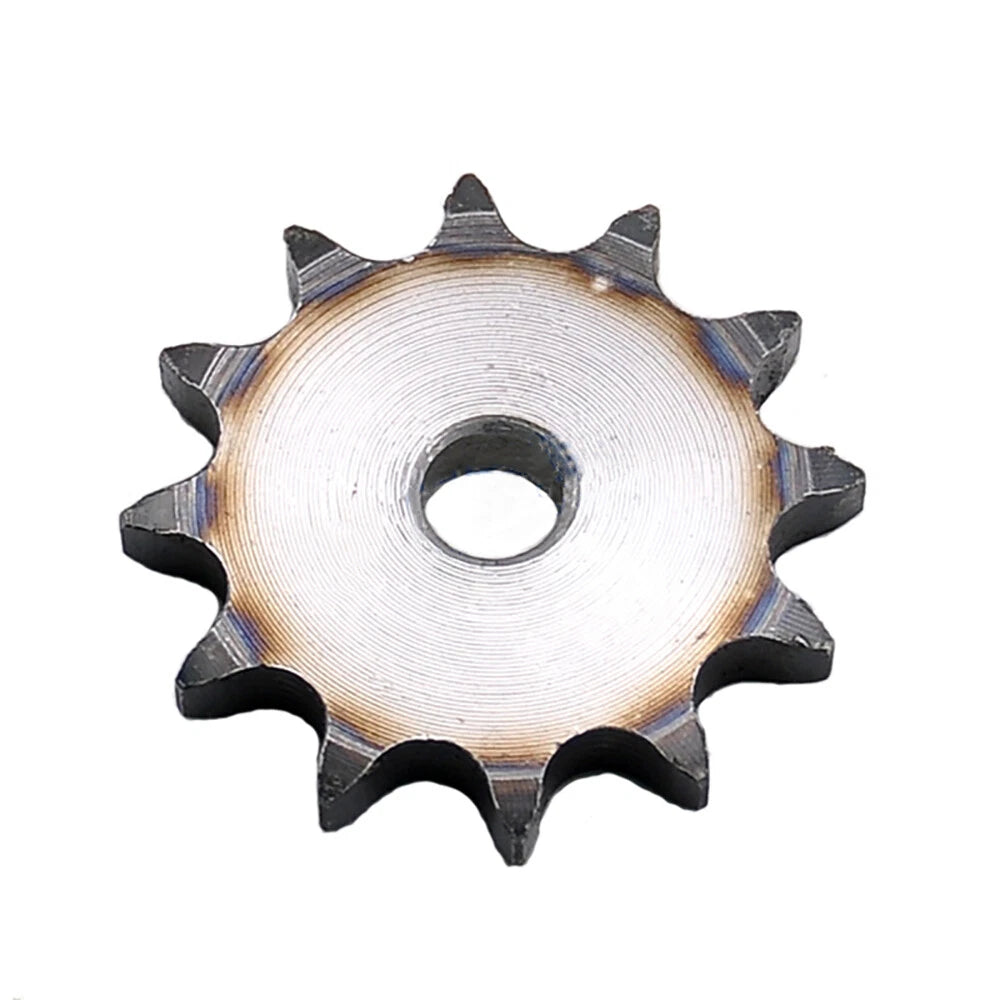
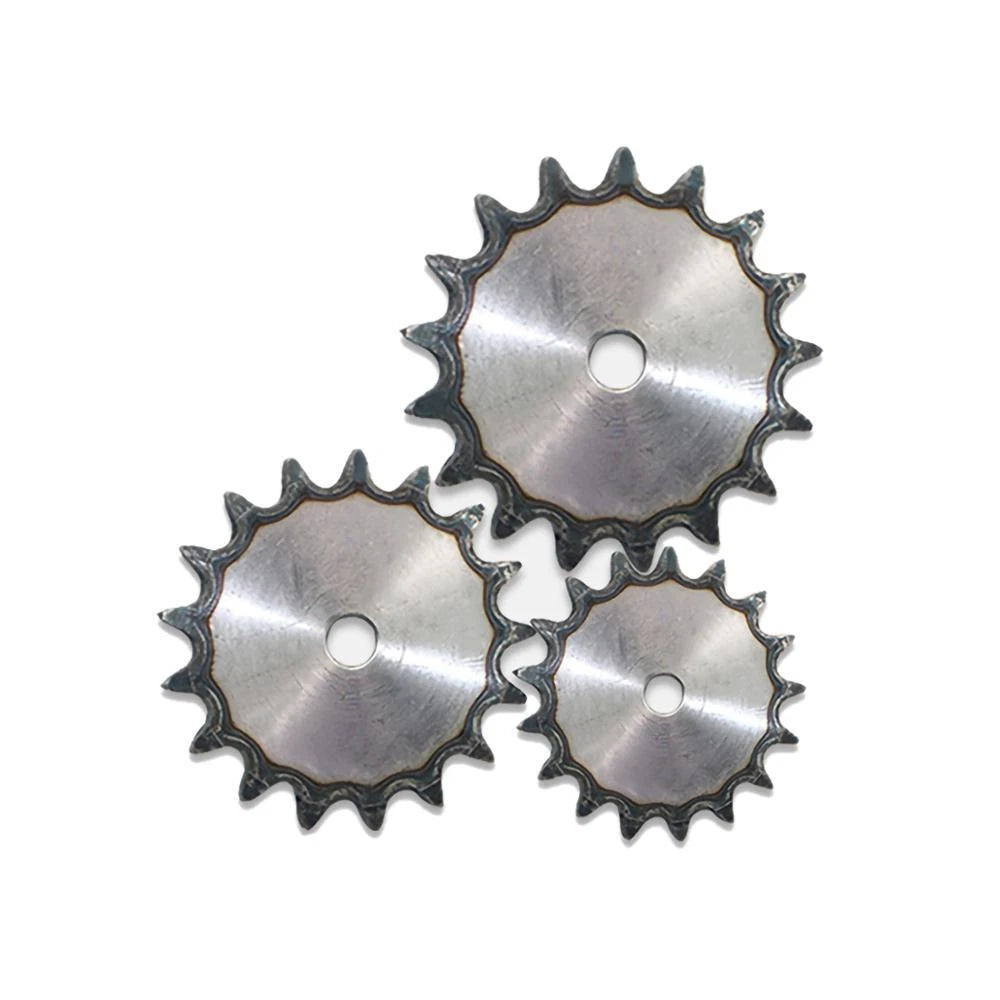
This 10A roller chain drive sprocket is machined from carbon steel with a natural or lightly finished surface, sized to mesh precisely with standard ANSI 10A (5/8" pitch) roller chain. The flat-plate (no-hub) profile keeps the assembly compact. Tooth counts range from 10T to 20T, with bore and outer diameter scaling accordingly — typically 30–90 mm (1.2"–3.5") OD depending on tooth count. Each sprocket ships individually (1 pcs) or in a 10-piece pack for workshop stock.
Typical use cases include go-kart and mini-bike final drives where a 10A sprocket swap changes gear ratio without a full drivetrain rebuild, conveyor and feeder systems in light industrial or maker-space settings that run ANSI #50 chain, and custom chain-drive automation rigs — CNC axis drives, rotary indexers, or motorized camera sliders — where a flat sprocket wheel keeps the profile slim.
Engineered to the ANSI 10A standard with a 5/8" (15.875 mm) pitch, ensuring drop-in compatibility with any standard #50 roller chain without modification.
Eleven tooth-count options from 10T to 20T let you dial in the exact gear ratio your drive system needs — from high-torque low-speed to faster output speeds.
The hubless flat-plate design minimizes axial space, making these sprocket wheels ideal for compact assemblies where a flanged hub would interfere with adjacent components.
Machined from carbon steel for the hardness and wear resistance needed in continuous-duty chain drive applications, including go-karts, conveyors, and motorized rigs.
Order a single sprocket for a one-off build or choose the 10-piece pack to stock your workshop and save per-unit cost on recurring projects.
Each sprocket is machined to consistent dimensional tolerances so tooth engagement stays smooth and chain wear is distributed evenly across all contact points.
| Chain Standard | ANSI 10A / #50 |
|---|---|
| Chain Pitch | 15.875 mm (5/8") |
| Roller Diameter | 9.53 mm (3/8") |
| Tooth Count (T) | 10T, 11T, 12T, 13T, 14T, 15T, 16T, 17T, 18T, 19T, 20T |
| Outer Diameter (OD) | See variant options |
| Bore Diameter | See variant options |
| Hub Style | Flat plate (no hub) |
| Material | Carbon Steel |
| Surface Finish | See variant options |
| Packing Quantity | 1 pcs or 10 pcs |
| Weight (per pcs) | See variant options |
Tooth count determines your gear ratio. Divide the driven sprocket teeth by the drive sprocket teeth to get the ratio. A smaller drive sprocket (fewer teeth) increases torque and reduces output speed; a larger one does the opposite. For go-karts, 10T–13T drive sprockets are common for higher top speed, while 15T–20T suits torque-heavy or low-speed applications.
Yes — ANSI 10A and #50 are the same chain standard. Any standard #50 roller chain with a 5/8" (15.875 mm) pitch and 3/8" (9.53 mm) roller diameter will mesh correctly with these sprockets. Always verify the chain's pitch before ordering.
Bore diameter varies by tooth count and is listed in the variant details. If you need a specific bore to match your shaft, check the variant specifications or contact us to confirm before ordering. Many builders also bore out the sprocket to a custom diameter using a lathe.
Carbon steel offers excellent hardness and wear resistance but is susceptible to surface rust if left unprotected in wet or humid conditions. For outdoor use, apply a chain lubricant regularly and consider a corrosion-inhibiting coating. For consistently wet environments, a stainless steel sprocket may be a better long-term choice.
Yes. 10A (#50) chain and sprockets are a standard choice for go-karts and mini-bikes. These flat sprocket wheels are commonly used as drive or driven sprockets in final-drive assemblies. Confirm the bore matches your axle diameter and that the sprocket thickness clears your chain guard before installing.
Both options ship the identical sprocket — the only difference is quantity. The 1-piece option is ideal for a single build or replacement. The 10-piece pack offers a lower per-unit cost and is suited for workshop stock, batch builds, or projects requiring multiple sprockets of the same tooth count.
Worn sprocket teeth develop a "shark fin" or hooked profile instead of a symmetric curve. You can also lay a new chain section across the sprocket — if the chain lifts noticeably off the teeth rather than seating flush, the sprocket is worn and should be replaced. Always replace the chain and sprocket together for best results.