The chain is fine...but I ordered the wrong size. Nine links of the chain I ordered equals six of the size I wanted. My error...
How can I straighten out the springs? I can't use them coil uo as is.
Your payment information is processed securely. We do not store credit card details nor have access to your credit card information.
Get fitment advice & recommendations
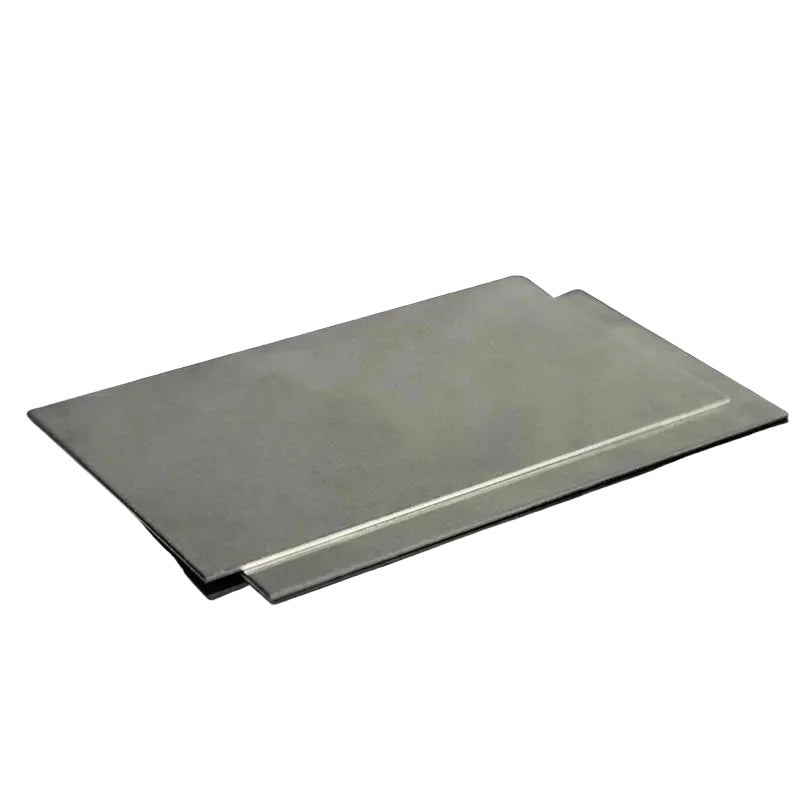
When your project demands a metal that holds its shape, resists corrosion, and delivers a clean silver-white finish without the cost of sterling silver, finding the right sheet stock can be frustrating. Hobbyists, model makers, electronics tinkerers, and small-batch fabricators all face the same challenge: sourcing flat metal plate in exact dimensions without ordering industrial minimums. These 18% nickel silver alloy sheets are stocked in a range of sizes and thicknesses specifically for hands-on builders who need reliable material they can cut, bend, and solder right away.
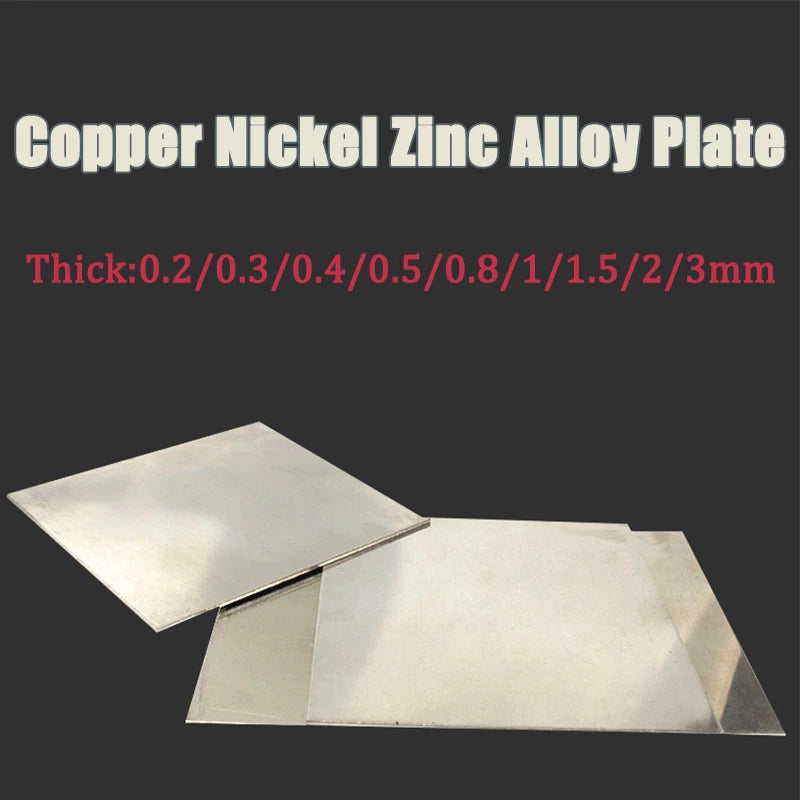
Each sheet is a cupronickel-zinc alloy (commonly called nickel silver or German silver) containing approximately 18% nickel content, giving it a bright, tarnish-resistant surface. Sheets are available in widths and lengths ranging from 100×100 mm (approx. 3.94×3.94 in) up to 150×300 mm (approx. 5.91×11.81 in), with thickness options spanning 0.2 mm to 3 mm (approx. 0.008 in to 0.118 in). Quantity options from 1 to 20 pieces let you order exactly what your project requires.
These nickel silver plate strips are well suited for decorative metalwork and jewelry blanks, precision shim stock and spacer applications, electrical contact and spring element prototyping, scale model structural panels, and musical instrument repair where a silver-toned, solderable alloy is needed. The flat-rolled surface finish makes them easy to scribe, drill, and form with standard hand tools.
| Alloy Type | Nickel Silver (Cupronickel-Zinc / German Silver) |
|---|---|
| Nickel Content | Approximately 18% |
| Primary Composition | Copper, Nickel, Zinc |
| Width × Length Range | 100×100 mm to 150×300 mm (see variant options) |
| Thickness Range | 0.2 mm – 3 mm (see variant options) |
| Surface Finish | Flat-rolled, silver-white |
| Solderability | Compatible with soft solder and silver solder |
| Machinability | Suitable for sawing, drilling, filing, and light bending |
| Quantity per Order | See variant options (1–20 pcs) |
| Weight per Piece | See variant options |
| Hardness | Contact us to confirm |
| Temper | Contact us to confirm |
For shim stock, gaskets, or decorative overlays, the 0.2–0.5 mm range is typically sufficient and easy to cut with snips or a jeweler's saw. For contact strips, spring elements, or structural panels that need to hold a formed shape, 0.8–1.5 mm offers a good balance of rigidity and workability. If you need a rigid bracket or a load-bearing blank, the 2–3 mm options provide the stiffness required. When in doubt, order one piece of your target thickness first to test formability before committing to a larger quantity.
No. Nickel silver (also called German silver or cupronickel-zinc alloy) contains no precious silver — the name refers to its silver-like color. It is a copper-based alloy with nickel and zinc added for color and corrosion resistance. It is distinct from stainless steel (which is iron-based) and from sterling silver (which is 92.5% fine silver). Nickel silver is significantly more affordable than sterling silver while offering a similar appearance for decorative and functional metalwork.
Nickel silver alloys offer good resistance to atmospheric corrosion and tarnishing compared to plain copper or brass, thanks to the nickel content forming a protective surface layer. For indoor decorative use, light hobby fabrication, and protected enclosures, these sheets perform well without additional coating. For prolonged outdoor exposure or humid environments, applying a clear lacquer or protective coating is recommended to maintain the surface appearance over time.
Yes. Nickel silver alloys are compatible with both soft soldering (using tin-lead or lead-free solder with an appropriate flux) and silver soldering (hard soldering with silver-bearing filler rods). Clean the surface with fine abrasive or flux before soldering to ensure good adhesion. Brazing is also possible with standard copper-zinc or silver-copper brazing alloys. Avoid using acid fluxes that are not neutralized after soldering, as residual acid can cause localized corrosion over time.
Thin sheets (0.2–0.5 mm) can be cut cleanly with metal snips, a utility knife and straightedge, or a jeweler's saw. Mid-gauge sheets (0.8–1.5 mm) are best cut with a hacksaw, jigsaw with a metal blade, or a rotary tool with a cutting disc. Thicker sheets (2–3 mm) require a hacksaw, angle grinder, or bandsaw with a metal-cutting blade. Always deburr cut edges with a file or fine sandpaper to remove sharp burrs before handling or assembling.
Yes. Nickel silver alloys respond well to standard electroplating processes, including gold, silver, and rhodium plating, making them a common base material for decorative hardware and jewelry findings. They also accept chemical etching with ferric chloride solution, which is widely used for circuit board prototyping and decorative surface patterning. Always follow appropriate safety precautions when working with plating chemicals or etchants.
If you are prototyping or testing a design for the first time, ordering 1–2 pieces of your target size and thickness lets you validate the fit and formability before committing to a larger quantity. For small production runs or repeat projects, ordering 5–10 pieces typically provides enough material to complete the work with some allowance for test cuts. The per-piece price decreases as quantity increases, so ordering slightly more than your minimum need is often cost-effective.