The chain is fine...but I ordered the wrong size. Nine links of the chain I ordered equals six of the size I wanted. My error...
How can I straighten out the springs? I can't use them coil uo as is.
Your payment information is processed securely. We do not store credit card details nor have access to your credit card information.
Get fitment advice & recommendations
When a loose ball bearing causes a seized bearing race, a sticking valve, or an uneven rolling surface, the root cause is almost always inconsistent diameter tolerance or poor surface finish. Machinists, hobbyists, and maintenance engineers who need reliable rolling elements — whether for bearing replacement, ball screw assemblies, or precision jigs — require steel balls that hold their stated diameter and deliver repeatable rebound every time.
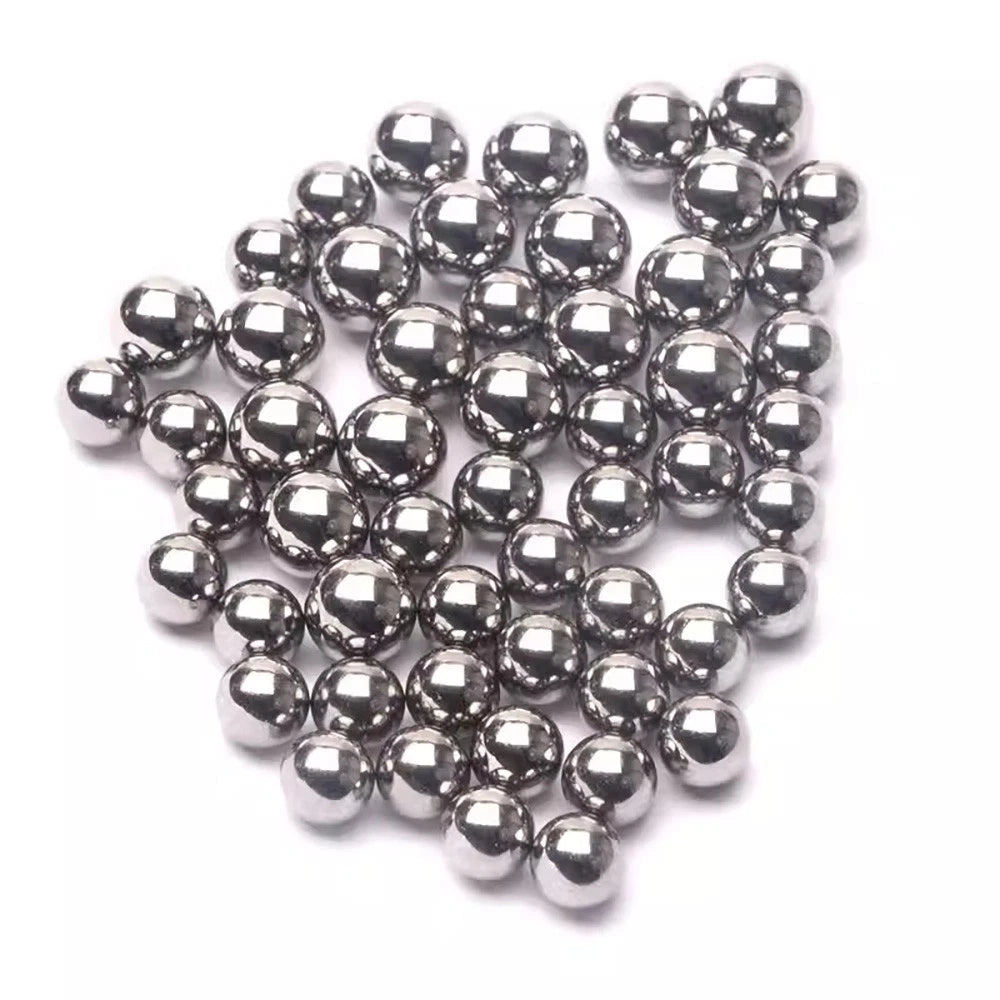
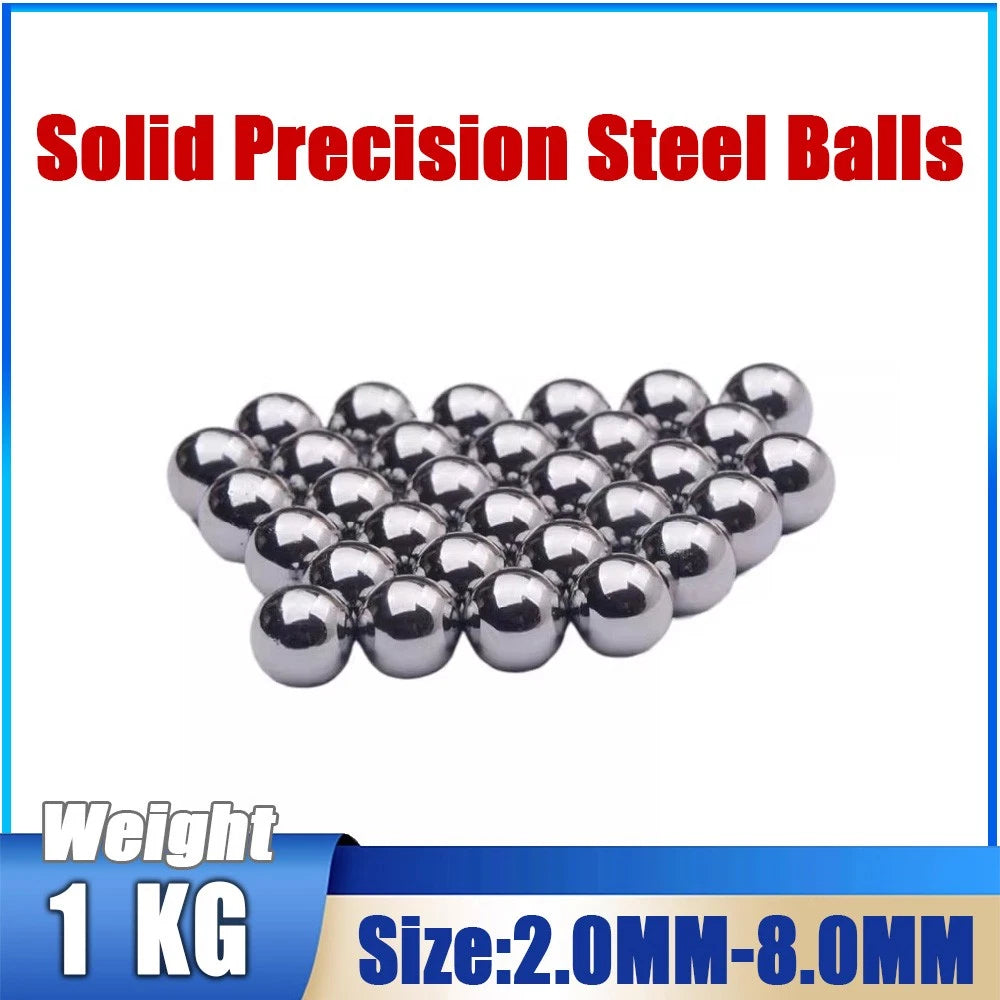
This listing covers a 1 kg quantity of carbon steel ball bearings available in 20 size options ranging from 2.0mm (approx. 0.079 in) to 8.0mm (approx. 0.315 in). Each ball is manufactured from carbon steel, offering a balance of hardness and toughness suited to moderate-load rolling and sliding contact applications. Surface finish is smooth and consistent across the batch, supporting low-friction operation in dry or lightly lubricated environments.
Typical use cases include replacement rolling elements in deep-groove ball bearings, load-distributing media in vibration finishing and tumbling machines, and precision spacers or detent balls in mechanical assemblies. Long-tail applications include DIY linear rail projects, catapult and slingshot ammunition for hobbyists, and decorative metalwork where uniform spheres are required.
| Material | Carbon Steel |
|---|---|
| Diameter Range | 2.0mm – 8.0mm (approx. 0.079 in – 0.315 in) |
| Available Sizes | 2.0 / 2.5 / 3.0 / 3.5 / 4.0 / 4.5 / 4.8 / 5.0 / 5.5 / 5.90 / 5.95 / 6.0 / 6.5 / 6.90 / 6.95 / 7.0 / 7.5 / 7.90 / 7.95 / 8.0 mm |
| Quantity per Order | 1 kg |
| Surface Finish | Smooth (ground) |
| Hardness | See variant options |
| Grade / Tolerance | See variant options |
| Finish / Coating | Bare carbon steel (uncoated) |
| Recommended Use | Bearing replacement, tumbling media, detent balls, linear motion, DIY mechanical assemblies |
| Corrosion Resistance | Moderate — apply light oil for storage in humid environments |
Check the bearing manufacturer's datasheet for the rolling element diameter specification. Match that figure to the size option in this listing. If your bearing uses imperial sizing, convert: for example, 1/4 inch ≈ 6.35mm — in that case, select the nearest metric size or contact us to confirm availability of closer tolerances.
Carbon steel ball bearings are suitable for moderate radial and axial loads in standard bearing housings and ball screw assemblies. They are not recommended for high-impact or heavy shock-load applications where hardened chrome steel (52100) or ceramic balls would be more appropriate. For light-to-medium duty use, carbon steel performs reliably.
Carbon steel is susceptible to surface oxidation in humid or wet conditions. For storage, apply a thin coat of machine oil or anti-rust spray. For applications exposed to moisture, consider stainless steel ball bearings instead. In dry or lightly lubricated environments, carbon steel performs well without additional treatment.
Yes. Steel balls are commonly used as burnishing media in rotary and vibratory tumblers to polish and work-harden metal parts. The 1 kg bulk quantity is practical for topping up existing media loads. Select a ball diameter appropriate to the part geometry — smaller balls (2.0–4.0mm) reach tighter recesses, while larger balls (5.0–8.0mm) provide more mass per piece for faster burnishing.
The piece count varies significantly by diameter. As a rough guide: 2.0mm balls yield approximately 15,000–18,000 pieces per kg, while 8.0mm balls yield approximately 250–300 pieces per kg. If you need an exact count for a specific size, contact us before ordering.
These balls are sized in metric millimeters, which aligns with ISO-standard bearing housings used globally including US and EU markets. Always verify the rolling element diameter in your bearing's specification sheet. For imperial-sized bearings, use a conversion chart and select the closest available metric size.
These near-identical sizes exist because some bearing standards specify non-round metric values for rolling elements. The 0.05mm difference matters in precision applications where the bearing race is machined to a tight tolerance. For general-purpose use, 6.0mm is the standard choice. Select 5.90mm or 5.95mm only if your bearing datasheet explicitly calls for that diameter.