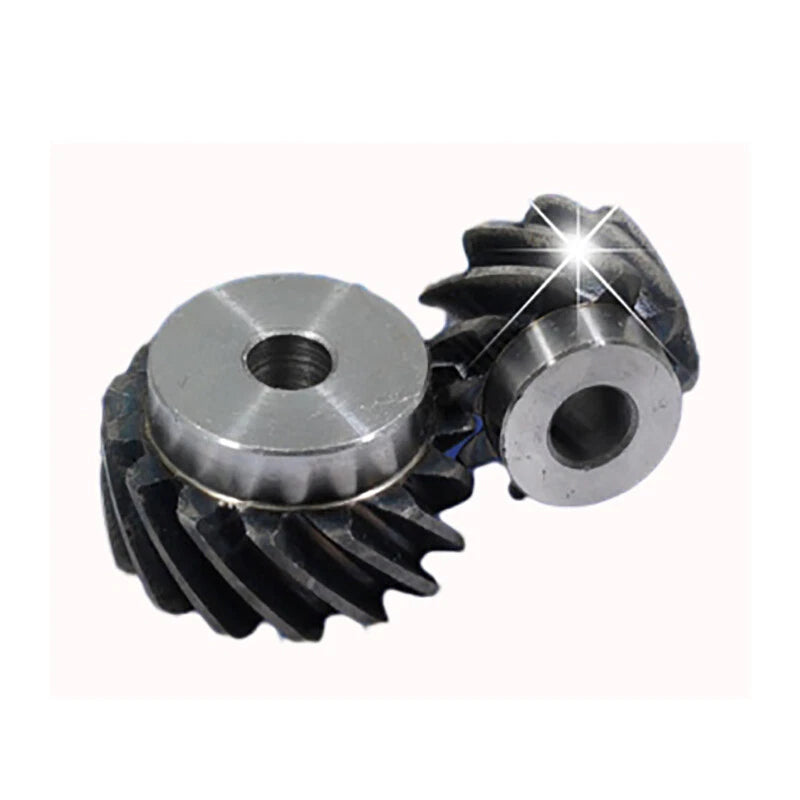
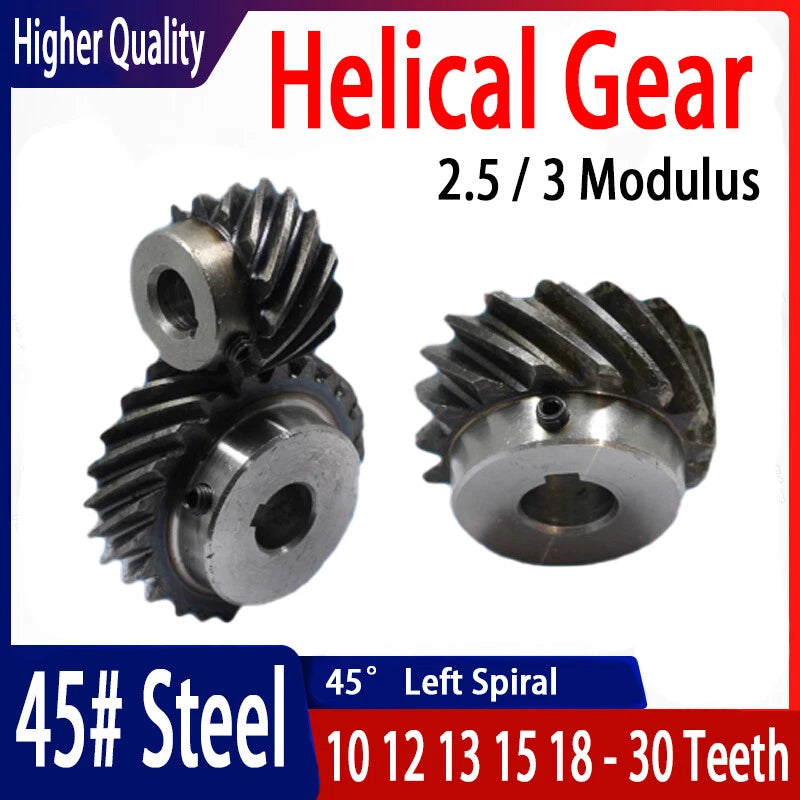
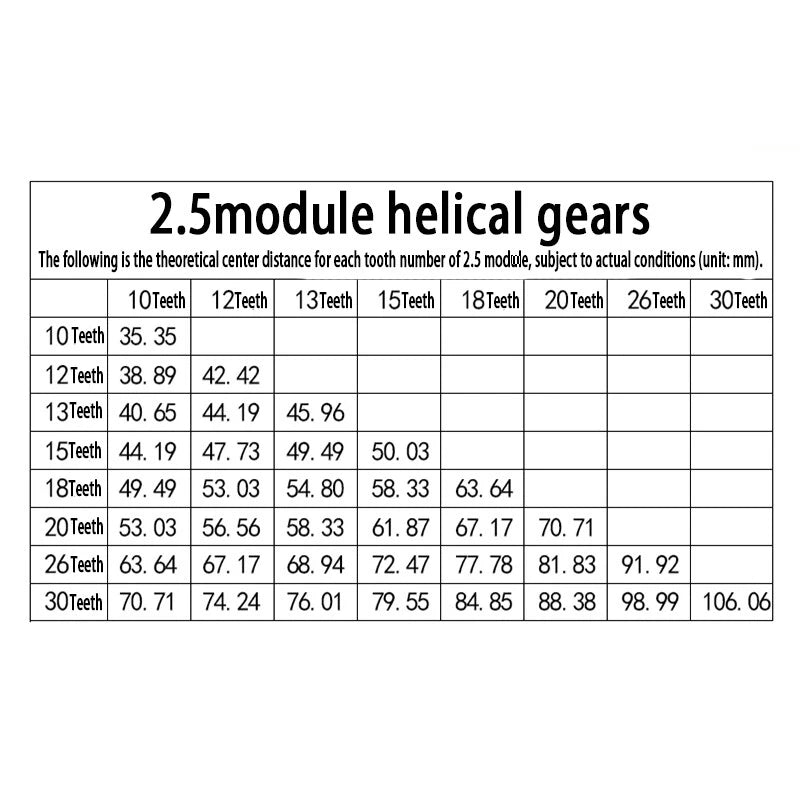
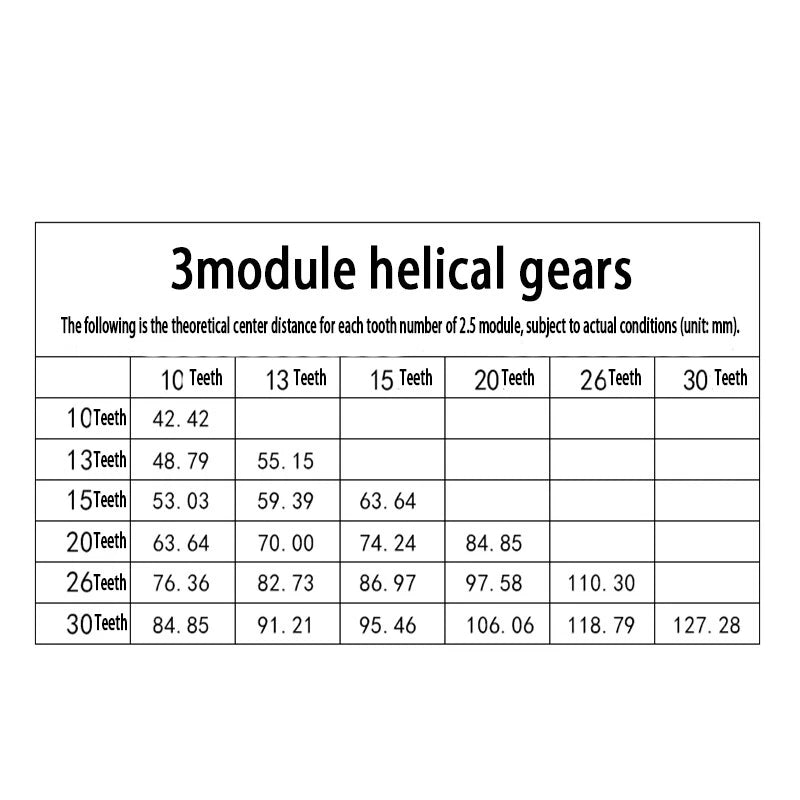
2.5 3 Mod Helical Gear With Step 45°Left Spiral Motor Transmission Gear 45#Steel

No reviews

Price:
Sale price$24.45 USD
Stock:
In stock (500 units), ready to be shipped

Payment & Security

Ach Direct Debit Amazon American Express Apple Pay Bancontact BLIK Diners Club Discover EPS Google Pay iDEAL Wero JCB Maestro Mastercard Multibanco MobilePay PayPal Przelewy24 Shop Pay Twint Union Pay USDC Visa

Your payment information is processed securely. We do not store credit card details nor have access to your credit card information.

Limited Offer — Spend More, Save More
Spend $55+
Save $5
Spend $100+
Save $10
Spend $200+
Save $25
HomeDIYer DIY Expert Support

DIY Expert Support

Get fitment advice & recommendations

Mon–Fri  8:30 AM – 8:00 PM
24-Hour Fast Ship
Arrives in 3–14 Days
Worldwide Shipping
30-Day Returns
1 tree planted with every purchase

Description

Left Spiral Helical Gear — Precision 45° Stepped Transmission for CNC & Motor Drives

When your motion-control build demands smooth, low-noise power transfer, a mismatched or poorly machined gear becomes the weakest link in the entire drivetrain. These left-spiral helical gears are engineered for makers, automation integrators, and small-batch manufacturers who need reliable stepped transmission components without sourcing from industrial distributors.

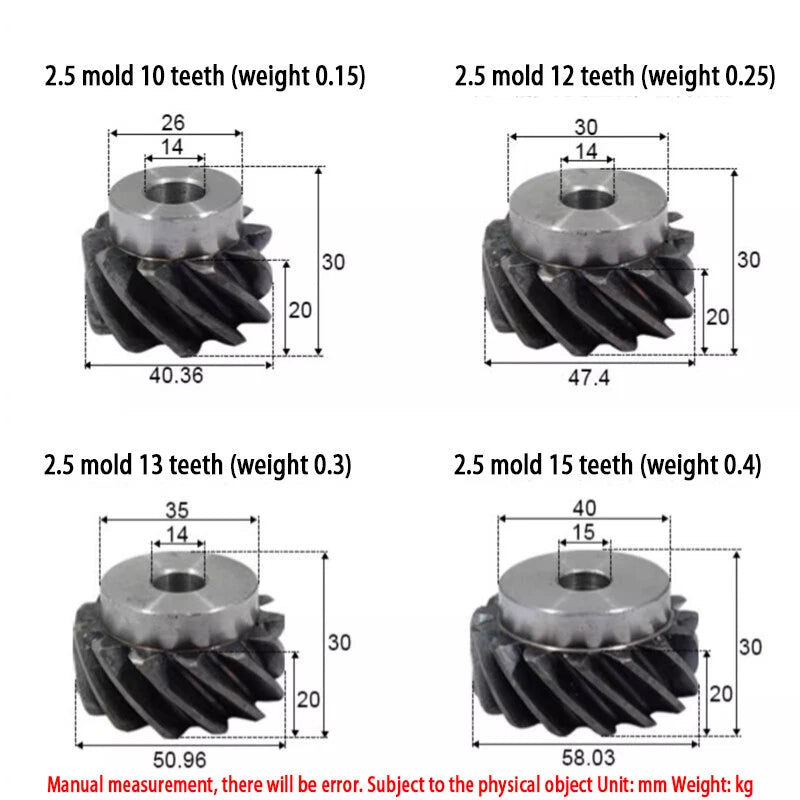
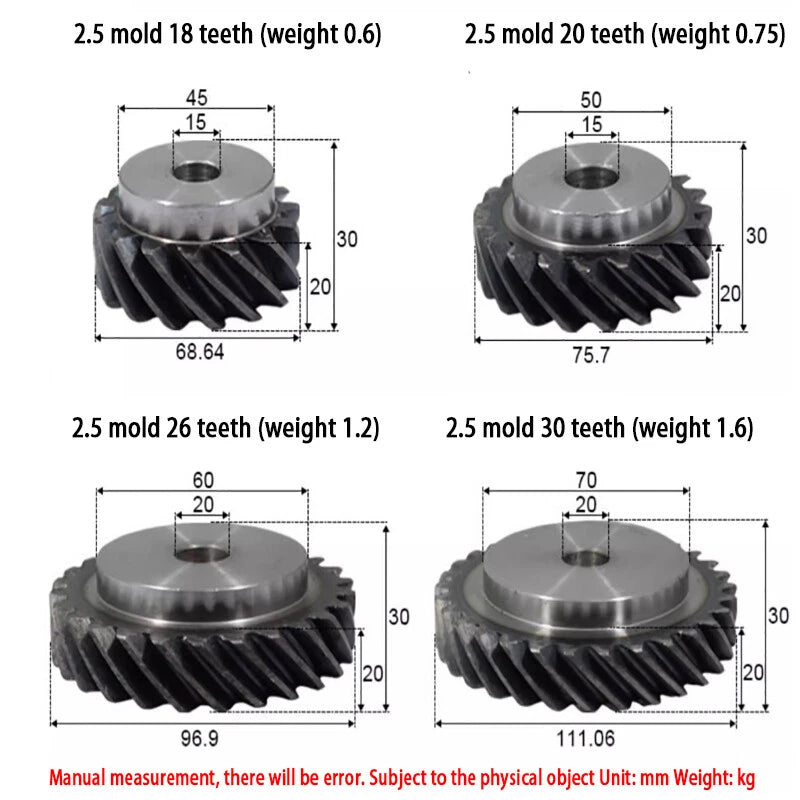
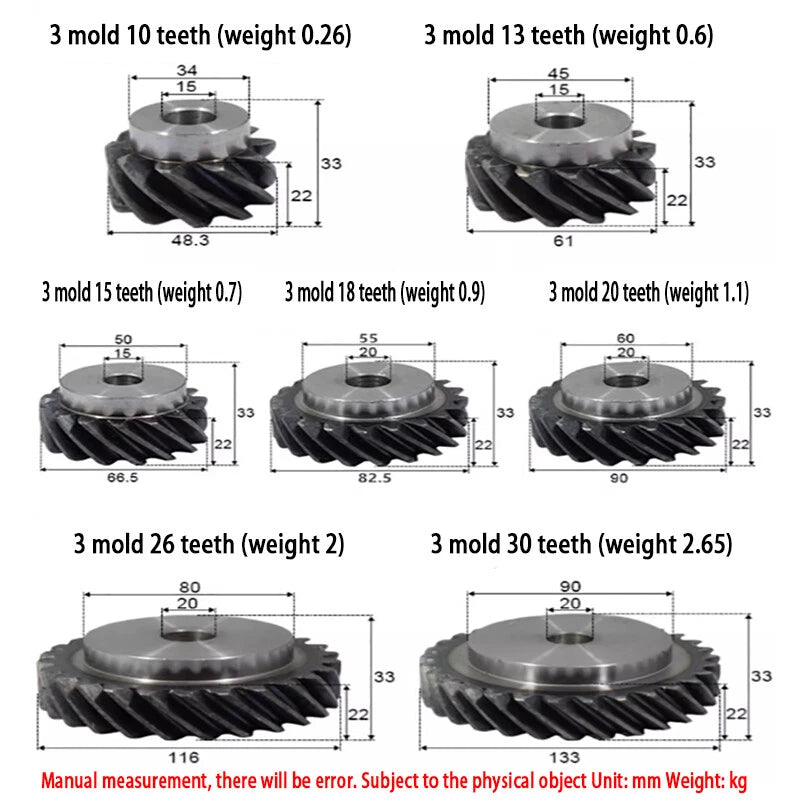
Each gear is machined from 45# medium-carbon steel and features a 45° left-hand helix angle with a precision-cut step bore. Available in Modulus 2.5 and Modulus 3, with tooth counts ranging from 10 to 30 teeth. Outer diameter varies by modulus and tooth count — typically 27.5 mm to 96 mm (approx. 1.08 in to 3.78 in). Face width is typically 20–30 mm (approx. 0.79–1.18 in).

Typical use cases include CNC router Z-axis drives, stepper and servo motor gearboxes, robotic joint transmission assemblies, and custom left-hand helical gear pair replacements in industrial equipment.

⚙️ Compatibility: Designed to mesh with matching right-spiral helical gears of the same modulus (2.5 or 3) and 45° helix angle. Confirm bore diameter and keyway dimensions against your shaft specs before ordering.

✅ Key Features of These Left Spiral Helical Gears

🔩
45# Medium-Carbon Steel Construction

Machined from 45# steel for a balance of machinability, tensile strength (typically 600–800 MPa), and wear resistance suited to continuous motor transmission loads.

🔄
45° Left-Hand Helix Angle

The 45° left-spiral geometry distributes tooth load across a wider contact area than spur gears, reducing vibration and operating noise in high-speed motor drives.

📐
Dual Modulus Options — 2.5 & 3

Choose Modulus 2.5 for compact, lighter-duty assemblies or Modulus 3 for higher torque applications. Both series share the same 45° helix for easy pairing.

🪜
Precision Step Bore Design

The stepped bore profile allows secure shaft seating and simplified axial positioning without additional spacers, saving assembly time in tight gearbox housings.

🦷
Wide Tooth Count Range — 10 to 30 Teeth

Eight tooth-count variants per modulus let you dial in your gear ratio precisely. Pair with a matching right-spiral gear of the same modulus to achieve ratios from 1:1 to 3:1 and beyond.

🛡️
Surface Treatment for Extended Service Life

Gear flanks are finished to reduce surface roughness, supporting consistent lubrication film retention and extending service intervals in enclosed gearbox environments.

📐 Technical Specifications — Helical Gear

Material 45# Medium-Carbon Steel
Helix Angle 45°
Spiral Direction Left Spiral (Left-Hand)
Available Modulus 2.5 / 3
Tooth Count Options 10, 12, 13, 15, 18, 20, 26, 30 Teeth
Bore Type Stepped Bore
Outer Diameter See variant options
Face Width Typically 20–30 mm (0.79–1.18 in)
Bore Diameter See variant options
Surface Finish Precision-machined, reduced surface roughness
Hardness See variant options
Weight See variant options
Quantity 1 PCS per order (multi-pack options available)

❓ Frequently Asked Questions

How do I choose between Modulus 2.5 and Modulus 3?

Modulus 2.5 gears are smaller and lighter, making them suitable for compact assemblies and lighter torque loads. Modulus 3 gears have larger teeth and a higher load-carrying capacity, making them the better choice for higher-torque motor drives and heavier-duty gearboxes. Both share the same 45° left-hand helix angle, so they can be paired with matching right-spiral gears of the same modulus.

What right-spiral gear do I need to pair with this left-spiral gear?

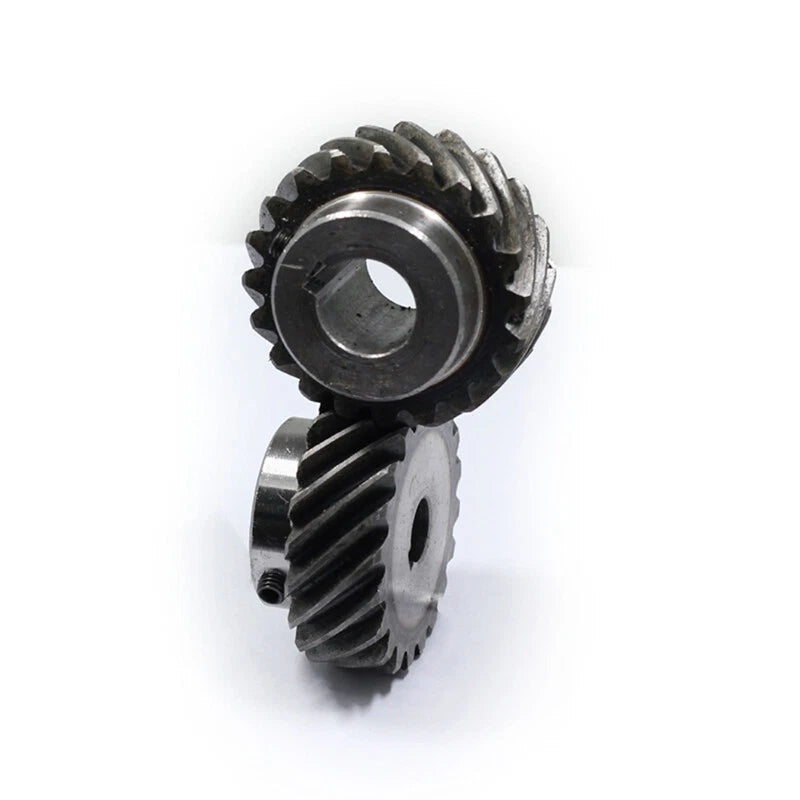
Left-spiral helical gears mesh with right-spiral helical gears of the same modulus and helix angle (45°). The mating gear must have the same modulus (2.5 or 3) and a matching tooth profile. Confirm the center distance and gear ratio you need, then select the appropriate tooth count for the driven gear.

What is the bore diameter and keyway size for each variant?

Bore diameter and keyway dimensions vary by tooth count and modulus. Please refer to the variant detail images or contact us to confirm the exact bore size before ordering to ensure compatibility with your shaft.

Is 45# steel strong enough for my application?

45# medium-carbon steel offers a tensile strength typically in the range of 600–800 MPa and is widely used in general-purpose gear manufacturing. It is suitable for moderate-speed, moderate-torque motor transmission applications. For very high-load or high-speed environments, consider whether a heat-treated or alloy steel variant would better suit your requirements.

Are these gears corrosion-resistant?

45# steel has moderate corrosion resistance. For applications in humid or mildly corrosive environments, we recommend applying a light machine oil or grease coating during installation and maintaining regular lubrication. For highly corrosive environments, a stainless steel or coated gear may be more appropriate.

Can I use these gears in a CNC router or 3D printer drivetrain?

Yes. These left-spiral helical gears are well-suited for CNC router axis drives, stepper motor gearboxes, and similar precision motion-control applications where smooth, low-backlash power transfer is important. Ensure the modulus, tooth count, and bore diameter match your existing drivetrain components.

What tooth count should I choose for a specific gear ratio?

Gear ratio is determined by dividing the tooth count of the driven gear by the tooth count of the driving gear. For example, pairing a 10-tooth driving gear with a 20-tooth driven gear gives a 2:1 reduction ratio. Select your tooth counts based on the input/output speed ratio your application requires.

🛒 Select your Modulus and Teeth & Amount above, then add to cart.

You may also like

Recently viewed