The chain is fine...but I ordered the wrong size. Nine links of the chain I ordered equals six of the size I wanted. My error...
How can I straighten out the springs? I can't use them coil uo as is.
Your payment information is processed securely. We do not store credit card details nor have access to your credit card information.
Get fitment advice & recommendations
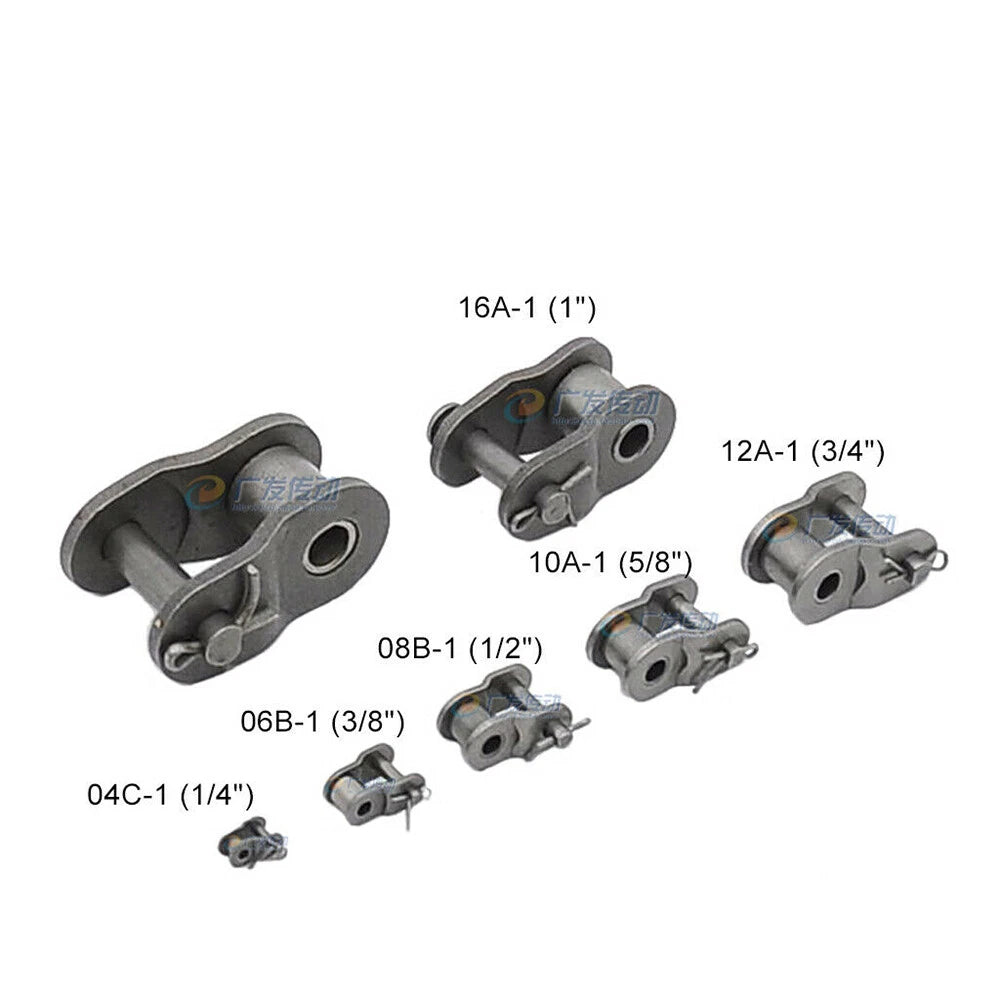
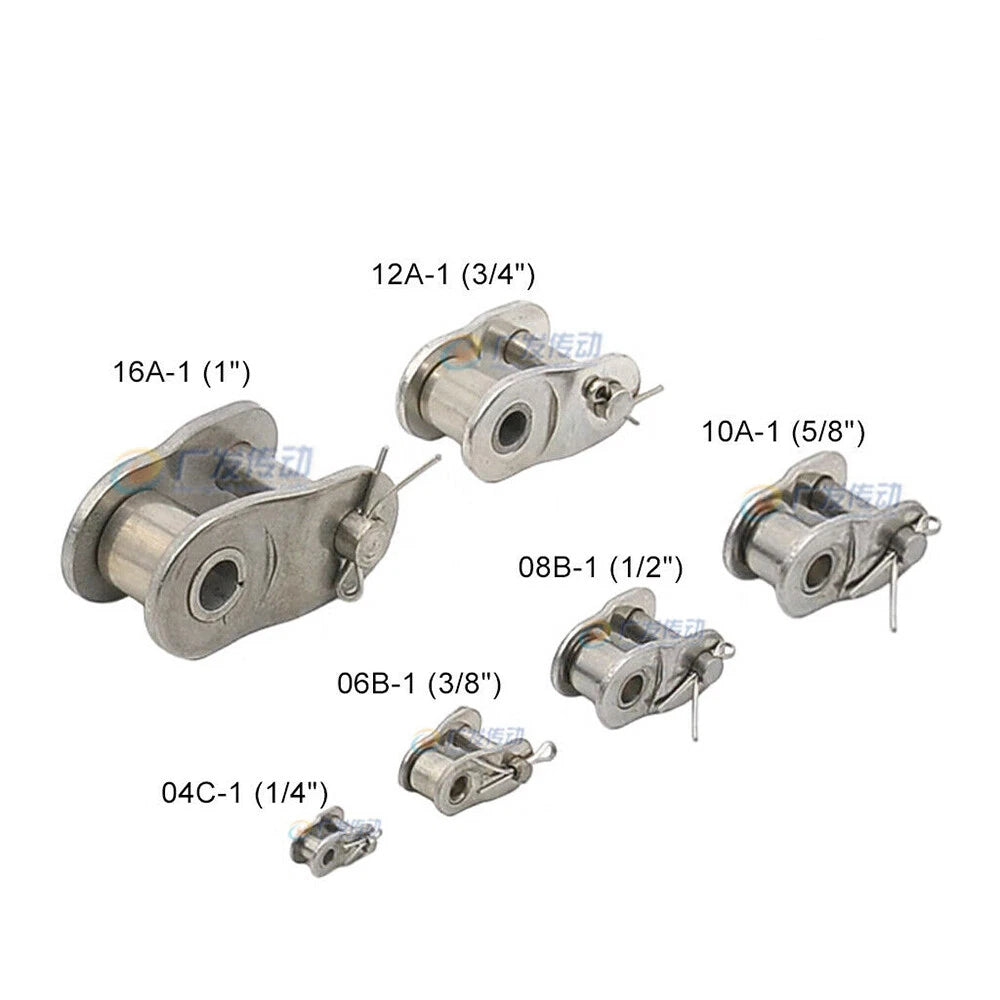
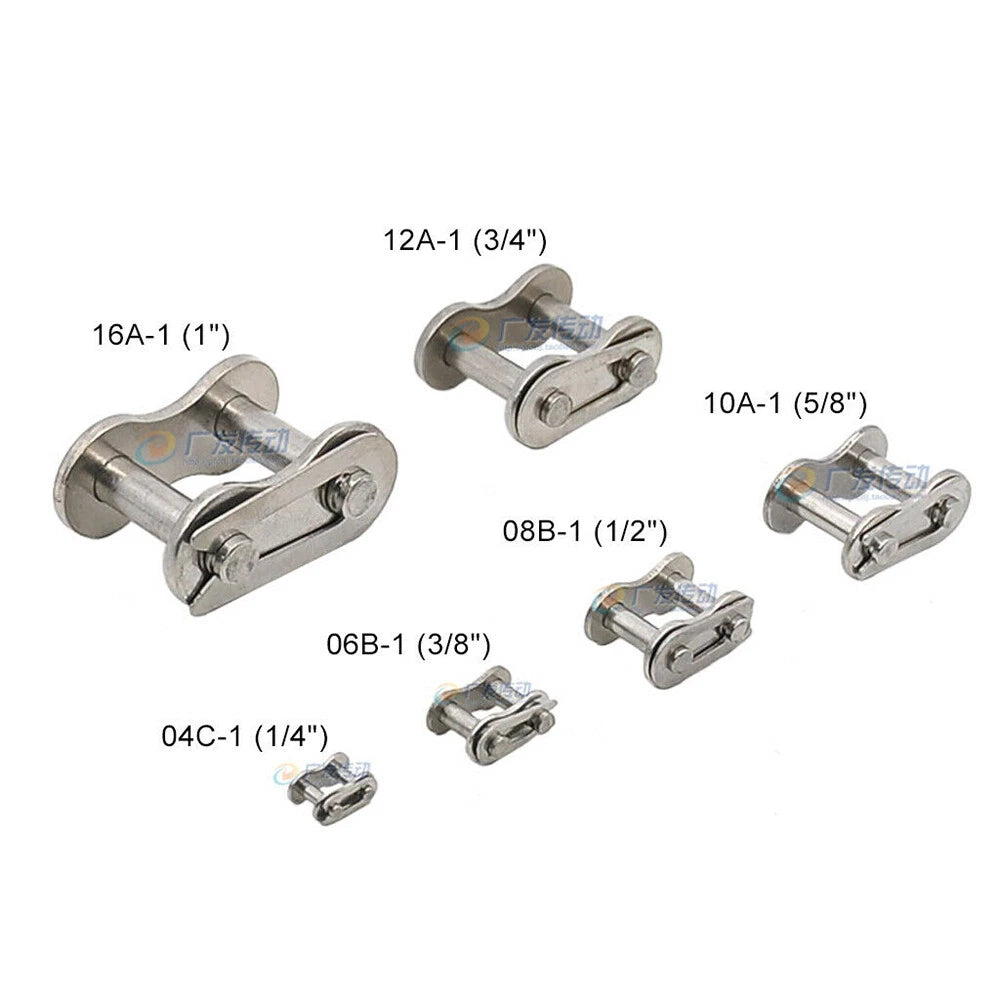
When a roller chain snaps mid-run or needs to be shortened for a new drive layout, finding the right connecting link fast is critical — whether you're a maintenance technician keeping a conveyor line moving, a fabricator assembling a custom power-transmission system, or a DIY builder fitting a go-kart or mini-bike drivetrain. These simplex and duplex roller chain connecting links are stocked across the full ANSI range so you can close out a repair or build without waiting on special orders.
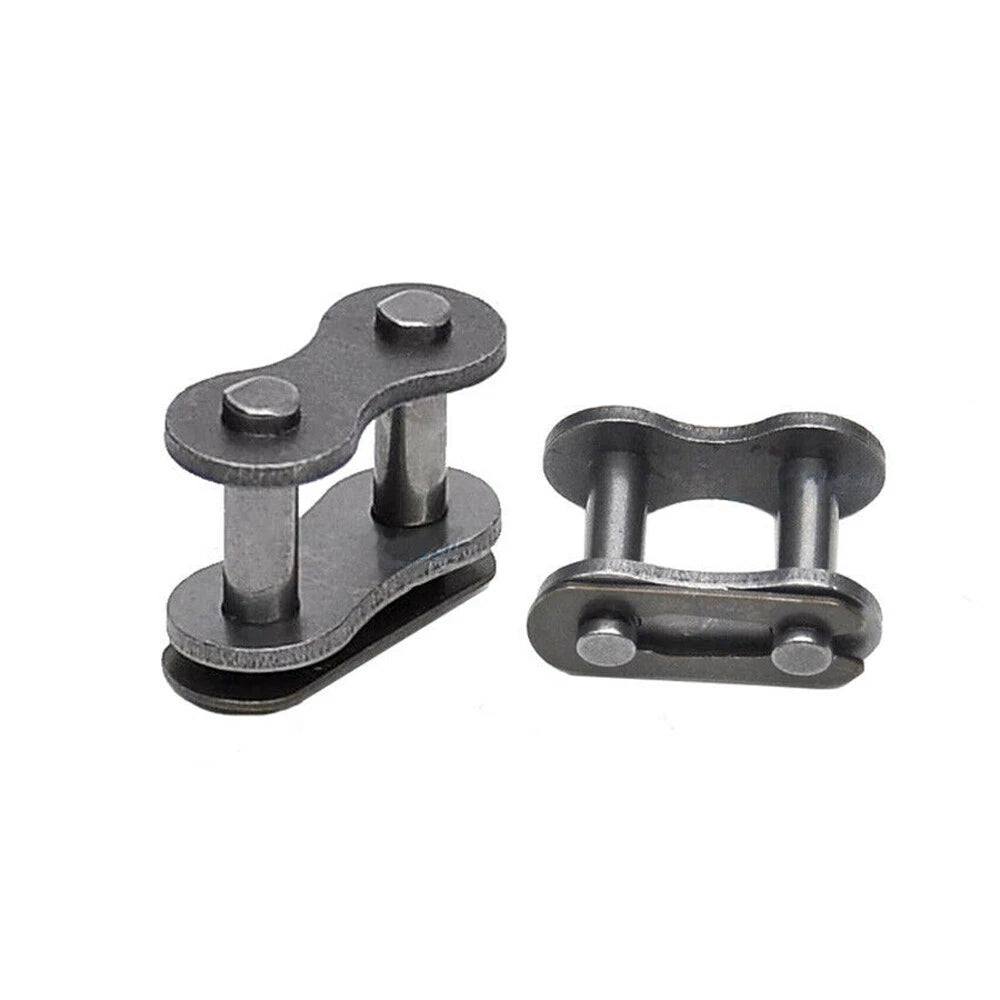
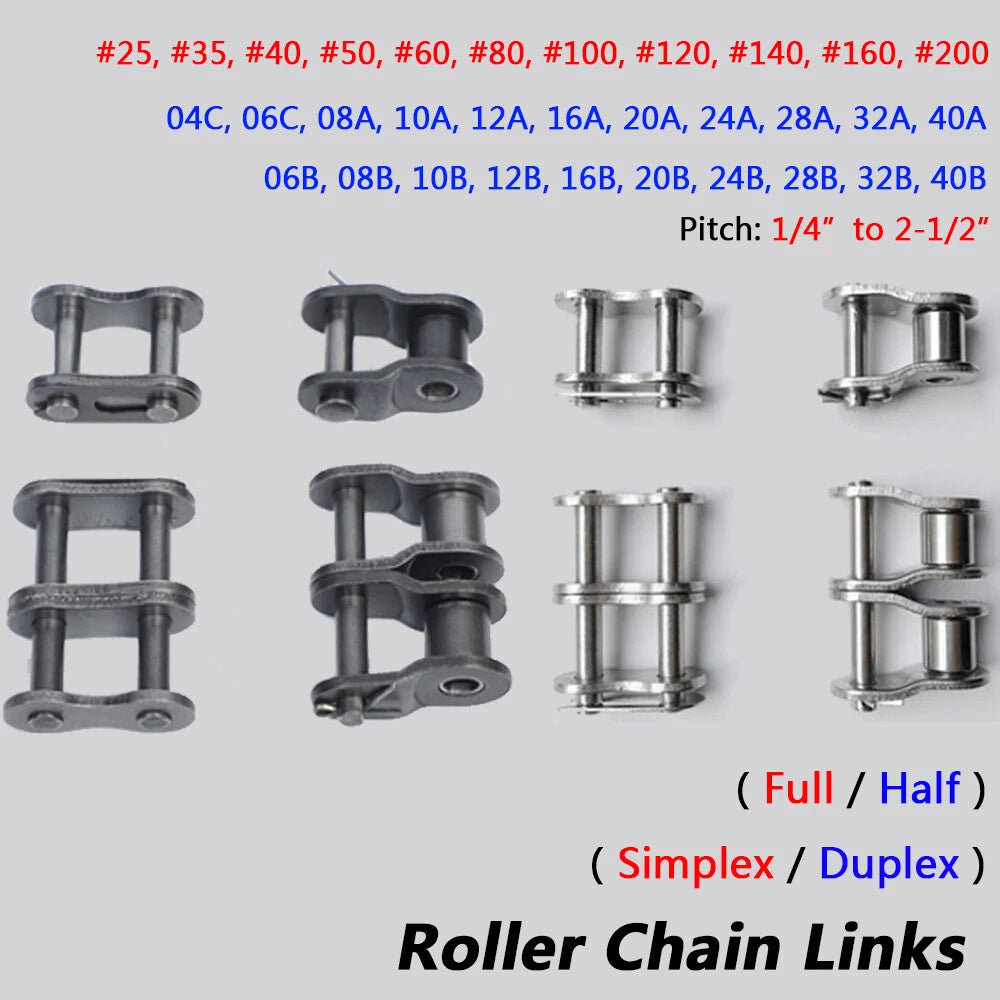
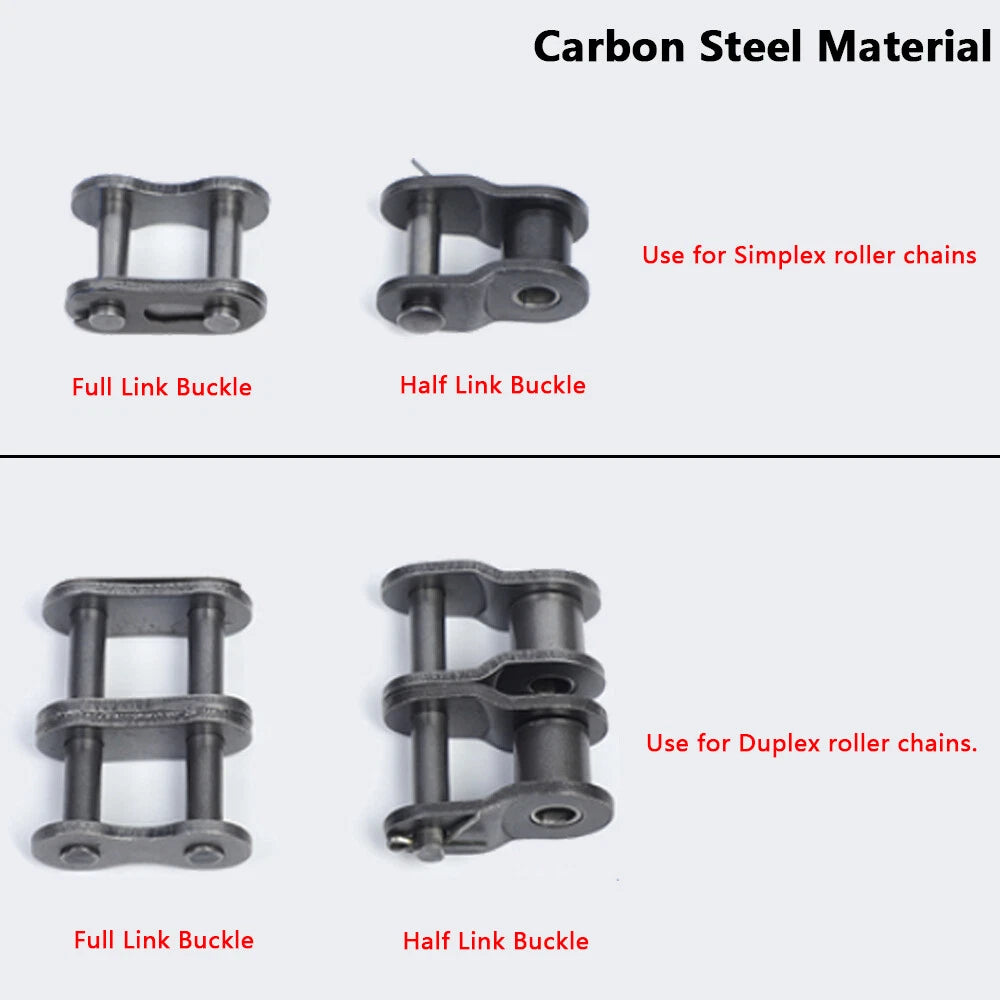
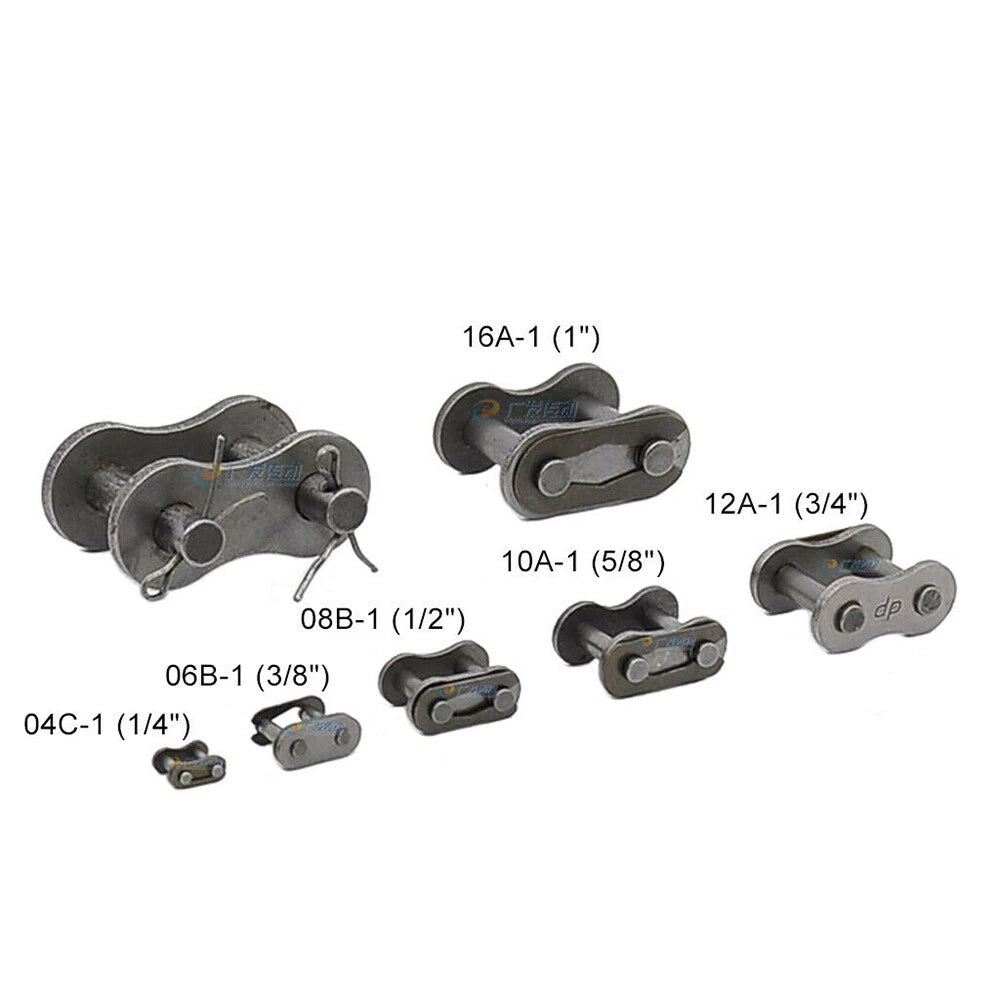
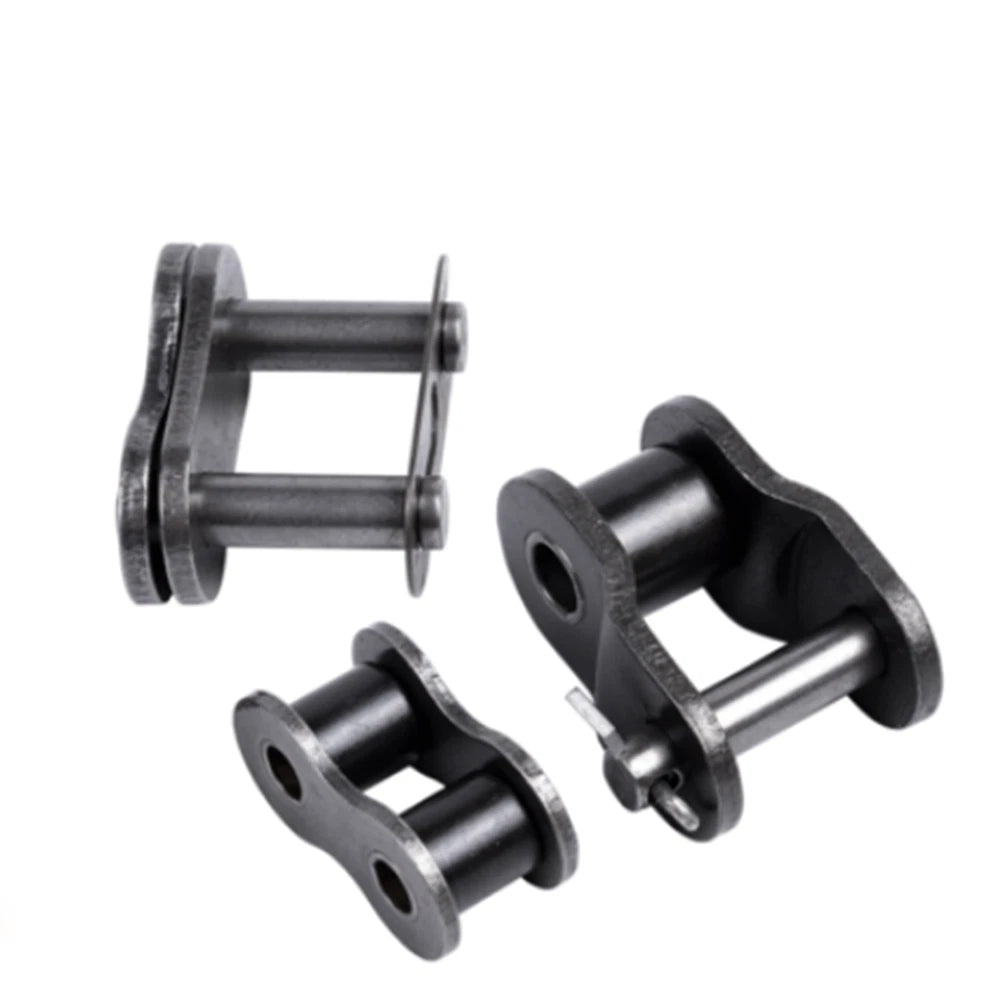
Each link consists of a side plate, two pins, and a spring clip or cotter pin retainer (style varies by model), machined to ANSI/ISO roller chain standards. Available in 304 stainless steel for corrosion-sensitive environments or carbon steel for general-purpose drives. Pitch range spans 1/4 inch (6.35 mm) for light #25 chain up to 2 inch (50.8 mm) for heavy-duty #160 and #200 chain, with select sizes extending to 2-1/2 inch (63.5 mm). Full link and half link (offset link) styles are offered to suit both standard and length-adjustment applications.
Typical use cases include agricultural equipment chain repair, industrial conveyor maintenance with ANSI #40–#80 simplex chain, and custom go-kart or mini-bike builds using #35 or #40 duplex connecting links for compact drive systems.
Covers light-duty #25 (1/4" pitch) through heavy-duty #200 (2-1/2" pitch), letting you source the exact link for your drive without substitution.
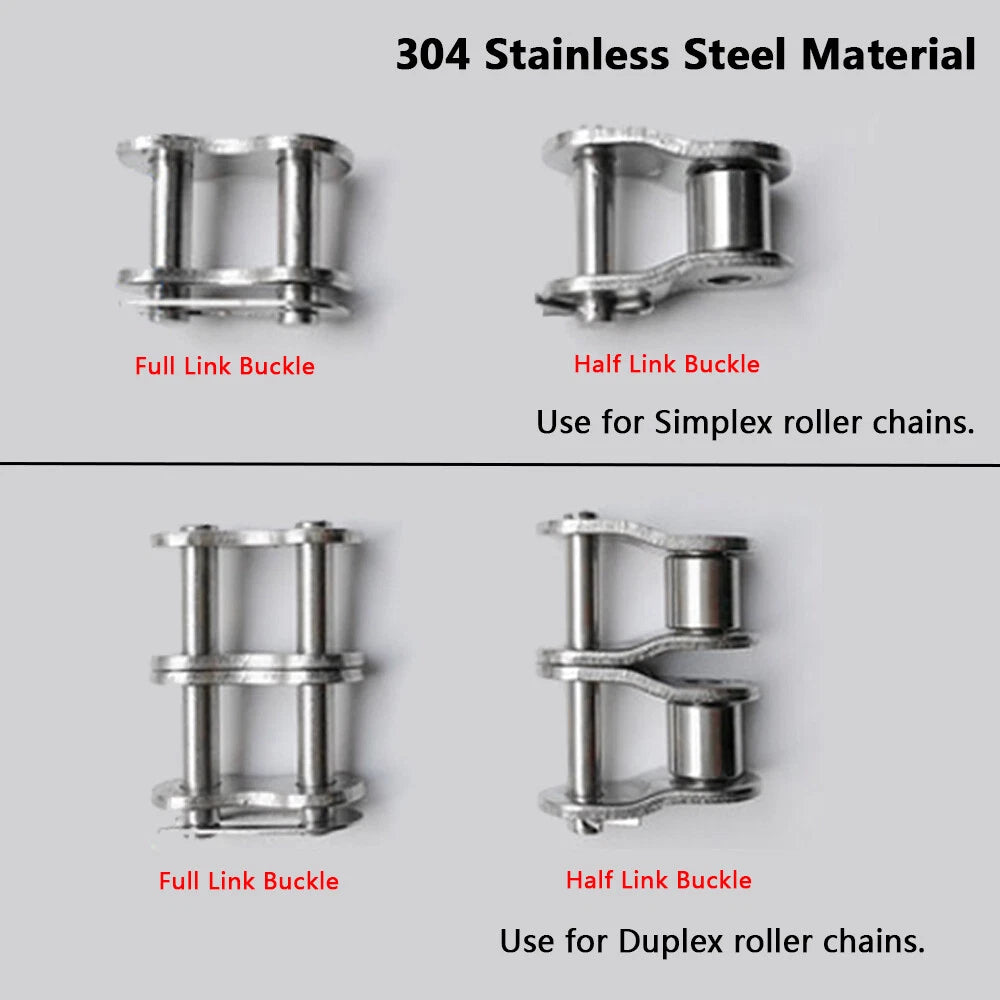
Full (outer) connecting links for standard chain closure; half (offset) links for odd-number link-count adjustments — both styles available across most sizes.
304 stainless variants resist rust and mild chemical exposure, suited for food-adjacent, outdoor, or wash-down environments where carbon steel would corrode.
Carbon steel links deliver solid tensile strength for standard industrial and recreational power-transmission applications at a cost-effective price point.
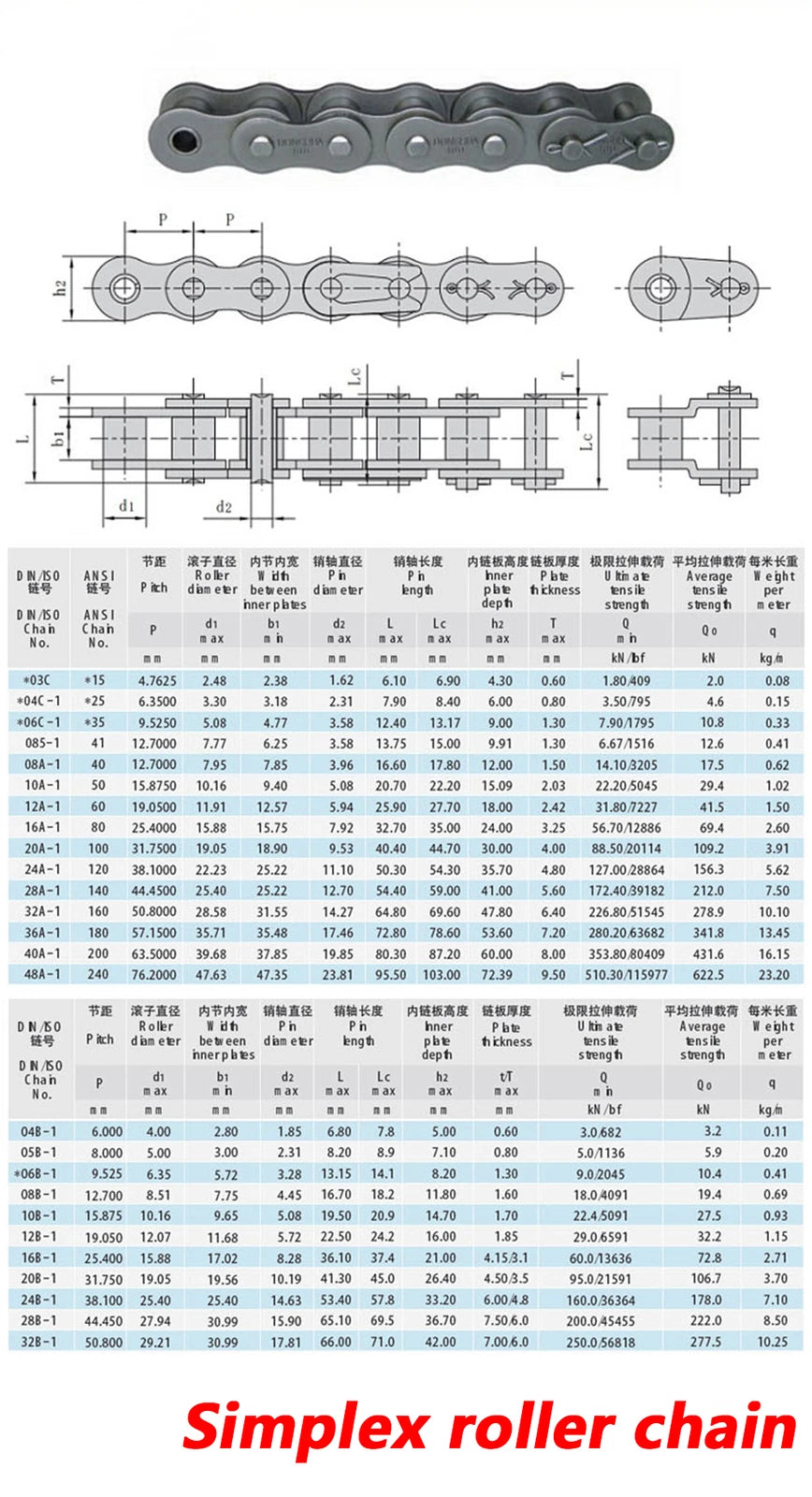
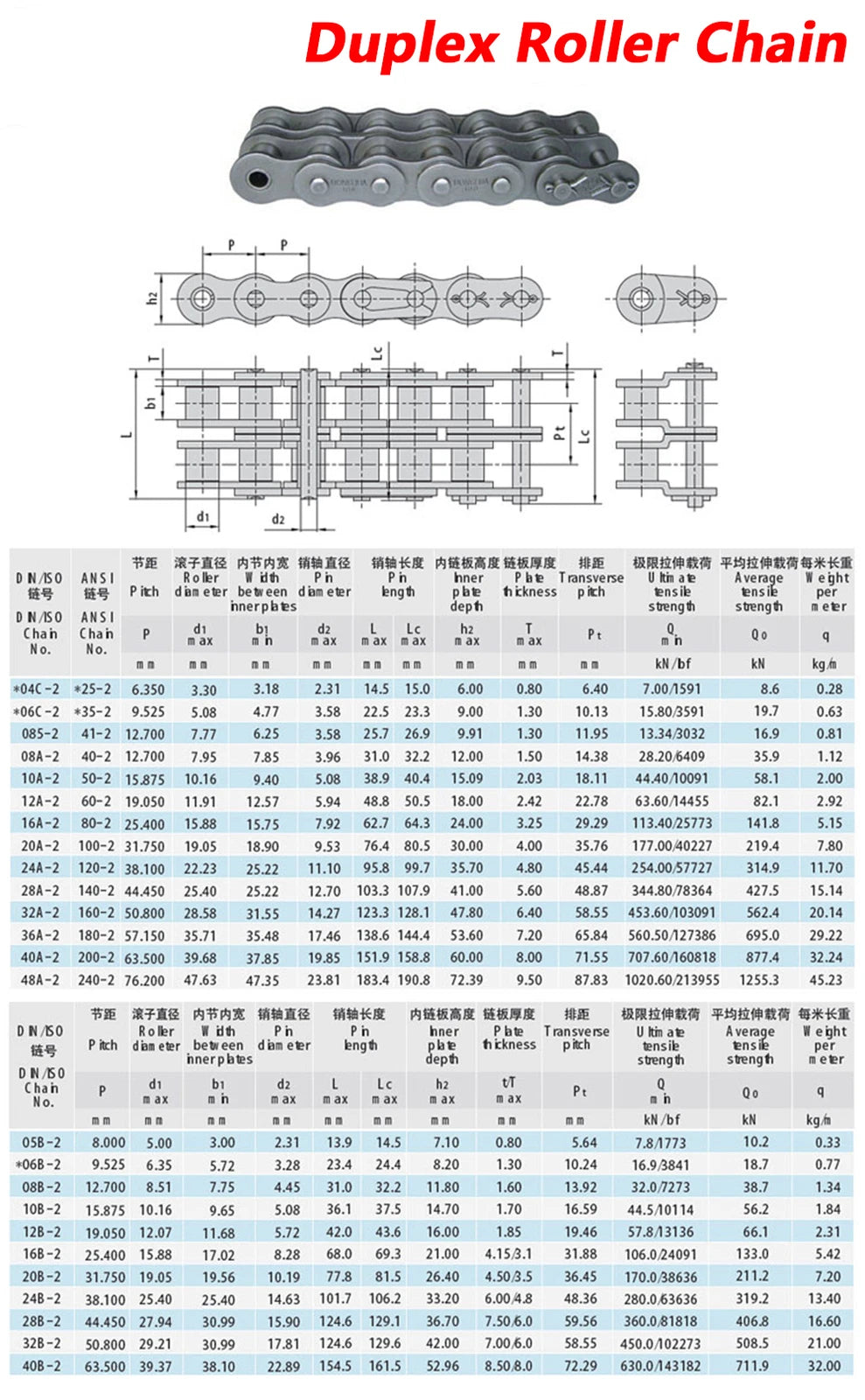
Manufactured to ANSI B29.1 / ISO 606 chain dimensions, ensuring interchangeability with standard sprockets and chain from major drive manufacturers.
Single-strand (simplex) and double-strand (duplex) connecting links stocked together, so one product listing covers both common drive configurations.
| Chain Standard | ANSI B29.1 / ISO 606 |
|---|---|
| Chain Series Range | #25 to #200 |
| Pitch Range | 1/4 inch (6.35 mm) – 2-1/2 inch (63.5 mm) |
| Strand Types | Simplex (single-strand), Duplex (double-strand) |
| Link Styles | Full Link (outer plate), Half Link (offset plate) |
| Material Options | 304 Stainless Steel, Carbon Steel |
| Finish | See variant options |
| Retainer Type | See variant options |
| Tensile Strength | See variant options |
| Quantity per Pack | 1 connecting link (1 set) |
A full connecting link (outer link) is the standard choice when your chain has an even number of links — it closes the chain loop using two outer plates and pins. A half link (offset link) is used when your chain has an odd number of links, as it bridges the gap between an inner and outer plate. For most repairs and replacements, a full link is correct. If you're shortening a chain by one link and end up with an odd count, use a half link.
Not always interchangeably. ANSI #40 (08A) and the ISO 08B designation share the same 1/2 inch (12.7 mm) pitch but differ in roller diameter, inner width, and plate dimensions. Always match the connecting link model code (08A vs. 08B) to your existing chain's specification. Check the chain's side plate markings or manufacturer datasheet to confirm the correct series before ordering.
304 stainless steel connecting links are suitable for light-to-moderate load drives where corrosion resistance is the priority — such as food processing conveyors, outdoor equipment, or wash-down environments. For high-load, high-speed industrial drives, carbon steel typically offers higher tensile strength. If your application involves heavy shock loads or continuous high-speed operation, verify the tensile rating of the specific stainless variant against your drive's design load.
Thread the two pins through the chain ends and the outer side plate. Slide the spring clip (also called an E-clip or snap clip) onto the pin grooves with the closed end of the clip facing the direction of chain travel. This ensures the clip cannot be pushed off by the chain's motion. Use needle-nose pliers to seat the clip fully into both pin grooves. Never run a chain with a clip installed in the wrong orientation.
No. Simplex (single-strand) and duplex (double-strand) connecting links are not interchangeable. A duplex link has a wider inner plate to span both strands of the chain. Using a simplex link on duplex chain will result in misalignment and immediate failure. Always select the link that matches your chain's strand count exactly.
ANSI chain numbers (e.g., #40, #50, #80) are the North American standard, while ISO numbers (e.g., 08A, 10A, 16A) are the international standard. The pitch is the same for equivalent series — ANSI #40 and ISO 08A both have 1/2 inch (12.7 mm) pitch — but plate and roller dimensions may differ slightly between A-series (ANSI-compatible) and B-series (European) variants. The product listings on this page include both designations in the variant name so you can match your existing chain directly.
The easiest method is to measure the pitch — the center-to-center distance between two adjacent pins. #25 = 1/4" (6.35 mm), #35 = 3/8" (9.525 mm), #40 = 1/2" (12.7 mm), #50 = 5/8" (15.875 mm), #60 = 3/4" (19.05 mm), #80 = 1" (25.4 mm). You can also check the chain's side plate for a stamped number. If the chain is already removed, count the ANSI number from the sprocket tooth count and shaft center distance specifications in your equipment manual.