The chain is fine...but I ordered the wrong size. Nine links of the chain I ordered equals six of the size I wanted. My error...
How can I straighten out the springs? I can't use them coil uo as is.
Your payment information is processed securely. We do not store credit card details nor have access to your credit card information.
Get fitment advice & recommendations
When a worn or mismatched sprocket causes chain skip, premature wear, or unexpected downtime, the fix starts with a correctly dimensioned replacement. Makers, fabricators, and mechanical hobbyists who build go-karts, mini-bikes, conveyor systems, or custom power-transmission rigs need a sprocket that matches their chain pitch exactly — and holds up under continuous load without wobble or slop.
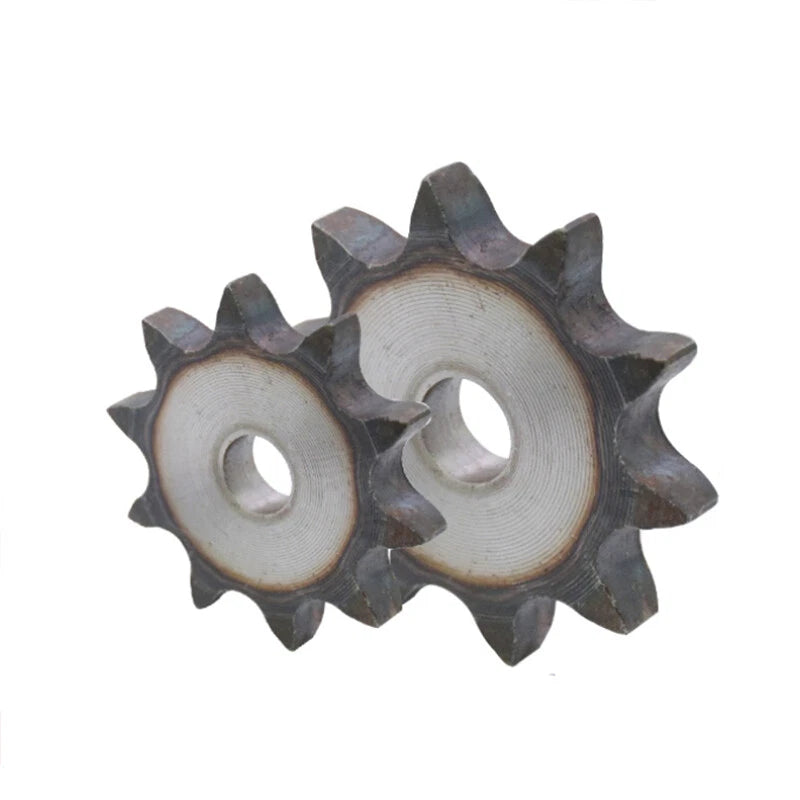
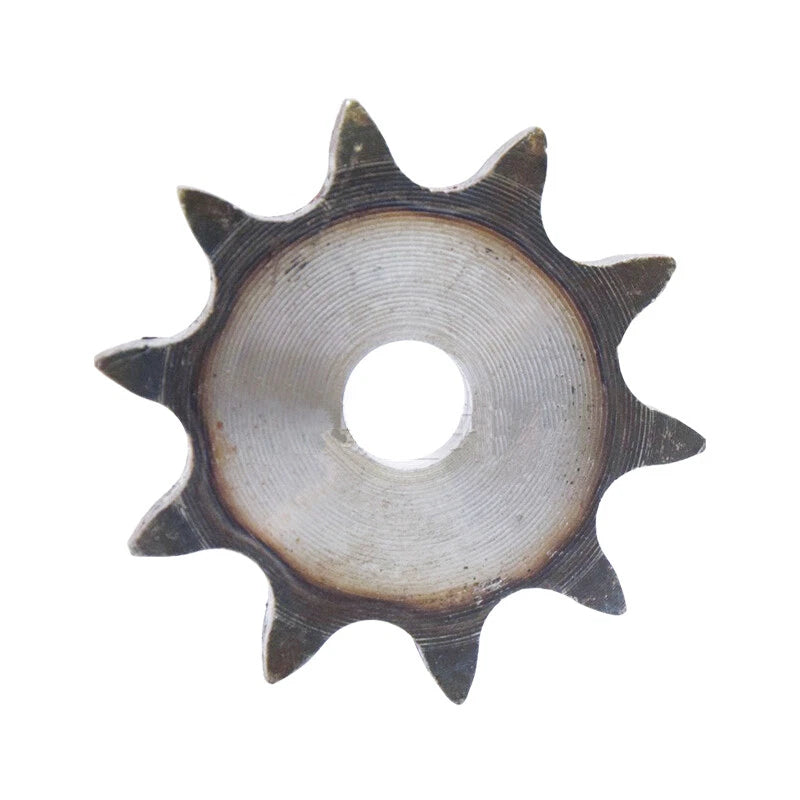
This flat-bore chain drive sprocket is machined from carbon steel with a natural or zinc-plated finish (see variant options for exact finish). Available in three ANSI chain series — #35 (pitch 9.525 mm / 0.375 in), #40 (pitch 12.7 mm / 0.5 in), and #50 (pitch 15.875 mm / 0.625 in) — with tooth counts ranging from 30T to 45T. The flat-bore hub style accepts standard set-screw or custom bore machining, making it straightforward to adapt to your shaft diameter.
Typical use cases include go-kart and mini-bike final-drive assemblies using #35 or #40 chain, light industrial conveyor drives running 06B or 08B chain, and DIY power-transmission projects where an #50 / 10A sprocket delivers the torque capacity needed for heavier loads. Long-tail search terms like "ANSI #40 sprocket 40 tooth flat bore" and "#35 roller chain sprocket replacement" describe exactly what this part covers.
| Chain Series | #35 / #40 / #50 (ANSI) |
|---|---|
| ISO Equivalent | 06B / 08B / 10A |
| #35 Chain Pitch | 9.525 mm (0.375 in) |
| #40 Chain Pitch | 12.7 mm (0.500 in) |
| #50 Chain Pitch | 15.875 mm (0.625 in) |
| Tooth Count Range | 30T – 45T (see variant options) |
| Hub Style | Flat bore (plain bore) |
| Bore Diameter | See variant options |
| Material | Carbon steel |
| Finish | See variant options |
| Strand | Single strand |
| Weight | See variant options |
Match the sprocket series to your existing roller chain. Measure the chain pitch (center-to-center distance between two consecutive pins): 9.525 mm (3/8 in) = #35 / 06B; 12.7 mm (1/2 in) = #40 / 08B; 15.875 mm (5/8 in) = #50 / 10A. Using a mismatched pitch will cause the chain to skip or jam immediately.
Divide the driver (engine/motor) sprocket tooth count by the driven (wheel/output) sprocket tooth count to get your reduction ratio. For example, a 10T driver and a 40T driven sprocket gives a 4:1 reduction. More teeth on the driven sprocket = more torque and lower top speed; fewer teeth = higher speed and less torque. Choose the tooth count that matches your target ratio.
This is a flat-bore (plain bore) sprocket — the bore diameter varies by variant (see variant options). Because it is a plain bore, a machinist can bore or ream it to a larger diameter and cut a keyway or drill set-screw holes to match your shaft. Do not exceed the maximum recommended bore for the hub size, as this reduces wall thickness and load capacity.
The sprockets are machined from carbon steel, which provides solid tensile strength for typical DIY and light industrial applications such as go-karts, mini-bikes, and conveyor drives. Exact load ratings depend on the chain series, tooth count, and operating speed. For heavy-duty or continuous industrial use, consult the chain manufacturer's power rating tables for the matching ANSI chain series.
Carbon steel has moderate corrosion resistance. For outdoor or high-humidity environments, apply a chain lubricant regularly and consider a zinc-plated variant if available (see variant options for finish). For fully corrosion-resistant applications, a stainless steel sprocket would be more appropriate.
Most go-karts and mini-bikes use #35 or #40 single-strand roller chain. Confirm your chain pitch, then select the matching series (#35 or #40) and the tooth count that gives your desired drive ratio. Also verify the bore diameter matches your axle — or plan to have the bore machined to size. If you are unsure, measure your existing sprocket's pitch diameter and tooth count before ordering.
Yes. #40 (08B) and #50 (10A) sprockets are commonly used in light industrial conveyor and power-transmission applications. Ensure the sprocket tooth count and bore are compatible with your conveyor shaft and chain. For continuous-duty industrial use, lubricate the chain regularly and inspect the sprocket teeth for wear at scheduled maintenance intervals.