The chain is fine...but I ordered the wrong size. Nine links of the chain I ordered equals six of the size I wanted. My error...
How can I straighten out the springs? I can't use them coil uo as is.
Your payment information is processed securely. We do not store credit card details nor have access to your credit card information.
Get fitment advice & recommendations
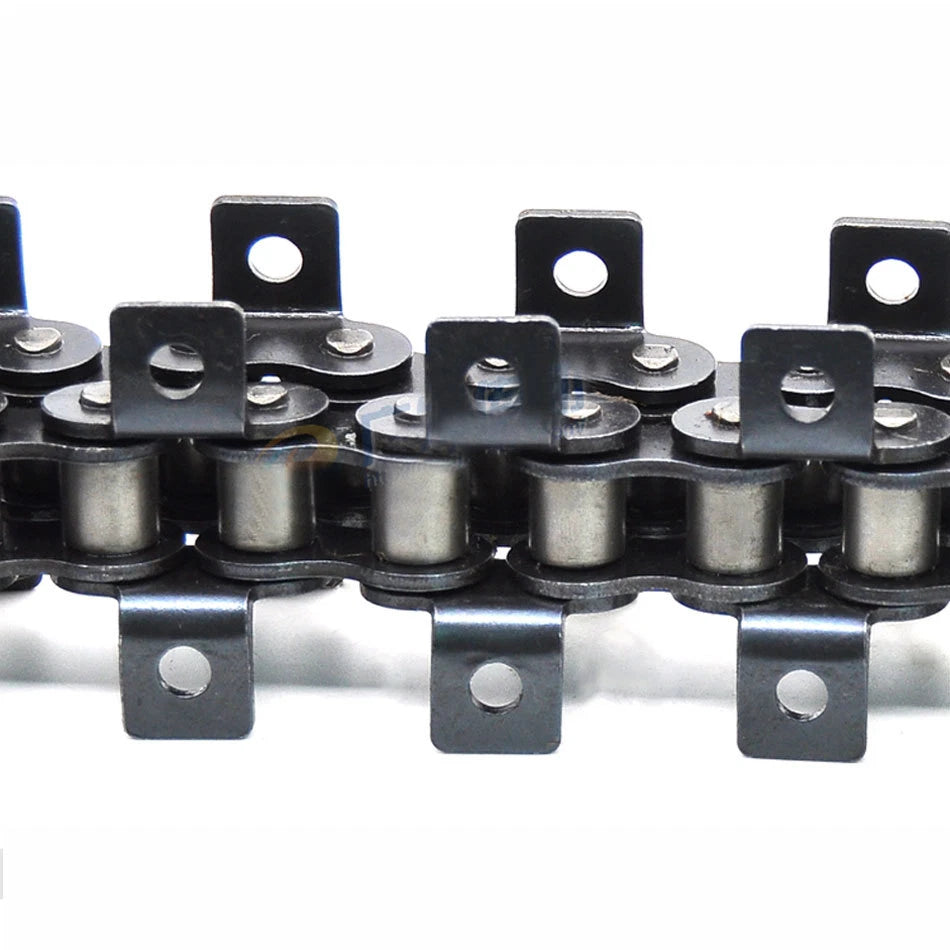
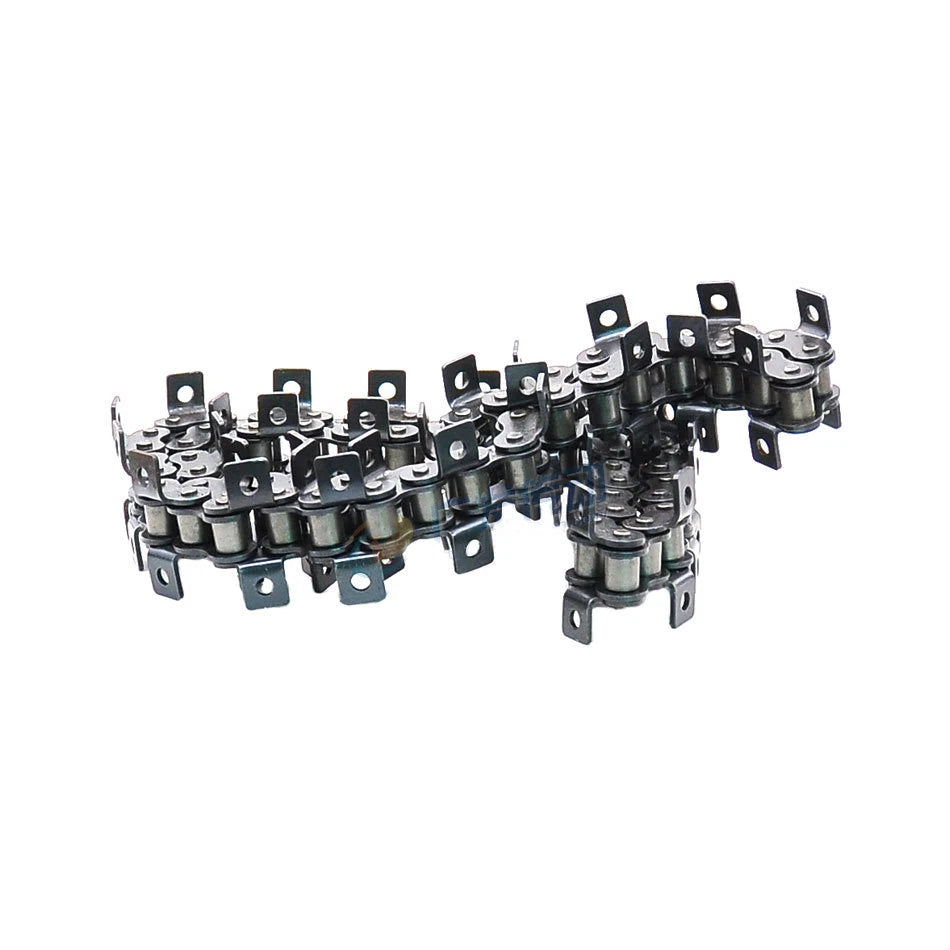
When standard roller chain isn't enough for your conveyor or attachment application, engineers and fabricators reach for a #35 roller chain with bent ear. The double-sided bent ear (also called a bent attachment plate) provides secure anchor points for fixtures, flights, or brackets — eliminating the need for custom welding or secondary fabrication. This chain is the go-to solution for DIYers and professionals who need a dependable, ready-to-mount drive chain.
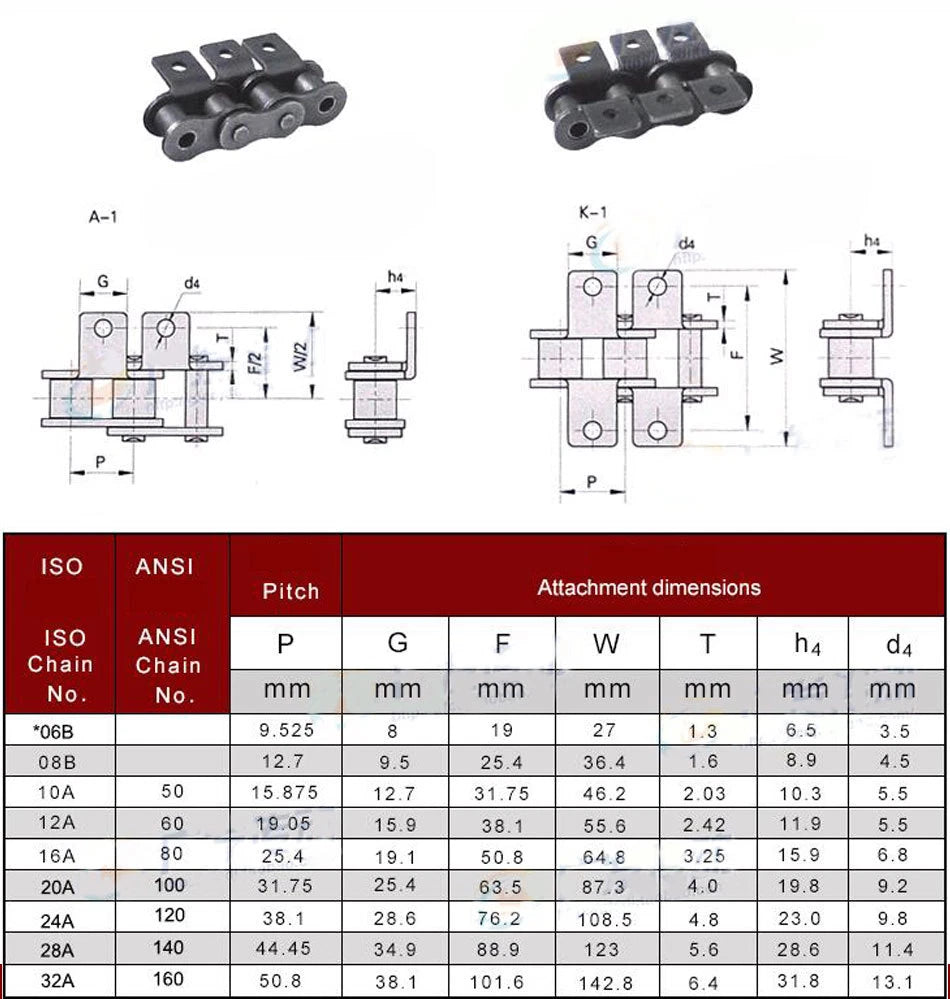
This listing covers a 06B pitch roller chain with a 3/8" (9.525 mm) pitch, featuring bent ears on both sides of every link. The chain runs approximately 1.5 meters (approx. 59 inches) in length. Link count and exact attachment spacing may vary by variant — see variant options for full dimensional details. Material is carbon steel with a standard zinc or oil-tempered finish for corrosion resistance in typical indoor and light outdoor environments.
Typical use cases include conveyor attachment chain for agricultural feeders, DIY chain drive systems for go-karts and mini bikes, industrial automation attachment chain, and light-duty material handling rigs where positive product engagement is required.
| Chain Standard | #35 / 06B |
|---|---|
| Pitch | 3/8" (9.525 mm) |
| Chain Length | 1.5 m (approx. 59 in) |
| Attachment Type | Bent ear, both sides |
| Roller Diameter | See variant options |
| Inner Plate Width | See variant options |
| Tensile Strength | See variant options |
| Material | Carbon steel |
| Finish | Oil-tempered / zinc-coated |
| Connecting Link | Standard #35 / 06B master link (sold separately) |
| Weight (approx.) | See variant options |
#35 is the ANSI designation and 06B is the ISO/BS designation for the same pitch class (3/8" / 9.525 mm). While the pitch is identical, there are minor dimensional differences in roller diameter and inner plate width between ANSI and ISO standards. Always verify sprocket compatibility before mixing standards in the same drive system.
Bent ear (also called a bent attachment plate or K-attachment) refers to an outer link plate that has a tab bent perpendicular to the chain run. "Both sides" means the tab extends on both the left and right side of the link, providing two mounting points per attachment link for symmetric fixture attachment.
Standard #35 / 06B carbon steel roller chain has a typical minimum tensile strength in the range of 7.8–8.9 kN (approximately 1,750–2,000 lbf), though exact values depend on the specific manufacturer's specification. For safety-critical applications, always apply an appropriate service factor and consult the chain's rated working load before use.
The oil-tempered finish provides basic protection against surface rust during storage and light indoor use. For prolonged outdoor exposure, wet environments, or chemical contact, we recommend applying a dedicated chain lubricant regularly or considering a stainless steel chain variant. Contact us to confirm if a corrosion-resistant option is available.
Yes. Roller chain can be shortened using a chain breaker tool to remove links to your required length. You will need a compatible #35 / 06B master link (connecting link) to close the loop. Half links are also available if you need an odd number of pitches. We recommend measuring your required loop length before cutting.
This chain is compatible with any standard #35 (ANSI) or 06B (ISO/BS) sprocket with a 3/8" pitch. Verify the sprocket's bore diameter, hub style, and tooth count match your drive system requirements. Using mismatched pitch sprockets will cause rapid wear and potential chain failure.
Each listing covers 1.5 meters of chain. To calculate how many lengths you need: measure the total chain path (drive loop perimeter) in meters, divide by 1.5, and round up. Add 10–15% extra for trimming, joining, and future maintenance replacements. If you need a longer continuous run, order multiple lengths and join them with master links.