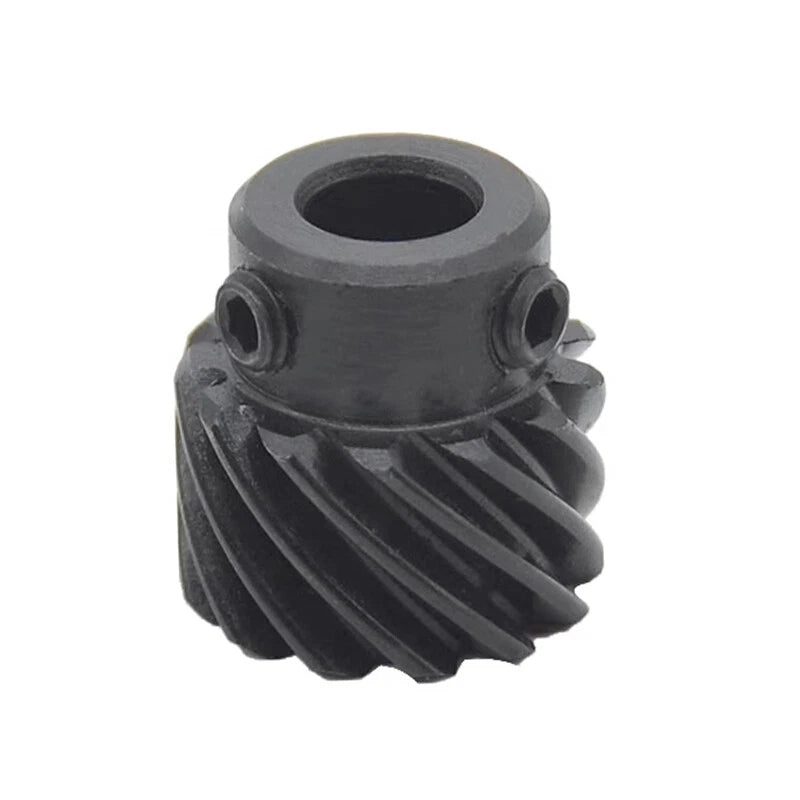
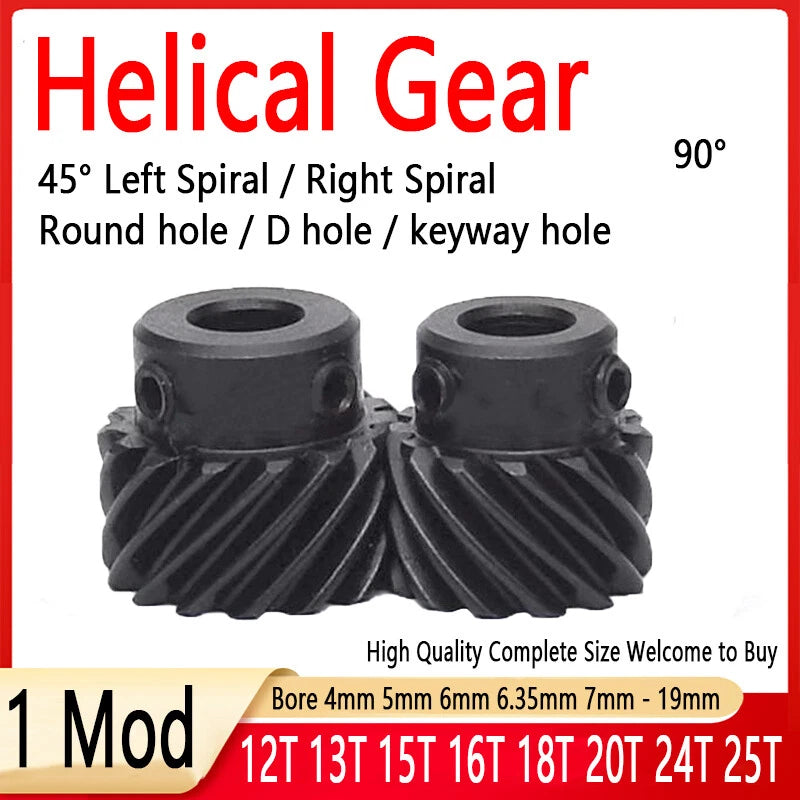
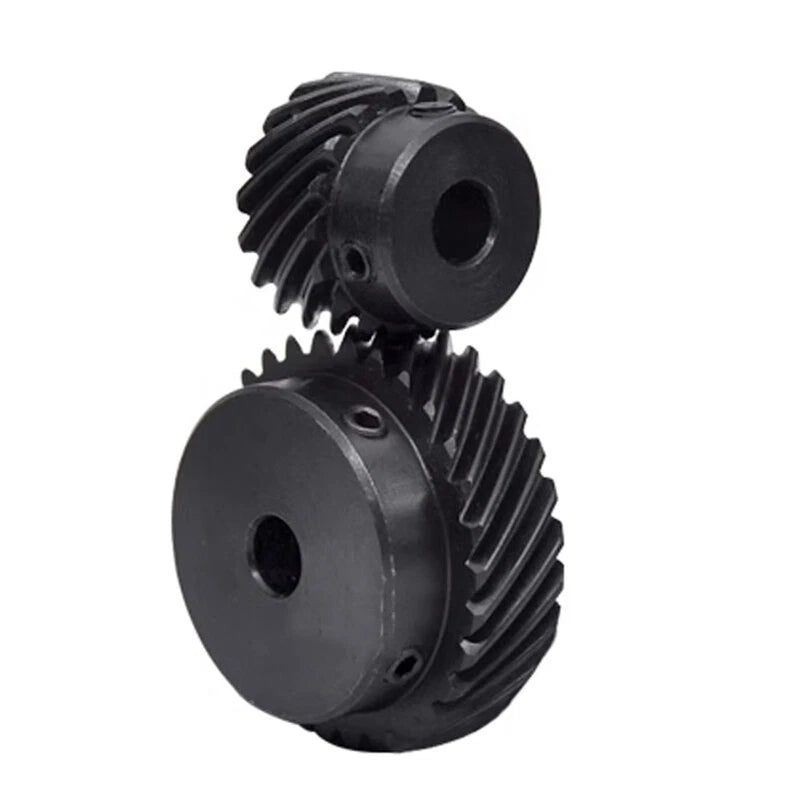
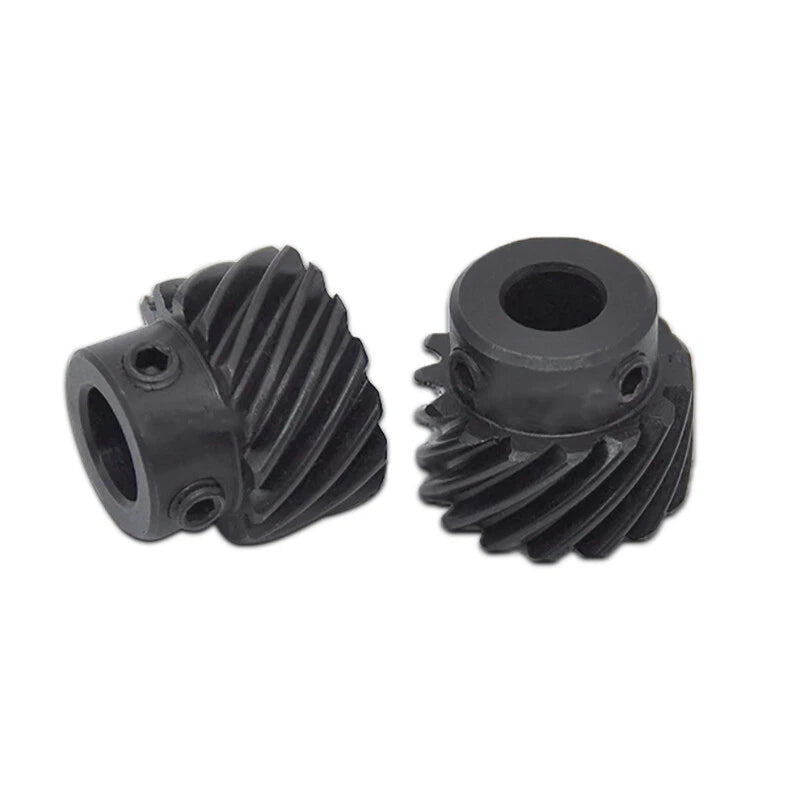
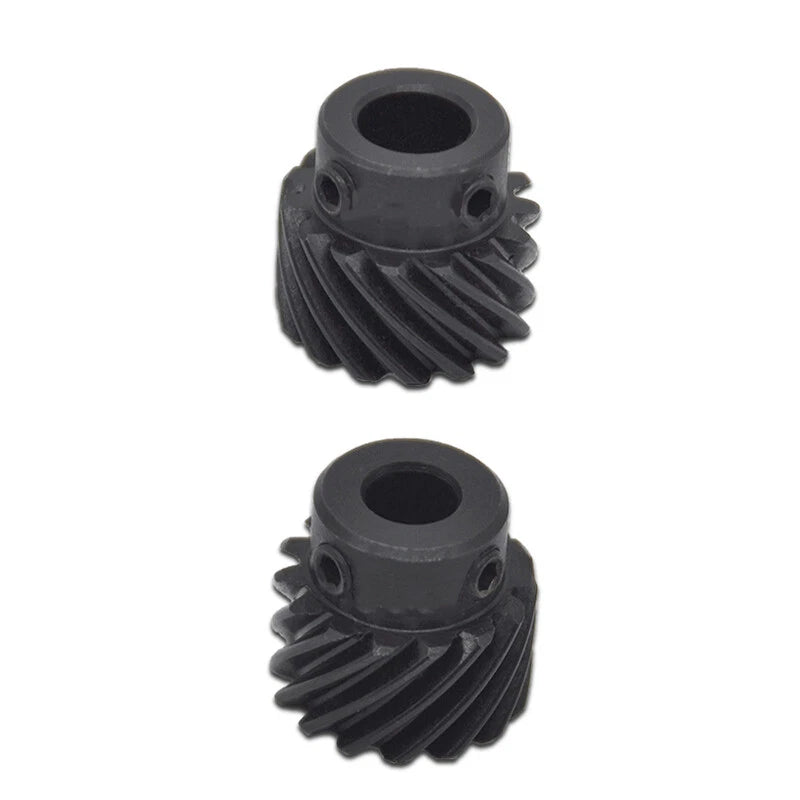
45# Steel Helical Gear 1 Mod 12-25 Teeth Blackened Pinion Transmission Gears

No reviews

Price:
Sale price$4.16 USD
Stock:
In stock (500 units), ready to be shipped

Payment & Security

Ach Direct Debit Amazon American Express Apple Pay Bancontact BLIK Diners Club Discover EPS Google Pay iDEAL Wero JCB Maestro Mastercard Multibanco MobilePay PayPal Przelewy24 Shop Pay Twint Union Pay USDC Visa

Your payment information is processed securely. We do not store credit card details nor have access to your credit card information.

Limited Offer — Spend More, Save More
Spend $55+
Save $5
Spend $100+
Save $10
Spend $200+
Save $25
HomeDIYer DIY Expert Support

DIY Expert Support

Get fitment advice & recommendations

Mon–Fri  8:30 AM – 8:00 PM
24-Hour Fast Ship
Arrives in 3–14 Days
Worldwide Shipping
30-Day Returns
1 tree planted with every purchase

Description

45# Steel Helical Gear 1 Mod 12–25 Teeth — Reliable Blackened Pinion for Precision Drives

When a slipping or noisy gear brings your CNC router, robotic arm, or automation rig to a halt, the root cause is almost always a mismatch between gear quality and application demand. Makers, machine builders, and small-batch manufacturers who need a drop-in helical pinion that runs quietly under load will find this 45# steel helical gear series a dependable solution.

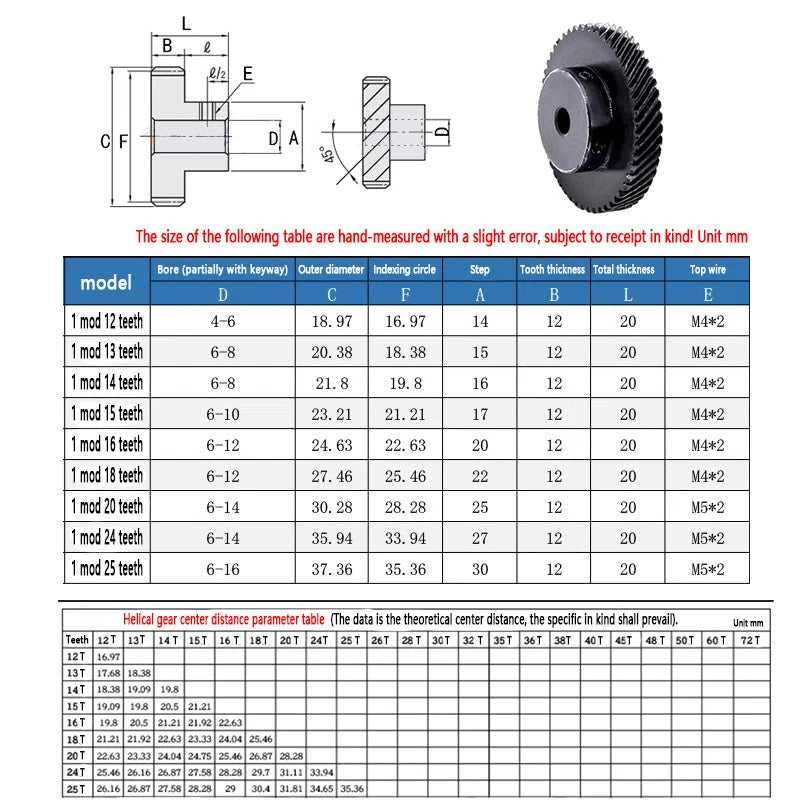
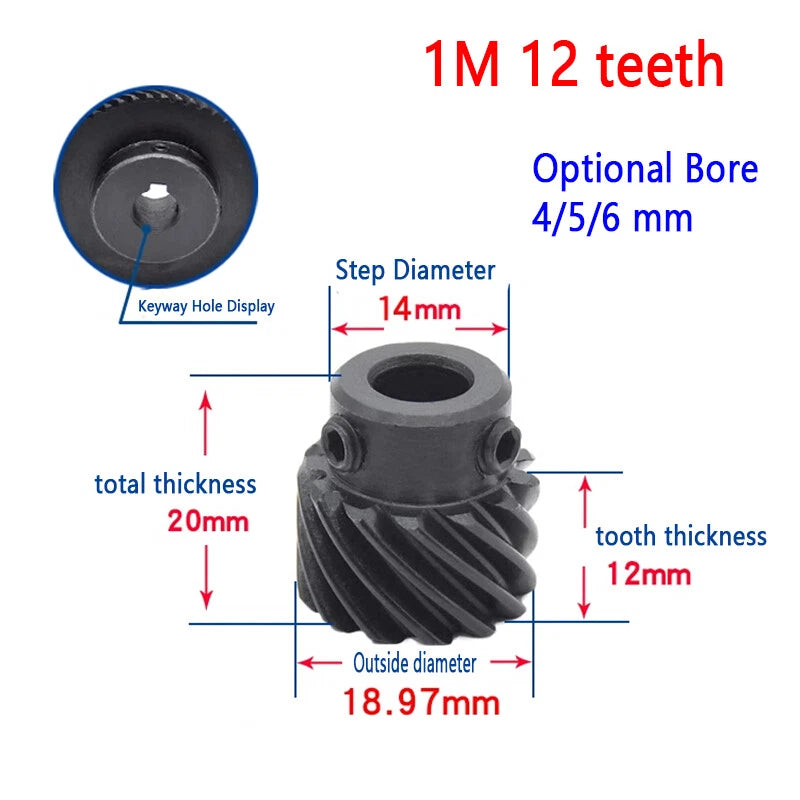
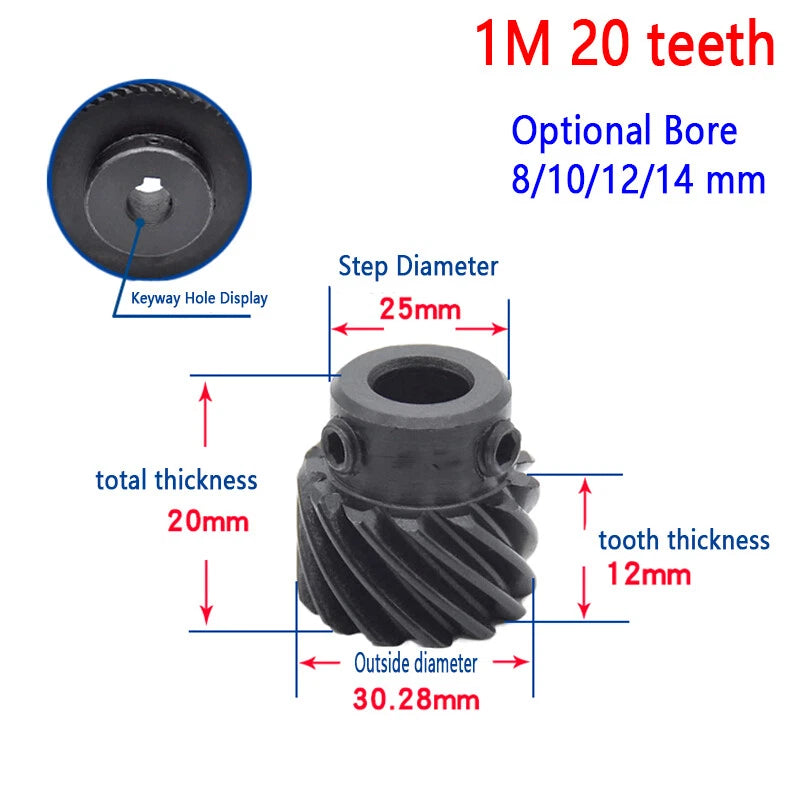
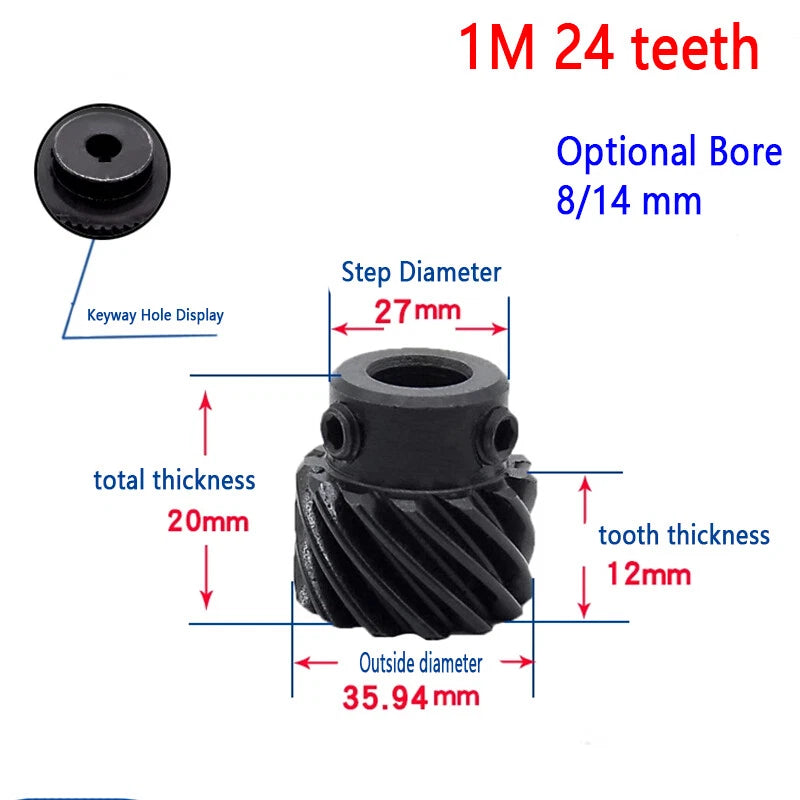
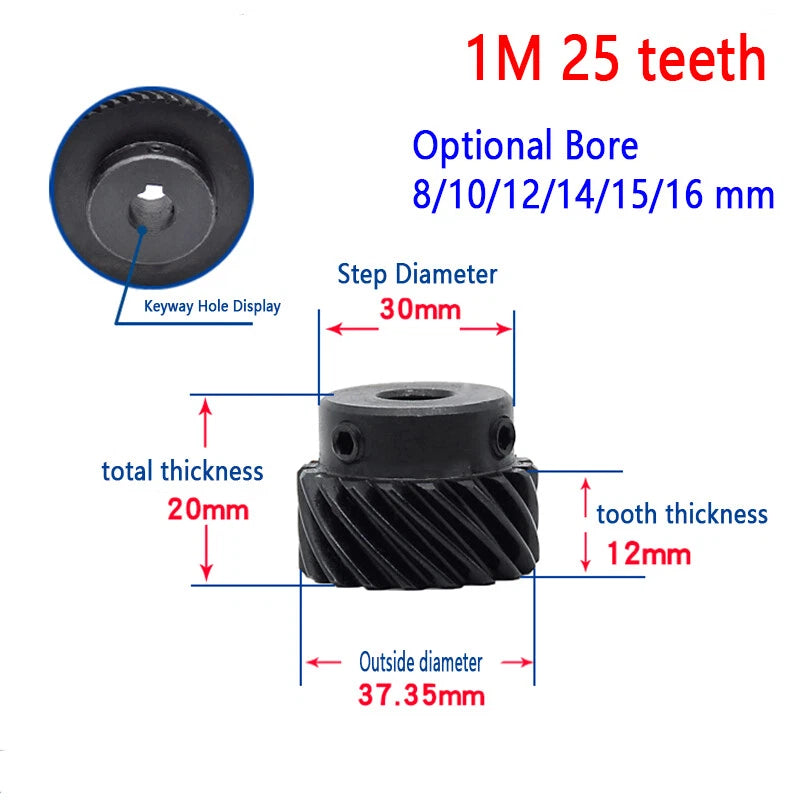
Each gear is machined from 45# medium-carbon steel and finished with a blackening treatment for corrosion resistance. The series covers Module 1 with tooth counts from 12 to 25 teeth and bore diameters ranging from 4 mm to 19 mm (approximately 0.16 in to 0.75 in), including plain round bores, nut-retention bores (M3–M5), D-flat bores, and keyed bores with standard keyways (3×1.4 mm, 4×1.8 mm, 5×2.3 mm, 6×2.8 mm). Both left-spiral and right-spiral hand options are available.

Typical use cases include helical gear rack-and-pinion drives for CNC gantry systems, motor output shaft pinions for 3D printer extruder drives, and reduction stage gears in small robotic joint actuators — all applications where low noise and smooth torque transmission are critical.

⚙️ Compatibility: Module 1 (Mod 1) standard. Meshes with any Mod 1 helical gear or rack of matching helix angle and hand. Verify spiral direction (Left / Right) and bore size before ordering.

✅ Key Features of These 45# Steel Helical Gears

🔩 45# Medium-Carbon Steel Construction

Machined from 45# steel for a balance of machinability and mechanical strength, suitable for moderate-load power transmission in CNC, robotics, and automation equipment.

🖤 Blackened Surface Finish

Chemical blackening provides a uniform dark oxide layer that reduces surface corrosion and light reflection — useful in precision optical or cleanroom-adjacent environments.

🔄 Left & Right Spiral Options

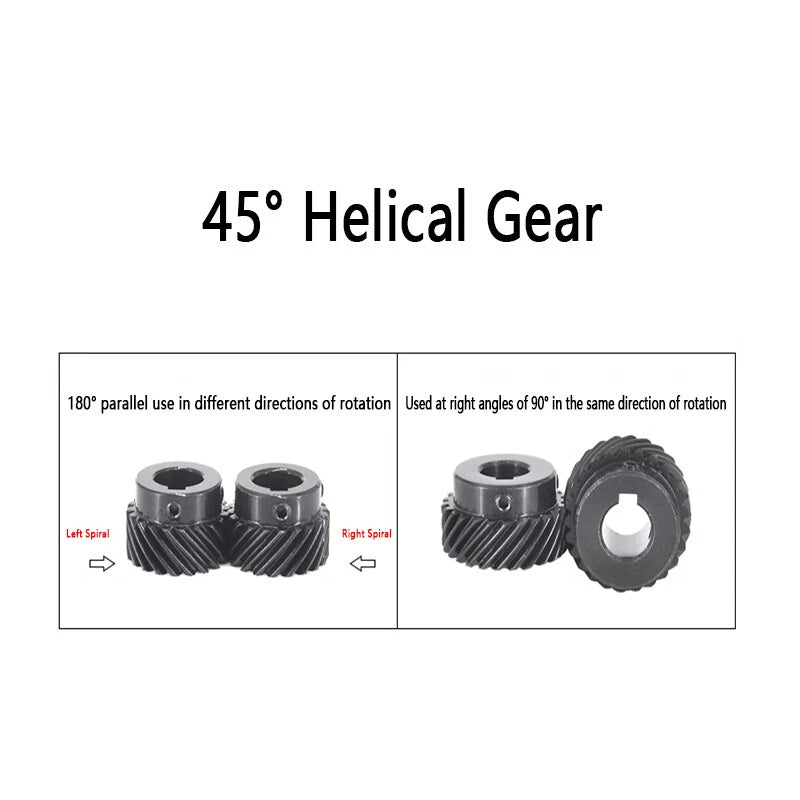
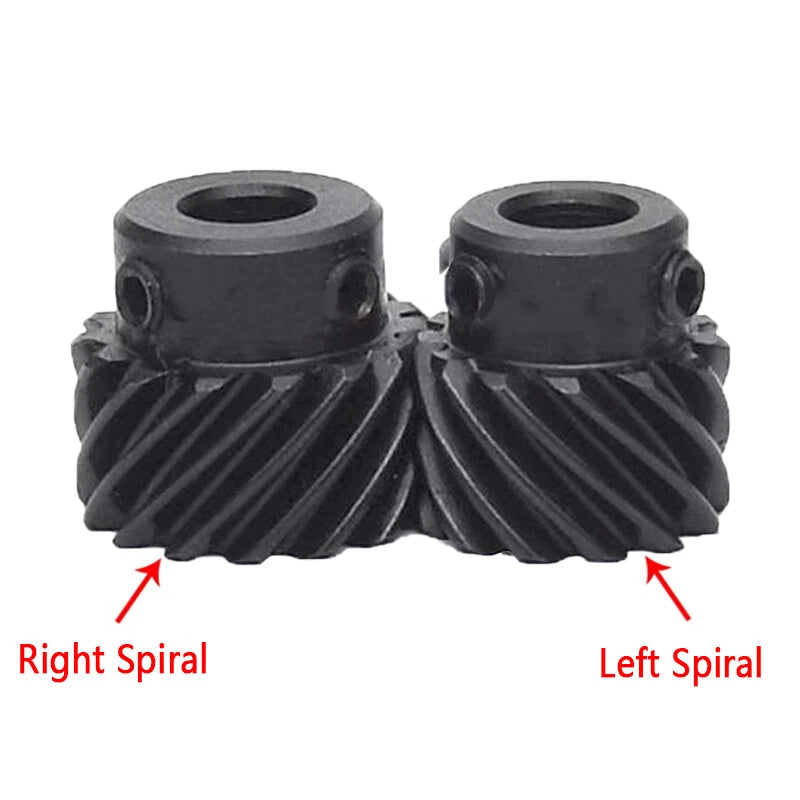
Both left-hand and right-hand helix directions are stocked, allowing correct pairing for parallel-shaft helical gear sets that require opposite-hand mates.

📐 Wide Bore Selection

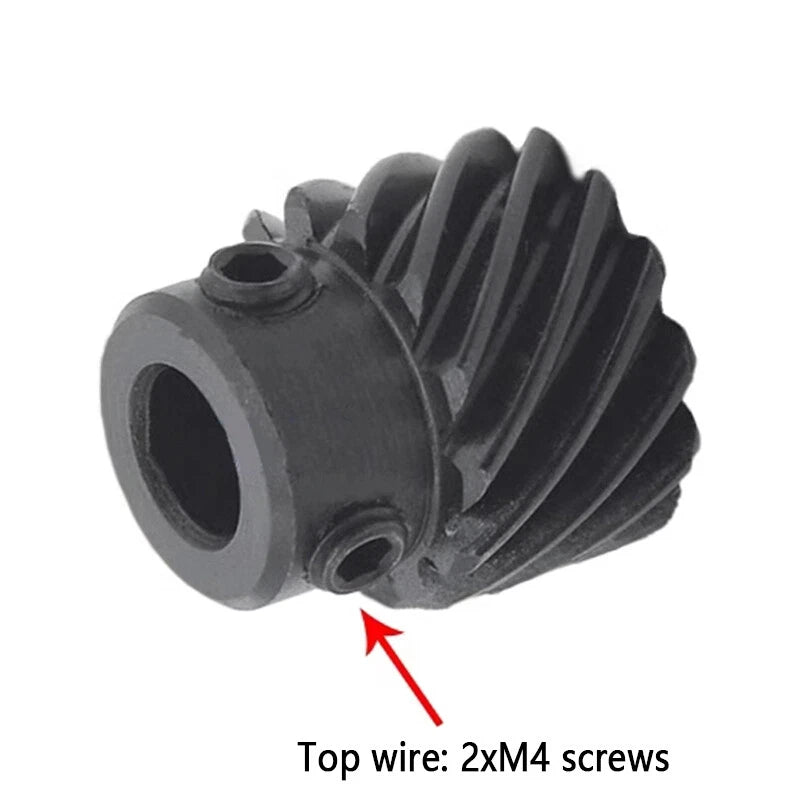
Plain round bores (4–19 mm), D-flat bores, nut-retention bores (M3–M5), and keyed bores with 3×1.4 mm, 4×1.8 mm, 5×2.3 mm, and 6×2.8 mm keyways cover most motor shaft standards.

🦷 12 to 25 Tooth Range

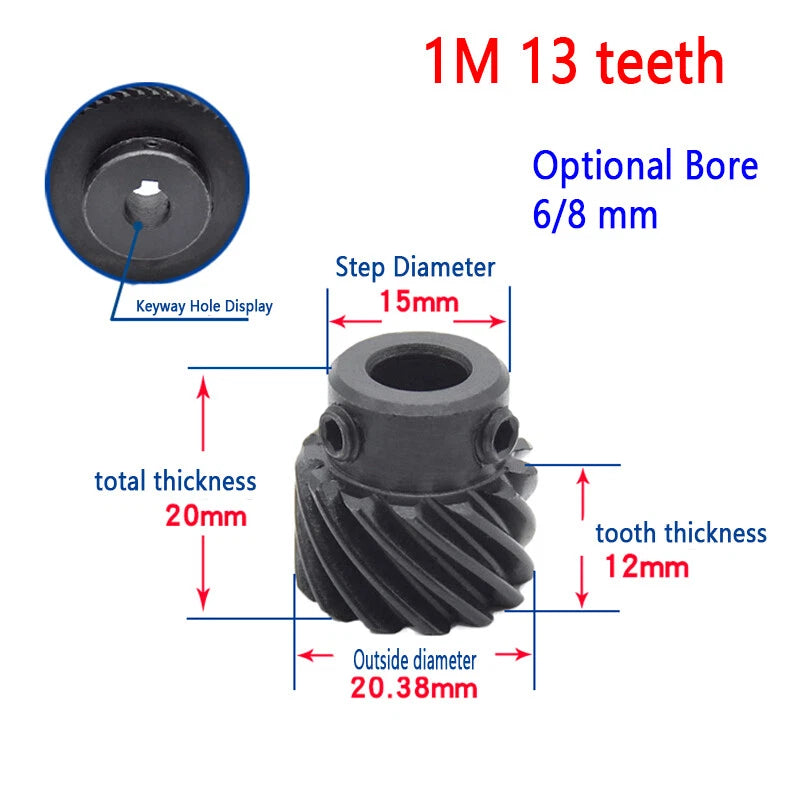
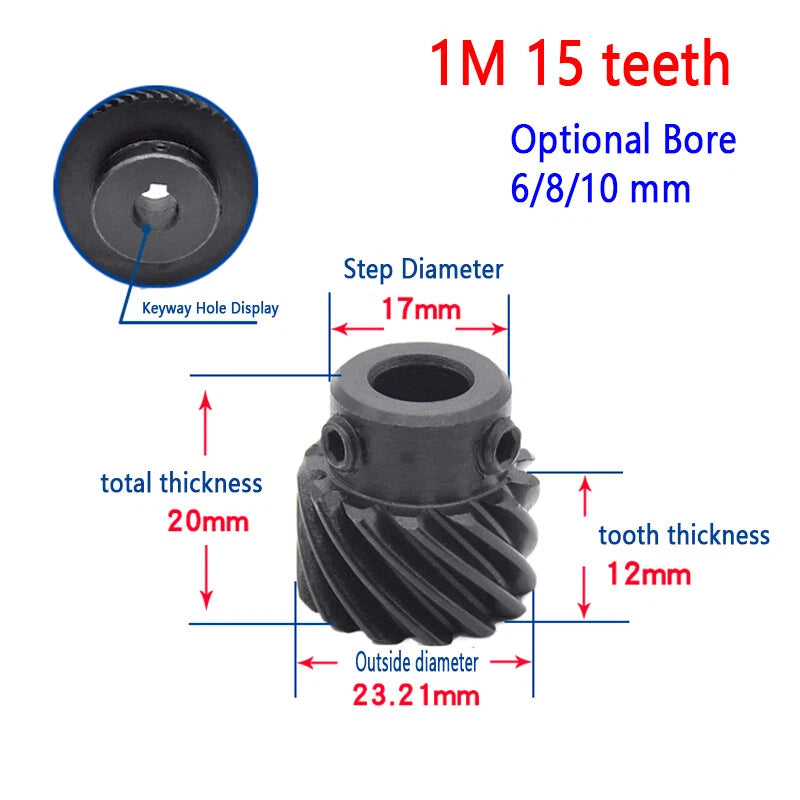
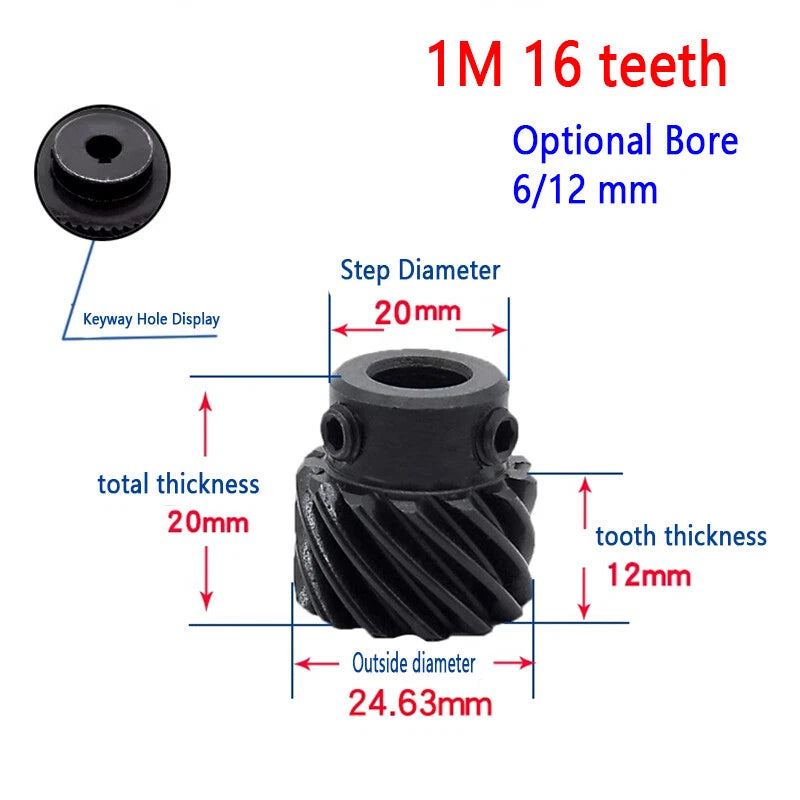
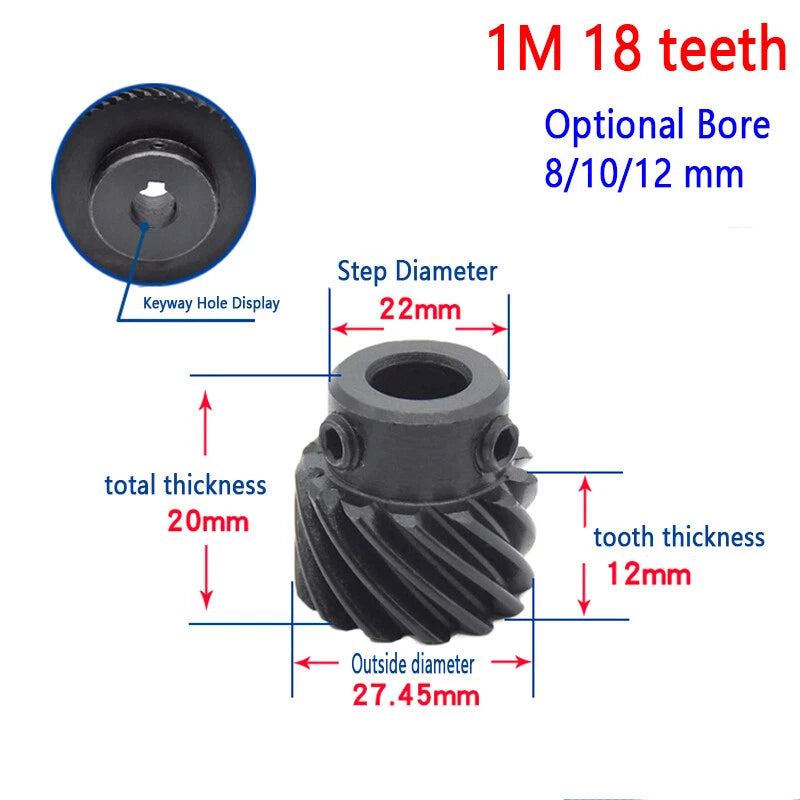
A broad tooth-count selection (12, 13, 15, 16, 18, 20, 24, 25 teeth) lets you dial in the gear ratio you need without custom machining.

🔧 Module 1 Standard Pitch

Mod 1 is one of the most common metric gear standards, ensuring straightforward sourcing of mating gears, racks, and replacement parts from multiple suppliers.

📐 Technical Specifications — Helical Pinion Gears

Module 1 (Mod 1)
Material 45# Medium-Carbon Steel
Surface Treatment Chemical Blackening
Tooth Count Options 12, 13, 15, 16, 18, 20, 24, 25 Teeth
Spiral Direction Left Spiral / Right Spiral (select variant)
Bore Type Options Plain Round, D-Flat, Nut (M3/M4/M5), Keyed
Bore Diameter Range 4 mm – 19 mm (approx. 0.16 in – 0.75 in)
Keyway Sizes Available 3×1.4 mm, 4×1.8 mm, 5×2.3 mm, 6×2.8 mm
Pressure Angle See variant options
Helix Angle See variant options
Face Width See variant options
Outside Diameter See variant options
Weight See variant options

❓ Frequently Asked Questions

How do I choose the right tooth count for my application?

The tooth count determines your gear ratio. Divide the driven gear's tooth count by the driving pinion's tooth count to get the ratio. For example, a 20-tooth pinion driving a 40-tooth gear gives a 2:1 reduction. Select a tooth count that achieves your target ratio while keeping the pinion outside diameter compatible with your shaft center distance.

What is the difference between left-spiral and right-spiral, and does it matter?

Helical gears must be paired with a mating gear of the opposite hand on parallel shafts. If your existing mating gear is left-spiral, select a right-spiral pinion, and vice versa. If you are building a new gear set from scratch, either hand works — just keep both gears consistent as a matched pair.

How strong are these gears under load?

45# steel offers a tensile strength typically in the range of 600–800 MPa after standard heat treatment, making it suitable for moderate-load power transmission. For high-shock or continuous heavy-duty applications, consider gears made from alloy steel or with additional surface hardening. Contact us to confirm load ratings for your specific configuration.

Does the blackened finish provide corrosion resistance?

Chemical blackening creates a thin iron oxide layer that offers mild corrosion resistance in dry or lightly humid indoor environments. It is not a substitute for galvanizing or stainless steel in wet or outdoor conditions. Applying a light machine oil after installation will extend the finish life.

Which bore type should I choose — plain round, D-flat, nut, or keyed?

Choose a plain round bore if you plan to secure the gear with a set screw or adhesive. Select a D-flat bore for a flat-shaft motor (common on small DC gearmotors). Choose a nut bore (M3/M4/M5) if your shaft uses a threaded end. Select a keyed bore if your shaft has a standard keyway — match the keyway dimensions (e.g., 3×1.4 mm) to your shaft specification.

Are these gears compatible with Module 1 racks and other Mod 1 gears?

Yes. All gears in this series are Module 1 (Mod 1) standard, so they mesh correctly with any Mod 1 helical rack or gear of the same helix angle and opposite hand. Verify that the mating component is also Mod 1 before ordering — mixing modules will result in incorrect meshing and rapid wear.

Can I use a left-spiral and right-spiral gear from this series as a matched pair?

Yes. For a parallel-shaft helical gear drive, order one left-spiral and one right-spiral gear with the same tooth count and module. They will mesh correctly and provide the smooth, quiet operation characteristic of helical gears compared to spur gears.

🛒 Select your Teeth & Bore size and Direction of Rotation above, then add to cart.

You may also like

Recently viewed