5ft x 164ft Galvanized Farm Fence — 14-Gauge Hot-Dip Zinc Woven Wire for Cattle, Deer, Goat & Livestock
Keeping livestock in and predators out starts with fencing that holds up season after season. Whether you're managing cattle pastures, protecting a garden from deer, or securing a mixed-animal farm, this 5ft tall galvanized farm fence delivers the structural integrity and corrosion resistance that working farms demand. Built from 14-gauge steel wire with a hot-dip galvanized surface, it's engineered for landowners, ranchers, and hobby farmers who need reliable perimeter control without constant maintenance.
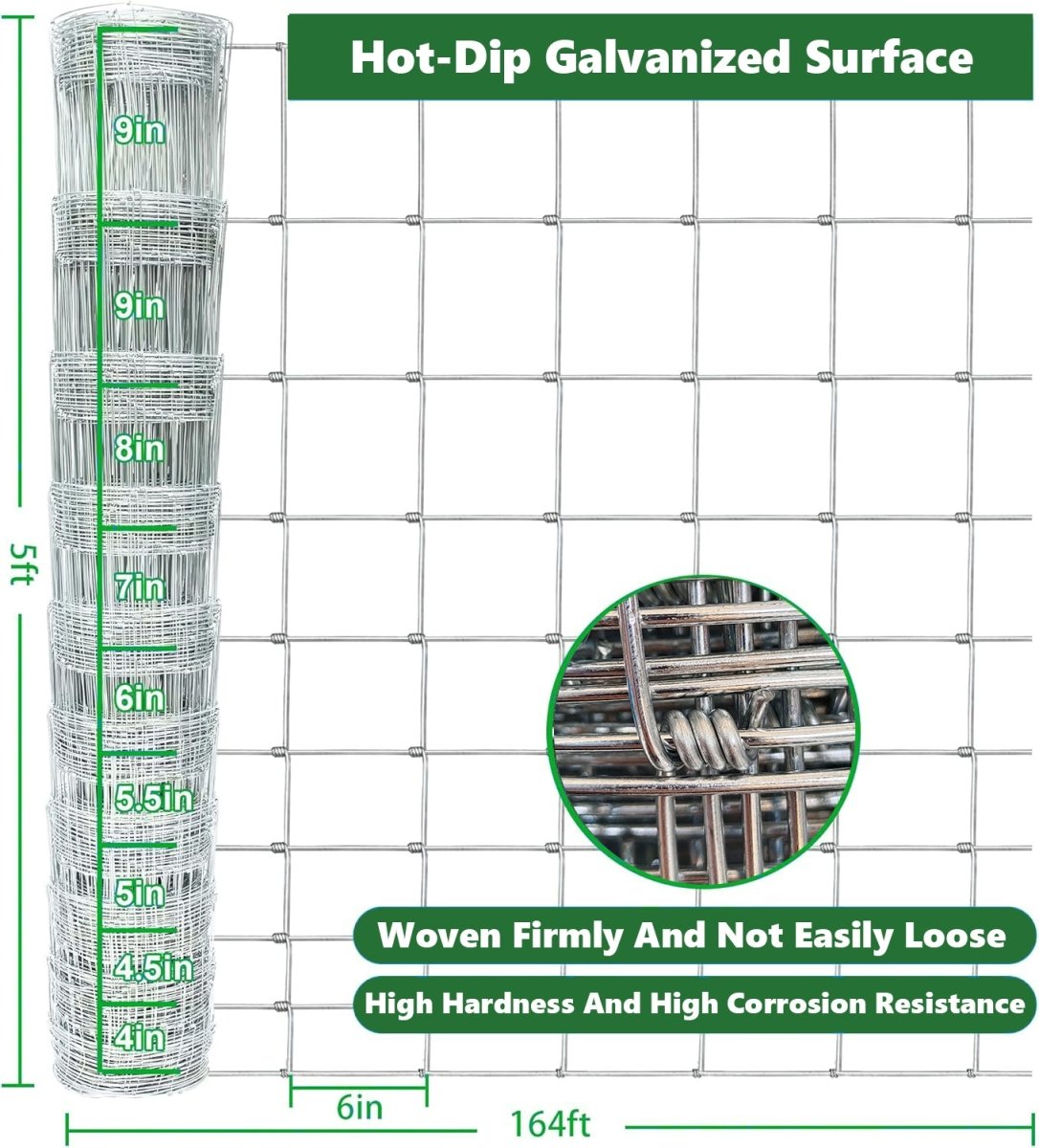
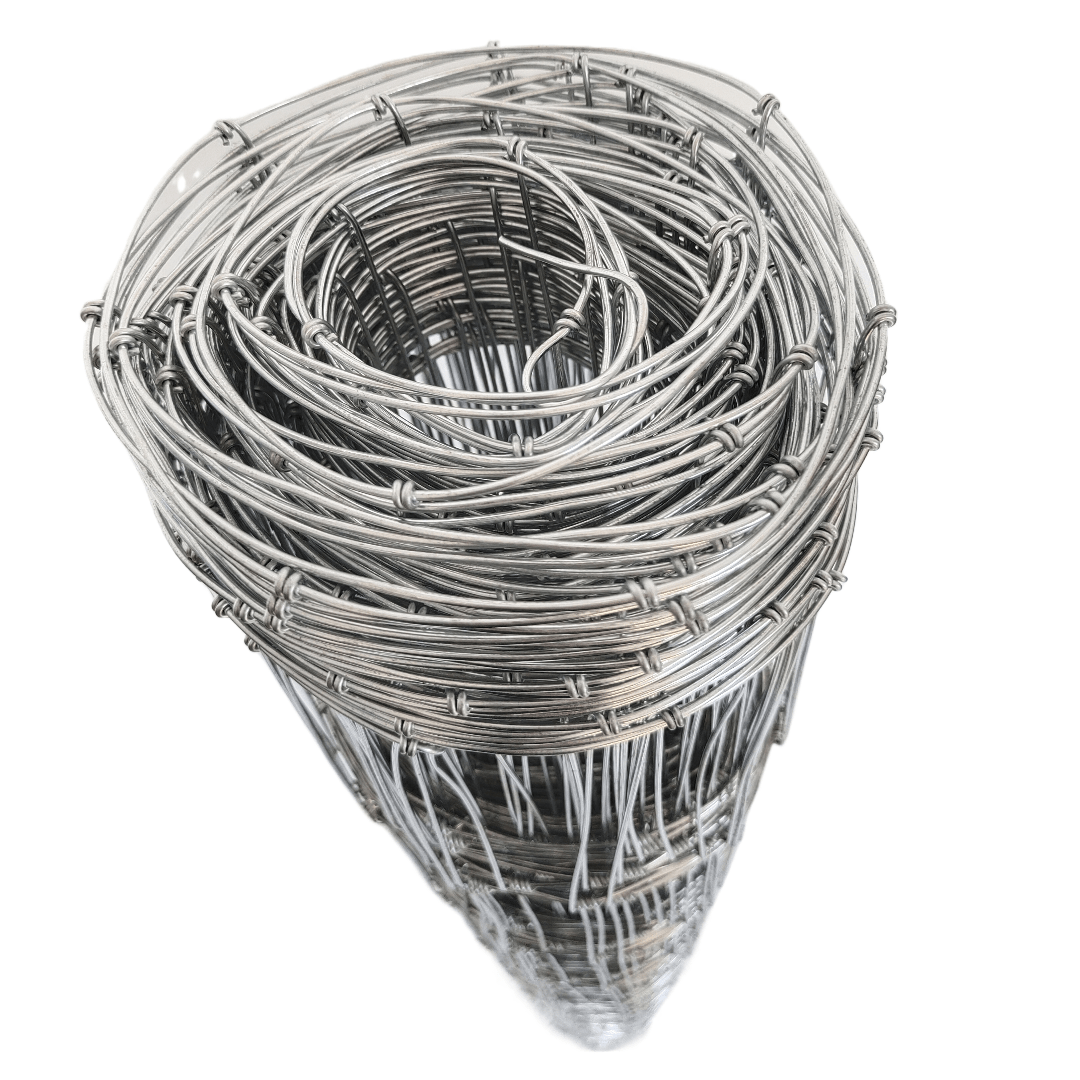
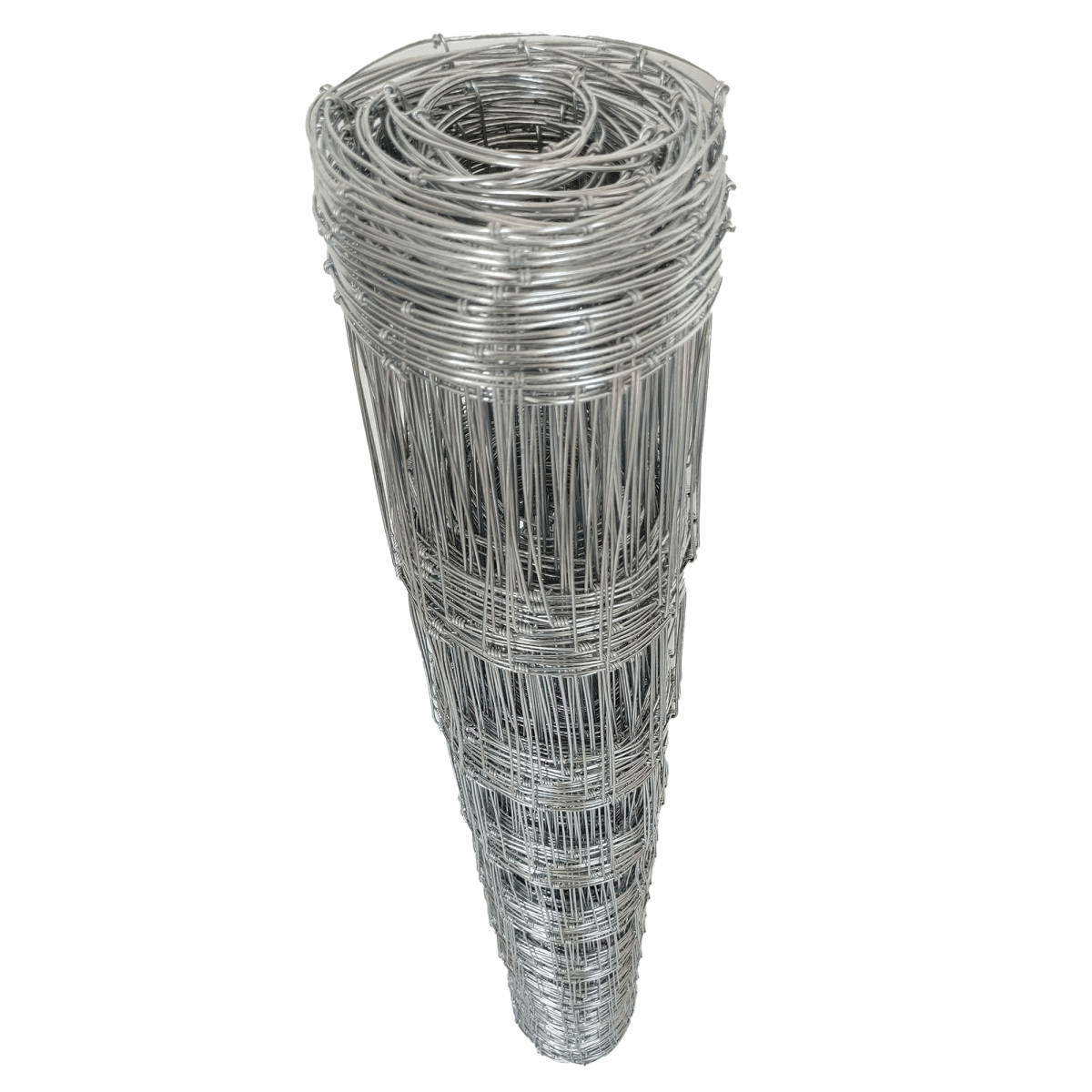
Each roll covers 164 linear feet (approximately 50 meters) at 5 feet (60 inches) tall, providing substantial coverage per roll. The wire is woven using a twisted-wire construction that locks vertical and horizontal wires at each intersection, resisting loosening under animal pressure and tension. The graduated mesh design features tighter spacing at the bottom of the fence and wider spacing toward the top — reducing material cost while preventing small animals and young livestock from passing through the lower section.
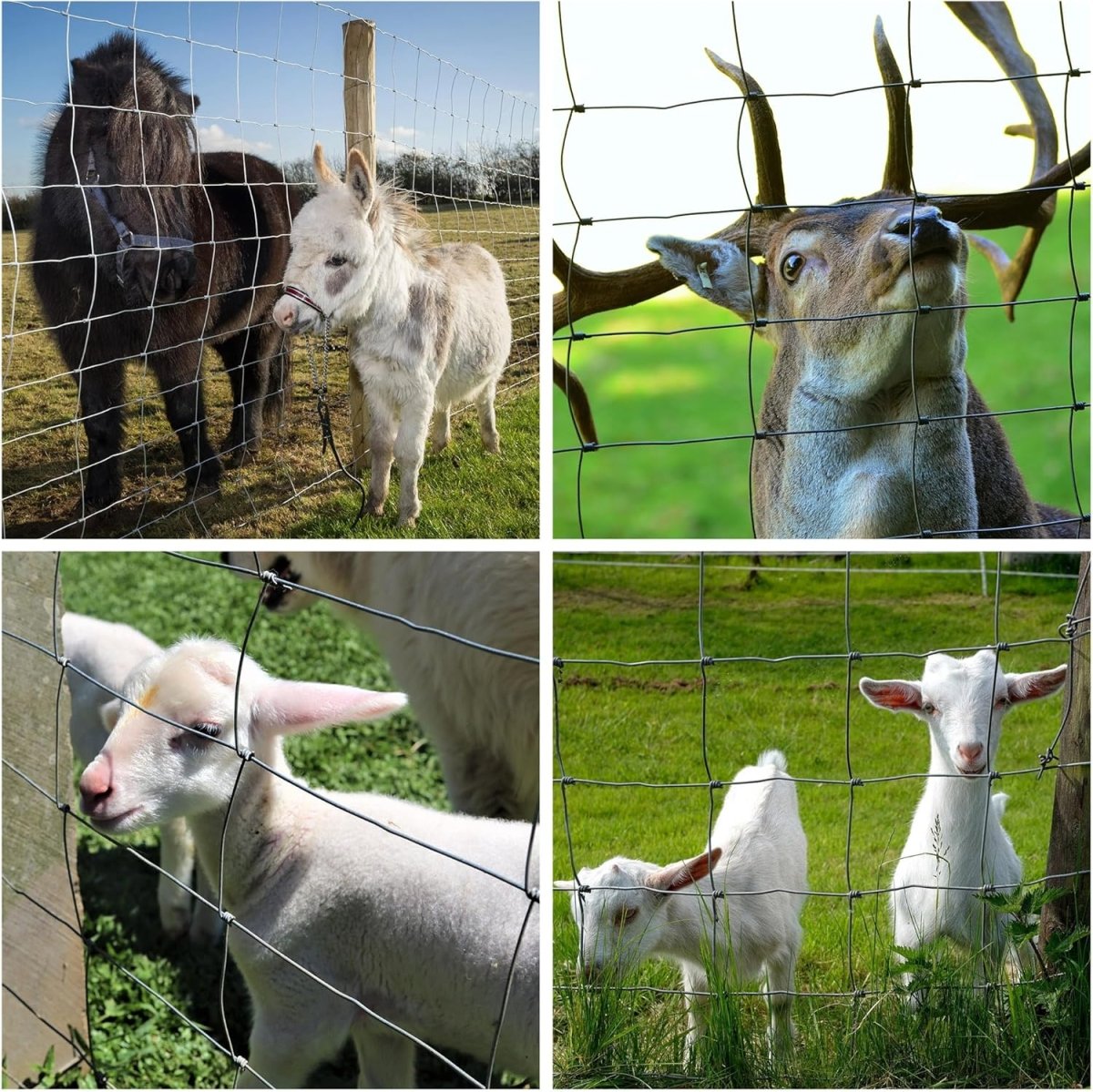
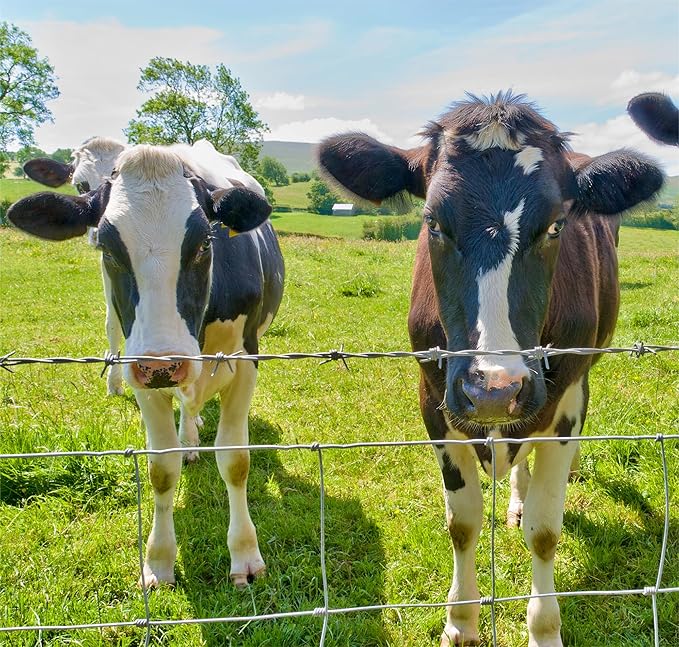
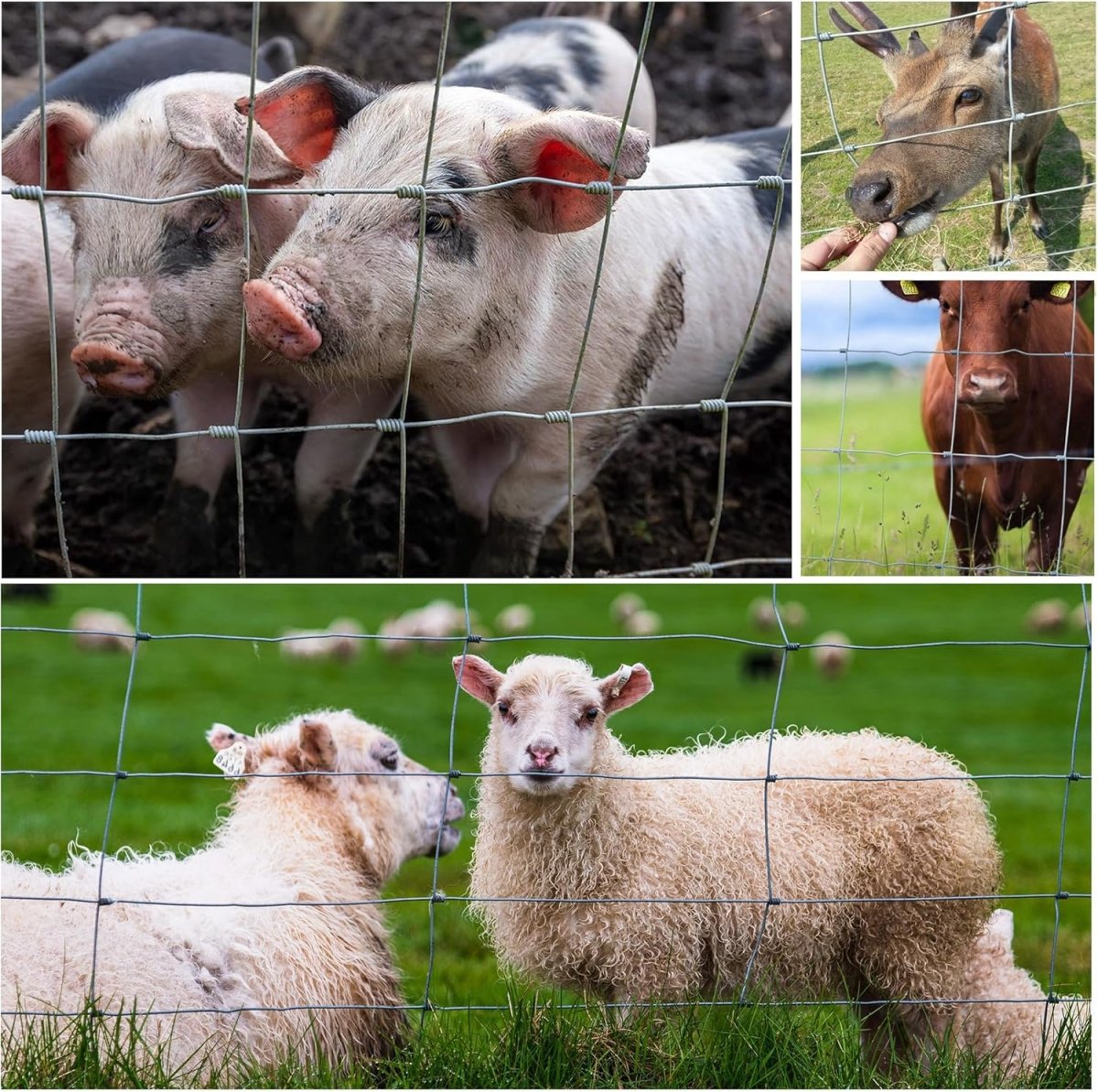
This galvanized field fence is widely used for cattle pasture perimeter fencing, horse paddock enclosures, sheep and goat containment, deer exclusion fencing for gardens and orchards, and hog yard perimeter control. The hot-dip zinc coating provides durable corrosion resistance for long-term outdoor agricultural use across a range of climates.
🌿 Compatible with standard T-posts, wooden fence posts, and steel U-posts. Attach using fence staples (wood posts), wire clips, or hog rings. Suitable for flat and moderately sloped terrain. Post spacing of 8–12 ft typically recommended.
✅ Key Features of This Galvanized Farm Fence
-
🛡️ Hot-Dip Galvanized Coating — Long-Term Corrosion Resistance — The steel wire is hot-dip galvanized, immersing it in molten zinc to create a thick, metallurgically bonded coating that resists rust and oxidation in outdoor agricultural environments far longer than electro-galvanized alternatives.
-
🔩 14-Gauge Steel Wire — Structural Rigidity Under Animal Pressure — Heavy 14-gauge wire provides the stiffness and tensile strength needed to resist pushing, leaning, and impact from cattle, horses, and large livestock without deforming or sagging over time.
-
📐 Graduated Mesh Design — Tighter at Bottom, Wider at Top — Horizontal wire spacing decreases from top to bottom, preventing small animals, lambs, piglets, and young livestock from passing through the lower section while reducing overall material weight and cost.
-
🔗 Twisted-Wire Woven Construction — Locked Intersections — Vertical and horizontal wires are joined using a twisted-wire weave at each intersection, creating a mechanically locked joint that resists loosening under tension and repeated animal contact.
-
📏 5ft Tall × 164ft Per Roll — Efficient Coverage — Each roll provides 164 linear feet of 5-foot-tall fencing, covering substantial perimeter area per roll and reducing the number of splices and joints required for large installations.
-
🐄 Multi-Animal Versatility — Cattle, Deer, Goats, Horses, Hogs & Dogs — Suitable for containing or excluding a wide range of livestock and animals, making it a practical choice for mixed-use farms and multi-species operations.
📐 Technical Specifications — Galvanized Farm Fence Woven Wire Roll
| Wire Gauge |
14-gauge steel wire |
| Surface Treatment |
Hot-dip galvanized (zinc coated) |
| Fence Height |
5 ft (60 inches / approximately 1.52 m) |
| Roll Length |
164 ft (approximately 50 m) per roll |
| Mesh Style |
Graduated woven wire — tighter spacing at bottom |
| Construction |
Twisted-wire woven, locked intersections |
| Compatible Post Types |
T-posts, wooden posts, steel U-posts |
| Recommended Post Spacing |
8–12 ft (typically) |
| Suitable Animals |
Cattle, horses, sheep, goats, hogs, deer, dogs |
| Typical Applications |
Pasture perimeter, paddock, garden deer exclusion, livestock yard |
| Weight per Roll |
Approximately 73.6 lbs |
❓ Frequently Asked Questions
What is the difference between hot-dip galvanized and electro-galvanized wire fencing?
Hot-dip galvanizing immerses the steel wire in molten zinc, creating a thick, metallurgically bonded coating that typically lasts significantly longer than electro-galvanized coatings in outdoor environments. Electro-galvanizing applies a thinner zinc layer via electrical current and is generally less durable under prolonged moisture, UV, and agricultural chemical exposure. For long-term farm use, hot-dip galvanized wire is the recommended choice.
What animals can this fence contain or exclude?
This fence is suitable for containing or excluding cattle, horses, sheep, goats, hogs, dogs, and deer. The graduated mesh design — with smaller openings at the bottom — helps prevent smaller animals and young livestock from passing through the lower section of the fence. For very small animals such as rabbits or poultry, additional fencing at the base may be needed.
What does the graduated mesh design mean?
Graduated mesh means the spacing between horizontal wires decreases from the top of the fence to the bottom. The tighter spacing at ground level prevents small animals, lambs, piglets, and young livestock from squeezing through, while the wider spacing at the top reduces material cost without compromising containment for larger animals. This design is standard in agricultural field fencing and is sometimes referred to as "hinge joint" or "field fence" style.
How many rolls do I need for my property?
Each roll covers 164 linear feet (approximately 50 meters). To estimate the number of rolls needed, measure the total perimeter of the area you want to fence, then divide by 164. Add 5–10% for corners, gates, and overlaps. For example, a 1-acre square lot has a perimeter of approximately 835 feet, requiring approximately 6 rolls.
What post spacing is recommended for this fencing?
For most livestock applications, post spacing of 8 to 12 feet is generally recommended. Closer spacing (8 feet) provides greater rigidity and is preferred for high-pressure areas such as corners, gates, and areas where animals push against the fence. Wider spacing (12 feet) is typically used for straight runs in lower-pressure areas. Brace posts at corners and ends are strongly recommended for proper tensioning.
Can this fence be used for deer exclusion?
Yes. At 5 feet tall, this fence provides a meaningful barrier against deer in many situations. However, deer are capable of jumping fences up to 8 feet or higher under pressure. For high-deer-pressure areas such as gardens or orchards, a taller fence or a double-fence system may be more effective. For general farm perimeter use and moderate deer pressure, 5 feet is a commonly used and practical height.
What tools do I need to install this fencing?
Typical installation tools include a post driver or post hole digger, fence stretcher or come-along, wire cutters, staples or fence clips (for wooden posts) or wire ties (for T-posts), a level, and work gloves. The specific tools required will depend on your post type, terrain, and total fence length. Proper tensioning tools are important for achieving a taut, long-lasting installation.
Is this fencing suitable for sloped or uneven terrain?
Yes. Woven wire fencing can generally be installed on sloped terrain by stepping the fence panels or racking the wire to follow the ground contour. On steep slopes, additional posts and careful tensioning are recommended to maintain consistent ground contact and prevent gaps at the base that animals could pass through.
🛒 Select your quantity above, then add to cart.