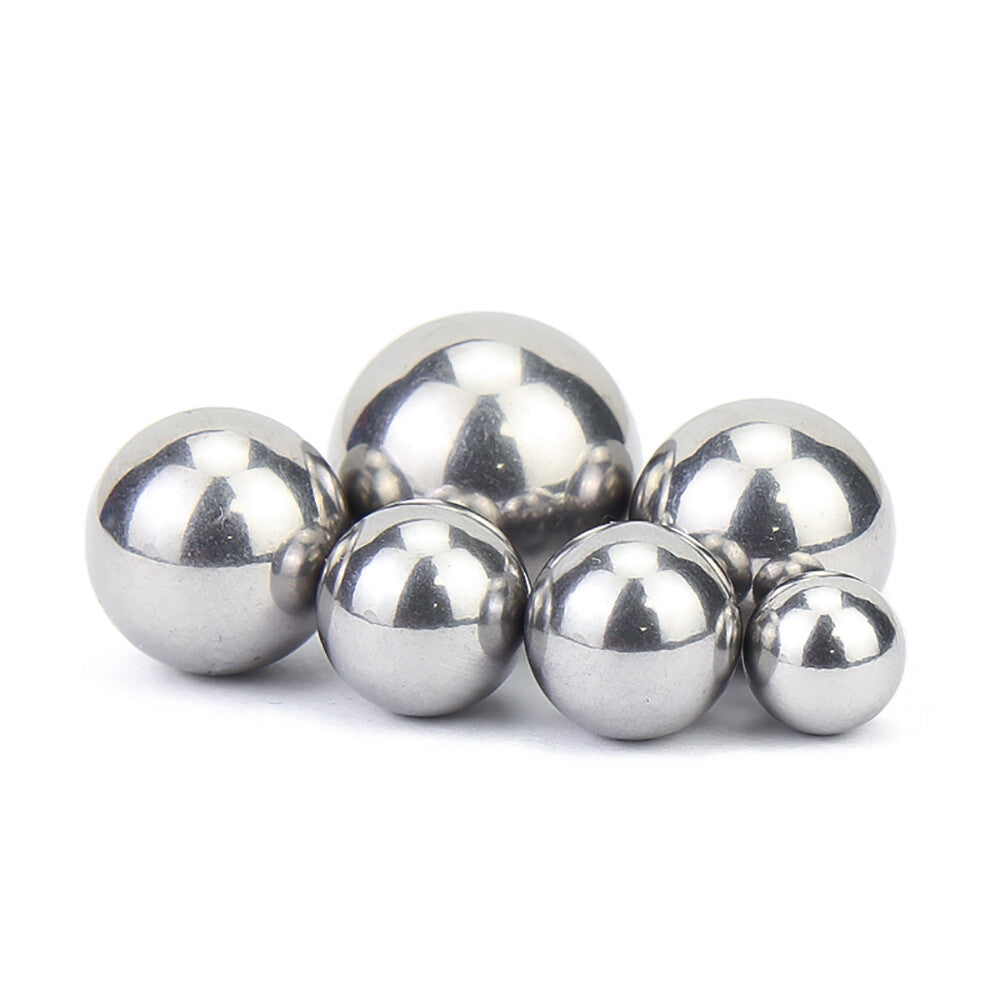
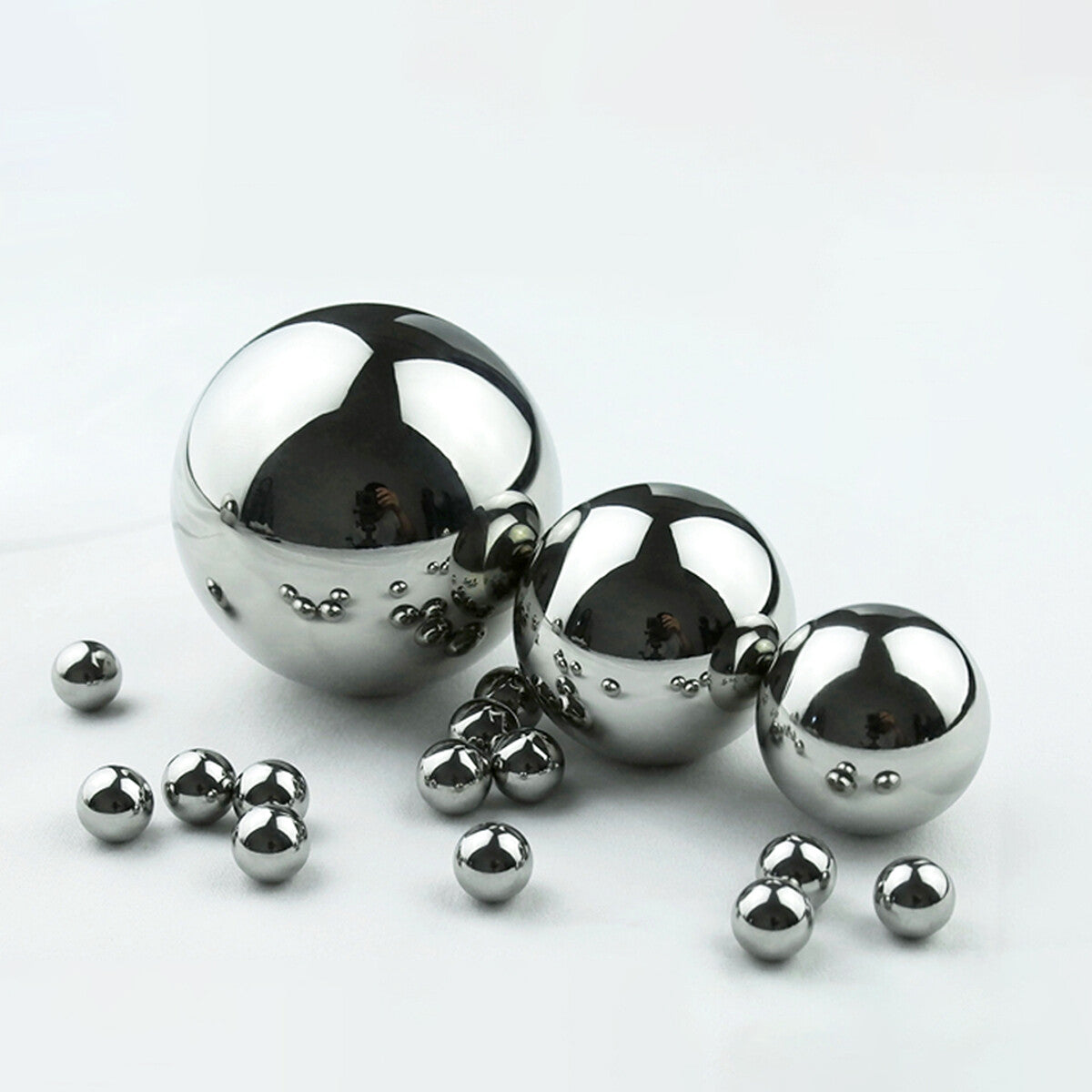
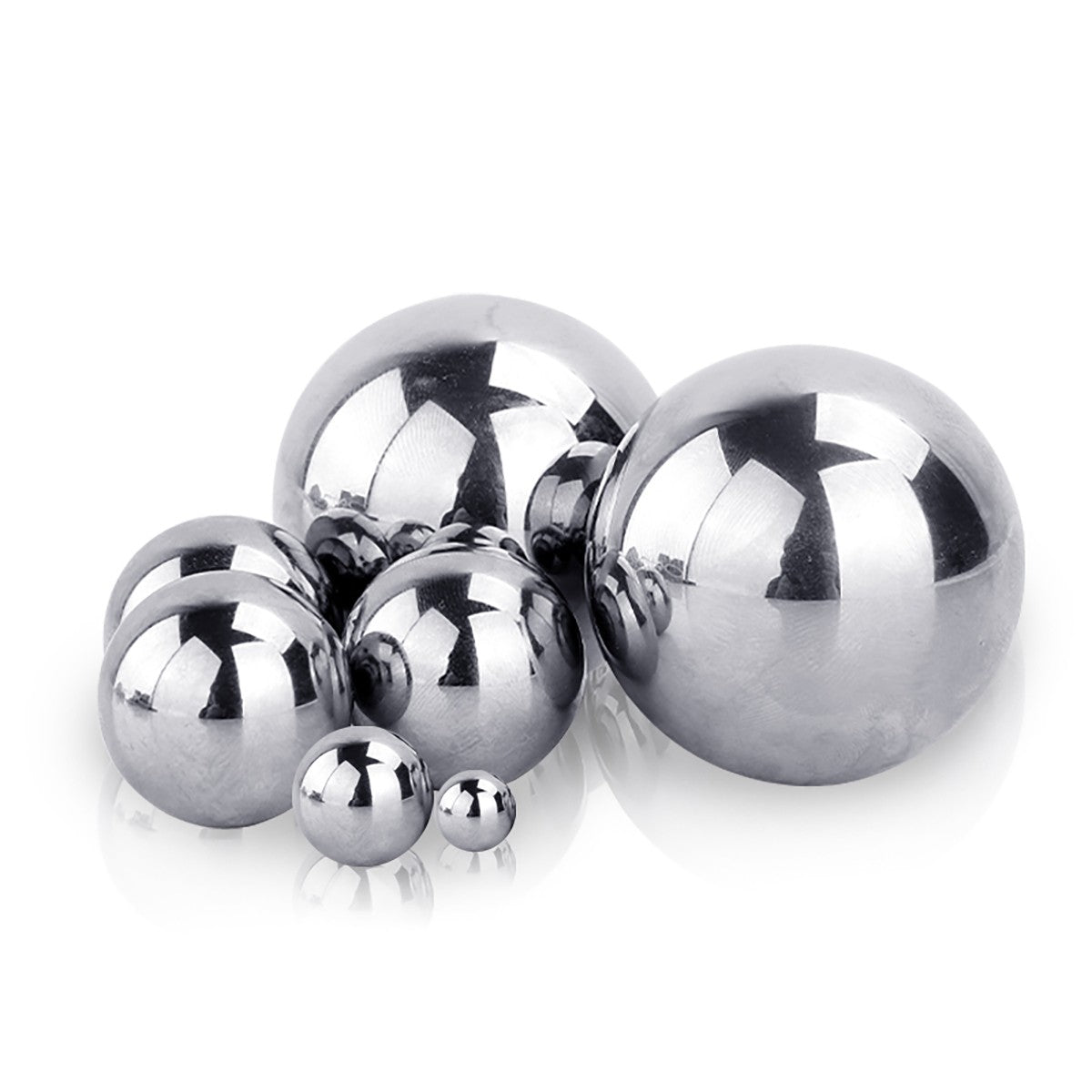
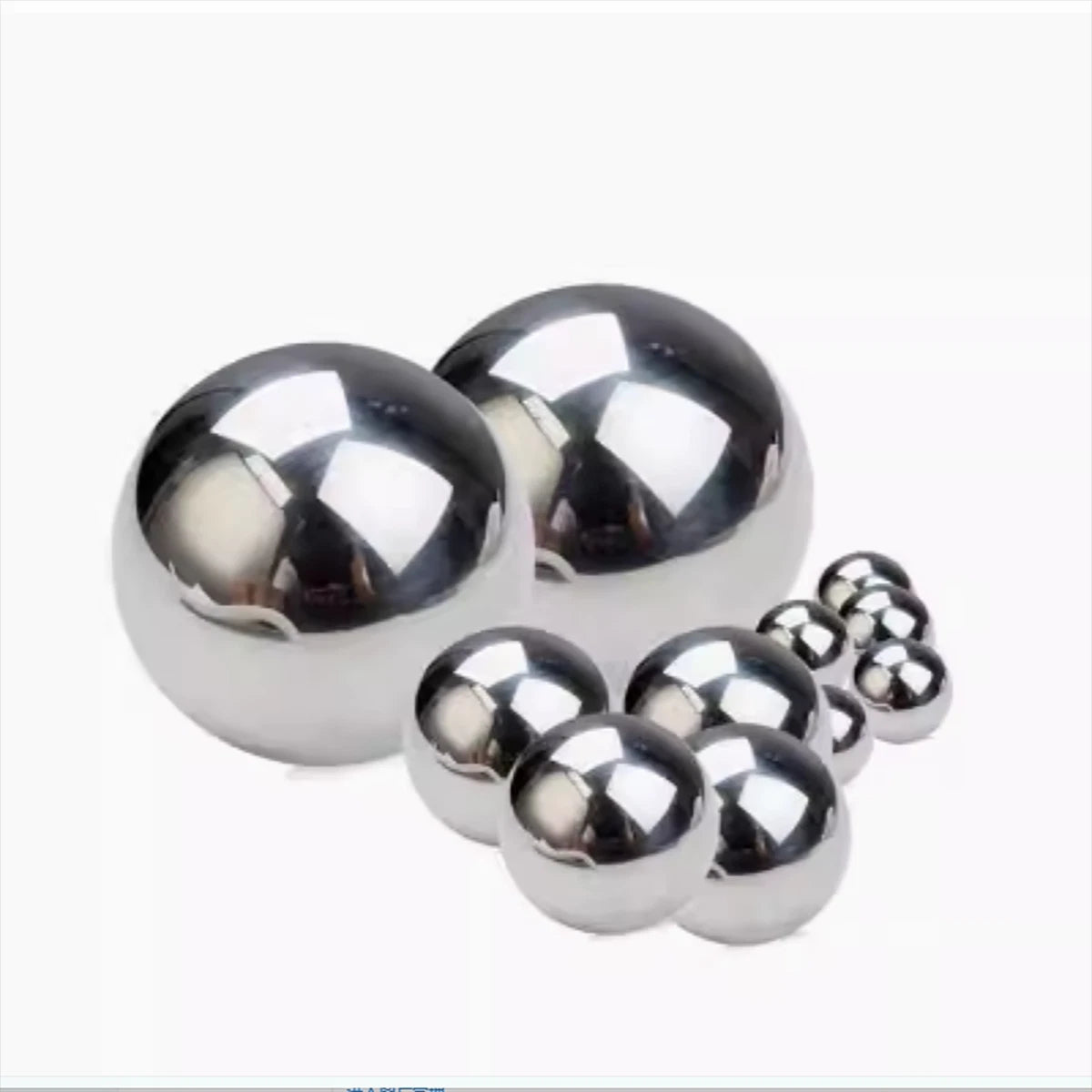
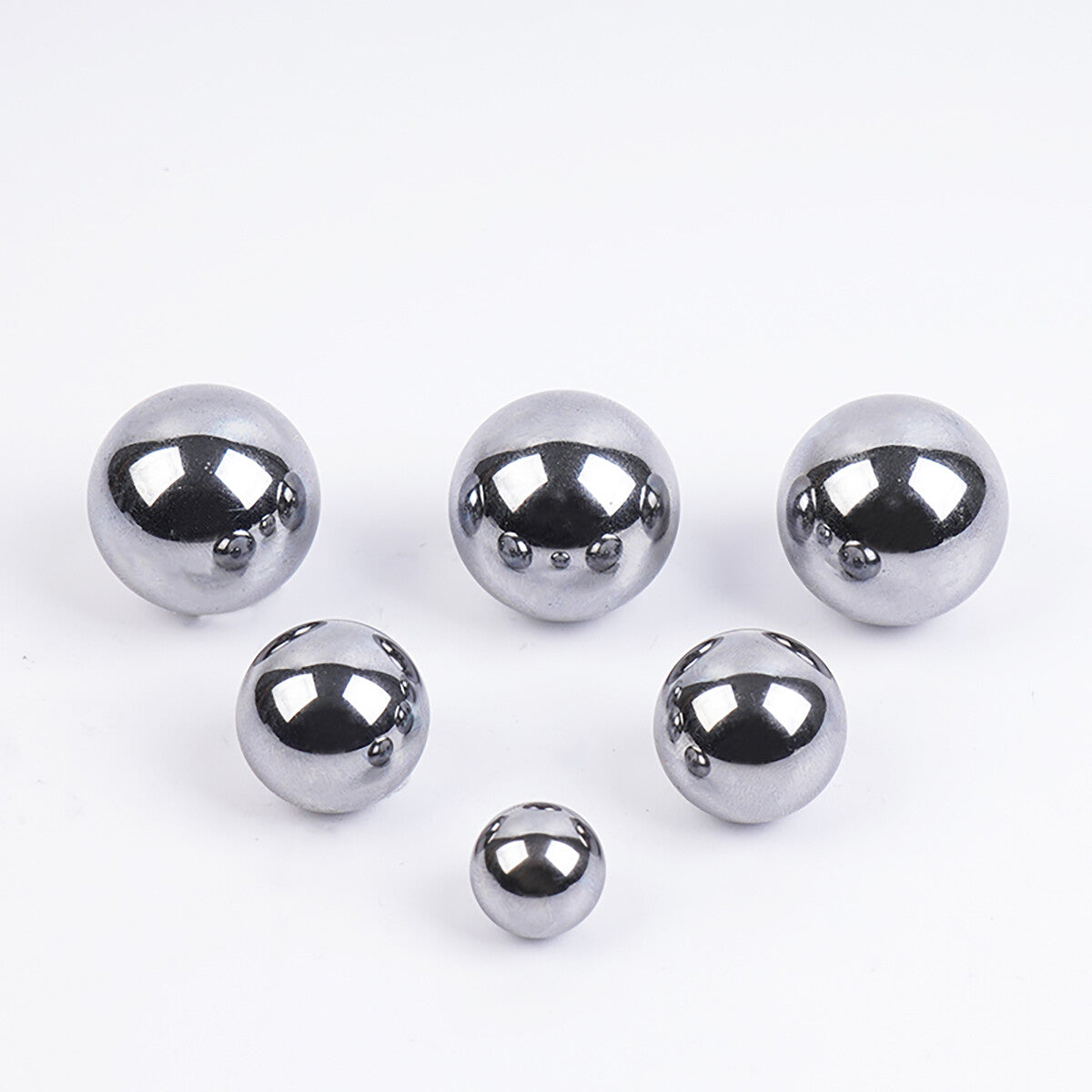
1mm to 100mm, 1/16" to 3" AISI 316L Stainless Steel Ball Bearings G100 Precision

No reviews

Price:
Sale price$3.71 USD
Stock:
In stock (500 units), ready to be shipped

Payment & Security

Ach Direct Debit Amazon American Express Apple Pay Bancontact BLIK Diners Club Discover EPS Google Pay iDEAL Wero JCB Maestro Mastercard Multibanco MobilePay PayPal Przelewy24 Shop Pay Twint Union Pay USDC Visa

Your payment information is processed securely. We do not store credit card details nor have access to your credit card information.

Limited Offer — Spend More, Save More
Spend $55+
Save $5
Spend $100+
Save $10
Spend $200+
Save $25
HomeDIYer DIY Expert Support

DIY Expert Support

Get fitment advice & recommendations

Mon–Fri  8:30 AM – 8:00 PM
24-Hour Fast Ship
Arrives in 3–14 Days
Worldwide Shipping
30-Day Returns
1 tree planted with every purchase

Description

AISI 316L Stainless Steel Ball Bearings G100 — Corrosion-Resistant Precision for Demanding Applications

When standard carbon steel balls corrode, seize, or contaminate your process, engineers and makers turn to AISI 316L stainless steel ball bearings. Whether you are building marine hardware, food-grade machinery, chemical handling equipment, or precision instruments, these G100-grade balls deliver the dimensional accuracy and surface finish your application demands — without the rust risk that plagues lesser alloys.

Each ball is manufactured from AISI 316L (UNS S31603) austenitic stainless steel, a low-carbon molybdenum-bearing grade that resists pitting and crevice corrosion in chloride-rich environments. Diameters span 1 mm (approximately 0.039 in) through 100 mm (approximately 3.937 in), with both metric and fractional imperial sizes available — from 1/16 in (1.5 mm) up to 3 in (76.2 mm) and beyond. Surface finish and sphericity conform to ABEC/ISO G100 tolerance class, making these balls suitable for precision bearing assemblies, valve seats, and metering applications.

Typical use cases include stainless steel ball bearing replacement in marine deck hardware and winches, corrosion-resistant ball valves for chemical dosing systems, precision check valves in food and beverage processing lines, and DIY linear motion or drawer slide projects requiring rust-free rolling elements. Bulk quantity options — from as few as 1 piece up to 10,000 pieces per order — make these balls equally practical for prototyping and production runs.

⚙️ Compatibility: Suitable for standard ball bearing housings, ball valves, check valves, and precision instruments designed for 316 or 316L stainless steel rolling elements. Verify bore diameter and tolerance class before ordering.

✅ Key Features of These AISI 316L Stainless Steel Ball Bearings

🦠 316L Molybdenum-Bearing Alloy

The addition of 2–3% molybdenum gives 316L significantly better resistance to chloride pitting and crevice corrosion compared to standard 304 stainless, making these balls the go-to choice for marine, coastal, and chemical environments.

🎯 G100 Precision Grade

Manufactured to ISO 3290 / ABEC G100 tolerance class, these balls exhibit tight sphericity, surface roughness, and diameter variation — ensuring smooth, low-noise operation in precision bearing assemblies and valve seats.

📐 Wide Size Range: 1 mm to 100 mm

With 65+ diameter options spanning 1 mm (1/16 in) through 100 mm (3 in), you can source the exact size needed for metric or imperial applications without custom machining or compromise.

🔢 Flexible Quantity Tiers

Order from as few as 1 piece for prototyping up to 10,000 pieces for production runs. Quantity pricing scales with volume, so you only pay for what you need — whether that is a handful of replacement balls or a full production batch.

🧼 Food-Grade and Hygienic Suitability

316L stainless steel is widely accepted in food processing, pharmaceutical, and medical device applications where non-reactive, cleanable metal contact surfaces are required. Low carbon content minimizes sensitization risk during welding or elevated-temperature service.

⚖️ Consistent Hardness and Density

Typical Vickers hardness of 160–200 HV and density of approximately 7.98 g/cm³ ensure predictable load-bearing performance and dimensional stability across the full size range.

📐 Technical Specifications — Stainless Steel Ball Bearings

Material AISI 316L (UNS S31603) Austenitic Stainless Steel
Molybdenum Content 2.0–3.0%
Carbon Content (max) 0.03%
Precision Grade G100 (ISO 3290 / ABEC equivalent)
Diameter Range 1 mm – 100 mm (1/16 in – approx. 3.94 in)
Available Sizes See variant options
Surface Finish See variant options
Hardness (typical) 160–200 HV
Density Approximately 7.98 g/cm³
Quantity per Order See variant options (1 pc – 10,000 pcs)
Corrosion Resistance Excellent — chloride, marine, and mild chemical environments
Temperature Range Typically –196°C to +800°C (–321°F to +1472°F) continuous
Magnetism Slightly magnetic (work-hardened surface layer)

❓ Frequently Asked Questions

How do I choose the correct ball bearing diameter for my application?

Measure the inner bore of your bearing housing or valve seat with a micrometer or caliper. The ball diameter should match the specified rolling element size in your bearing's datasheet. For ball valves, the ball diameter is typically specified in the valve's technical drawing. If you are replacing worn balls, measure the original ball across its widest point. Both metric (mm) and fractional imperial (in) sizes are available — select the variant that matches your drawing specification exactly.

Is 316L stainless steel stronger than 304 stainless steel for ball bearings?

316L and 304 have similar tensile and yield strength. The key difference is corrosion resistance: 316L contains 2–3% molybdenum, which dramatically improves resistance to chloride pitting and crevice corrosion — the failure mode most common in marine, coastal, and chemical environments. For dry indoor applications, 304 may suffice; for saltwater, acidic, or chlorinated environments, 316L is the correct choice.

What does G100 precision grade mean, and do I need it?

G100 refers to the ISO 3290 grade, which defines maximum allowable deviation in sphericity, surface roughness, and diameter variation. A G100 ball has a maximum spherical deviation of 1 µm per mm of diameter (up to a defined limit). For precision bearings, instrument pivots, and metering valves, G100 ensures smooth, low-noise, low-vibration operation. For general-purpose applications such as drawer slides or decorative hardware, G100 still provides excellent performance and is a reliable standard choice.

Are these balls suitable for food processing or pharmaceutical equipment?

Yes. AISI 316L stainless steel is widely used in food-grade, pharmaceutical, and medical device applications. Its low carbon content (max 0.03%) reduces sensitization risk, and the alloy is non-reactive with most food acids and cleaning agents. Always verify compliance with your specific regulatory standard (e.g., FDA, EU 10/2011, or 3-A Sanitary Standards) for your particular application before use.

Will these stainless steel balls rust or corrode?

316L stainless steel offers excellent corrosion resistance in most environments, including marine, coastal, mildly acidic, and chlorinated water applications. However, no stainless steel is completely immune to corrosion. Prolonged exposure to concentrated acids (e.g., hydrochloric acid), high-chloride solutions at elevated temperatures, or crevice conditions can cause localized corrosion. For highly aggressive chemical environments, consult a materials engineer to confirm suitability.

Can I use these balls as replacement rolling elements in standard ball bearings?

Yes, provided the diameter and precision grade match the original specification. Measure the existing balls or consult the bearing manufacturer's datasheet for the rolling element diameter and grade. 316L stainless balls are a common upgrade from carbon steel balls in bearings exposed to moisture, chemicals, or food contact. Note that 316L is slightly softer than hardened chrome steel (52100), so it may not be suitable for very high-load or high-speed bearing applications where hardened steel is specified.

Are these balls slightly magnetic?

316L stainless steel is nominally non-magnetic in its annealed state, but cold working during ball manufacturing can induce a small amount of ferromagnetism in the surface layer. In practice, these balls may show a slight magnetic response. If your application requires fully non-magnetic components (e.g., MRI equipment or sensitive instruments), specify a fully annealed or certified non-magnetic grade and test with a gaussmeter before use.

🛒 Select your ball bearing diameter and quantity above, then add to cart.


You may also like

Recently viewed