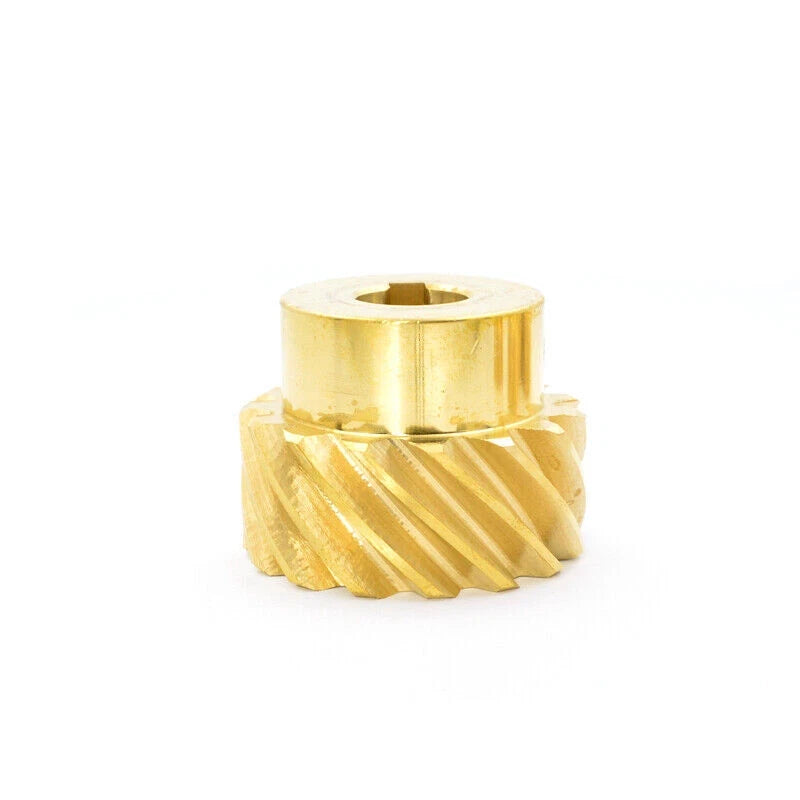
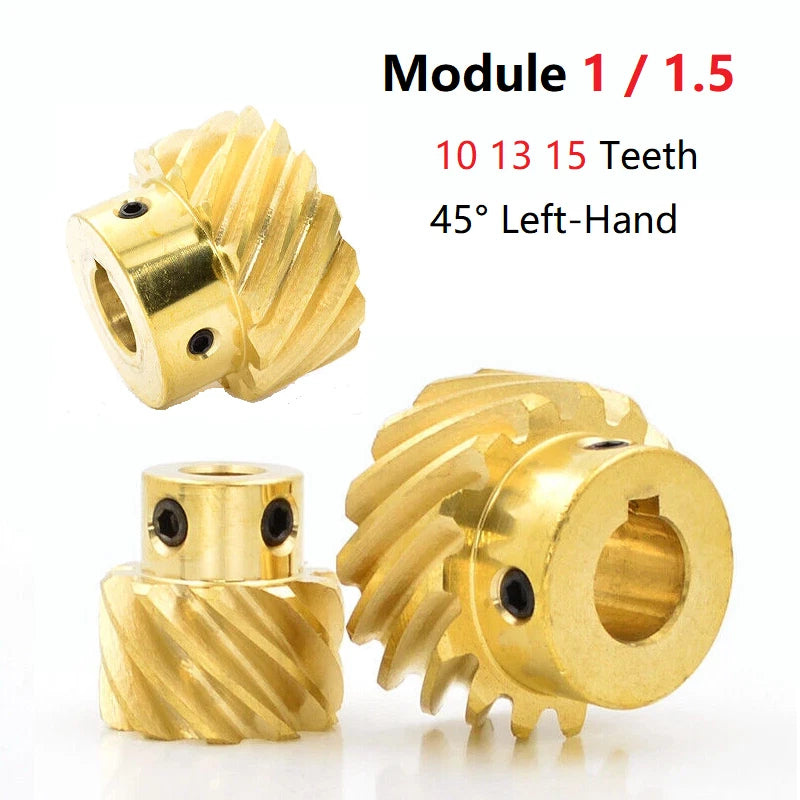
Brass Helical Gears Module 1-1.5 45 Degree 10 13 15 Teeth Motor Pinion Gear

No reviews

Price:
Sale price$7.14 USD
Stock:
In stock (500 units), ready to be shipped

Payment & Security

Ach Direct Debit Amazon American Express Apple Pay Bancontact BLIK Diners Club Discover EPS Google Pay iDEAL Wero JCB Maestro Mastercard Multibanco MobilePay PayPal Przelewy24 Shop Pay Twint Union Pay USDC Visa

Your payment information is processed securely. We do not store credit card details nor have access to your credit card information.

Limited Offer — Spend More, Save More
Spend $55+
Save $5
Spend $100+
Save $10
Spend $200+
Save $25
HomeDIYer DIY Expert Support

DIY Expert Support

Get fitment advice & recommendations

Mon–Fri  8:30 AM – 8:00 PM
24-Hour Fast Ship
Arrives in 3–14 Days
Worldwide Shipping
30-Day Returns
1 tree planted with every purchase

Description

Brass Helical Gears Module 1–1.5 — Smooth, Quiet Power Transmission for Motors & DIY Drives

When backlash, noise, and premature wear are costing you precision in your build, the right pinion gear makes all the difference. These brass helical gears are engineered for hobbyists, robotics builders, and small-machine designers who need reliable, low-noise torque transfer without the bulk of industrial-grade components.

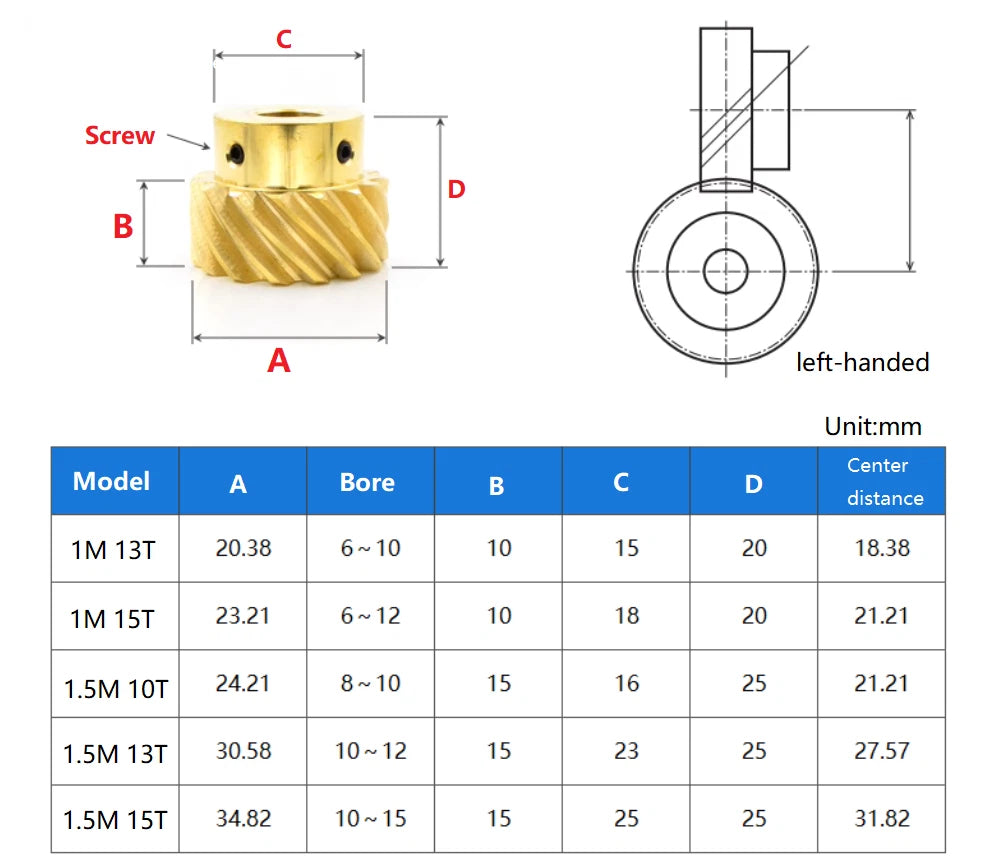
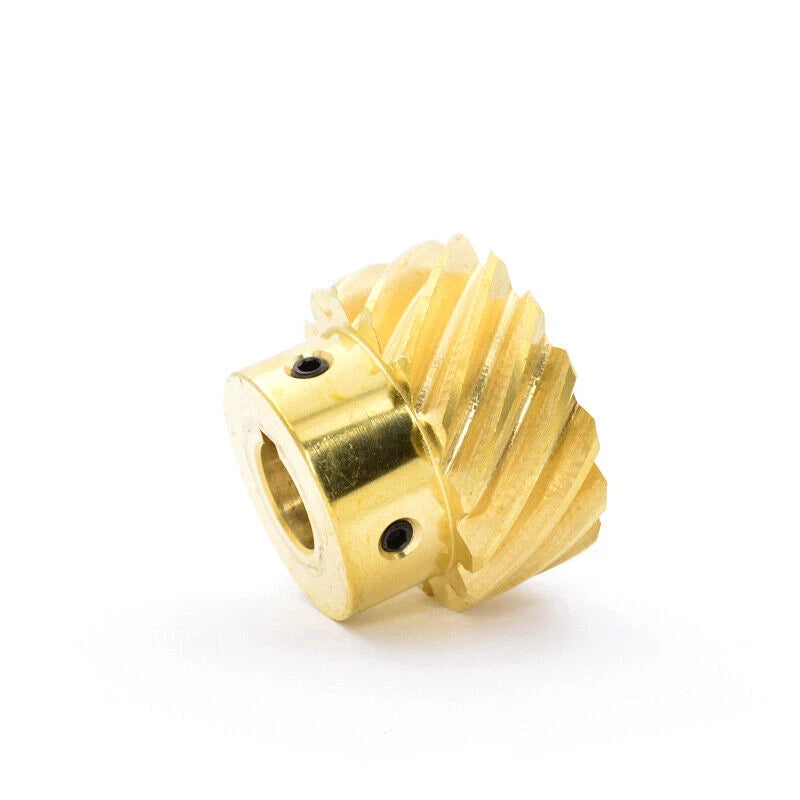
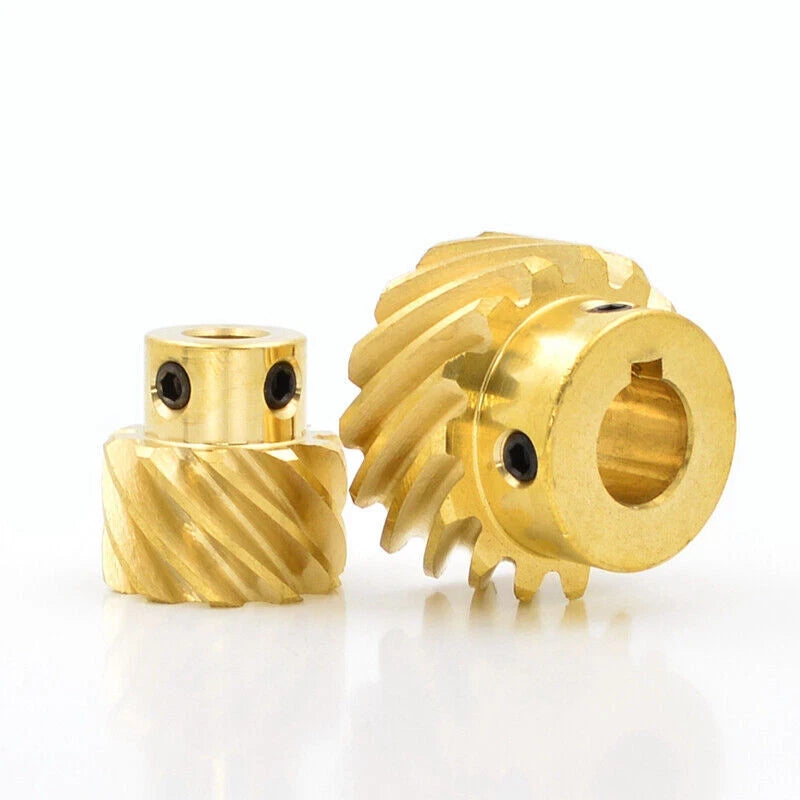
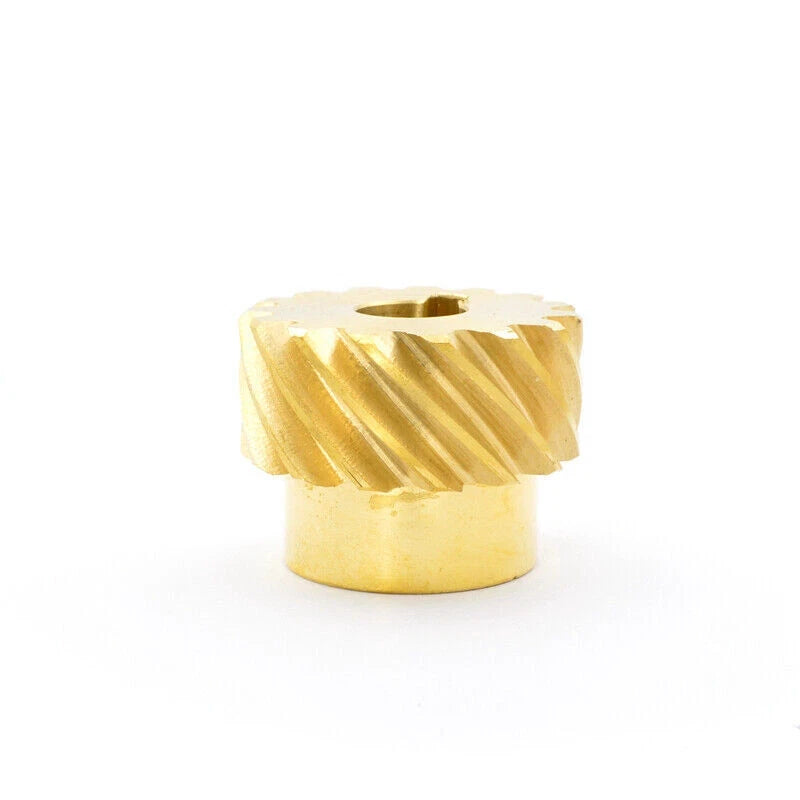
Each gear is machined from solid brass with a 45-degree helix angle, available in Module 1 and Module 1.5 configurations with 10, 13, or 15 teeth. Bore options range from 6 mm (0.24 in) to 15 mm (0.59 in), including keyway variants (4 mm and 5 mm keyways) for positive shaft locking. Overall gear diameter varies by module and tooth count, typically 12–27 mm (0.47–1.06 in).

Typical use cases include DC motor pinion drives in 3D printer extruder assemblies, compact gearbox stages in robotic arm joints, and speed-reduction drives in DIY CNC router Z-axis mechanisms — all applications where helical tooth engagement reduces vibration and extends component life.

⚙️ Compatible with mating helical gears of the same module (M1 or M1.5) and matching helix angle (45°). Verify bore diameter and keyway dimensions against your shaft spec before ordering.

✅ Key Features of These Brass Helical Pinion Gears

🔩
Solid Brass Construction

Machined from brass for corrosion resistance, low friction against steel shafts, and self-lubricating properties that reduce maintenance intervals in enclosed gearboxes.

📐
45° Helix Angle for Quiet Meshing

The 45-degree helix angle distributes tooth load across a longer contact line than spur gears, delivering noticeably smoother, quieter operation at equivalent speeds.

🎯
Multiple Module & Tooth Options

Available in Module 1 (13T, 15T) and Module 1.5 (10T, 13T, 15T) to match a wide range of gear ratio requirements in compact drive trains.

🔧
Wide Bore Range with Keyway Options

Plain bore sizes from 6 mm to 12 mm, plus keyway variants (10 mm + 4 mm key, 12 mm + 4 mm key, 14 mm + 5 mm key, 15 mm + 5 mm key) for positive, slip-free shaft engagement.

📦
Flexible Pack Quantities

Order 1, 2, 3, or 5 pieces per pack — ideal for prototyping single units or stocking spares for production runs without over-committing budget.

Drop-In Fit for Standard Motor Shafts

Bore tolerances are machined to H7 fit standards (typically ±0.01–0.02 mm), ensuring a snug, concentric mount on standard DC motor and stepper motor output shafts.

📐 Technical Specifications — Brass Helical Pinion Gears

Material Brass
Helix Angle 45°
Module 1 / 1.5 (see variant options)
Tooth Count 10T / 13T / 15T (see variant options)
Bore Diameter 6 mm / 8 mm / 10 mm / 12 mm / 14 mm / 15 mm (see variant options)
Keyway 4 mm (for 10–12 mm bore) / 5 mm (for 14–15 mm bore) — keyway variants only
Pitch Diameter (approx.) M1: 13–15 mm | M1.5: 15–22.5 mm
Overall Gear Width See variant options
Bore Tolerance H7 fit (typically ±0.01–0.02 mm)
Finish Natural brass (uncoated)
Pack Quantity 1 / 2 / 3 / 5 pcs (see variant options)
Weight (per piece) See variant options

❓ Frequently Asked Questions

How do I choose between Module 1 and Module 1.5?

Module (M) defines the tooth size and pitch diameter. Module 1.5 gears have larger, stronger teeth and a bigger pitch diameter than Module 1 for the same tooth count. Choose M1 for compact, lightweight drives (e.g., 3D printer extruders, small robots) and M1.5 when you need higher torque capacity or are mating with existing M1.5 gears in your gearbox.

Can I pair these helical gears with standard spur gears of the same module?

No. Helical gears must mesh with other helical gears of the same module and the same (or complementary) helix angle. Mixing helical and spur gears of the same module will result in poor tooth contact, rapid wear, and noise. Always match module and helix angle when selecting mating gears.

Do I need a keyway bore, or will a plain bore work?

A plain bore is sufficient for light-duty or low-torque applications where a set screw or press fit holds the gear. For higher torque, reversing loads, or applications where slippage would be dangerous, select a keyway bore variant — the key provides a positive mechanical lock between the gear and shaft, preventing rotational slip under load.

What shaft materials are compatible with these brass gears?

Brass gears work well against hardened steel shafts (the most common pairing), stainless steel, and aluminum shafts. Brass is softer than steel, so in a brass-on-steel mesh the brass gear acts as the sacrificial wear component — which is intentional in many designs to protect the more expensive steel shaft or mating gear. Avoid pairing brass with other brass for the mating gear, as similar-hardness pairs wear faster.

How do I measure my shaft to select the correct bore size?

Use a digital caliper to measure the shaft outer diameter at the mounting point. Select the bore size that matches your shaft diameter exactly — for example, a 6 mm shaft requires the 6 mm bore variant. If your shaft has a flat or keyway, measure the shaft diameter across the full round section (not across the flat) and choose the corresponding keyway bore variant.

Are these gears suitable for outdoor or high-humidity environments?

Brass has good natural corrosion resistance and performs well in moderate humidity and indoor environments. For prolonged outdoor exposure or salt-spray environments, apply a light coat of grease or corrosion-inhibiting lubricant to the gear teeth and bore. For fully outdoor or marine applications, consider stainless steel gears instead.

What lubrication should I use with these helical gears?

A light machine oil (ISO VG 32–68) or white lithium grease works well for most applications. Avoid heavy greases that can trap debris in fine-pitch teeth. For enclosed gearboxes, a splash-lubricated gear oil is ideal. Re-lubricate periodically based on operating hours and load — typically every 200–500 hours under normal conditions.

🛒 Select your Model, Bore, and Pack Quantity above, then add to cart.

You may also like

Recently viewed