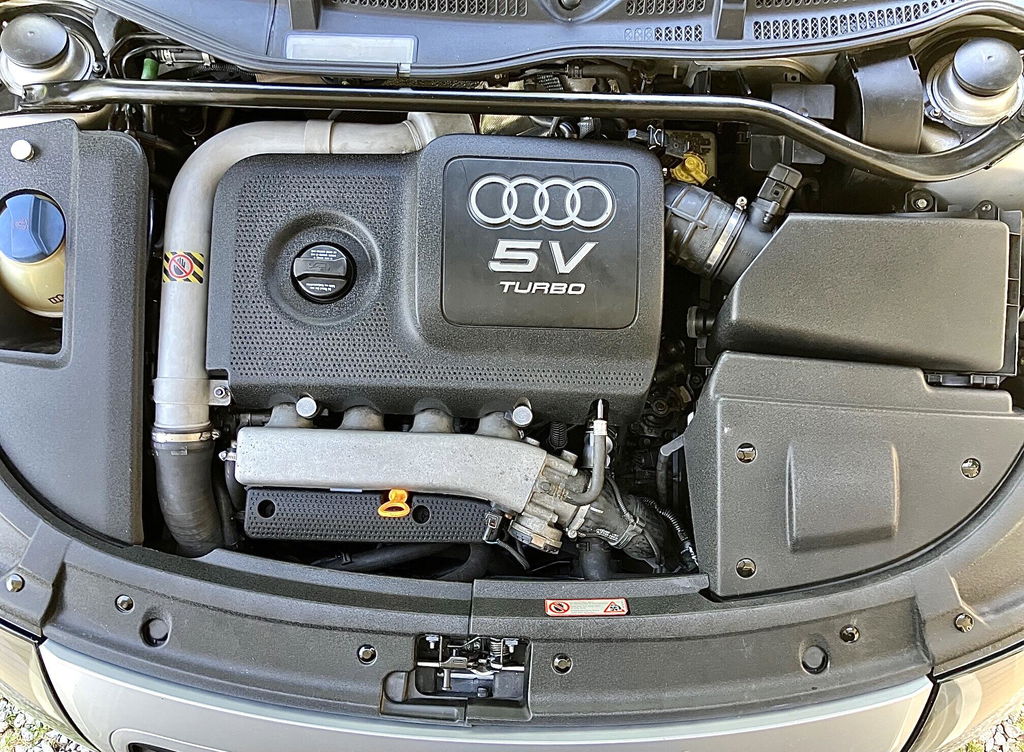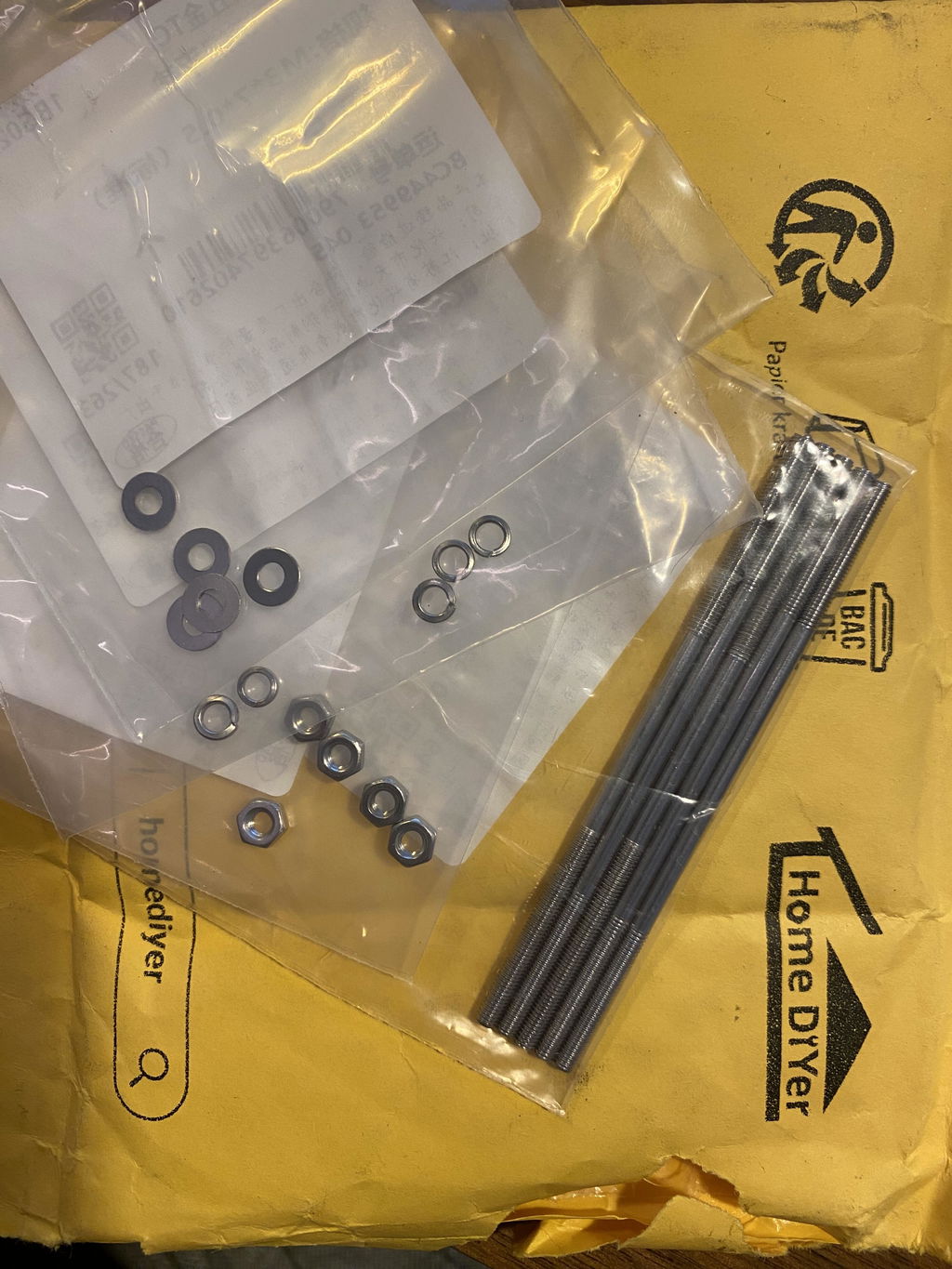
The chain is fine...but I ordered the wrong size. Nine links of the chain I ordered equals six of the size I wanted. My error...
How can I straighten out the springs? I can't use them coil uo as is.
Your payment information is processed securely. We do not store credit card details nor have access to your credit card information.
Get fitment advice & recommendations
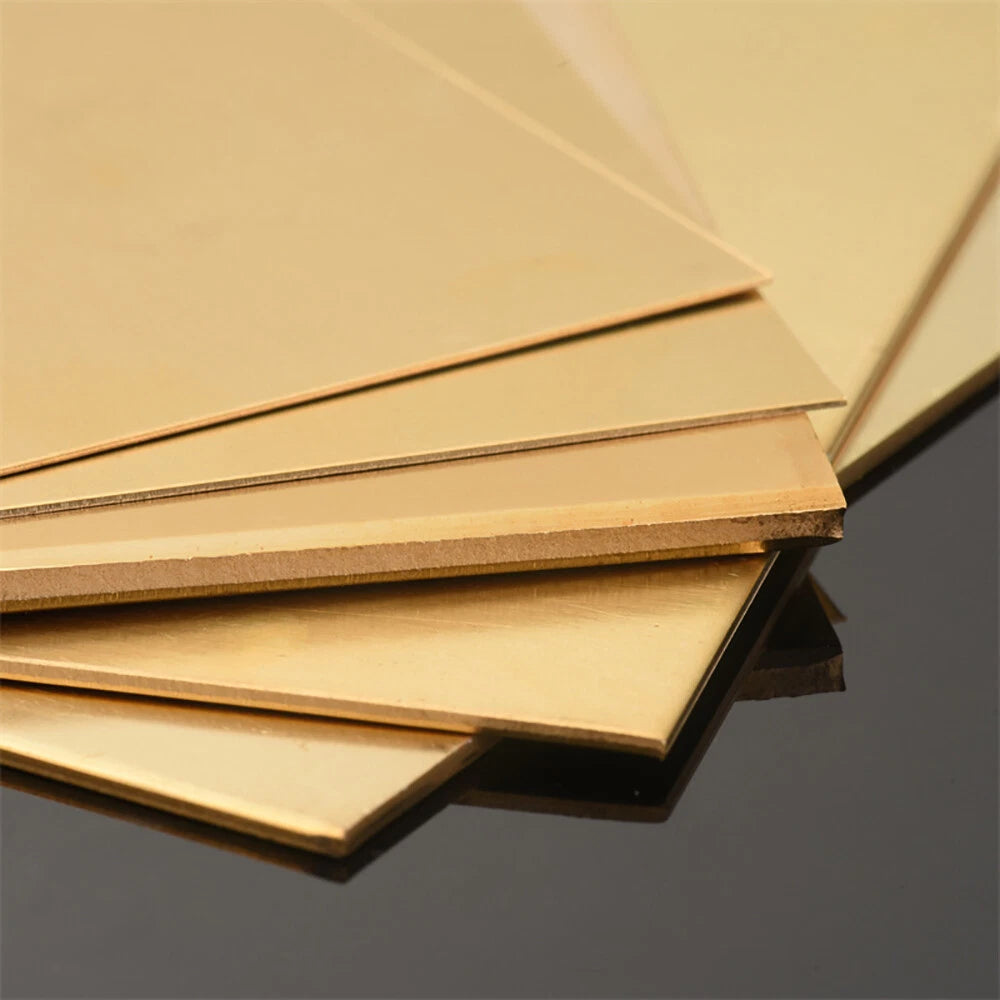
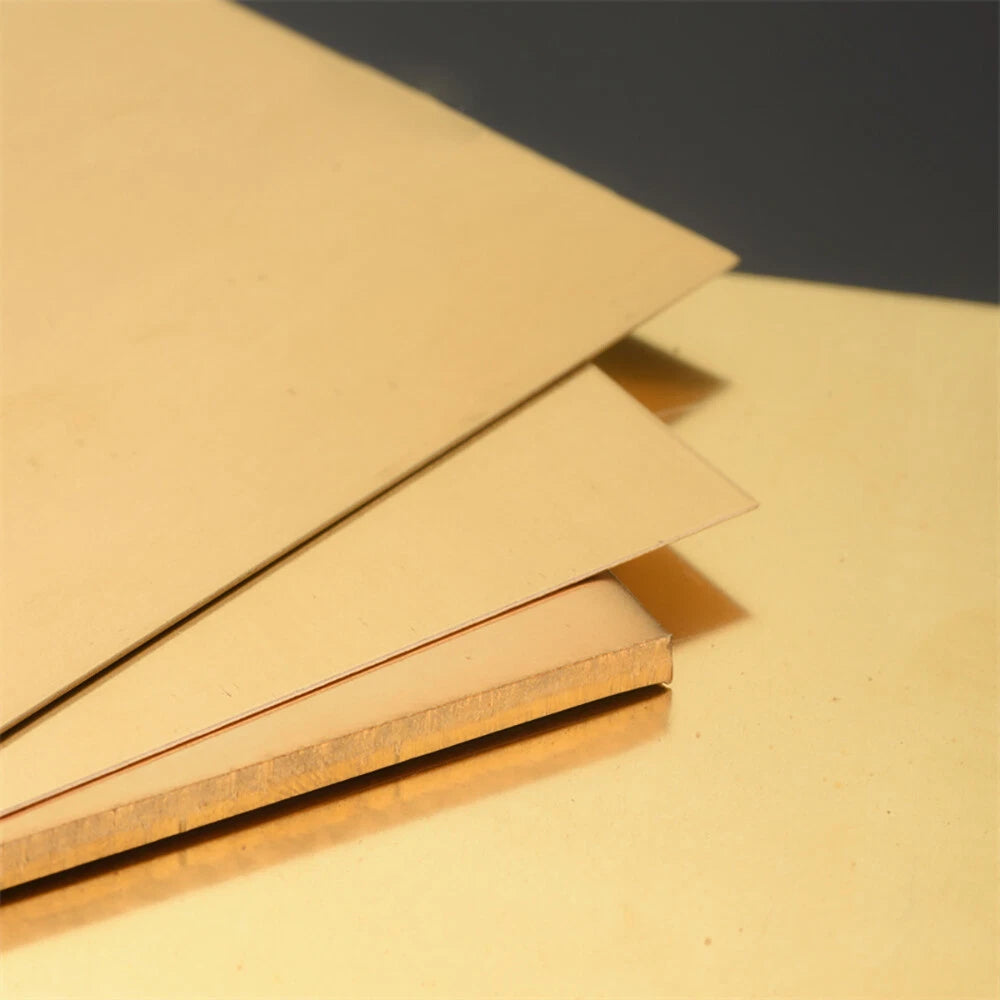
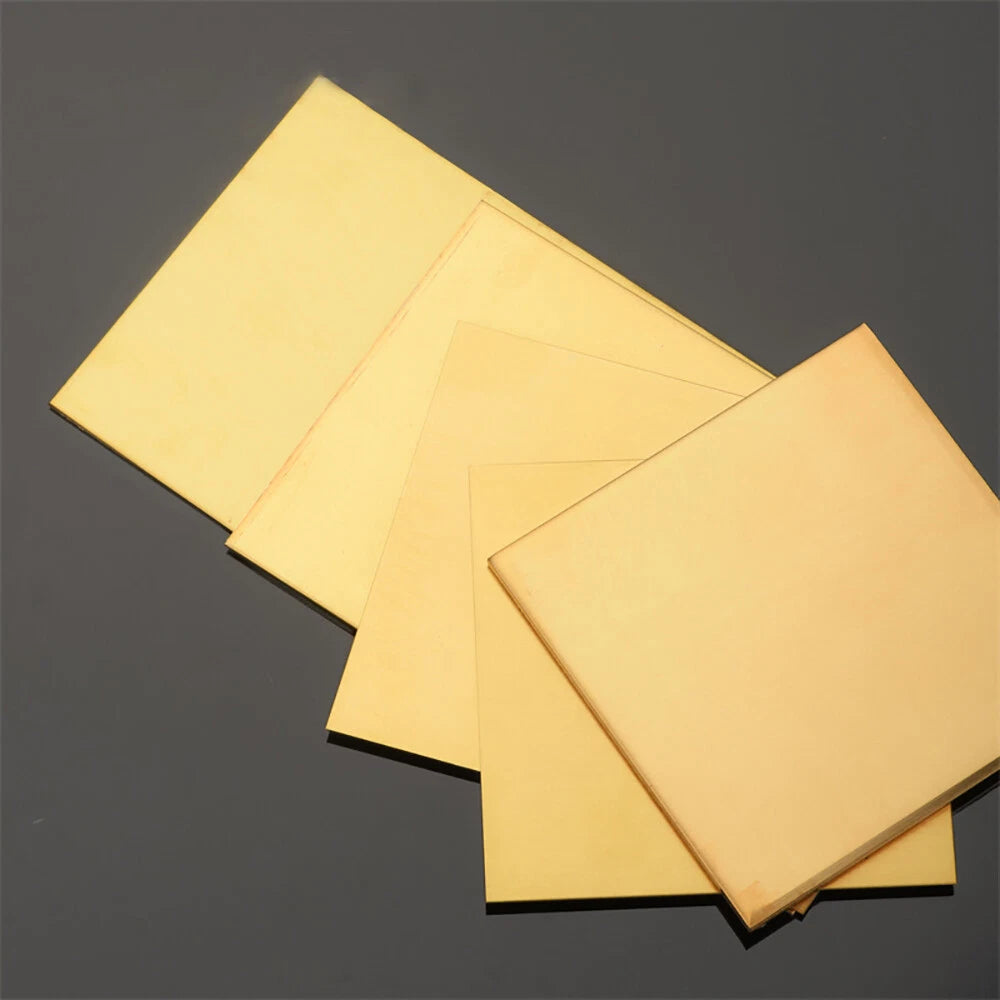
When your project demands a specific size without the waste of full-length stock, sourcing the right brass sheet offcut can be a frustrating hunt. Whether you are a hobbyist machinist, a jewellery maker, or a workshop professional needing shim stock or backing plates, these guillotine-cut brass sheet plate offcuts give you exactly the dimensions you need — no more, no less.
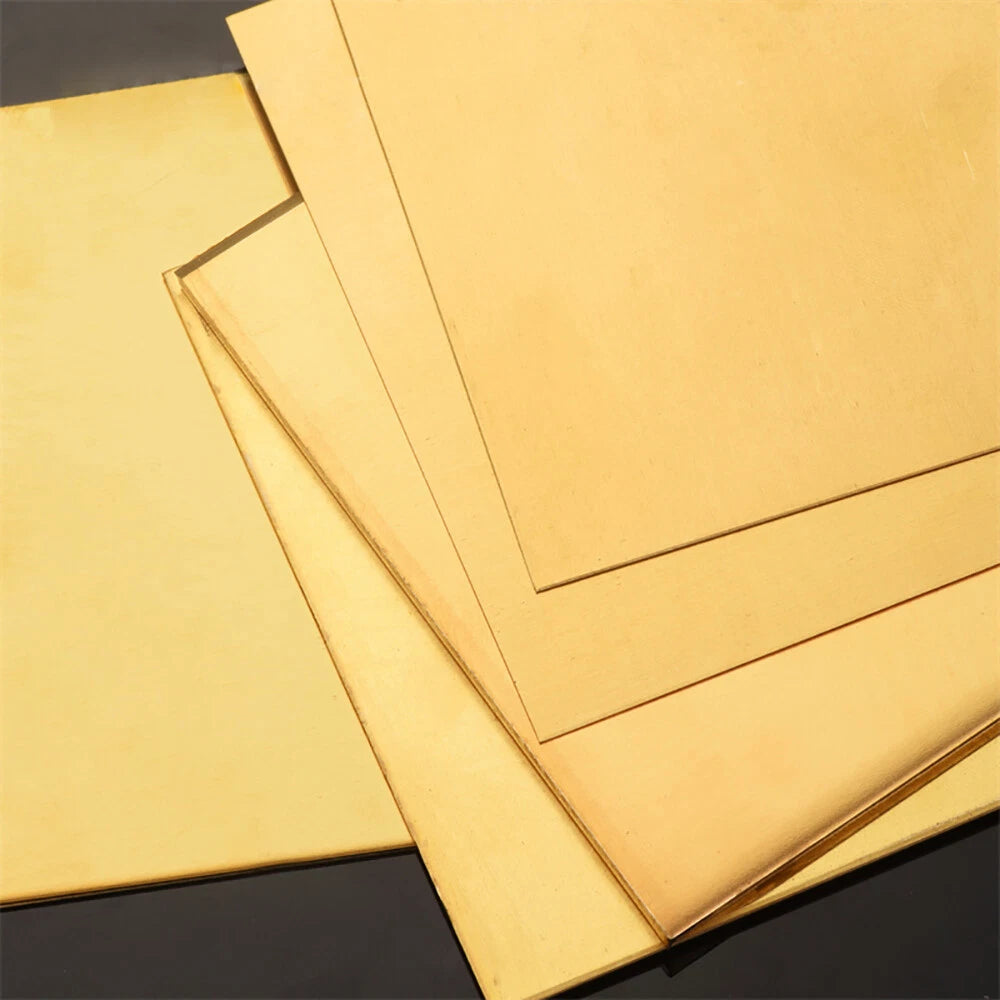
Each piece is cut from solid brass sheet (CuZn alloy, typically CW614N / C360 free-machining grade) with a guillotine shear for clean, straight edges. Thickness ranges from 0.5 mm to 6 mm (approx. 0.020 in to 0.236 in), and sheet dimensions span from 50 mm × 50 mm up to 300 mm × 300 mm (approx. 2 in × 2 in to 11.8 in × 11.8 in). Select your exact thickness and sheet size from the variant options above.
Typical applications include engraving blanks and name plates, electrical contact shims and spacers, model engineering and clockmaking components, architectural decorative inlays, and craft or jewellery fabrication requiring flat brass sheet stock.
Available from 0.5 mm to 6 mm (0.020 in – 0.236 in) to suit thin shim work through to structural plate applications.
Shear-cut for straight, consistent edges — ready to use or finish with minimal dressing required.
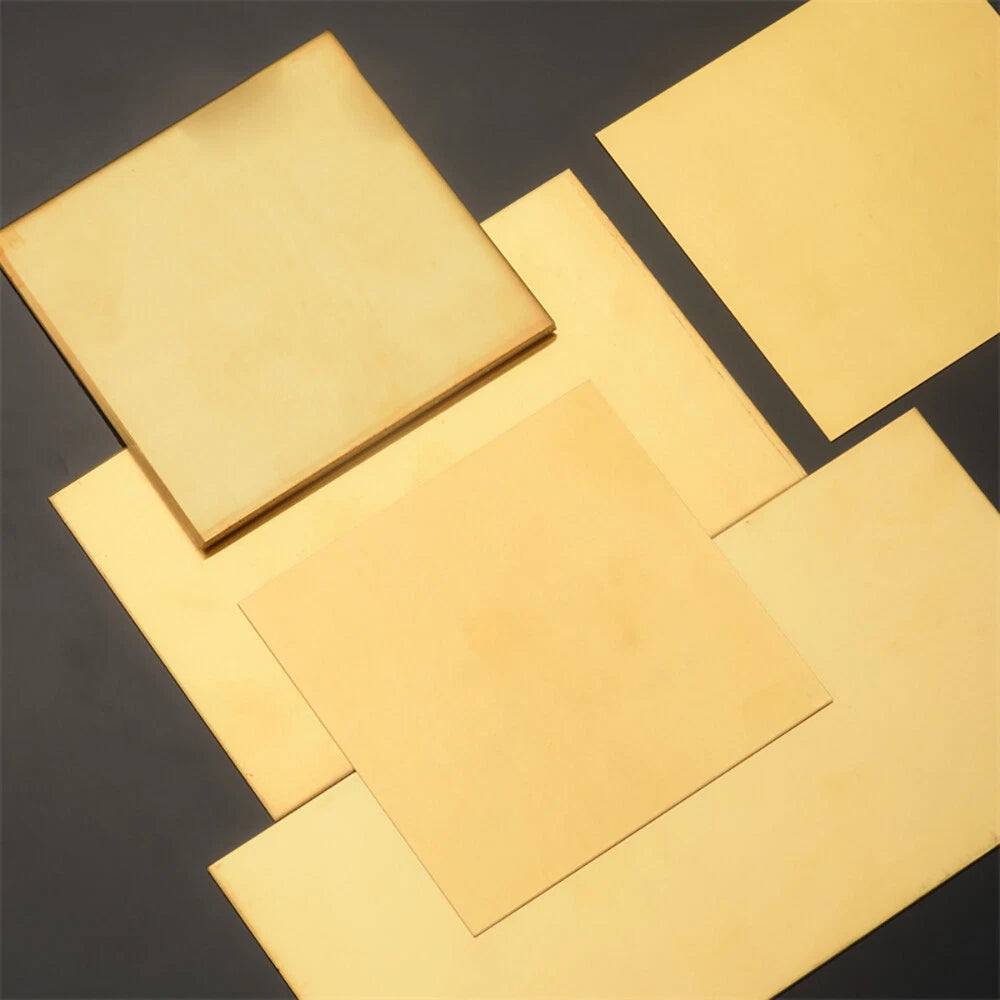
Choose from 50 × 50 mm up to 300 × 300 mm (and rectangular cuts), covering a broad range of project footprints.
Brass naturally resists oxidation and atmospheric corrosion, making it suitable for both indoor and mildly humid environments.
Free-machining brass grade machines cleanly with standard HSS or carbide tooling — ideal for drilling, tapping, and milling.
Packing quantity selectable at checkout — order exactly what your project requires without over-buying.
| Material | Brass (CuZn alloy, free-machining grade) |
|---|---|
| Finish | Mill finish / guillotine shear cut |
| Thickness Range | 0.5 mm – 6 mm (0.020 in – 0.236 in) |
| Sheet Size Range | 50 × 50 mm up to 300 × 300 mm (2 in × 2 in – 11.8 in × 11.8 in) |
| Edge Condition | Guillotine shear cut — straight edges, minor burr possible |
| Colour | Golden yellow (natural brass) |
| Machinability | Excellent — suitable for drilling, milling, tapping, soldering |
| Corrosion Resistance | Good — resistant to atmospheric and mild moisture exposure |
| Conductivity | Electrically and thermally conductive |
| Weight per Piece | See variant options |
| Packing Quantity | See variant options |
For shim stock, gaskets, or thin decorative inlays, 0.5 mm – 1 mm is typically sufficient. For structural backing plates, brackets, or engraving blanks that need rigidity, 2 mm – 4 mm is a common choice. For heavy-duty machined components or thick spacers, 5 mm – 6 mm provides the necessary material depth. If in doubt, select the next size up — brass is easy to reduce by filing or milling.
Guillotine-shear cut edges are generally straight and consistent, but a minor burr may be present on one face. We recommend a light pass with a flat file or deburring tool before handling in precision applications or where skin contact is frequent. Thicker plates (4 mm+) may have a more pronounced shear edge.
Yes. Brass solders readily with standard soft solder (tin-lead or lead-free) and can be silver-brazed for higher-strength joints. Clean the surface with fine abrasive or flux before soldering to ensure good adhesion. Avoid overheating thin sheets (under 1 mm) as they can warp.
Brass naturally develops a patina (slight darkening) when exposed to air over time. This is a surface oxidation process and does not affect structural integrity. For applications requiring a bright finish, apply a clear lacquer or metal polish after cleaning. In mildly humid or outdoor-adjacent environments, brass performs well without additional treatment.
Yes. Thin sheets (0.5 mm – 1.5 mm) can be cut with aviation snips, a jeweller's saw, or a fine-tooth hacksaw. Thicker sheets (2 mm+) are best cut with a hacksaw, angle grinder with a metal cutting disc, or a bandsaw fitted with a bi-metal blade. Always secure the workpiece firmly and use appropriate PPE.
Absolutely. Brass is one of the most popular materials for rotary engraving, laser engraving (with a fibre laser), and chemical etching. The mill finish surface accepts engraving cleanly. For laser engraving, a 1 mm – 2 mm thickness is commonly used for name plates and signage. For chemical etching (PCB-style), 0.5 mm – 1 mm sheets work well.
Square options (e.g. 100 × 100 mm, 200 × 200 mm) are ideal when you need equal dimensions on both axes — common for blanks, tiles, and symmetrical components. Rectangular options (e.g. 50 × 100 mm, 100 × 200 mm) suit strip-style applications such as hinges, brackets, and elongated name plates. Select the size closest to your finished part to minimise waste.