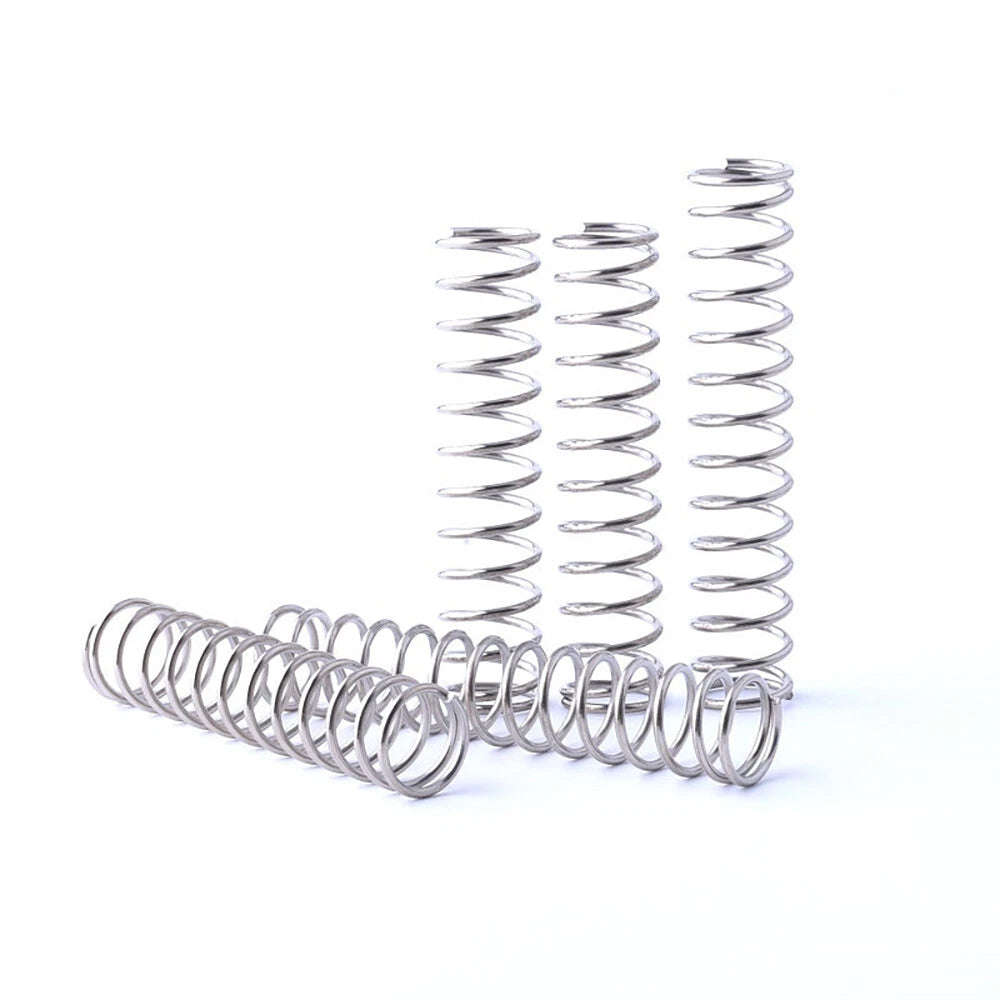
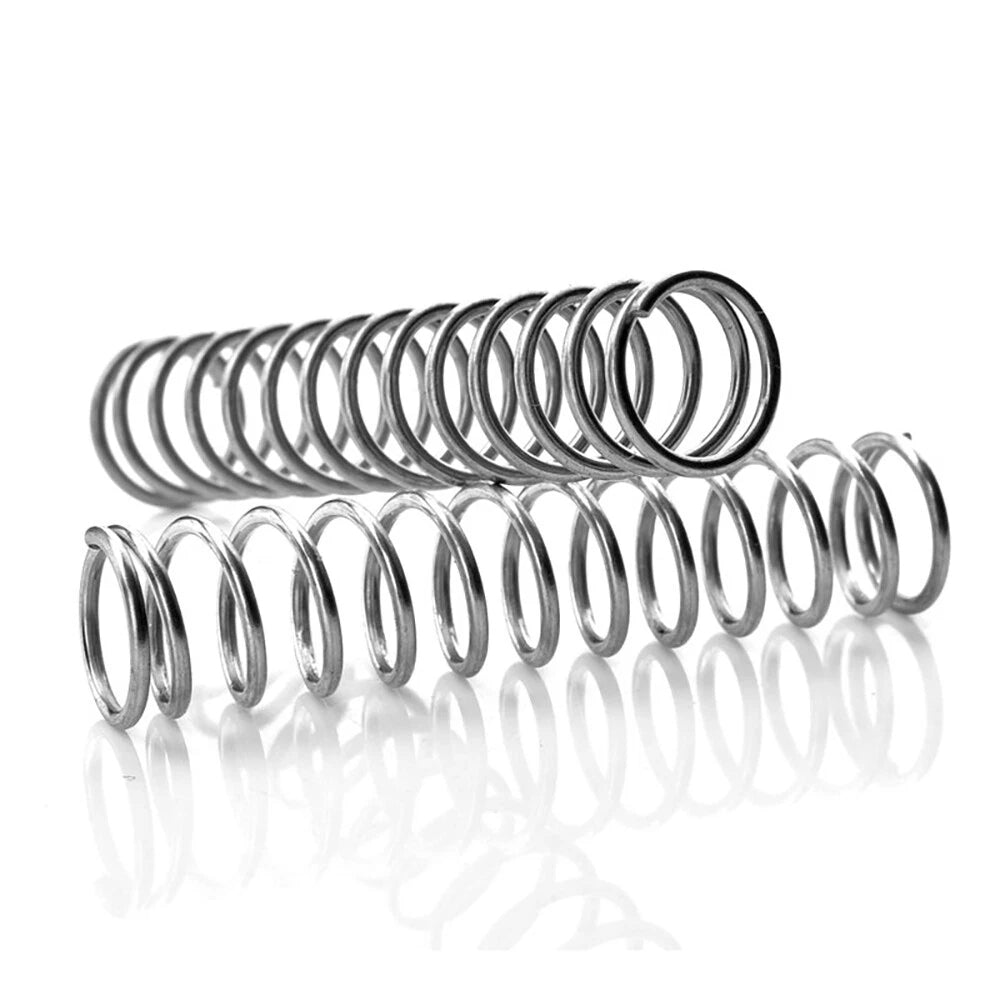
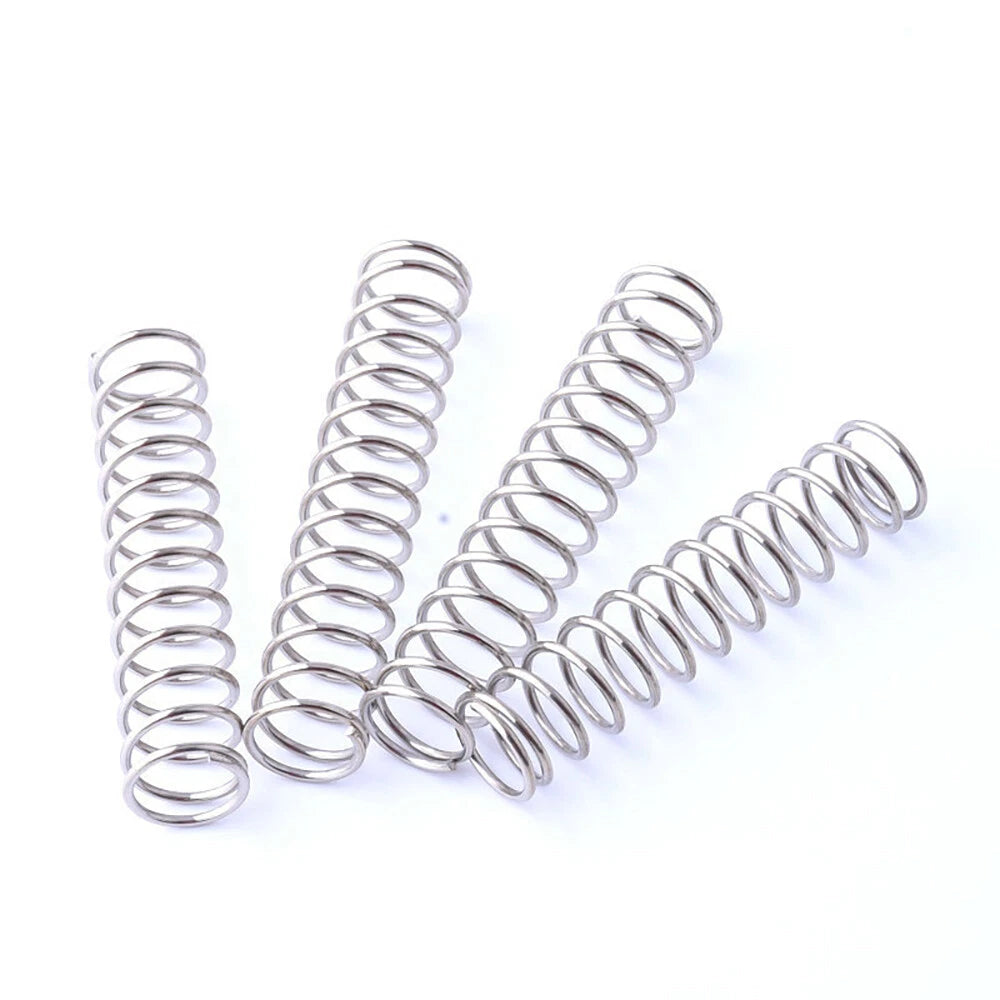
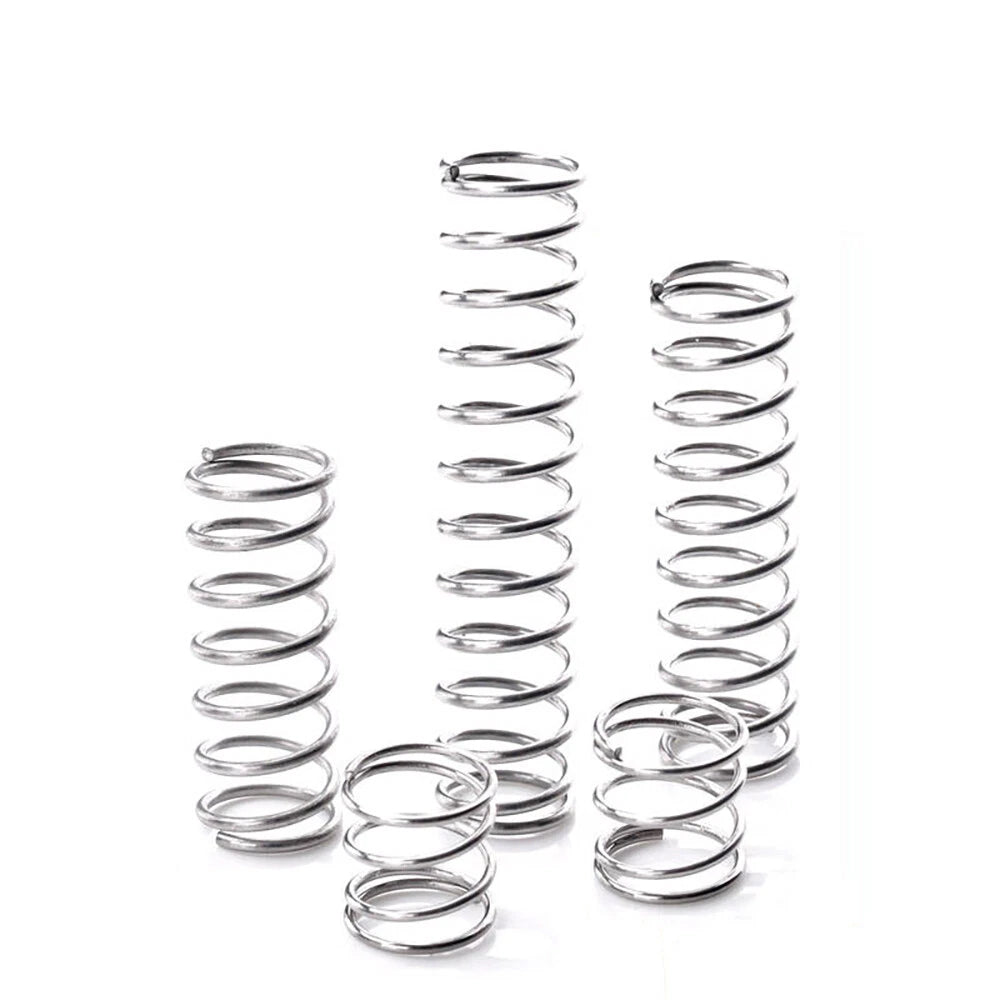
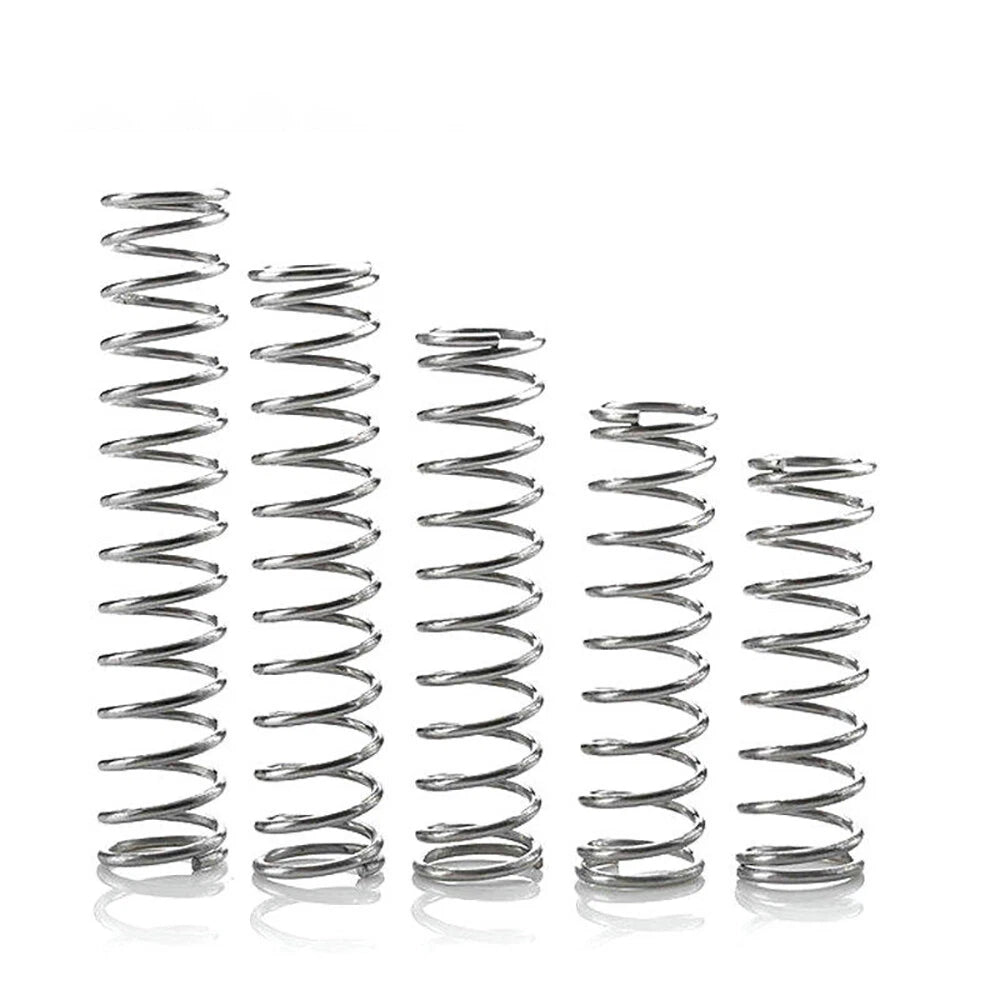
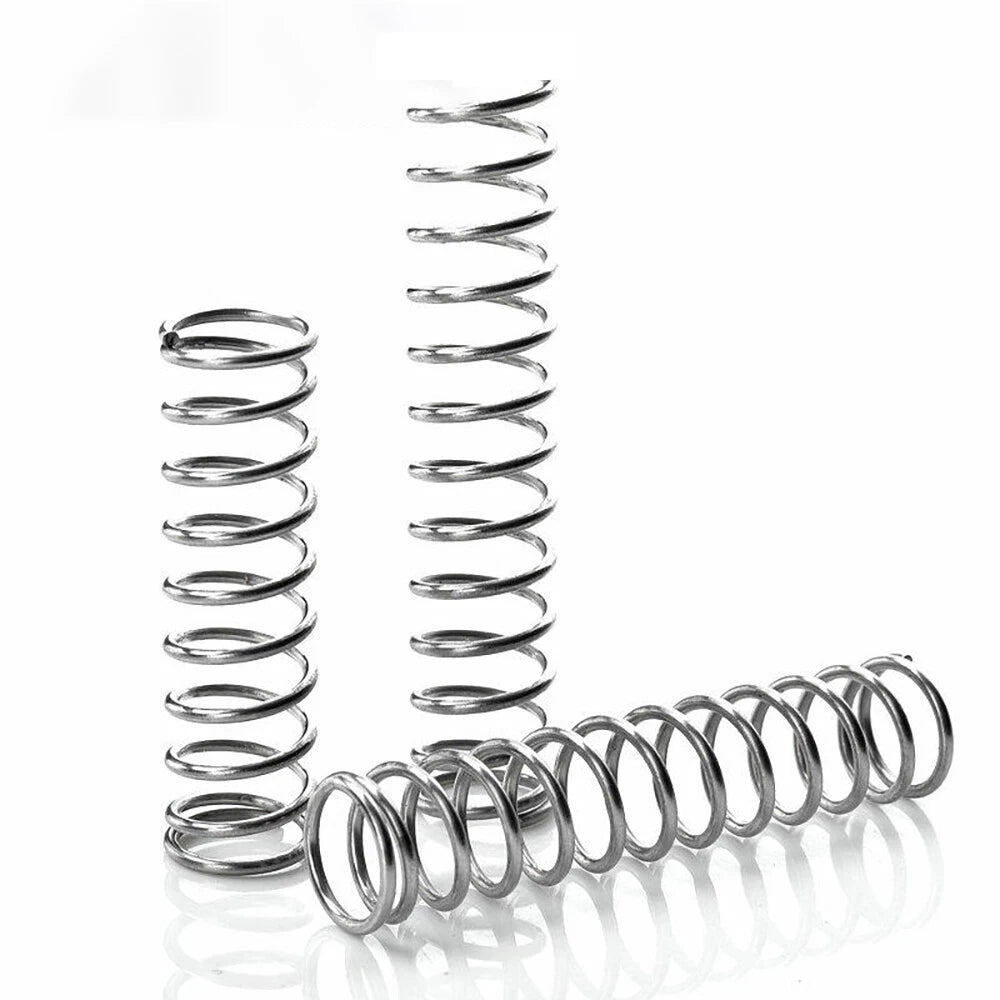
Compression Spring 1.0-1.2mm Wire Diameter 10mm-100mm Length Small Springs Steel

No reviews

Price:
Sale price$3.39 USD
Stock:
In stock (500 units), ready to be shipped

Payment & Security

Ach Direct Debit Amazon American Express Apple Pay Bancontact BLIK Diners Club Discover EPS Google Pay iDEAL Wero JCB Maestro Mastercard Multibanco MobilePay PayPal Przelewy24 Shop Pay Twint Union Pay USDC Visa

Your payment information is processed securely. We do not store credit card details nor have access to your credit card information.

Limited Offer — Spend More, Save More
Spend $55+
Save $5
Spend $100+
Save $10
Spend $200+
Save $25
HomeDIYer DIY Expert Support

DIY Expert Support

Get fitment advice & recommendations

Mon–Fri  8:30 AM – 8:00 PM
24-Hour Fast Ship
Arrives in 3–14 Days
Worldwide Shipping
30-Day Returns
1 tree planted with every purchase

Description

Compression Spring — Precision Steel Coil Springs for CNC, Robotics & DIY Builds

When a loose fit, inconsistent return force, or spring fatigue causes your mechanism to fail mid-cycle, the root cause is almost always an undersized or poorly specified compression spring. Engineers, makers, and repair technicians who need reliable elastic return force in tight spaces rely on correctly dimensioned coil springs — and this listing covers the most commonly needed small-spring range in a single place.

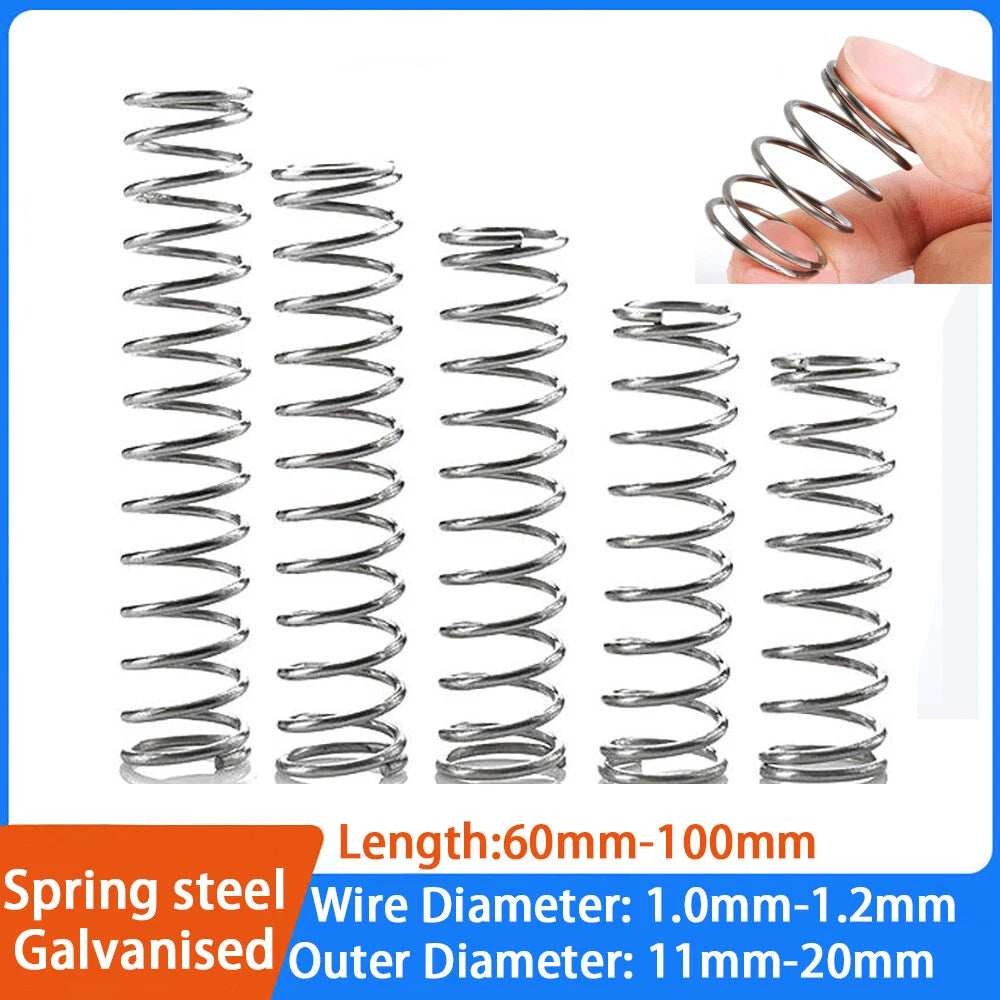
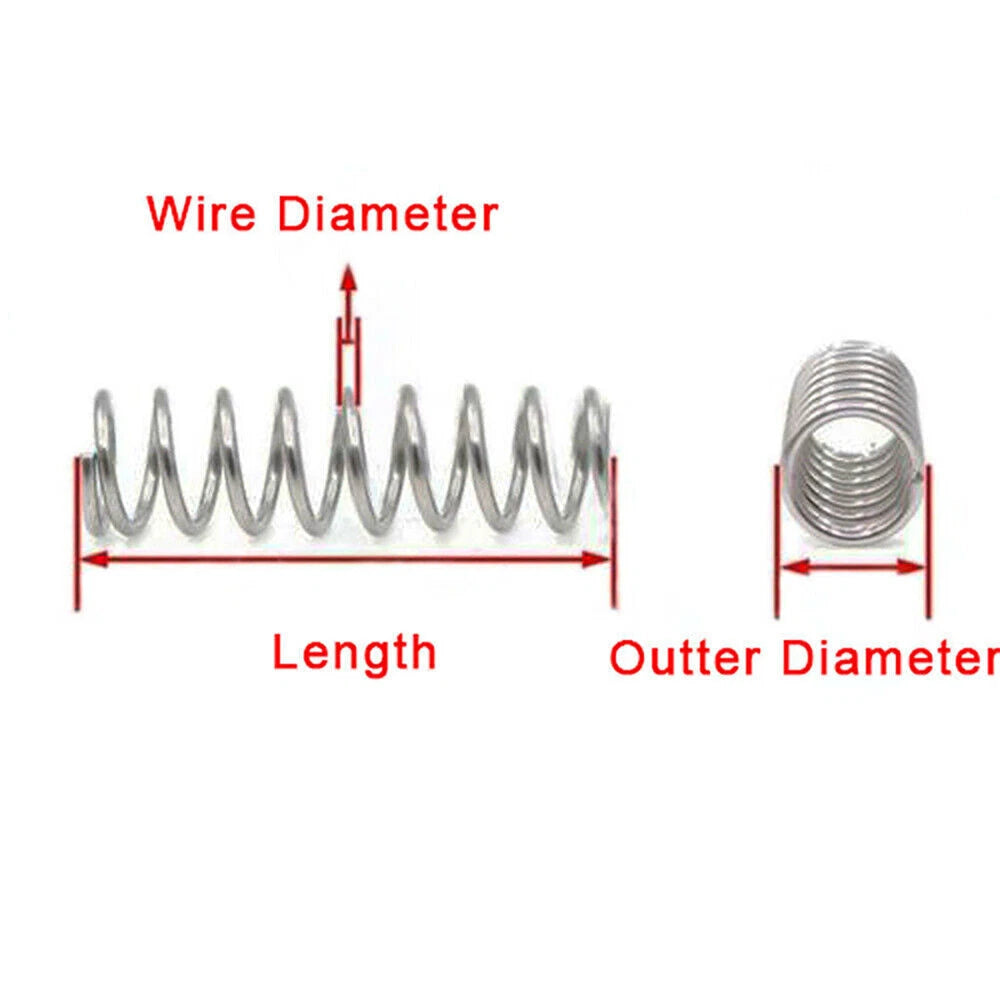
These compression springs are wound from carbon steel wire in two wire diameters — 1.0 mm and 1.2 mm — with outer diameters ranging from 10 mm to 20 mm (approximately 0.39 in to 0.79 in) and free lengths from 60 mm to 100 mm (approximately 2.36 in to 3.94 in). Each spring features a closed-and-ground end style typical of precision coil springs, providing a flat seating surface for consistent load application.

Typical use cases include CNC router Z-axis return mechanisms, 3D printer extruder tensioners, robotics joint preload assemblies, drawer slide dampers, and general-purpose DIY hardware projects requiring a compact compression element with repeatable spring rate.

⚙️ Compatibility: Suitable for spring seats, guide rods, and bores sized to match the selected outer diameter. Verify inner bore clearance and free-length pocket depth before ordering. Wire diameter determines spring rate — choose 1.0 mm for lighter loads and 1.2 mm for higher preload requirements.

✅ Key Features of These Compression Springs

🔩
Two Wire Diameters

Available in 1.0 mm and 1.2 mm wire diameter to cover a range of load and deflection requirements in compact assemblies.

📐
Wide Size Matrix

Outer diameters from 10 mm to 20 mm and free lengths from 60 mm to 100 mm give you precise dimensional control without custom fabrication.

🛡️
Carbon Steel Construction

Wound from carbon steel wire for consistent elastic modulus and reliable return force across repeated compression cycles.

🔄
Closed & Ground Ends

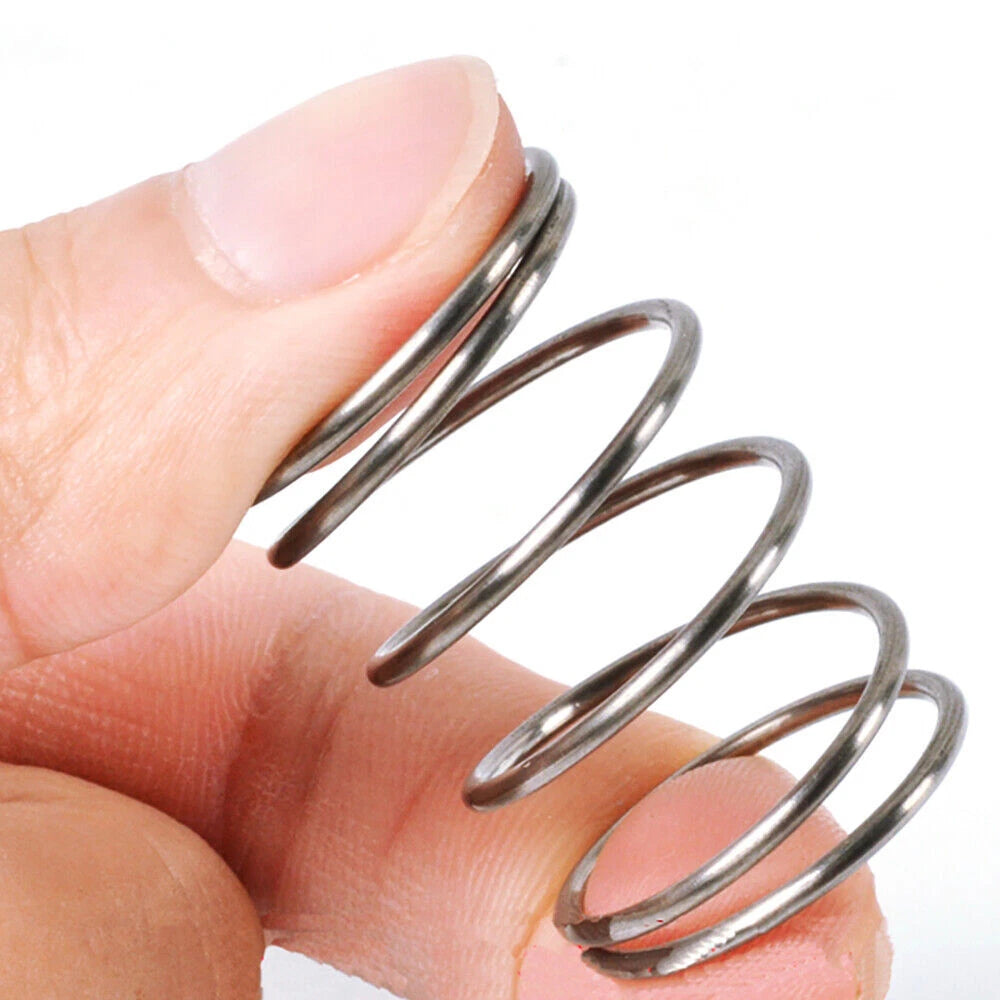
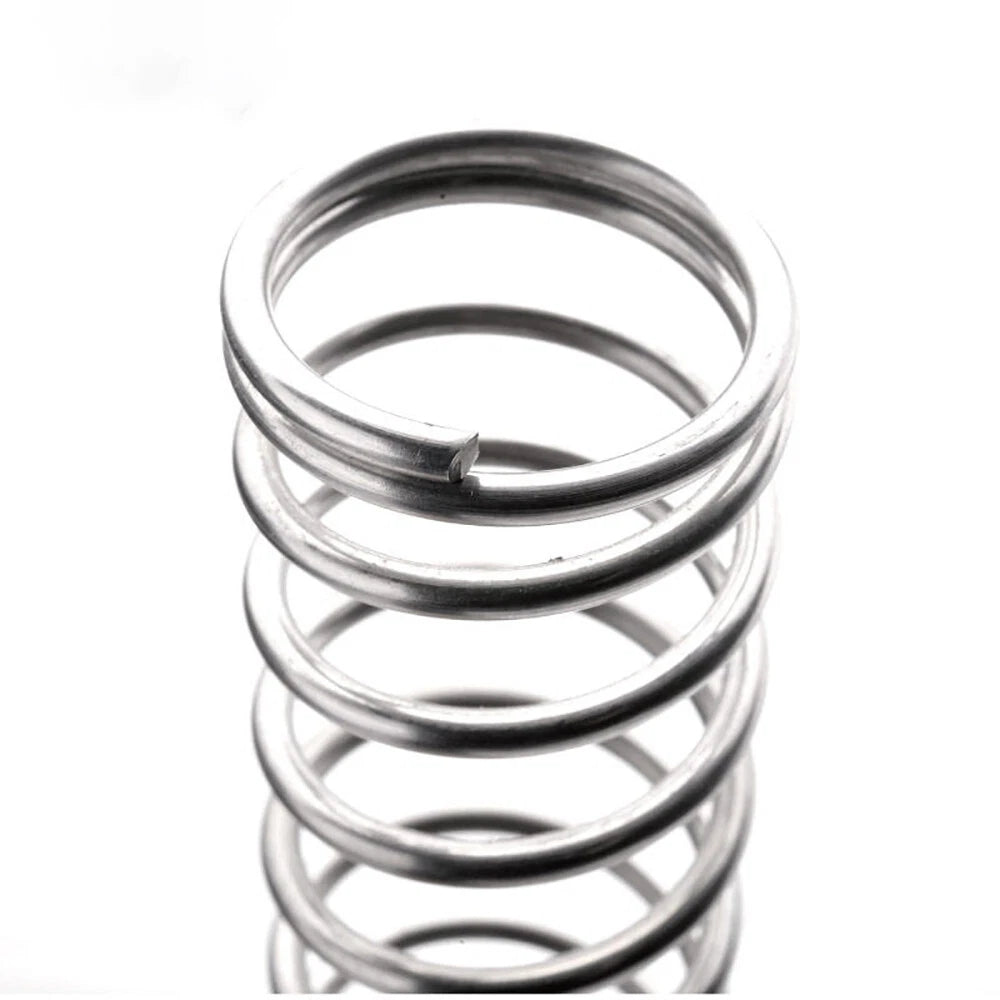
Flat end coils provide stable seating on spring pockets and guide rods, reducing lateral buckling under axial load.

📦
5-Piece or 10-Piece Packs

Order in 5 pcs for prototyping or 10 pcs for production runs and repair stock — both pack sizes available across the full size range.

🎯
Consistent Dimensional Tolerances

Wire diameter, outer diameter, and free length are held to close tolerances, ensuring interchangeability across identical spring positions in multi-spring assemblies.

📐 Technical Specifications — Compression Coil Springs

Spring Type Compression coil spring
Wire Diameter 1.0 mm / 1.2 mm (see variant options)
Outer Diameter (OD) 10 mm – 20 mm (see variant options)
Free Length 60 mm – 100 mm (see variant options)
End Style Closed and ground
Material Carbon steel
Surface Finish See variant options
Spring Rate See variant options
Pack Quantity 5 pcs or 10 pcs (see variant options)
Wind Direction Right-hand

❓ Frequently Asked Questions

How do I choose between 1.0 mm and 1.2 mm wire diameter?

Wire diameter directly affects spring rate and load capacity. The 1.2 mm wire produces a stiffer spring with higher load capacity for the same outer diameter and free length. Choose 1.0 mm for lighter preload applications such as small tensioners or return mechanisms, and 1.2 mm where higher axial force is needed, such as heavier CNC axis returns or industrial fixtures.

What outer diameter should I select for my guide rod or bore?

The outer diameter of the spring should be slightly smaller than the bore it sits in, or slightly larger than the guide rod it surrounds. As a general rule, allow 0.5 mm – 1.0 mm clearance between the spring OD and the bore ID to prevent binding during compression. Measure your pocket or rod diameter before selecting a variant.

Are these springs corrosion-resistant?

These springs are made from carbon steel, which provides good mechanical properties but has limited corrosion resistance in humid or wet environments without additional protection. For outdoor or high-moisture applications, consider applying a light coat of machine oil or grease, or contact us to confirm if a coated variant is available for your requirement.

What is the maximum compression (solid height) I should expect?

Solid height depends on the number of active coils and wire diameter. As a conservative guideline, avoid compressing these springs beyond 80% of their free length in continuous-duty applications to prevent set (permanent deformation). For exact solid height values for a specific variant, contact us to confirm.

Are these compatible with 3D printer extruder tensioners and CNC Z-axis assemblies?

Yes. The 10 mm – 16 mm OD range and 60 mm – 100 mm free lengths are commonly used in desktop CNC router Z-axis return springs and FDM 3D printer extruder arm tensioners. Verify the OD fits your guide rod or pocket and that the free length matches your travel requirement before ordering.

Should I order 5 pcs or 10 pcs?

The 5-piece pack is ideal for prototyping, single-machine builds, or replacement of worn springs. The 10-piece pack offers a better per-unit value and is suited for production runs, multi-axis machines, or maintaining a spare-parts inventory. Both pack sizes are available across the full wire diameter, OD, and length matrix.

Can I use these springs in a parallel or series configuration?

Yes. Springs in parallel (side by side on the same axis) multiply the combined spring rate, while springs in series (end to end) reduce the effective rate and increase total travel. This is a common technique in robotics and fixture design when a single spring cannot provide the exact rate or travel needed. Ensure all springs in a parallel set are from the same variant for consistent load sharing.

🛒 Select your Wire Diameter, Outer Diameter, and Length & Amount above, then add to cart.


You may also like

Recently viewed