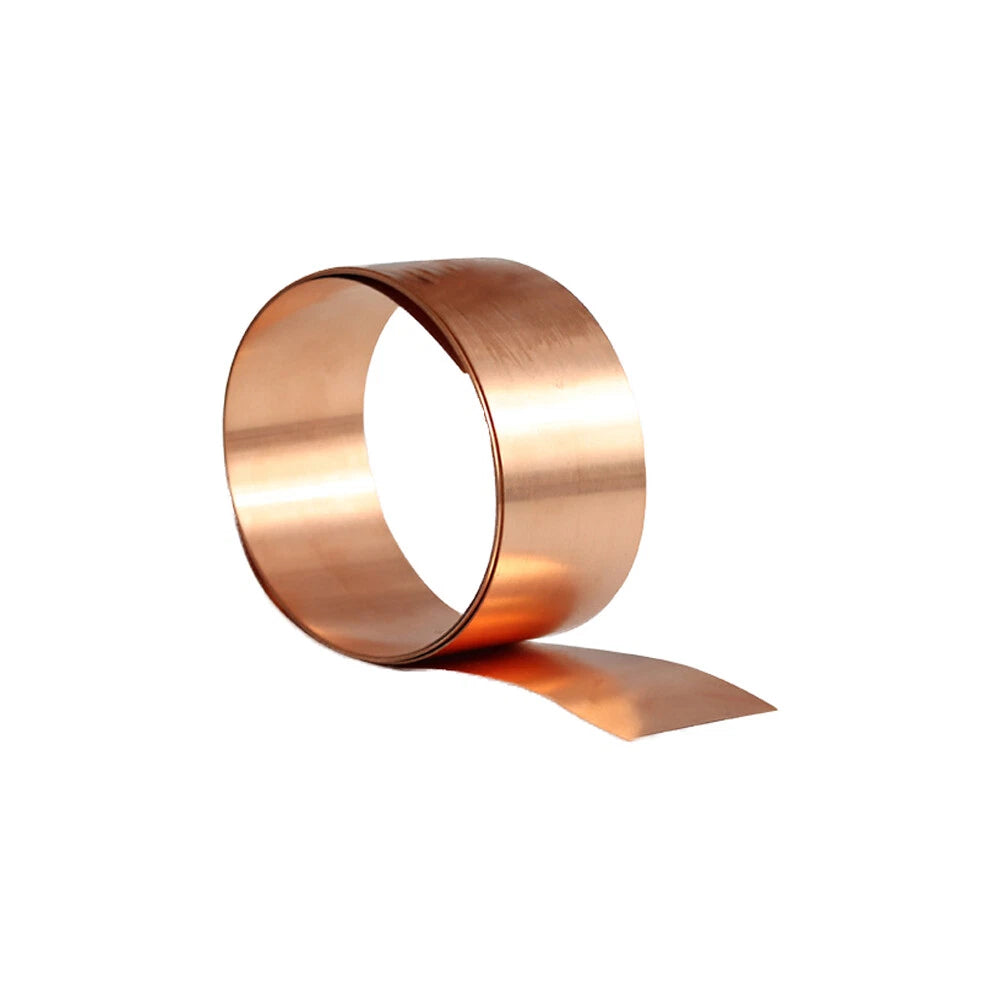
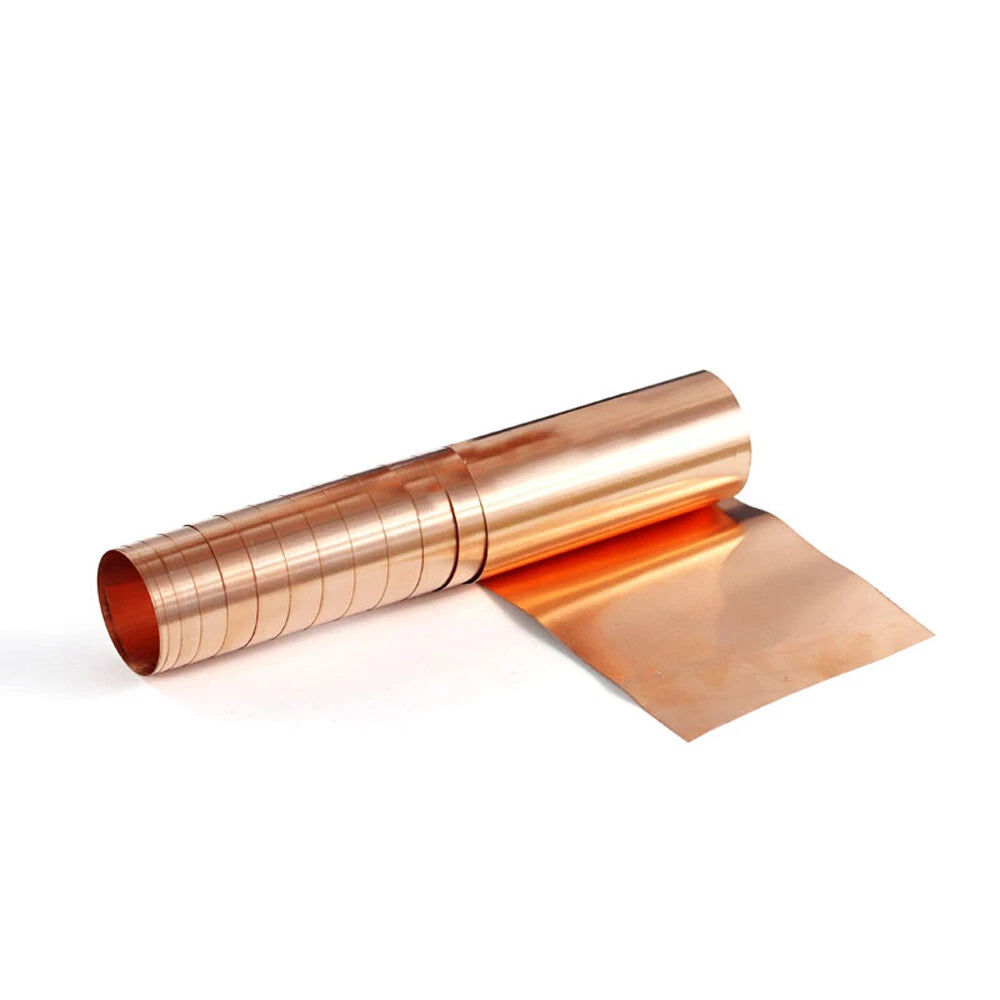
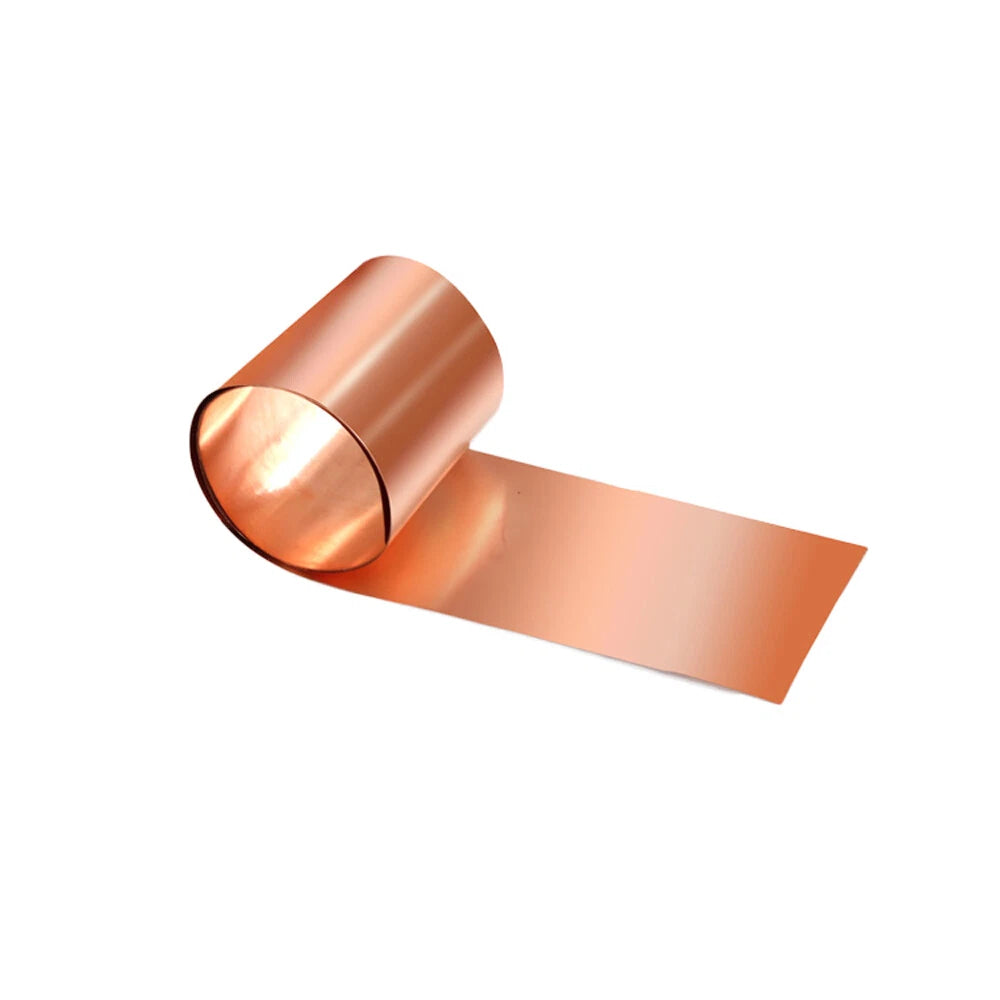
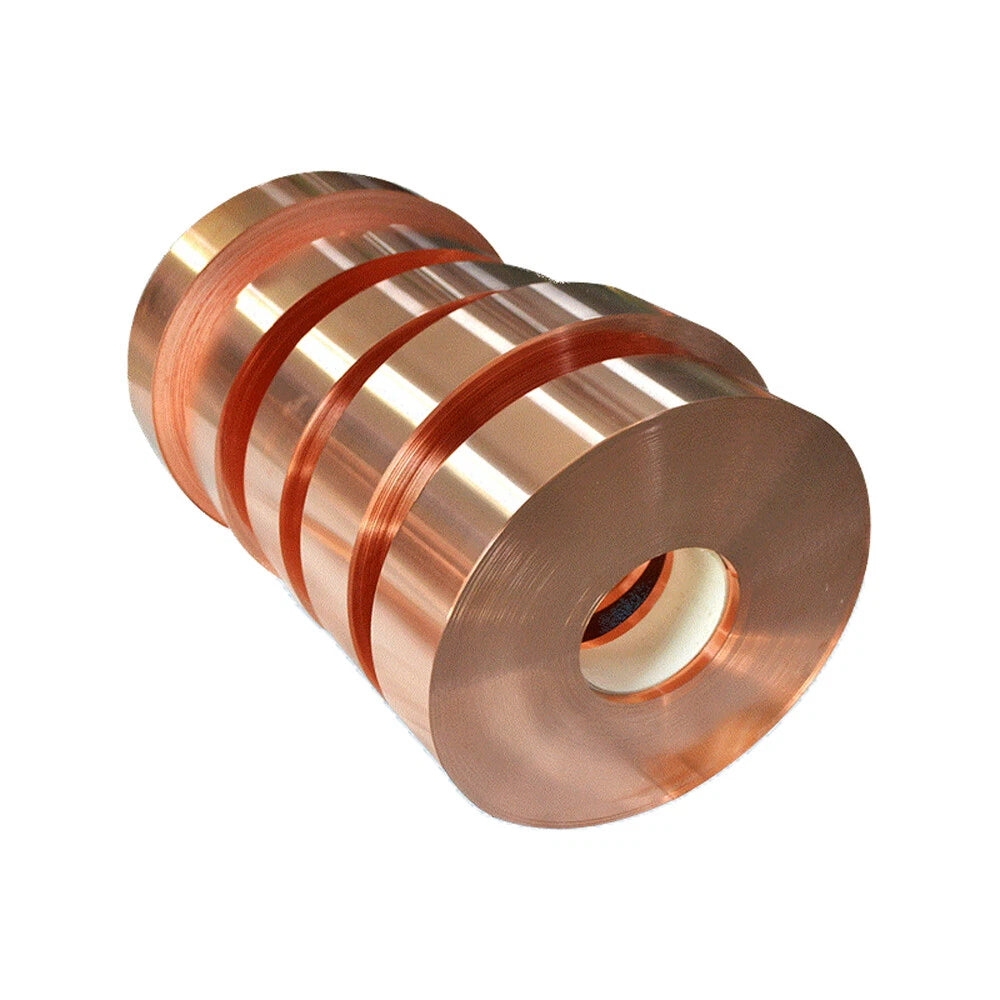
1 Meter Copper Sheet Strip Pure Cu Thin Foil Plate Thick 0.05-1mm Width 10-50mm

No reviews

Price:
Sale price$2.65 USD
Stock:
In stock (500 units), ready to be shipped

Payment & Security

Ach Direct Debit Amazon American Express Apple Pay Bancontact BLIK Diners Club Discover EPS Google Pay iDEAL Wero JCB Maestro Mastercard Multibanco MobilePay PayPal Przelewy24 Shop Pay Twint Union Pay USDC Visa

Your payment information is processed securely. We do not store credit card details nor have access to your credit card information.

Limited Offer — Spend More, Save More
Spend $55+
Save $5
Spend $100+
Save $10
Spend $200+
Save $25
HomeDIYer DIY Expert Support

DIY Expert Support

Get fitment advice & recommendations

Mon–Fri  8:30 AM – 8:00 PM
24-Hour Fast Ship
Arrives in 3–14 Days
Worldwide Shipping
30-Day Returns
1 tree planted with every purchase

Description

Pure Copper Sheet Strip — Precision-Cut Thin Foil for Metalworking & Electronics

When your project demands a material that conducts reliably, bends cleanly, and holds its shape over time, generic metal strips fall short. Whether you're a hobbyist fabricating custom shielding, an electronics technician routing grounding traces, or a craftsperson working on decorative inlays, this pure copper sheet strip gives you the dimensional accuracy and material integrity your work requires.

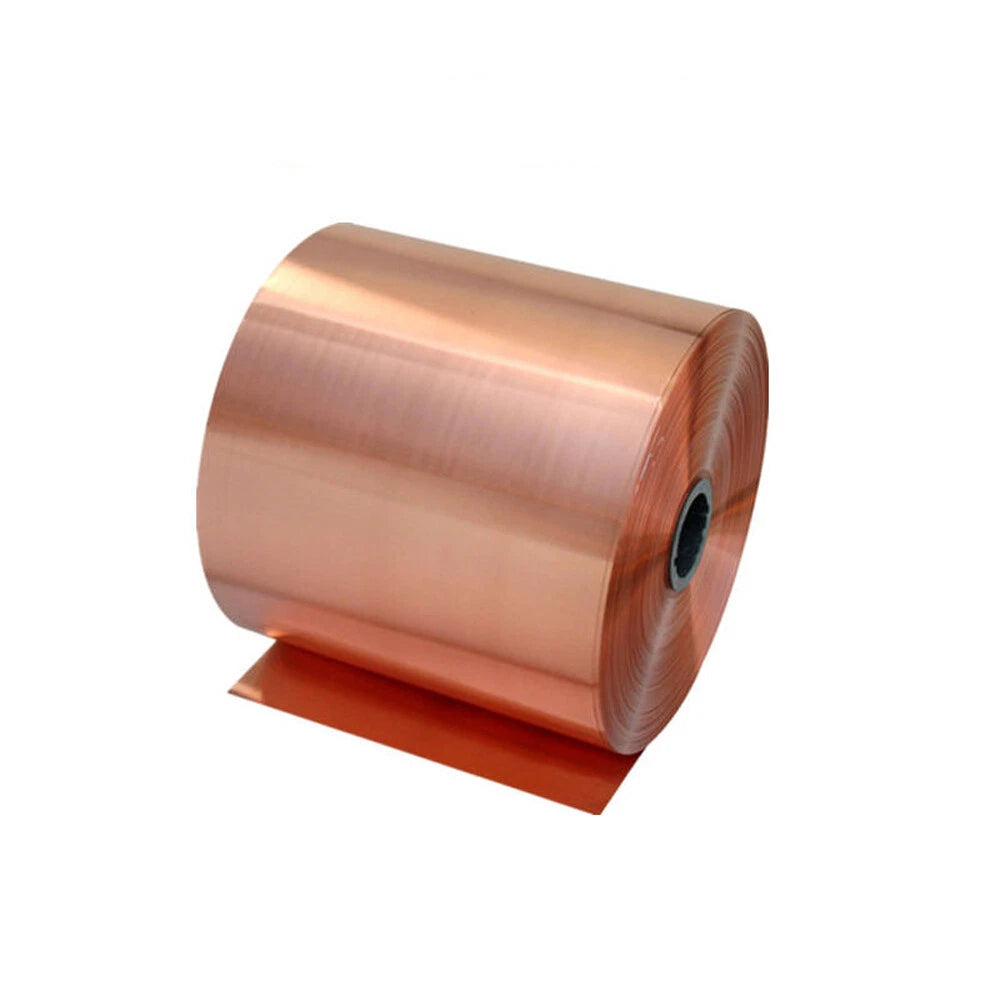
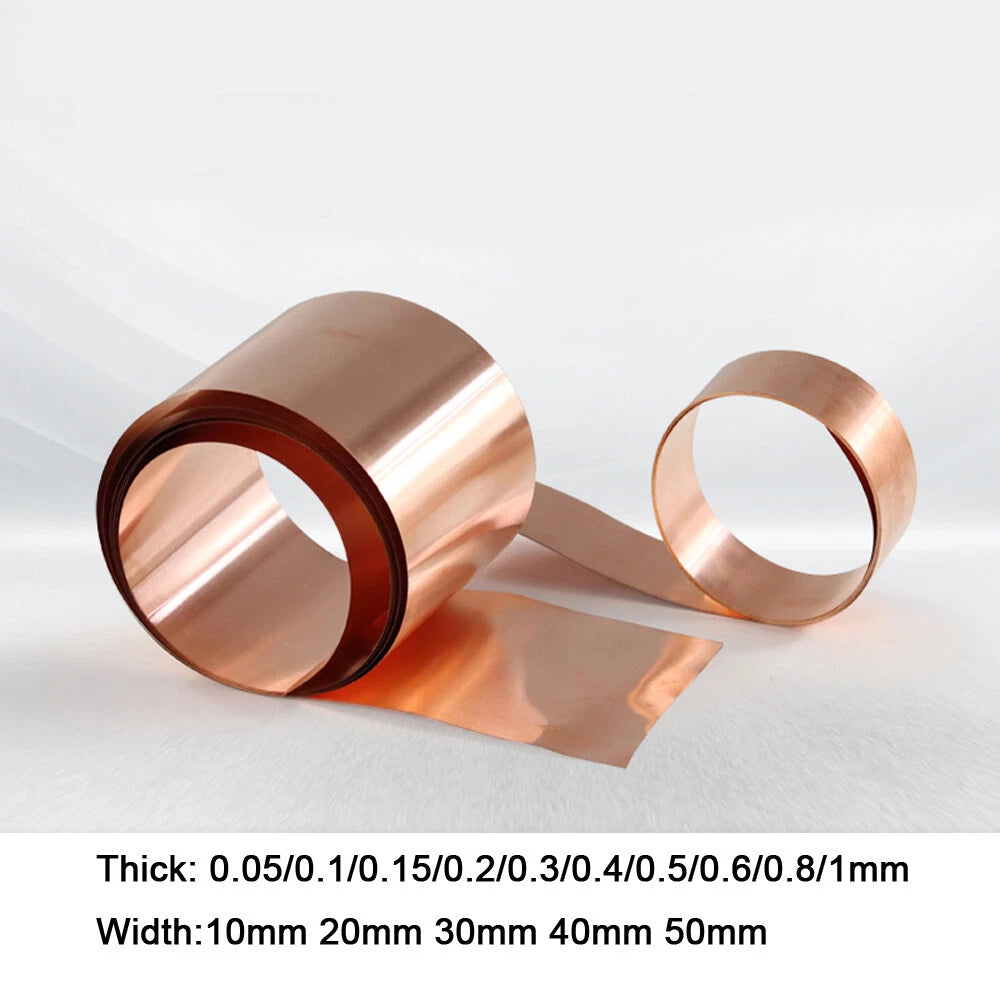
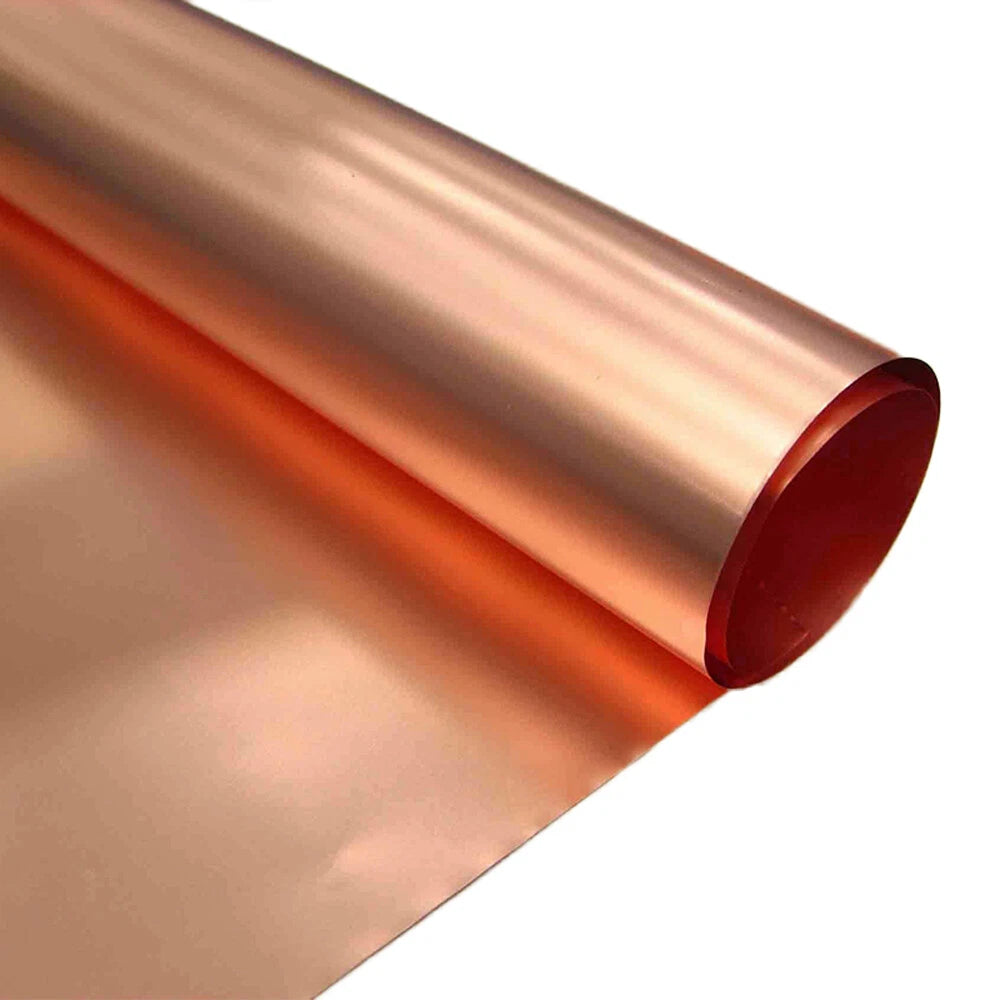
Each strip is cut from pure copper (Cu) with a characteristic warm reddish-gold surface. Thickness options range from 0.05 mm to 0.8 mm (approximately 0.002" to 0.031"), and widths span 10 mm to 50 mm (approximately 0.39" to 1.97"). All pieces are supplied at a standard 1000 mm (1 meter / ~39.4") length, giving you a consistent working blank for every application.

Typical use cases include EMI/RFI shielding tape for electronics enclosures, copper inlay work in woodworking and resin art, battery tab and busbar fabrication for DIY power projects, and thin gasket or heat-spreader stock for thermal management applications — all long-tail scenarios where precise gauge and width matter.

⚙️ Compatibility: Suitable for soldering, brazing, and cold-forming. Compatible with standard copper etchants and patina solutions. Works with most metalworking hand tools and CNC cutting equipment.

✅ Key Features of These Pure Copper Sheet Strips

🔩 Pure Cu Material

Made from unalloyed copper for maximum electrical conductivity (~58 MS/m) and excellent thermal transfer — no brass or bronze substitutes.

📏 Wide Gauge Selection

Nine thickness options from 0.05 mm to 0.8 mm let you match the exact gauge your design calls for, from ultra-thin foil to structural strip.

↔️ Multiple Width Options

Choose from 10, 20, 25, 30, 40, or 50 mm widths — all at a consistent 1000 mm (1 meter) length for predictable material yield.

🛡️ Natural Corrosion Resistance

Copper forms a stable oxide layer that slows further corrosion, making these strips suitable for both indoor and moderately humid environments.

✂️ Easy to Cut & Form

Thin gauges (0.05–0.3 mm) can be cut with scissors or a craft knife; thicker gauges (0.4–0.8 mm) respond well to tin snips or a rotary tool.

Solderable & Bondable

Accepts standard rosin-core solder, silver solder, and conductive adhesives — ready for electronics assembly, grounding straps, and busbar work.

📐 Technical Specifications — Copper Sheet Strip

Material Pure Copper (Cu)
Thickness Range 0.05 mm – 0.8 mm (0.002" – 0.031")
Width Range 10 mm – 50 mm (0.39" – 1.97")
Length 1000 mm / 1 Meter (~39.4")
Surface Finish Mill finish (natural copper)
Electrical Conductivity ~58 MS/m (IACS ~100%)
Temper / Hardness See variant options
Weight per Piece See variant options
Tolerance (Thickness) See variant options

❓ Frequently Asked Questions

How do I choose the right thickness for my project?

For EMI shielding tape or decorative foil inlays, 0.05–0.1 mm is typically sufficient and easy to cut by hand. For grounding straps or battery tabs, 0.2–0.3 mm offers a better balance of flexibility and current capacity. For structural busbars or heat spreaders, 0.5–0.8 mm provides the rigidity and cross-sectional area needed for higher currents or mechanical loads.

Is this pure copper or an alloy like brass or bronze?

These strips are made from unalloyed copper (Cu). They are not brass (Cu-Zn) or bronze (Cu-Sn). Pure copper delivers the highest electrical and thermal conductivity of any common copper-based metal, which is why it is specified for electronics, grounding, and heat-transfer applications.

Will the copper corrode or tarnish over time?

Copper naturally develops a thin oxide layer (tarnish) when exposed to air and moisture. This layer actually slows further corrosion. For applications where appearance matters, you can apply a clear lacquer or wax. For outdoor or high-humidity environments, consider a protective coating or periodic cleaning with a mild acid solution (e.g., diluted vinegar).

Can I solder directly to these strips?

Yes. Pure copper solders readily with standard rosin-core solder (60/40 or 63/37 Sn/Pb) and lead-free alternatives. For best results, lightly abrade the surface with fine sandpaper or steel wool to remove any oxide layer before soldering, then apply flux. Silver solder and conductive epoxy also bond well to copper.

What tools do I need to cut these strips to length?

Thin gauges (0.05–0.2 mm) can be cut cleanly with sharp scissors, a craft knife and steel ruler, or a paper trimmer. Medium gauges (0.3–0.5 mm) work well with tin snips or aviation shears. Thicker gauges (0.6–0.8 mm) are best cut with a rotary tool, angle grinder, or metal-cutting bandsaw for a clean edge.

Are these strips compatible with CNC machining or laser cutting?

Thinner gauges (0.05–0.2 mm) can be laser-cut with a fiber laser, though copper's high reflectivity requires appropriate laser settings and safety precautions. CNC routing and waterjet cutting work well across all thicknesses. Always consult your machine's material compatibility guidelines before processing.

How do I select the right width for a busbar or grounding strap?

Current-carrying capacity depends on both width and thickness (cross-sectional area). As a conservative rule of thumb, pure copper can carry approximately 3–4 A per mm² of cross-section at moderate temperatures. For example, a 0.5 mm × 20 mm strip has a 10 mm² cross-section, suitable for roughly 30–40 A continuous. Always derate for your specific installation conditions and consult relevant electrical standards.

🛒 Select your Thickness and Width above, then add to cart.

You may also like

Recently viewed