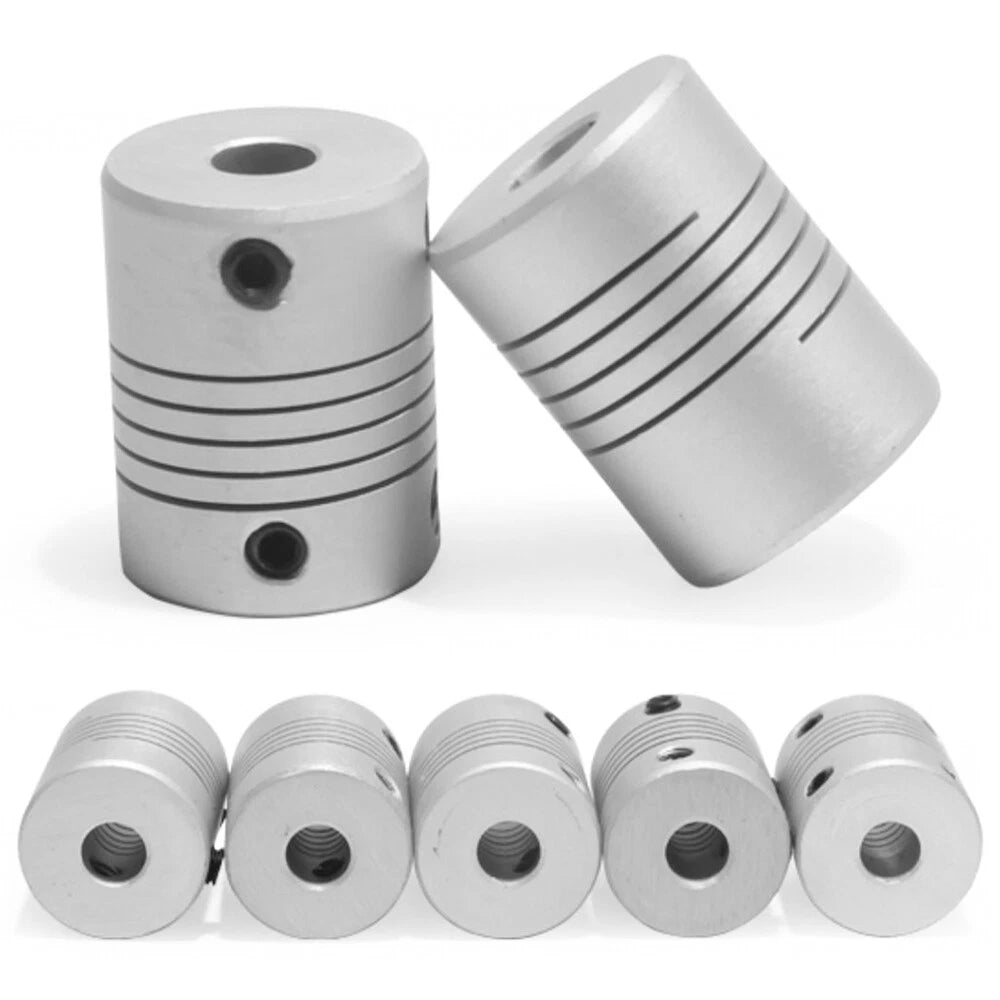
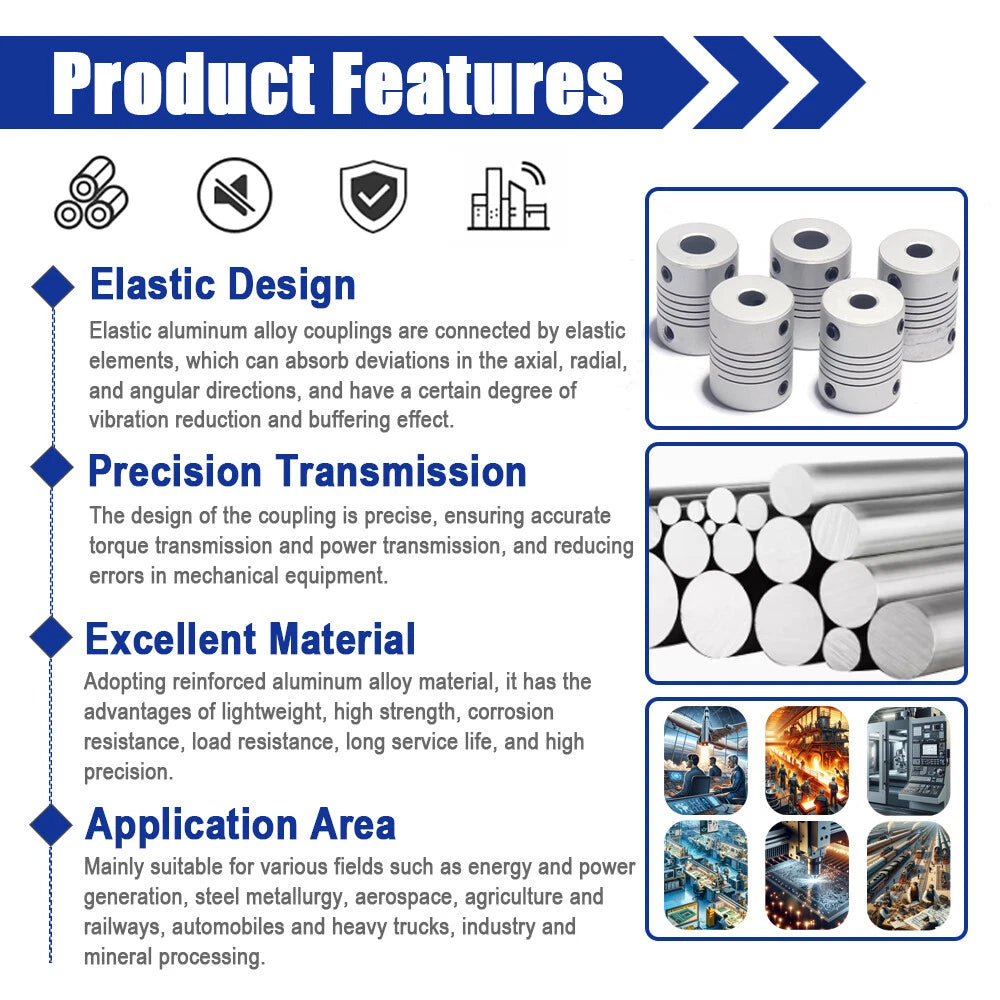

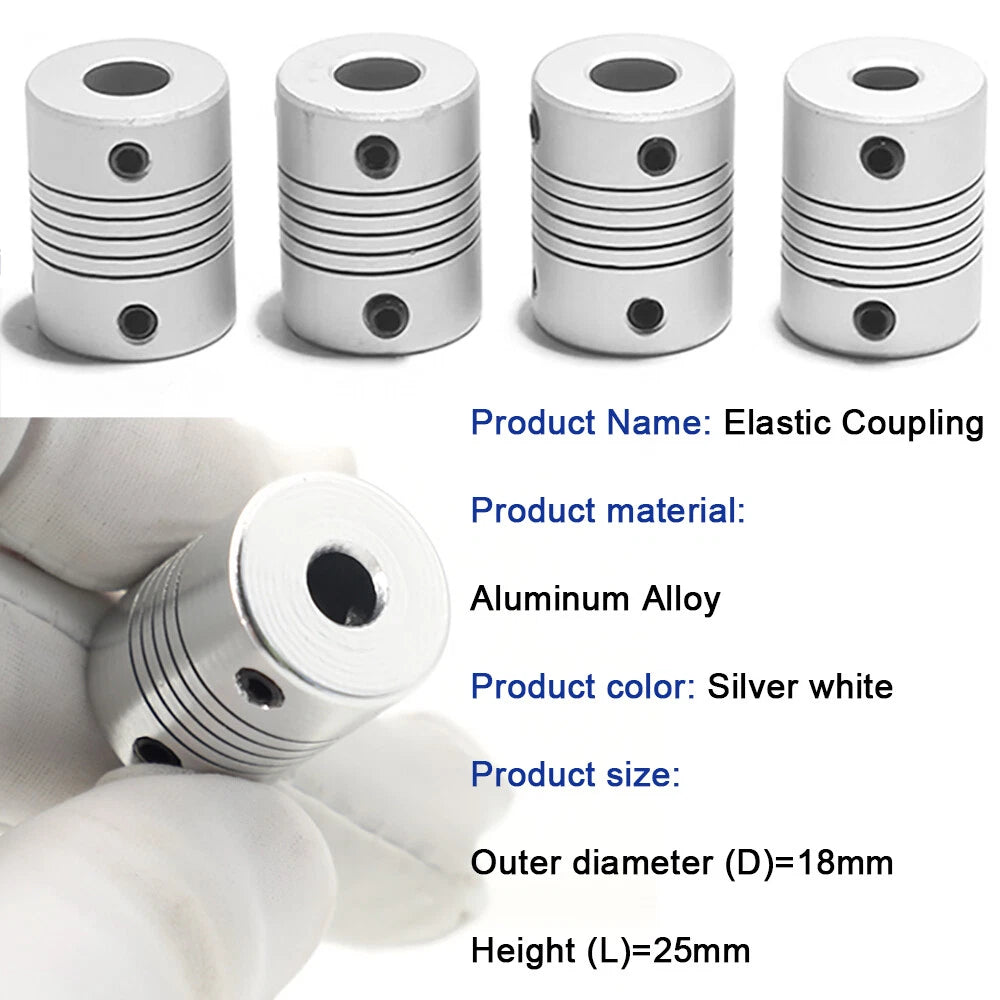
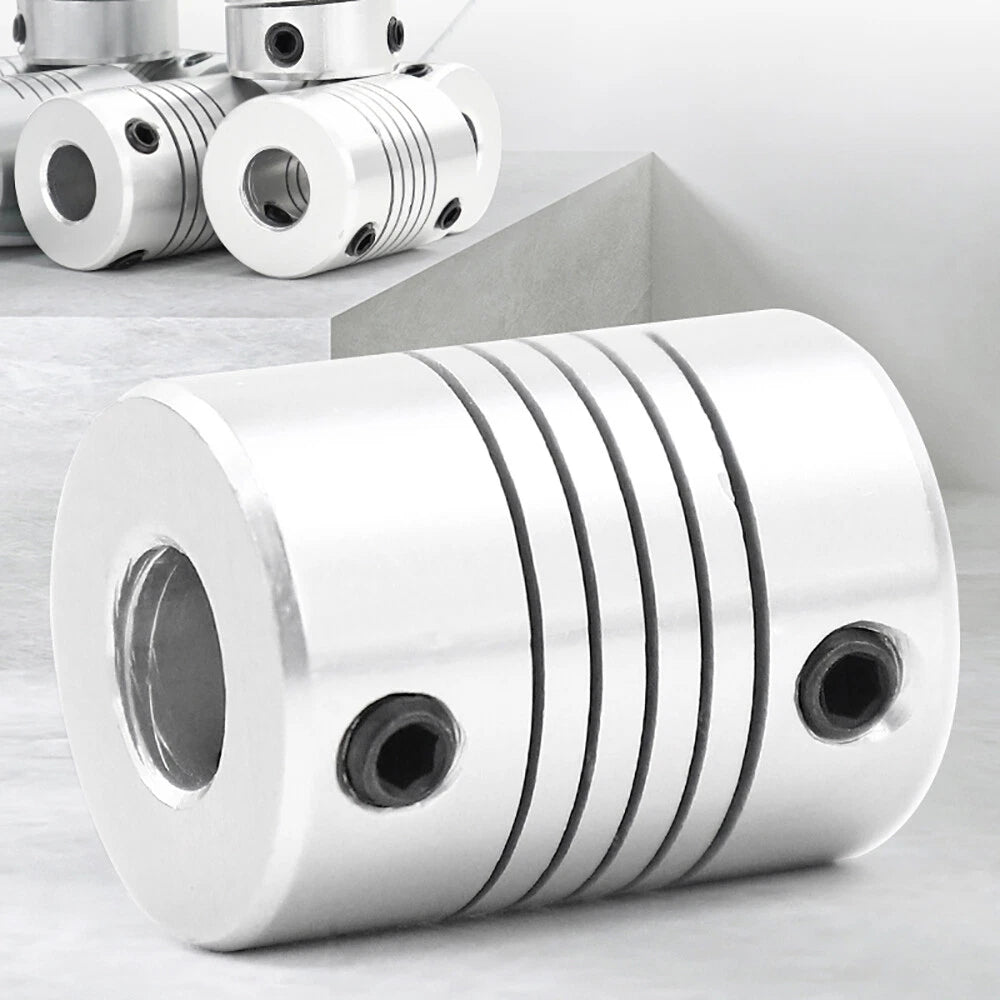
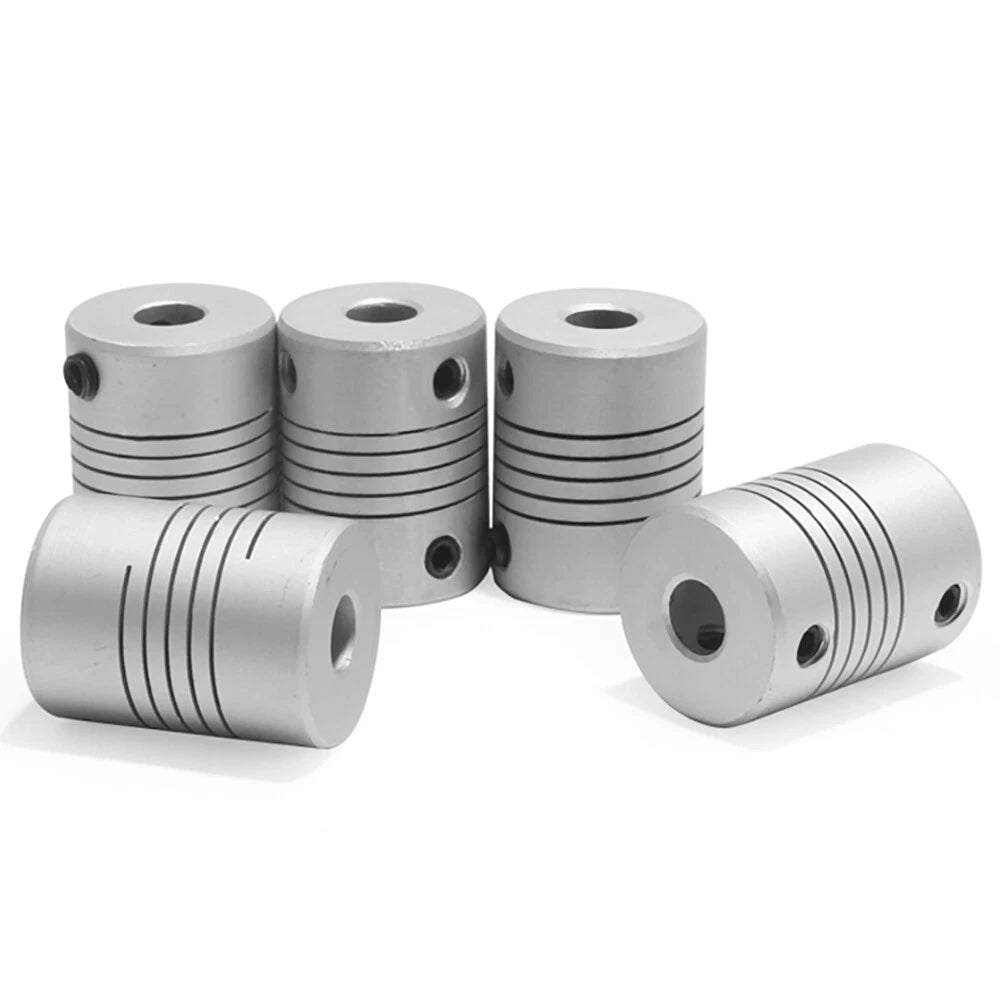
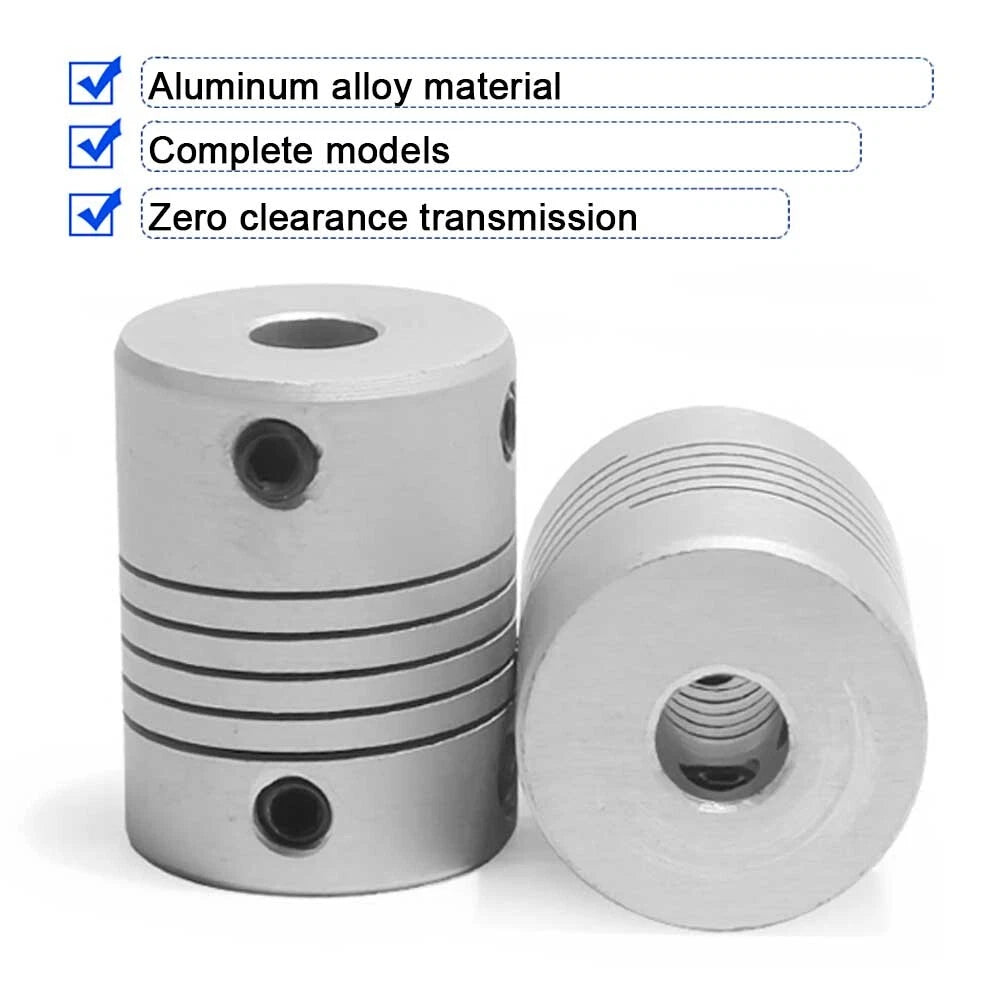
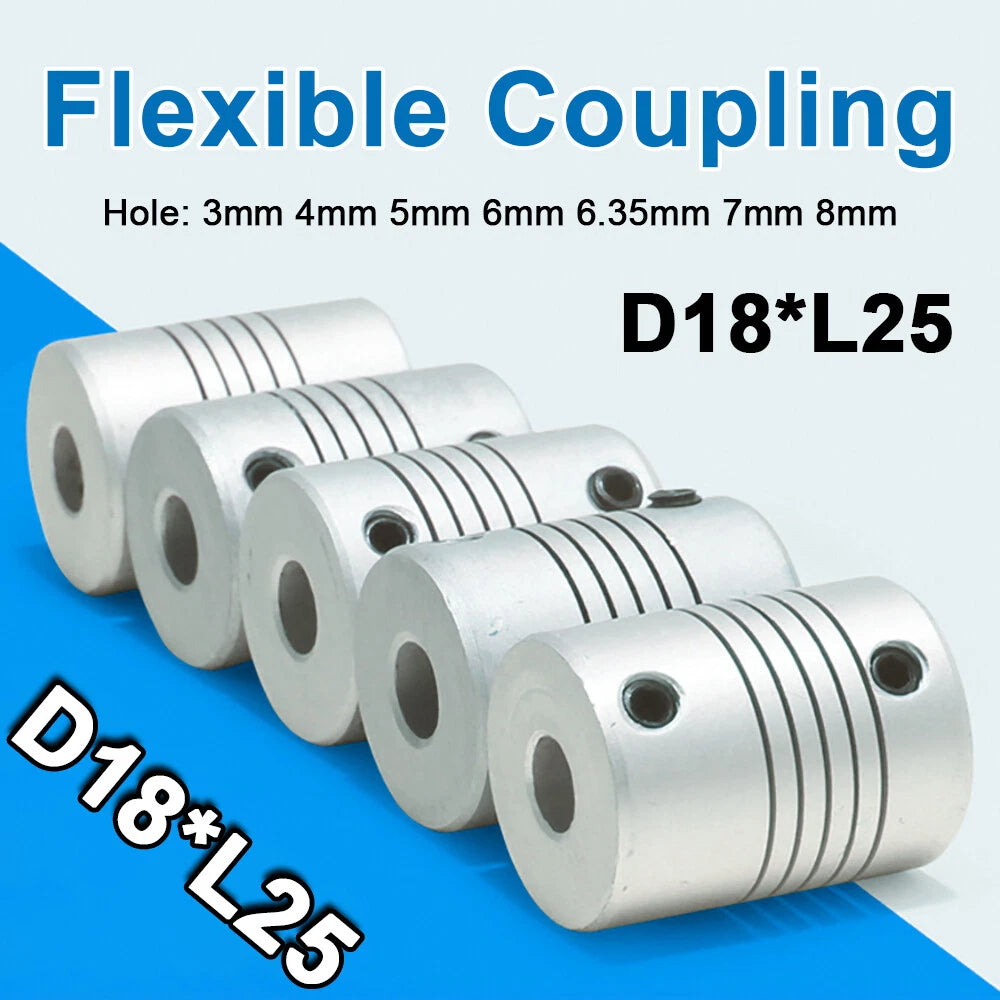
D18*L25 Flexible Shaft Coupling Rigid CNC Motor Coupler 3D Printer 3/4/5/6/7/8mm

No reviews

Price:
Sale price$4.75 USD
Stock:
In stock (500 units), ready to be shipped

Payment & Security

Ach Direct Debit Amazon American Express Apple Pay Bancontact BLIK Diners Club Discover EPS Google Pay iDEAL Wero JCB Maestro Mastercard Multibanco MobilePay PayPal Przelewy24 Shop Pay Twint Union Pay USDC Visa

Your payment information is processed securely. We do not store credit card details nor have access to your credit card information.

Limited Offer — Spend More, Save More
Spend $55+
Save $5
Spend $100+
Save $10
Spend $200+
Save $25
HomeDIYer DIY Expert Support

DIY Expert Support

Get fitment advice & recommendations

Mon–Fri  8:30 AM – 8:00 PM
24-Hour Fast Ship
Arrives in 3–14 Days
Worldwide Shipping
30-Day Returns
1 tree planted with every purchase

Description

D18*L25 Rigid Shaft Coupling — Zero-Backlash CNC Motor Coupler for Precision Motion Control

When even the slightest rotational play ruins a cut, a print, or a calibration run, engineers and makers need a coupling that transmits torque without compromise. The D18*L25 rigid shaft coupling is designed for CNC router builders, 3D printer enthusiasts, and automation technicians who demand exact shaft alignment and zero backlash in every axis.

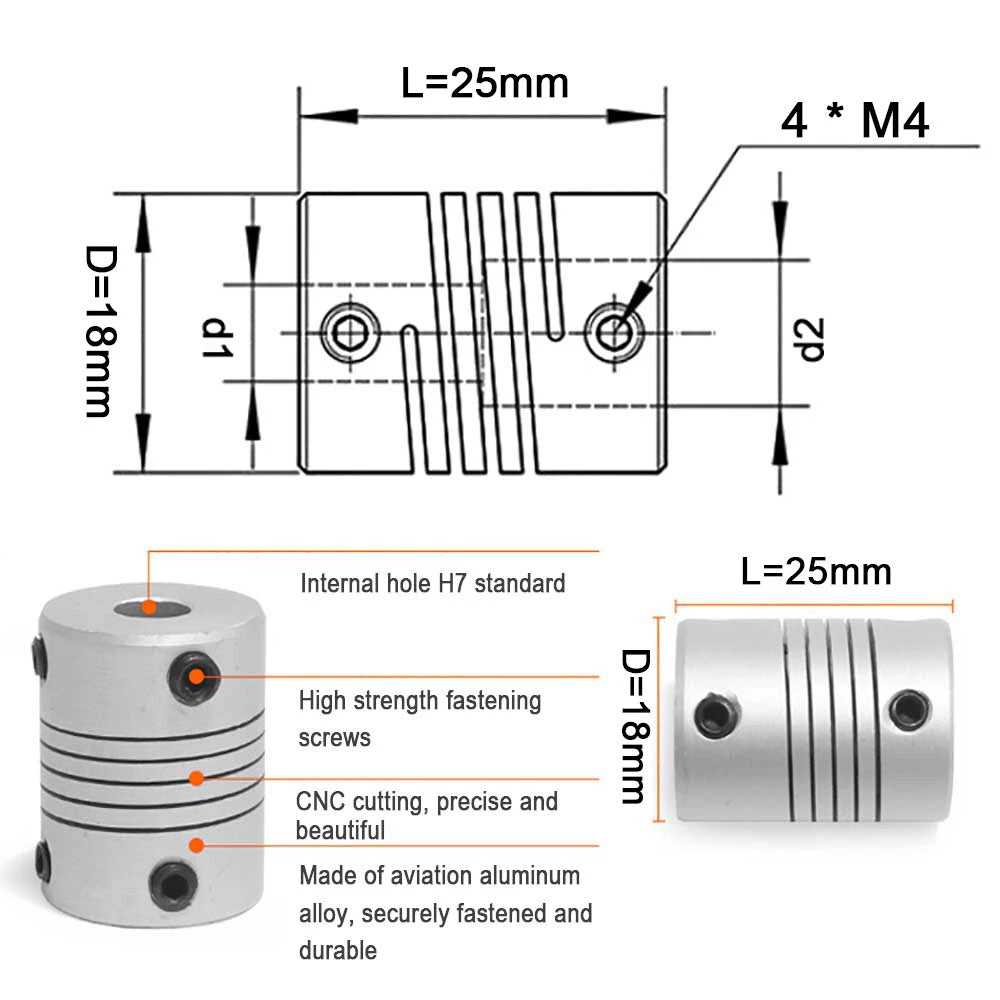
This coupler features a one-piece aluminum alloy body measuring 18mm in outer diameter and 25mm in length (approximately 0.71 in × 0.98 in). Bore combinations range from 3mm to 8mm (approx. 0.12 in to 0.31 in) on each side, with both same-diameter and stepped-bore configurations available. Clamping is achieved via radial set screws for a firm, slip-resistant grip on each shaft end.

Typical applications include connecting NEMA 17 and NEMA 23 stepper motor shafts to lead screws on CNC mills and laser engravers, coupling servo motor outputs to encoder shafts in robotics platforms, and linking motor shafts to ball screws in DIY linear actuator builds — all scenarios where a rigid shaft coupler for stepper motors outperforms flexible alternatives.

⚙️ Compatibility: Fits NEMA 17 / NEMA 23 stepper motors, standard lead screws, ball screws, and encoder shafts with bore diameters from 3mm to 8mm (including 6.35mm / ¼ inch). Verify shaft diameters before ordering.

✅ Key Features of These D18*L25 Rigid Shaft Couplings

🔩 Zero-Backlash Rigid Design

One-piece construction eliminates rotational play, ensuring direct torque transfer from motor shaft to lead screw with no lost motion.

📐 Compact D18 × L25mm Body

The 18mm outer diameter and 25mm length fit into tight motor mounts and carriage assemblies where larger couplers cannot.

🔧 Wide Bore Range (3–8mm)

Available in 28 bore combinations — same-diameter and stepped — covering the most common stepper motor and lead screw shaft sizes, including the 6.35mm (¼ in) imperial standard.

🏗️ Aluminum Alloy Construction

Lightweight yet rigid aluminum alloy body resists deformation under continuous rotational load, keeping shaft alignment stable over long duty cycles.

🔒 Set Screw Clamping

Radial set screws on each bore end clamp firmly to the shaft, preventing axial slip during direction reversals and high-acceleration moves.

📦 Flexible Quantity Options

Order as a single piece for a repair or upgrade, or choose 5, 10, or 20-piece packs for machine builds, classroom kits, or workshop stock.

📐 Technical Specifications — Rigid Shaft Coupling

Outer Diameter (D) 18mm (approx. 0.71 in)
Length (L) 25mm (approx. 0.98 in)
Bore Diameter (d1) 3mm – 8mm (see variant options)
Bore Diameter (d2) 3mm – 8mm (see variant options)
Bore Combinations 28 options including 6.35mm (¼ in)
Material Aluminum alloy
Coupling Type Rigid (zero-backlash)
Clamping Method Radial set screws
Finish See variant options
Max Shaft Misalignment Designed for aligned shafts only
Available Quantities 1 / 5 / 10 / 20 pcs

❓ Frequently Asked Questions

What is the difference between a rigid and a flexible shaft coupling?

A rigid shaft coupling transmits torque with zero rotational play, making it ideal for CNC and 3D printer axes where positional accuracy is critical. A flexible coupling absorbs minor misalignment and vibration but introduces a small amount of backlash. If your shafts are precisely aligned, a rigid coupler delivers more accurate motion.

How do I choose the correct bore size for my motor and lead screw?

Measure the outer diameter of both your motor shaft and your lead screw or ball screw shaft with a caliper. Select the variant whose d1 matches your motor shaft and d2 matches your lead screw. Common NEMA 17 motor shafts are 5mm; common lead screws are 8mm. If one shaft is imperial (¼ in = 6.35mm), choose a variant that includes 6.35mm.

Will this coupler work with my NEMA 17 or NEMA 23 stepper motor?

Yes. NEMA 17 motors typically have a 5mm output shaft, and NEMA 23 motors commonly use 6.35mm or 8mm shafts. Both are covered by the available bore combinations. Confirm your motor's shaft diameter in its datasheet before selecting a variant.

Is this coupling suitable for high-speed or high-torque applications?

This D18*L25 rigid coupler is well-suited for the torque and speed ranges typical of CNC routers, 3D printers, and light automation equipment. For very high-torque industrial drives or applications with significant shaft misalignment, consult the torque rating of your specific motor and verify that a rigid coupling is appropriate — misaligned shafts can cause bearing wear when using rigid couplers.

Does aluminum corrode, and how should I maintain this coupler?

Aluminum alloy forms a natural oxide layer that resists corrosion in typical indoor workshop and machine environments. For humid or mildly corrosive environments, a light coat of machine oil on the exterior is sufficient. Keep the set screw threads clean and re-torque periodically if the machine experiences heavy vibration.

How do I install and secure the coupler to the shafts?

Slide each shaft end into the corresponding bore until it reaches the center of the coupler body. Align the shafts as precisely as possible — rigid couplers do not compensate for misalignment. Tighten the set screws on each side with an appropriate hex key until firm. Avoid over-tightening, which can deform the bore or damage the shaft surface.

Should I order a single piece or a multi-pack?

If you are replacing a single coupler or testing a design, the 1-piece option is the most economical starting point. For full machine builds with multiple axes, the 5 or 10-piece packs offer a lower per-unit cost. The 20-piece pack is suited for classroom kits, batch production, or workshop inventory.

🛒 Select your Hole (d1 × d2) size and quantity above, then add to cart.

You may also like

Recently viewed