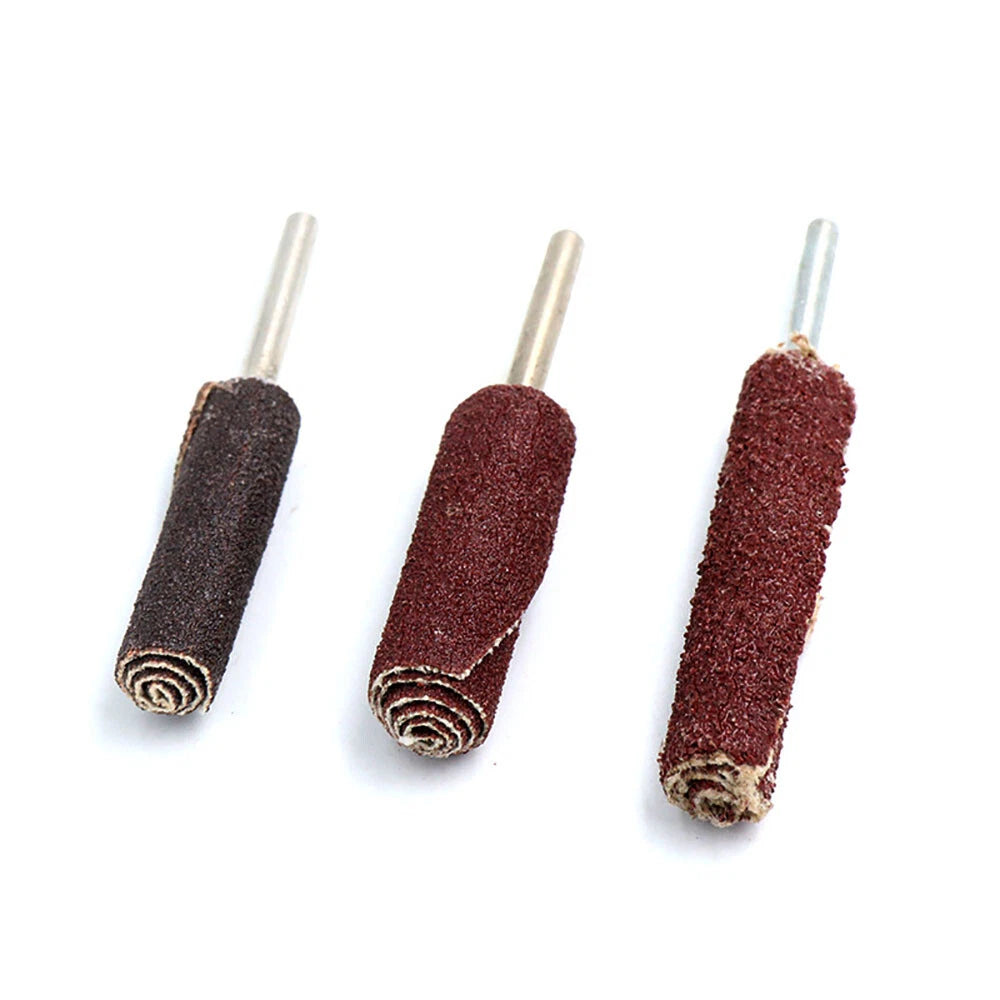
📦 Product Overview – 3mm Shank Cylinder Sanding Rod Bits
Reach the spots that normal discs and pads can't touch with these cylinder-shaped sandpaper rods. Designed specifically for inner holes, concave curves, and irregularly shaped workpieces, they make short work of deburring, smoothing, and polishing on a wide range of materials. Whether you're a hobbyist cleaning up a 3D printed part, a jeweler refining a ring's inner shank, or a woodworker evening out a tight recess, these 3mm shank bits fit right into your Dremel or rotary tool and turn a tedious hand-sanding chore into a fast, controlled machine operation. The rigid cylindrical form holds its shape while the abrasive surface wears evenly, giving you a consistent finish every time.
✨ Key Features of 3mm Shank Cylinder Sanding Rods
- Cylindrical Design for Internal Surfaces: Unlike flap wheels, these solid rods maintain their diameter while sanding inner bores and recesses, ensuring even contact.
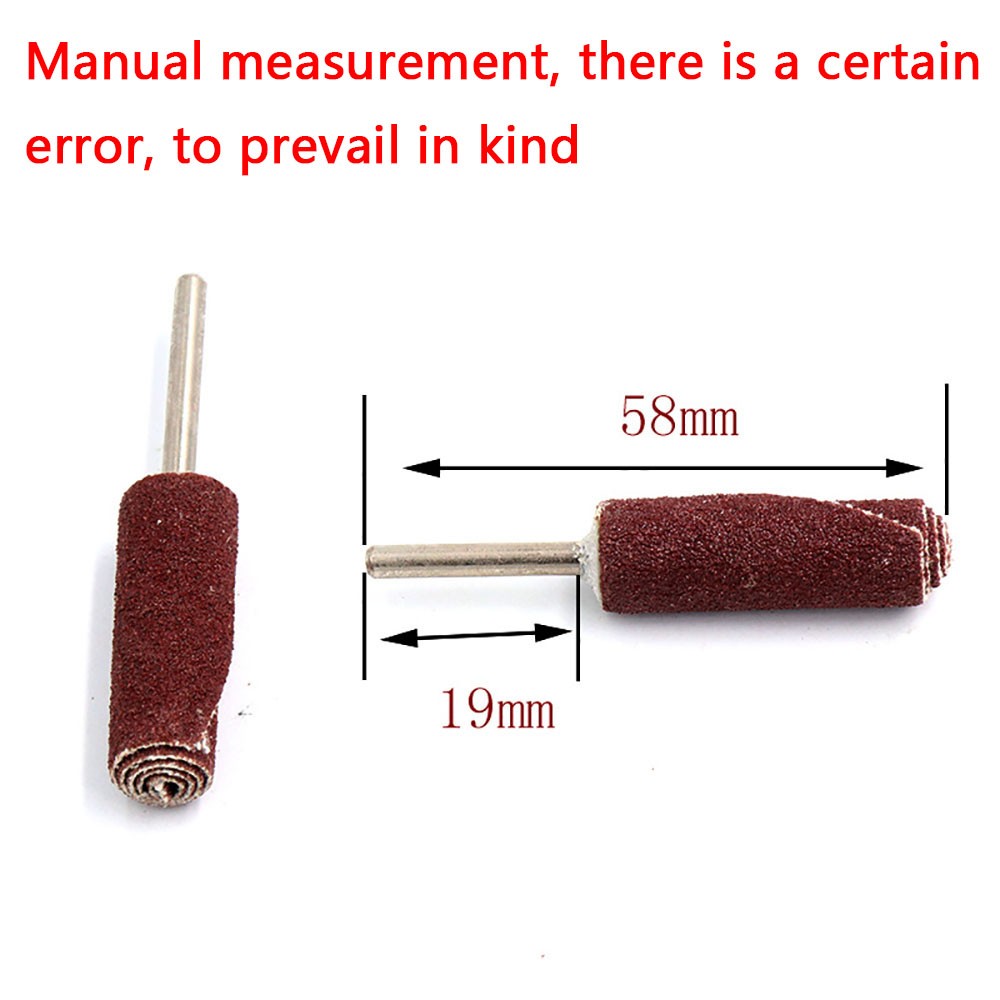
- Three Diameter Options (6/8/10mm): Choose 6mm for small holes and fine jewelry work, 8mm for general cavities, and 10mm for larger openings and concave areas.
- Universal 3mm Shank: Fits standard Dremel collets, flex shafts, and any rotary tool with a 3mm chuck—no adapter needed.
- High-Quality Abrasive Cloth: Evenly coated sandpaper bonded to a rigid core resists peeling and delivers a uniform scratch pattern across metals, wood, and plastics.
- Dry Sanding Ready: No pre-soak required. Simply mount, set your speed, and begin working. For best results, use moderate pressure and let the tool do the work.
- Broad Material Compatibility: Effective on stainless steel, copper, aluminum, iron, plastic, bamboo, and wood—ideal for mixed-material projects.
📏 Specifications – Sandpaper Cylinder Rod Bits
| Product Name |
Sandpaper Rod / Cylinder Sanding Bit |
| Shank Diameter |
3 mm |
| Head Diameter Options |
6 mm / 8 mm / 10 mm |
| Abrasive Type |
Sandpaper bonded to a rigid core |
| Application |
Inner holes, concave surfaces, irregular shapes, deburring, and polishing |
| Compatible Materials |
Stainless steel, copper, iron, aluminum, plastic, bamboo, wood, non-metals |
| Compatible Tools |
Rotary tools with 3mm collet (Dremel, Wen, flex shafts, pendant motors) |
| Package Includes |
1 x sandpaper rod (select diameter; multi-piece options available) |
❓ Frequently Asked Questions – Sandpaper Cylinder Rods for Rotary Tools
Q: Are these the same as flap wheels, or exactly what is a “sandpaper rod”?
A: These are solid cylindrical sanding bits, often called sandpaper rods. Unlike flap wheels, they have a firm core that won't change shape under pressure, making them perfect for sanding the inside of holes and concave areas where a flap wheel might deform.
Q: Will the 3mm shank fit my Dremel 4300 or 8220?
A: Yes, absolutely. Any Dremel rotary tool that uses the standard 3mm collet (which most do) will securely grip this shank. It also works with generic rotary tools that have a 3mm chuck.
Q: Do I need to soak these rods before using them, like some other abrasive bits?
A: No soaking is needed. They are ready to use dry. Applying excessive water or coolant may loosen the sandpaper bond, so keep the rod and your workpiece dry for the longest life.
Q: How do I choose between 6mm, 8mm, and 10mm diameters?
A: Measure the hole or curve you need to sand. The rod should be slightly smaller than the opening so it can move freely. For jewelry or small bores, 6mm is ideal. For larger automotive or woodworking cavities, 10mm covers an area faster. An 8mm rod is a great all-purpose middle ground.
Q: Can I use this on soft metals like aluminum without loading up the abrasive?
A: Yes, but use a lower RPM and light pressure. Aluminum can sometimes clog the sandpaper. If loading occurs, a quick brush with a stiff nylon pad will clean the surface and restore cutting performance.