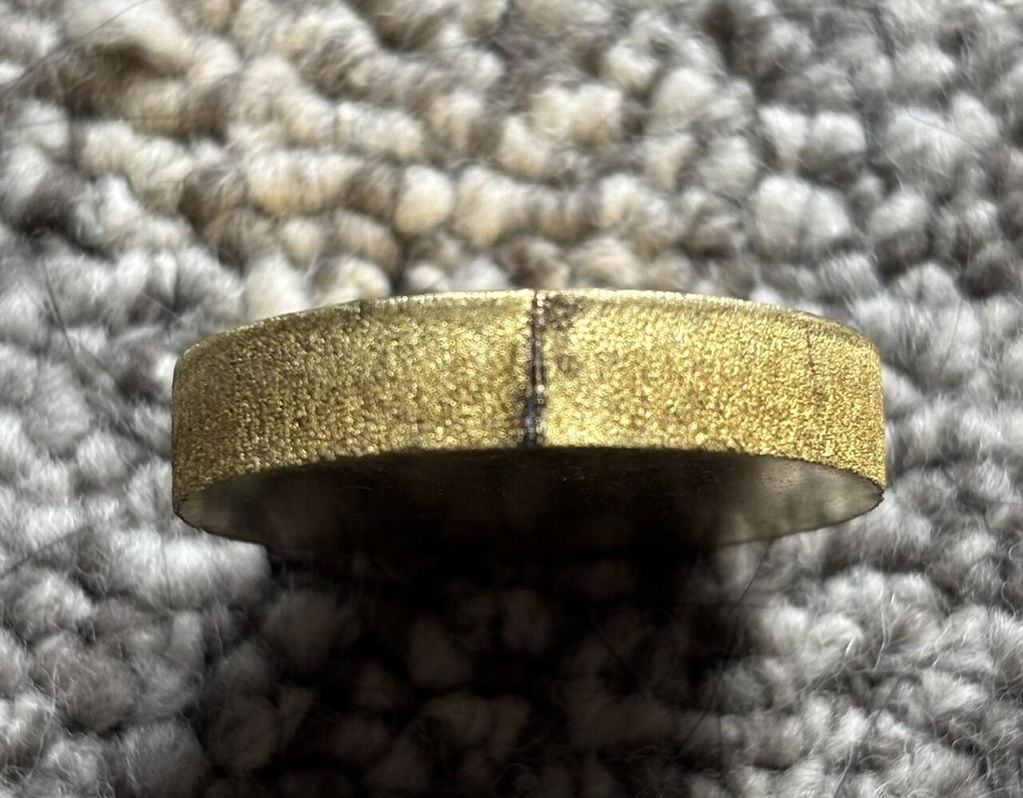
The chain is fine...but I ordered the wrong size. Nine links of the chain I ordered equals six of the size I wanted. My error...
How can I straighten out the springs? I can't use them coil uo as is.
Your payment information is processed securely. We do not store credit card details nor have access to your credit card information.
Get fitment advice & recommendations
When a worn or mismatched sprocket causes chain skip, premature wear, or unexpected downtime, the fix starts with the right tooth profile and pitch. Engineers, fabricators, and serious DIYers working with #40 (08B-1) simplex roller chain need a sprocket that holds tight tolerances across every tooth — whether they're building a conveyor line, retrofitting a go-kart drivetrain, or maintaining agricultural equipment.
These flat simplex sprockets are machined to suit #40 / 08B-1 single-strand roller chain with a 1/2 inch (12.7 mm) pitch. Available in a wide tooth range from 10T to 50T, each sprocket features a flat-plate hub profile suited for direct bore or custom shaft adaptation. Outer diameter scales with tooth count, ranging from approximately 42 mm (1.65 in) at 10T to approximately 205 mm (8.07 in) at 50T. Material is typically carbon steel or alloy steel, with a natural or lightly treated finish depending on variant.
Typical use cases include light-to-medium industrial conveyor drives, bicycle and e-bike drivetrain conversions using #40-compatible chain, small engine power take-off assemblies, and custom automation rigs where a specific gear ratio is dialed in by swapping tooth count. Long-tail applications such as "#40 chain sprocket replacement," "08B simplex drive sprocket," and "1/2 inch pitch roller chain gear" are all served by this single product family.
Engineered to match both ANSI #40 and ISO 08B-1 chain specifications, making these sprockets interchangeable across North American and metric drivetrain builds without modification.
Select from 37 tooth-count variants to dial in your exact gear ratio. Whether you need a small 10T drive sprocket for high speed or a large 50T driven sprocket for torque multiplication, one product family covers the full range.
The flat simplex design provides a clean, low-profile mounting surface ideal for custom bore machining, set-screw hubs, or direct weld-on applications in fabricated frames and conveyor structures.
Machined from carbon or alloy steel stock for solid tooth strength and resistance to deformation under cyclic load — suited for continuous-duty conveyor and power transmission applications.
Tooth spacing is held to the 1/2 inch (12.7 mm) pitch standard throughout the tooth range, ensuring smooth chain engagement, reduced vibration, and extended chain life across all variants.
Tooth profile follows standard ANSI/ISO roller chain sprocket geometry, allowing direct substitution for OEM sprockets in conveyors, agricultural machinery, go-karts, and light industrial drives.
| Chain Standard | ANSI #40 / ISO 08B-1 |
|---|---|
| Chain Type | Single-Strand (Simplex) Roller Chain |
| Pitch | 1/2 inch (12.7 mm) |
| Tooth Range | 10T – 50T (37 variants) |
| Hub Style | Flat Plate (no integrated hub boss) |
| Material | Carbon Steel / Alloy Steel |
| Surface Finish | See variant options |
| Bore Type | See variant options |
| Bore Diameter | See variant options |
| Outer Diameter (approx.) | ~42 mm (10T) to ~205 mm (50T) |
| Thickness / Face Width | See variant options |
| Weight | See variant options |
Tooth count determines your gear ratio. Divide the driven sprocket teeth by the drive sprocket teeth to get the reduction ratio. For example, a 10T drive paired with a 30T driven sprocket gives a 3:1 reduction — tripling torque while reducing output speed by two-thirds. Select a smaller tooth count on the drive side for more torque, or a larger count for higher speed.
Yes. ANSI #40 and ISO 08B-1 share the same 1/2 inch (12.7 mm) pitch and are functionally interchangeable in most applications. These sprockets are machined to the common pitch dimension and will engage correctly with standard #40 or 08B single-strand roller chain.
Bore diameter varies by tooth count and variant. Please refer to the variant options above or contact us to confirm the bore size for your selected tooth count before ordering. Many flat-plate sprockets are supplied with a pilot bore suitable for custom machining to your shaft diameter.
These sprockets are machined from carbon or alloy steel, which provides solid tooth strength for light-to-medium duty continuous operation. For heavy shock-load or high-speed industrial applications, confirm the working load rating against your drive design requirements. Contact us if you need specific load capacity data for your tooth count.
Carbon and alloy steel sprockets will develop surface oxidation in humid or wet environments without protective treatment. For corrosion-sensitive applications, consider applying a chain lubricant or rust-inhibiting coating after installation. If your environment requires inherent corrosion resistance, contact us to confirm whether a treated or stainless variant is available for your tooth count.
In most cases, yes — provided your existing chain is ANSI #40 or ISO 08B-1 with a 1/2 inch pitch and the bore diameter matches your shaft. Verify the tooth count, bore size, and hub thickness against your OEM specification before ordering. The flat-plate profile is a common geometry used across conveyors, agricultural drives, and light machinery.
A simplex sprocket is designed for single-strand roller chain — one row of rollers engages one row of teeth. A duplex sprocket has two side-by-side tooth rows for double-strand (duplex) chain, which carries roughly twice the load. These sprockets are simplex and are intended for use with single-strand #40 / 08B-1 chain only.