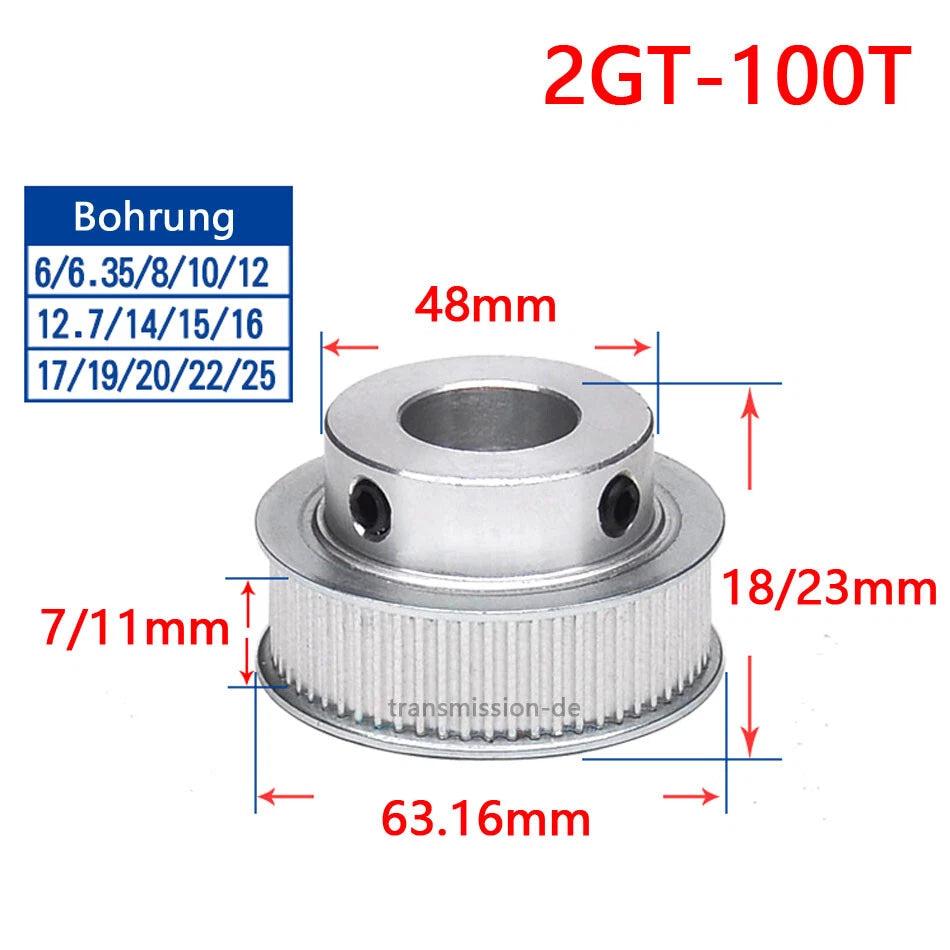
16T - 100T Synchronous Wheel GT2 Timing Belt Pulley for 10 mm width Drive Belts

No reviews

Price:
Sale price$4.35 USD
Stock:
In stock (500 units), ready to be shipped

Payment & Security

Ach Direct Debit Amazon American Express Apple Pay Bancontact BLIK Diners Club Discover EPS Google Pay iDEAL Wero JCB Maestro Mastercard Multibanco MobilePay PayPal Przelewy24 Shop Pay Twint Union Pay USDC Visa

Your payment information is processed securely. We do not store credit card details nor have access to your credit card information.

Limited Offer — Spend More, Save More
Spend $55+
Save $5
Spend $100+
Save $10
Spend $200+
Save $25
HomeDIYer DIY Expert Support

DIY Expert Support

Get fitment advice & recommendations

Mon–Fri  8:30 AM – 8:00 PM
24-Hour Fast Ship
Arrives in 3–14 Days
Worldwide Shipping
30-Day Returns
1 tree planted with every purchase

Description

GT2 Timing Belt Pulley — Precision 2GT Synchronous Wheel for 10 mm Drive Belts

When belt slip, backlash, or misaligned drive components are costing you accuracy on your 3D printer, CNC router, or robotics build, the root cause is often an undersized or poorly machined pulley. Engineers and makers who demand repeatable motion need a GT2 timing belt pulley that holds tight tolerances across every tooth — from the first revolution to the ten-thousandth.

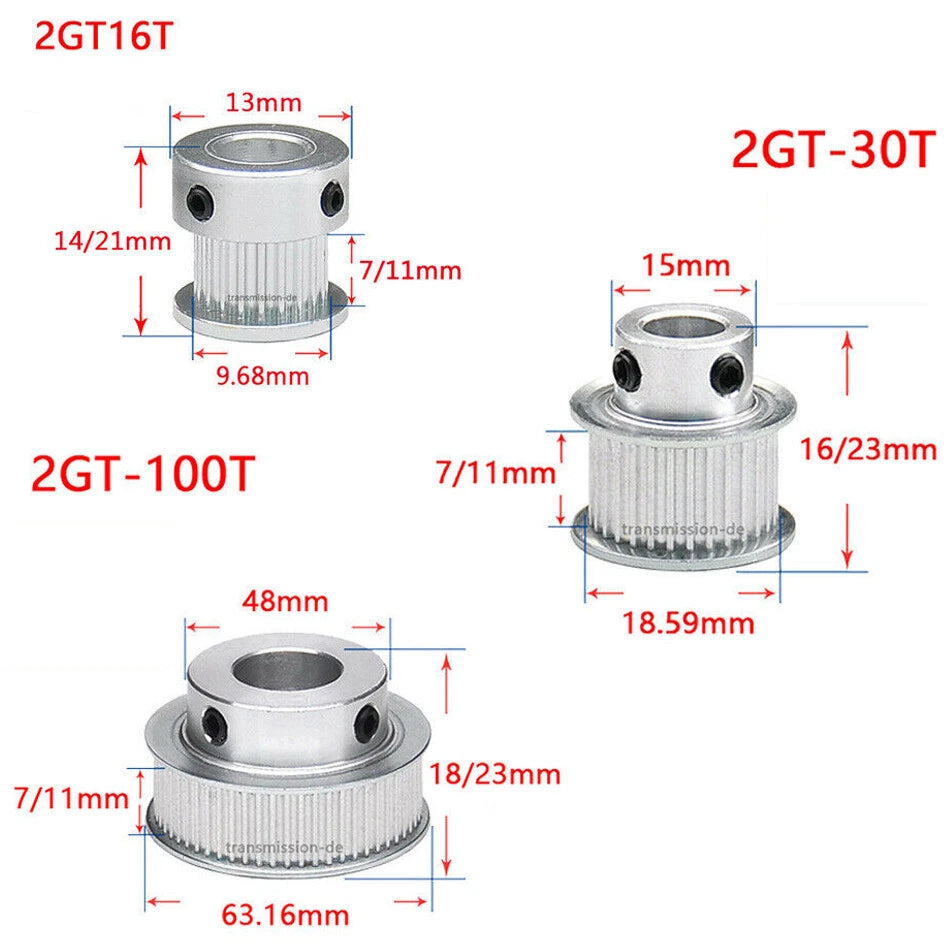
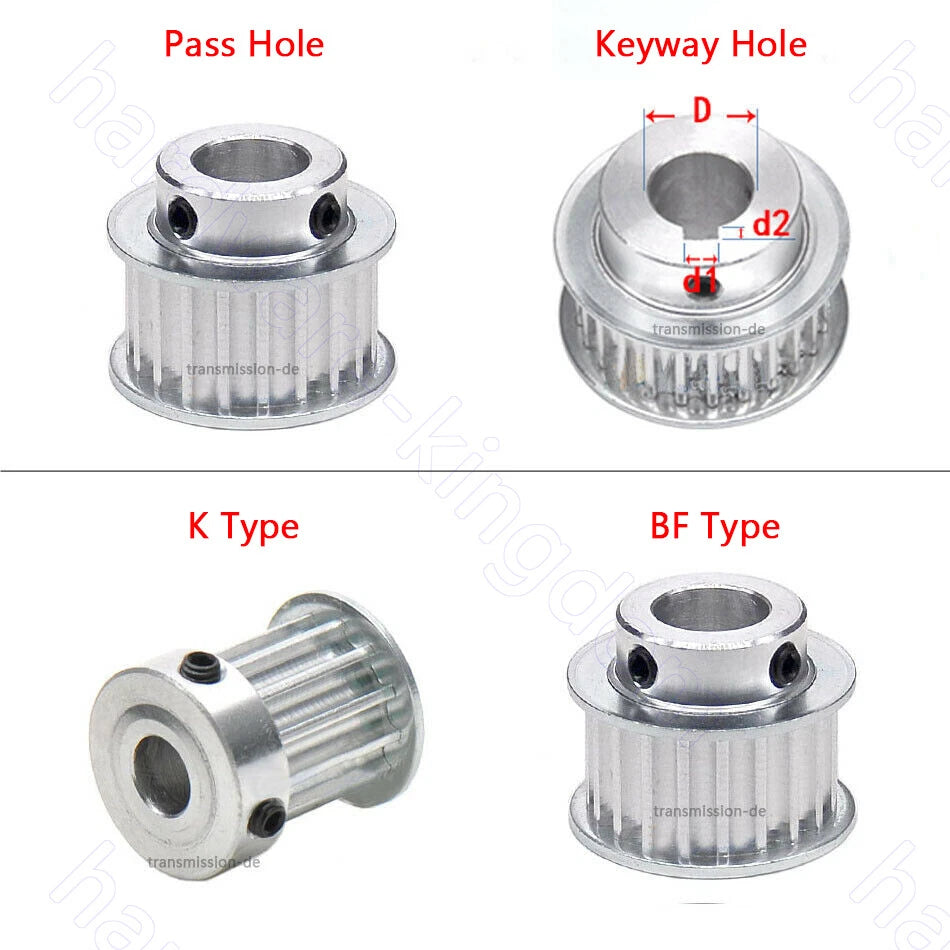
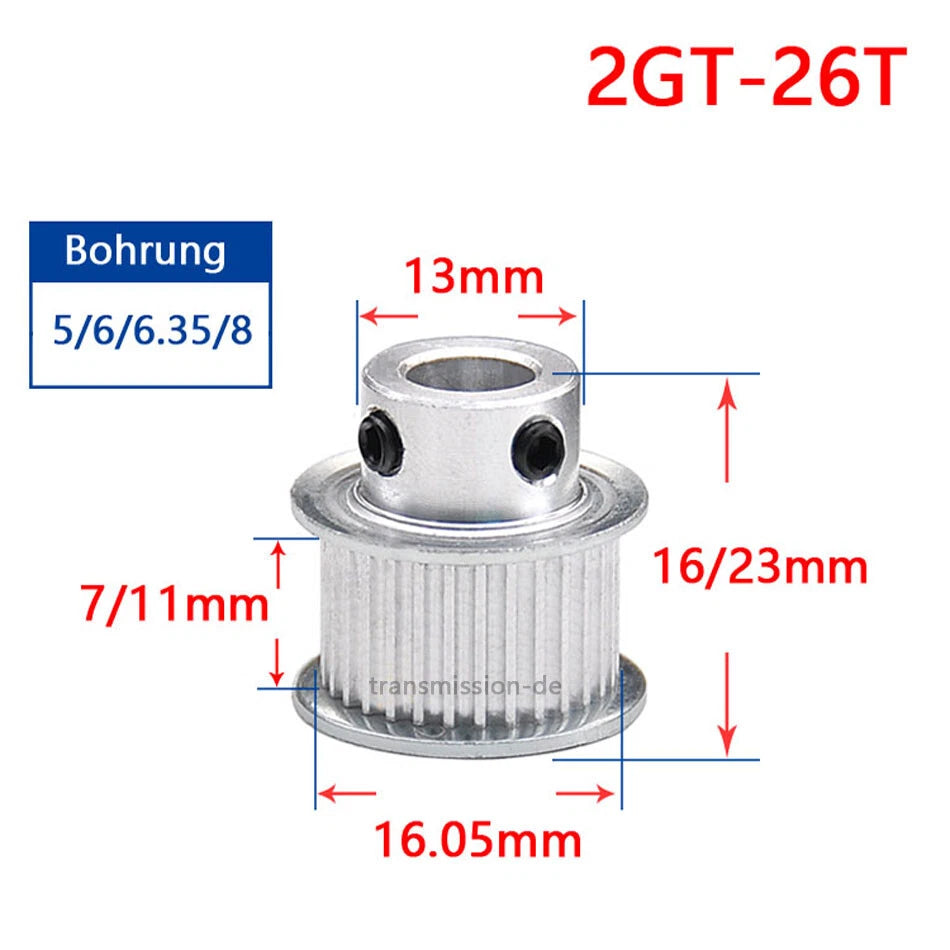
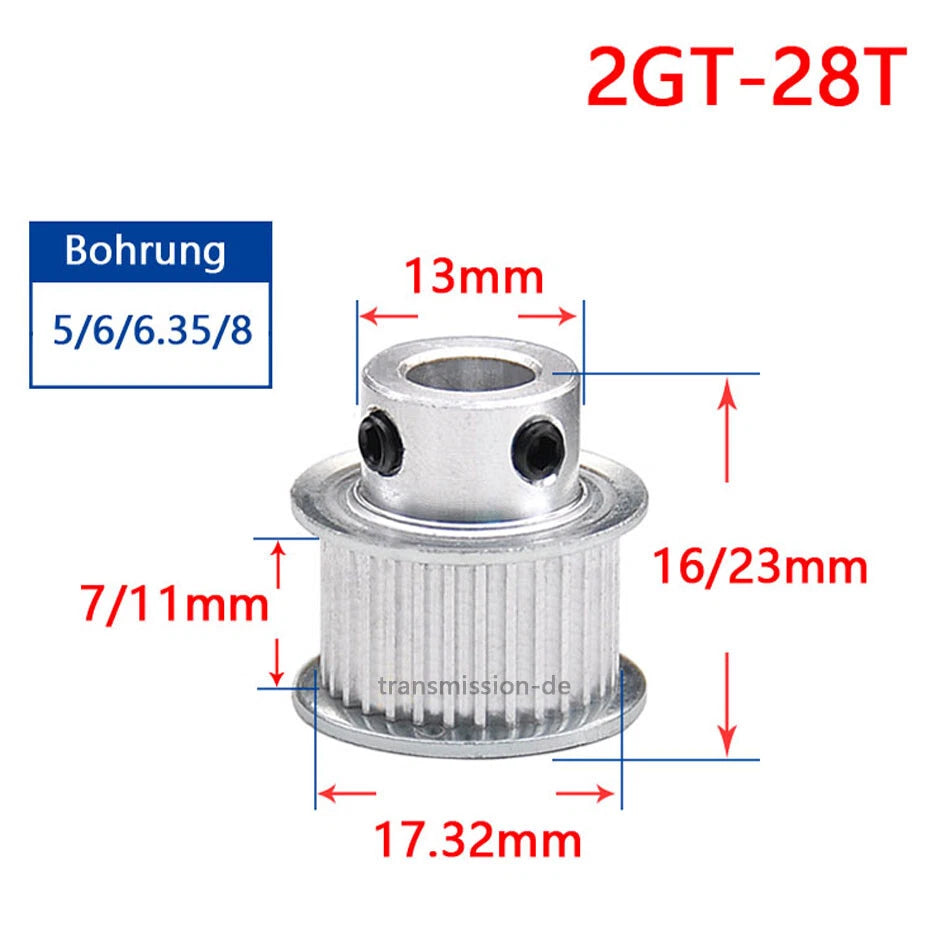
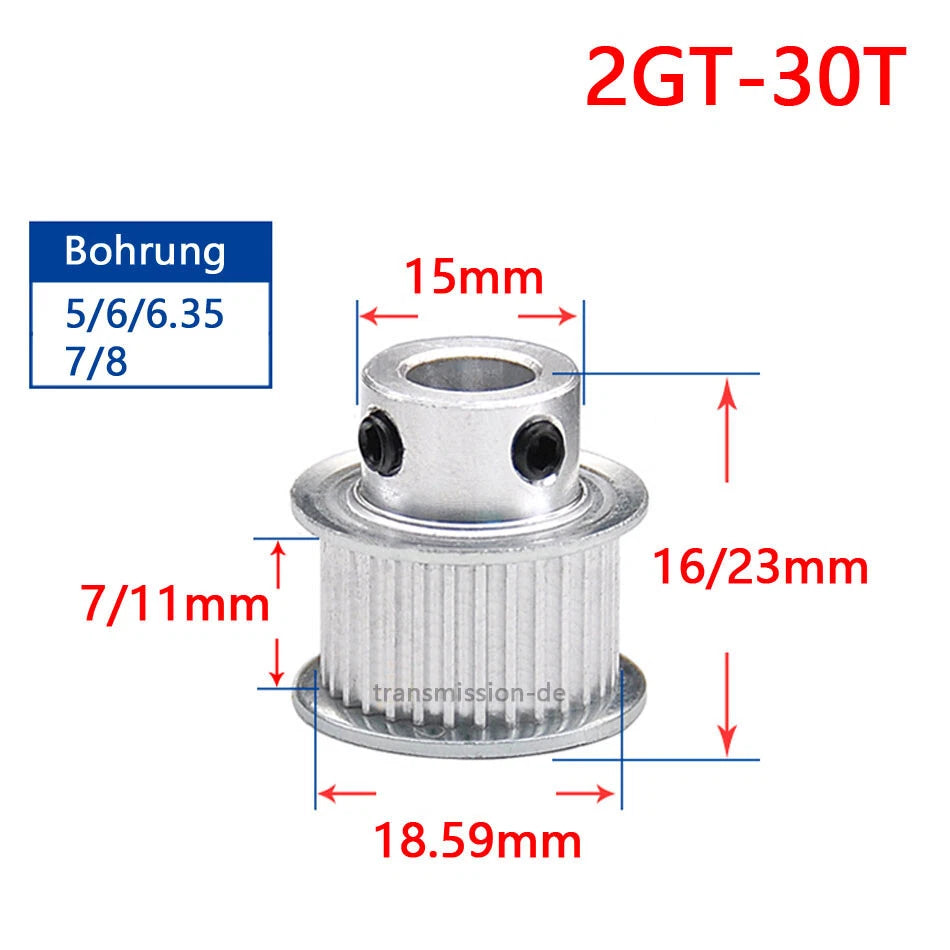
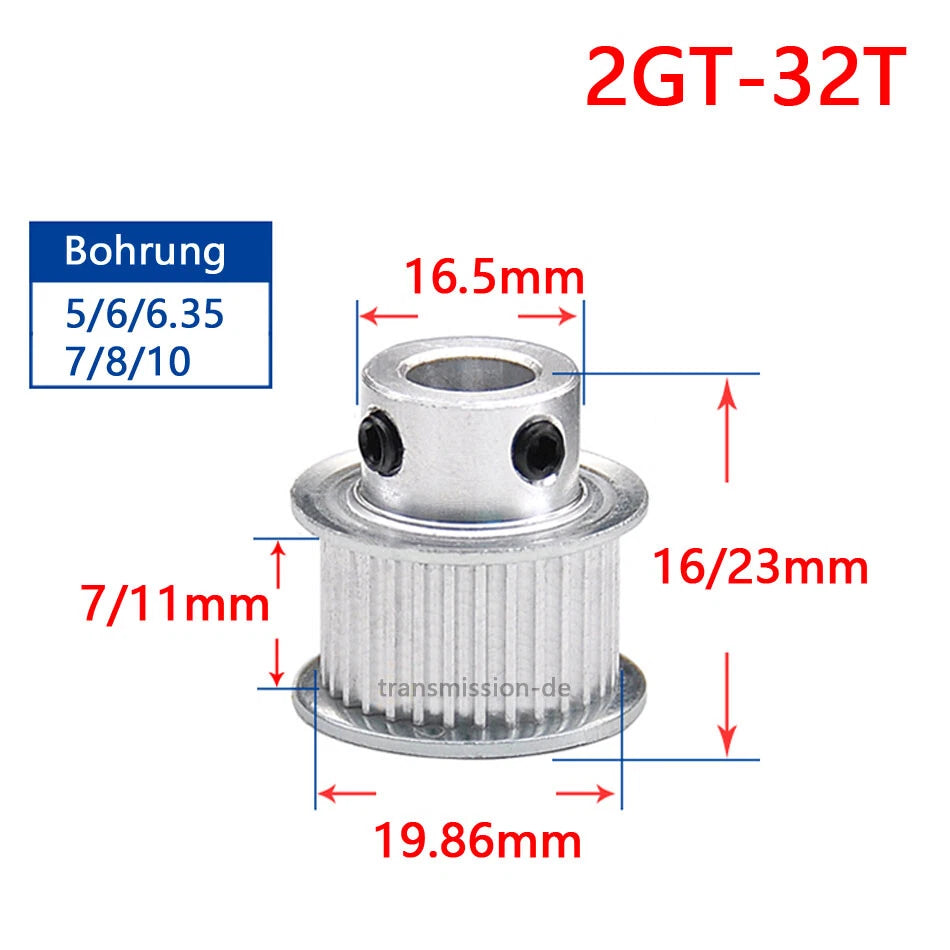
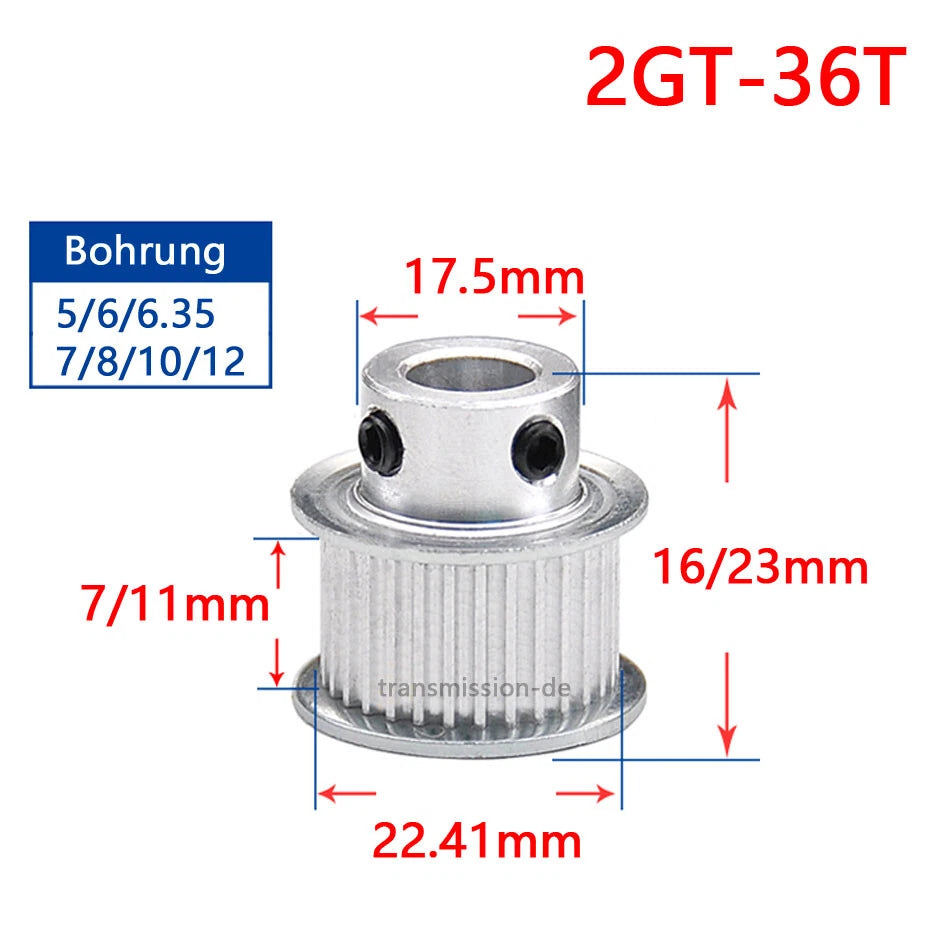
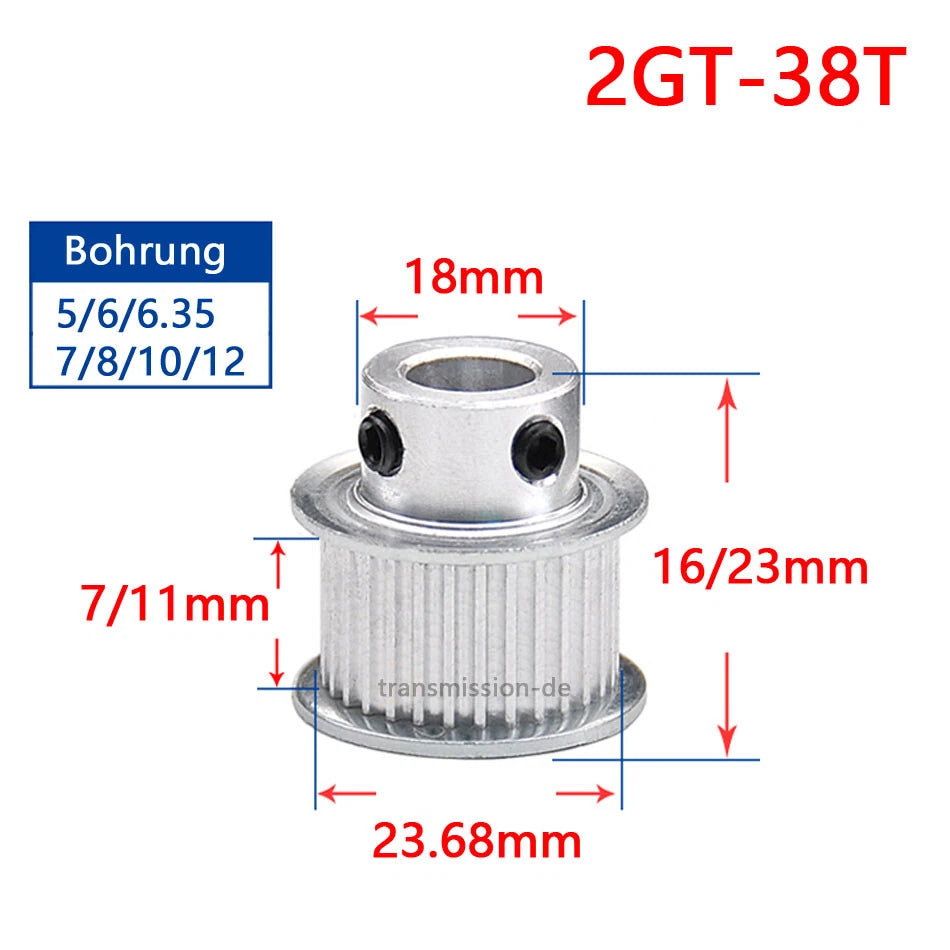
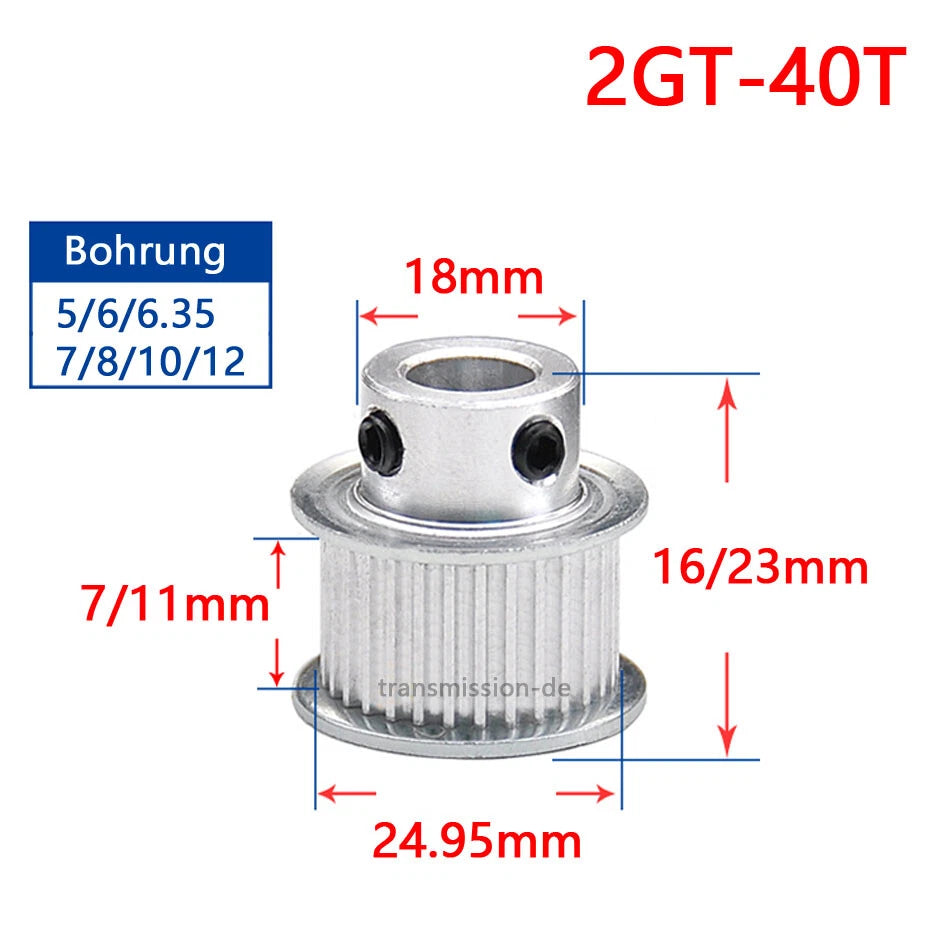
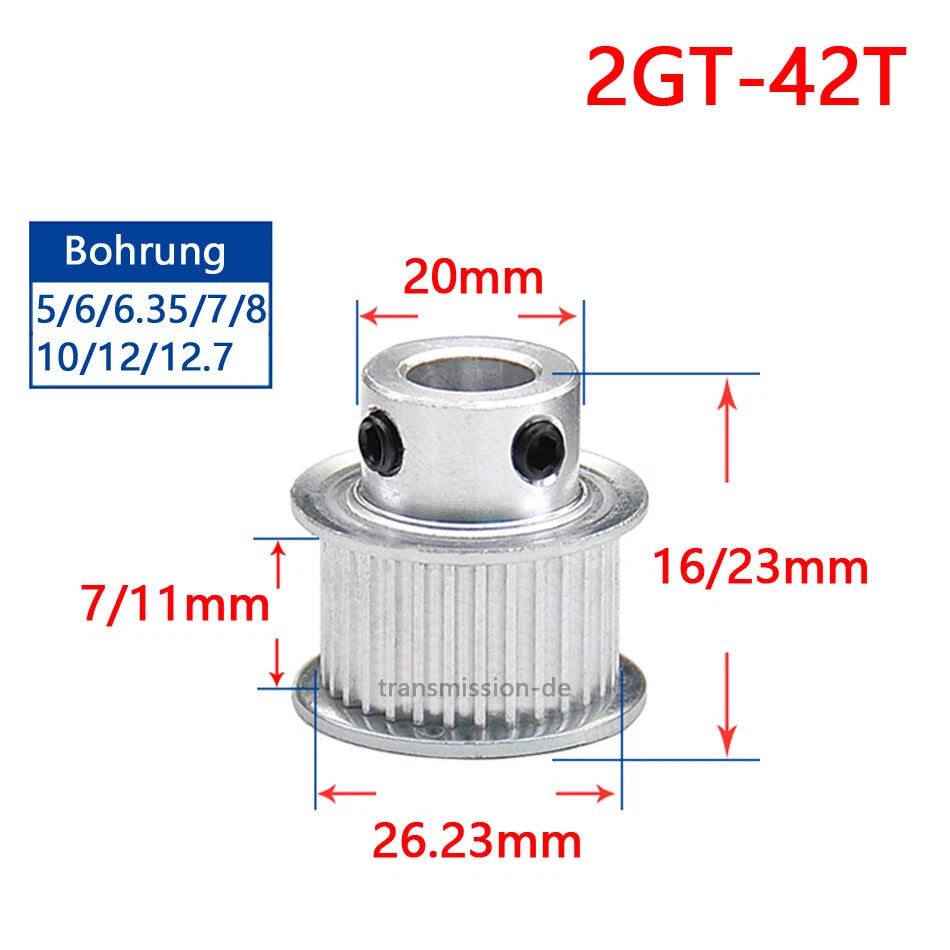
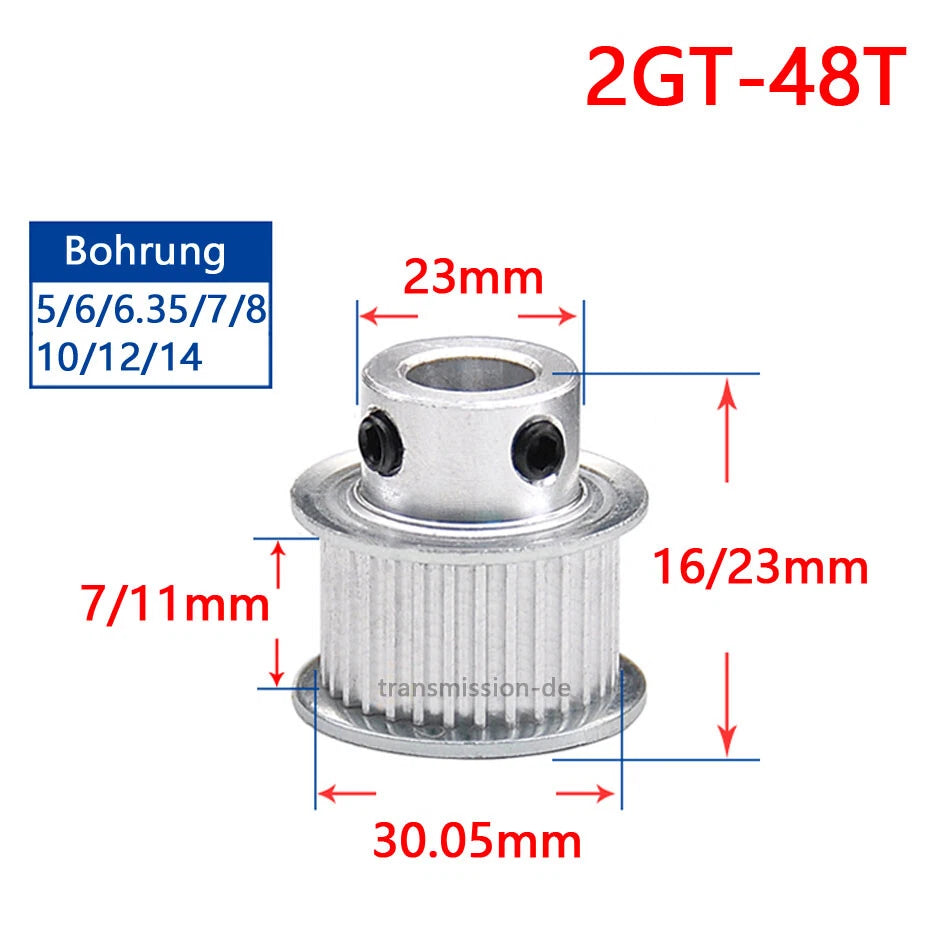
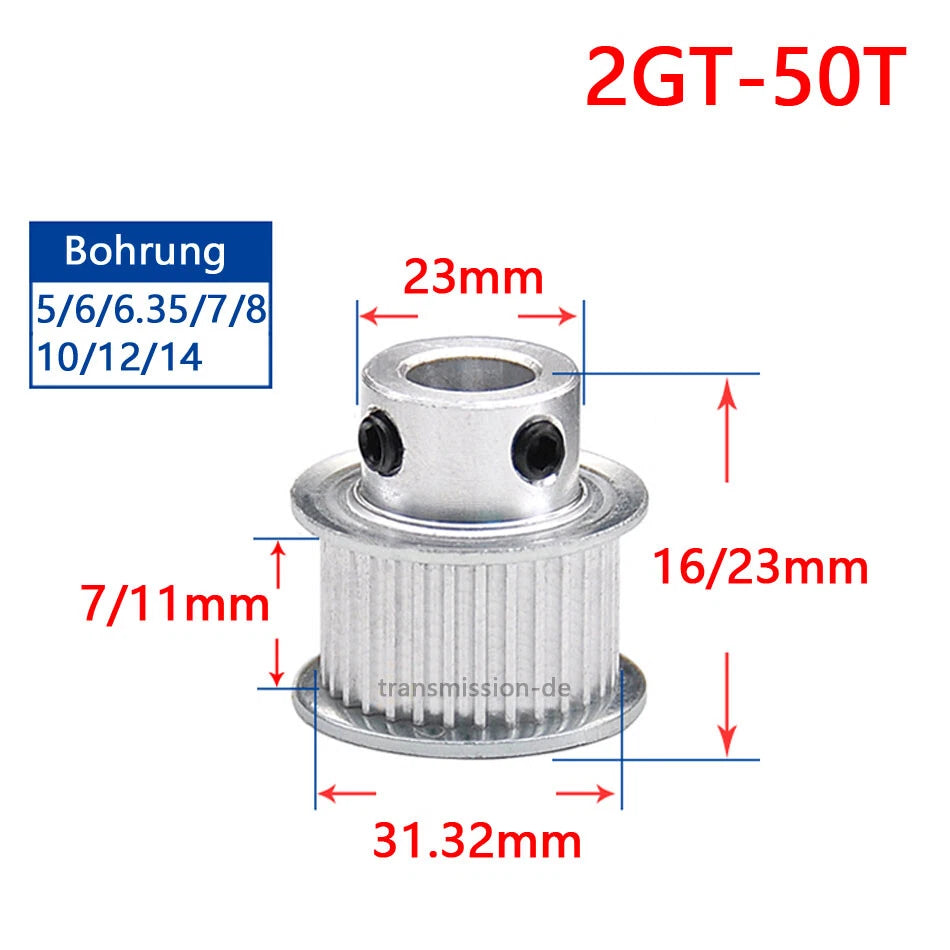
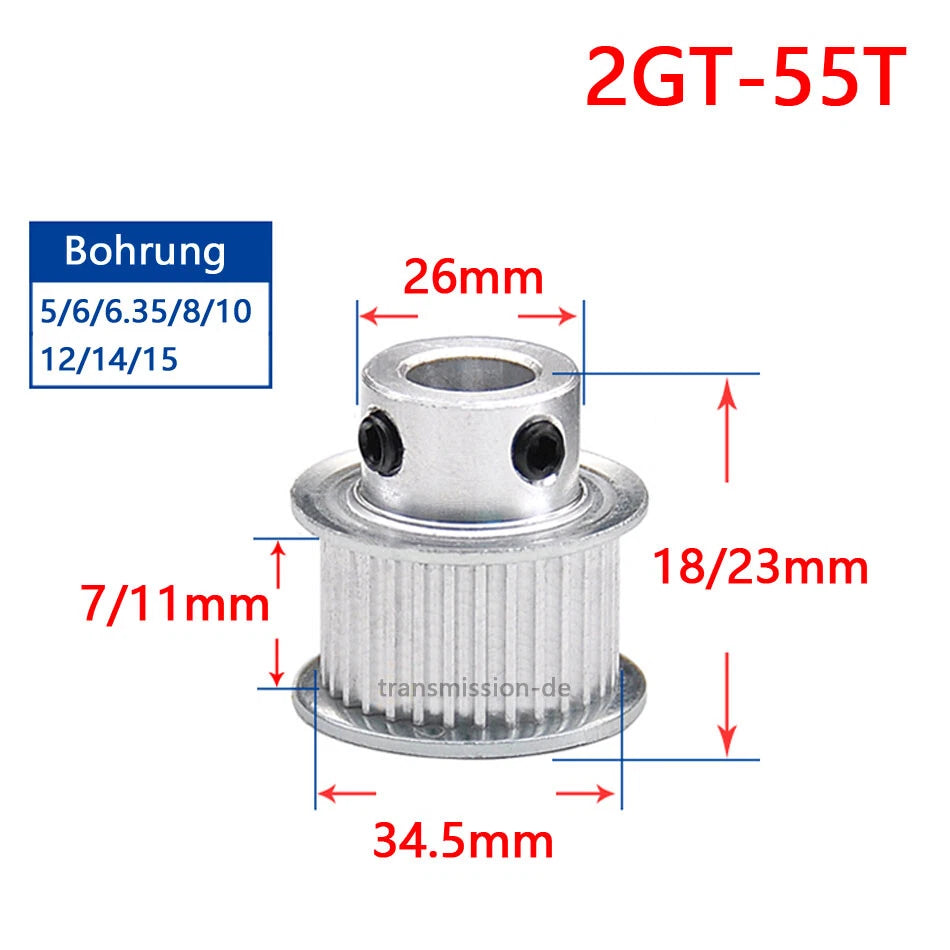
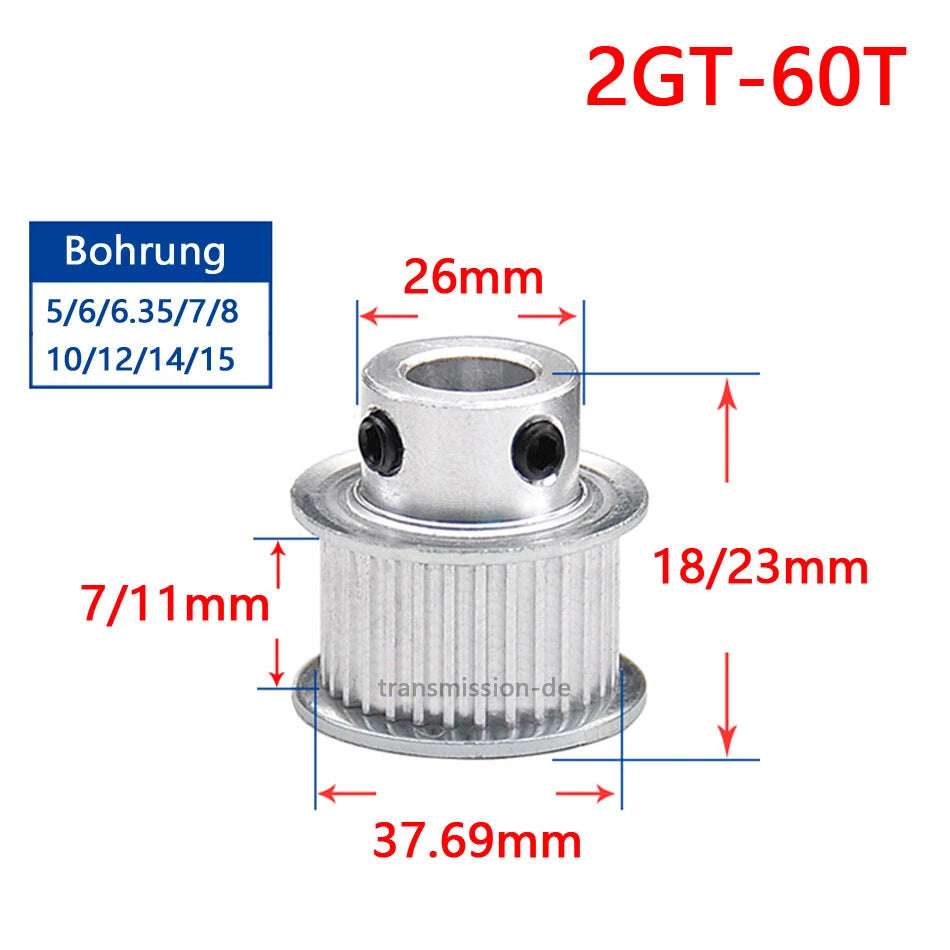
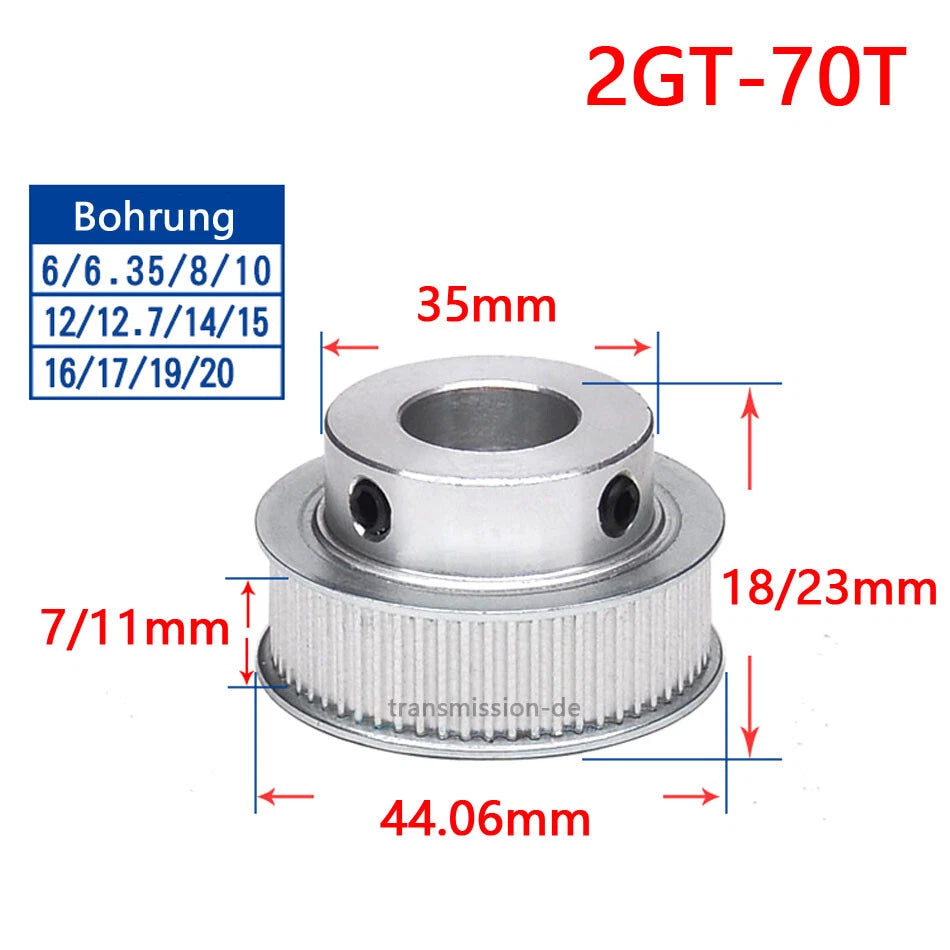
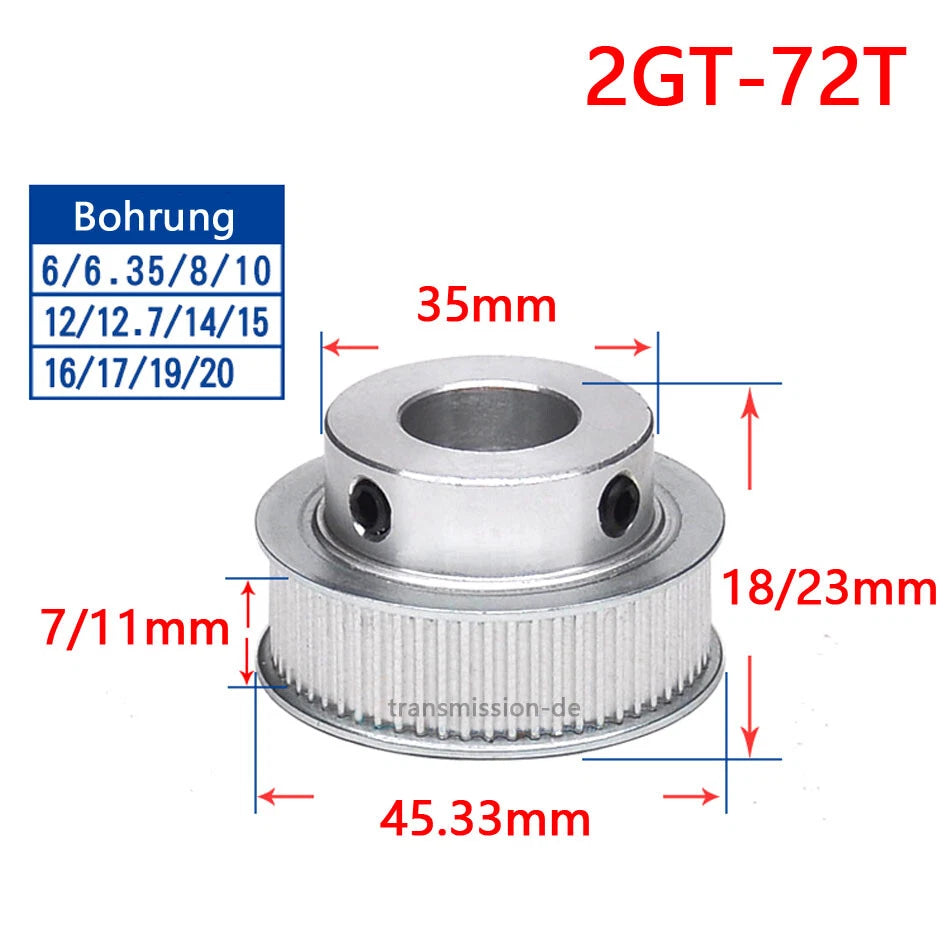
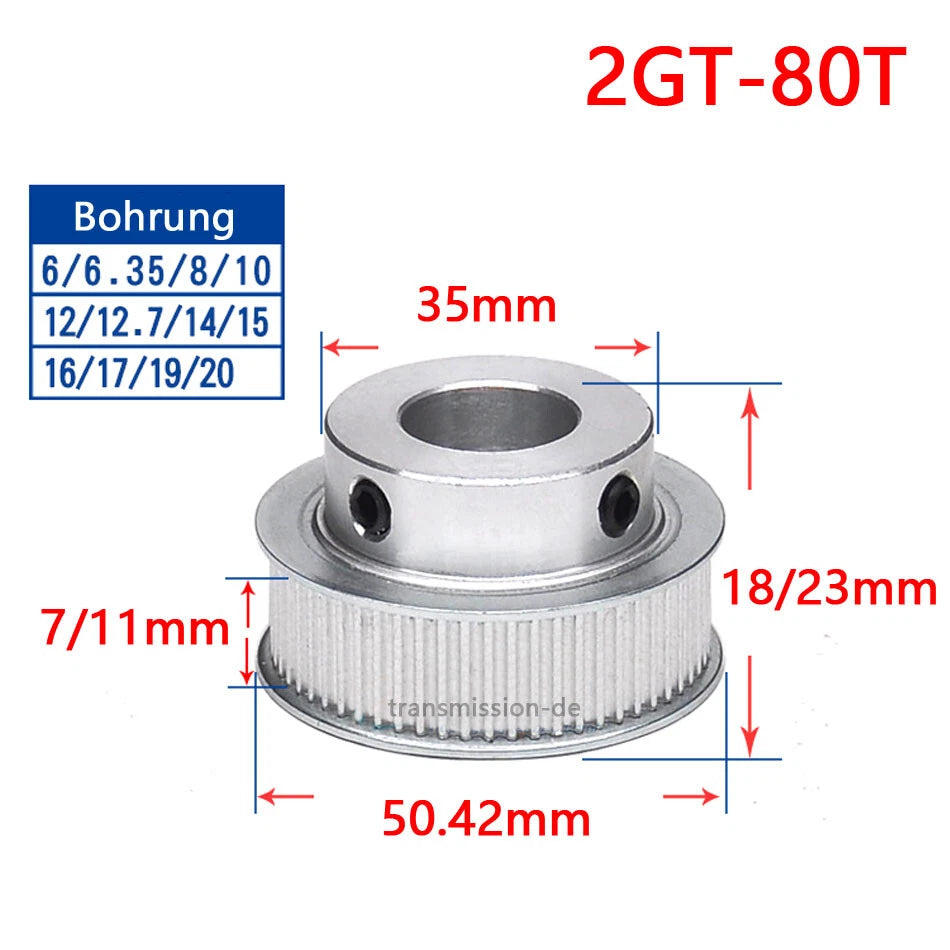
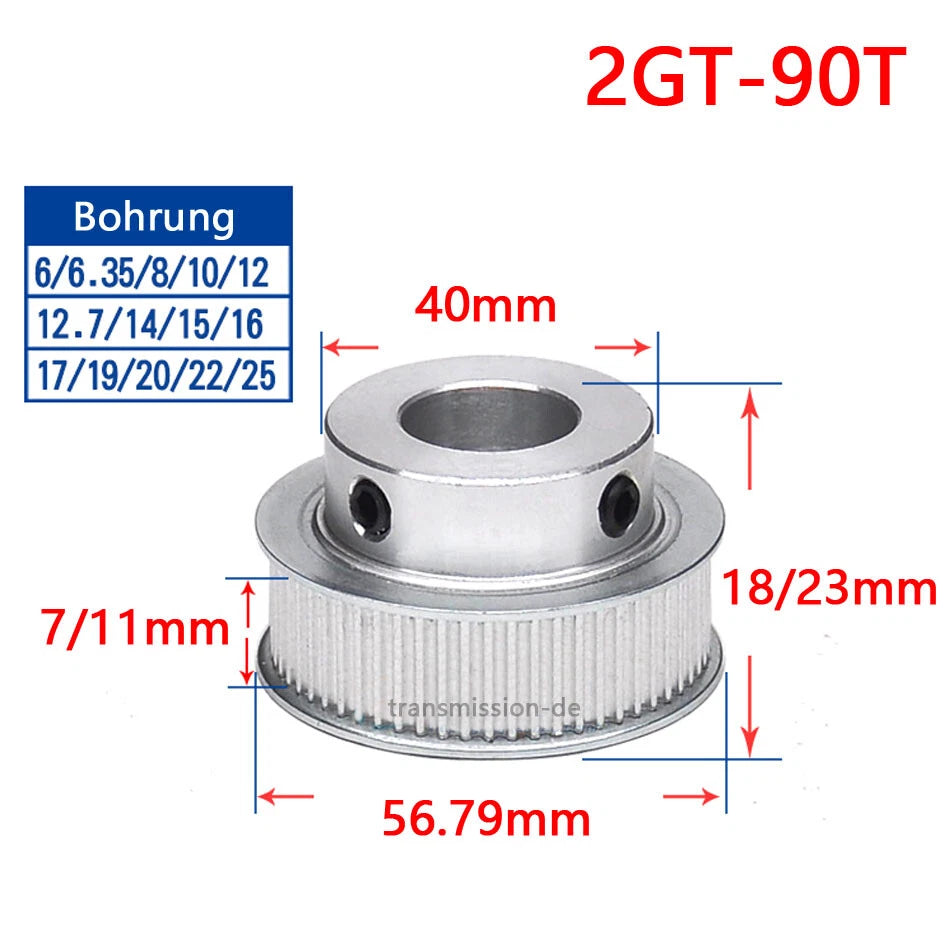
These 2GT synchronous wheels are machined from aluminum alloy and are available in tooth counts from 16T to 100T, all sized for 10 mm wide GT2 belts. Slot width is 11 mm to accommodate standard belt edge clearance. Bore options span 4 mm to 20 mm in both K-type (set-screw clamping) and BF-type (flange-retained) configurations, covering shaft diameters common in NEMA 17/23 stepper motors and servo drives.

Typical use cases include open-loop and closed-loop 3D printer X/Y axis drives, CNC plasma and laser gantry systems, pick-and-place automation arms, and small-batch conveyor indexing — anywhere a GT2 2GT timing pulley must deliver consistent pitch engagement without tooth jump under load.

⚙️ Compatible with: GT2 / 2GT open-loop and closed-loop timing belts, 10 mm belt width. Fits NEMA 17 and NEMA 23 motor shafts (bore-dependent). Works with standard GT2 idler pulleys and tensioners.

✅ Key Features of These GT2 Timing Belt Pulleys

  • 🦷Wide Tooth Range (16T – 100T): Select the exact gear ratio your drive system needs — from compact 16-tooth drive pulleys to large 100-tooth reduction wheels, all in the same 2GT tooth profile.
  • 📏11 mm Slot Width for 10 mm Belts: The 1 mm of clearance on each side prevents belt edge wear and allows smooth tracking without lateral binding during high-cycle operation.
  • 🔩K-Type & BF-Type Bore Options: K-type uses a radial set screw for quick shaft mounting; BF-type adds a flange face for axial retention — choose the clamping style that matches your assembly constraints.
  • ⚖️Aluminum Alloy Construction: Lightweight yet rigid, aluminum pulleys reduce rotational inertia compared to steel alternatives, improving acceleration response in servo and stepper-driven axes.
  • 🎯Consistent 2GT Tooth Profile: The GT2 involute tooth geometry minimizes backlash and distributes belt load evenly across multiple teeth, maintaining positional accuracy in open-loop motion systems.
  • 🔄Broad Bore Compatibility (4 – 20 mm): Covers the most common motor and drive shaft diameters used in desktop CNC, 3D printing, and light industrial automation without requiring custom machining.

📐 Technical Specifications — GT2 Timing Belt Pulley

Belt Profile GT2 / 2GT
Belt Width Compatibility 10 mm
Slot Width 11 mm
Tooth Count 16T, 20T, 24T, 25T, 26T, 28T, 30T, 32T, 35T, 36T, 38T, 40T, 42T, 45T, 48T, 50T, 55T, 60T, 70T, 72T, 80T, 90T, 100T
Bore Type K Type (set screw) / BF Type (flange)
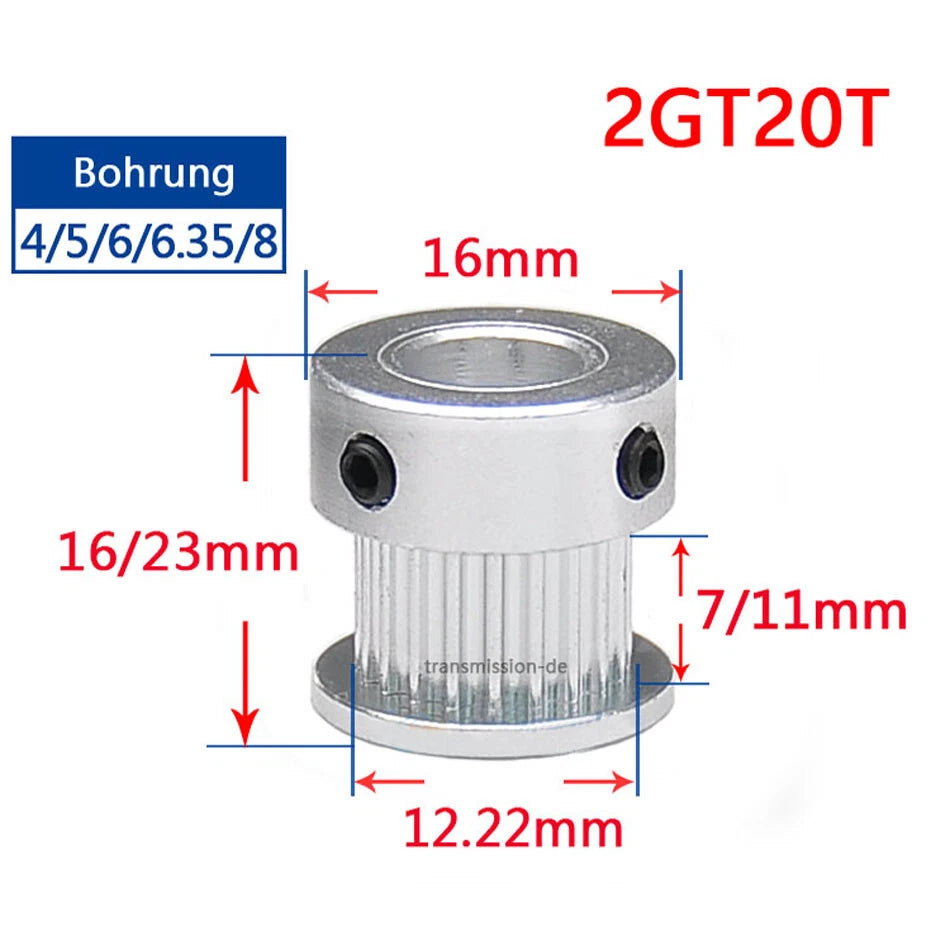
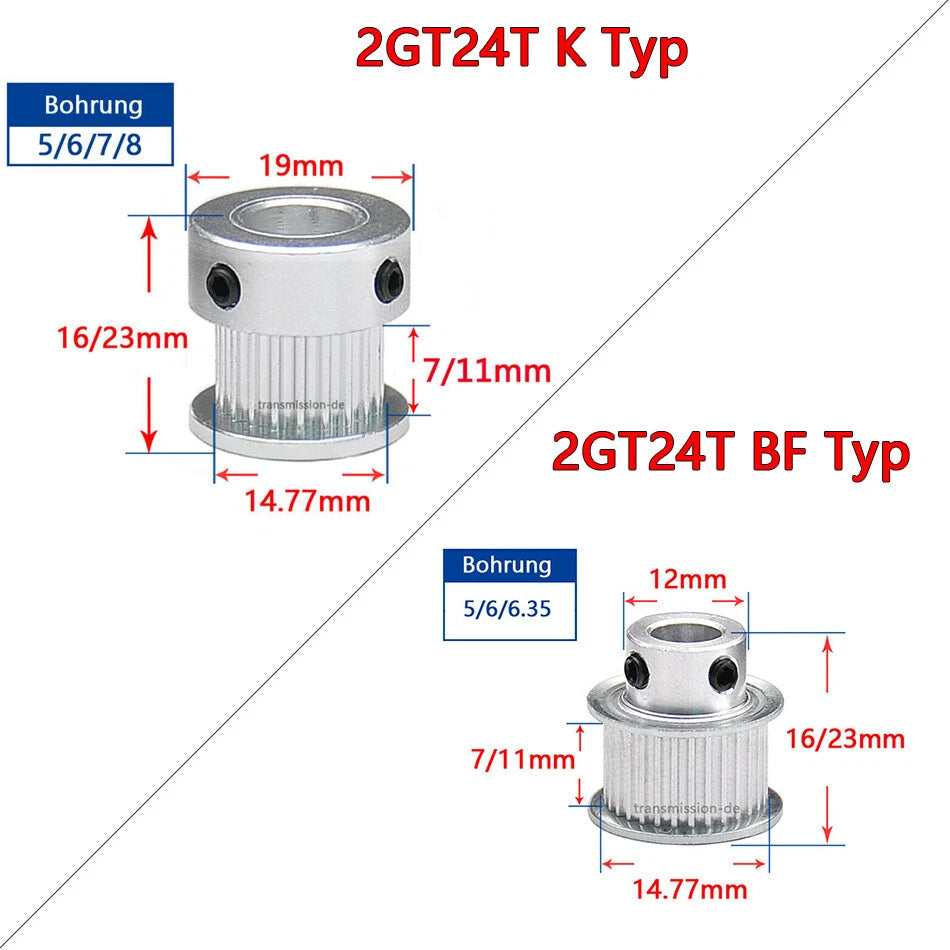
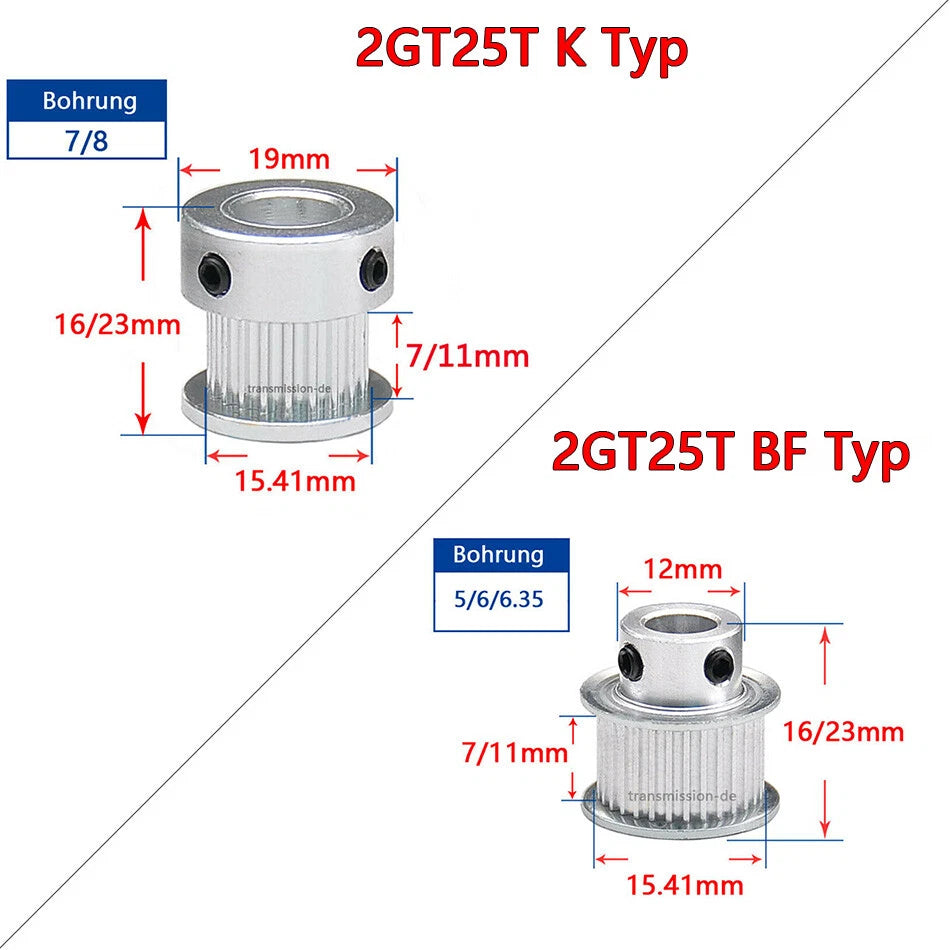
Bore Diameter Options 4, 5, 6, 6.35, 7, 8, 10, 12, 12.7, 14, 15, 16, 17, 19, 20 mm
Material Aluminum Alloy
Pitch 2 mm (GT2)
Outer Diameter See variant options
Hub Diameter See variant options
Weight See variant options
Surface Finish Natural anodized / machined

❓ Frequently Asked Questions

How do I choose the right tooth count for my application?

The tooth count determines your drive ratio. Pair a small drive pulley (e.g., 20T on the motor) with a larger driven pulley (e.g., 40T on the axis) for a 2:1 reduction, doubling torque at half speed. For direct-drive 3D printer axes, matching tooth counts on both ends gives a 1:1 ratio. Calculate your steps-per-mm based on motor step angle, microstepping, and pulley circumference (tooth count × 2 mm pitch).

What is the difference between K-type and BF-type bore?

K-type pulleys have a radial set screw that clamps directly onto the shaft — fast to install and reposition, suitable for most 3D printer and CNC builds. BF-type pulleys include a flange face on the bore end that provides axial retention, preventing the pulley from walking along the shaft under lateral belt tension. BF-type is preferred in higher-load or vibration-prone environments.

Will these pulleys work with standard GT2 belts?

Yes. These pulleys use the standard GT2 (2GT) tooth profile with a 2 mm pitch, compatible with all GT2 open-loop and closed-loop timing belts of 10 mm width. They are interchangeable with other GT2 pulleys of the same tooth count from any manufacturer following the GT2 standard.

Can I use these on NEMA 17 stepper motors?

Yes. NEMA 17 motors typically have a 5 mm output shaft, so select the 5 mm bore variant. If your motor has a D-cut shaft, the K-type set screw will engage the flat. For NEMA 23 motors with 6.35 mm or 8 mm shafts, choose the matching bore size in either K-type or BF-type.

How do I verify the outer diameter before ordering?

The outer diameter of a GT2 pulley is calculated as: OD = (tooth count × pitch) / π. For example, a 20T pulley has OD ≈ (20 × 2) / 3.1416 ≈ 12.73 mm. For precise clearance checks in your assembly, refer to the variant options or contact us to confirm the exact machined OD for your selected tooth count.

Are these pulleys suitable for high-speed or high-torque applications?

These aluminum GT2 pulleys are well-suited for the speed and torque ranges typical of desktop 3D printers, laser cutters, and light CNC machines. For heavy industrial drives with sustained high torque or speeds exceeding 3,000 RPM, evaluate whether a steel pulley or a larger belt width (e.g., 15 mm or 20 mm) would better suit your load requirements.

What if my shaft diameter is not listed in the bore options?

Select the next larger bore size and use a shaft adapter sleeve or have the bore finish-reamed to your exact diameter by a local machine shop. Alternatively, contact us before ordering — we may be able to source a bore size not listed in the standard variant options.

🛒 Select your Model-Teeth count and Bore & Type above, then add to cart.

You may also like

Recently viewed