HTD-5M 10T-72T Timing Belt Pulley With Step Bore 5-25mm, For 15mm Width Belt

No reviews

Price:
Sale price$6.79 USD
Stock:
In stock (500 units), ready to be shipped

Payment & Security

Ach Direct Debit Amazon American Express Apple Pay Bancontact BLIK Diners Club Discover EPS Google Pay iDEAL Wero JCB Maestro Mastercard Multibanco MobilePay PayPal Przelewy24 Shop Pay Twint Union Pay USDC Visa

Your payment information is processed securely. We do not store credit card details nor have access to your credit card information.

Limited Offer — Spend More, Save More
Spend $55+
Save $5
Spend $100+
Save $10
Spend $200+
Save $25
HomeDIYer DIY Expert Support

DIY Expert Support

Get fitment advice & recommendations

Mon–Fri  8:30 AM – 8:00 PM
24-Hour Fast Ship
Arrives in 3–14 Days
Worldwide Shipping
30-Day Returns
1 tree planted with every purchase

Description

HTD-5M Timing Belt Pulley — Precision Step Bore for 15mm Belt Drives

When your CNC router, 3D printer, or automation rig demands repeatable, slip-free motion, a mismatched pulley is the first thing that breaks your build. Engineers and makers who need a wide selection of tooth counts and bore sizes in a single HTD-5M timing belt pulley series will find exactly what they need here — without hunting across multiple suppliers.

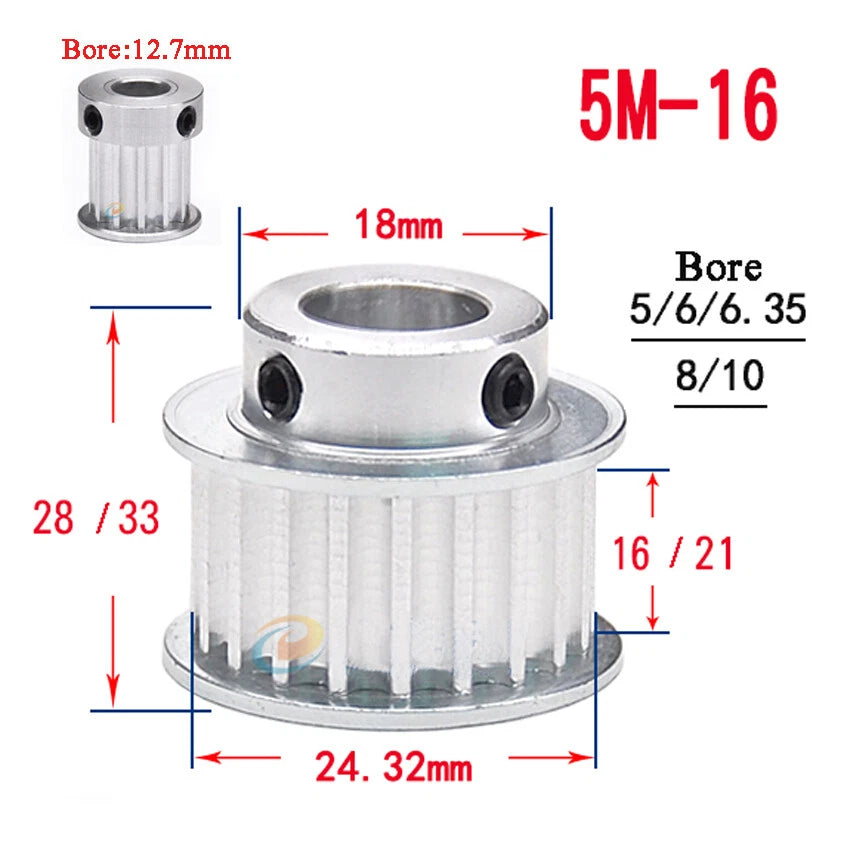
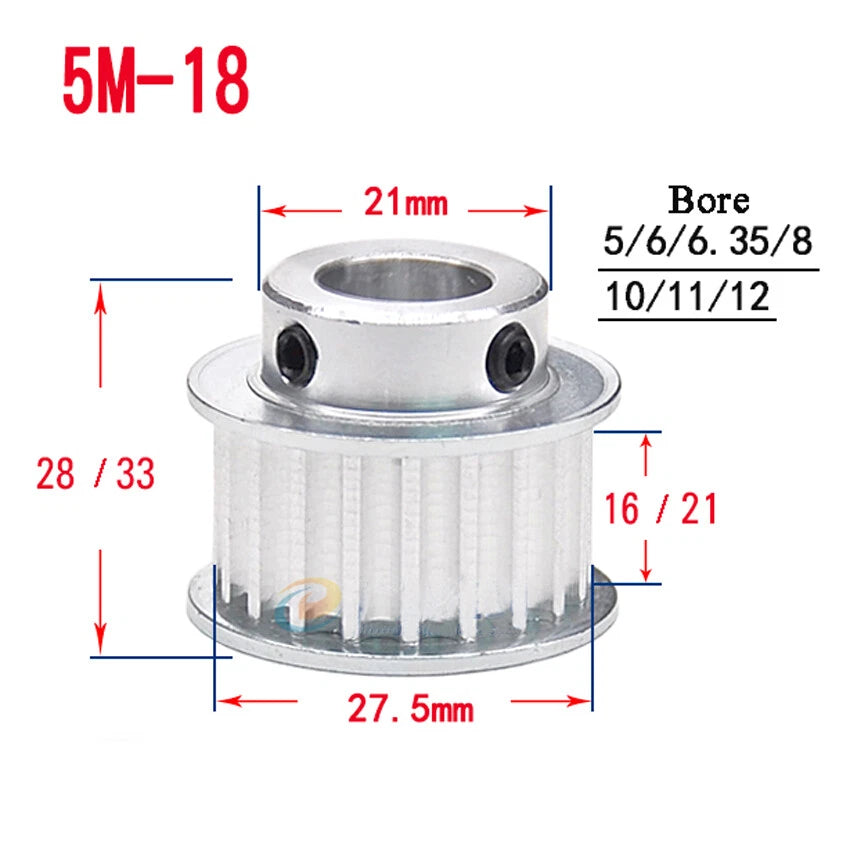
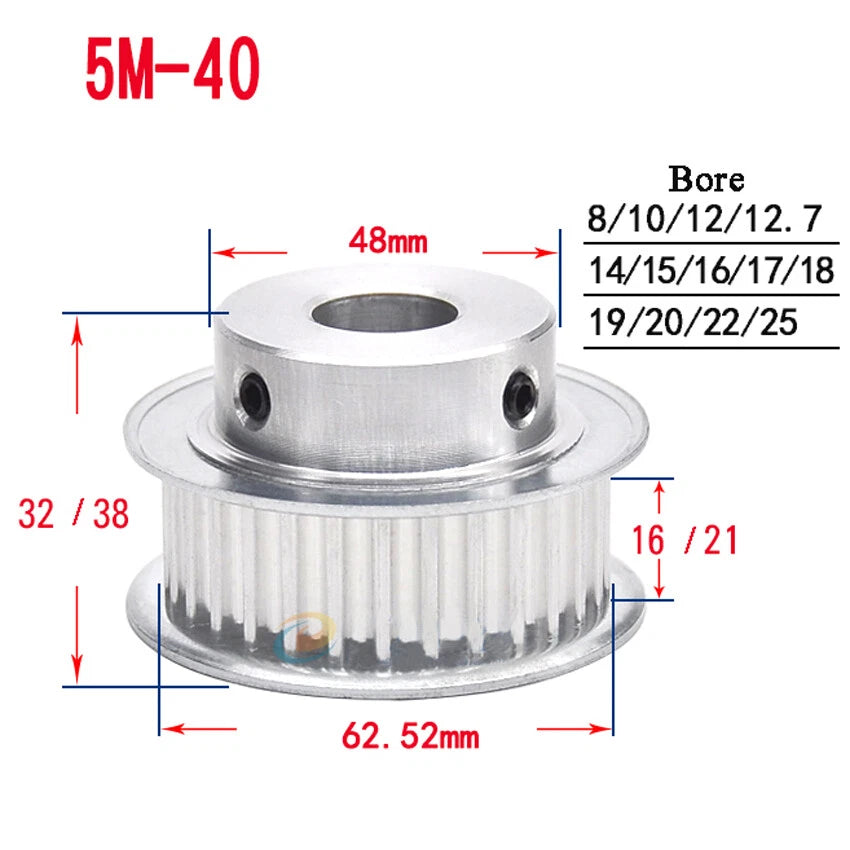
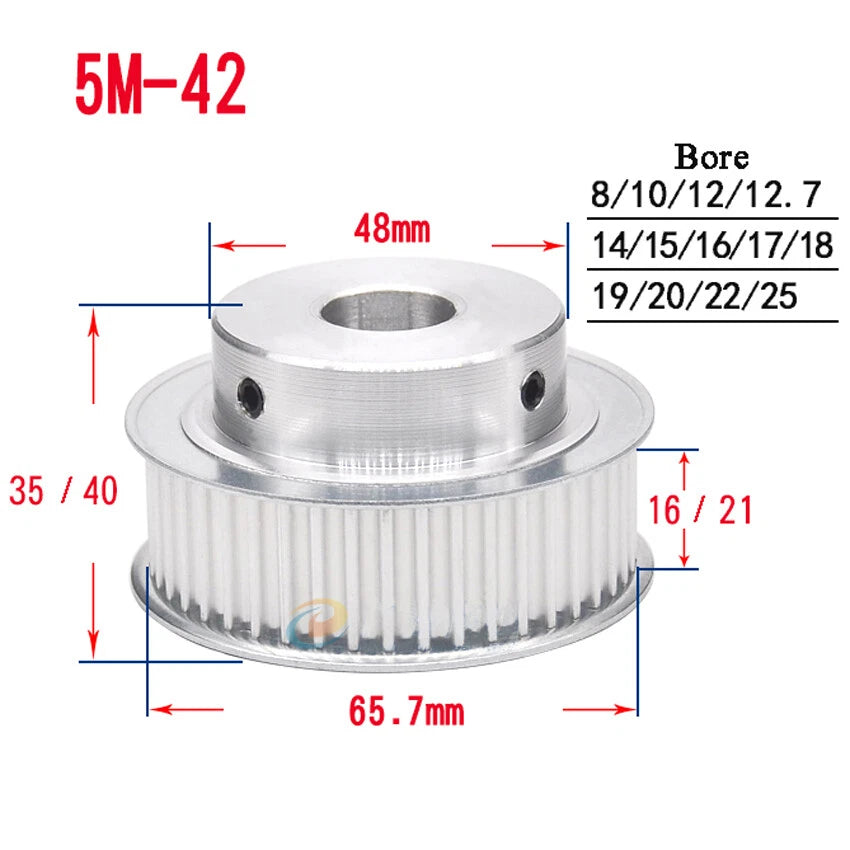
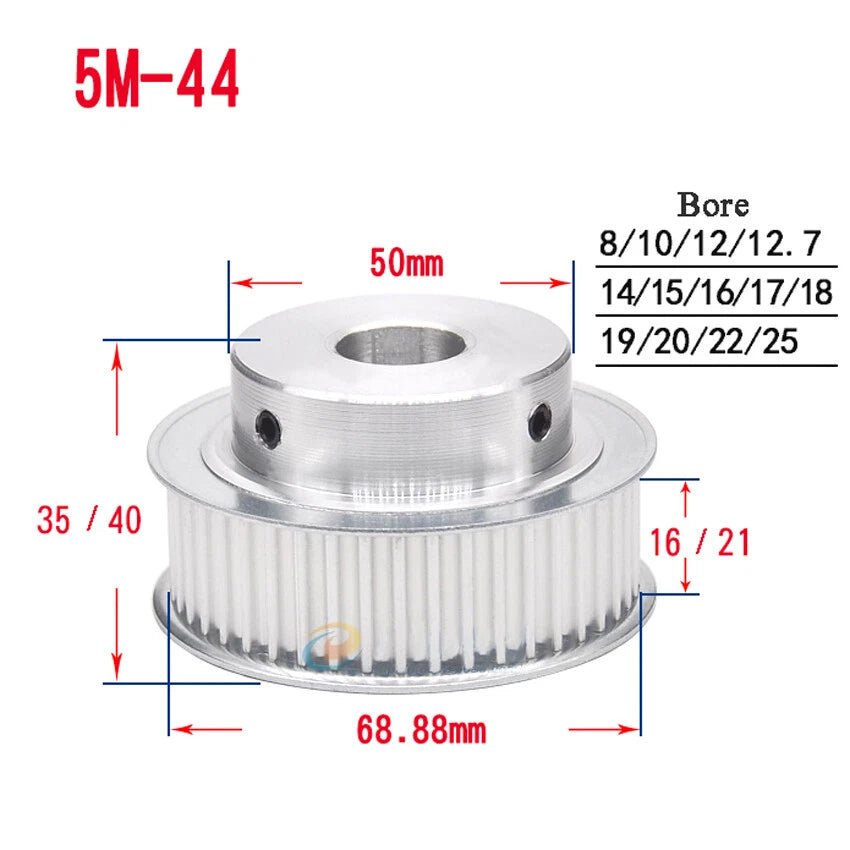
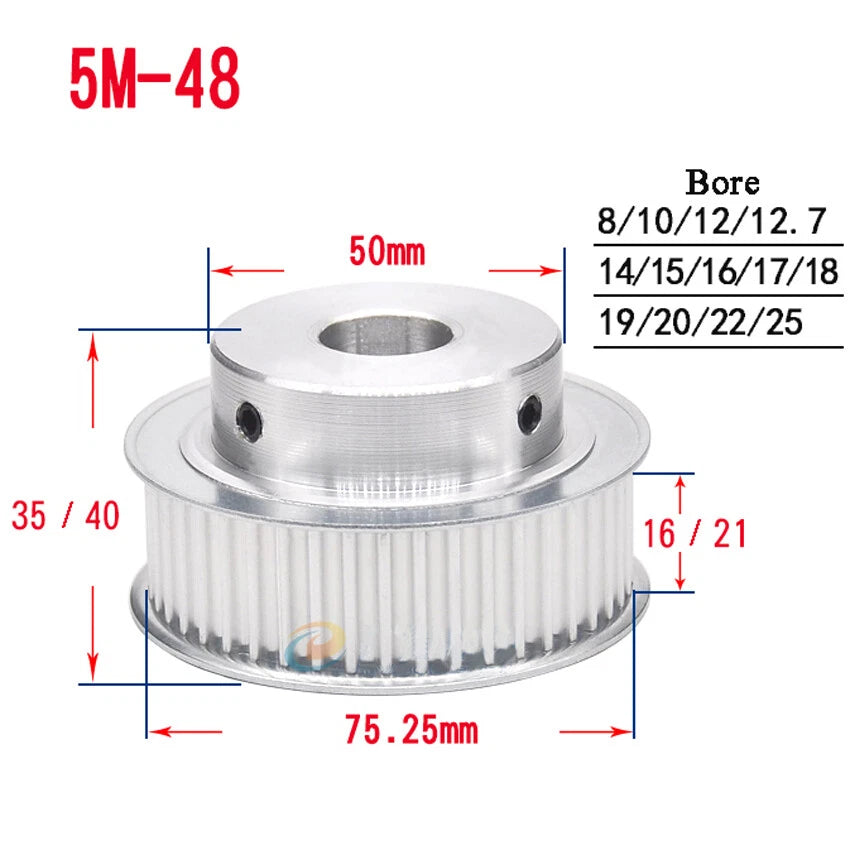
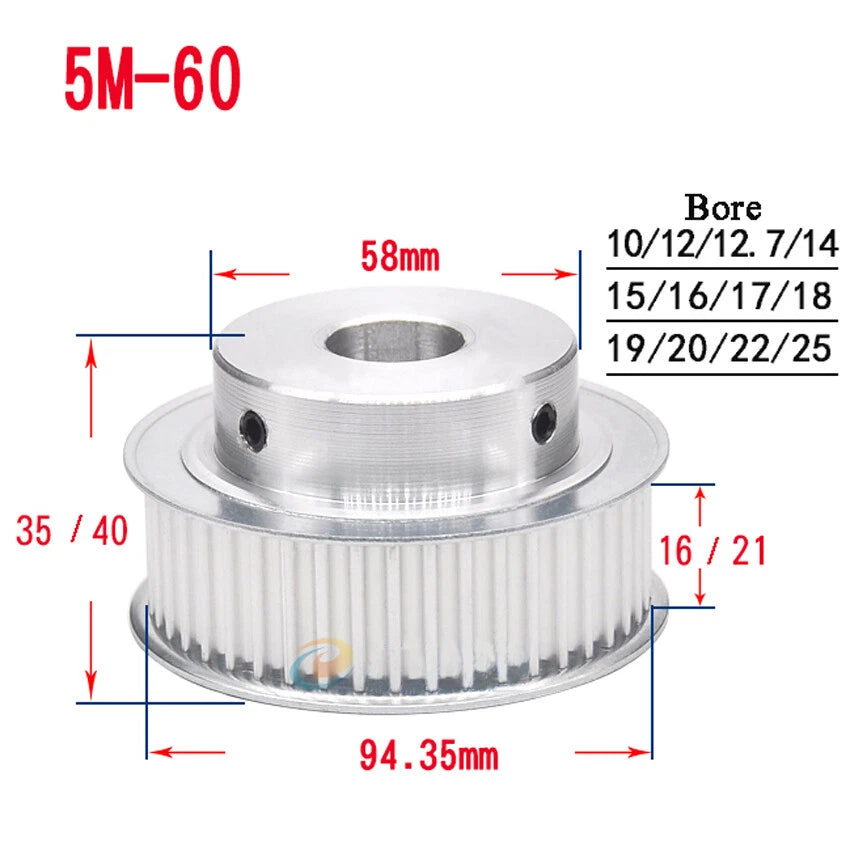
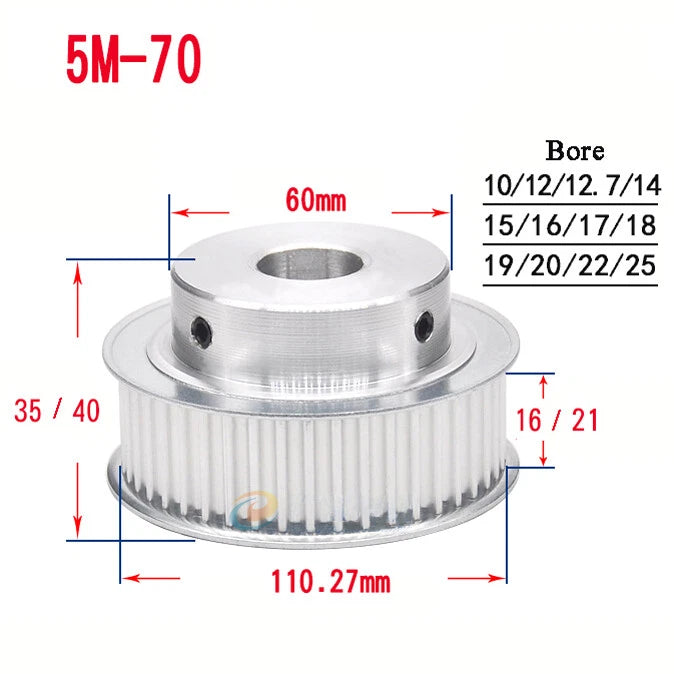
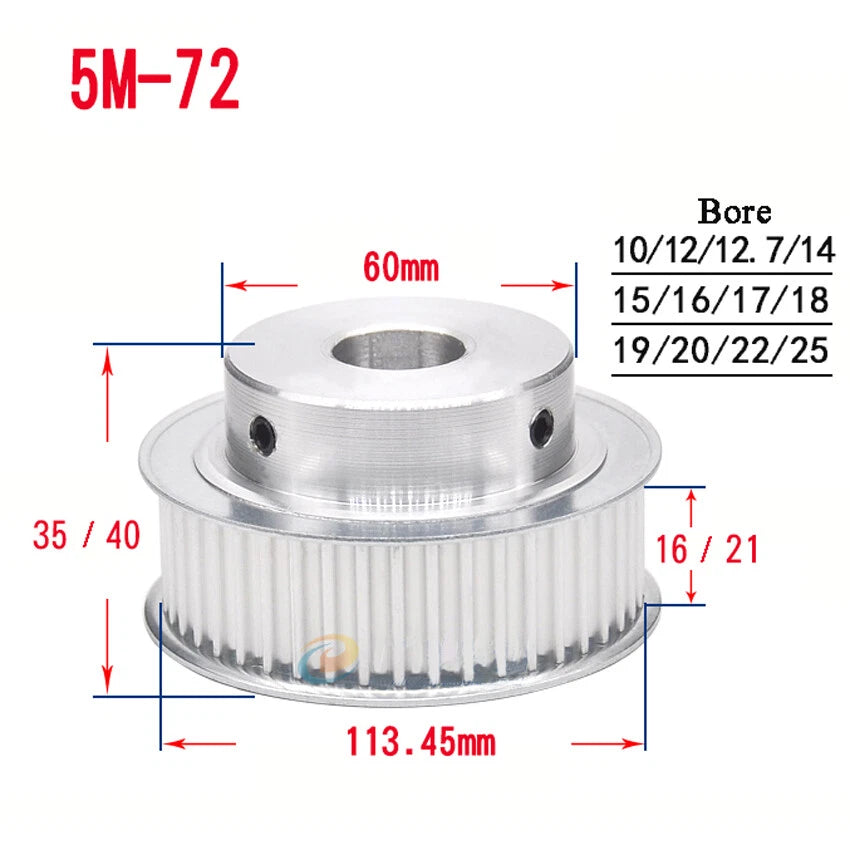
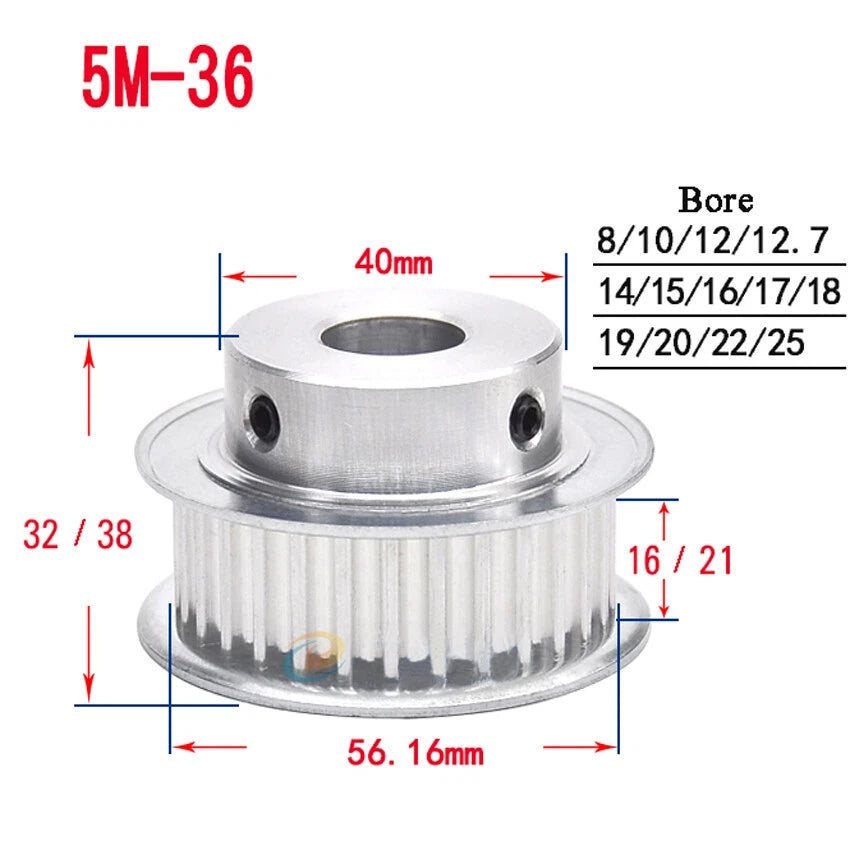
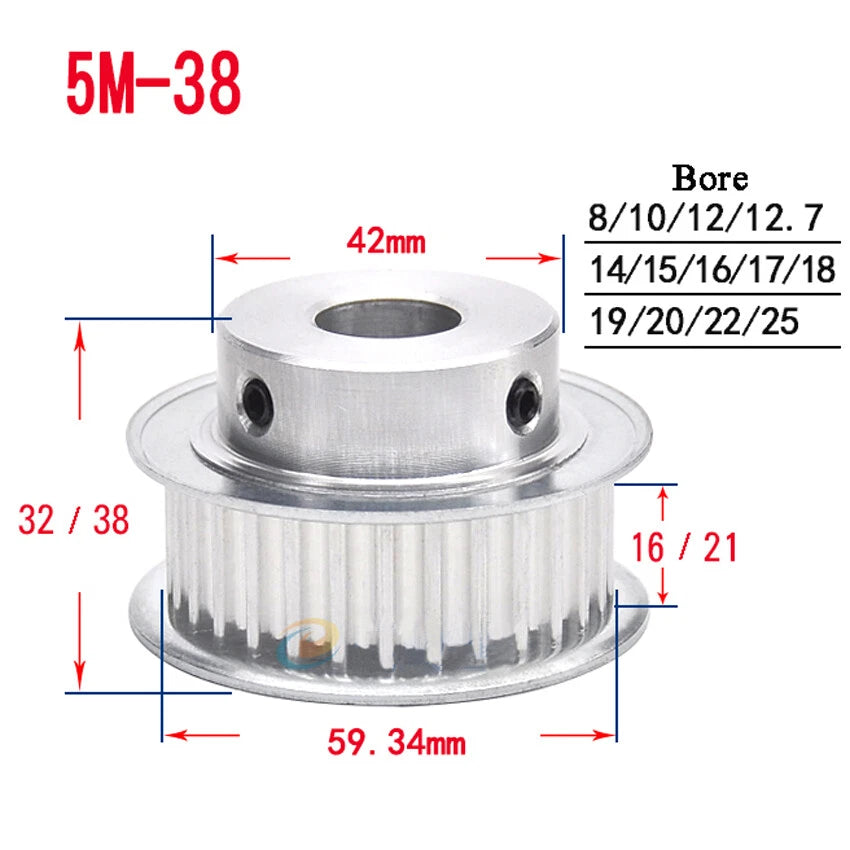
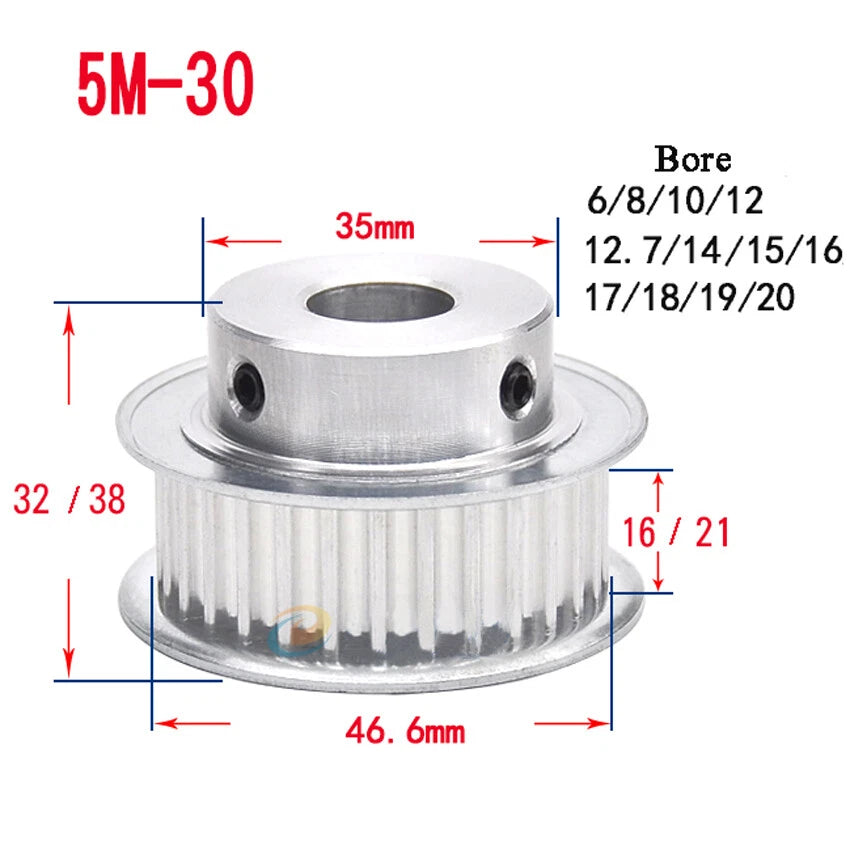
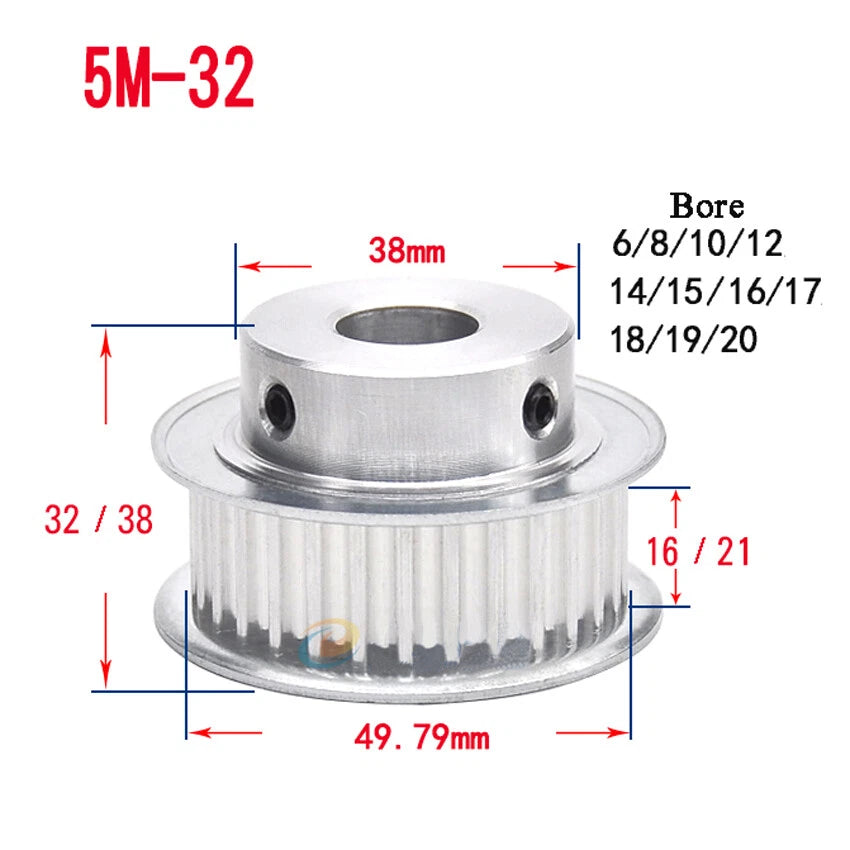
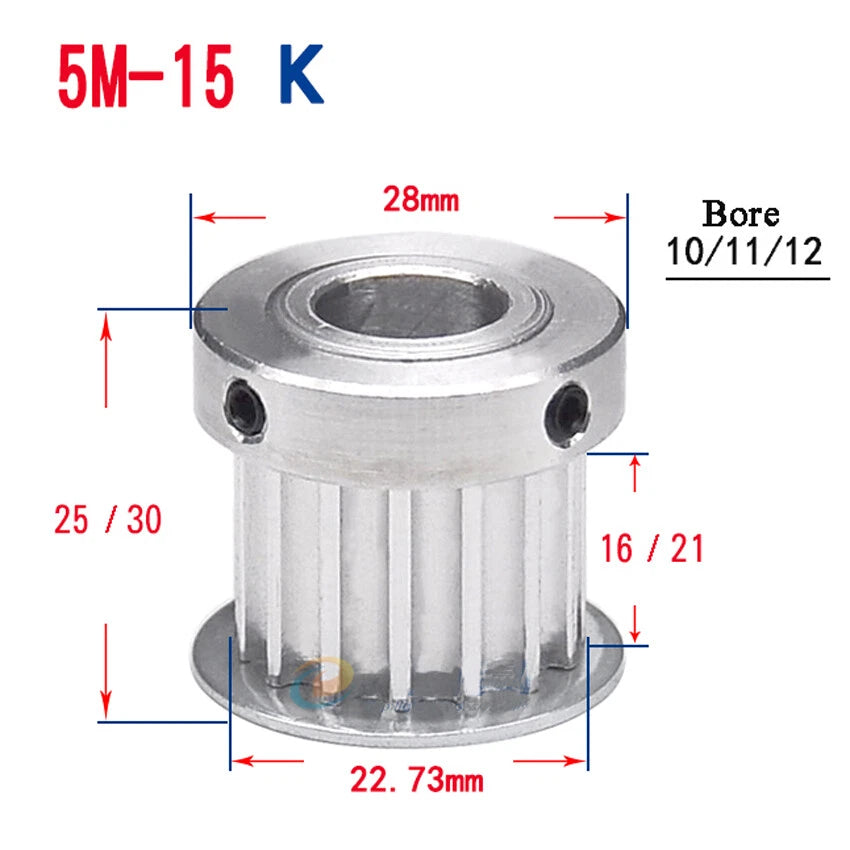
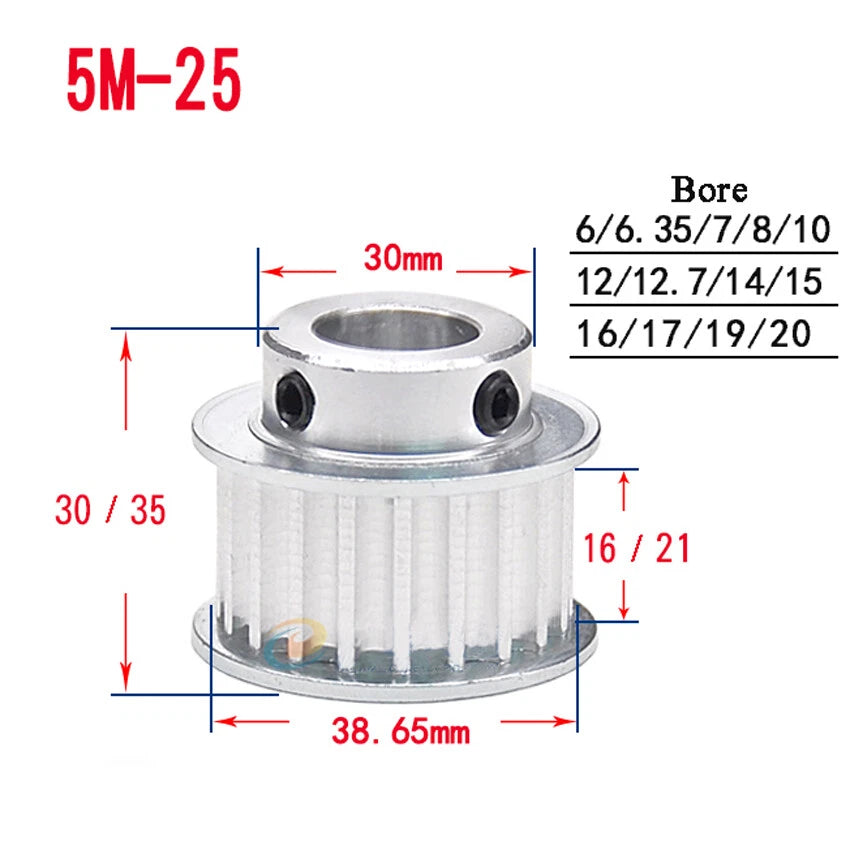
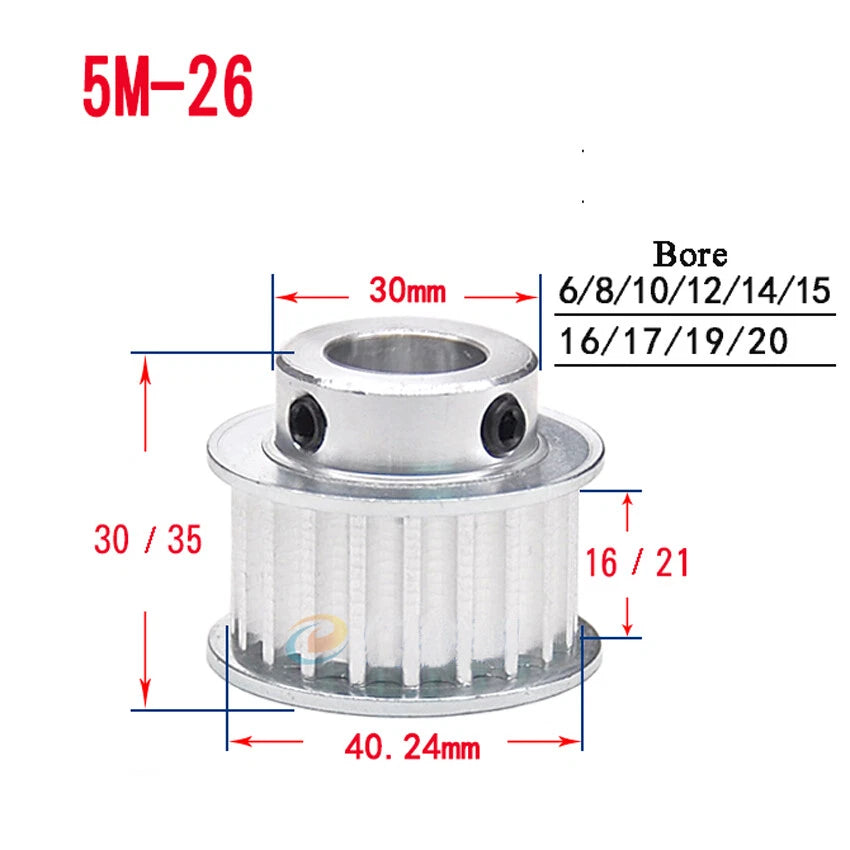
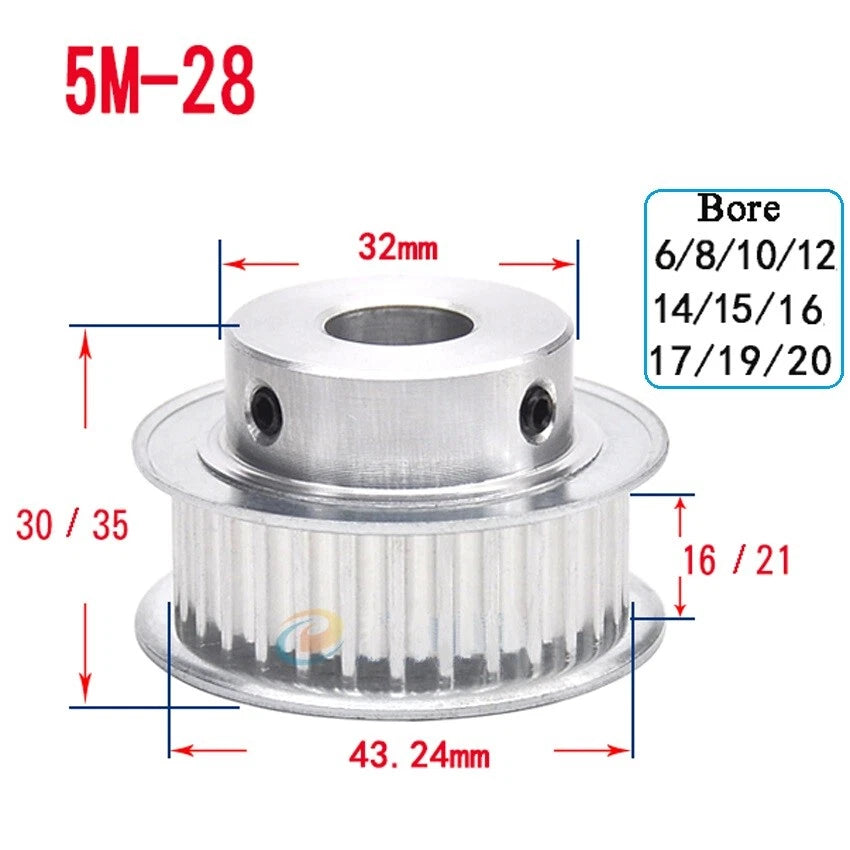
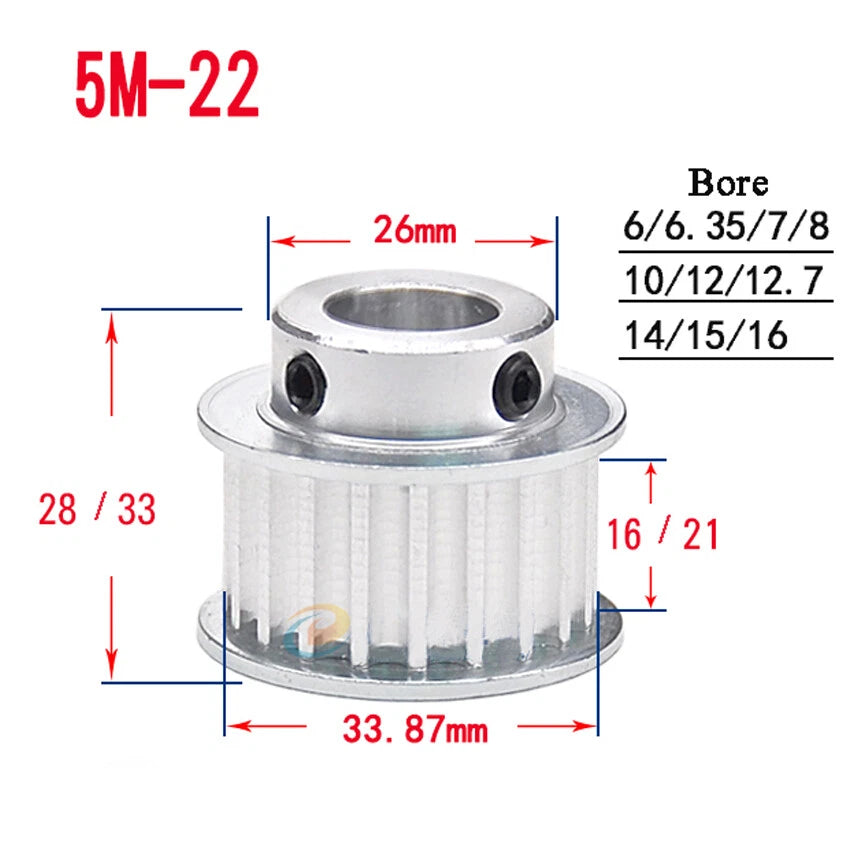
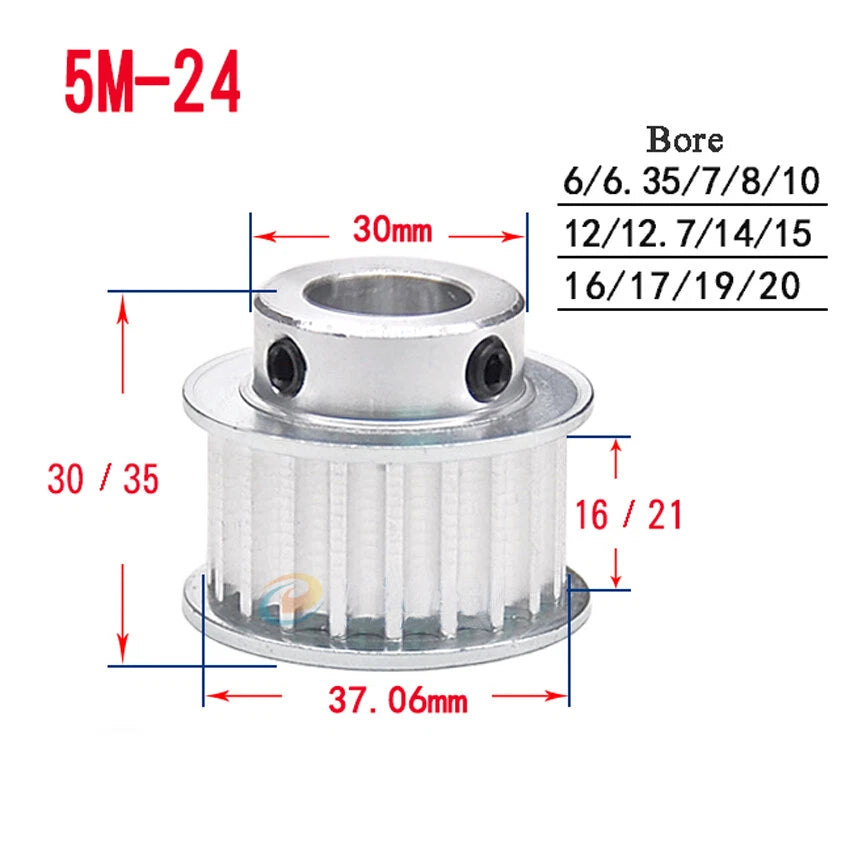
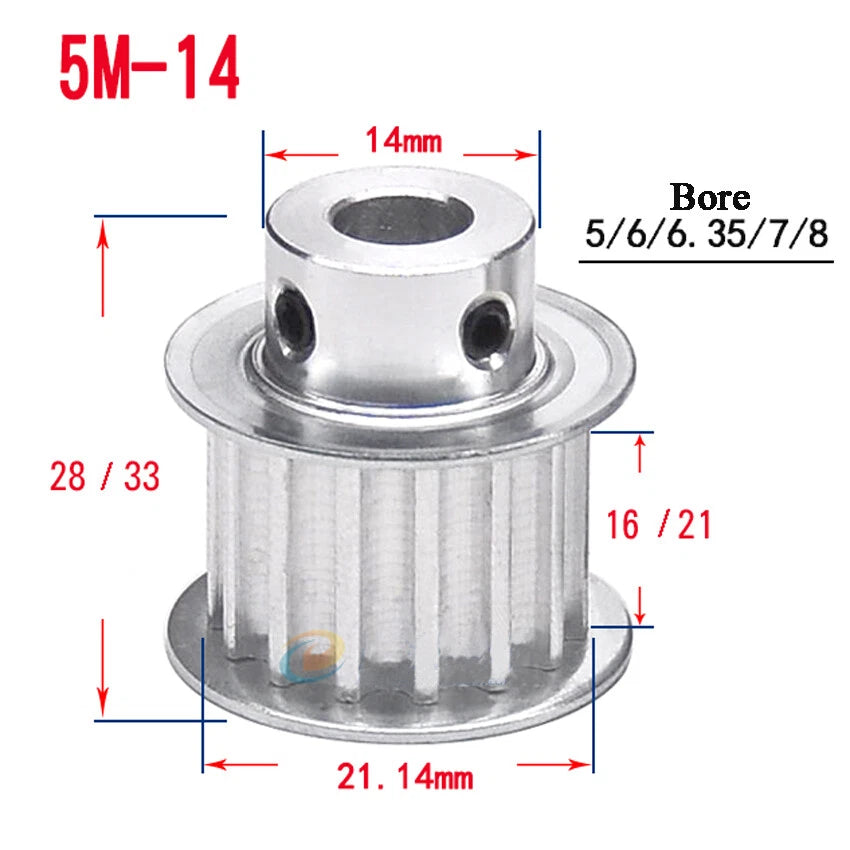
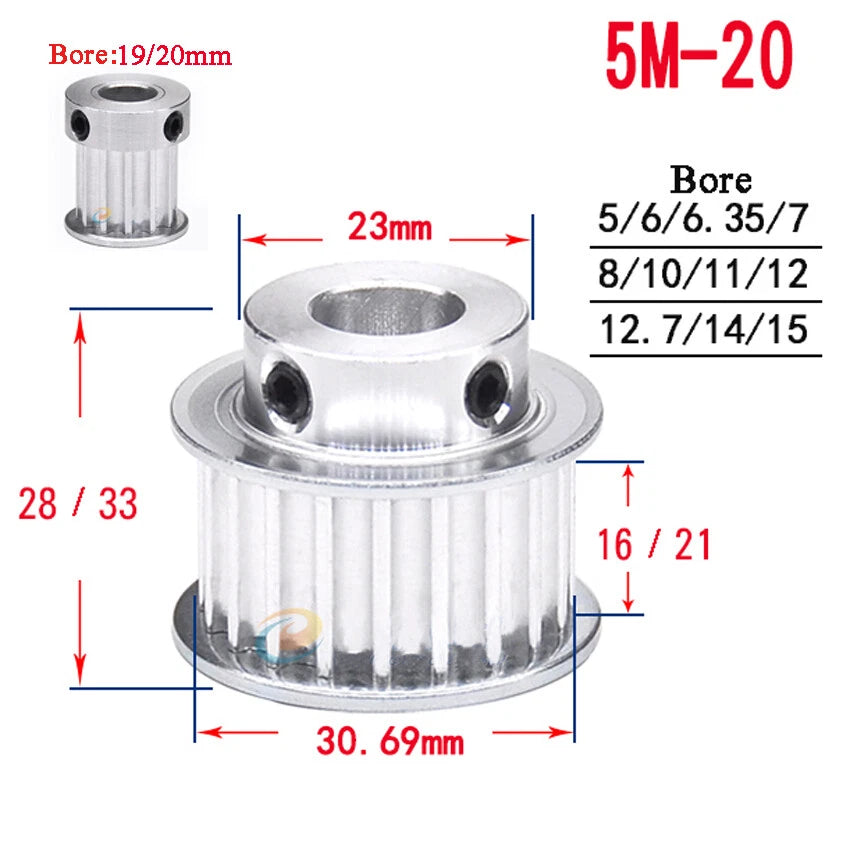
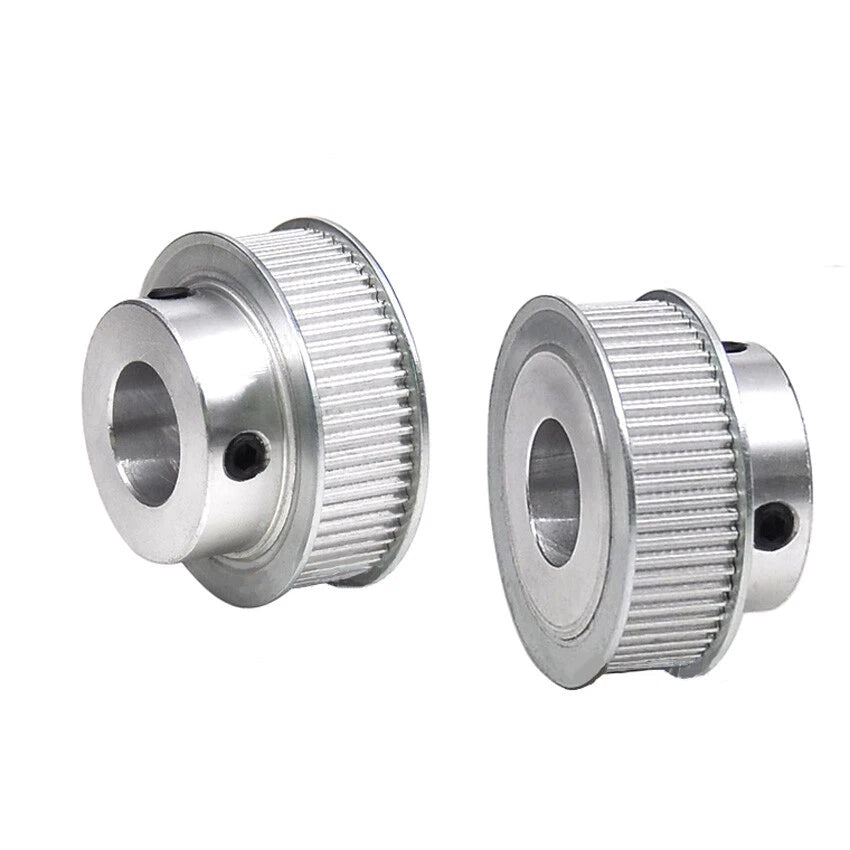
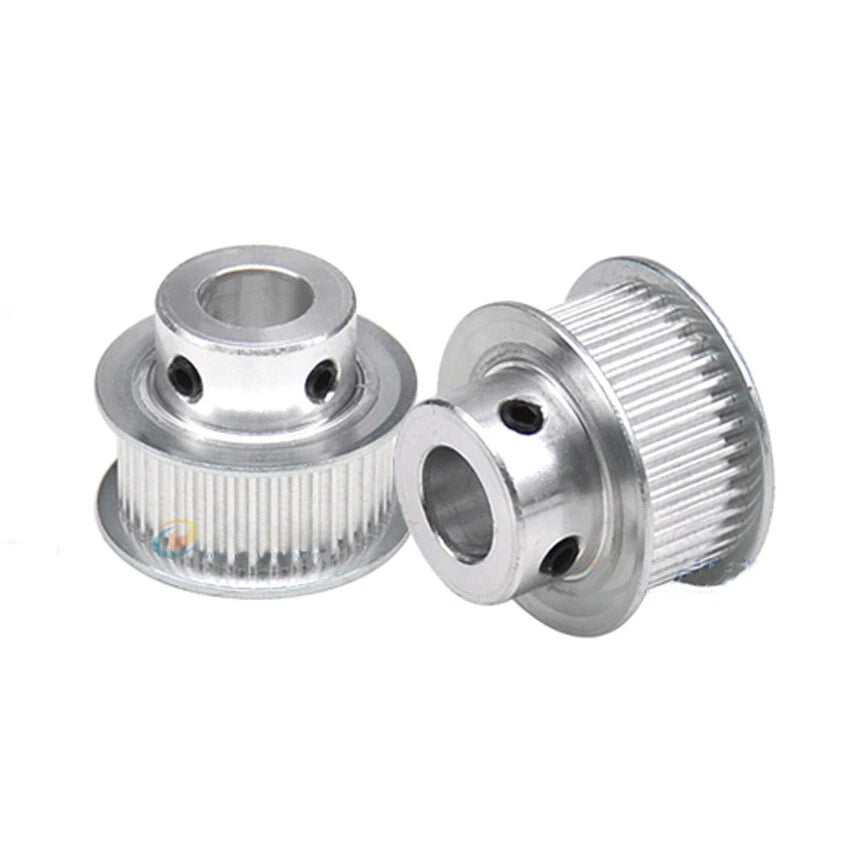
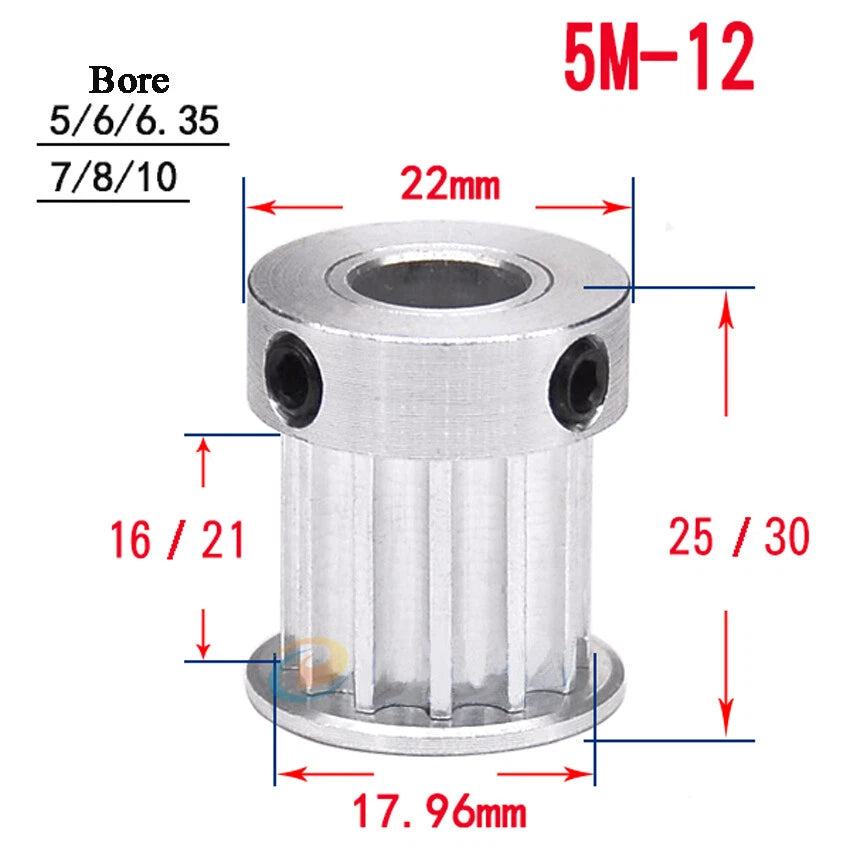
Each HTD-5M timing belt pulley in this series is machined from aluminum alloy with an anodized finish, featuring a step-bore design that accepts shaft diameters from 5 mm (0.20 in) up to 25 mm (0.98 in). Tooth counts span 10T through 72T, and the tooth width is 16 mm (0.63 in) to match standard 15 mm wide HTD-5M synchronous belts. A set screw secures the pulley to the shaft at the desired bore step.

Typical use cases include DIY CNC gantry drives requiring precise gear ratios, robotics joint actuators where compact 5M-15T or 5M-20T pulleys reduce backlash, and conveyor or pick-and-place automation systems that rely on larger 5M-40T to 5M-72T pulleys for high-torque low-speed motion. The step-bore format also suits educators and prototypers who need one pulley body to fit multiple shaft sizes during iterative design.

⚙️ Compatible with standard HTD-5M synchronous belts, 15 mm width. Verify shaft diameter against selected bore option before ordering.

✅ Key Features of These HTD-5M Timing Belt Pulleys

🔩 Wide Tooth Count Range

Available from 10T to 72T in a single product series, letting you dial in the exact gear ratio your drive system needs without sourcing from multiple vendors.

📐 Step Bore Design

Accepts shaft diameters from 5 mm to 25 mm (0.20–0.98 in) via a machined step bore, secured by a set screw — no custom boring required for common shaft sizes.

🏗️ Aluminum Alloy Construction

Lightweight yet rigid aluminum alloy body with anodized surface treatment resists wear and corrosion in typical indoor mechanical environments.

📏 16 mm Tooth Width

Matches standard 15 mm wide HTD-5M synchronous belts with a 1 mm flange overhang on each side to keep the belt tracking reliably under load.

HTD Tooth Profile

The curvilinear HTD tooth form distributes load across a larger contact area than trapezoidal profiles, reducing tooth stress and extending belt life in high-cycle applications.

🔧 K-Type Variants Available

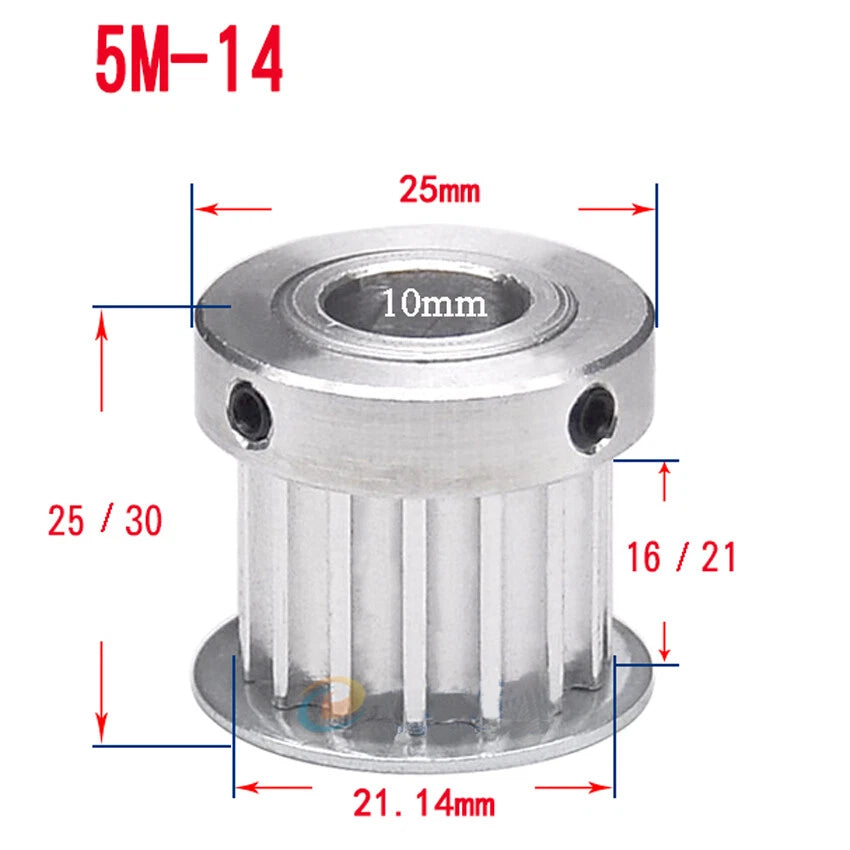
Select tooth counts (14T, 15T) are offered in a K-Type configuration with a keyway bore for applications that require positive rotational locking beyond a set screw.

📐 Technical Specifications — HTD-5M Timing Belt Pulley

Belt Profile HTD-5M
Belt Pitch 5 mm (0.197 in)
Tooth Count (Types) 10T, 12T, 14T, 15T, 16T, 18T, 19T, 20T, 22T, 24T, 25T, 26T, 28T, 30T, 32T, 35T, 36T, 38T, 40T, 42T, 44T, 45T, 48T, 50T, 60T, 65T, 70T, 72T
Tooth Width 16 mm (0.63 in)
Compatible Belt Width 15 mm
Bore Range 5 mm – 25 mm (0.20 – 0.98 in)
Bore Type Step bore with set screw; K-Type (keyway) on select sizes
Material Aluminum alloy
Surface Treatment Anodized
Pitch Diameter See variant options
Outside Diameter See variant options
Weight See variant options

❓ Frequently Asked Questions

How do I choose the right tooth count for my application?

The tooth count determines your drive ratio. Divide the driven pulley tooth count by the driving pulley tooth count to get the ratio. For example, a 20T driver paired with a 40T driven pulley gives a 2:1 reduction. For CNC axes, smaller tooth counts (10T–20T) are common on motor shafts for higher resolution; larger counts (30T–72T) suit idler or driven shafts where torque multiplication is needed.

Which bore size should I select for my motor shaft?

Select the bore that matches your shaft diameter exactly. Common NEMA 17 stepper shafts are 5 mm; NEMA 23 shafts are typically 6.35 mm (1/4 in) or 8 mm; servo motors often use 8 mm, 10 mm, or 12 mm shafts. The step bore design means the pulley body is the same — only the bore step differs. If your shaft is metric, choose the matching metric bore; for imperial shafts, the 6.35 mm (1/4 in) and 12.7 mm (1/2 in) options are available.

What is the difference between the standard and K-Type variants?

Standard variants use a set screw to clamp the pulley onto a smooth shaft. K-Type variants include a machined keyway in the bore, which provides a positive mechanical lock between the shaft and pulley — preventing rotation under shock loads or high torque. K-Type is available on 14T and 15T sizes with a 10 mm bore.

Is this pulley compatible with non-HTD 5M belts, such as GT2-5M?

HTD-5M and GT2-5M belts share the same 5 mm pitch but have slightly different tooth profiles. In many low-load applications they are interchangeable, but for precision or high-load drives it is recommended to match the pulley profile to the belt profile. These pulleys are designed and optimized for HTD-5M synchronous belts.

How strong is the aluminum pulley under continuous load?

Aluminum alloy pulleys are well-suited for the torque levels typical of NEMA 17 and NEMA 23 stepper motors, hobby servo motors, and light industrial drives. For very high-torque applications (e.g., large servo drives above 5 Nm continuous), consider whether a steel pulley is more appropriate. The anodized surface adds hardness to the tooth flanks, extending wear life under normal belt tension.

Will the set screw damage my motor shaft?

A standard set screw can leave a small indentation on a smooth shaft, which is normal and helps prevent the pulley from walking axially. If you need to reposition the pulley frequently, consider using a flat on the shaft aligned with the set screw, or apply a thread-locking compound at a fixed position. For shafts where surface damage must be avoided, the K-Type keyway variant is the better choice.

Can I use these pulleys outdoors or in humid environments?

The anodized aluminum finish provides moderate corrosion resistance suitable for indoor and sheltered environments. Prolonged exposure to moisture, salt spray, or harsh chemicals is not recommended without additional protective measures. For outdoor or washdown applications, consider stainless steel or coated alternatives.

🛒 Select your tooth count (Types) and bore size above, then add to cart.


You may also like

Recently viewed