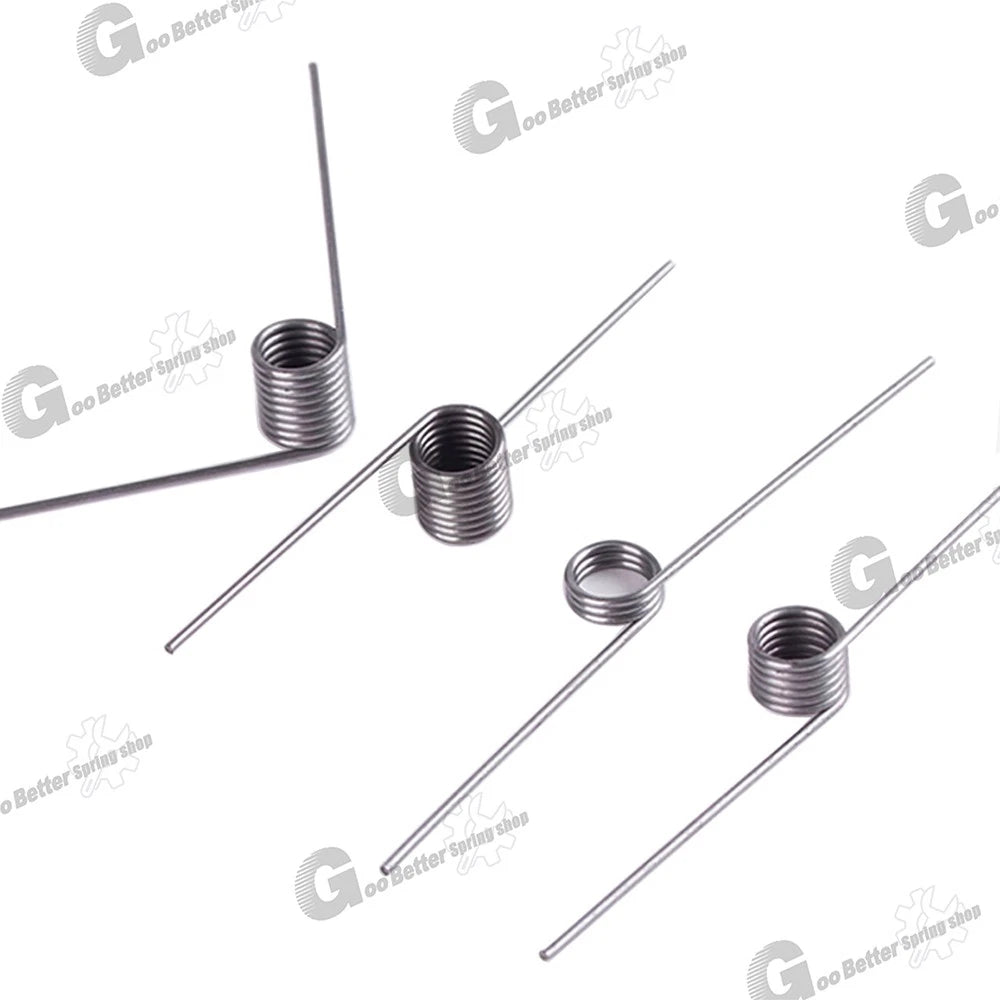
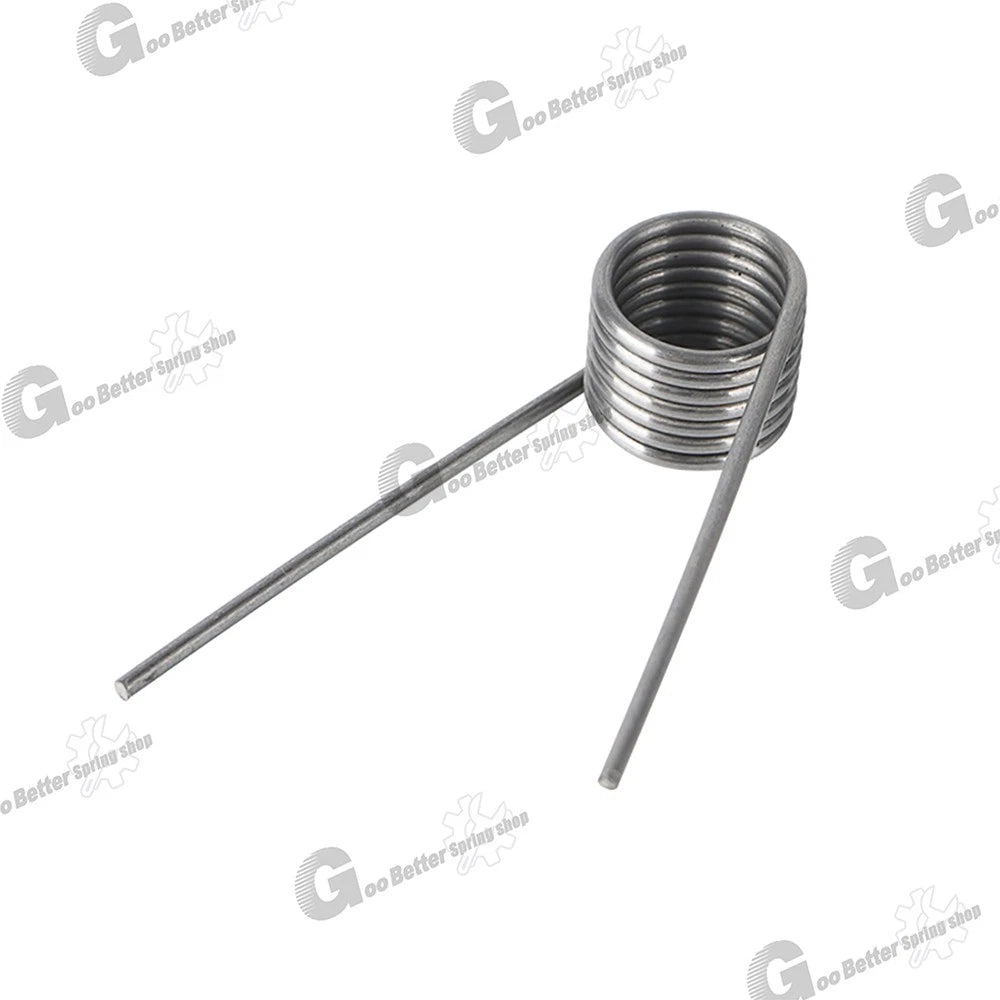
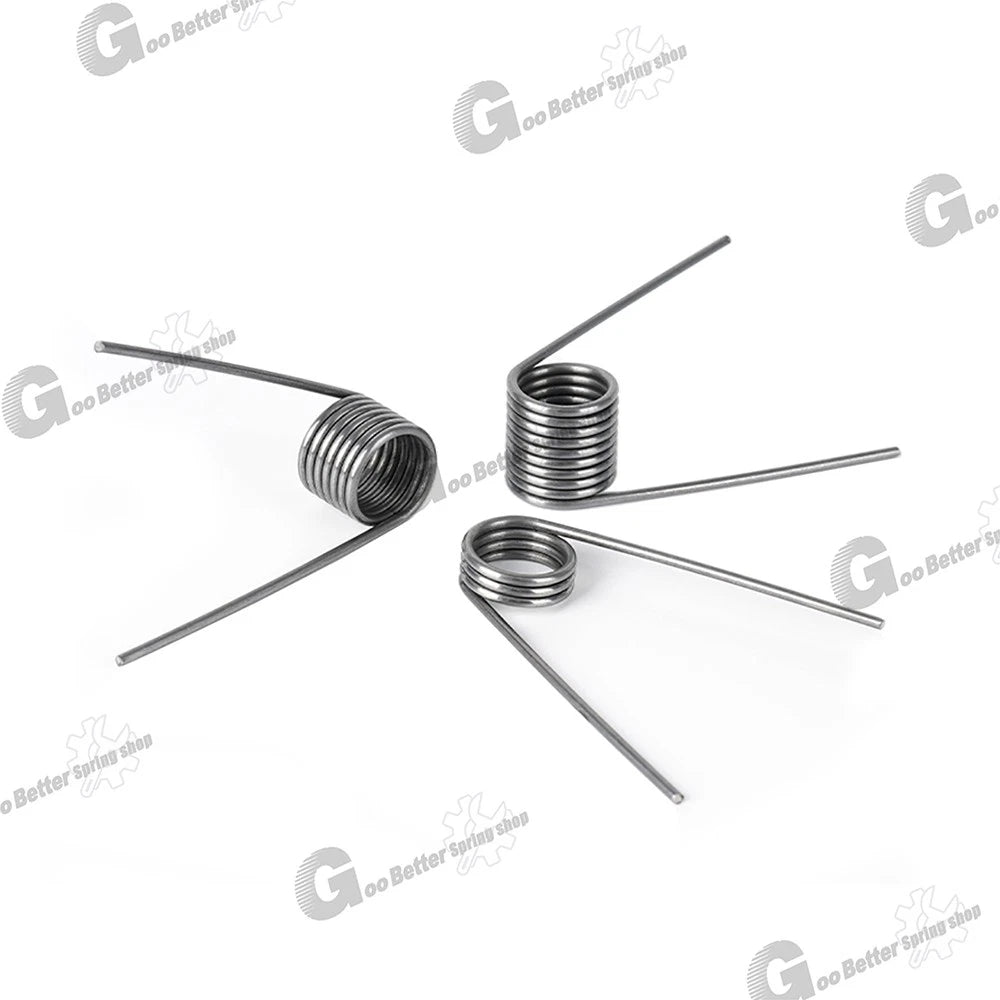
Schenkelfeder/Torsionsfeder/Drehfeder/D 0,5 mm Øa 3-6 mm Spannfeder linke Feder

No reviews

Price:
Sale price$4.16 USD
Stock:
In stock (500 units), ready to be shipped

Payment & Security

Ach Direct Debit Amazon American Express Apple Pay Bancontact BLIK Diners Club Discover EPS Google Pay iDEAL Wero JCB Maestro Mastercard Multibanco MobilePay PayPal Przelewy24 Shop Pay Twint Union Pay USDC Visa

Your payment information is processed securely. We do not store credit card details nor have access to your credit card information.

Limited Offer — Spend More, Save More
Spend $55+
Save $5
Spend $100+
Save $10
Spend $200+
Save $25
HomeDIYer DIY Expert Support

DIY Expert Support

Get fitment advice & recommendations

Mon–Fri  8:30 AM – 8:00 PM
24-Hour Fast Ship
Arrives in 3–14 Days
Worldwide Shipping
30-Day Returns
1 tree planted with every purchase

Description

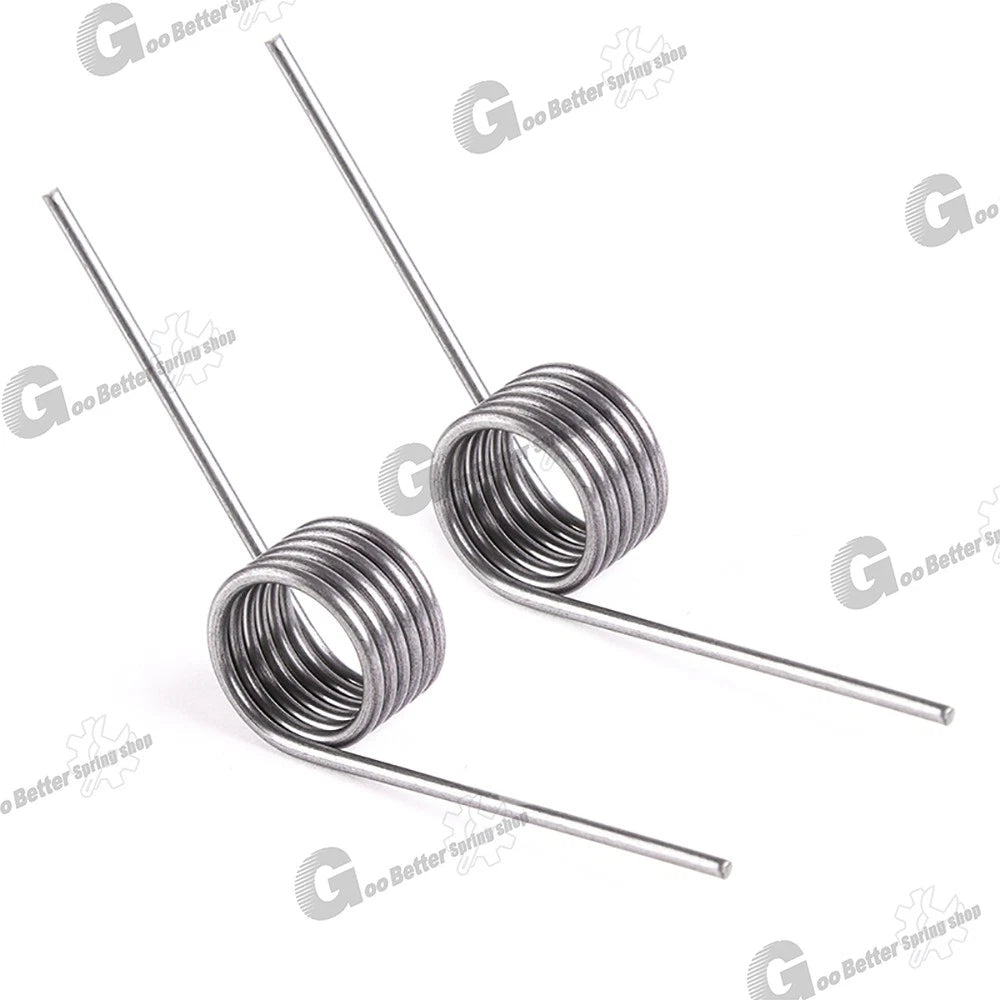
Left-Hand Torsion Spring — Precision Wire Ø 0.5 mm, Outer Ø 3–6 mm

When a mechanism demands exact rotational force and reliable return motion, a poorly matched spring causes premature failure, misalignment, or inconsistent torque — frustrating for engineers, hobbyists, and repair technicians alike. These left-hand wound torsion springs are engineered for applications where directional winding matters, delivering consistent angular force across a wide range of coil counts and leg angles.

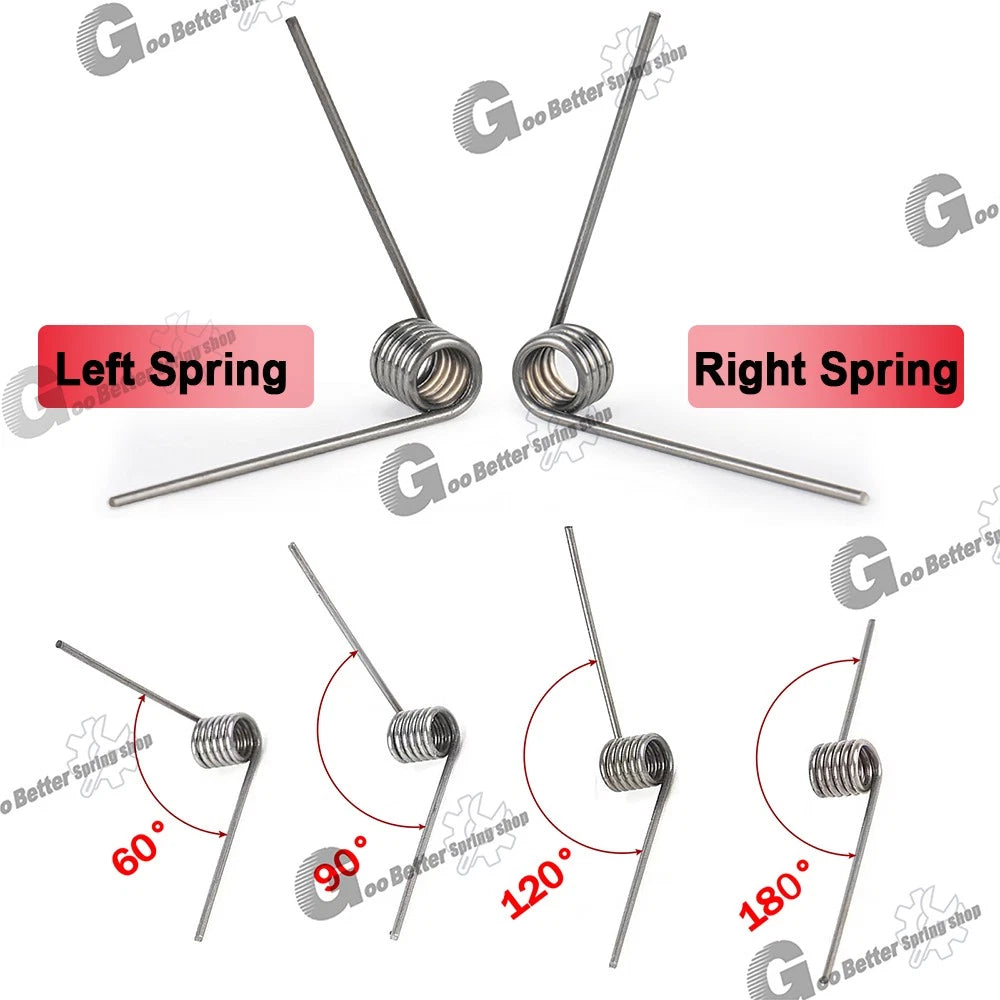
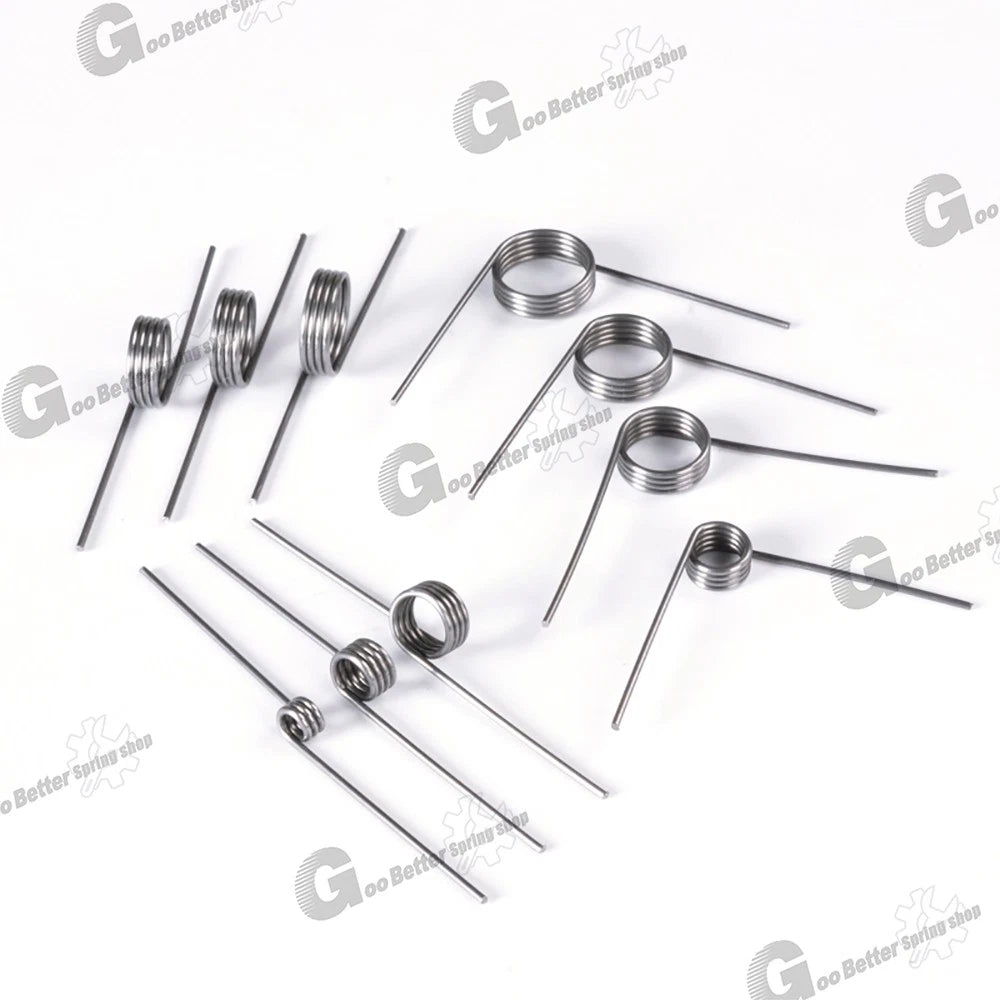
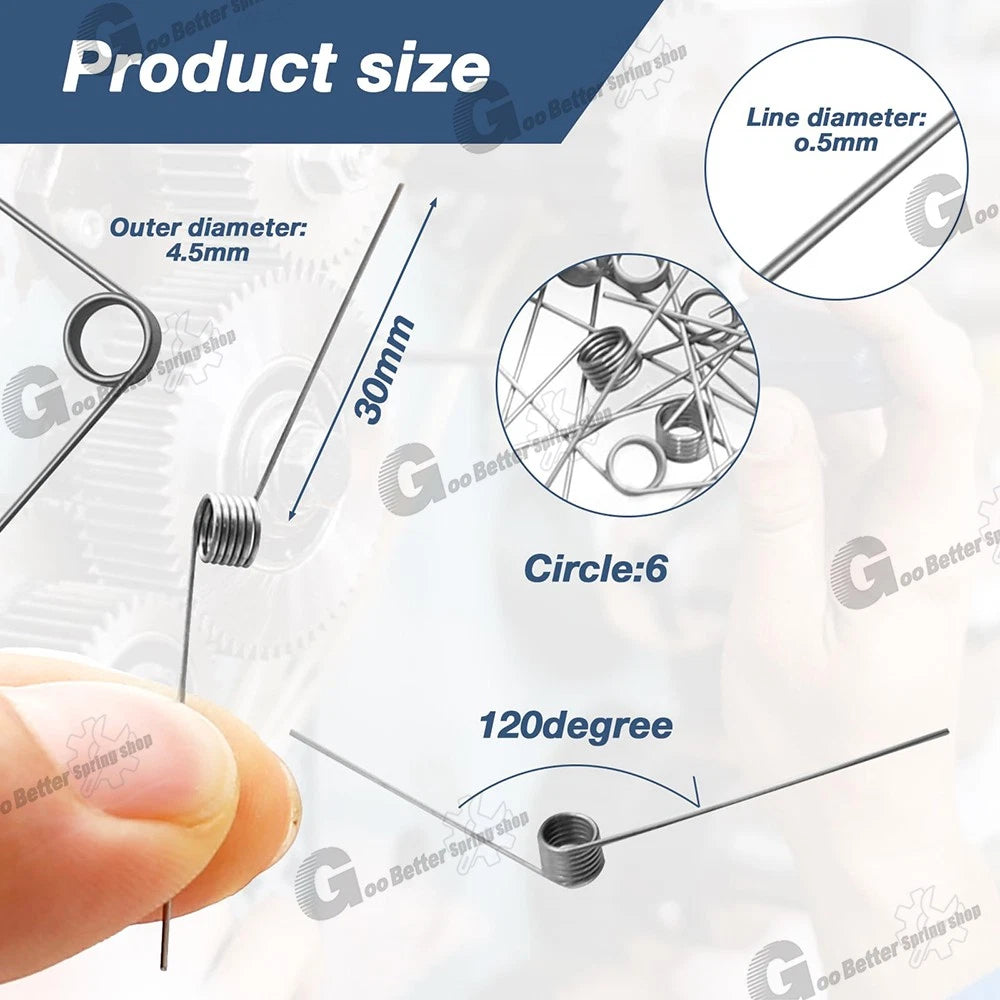
Each spring is manufactured from spring steel wire with a wire diameter of 0.5 mm (approx. 0.020 in). The outer diameter spans 3–6 mm (approx. 0.118–0.236 in), with coil counts from 3 to 9 and leg angles of 60°, 90°, 120°, or 180°. The left-hand winding direction ensures correct torque application in counter-clockwise loading scenarios.

Typical use cases include small appliance hinges requiring left-hand torsion spring replacement, precision instrument mechanisms needing a 0.5 mm wire torsion spring, and DIY clockwork or robotics projects calling for a compact coil spring with selectable leg angle.

⚙️ Compatibility: Suitable for shafts and bores accepting an outer diameter of 3–6 mm. Verify shaft diameter and required leg angle before ordering. Left-hand winding only.

✅ Key Features of These Left-Hand Torsion Springs

  • 🔩Left-Hand Winding — Correct torque direction for counter-clockwise loading; prevents unwinding under operational stress.
  • 📐Precise Wire Diameter — 0.5 mm (0.020 in) spring steel wire for consistent spring rate and reliable deflection.
  • 🔄Multiple Coil Counts — Choose from 3 to 9 active coils to tune stiffness and angular travel to your application.
  • 📏Selectable Leg Angles — Available in 60°, 90°, 120°, and 180° to match your assembly geometry without bending or modification.
  • 🔧Compact Outer Diameter Range — OD 3–6 mm (0.118–0.236 in) fits tight spaces in instruments, hinges, and miniature mechanisms.
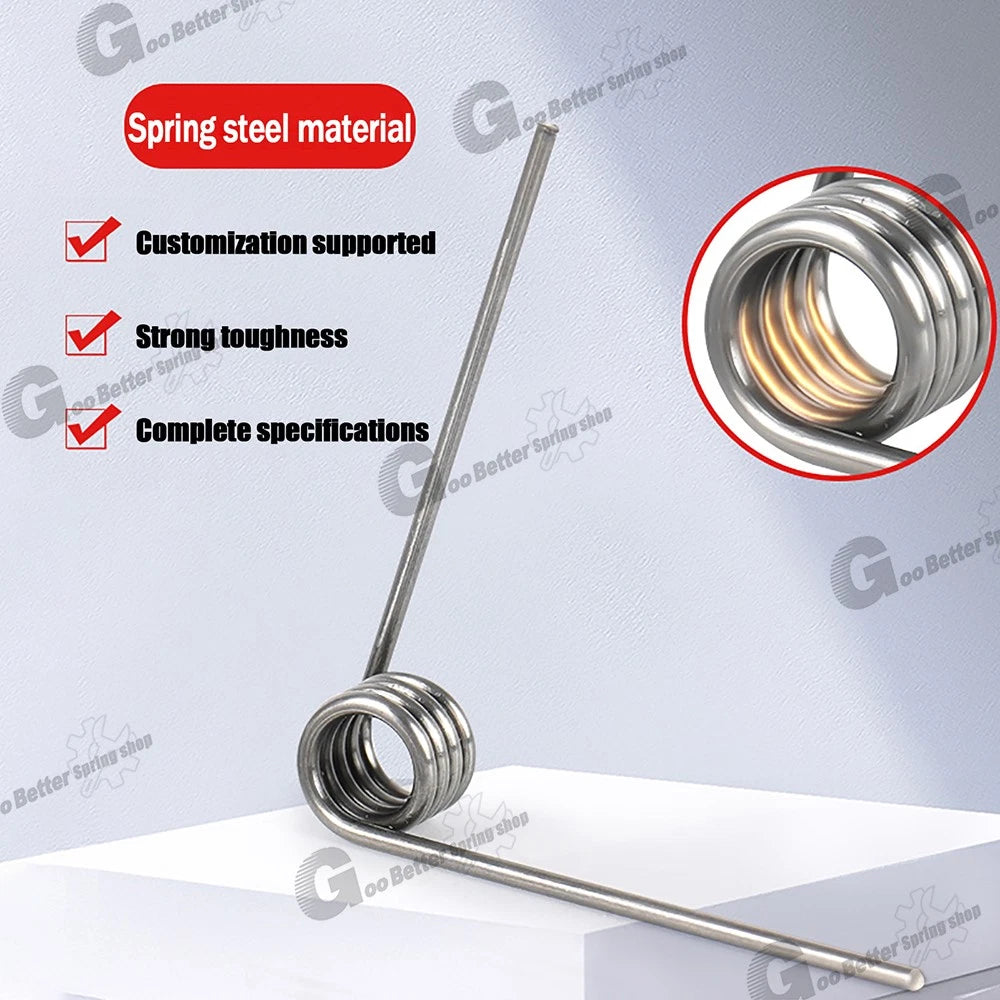
  • 🛡️Spring Steel Construction — Maintains elasticity and shape retention through repeated deflection cycles in typical indoor mechanical environments.

📐 Technical Specifications — Torsion Spring

Wire Diameter (Draht Ø) 0.5 mm (approx. 0.020 in)
Outer Diameter (Außen Ø) 3 mm – 6 mm (approx. 0.118–0.236 in)
Number of Coils 3 / 4 / 5 / 6 / 7 / 8 / 9 (see variant options)
Leg Angle (Winkel) 60° / 90° / 120° / 180° (see variant options)
Winding Direction Left-hand (counter-clockwise)
Material Spring steel
Surface Finish See variant options
Spring Rate See variant options
Free Angle See variant options
Application Hinges, instruments, robotics, DIY mechanisms

❓ Frequently Asked Questions

How do I choose the right outer diameter for my application?

The outer diameter (OD) should be slightly smaller than the bore or housing it sits in, and larger than the shaft it wraps around. For a shaft, the inner diameter (ID = OD minus 2× wire diameter) must clear the shaft with a small gap. With a wire diameter of 0.5 mm, the ID ranges from approximately 2 mm (OD 3 mm) to 5 mm (OD 6 mm). Select the variant whose OD matches your housing clearance and whose ID fits your shaft.

What does left-hand winding mean, and why does it matter?

Left-hand winding means the coils spiral counter-clockwise when viewed from the leg end. This is critical because a torsion spring tightens (winds up) when torque is applied in the direction of its winding. If you apply torque in the opposite direction, the spring unwinds and loses contact with the shaft. Always match the winding direction to your loading direction to ensure the spring functions correctly and does not slip.

How does the number of coils affect spring performance?

More coils result in a lower spring rate (softer spring) and greater angular travel for the same torque. Fewer coils produce a stiffer spring with less angular deflection. For applications requiring a gentle return force over a wide angle, choose a higher coil count (7–9). For a firm, short-travel return, choose a lower coil count (3–4). The coil count also affects the overall body length of the spring.

Which leg angle should I select?

The leg angle is the angle between the two straight legs of the spring in its free (unloaded) state. Select the angle that matches your assembly geometry so the legs contact their mounting points without pre-stressing the spring beyond its design range. Common choices: 90° for right-angle brackets, 180° for parallel-leg configurations, 60° or 120° for angled housings. If your required angle falls between options, choose the nearest available angle and adjust your mounting geometry slightly.

Is this spring corrosion-resistant for outdoor or humid environments?

These springs are made from spring steel, which provides good mechanical properties but has limited corrosion resistance without additional surface treatment. For indoor or dry environments, they perform reliably over extended service life. For humid, wet, or outdoor applications, consider applying a light coating of machine oil or contact us to confirm whether a coated or stainless variant is available for your size.

Can I use this spring as a direct replacement for an existing torsion spring?

Yes, provided the key dimensions match: wire diameter (0.5 mm), outer diameter, coil count, leg angle, and winding direction (left-hand). Measure your existing spring carefully before ordering. If the original spring has a different wire diameter or winding direction, it is not a direct replacement. Contact us if you need help matching specifications to your existing part.

What is the difference between a torsion spring and a compression or extension spring?

A torsion spring (Torsionsfeder / Schenkelfeder / Drehfeder) stores energy through angular deflection — it resists twisting and returns to its free angle when released. A compression spring resists being compressed along its axis, and an extension spring resists being stretched. Torsion springs are used in hinges, latches, clothespins, and any mechanism that requires a rotational return force rather than a linear one.

🛒 Select your wire/outer diameter, coil count, and leg angle above, then add to cart.

You may also like

Recently viewed