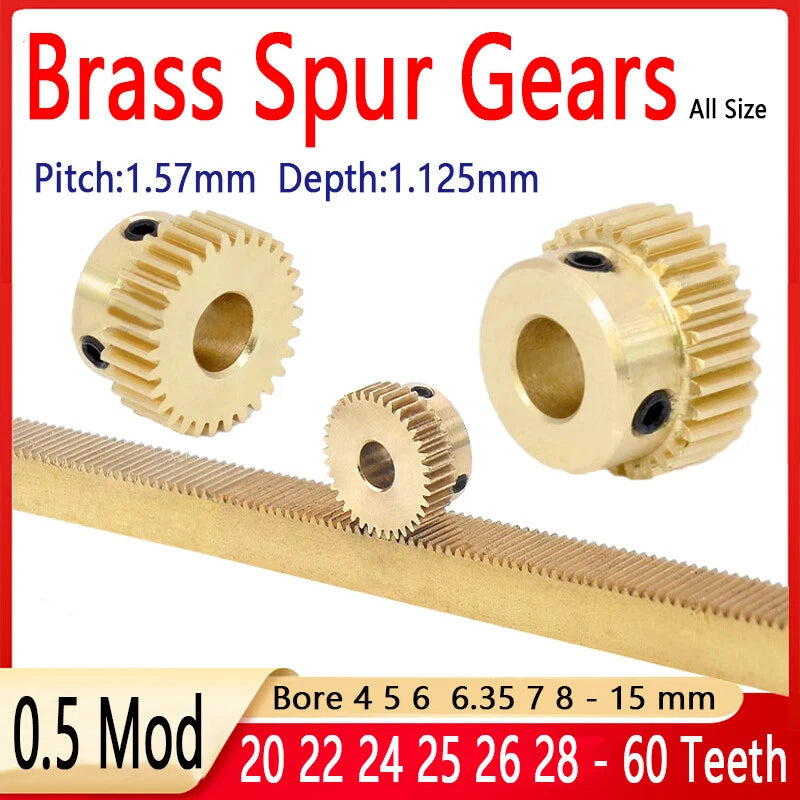
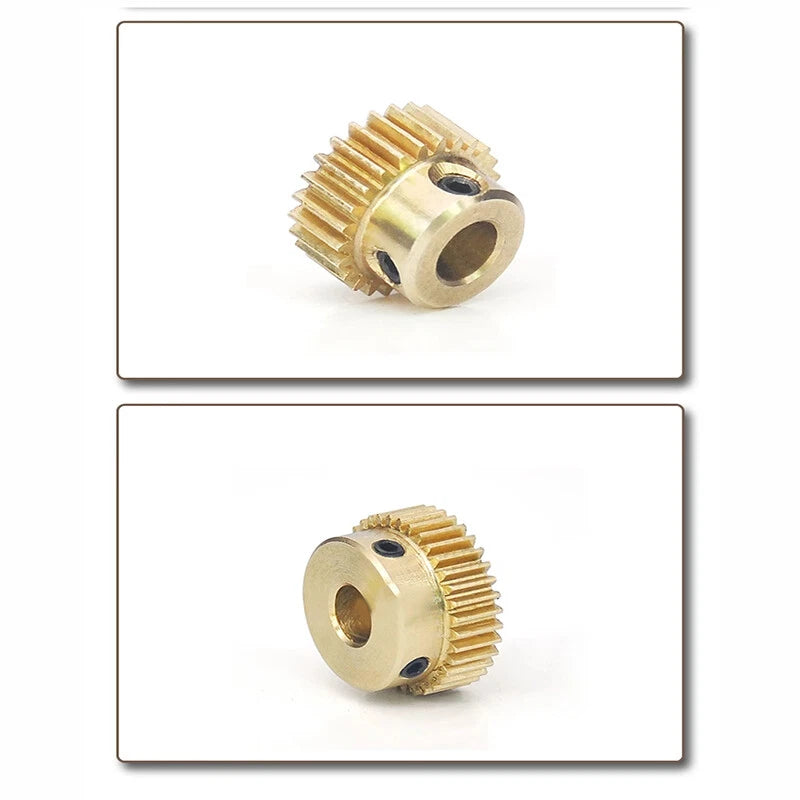
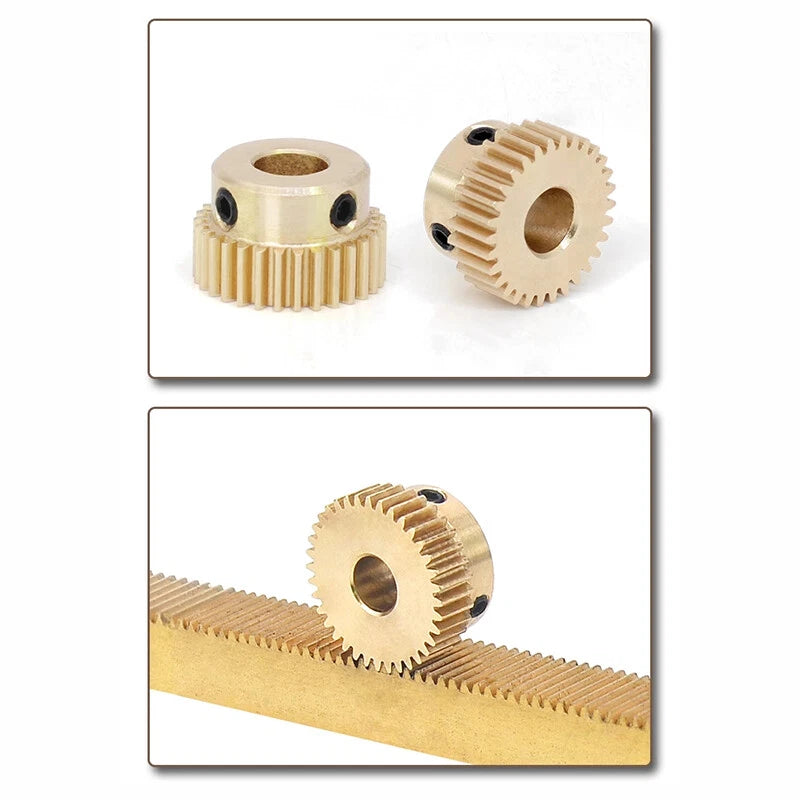
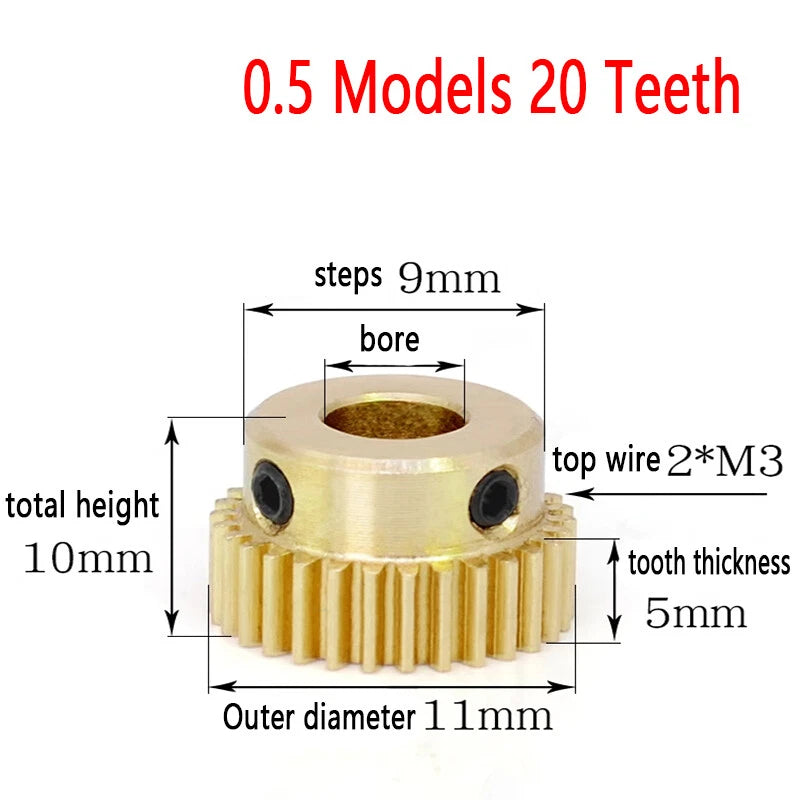
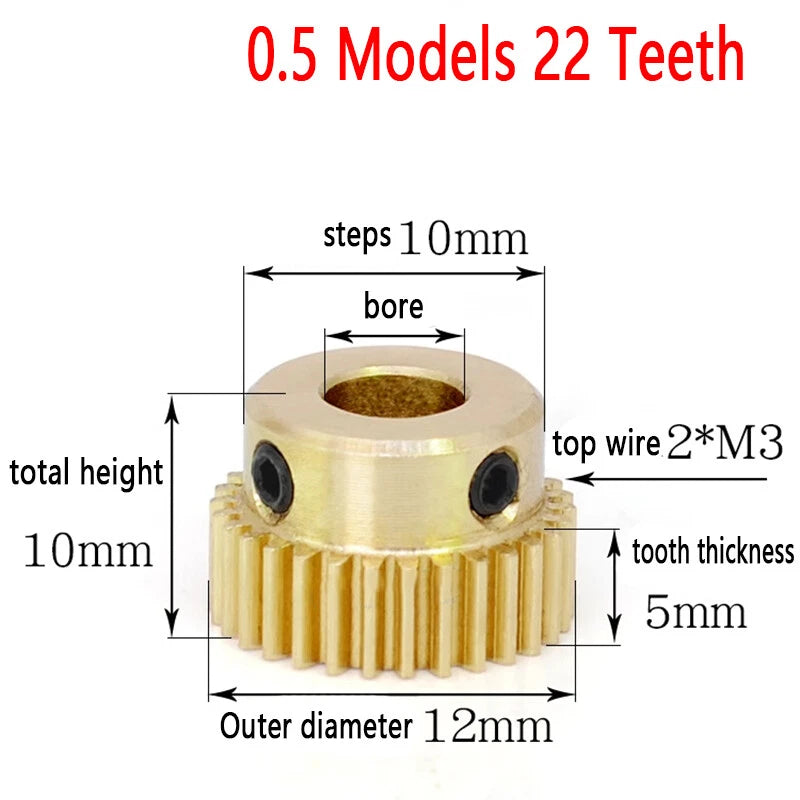
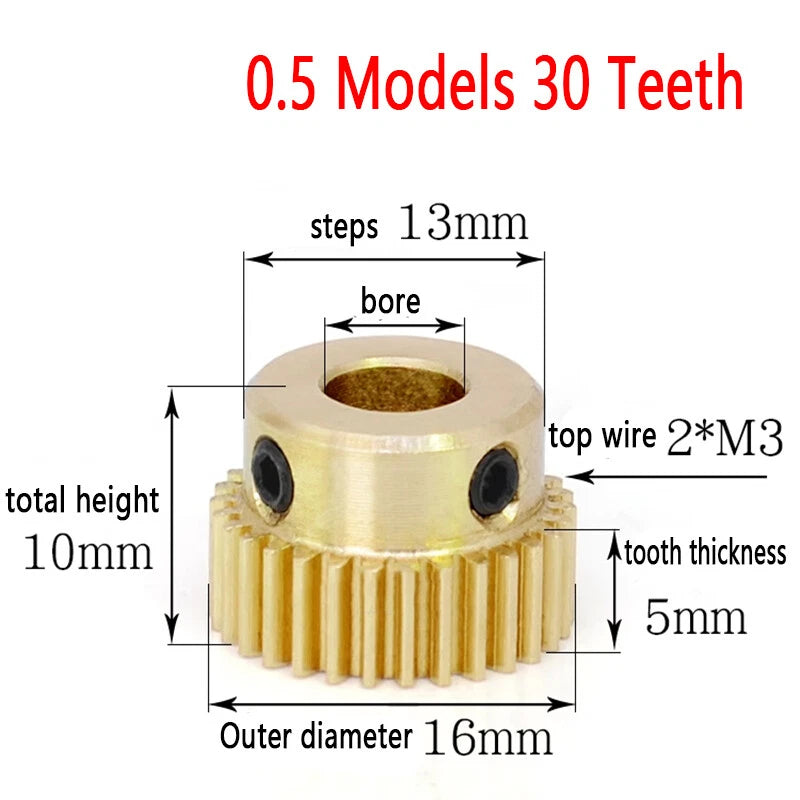
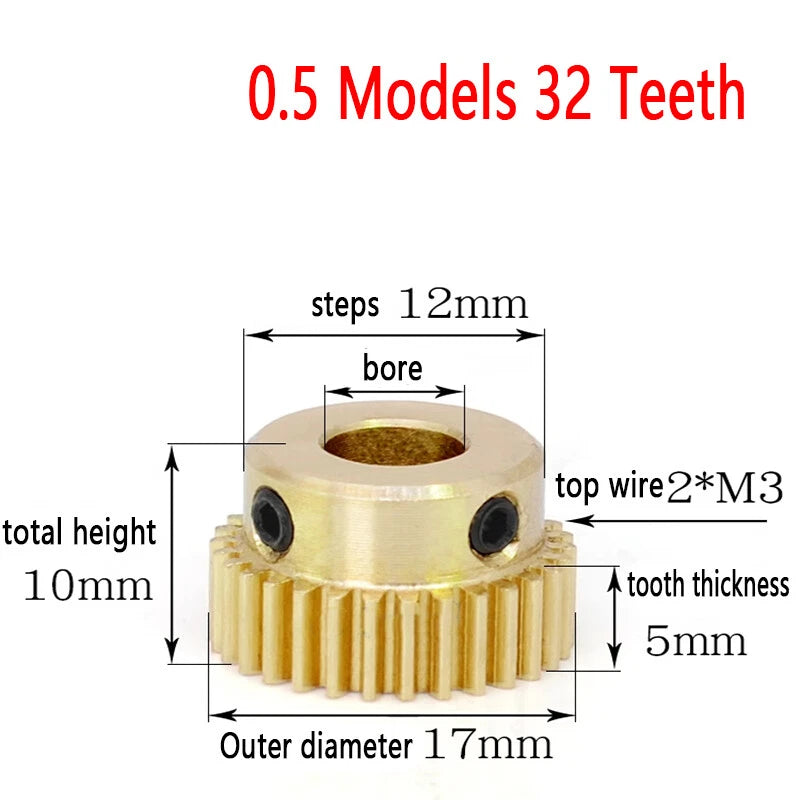
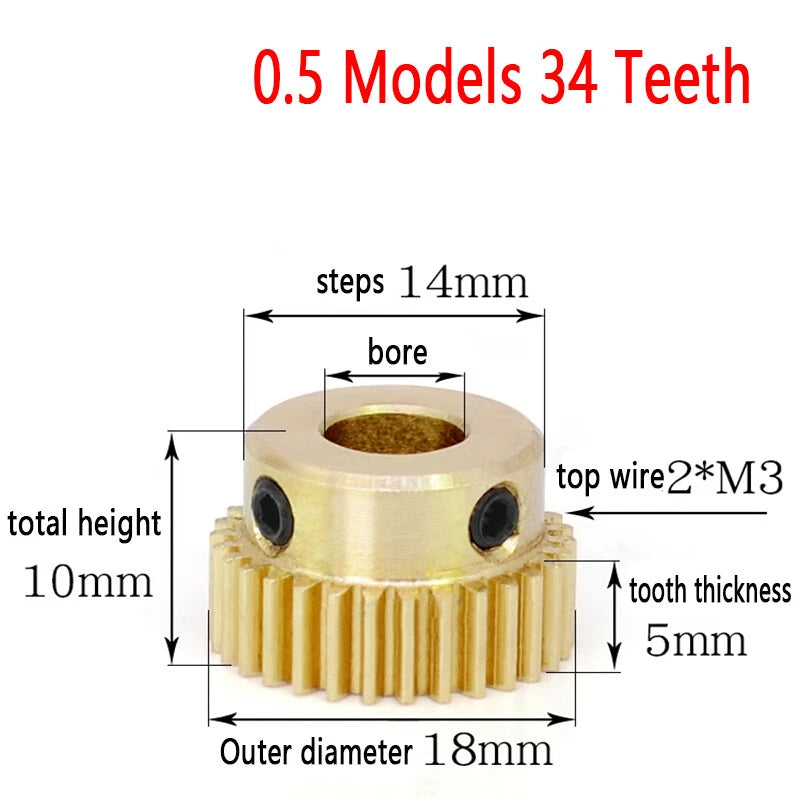
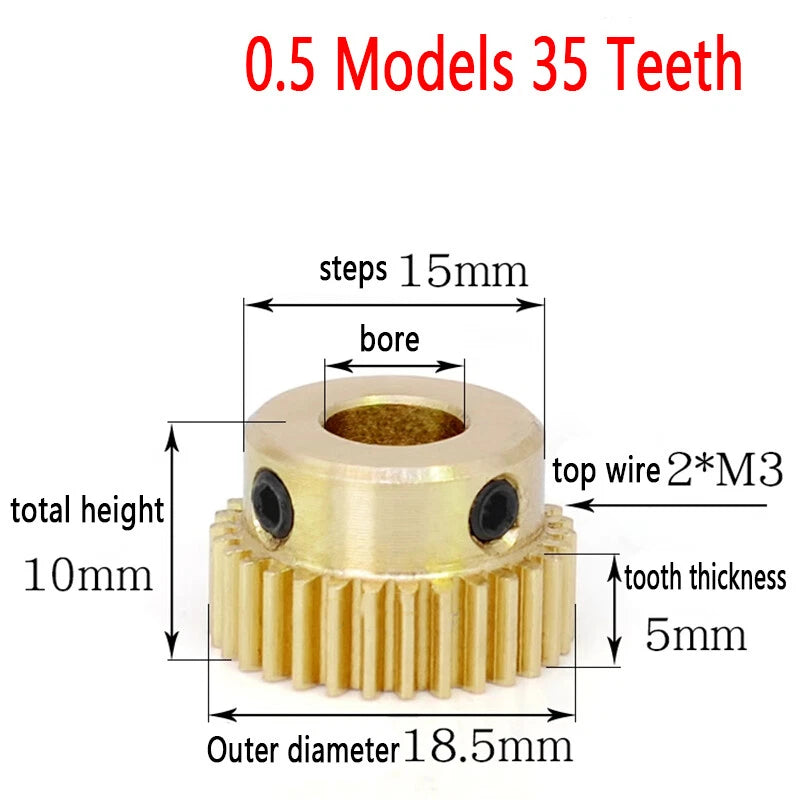
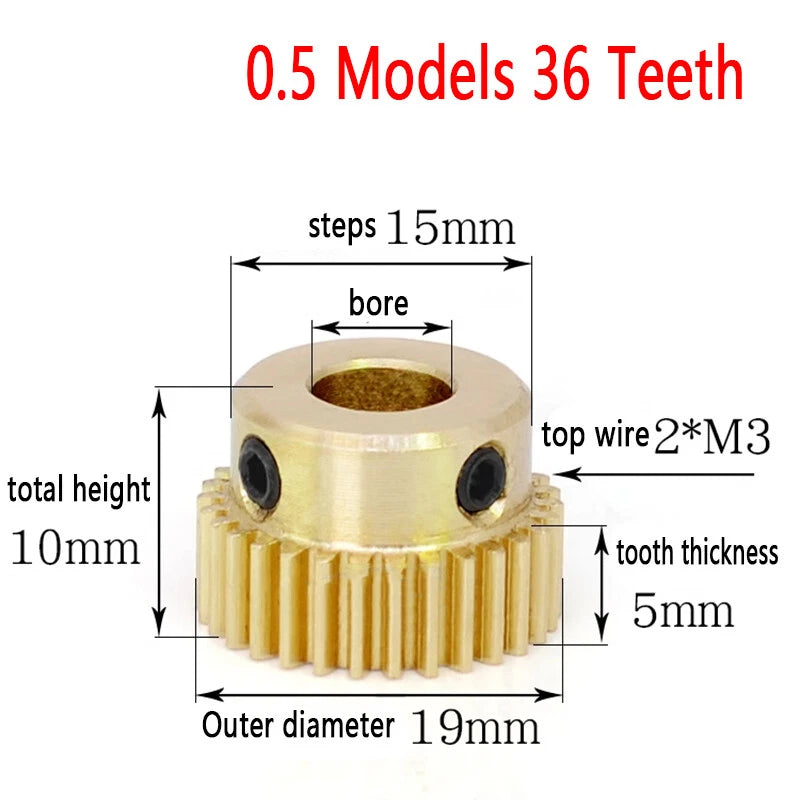
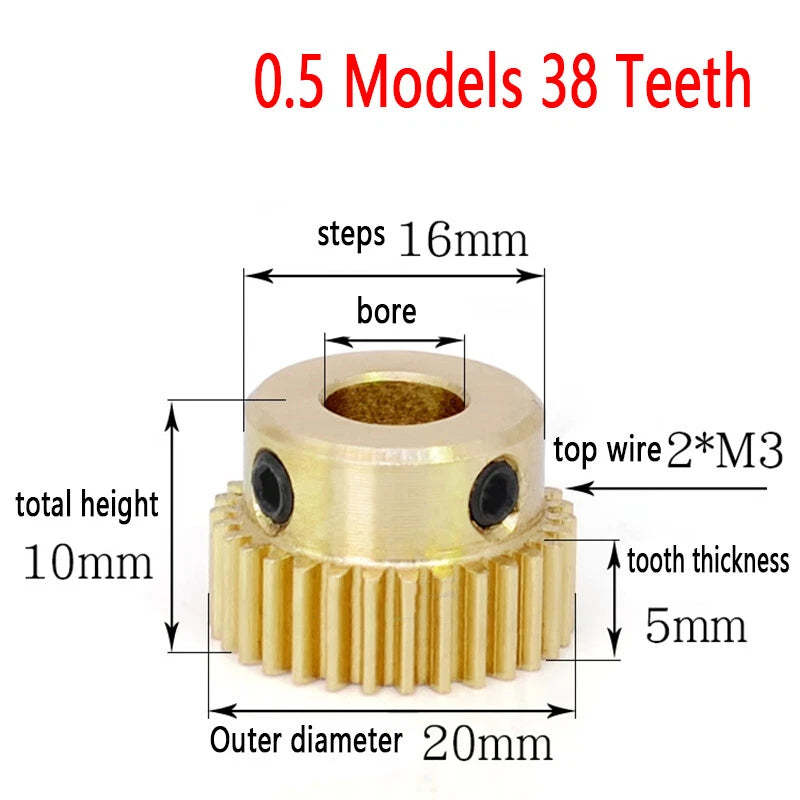
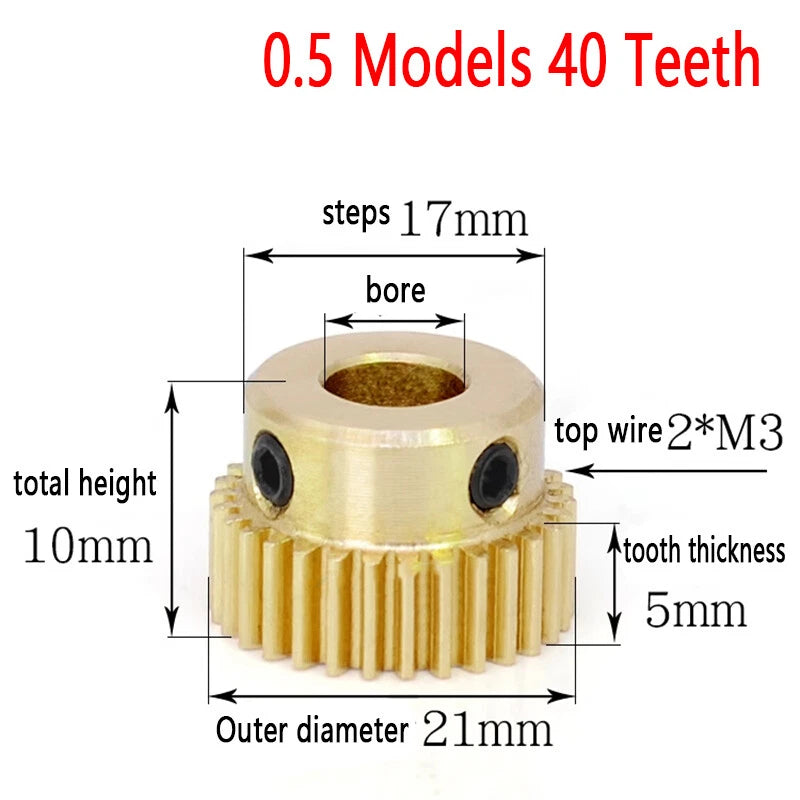
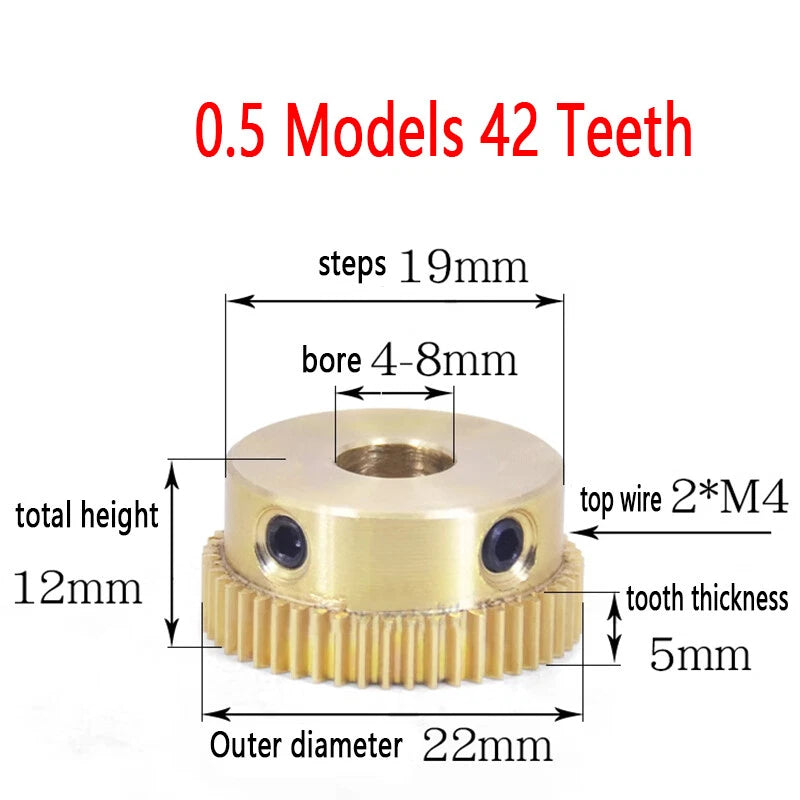
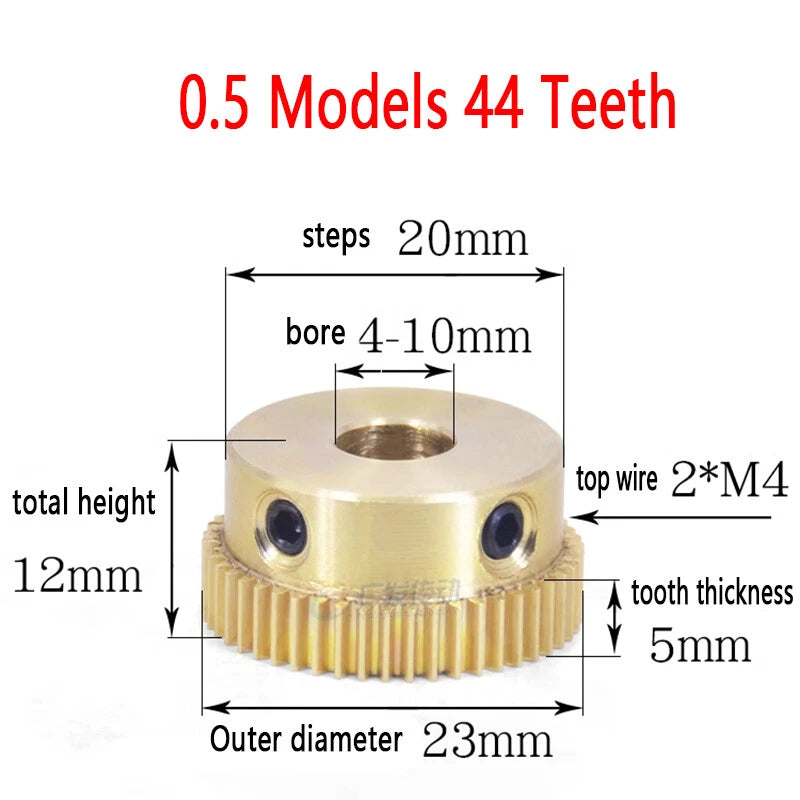
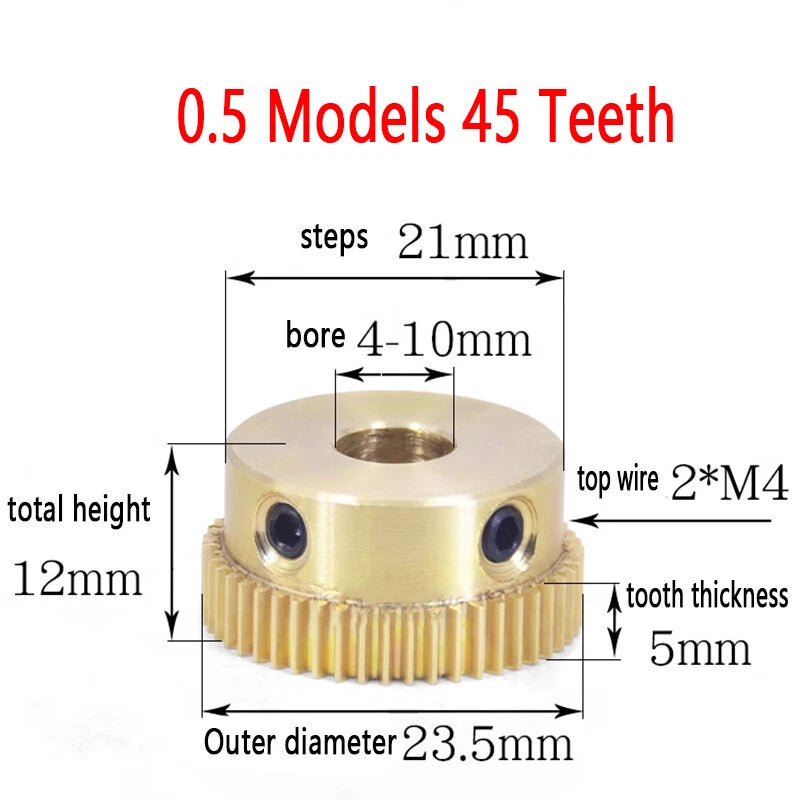
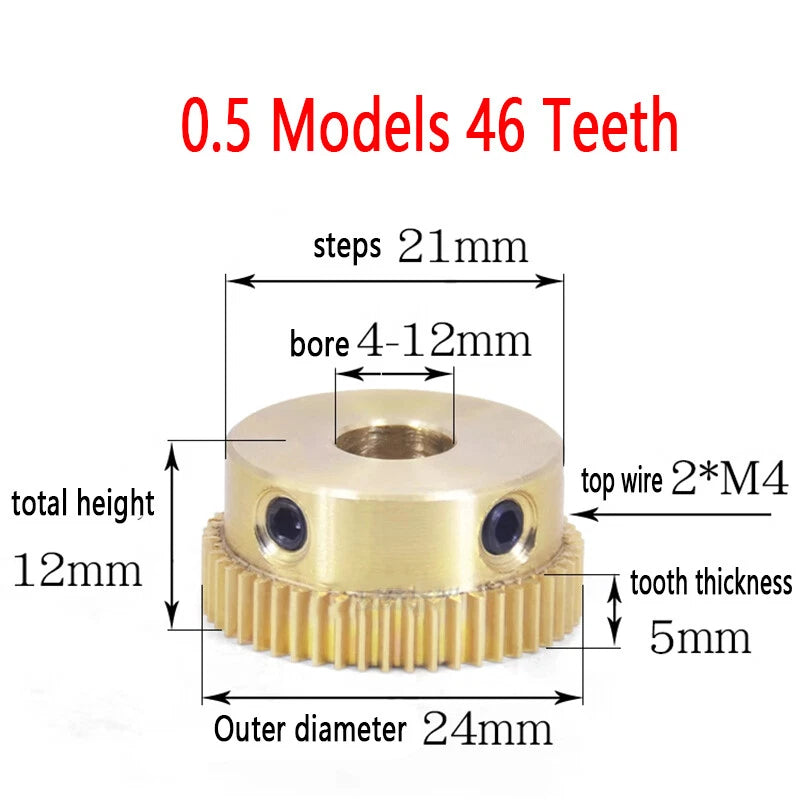
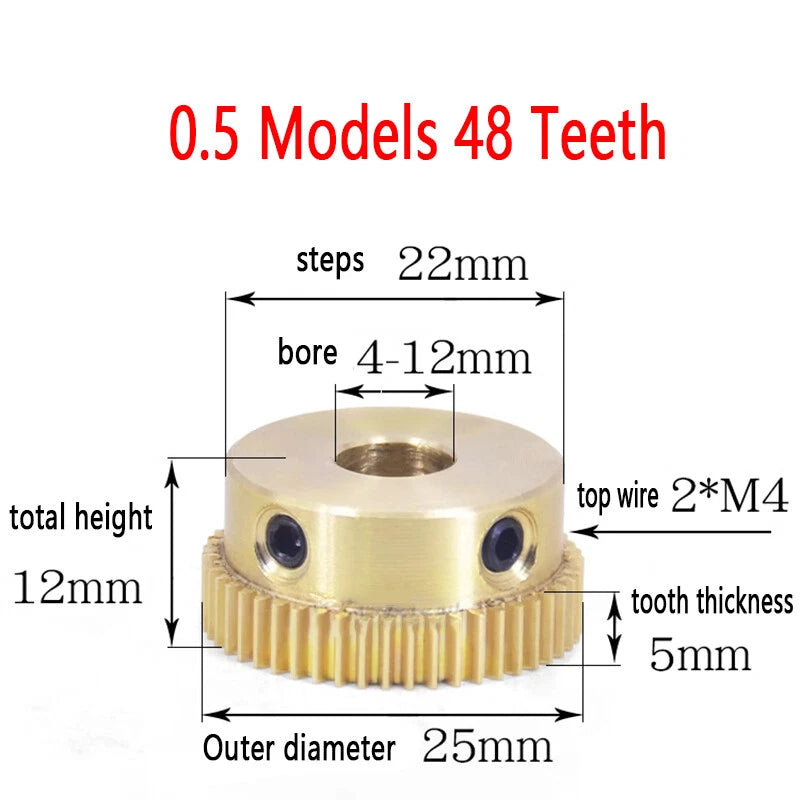
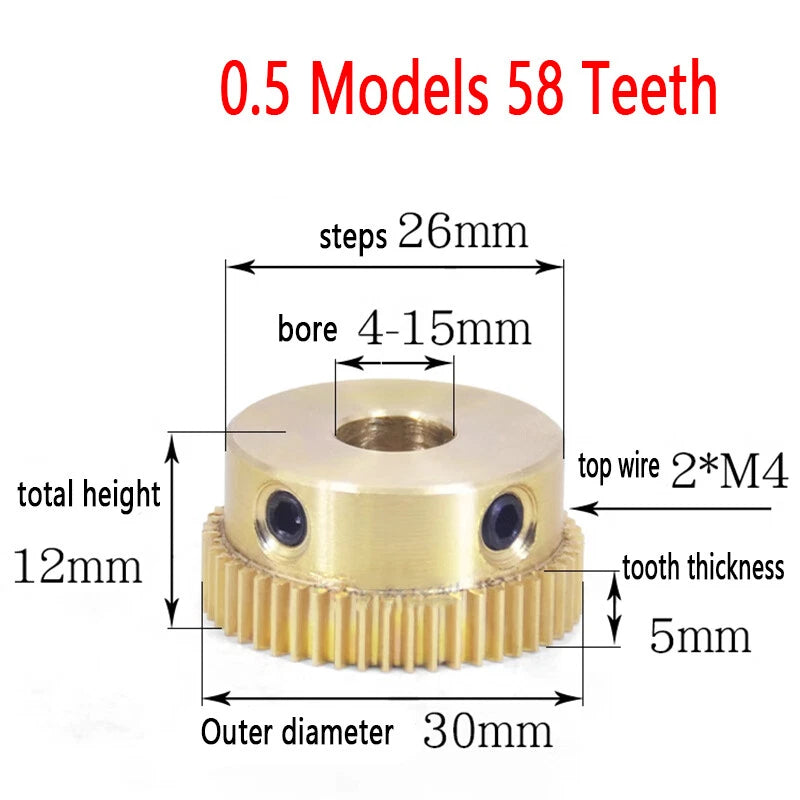
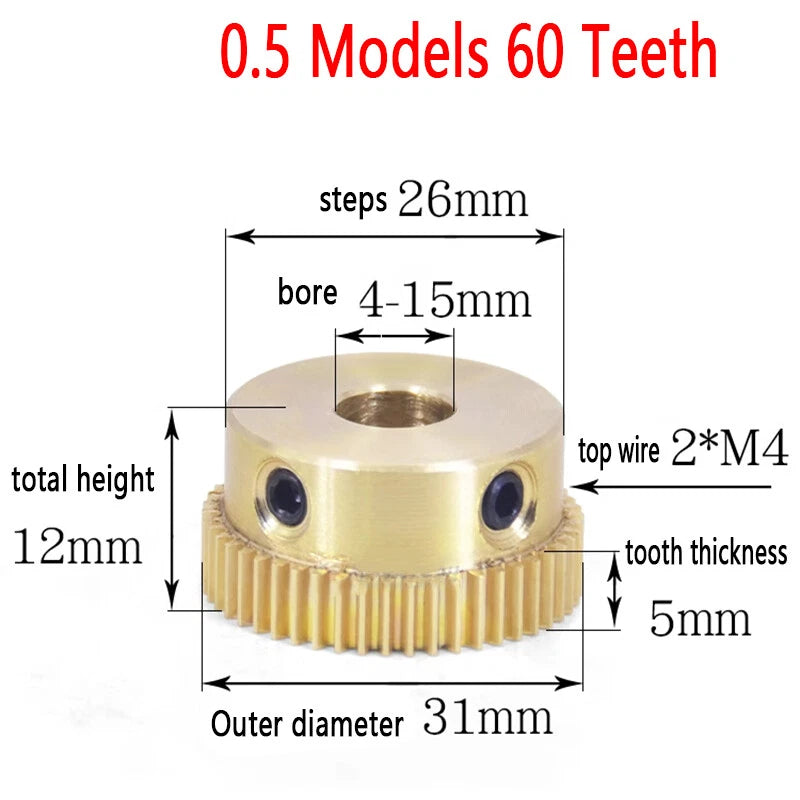
Mod 0.5 Brass Pinion Gear Spur Gears 20-60 Teeth 4-15mm Bore With Screw Hardened

No reviews

Price:
Sale price$1.48 USD
Stock:
In stock (500 units), ready to be shipped

Payment & Security

Ach Direct Debit Amazon American Express Apple Pay Bancontact BLIK Diners Club Discover EPS Google Pay iDEAL Wero JCB Maestro Mastercard Multibanco MobilePay PayPal Przelewy24 Shop Pay Twint Union Pay USDC Visa

Your payment information is processed securely. We do not store credit card details nor have access to your credit card information.

Limited Offer — Spend More, Save More
Spend $55+
Save $5
Spend $100+
Save $10
Spend $200+
Save $25
HomeDIYer DIY Expert Support

DIY Expert Support

Get fitment advice & recommendations

Mon–Fri  8:30 AM – 8:00 PM
24-Hour Fast Ship
Arrives in 3–14 Days
Worldwide Shipping
30-Day Returns
1 tree planted with every purchase

Description

Mod 0.5 Brass Pinion Spur Gear — Precision Motion Control for CNC & Robotics

When a slipping or undersized gear derails your build mid-project, the frustration is real. Makers, robotics hobbyists, and small-machine builders who need reliable, repeatable motion transfer demand a gear that holds its bore tight and meshes cleanly under load. These Mod 0.5 brass pinion spur gears are engineered for exactly that — delivering consistent torque transmission in compact drive trains where accuracy matters.

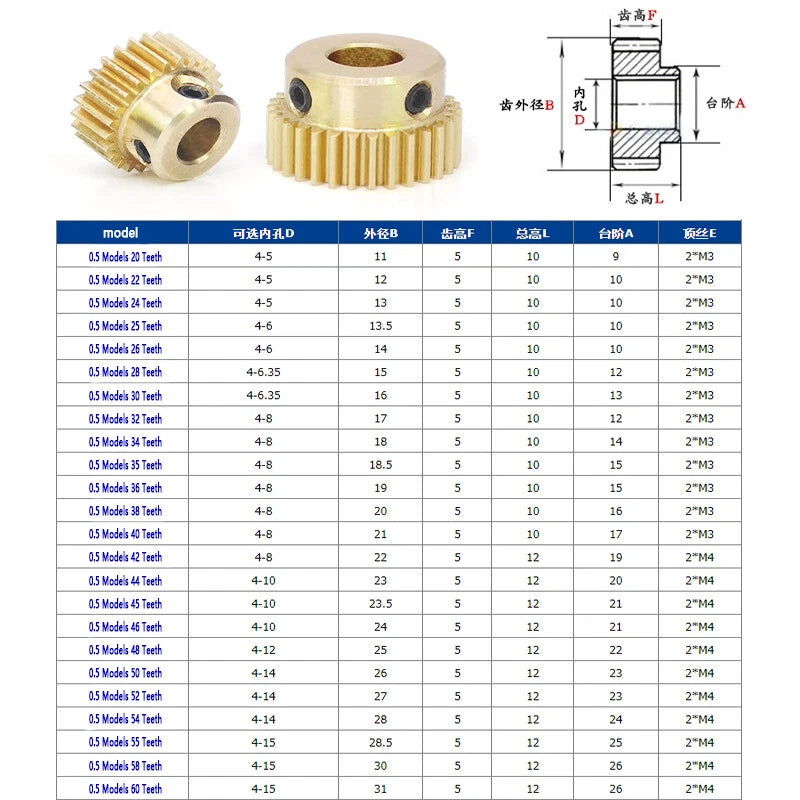
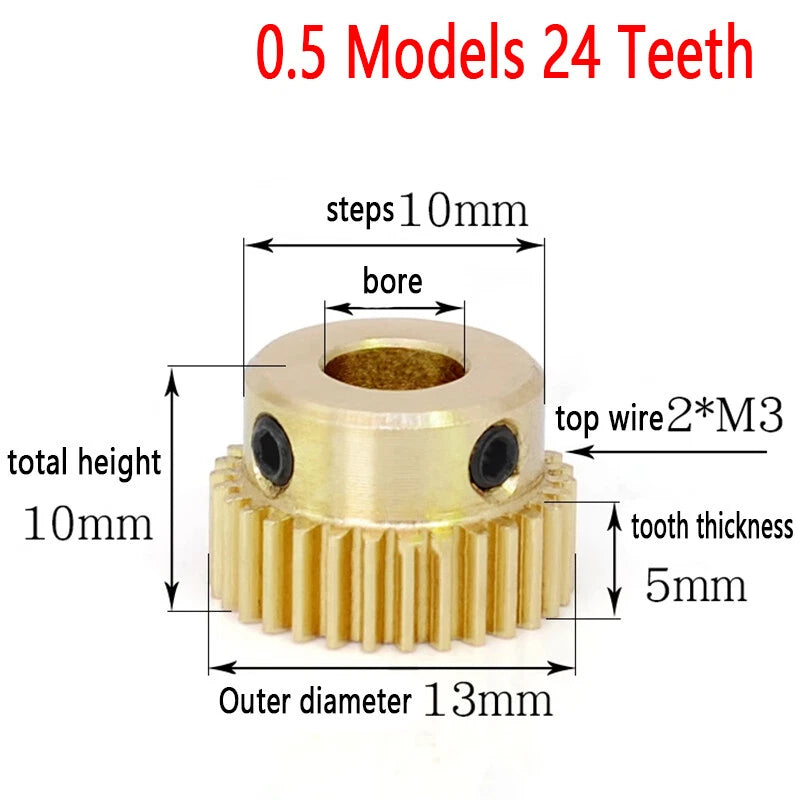
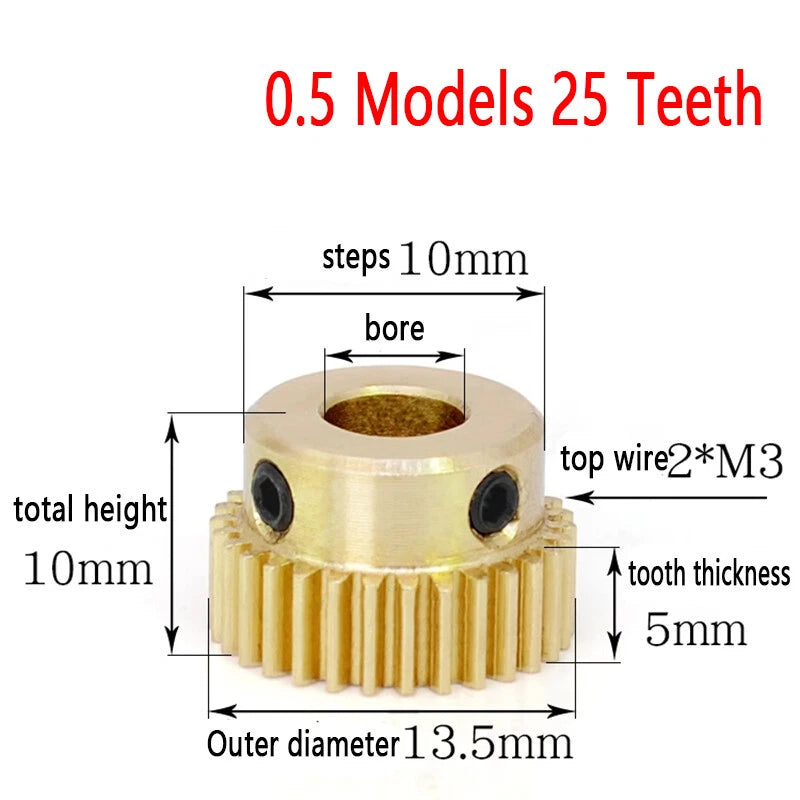
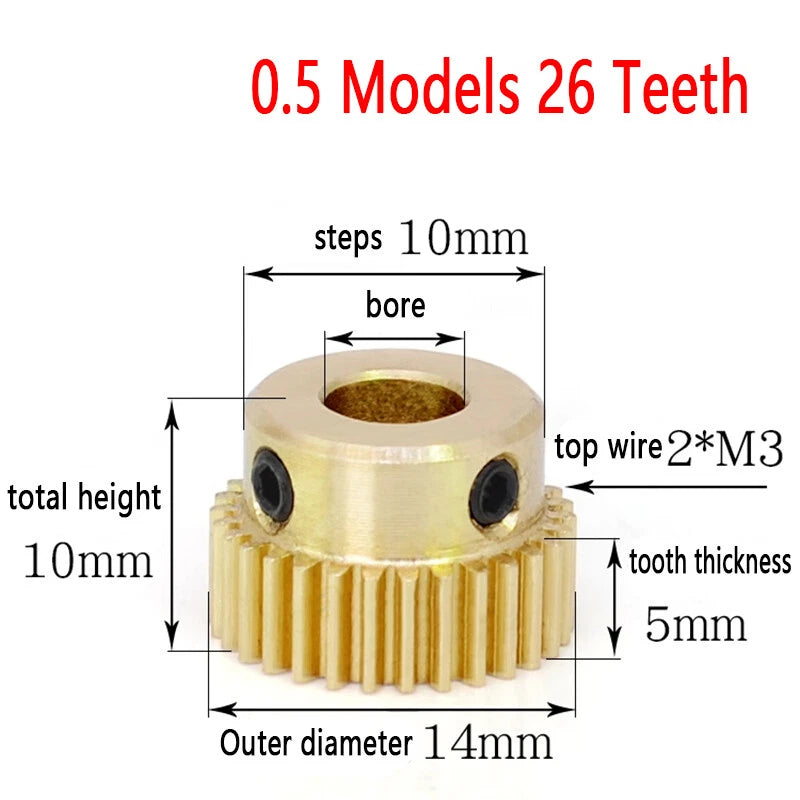
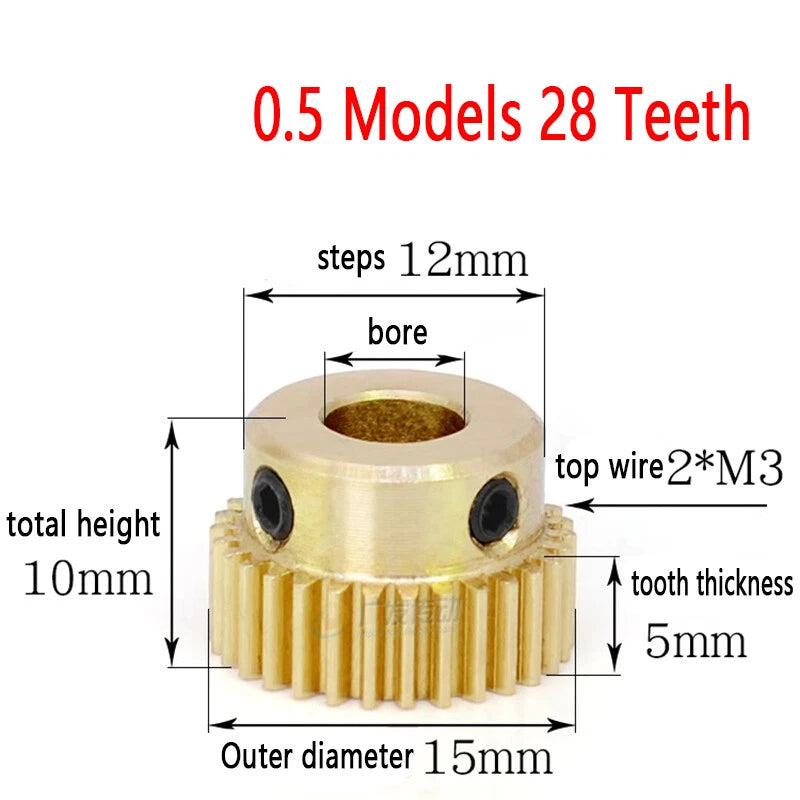
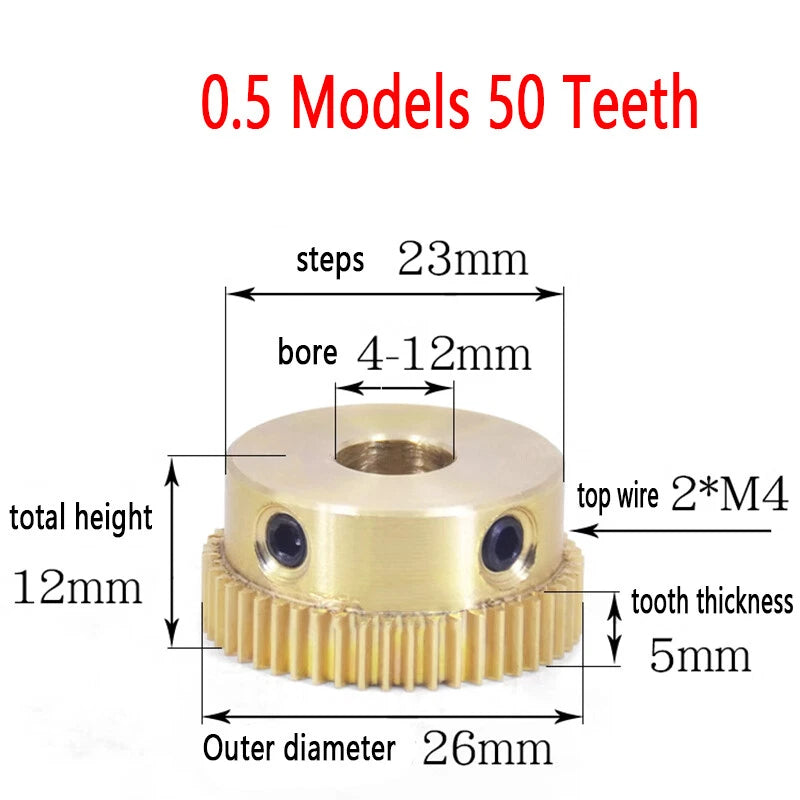
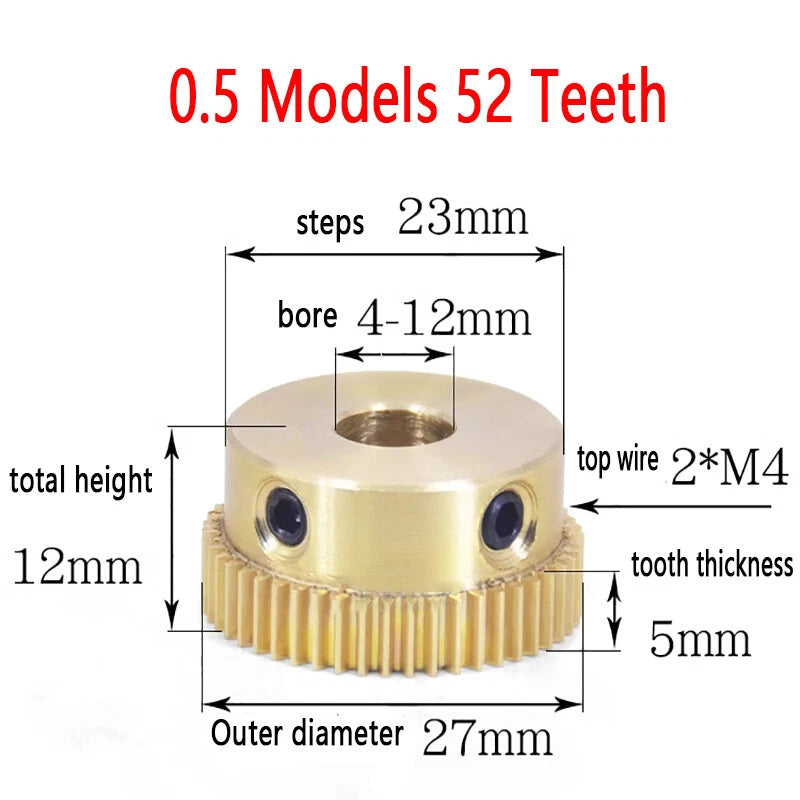
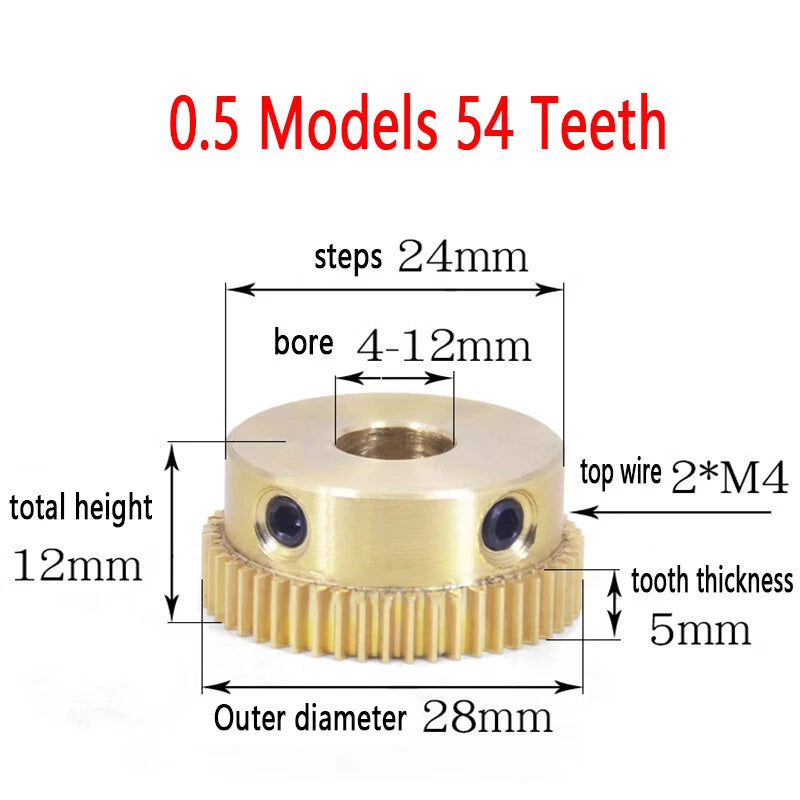
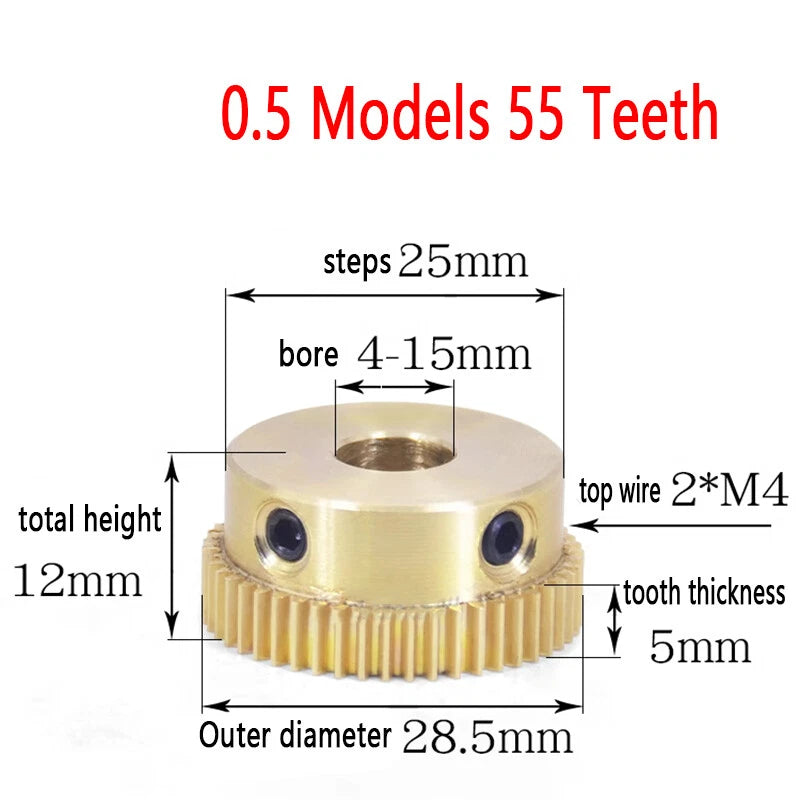
Each gear is machined from brass with a hardened tooth profile, available in 20 to 60 teeth and bore diameters from 4 mm to 15 mm (approximately 0.16 in to 0.59 in). A captive set screw locks the gear firmly to the shaft, eliminating axial slip. The module (Mod) rating of 0.5 defines the tooth pitch, making these gears directly interchangeable with any other Mod 0.5 spur gear in your drivetrain.

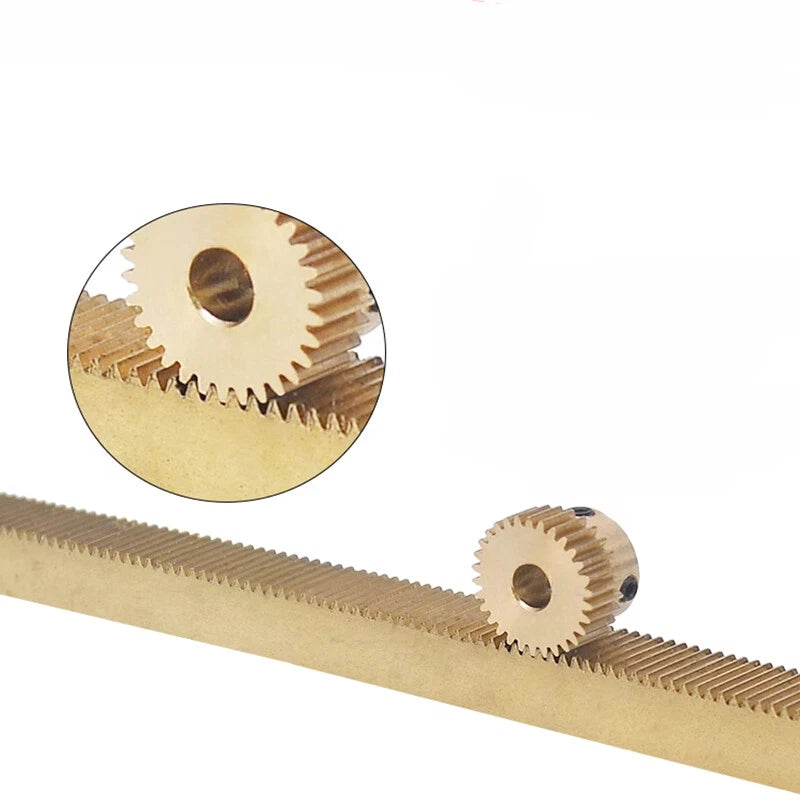
Typical use cases include CNC pen plotters and engravers requiring fine-pitch gear reduction, small robotic arm joints where a compact Mod 0.5 pinion gear meshes with a rack or larger spur, and DIY automation projects such as conveyor indexers, camera sliders, and clock mechanisms that rely on a hardened brass spur gear for long service life.

⚙️ Compatibility: Meshes with any Mod 0.5 spur gear, rack, or pinion. Bore options from 4 mm to 15 mm fit standard motor shafts including NEMA 17 (5 mm), NEMA 23 (6.35 mm), and common hobby motor shafts (4–8 mm). Confirm your shaft diameter before selecting a bore variant.

✅ Key Features of These Mod 0.5 Brass Pinion Spur Gears

🔩
Set Screw Bore Lock

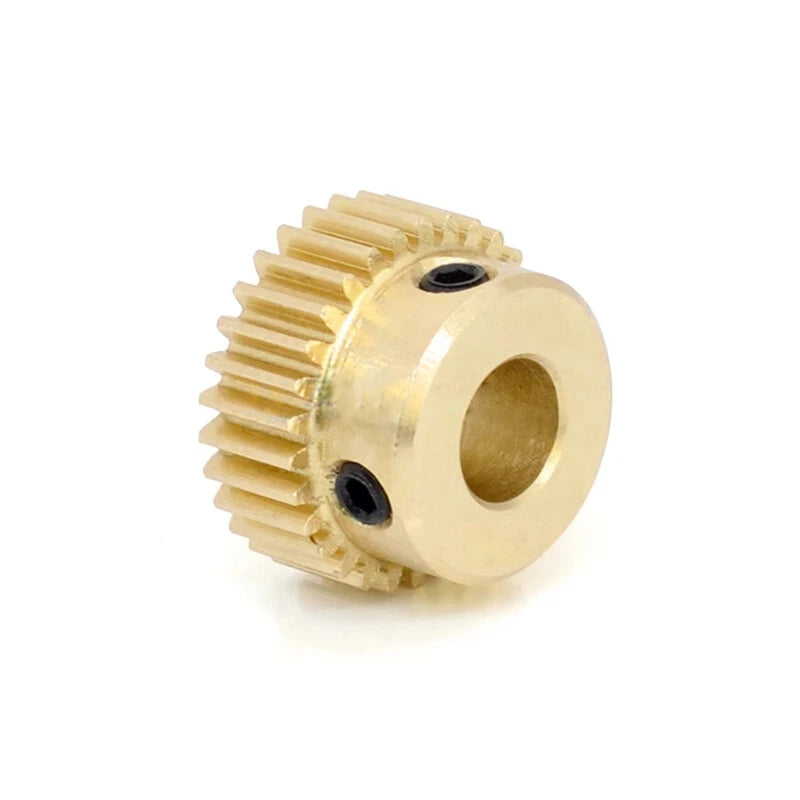
Each gear includes a captive M2 or M3 set screw (size varies by bore) that clamps directly onto the shaft, preventing rotational and axial slip under dynamic loads.

🦷
Wide Tooth Count Range — 20 to 60 Teeth

Choose from 20 T up to 60 T to dial in your gear ratio. Finer ratios for speed, larger tooth counts for torque — all in the same Mod 0.5 pitch family.

🎯
Hardened Tooth Profile

The tooth flanks are hardened for wear resistance, extending service life in continuous-duty applications such as CNC routers, 3D printer extruder drives, and robotic joints.

🔧
Brass Construction

Brass offers a favorable combination of machinability, moderate corrosion resistance, and low friction against steel mating gears — ideal for indoor automation and light-industrial use.

📐
Precision Mod 0.5 Pitch

Module 0.5 is a globally standardized tooth pitch. These gears mesh directly with any Mod 0.5 rack, pinion, or spur gear, simplifying drivetrain design and part sourcing.

🔄
Multiple Bore Options — 4 mm to 15 mm

Bore sizes span 4 mm, 5 mm, 6 mm, 6.35 mm (1/4 in), 7 mm, 8 mm, 10 mm, 12 mm, 14 mm, and 15 mm, covering the most common hobby and light-industrial motor shaft diameters.

📐 Technical Specifications — Mod 0.5 Brass Spur Gear

Module (Mod) 0.5
Material Brass (hardened tooth profile)
Tooth Count Range 20 – 60 Teeth (see variant options)
Bore Diameter Range 4 mm – 15 mm (see variant options)
Bore Type Round bore with set screw; stepped bore available on select variants
Pitch Diameter Mod × Teeth (e.g., 0.5 × 20 = 10 mm; 0.5 × 60 = 30 mm)
Pressure Angle 20° (standard)
Hub / Face Width See variant options
Fastener Included Set screw (M2 or M3, varies by bore size)
Finish Natural brass
Weight See variant options
Quantity per Order 1 PCS (per variant listing)

❓ Frequently Asked Questions

How do I choose the right tooth count for my application?

The gear ratio is determined by dividing the driven gear tooth count by the driving (pinion) gear tooth count. For example, pairing a 20-tooth pinion with a 40-tooth spur gives a 2:1 reduction — halving speed and doubling torque. Choose a lower tooth count for higher speed output and a higher tooth count when you need more torque or a larger pitch diameter to match a specific center distance.

Which bore size should I select for a NEMA 17 stepper motor?

NEMA 17 stepper motors typically have a 5 mm output shaft. Select the 5 mm bore variant. If your motor has a D-flat shaft, the set screw will seat against the flat for a more secure grip. For NEMA 23 motors (6.35 mm / 1/4 in shaft), choose the 6.35 mm bore variant.

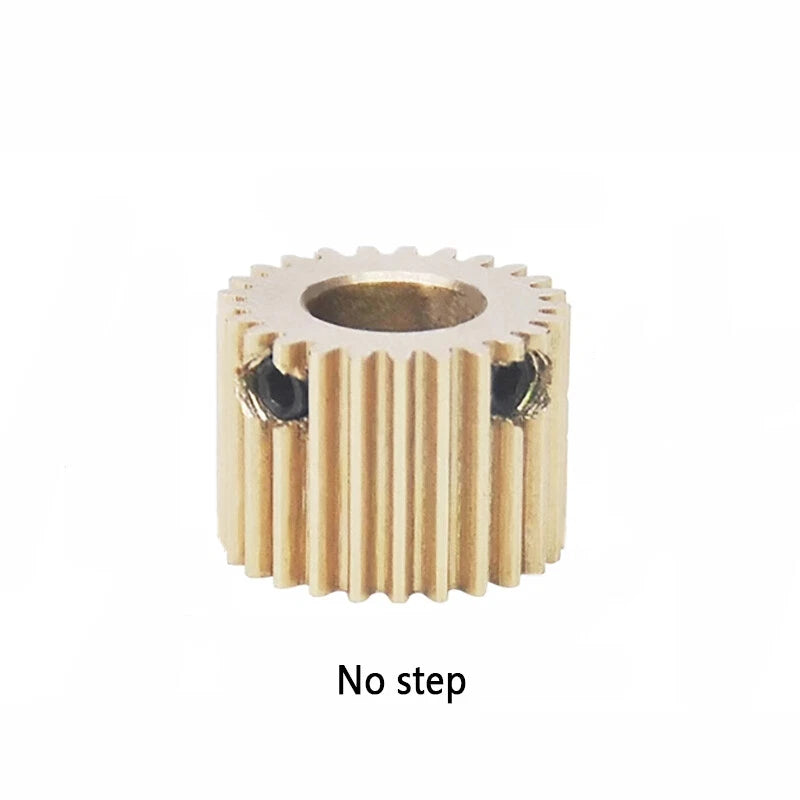
What is the difference between "No step" and standard bore variants?

"No step" bore variants have a straight-through cylindrical bore with no shoulder or counterbore — the shaft passes fully through the hub. Standard bore variants may include a stepped counterbore that positions the gear at a fixed axial depth on the shaft. Choose "No step" when you need to adjust the gear's axial position freely; choose the stepped variant when a fixed seating depth is required for your assembly.

Are these gears strong enough for continuous-duty CNC or robotics use?

Brass Mod 0.5 spur gears are well-suited for light-to-medium duty continuous operation in CNC pen plotters, camera sliders, small robotic joints, and similar applications. The hardened tooth profile improves wear resistance compared to standard brass. For high-torque or high-speed industrial drives, consider a steel Mod 0.5 gear instead. If you are unsure whether brass meets your load requirements, contact us to confirm.

Will these gears corrode or rust in humid environments?

Brass is inherently corrosion-resistant and will not rust. In humid or mildly corrosive indoor environments, brass performs reliably without surface treatment. For outdoor or high-humidity applications, a light coating of machine oil or grease on the tooth flanks will further extend service life and reduce friction against mating steel gears.

Can I mesh this gear with a steel Mod 0.5 rack or spur gear?

Yes. Any Mod 0.5 gear — regardless of material — will mesh correctly with these brass pinion gears, provided the pressure angle is 20° (the industry standard for Mod 0.5). Brass-on-steel pairings are common in precision instruments and light automation because the softer brass acts as a sacrificial wear surface, protecting the harder steel rack or spur from accelerated wear.

How do I calculate the center distance between two meshing Mod 0.5 gears?

Center distance = (Pitch Diameter of Gear 1 + Pitch Diameter of Gear 2) ÷ 2. For Mod 0.5 gears, Pitch Diameter = Module × Tooth Count. Example: a 20-tooth pinion (PD = 10 mm) meshing with a 40-tooth spur (PD = 20 mm) requires a center distance of (10 + 20) ÷ 2 = 15 mm.

🛒 Select your Teeth count and Bore diameter above, then add to cart.

You may also like

Recently viewed