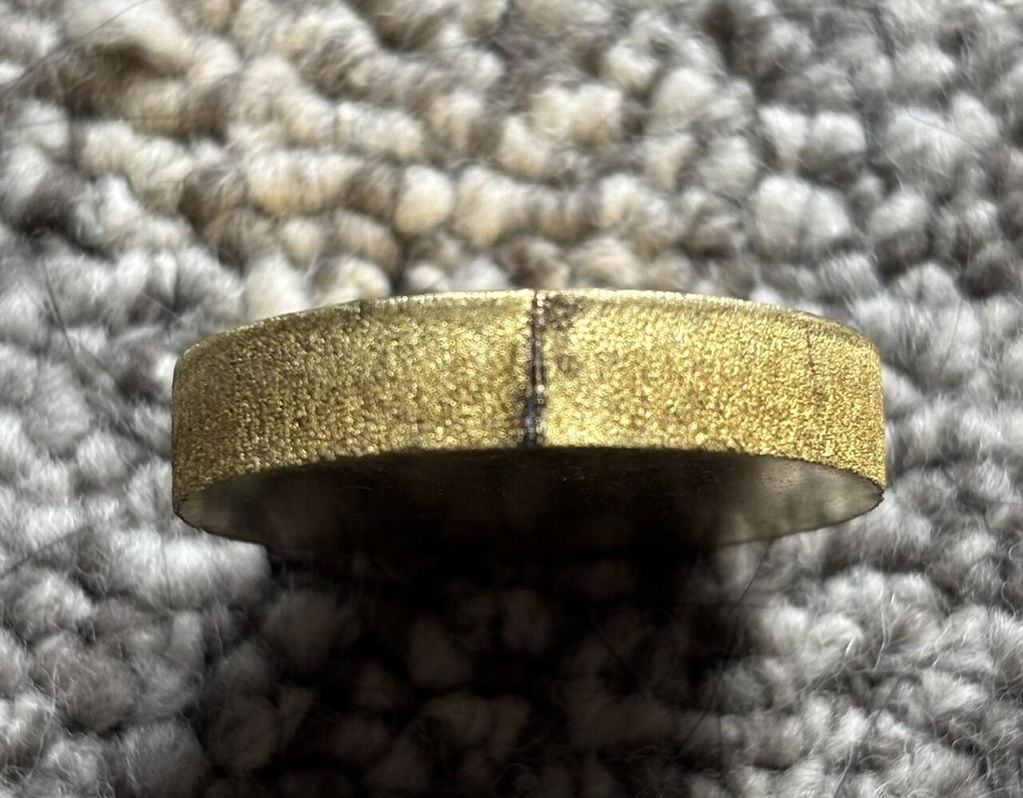
The chain is fine...but I ordered the wrong size. Nine links of the chain I ordered equals six of the size I wanted. My error...
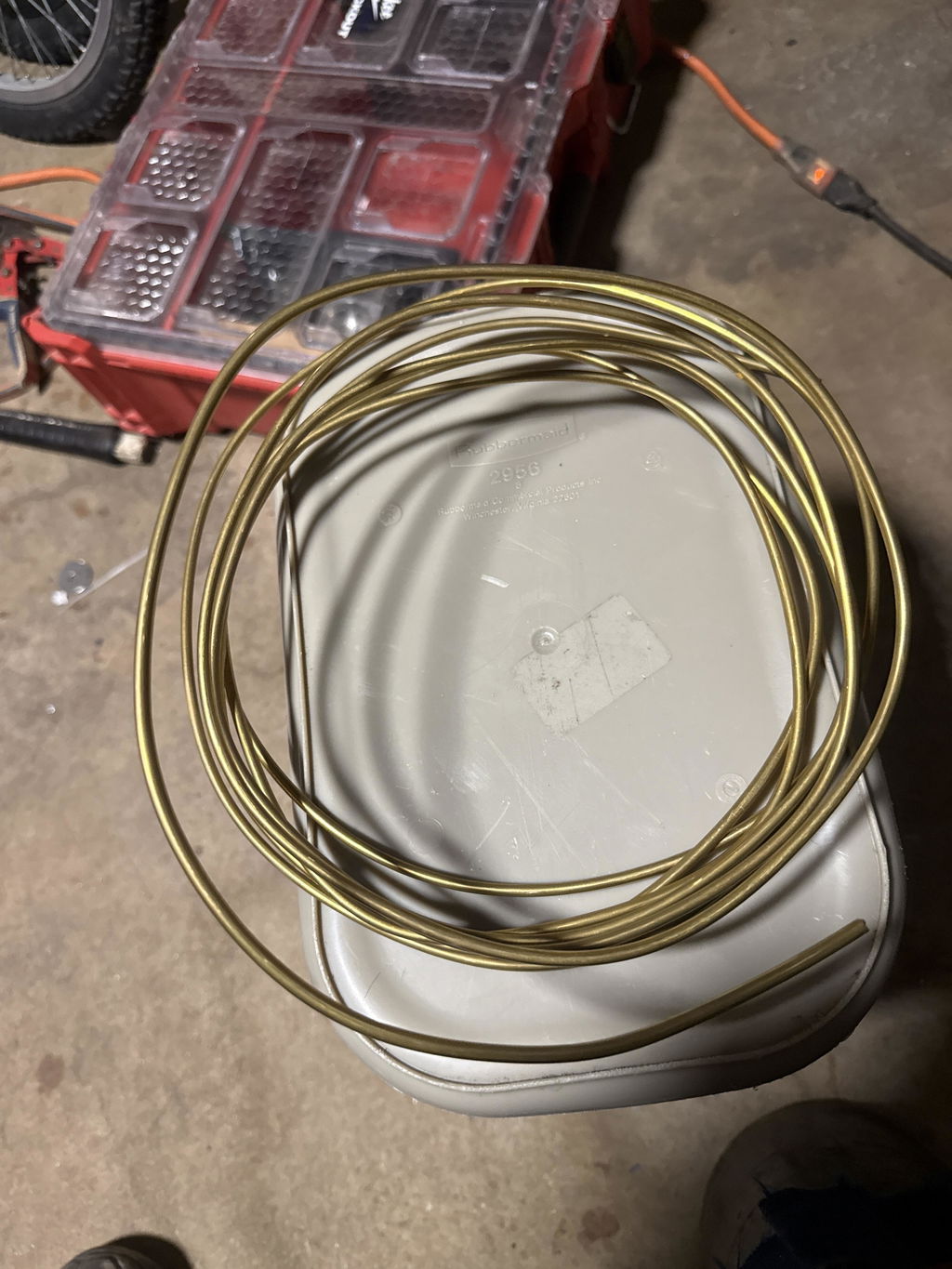
How can I straighten out the springs? I can't use them coil uo as is.
Your payment information is processed securely. We do not store credit card details nor have access to your credit card information.
Get fitment advice & recommendations
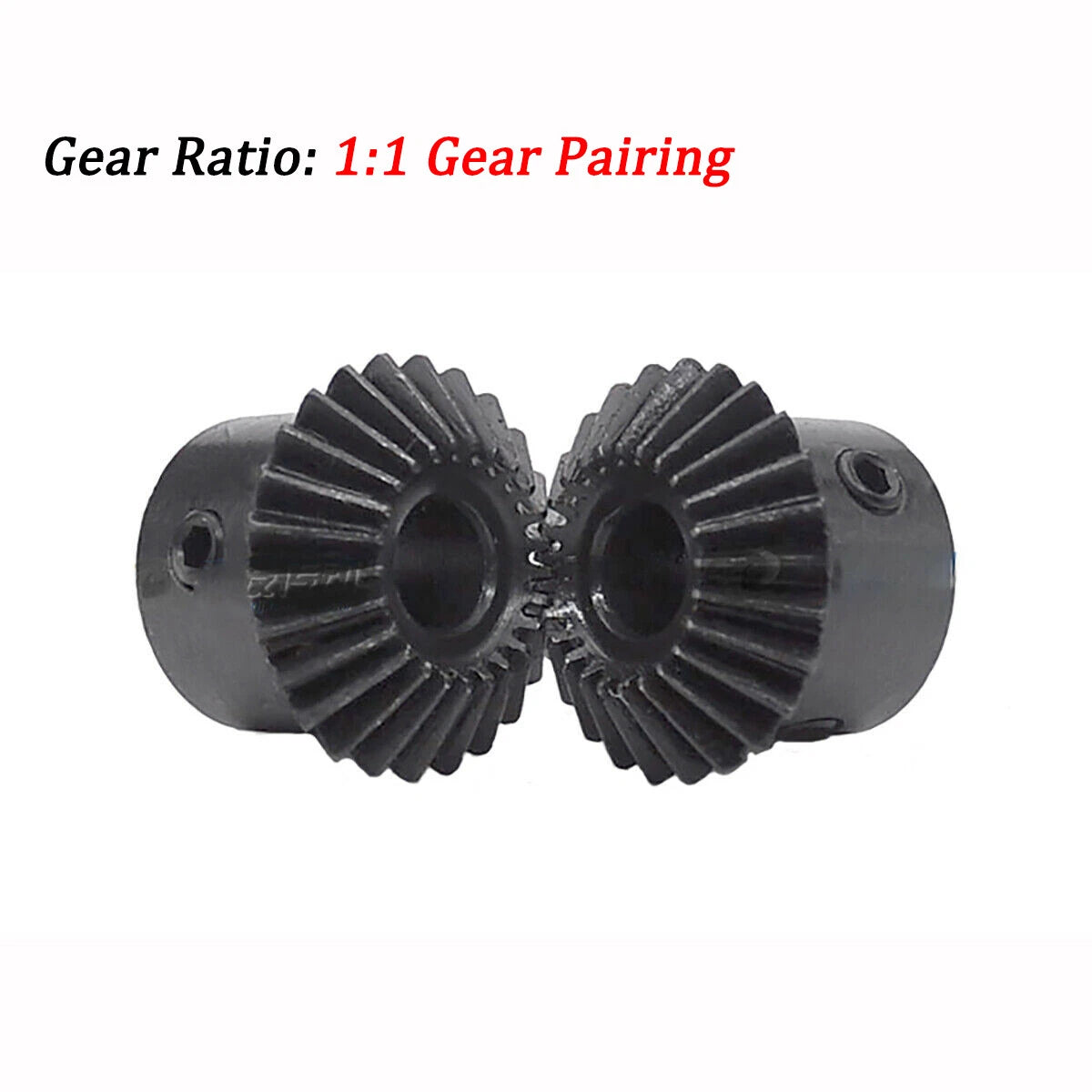
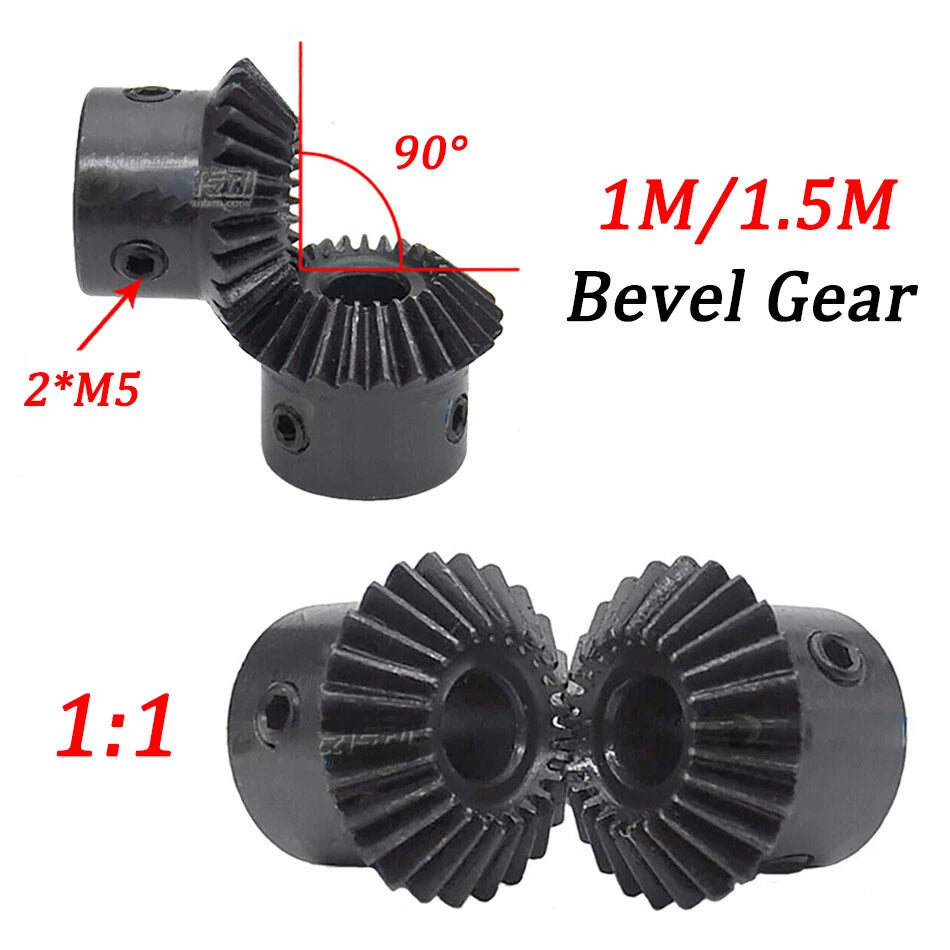
When a drivetrain demands a clean 90-degree direction change without sacrificing torque, engineers and makers reach for a matched bevel gear pair. These Mod 1 and Mod 1.5 bevel gears are designed for hobbyists, robotics builders, CNC enthusiasts, and light industrial designers who need a reliable 1:1 ratio right-angle transmission in a compact, machined package.
Each gear is machined from 45# medium-carbon steel, offering a balance of machinability and mechanical strength. Available in Modulus 1 and Modulus 1.5, with tooth counts of 20, 25, or 30, and bore diameters ranging from 5 mm (0.197 in) to 15 mm (0.591 in). The 90-degree mating angle is held to standard bevel gear geometry for consistent mesh across the full tooth range.
Typical use cases include DIY gearbox builds requiring a 90° shaft redirection, robotics joint drives where a compact bevel pair replaces a worm stage, and light-duty automation fixtures needing a matched Mod 1 bevel gear set for right-angle power transmission in confined enclosures.
| Material | 45# Medium-Carbon Steel |
|---|---|
| Modulus | 1 / 1.5 (see variant options) |
| Number of Teeth | 20 / 25 / 30 (see variant options) |
| Transmission Ratio | 1:1 |
| Shaft Angle | 90° |
| Bore Diameter | 5 / 6 / 6.35 / 8 / 10 / 12 / 14 / 15 mm (see variant options) |
| Pitch Circle Diameter | See variant options |
| Face Width | See variant options |
| Surface Finish | See variant options |
| Keyway | See variant options |
| Weight | See variant options |
| Application | Right-angle power transmission, robotics, DIY gearboxes, light automation |
Modulus (or Module) defines the tooth size. Mod 1 has smaller teeth suited for lighter loads and tighter spaces, while Mod 1.5 has larger teeth that handle higher torque and are easier to align during assembly. Both mating gears in a pair must share the same modulus — you cannot mix Mod 1 with Mod 1.5.
Yes. For a 1:1 ratio, both the drive and driven bevel gears must have the same tooth count (e.g., both 20T, both 25T, or both 30T). Mismatching tooth counts will change the transmission ratio and alter the mesh geometry.
Select the bore diameter that matches your shaft's outer diameter. Available options are 5, 6, 6.35, 8, 10, 12, 14, and 15 mm. If your shaft is imperial (e.g., 1/4 in = 6.35 mm), choose the 6.35 mm bore. For a keyed shaft, verify whether a keyway is required and contact us to confirm keyway availability for your chosen variant.
These gears are machined from 45# medium-carbon steel, which typically has a tensile strength of approximately 600–800 MPa depending on heat treatment. They are suitable for moderate-load applications such as robotics joints, DIY gearboxes, and light automation. For heavy industrial loads or continuous high-speed operation, consult a mechanical engineer to verify suitability.
45# steel has moderate corrosion resistance. For environments with moisture or mild chemicals, applying a light machine oil or grease to the gear teeth and bore is recommended. For highly corrosive environments, consider stainless steel alternatives or apply a protective coating after installation.
Yes. Mod 1 and Mod 1.5 bevel gears are widely used in hobby robotics, RC vehicles, and DIY automation projects. The 5 mm and 6 mm bore options are particularly popular for pairing with standard hobby servo output shafts and small stepper motor shafts. Ensure your motor's torque rating is within the gear's load capacity for your application.
Each listing is sold as a single gear. To complete a 90° right-angle drive, you need two matching gears of the same modulus and tooth count — one for the drive shaft and one for the driven shaft. Add two units to your cart, or contact us if you need assistance selecting a matched pair.