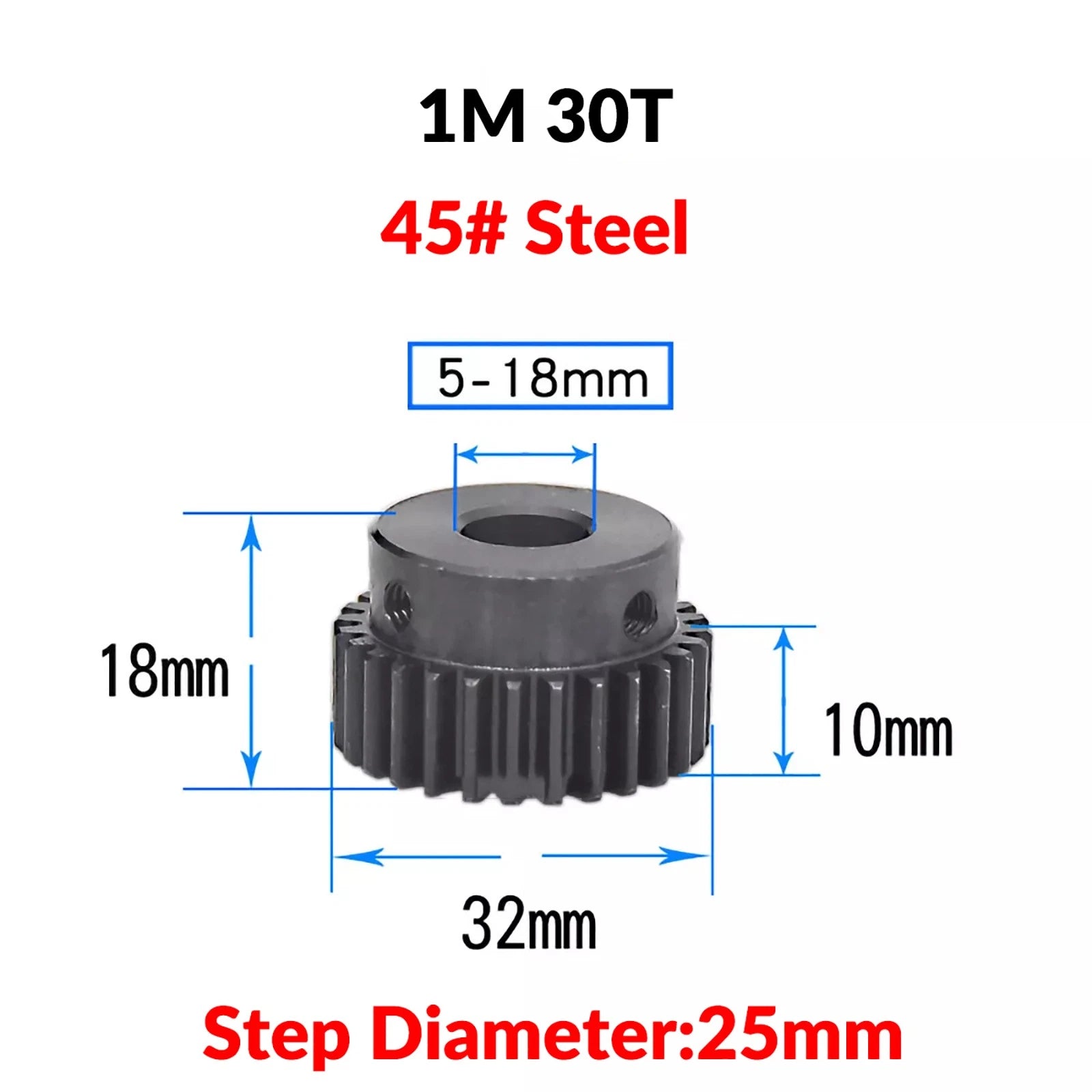
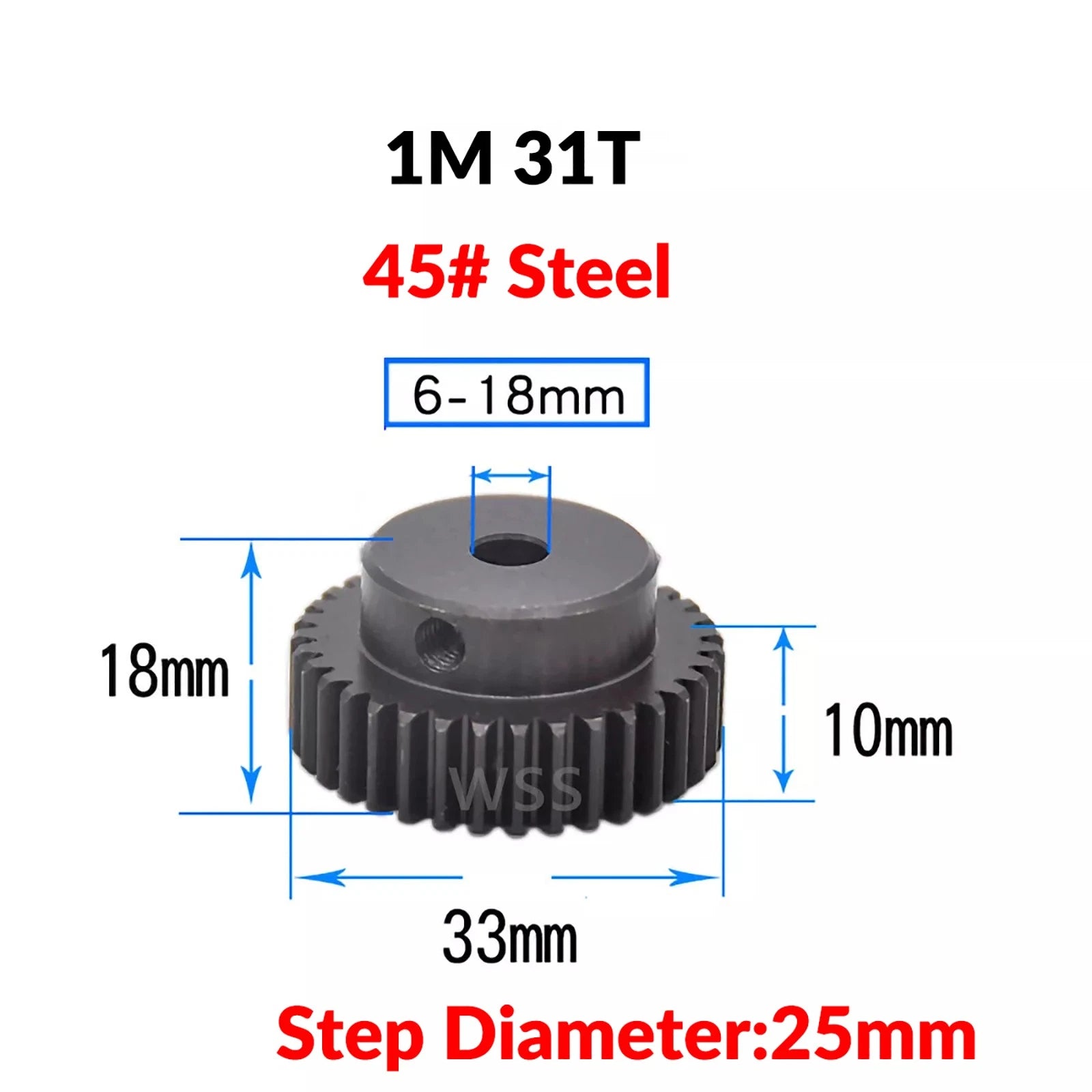
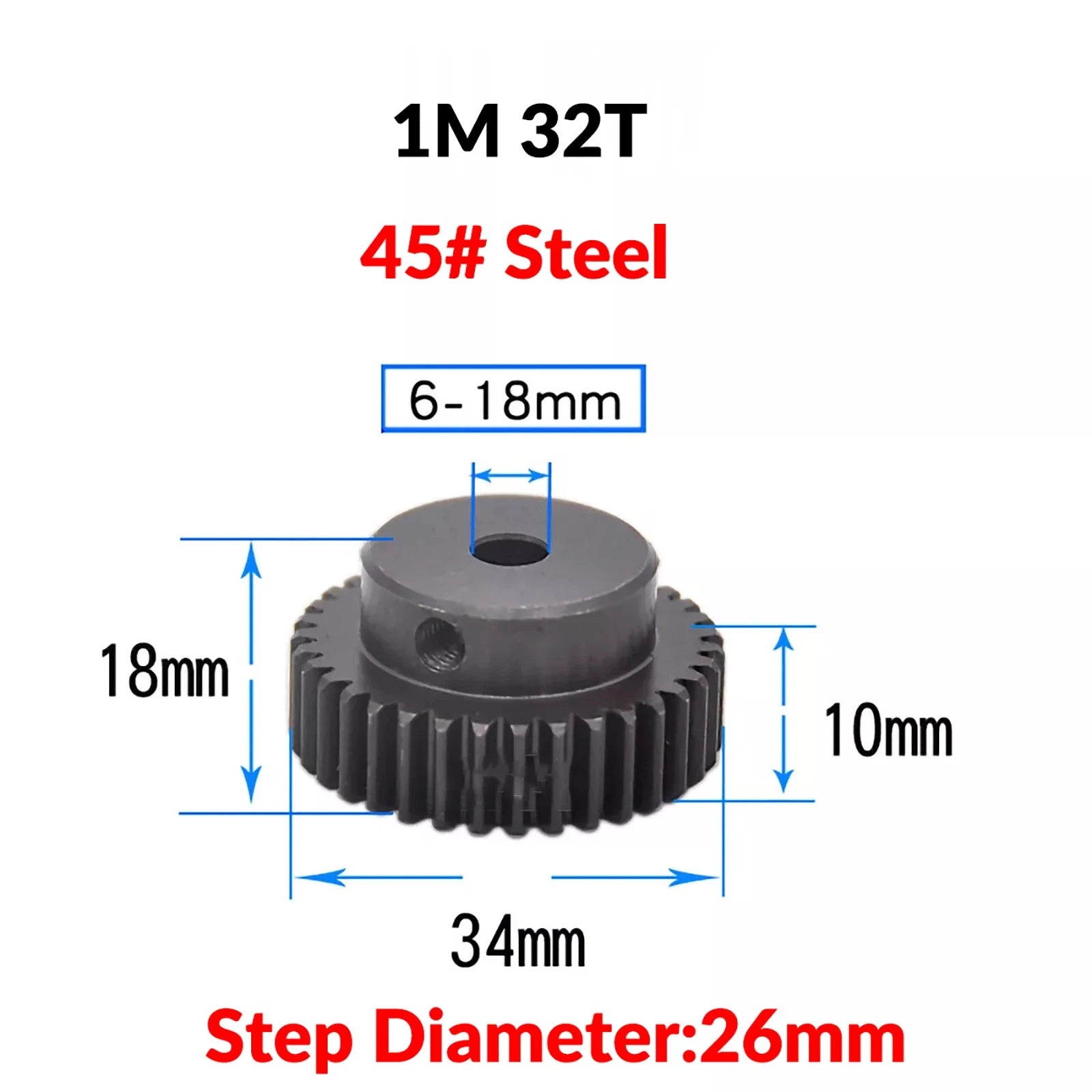
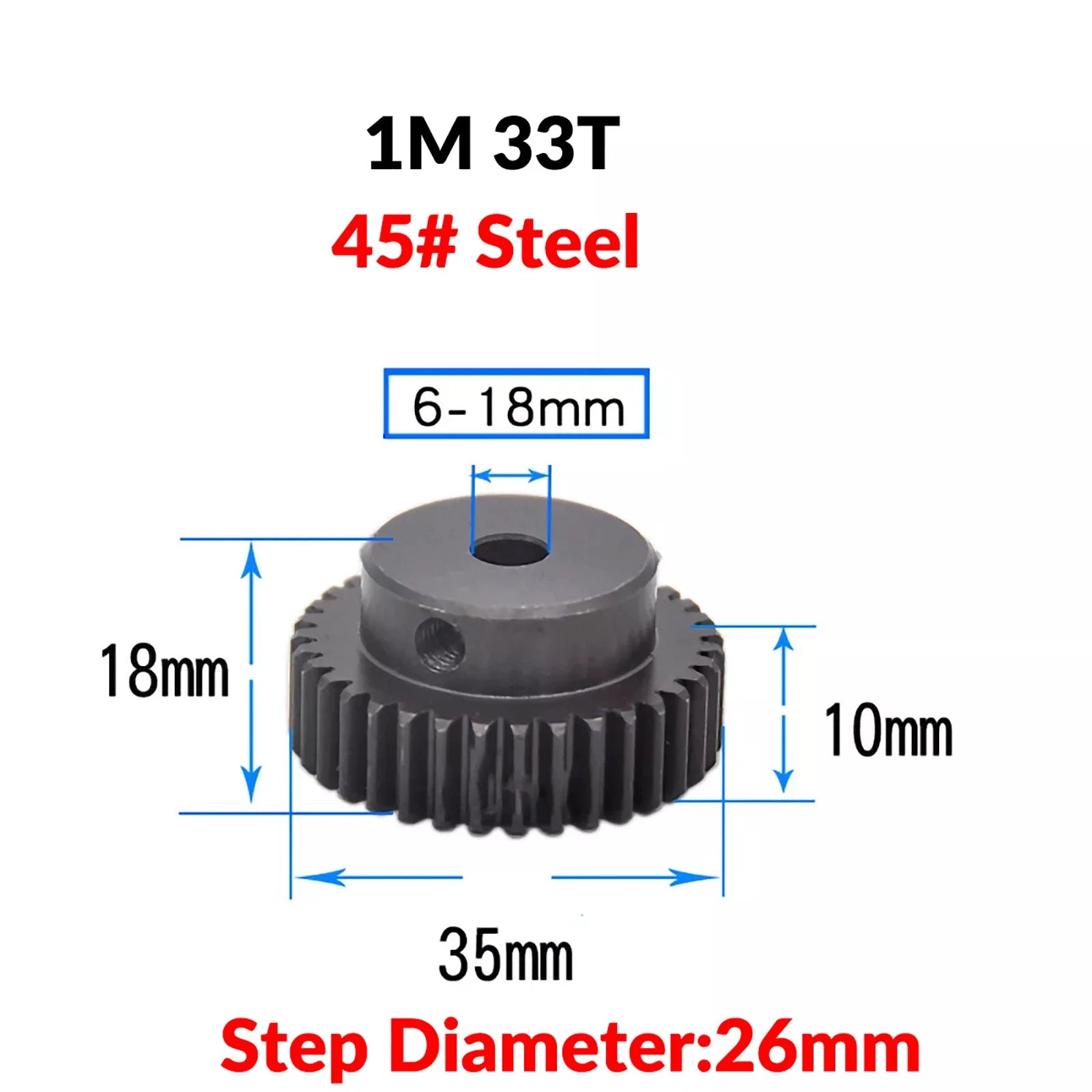
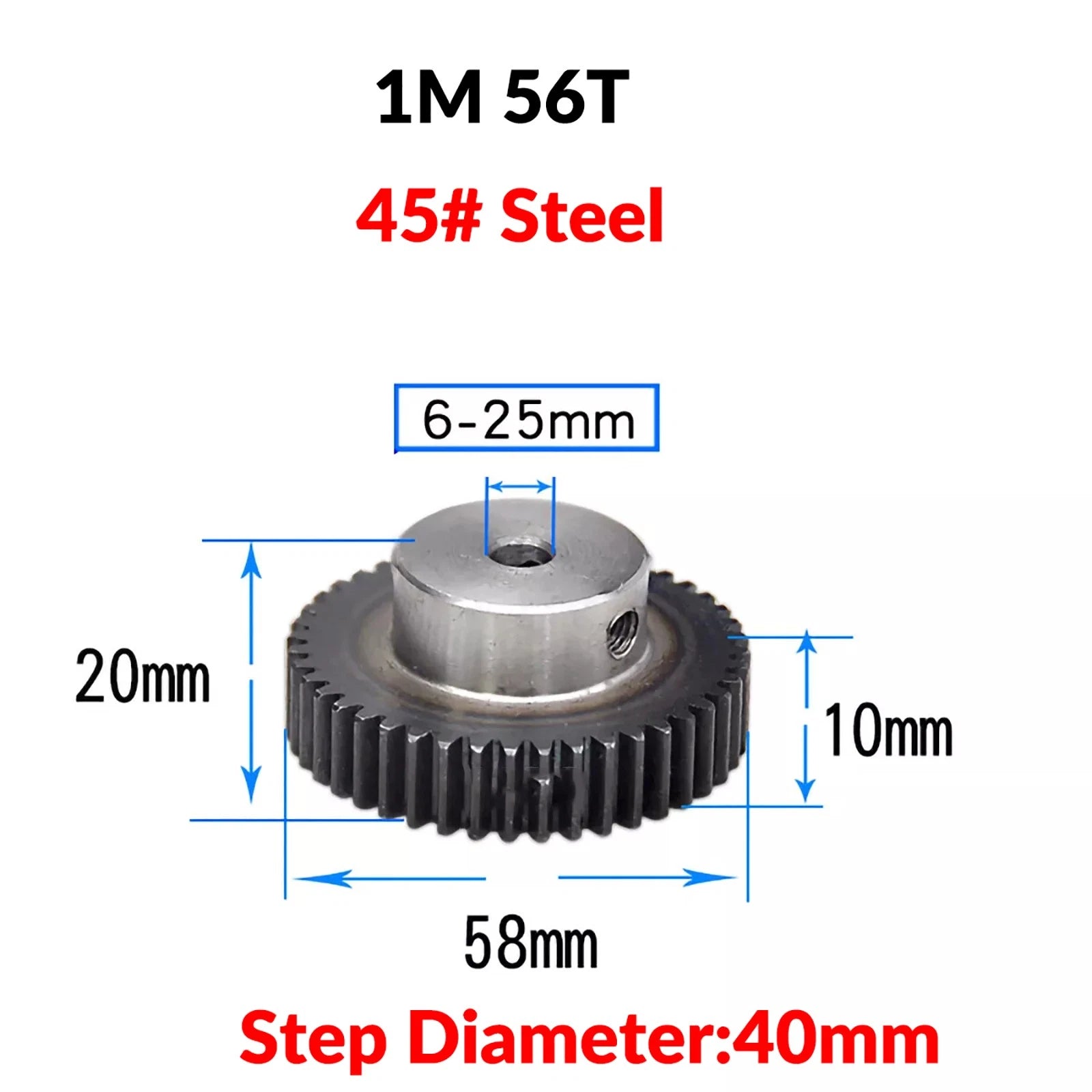
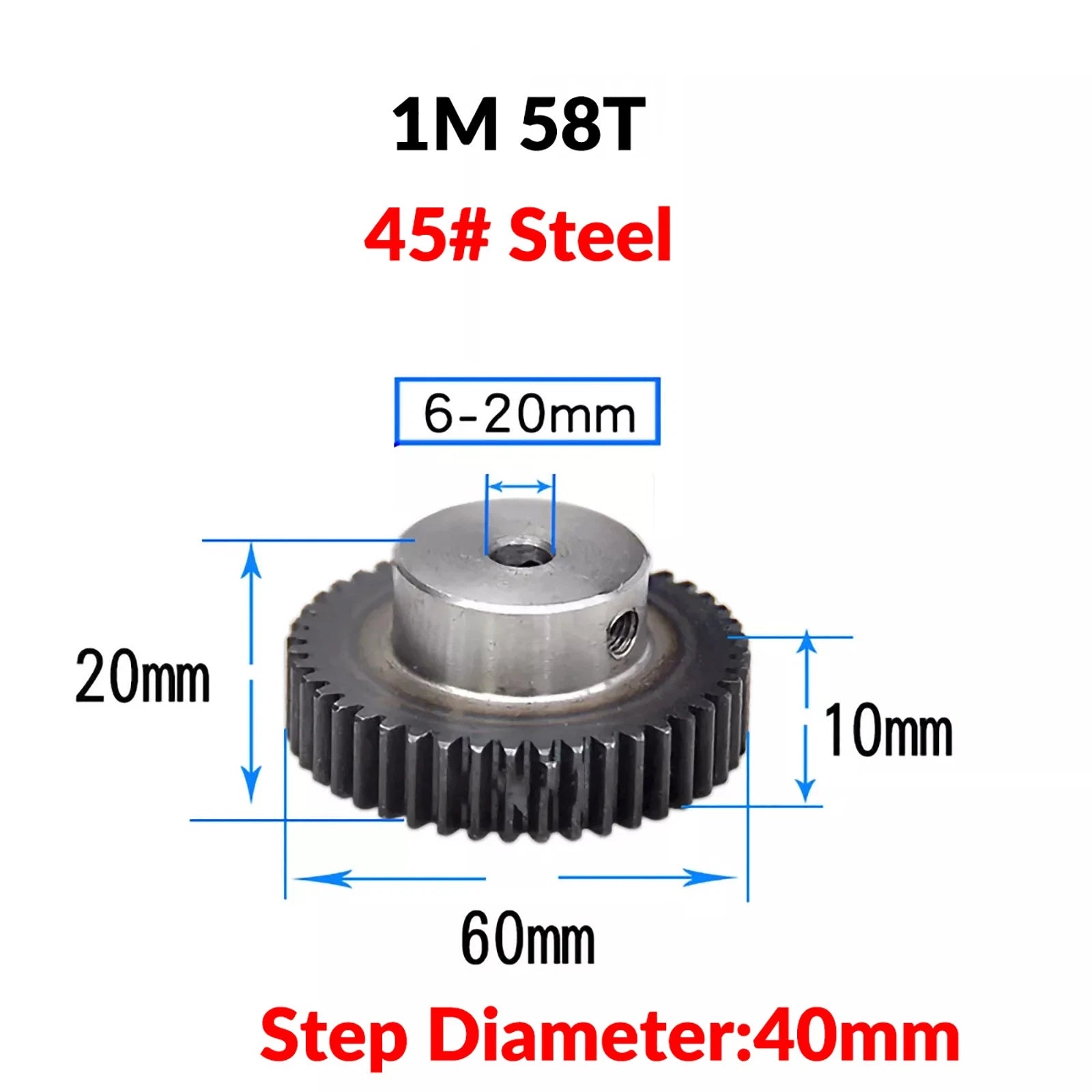
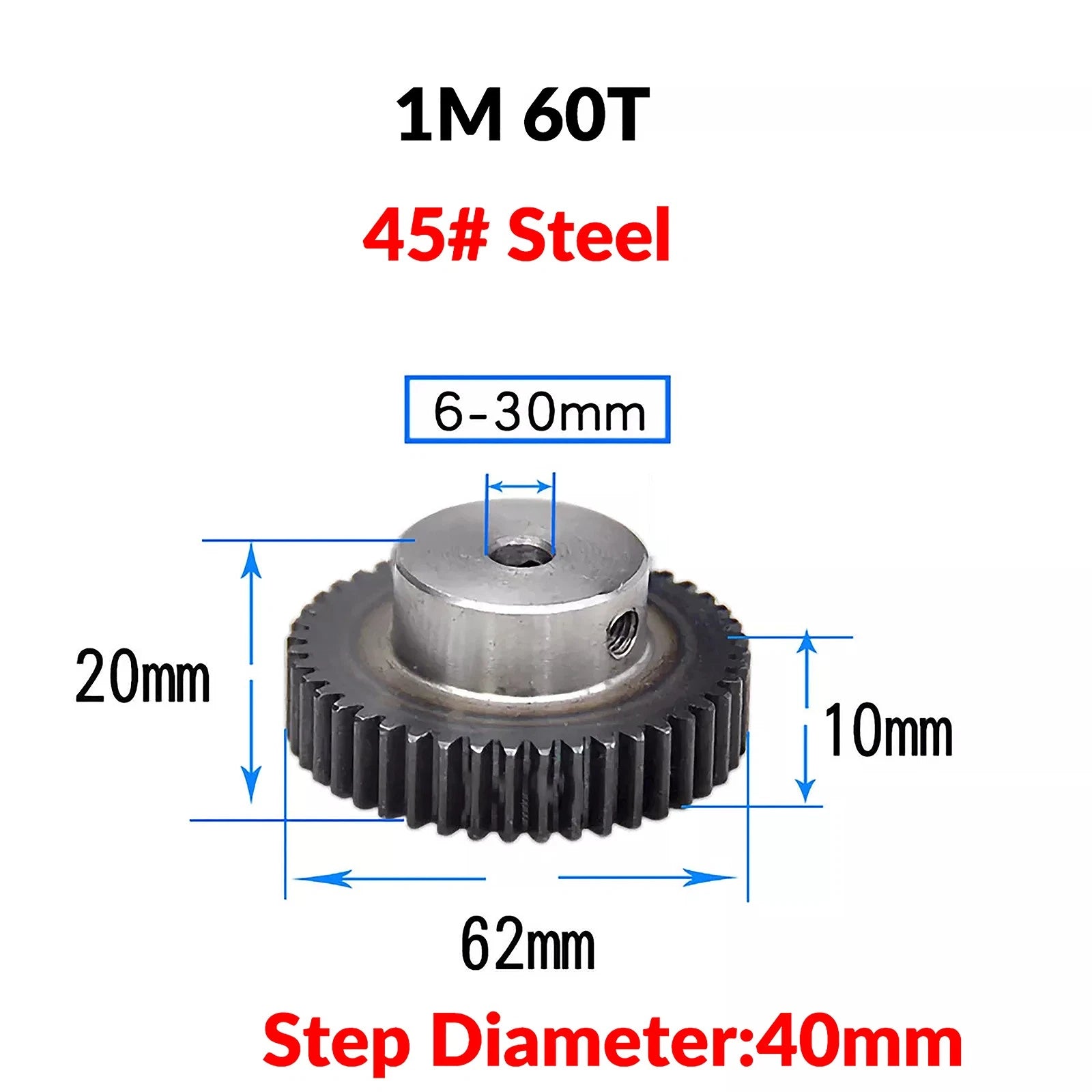
Mod 1 45# Steel Pinion Gear Spur Gears 10-60 T 14-50mm Bore With Step Motor Gear

No reviews

Price:
Sale price$8.02 USD
Stock:
In stock (500 units), ready to be shipped

Payment & Security

Ach Direct Debit Amazon American Express Apple Pay Bancontact BLIK Diners Club Discover EPS Google Pay iDEAL Wero JCB Maestro Mastercard Multibanco MobilePay PayPal Przelewy24 Shop Pay Twint Union Pay USDC Visa

Your payment information is processed securely. We do not store credit card details nor have access to your credit card information.

Limited Offer — Spend More, Save More
Spend $55+
Save $5
Spend $100+
Save $10
Spend $200+
Save $25
HomeDIYer DIY Expert Support

DIY Expert Support

Get fitment advice & recommendations

Mon–Fri  8:30 AM – 8:00 PM
24-Hour Fast Ship
Arrives in 3–14 Days
Worldwide Shipping
30-Day Returns
1 tree planted with every purchase

Description

Mod 1 45# Steel Pinion Spur Gear — Precision-Cut for Motor Shaft Drives

When a loose or undersized gear causes backlash, missed steps, or premature wear in your CNC router, 3D printer, or robotic arm, the root cause is almost always a mismatch between the gear module and the shaft bore. These Mod 1 45# steel pinion spur gears are engineered for makers, automation engineers, and machine builders who need a drop-in replacement or a reliable upgrade for their drive train.

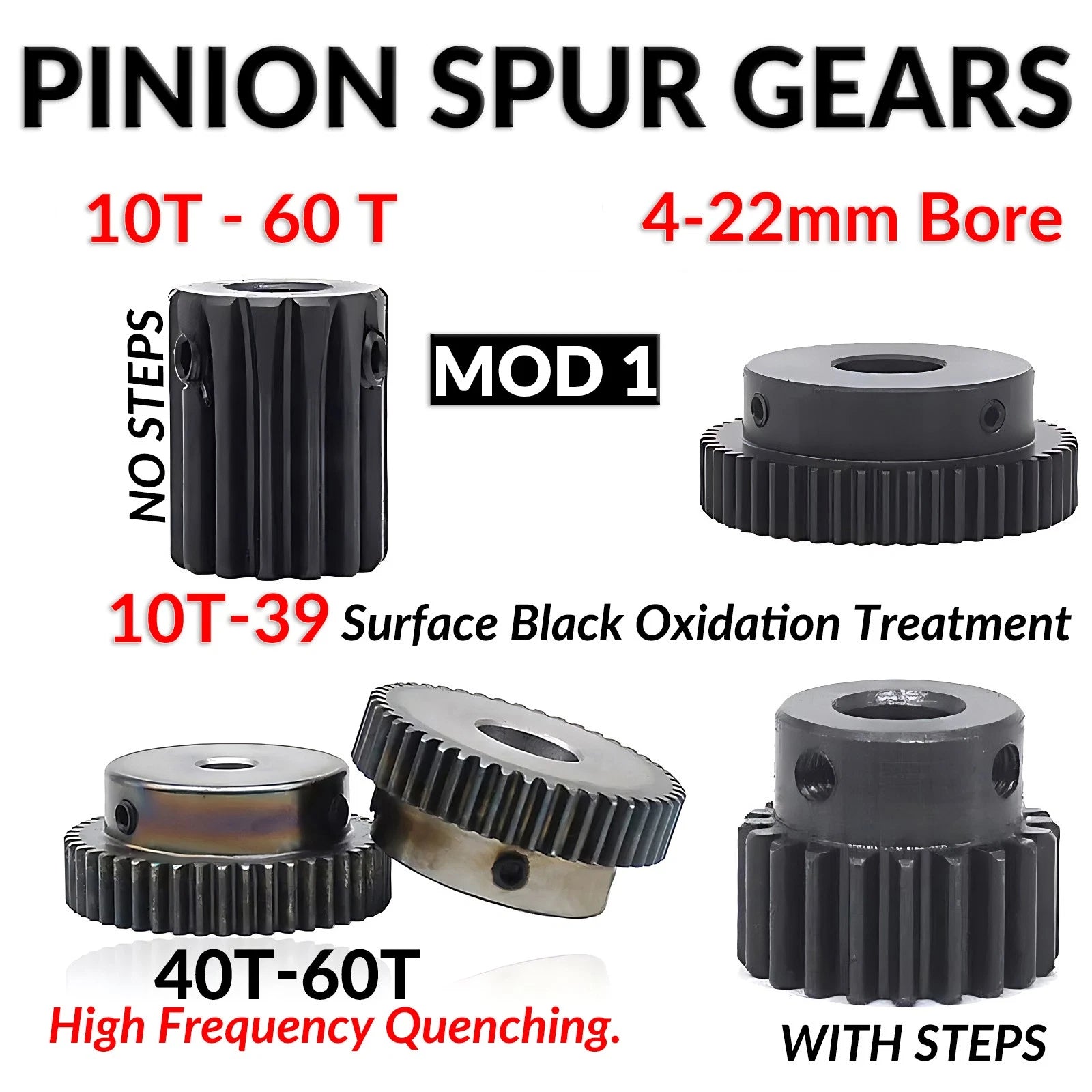
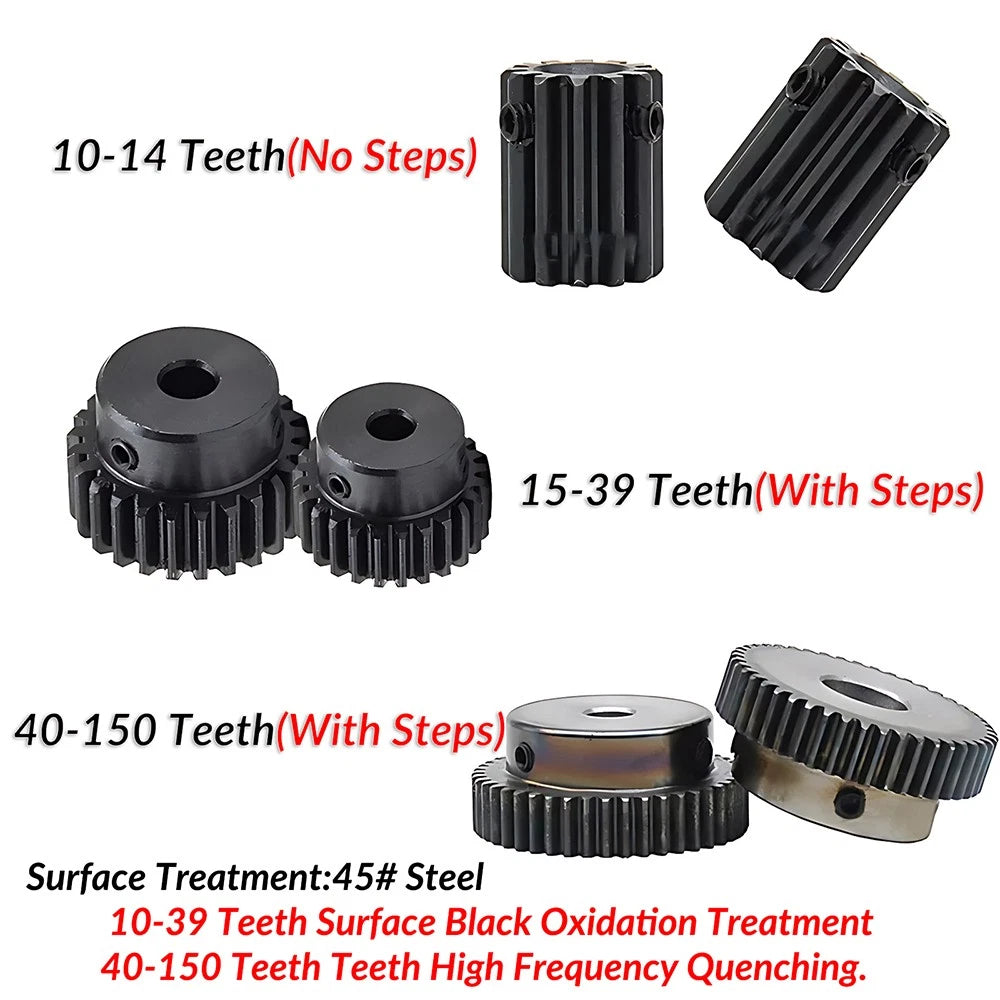
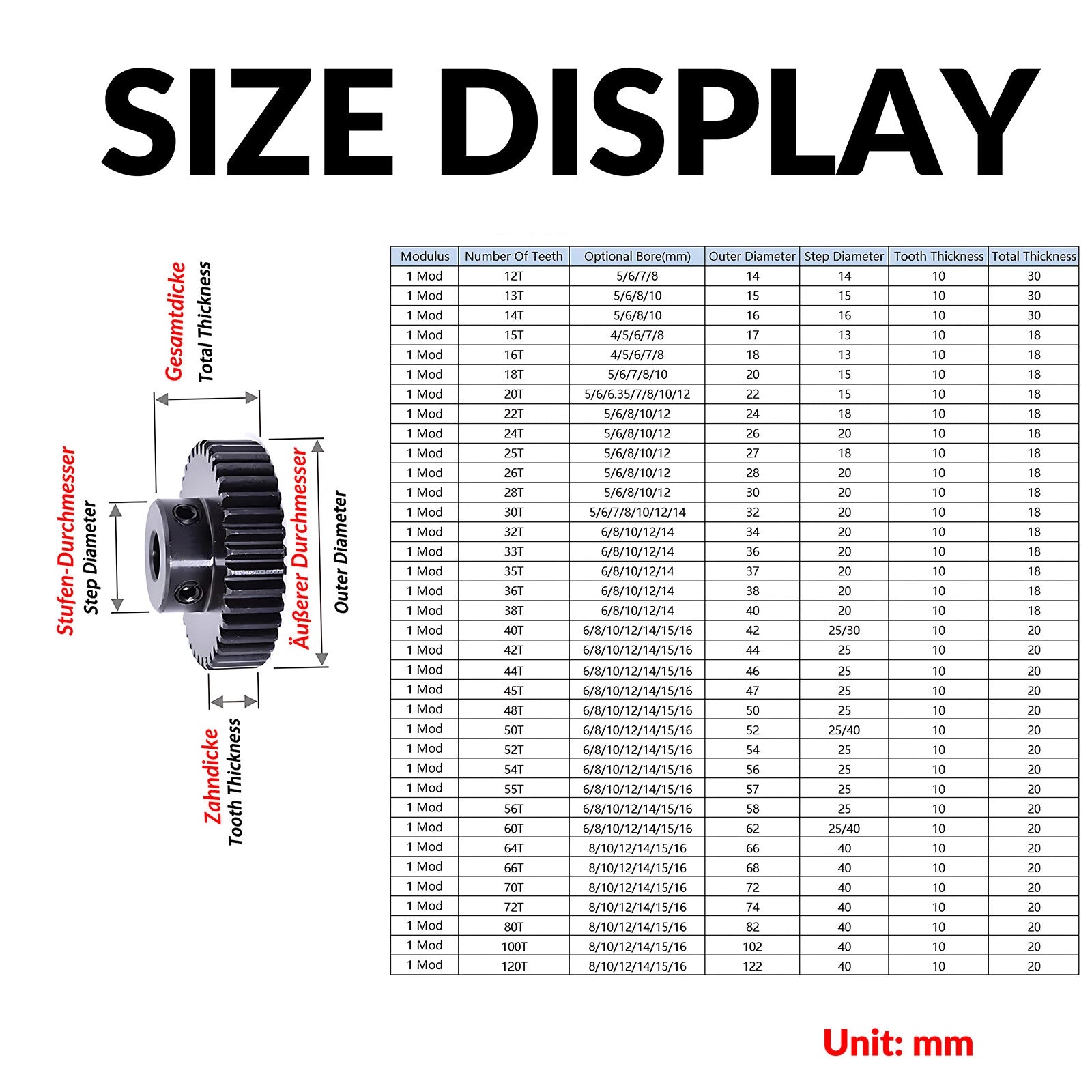
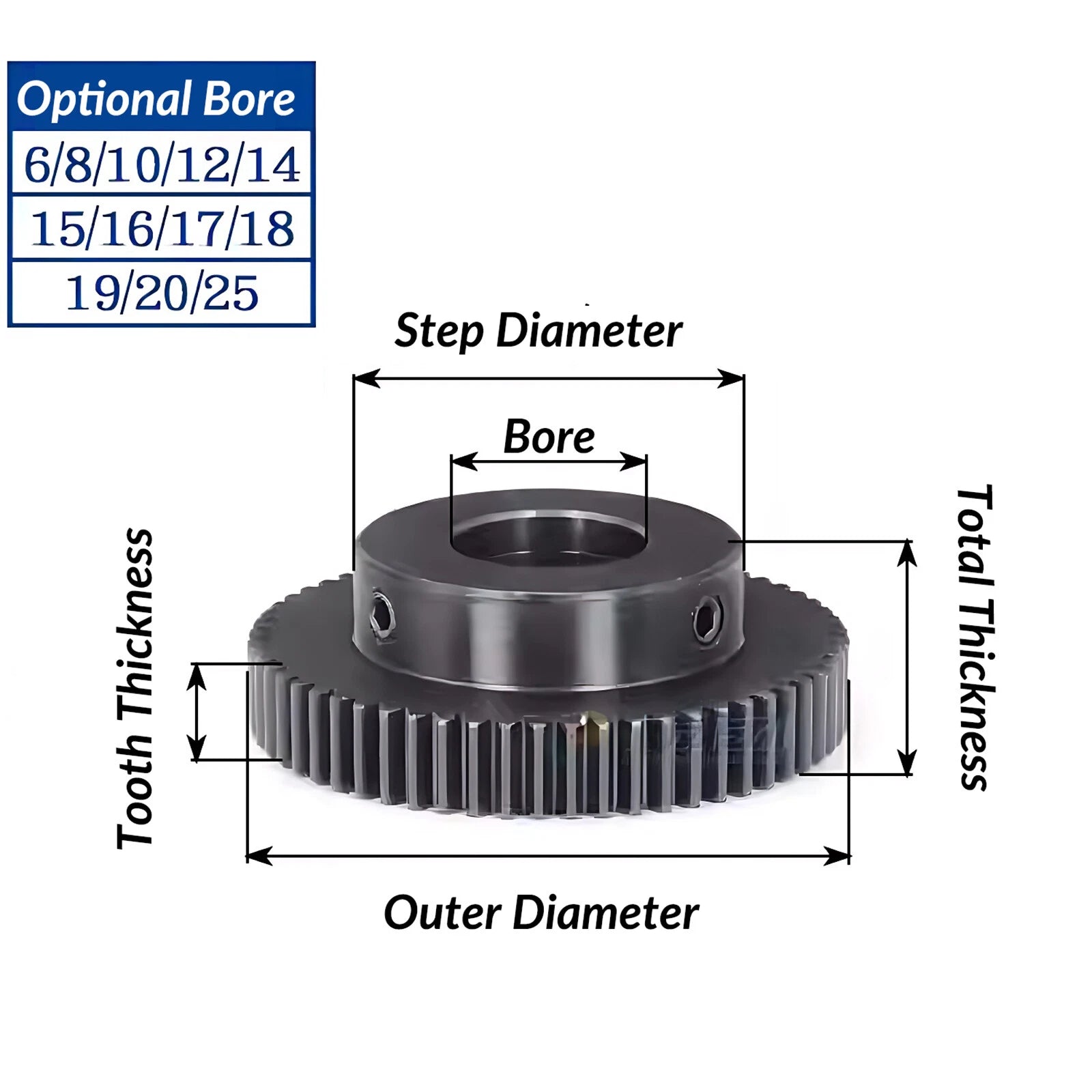
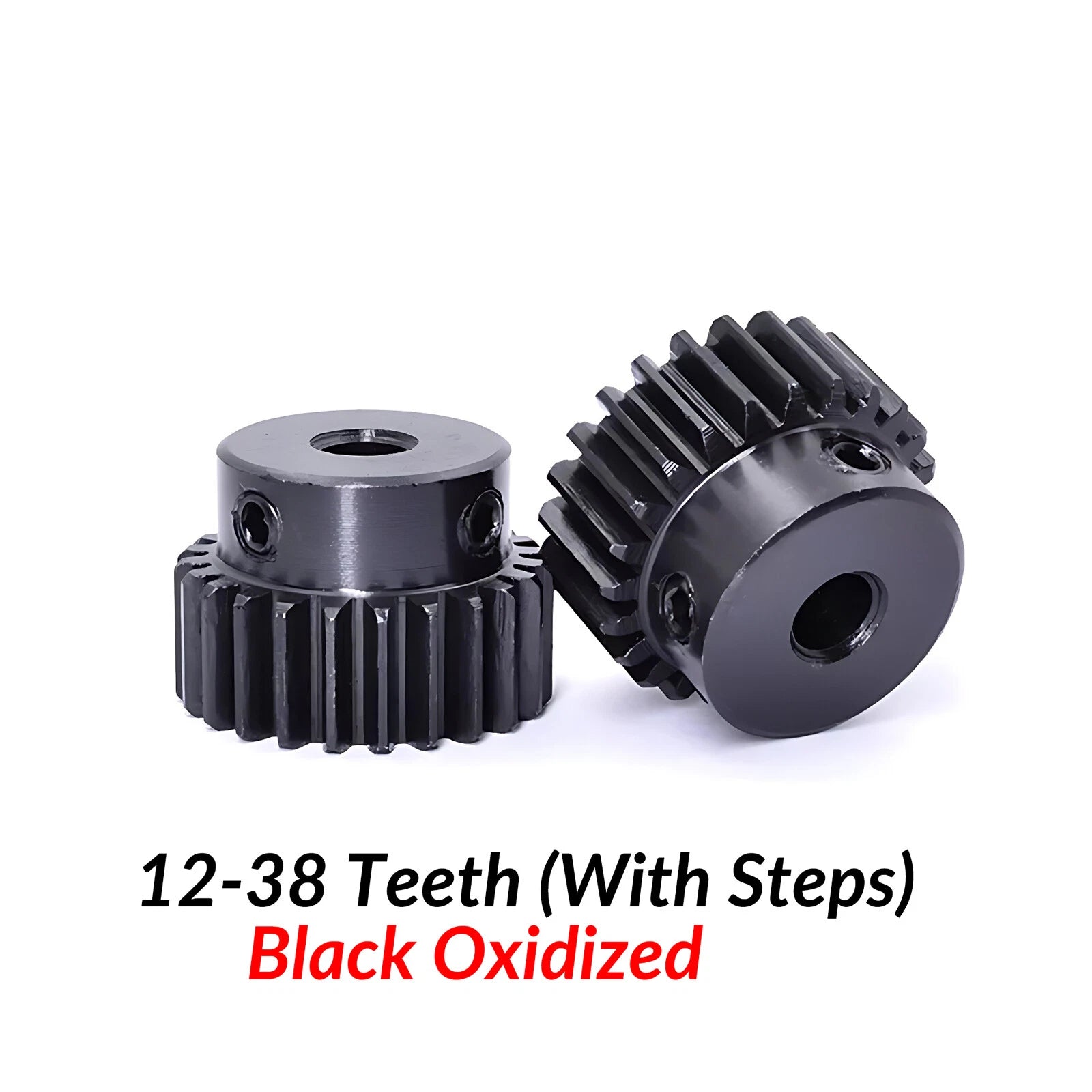
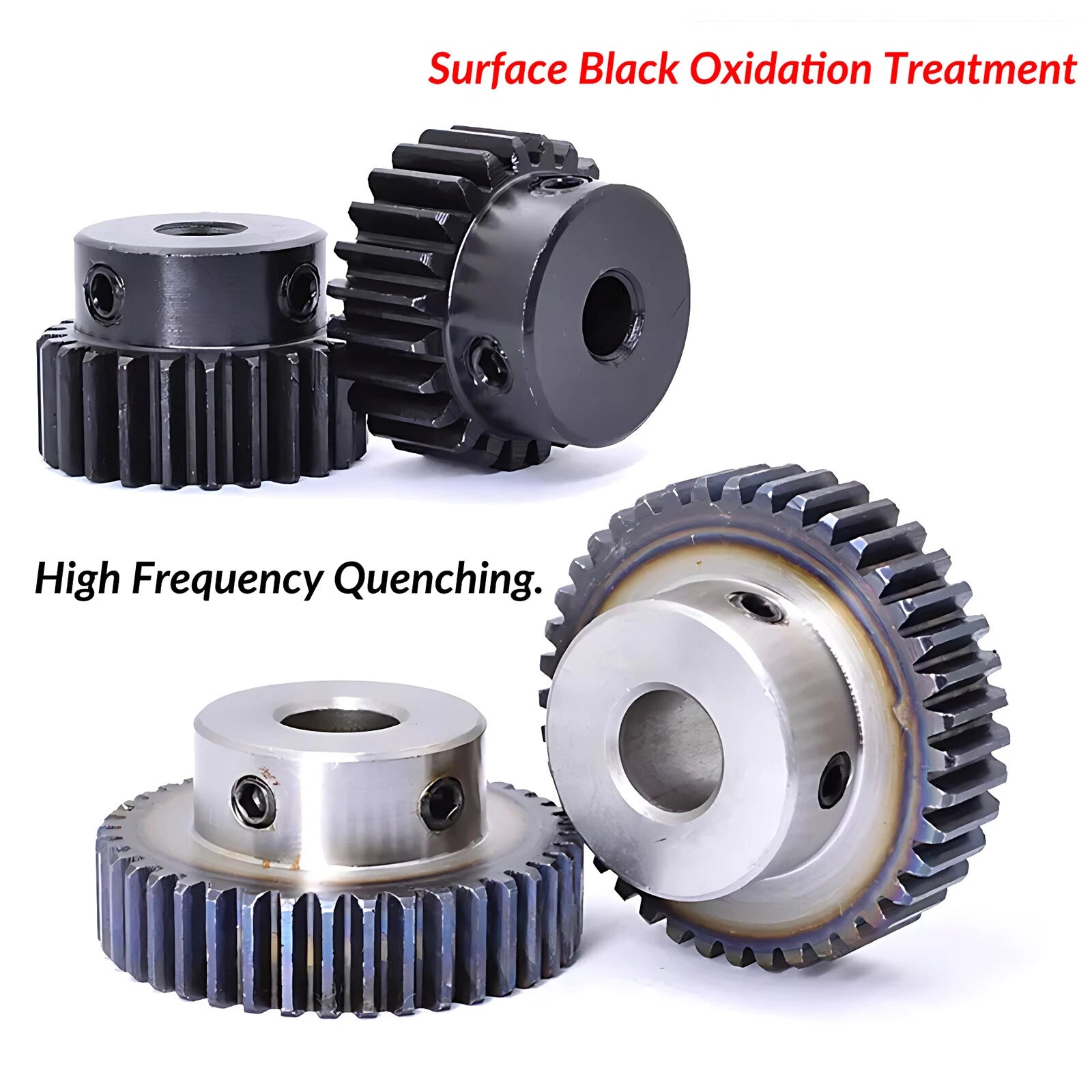
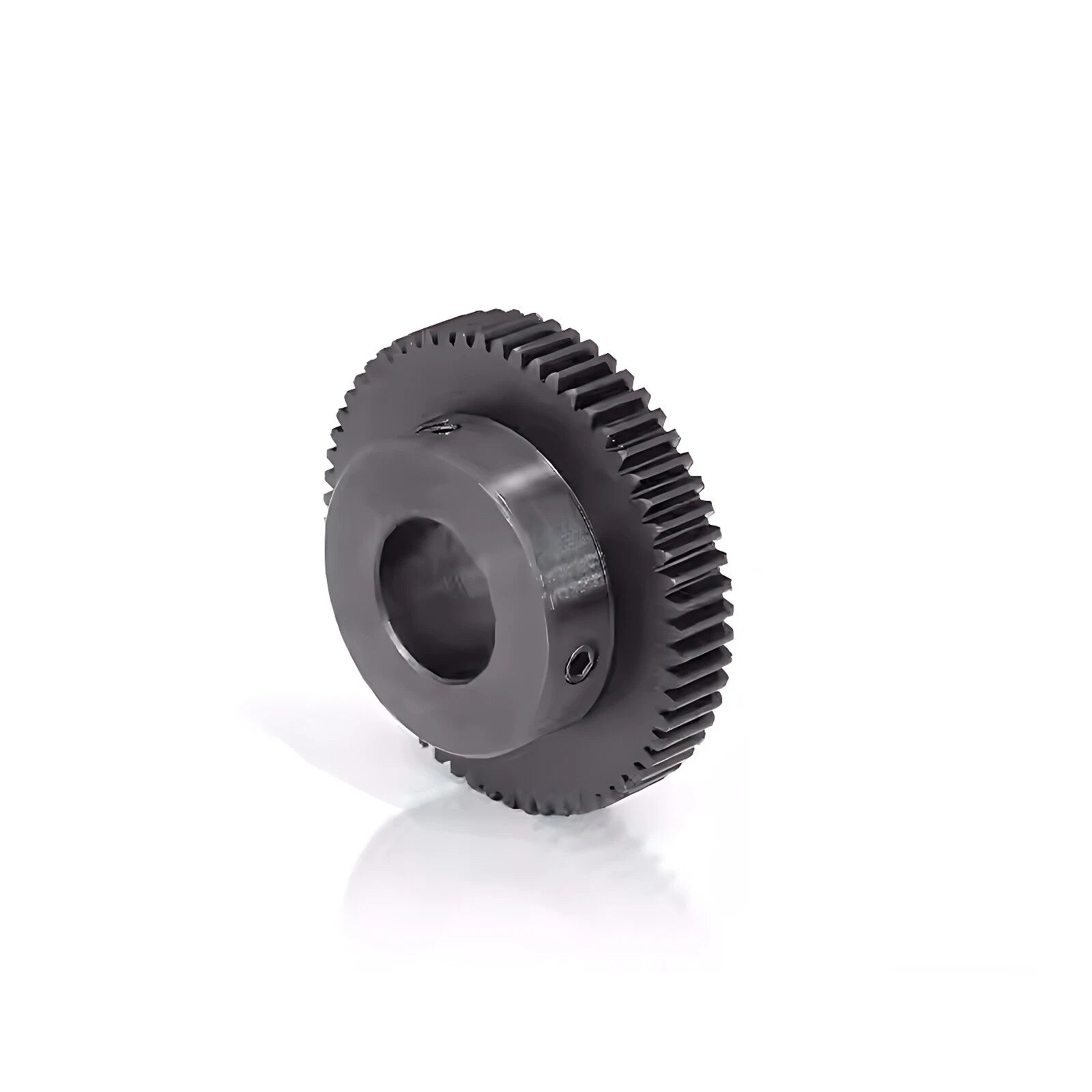
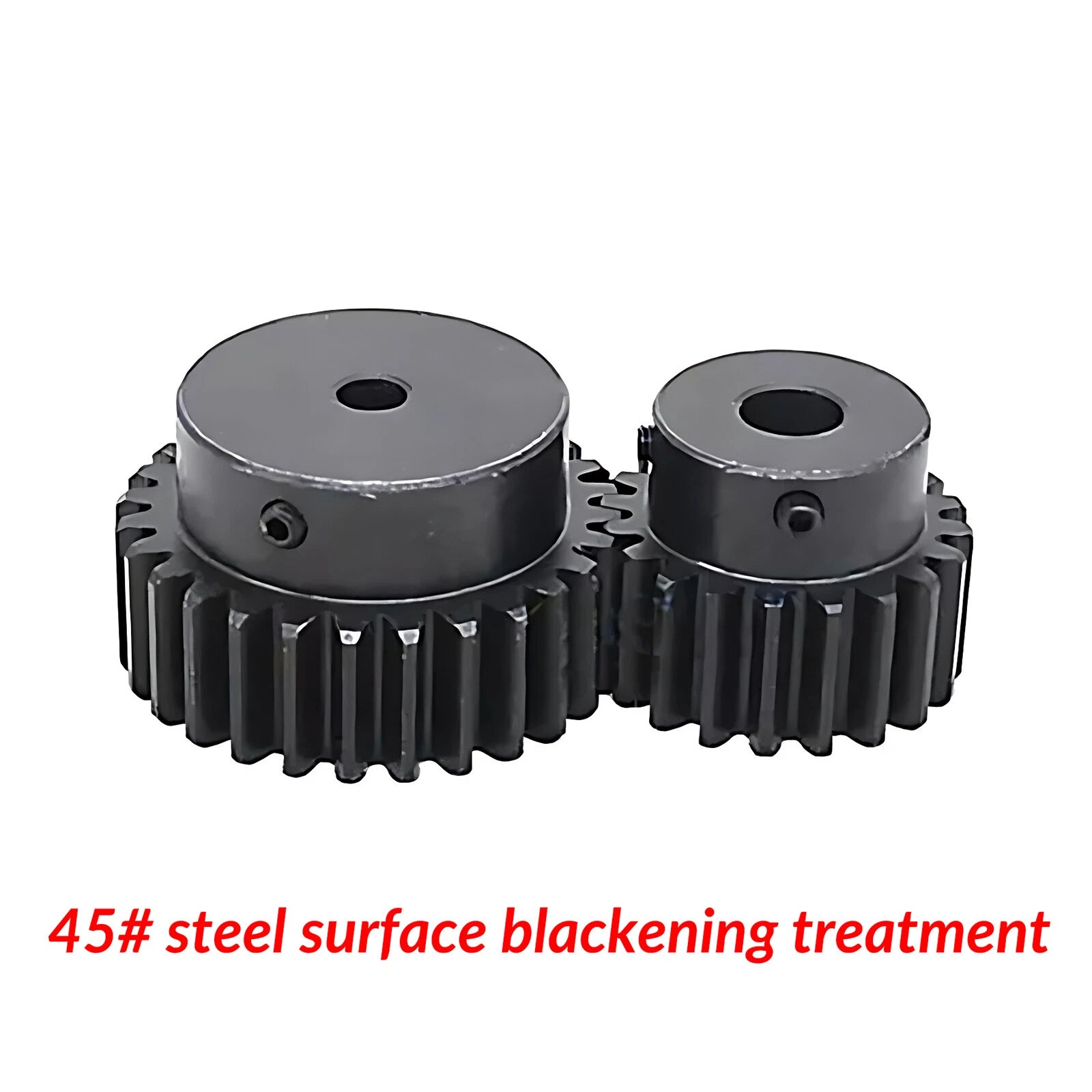
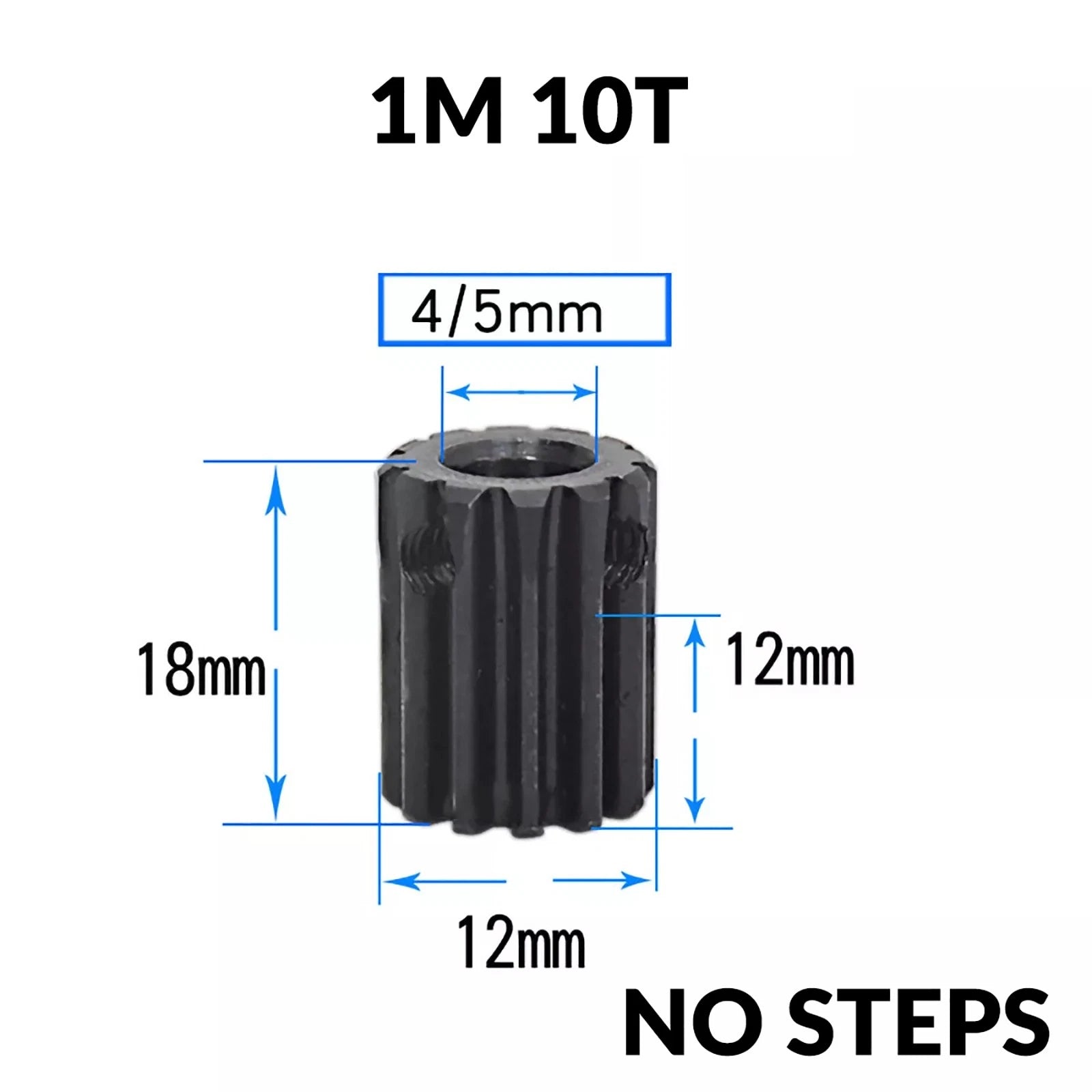
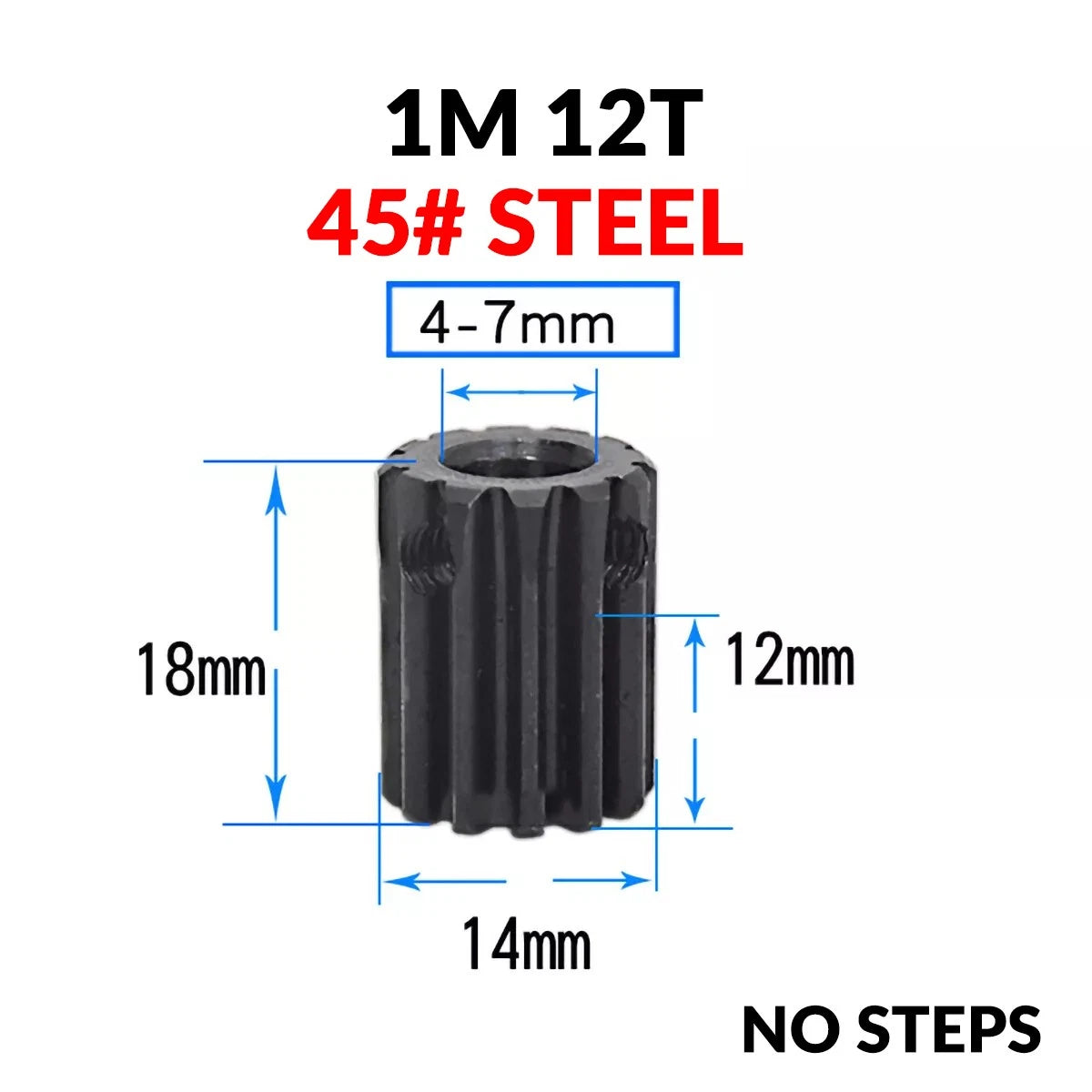
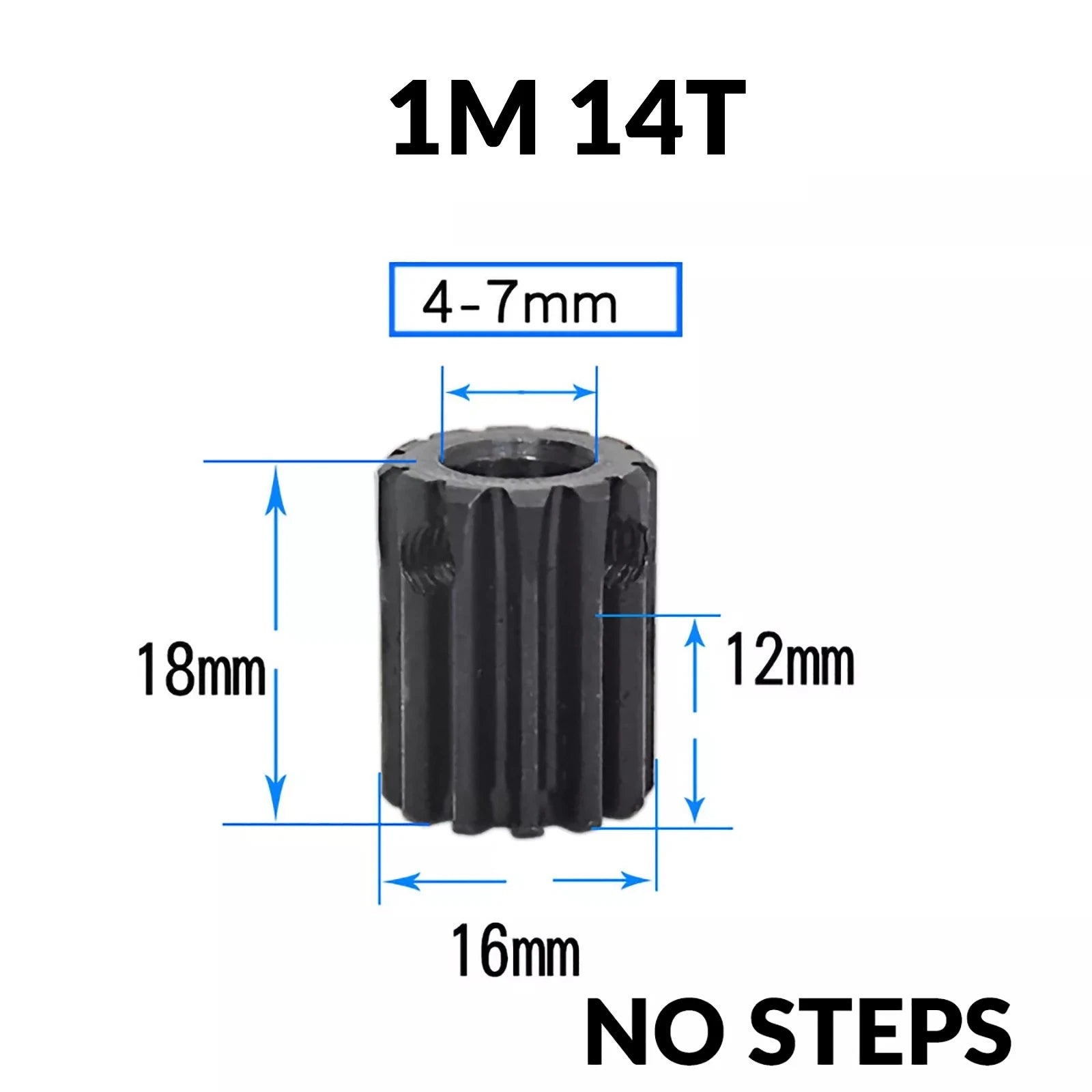
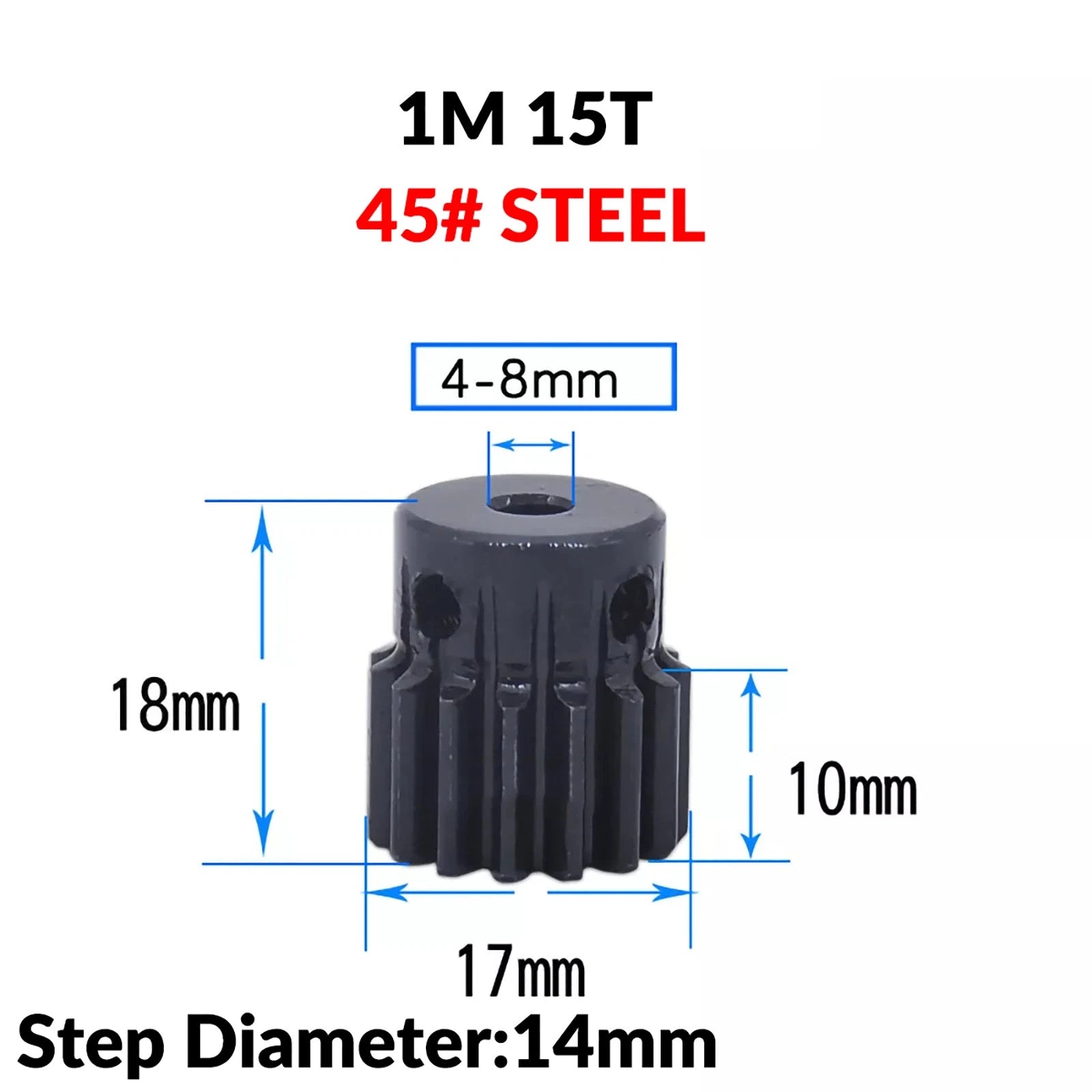
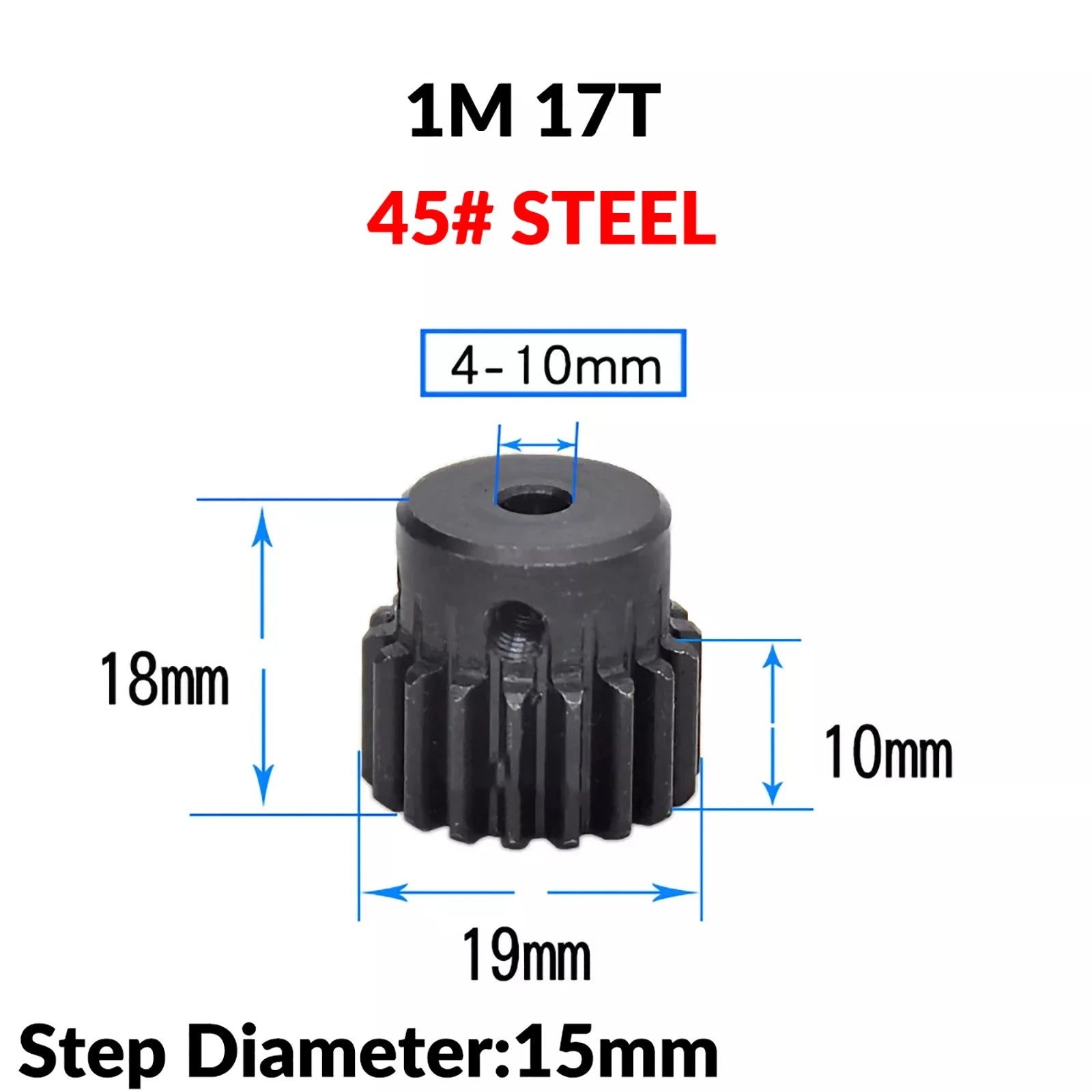
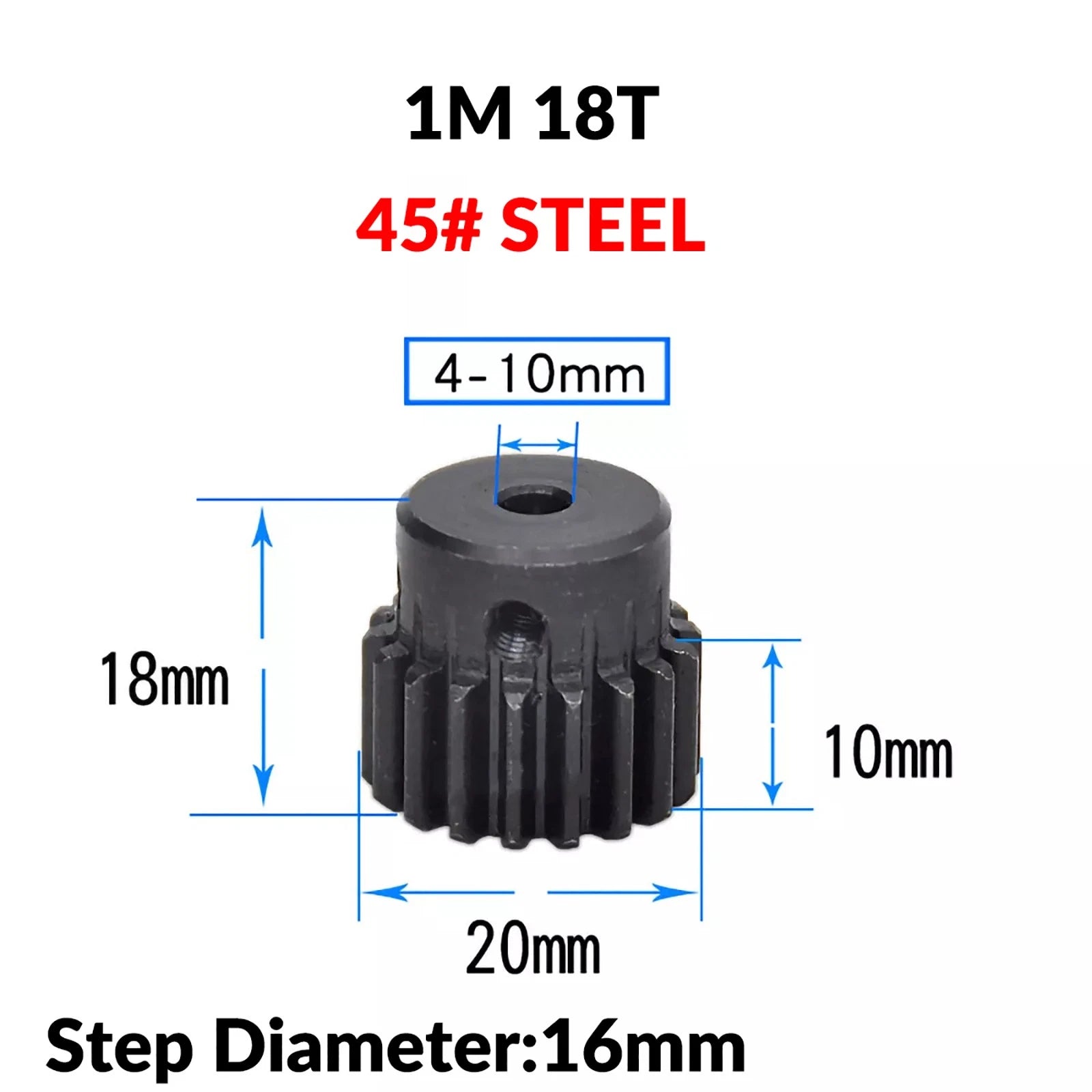
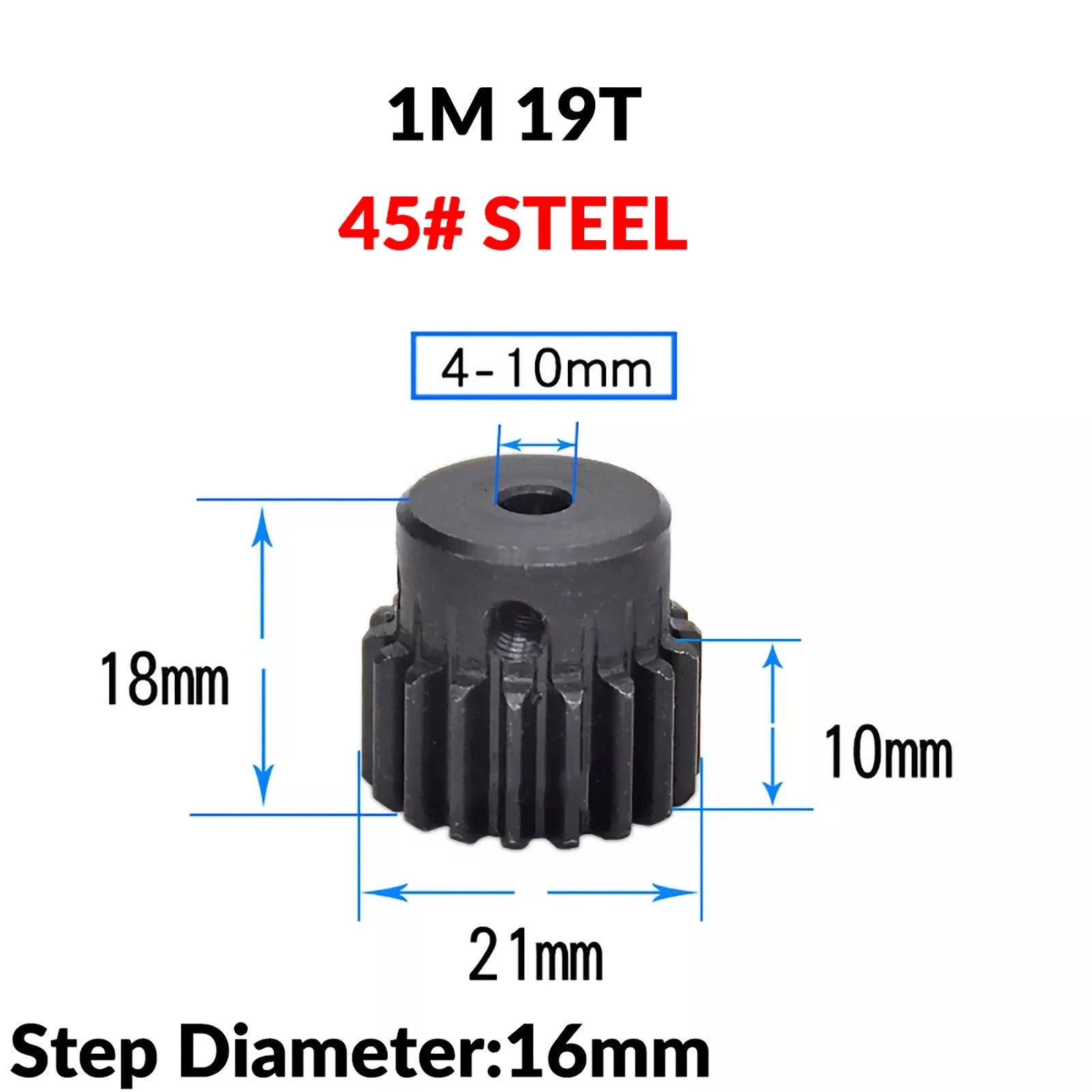
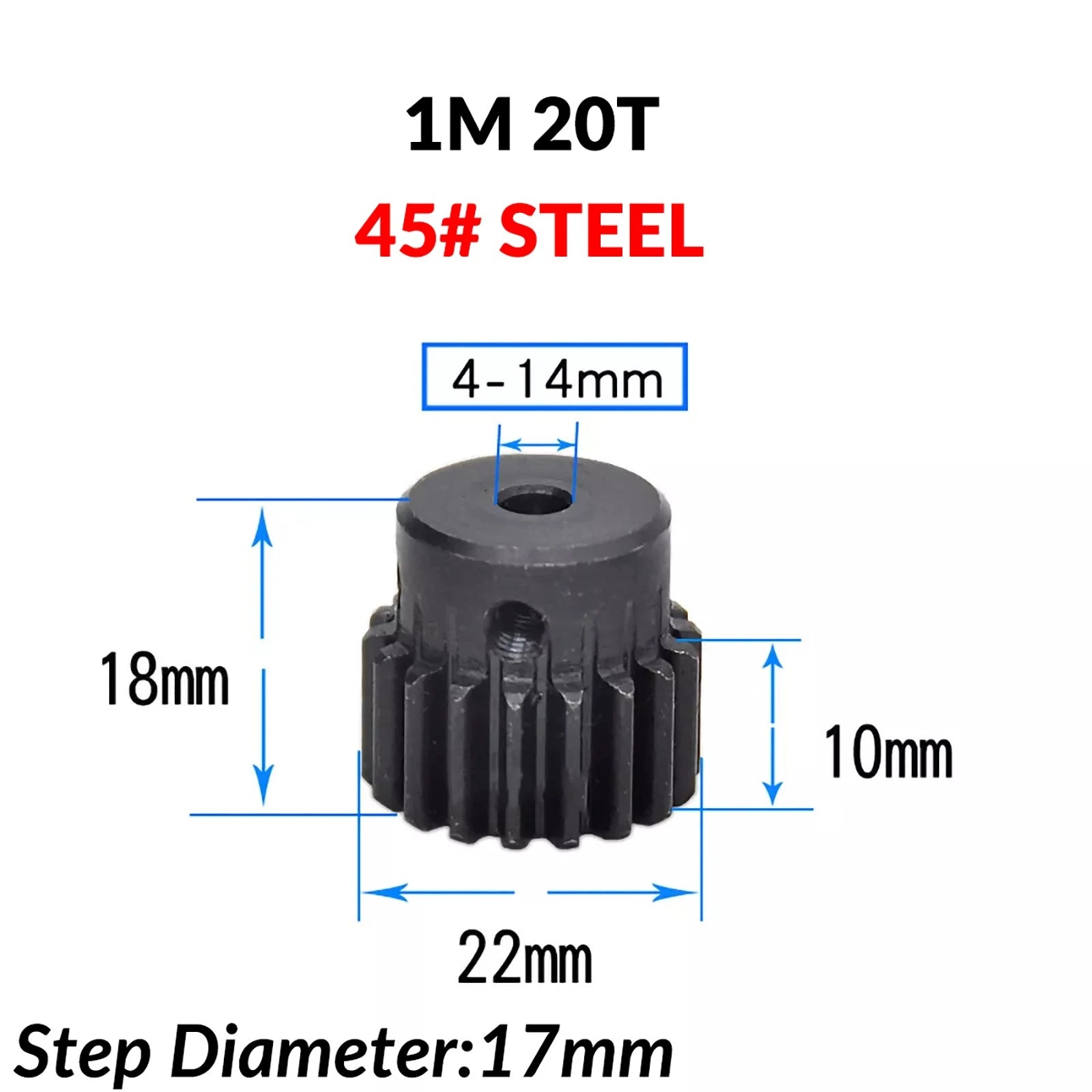
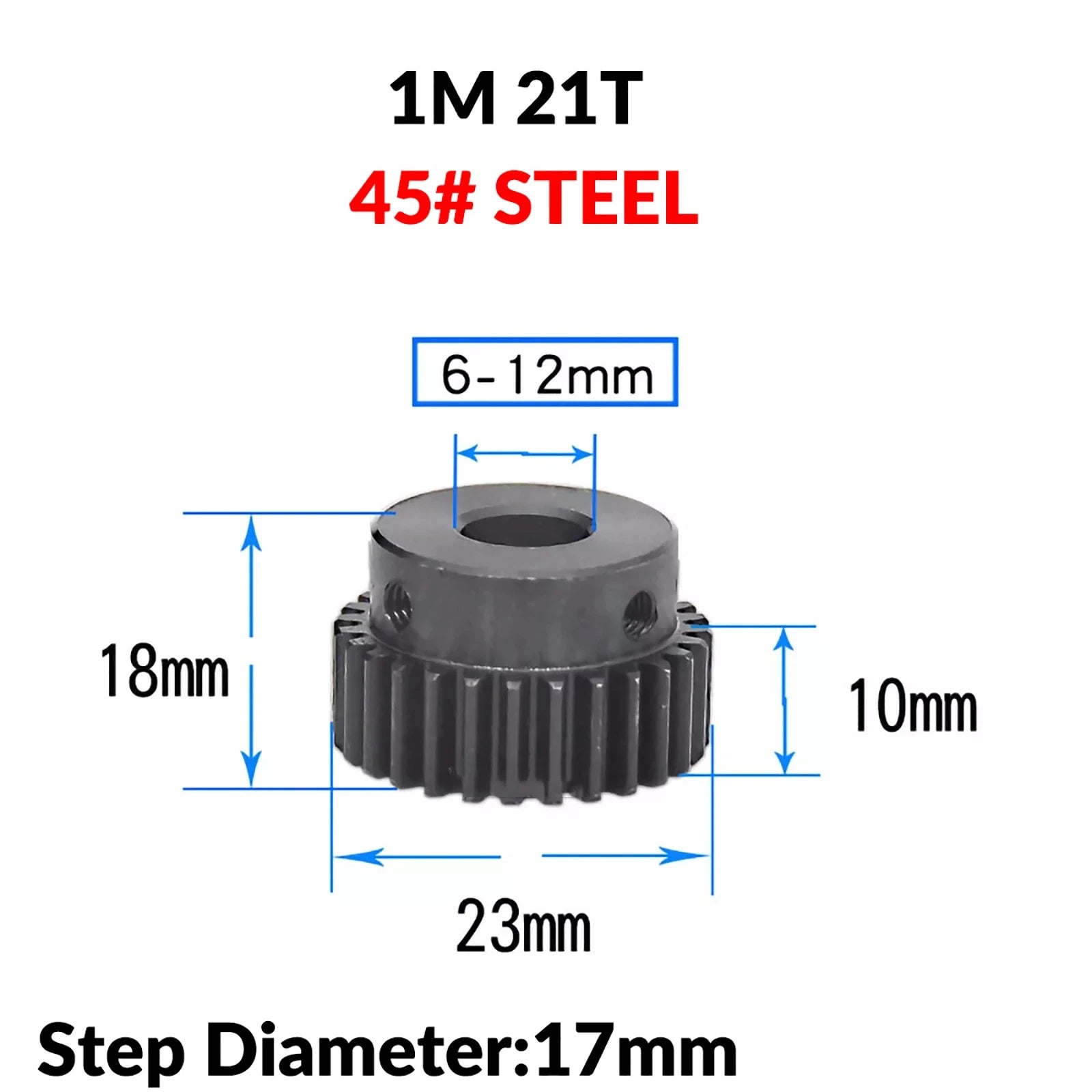
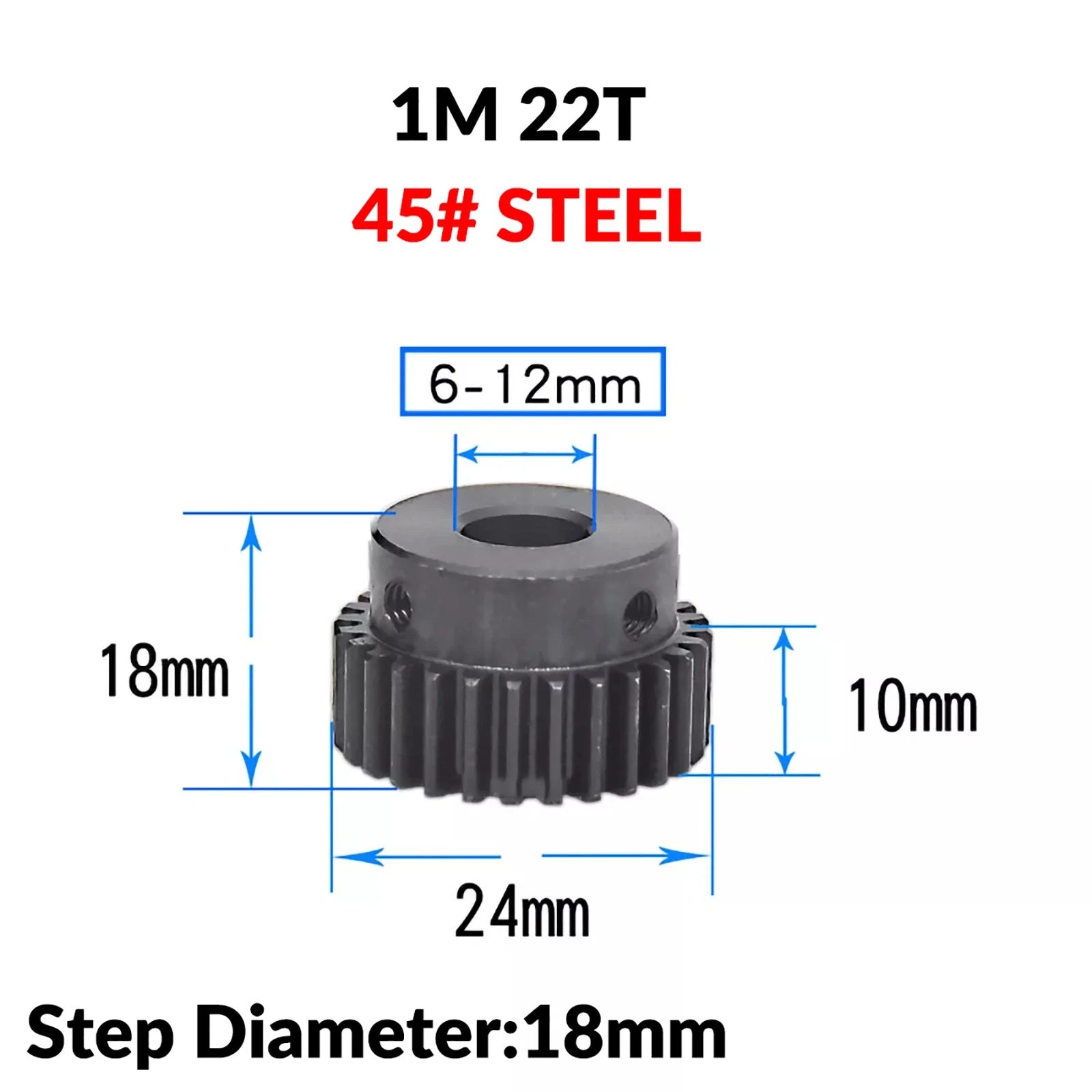
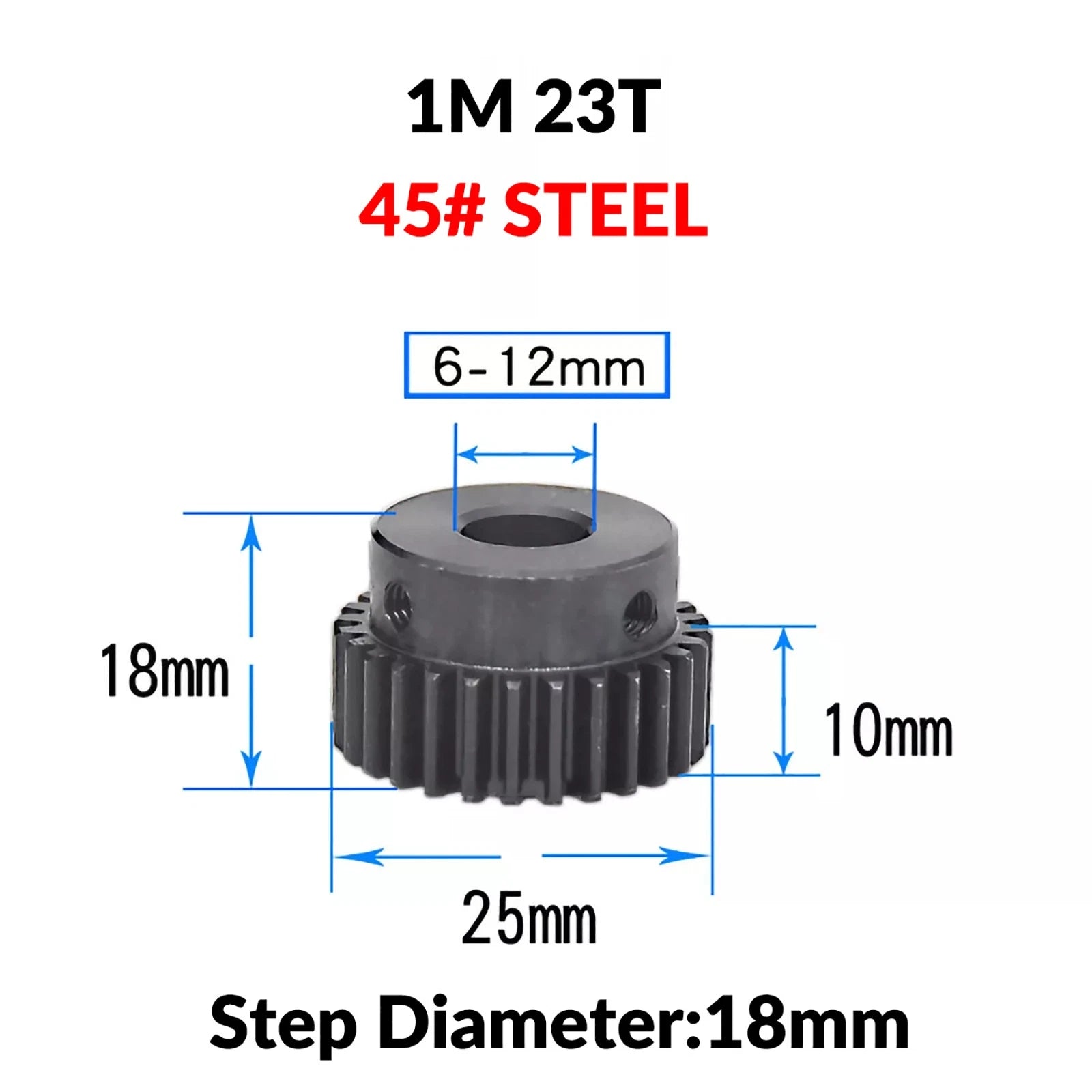
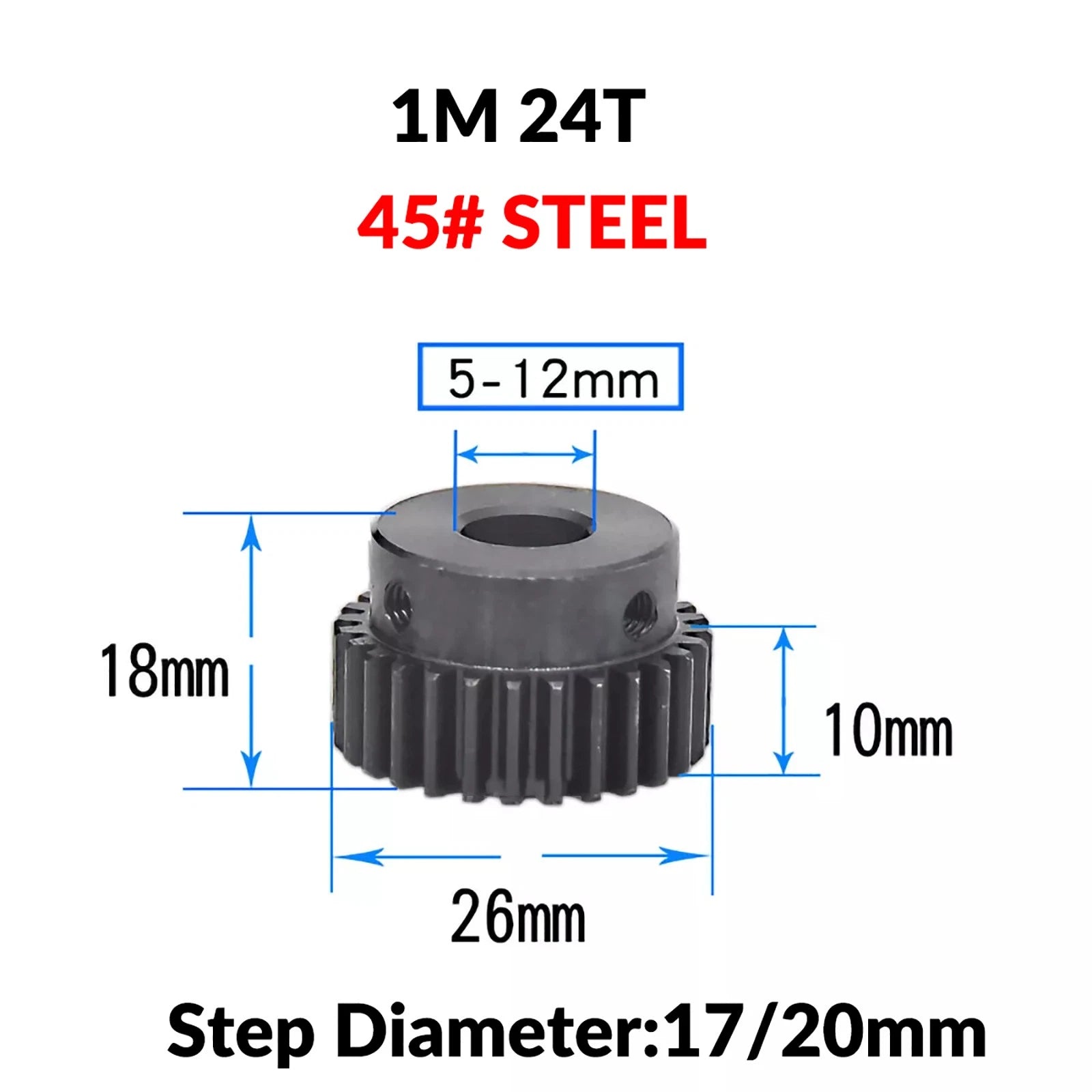
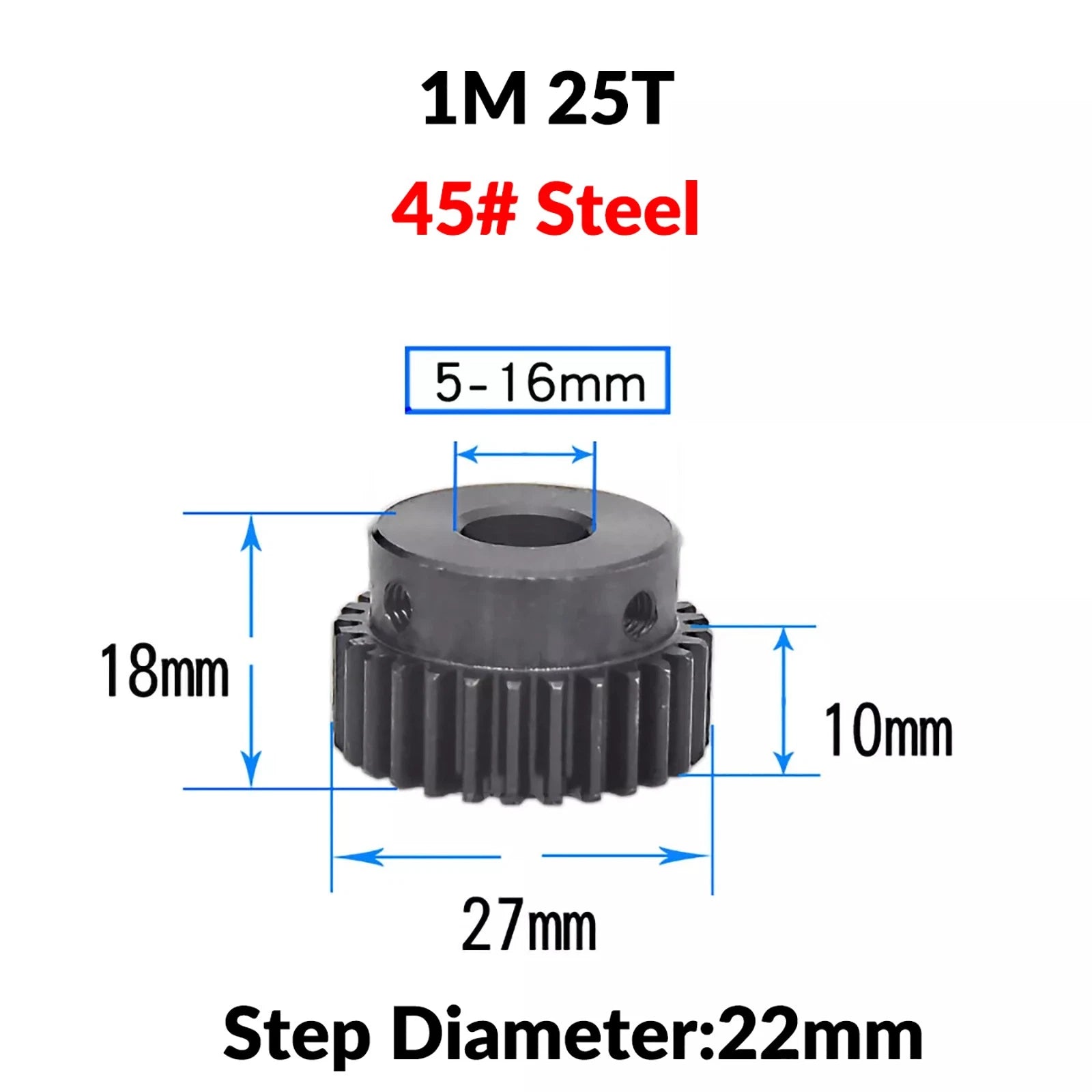
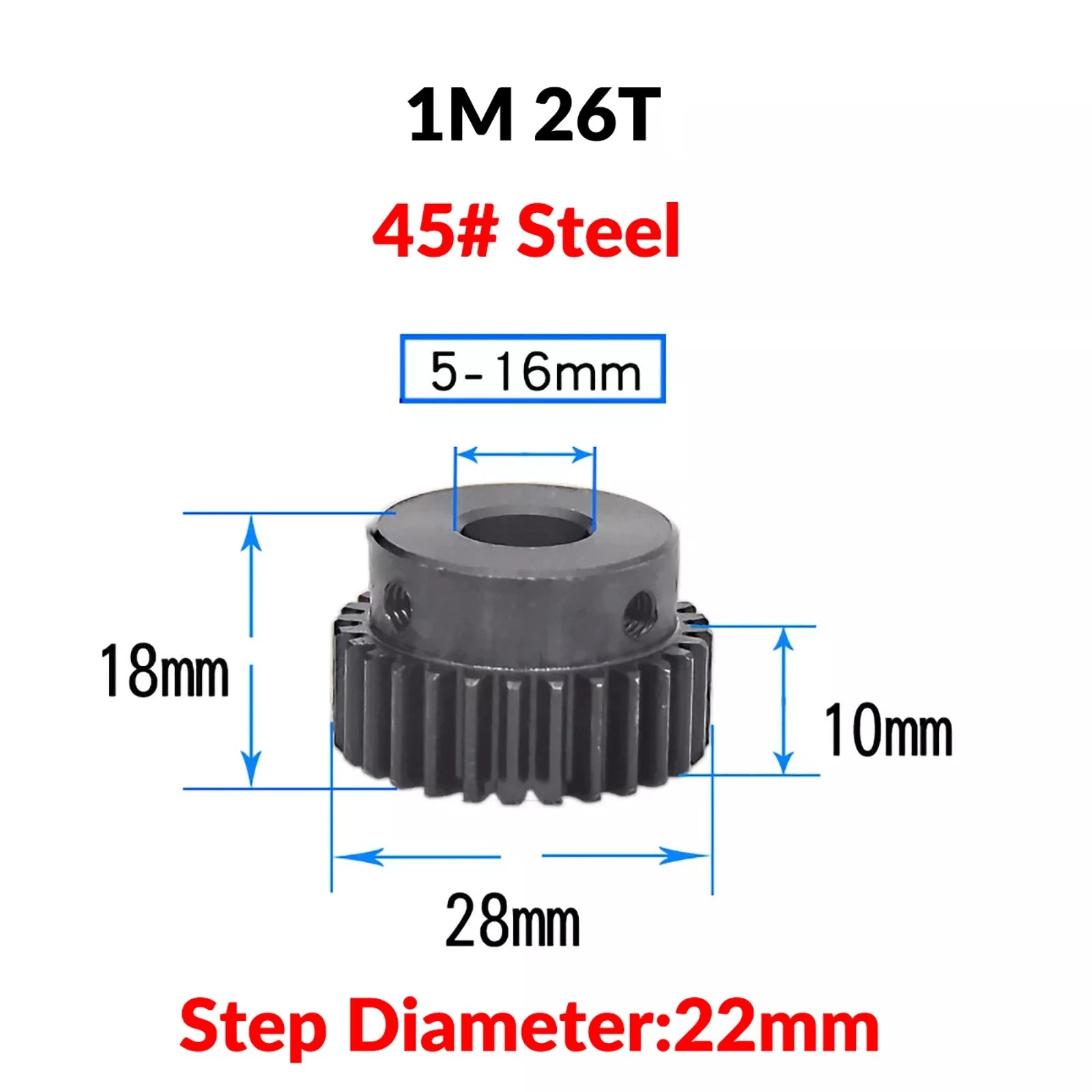
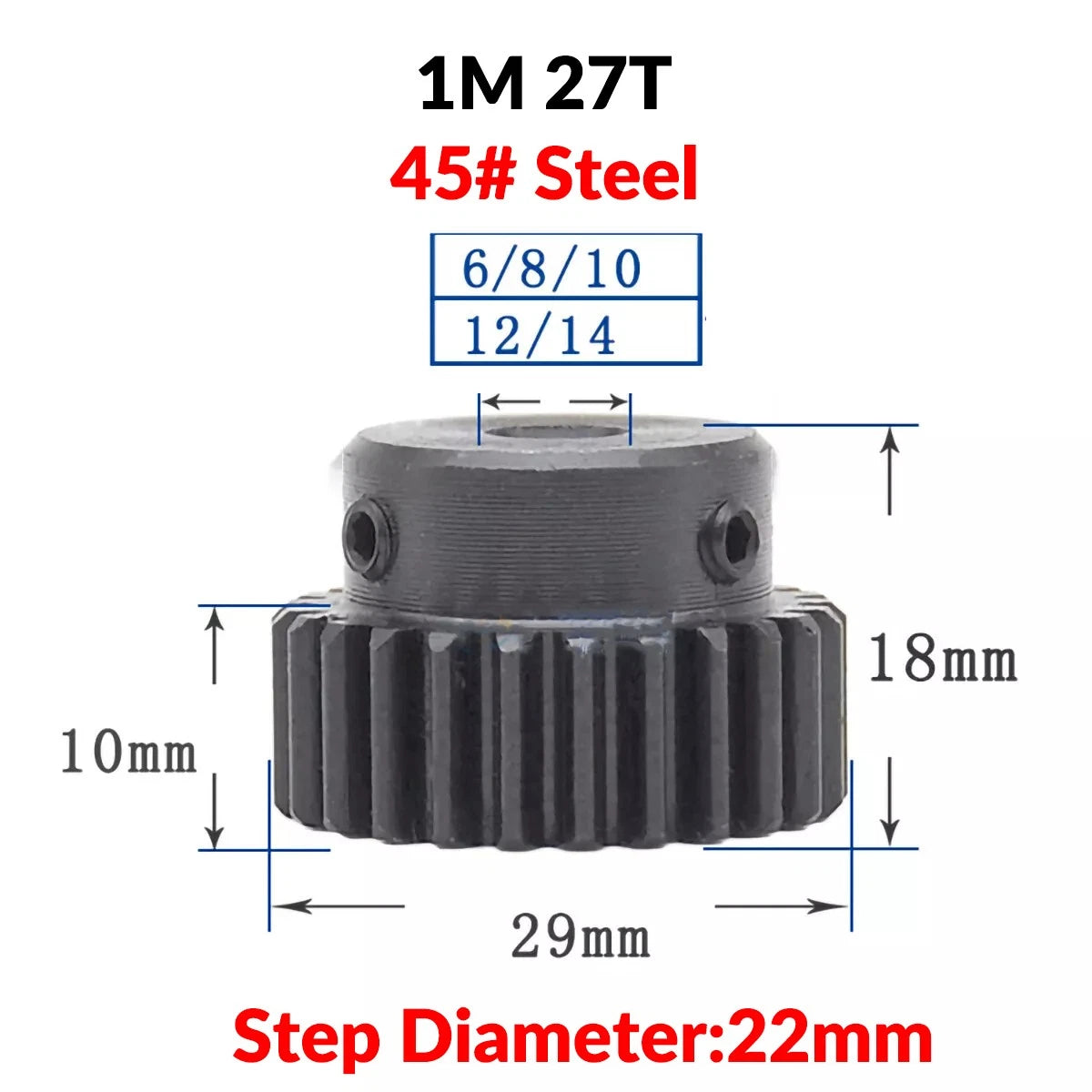
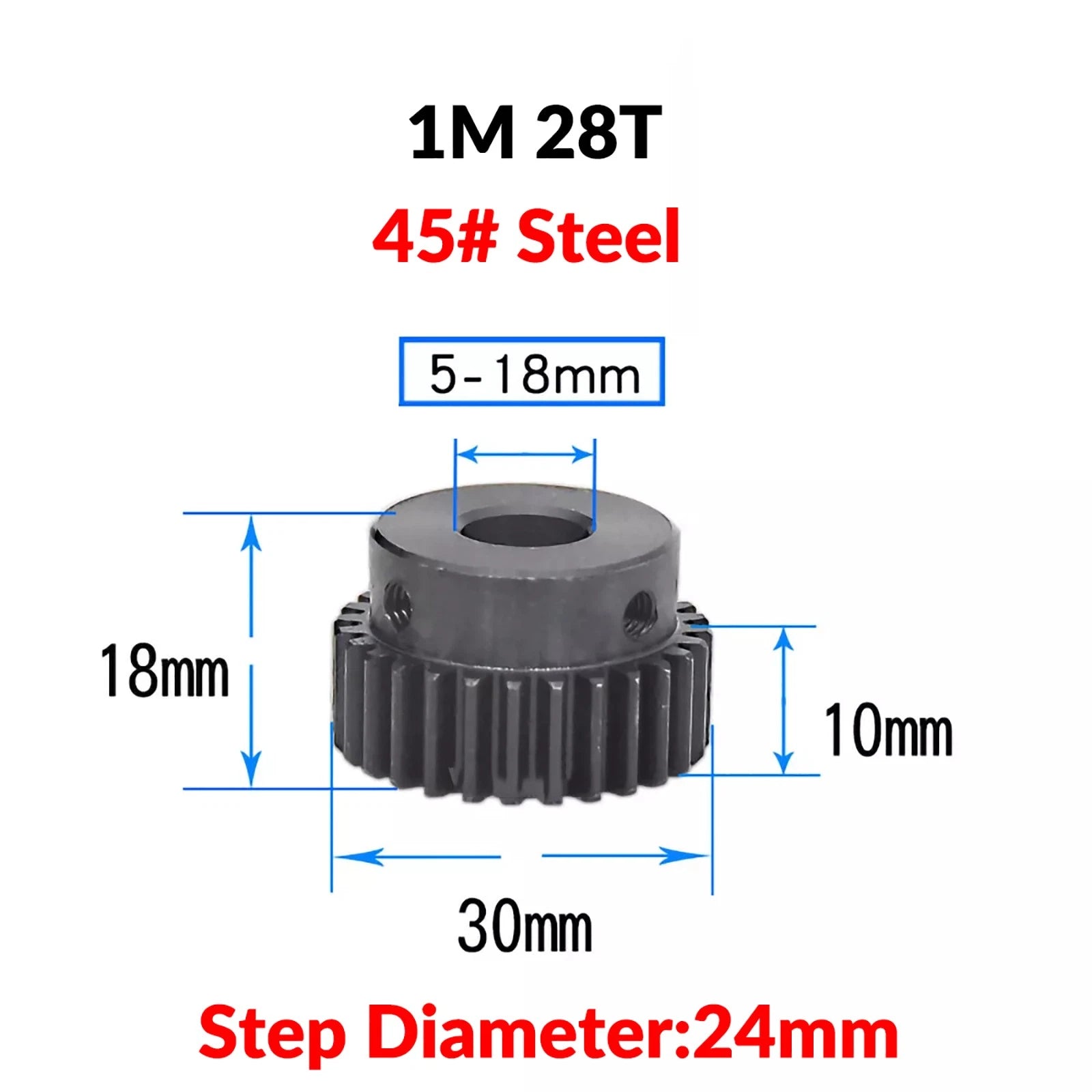
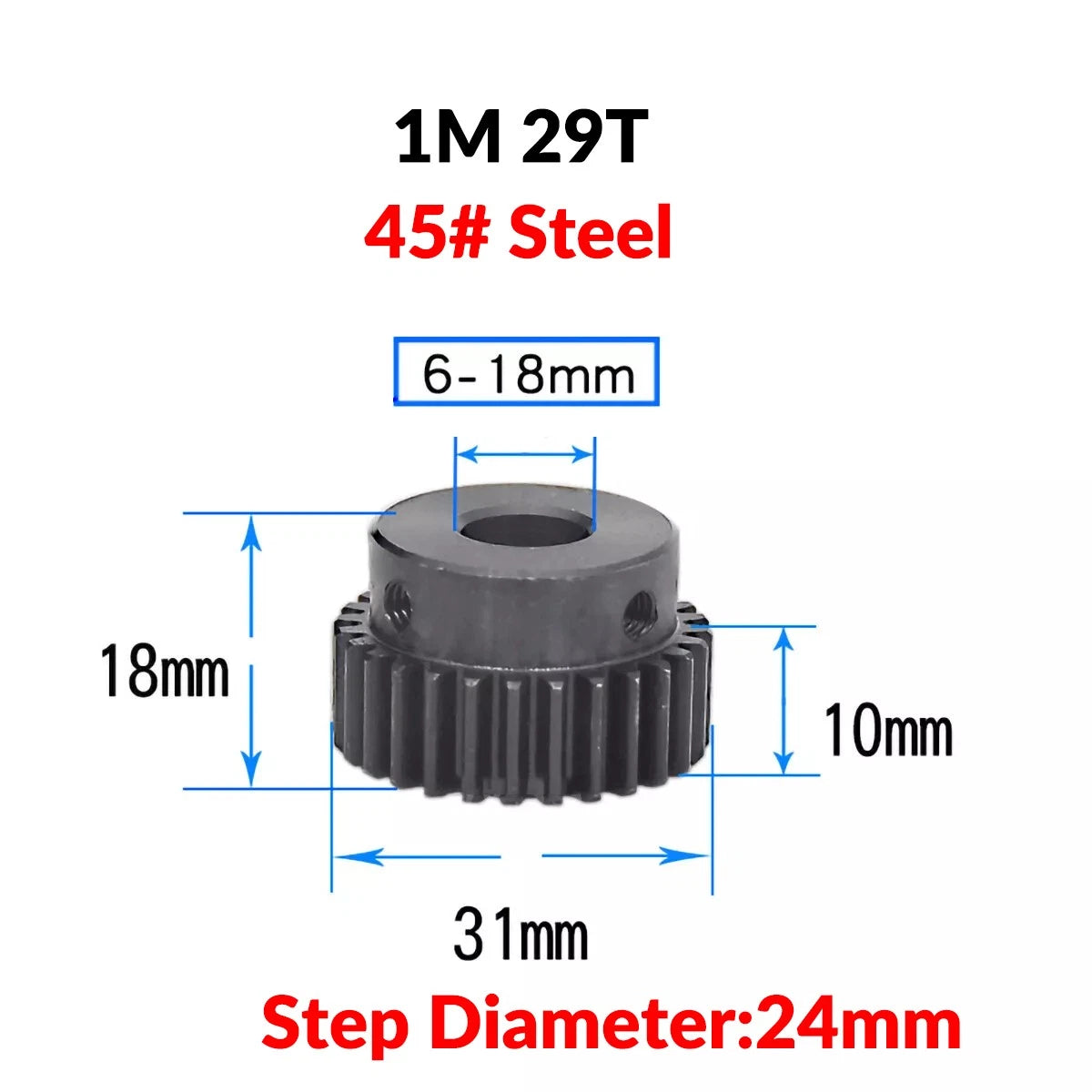
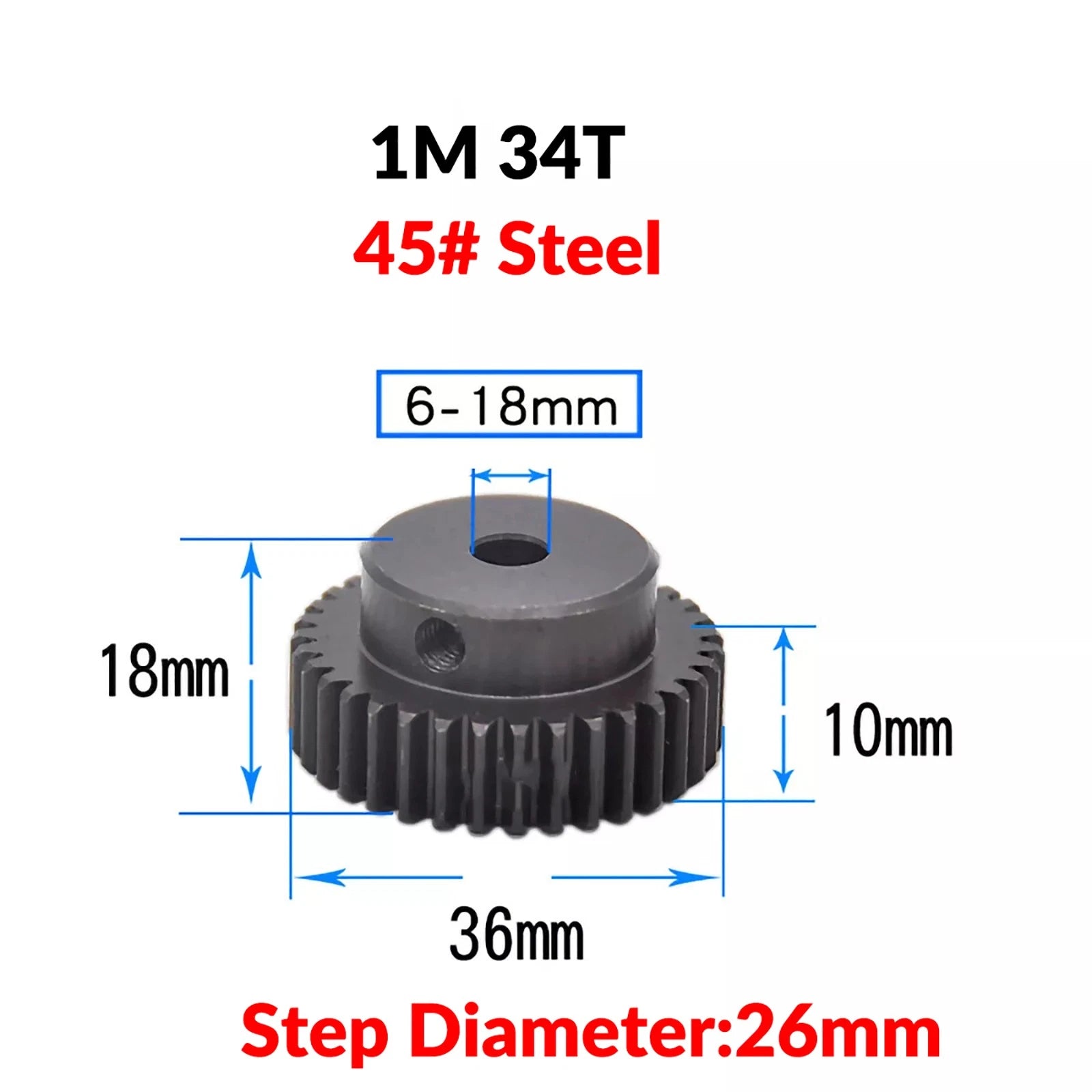
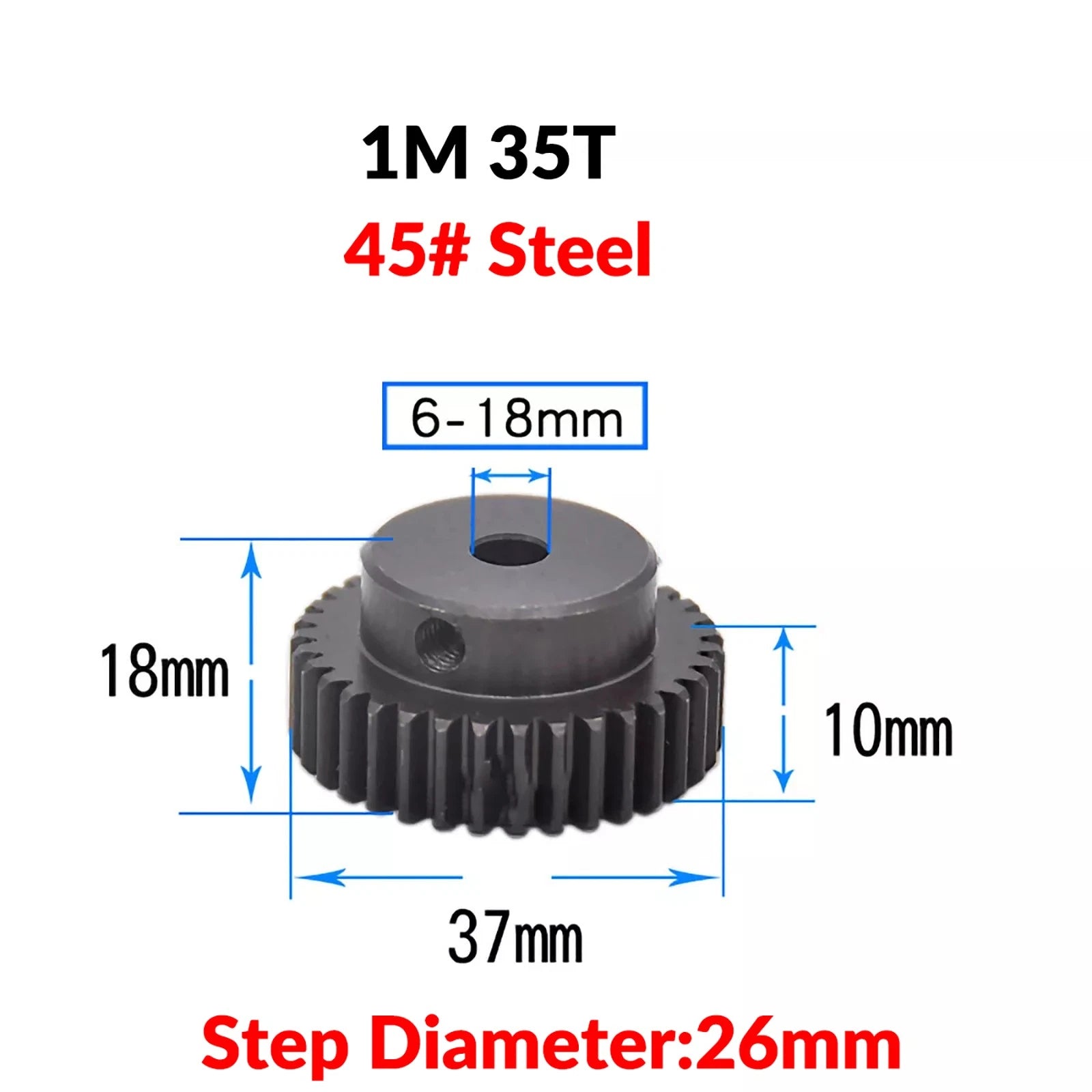
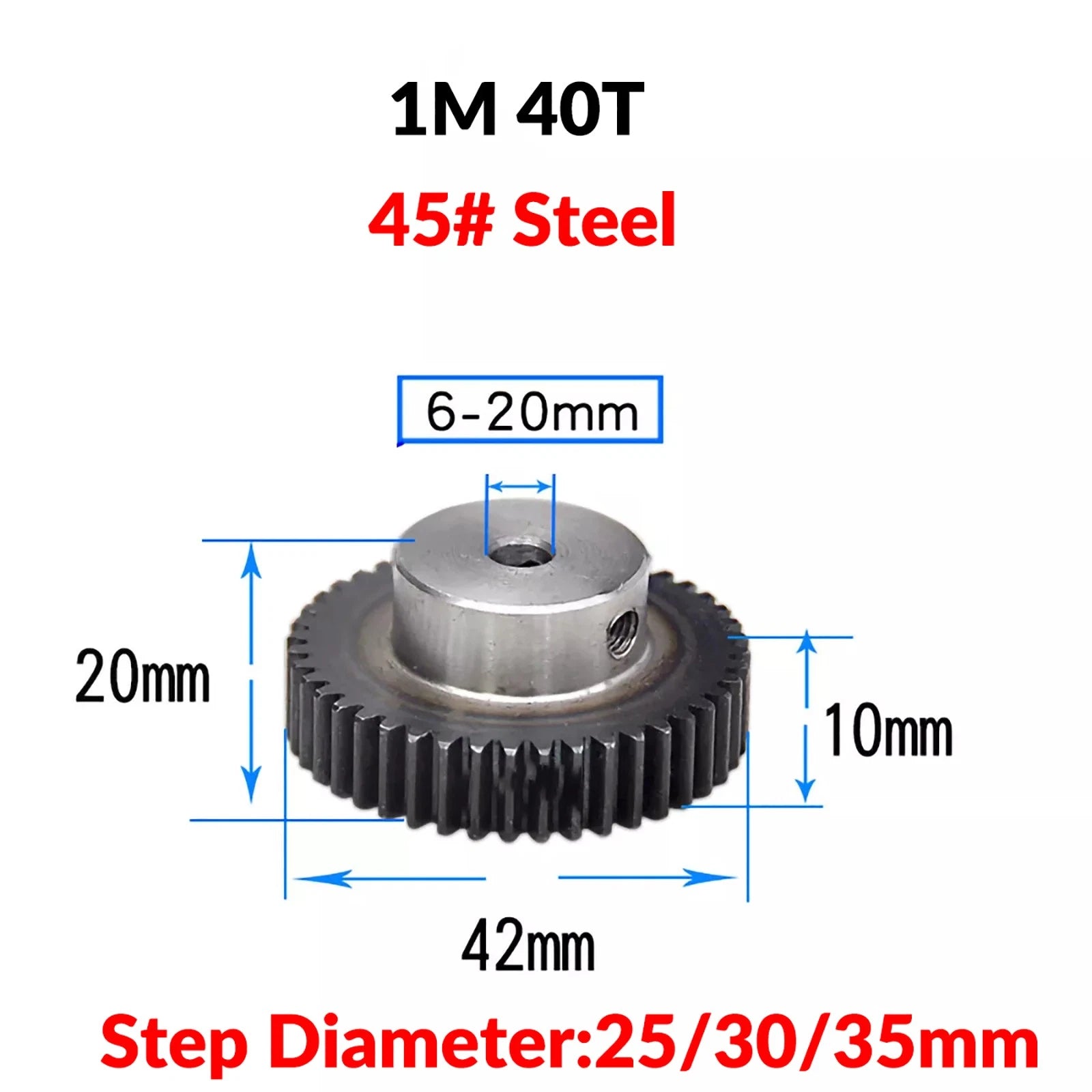
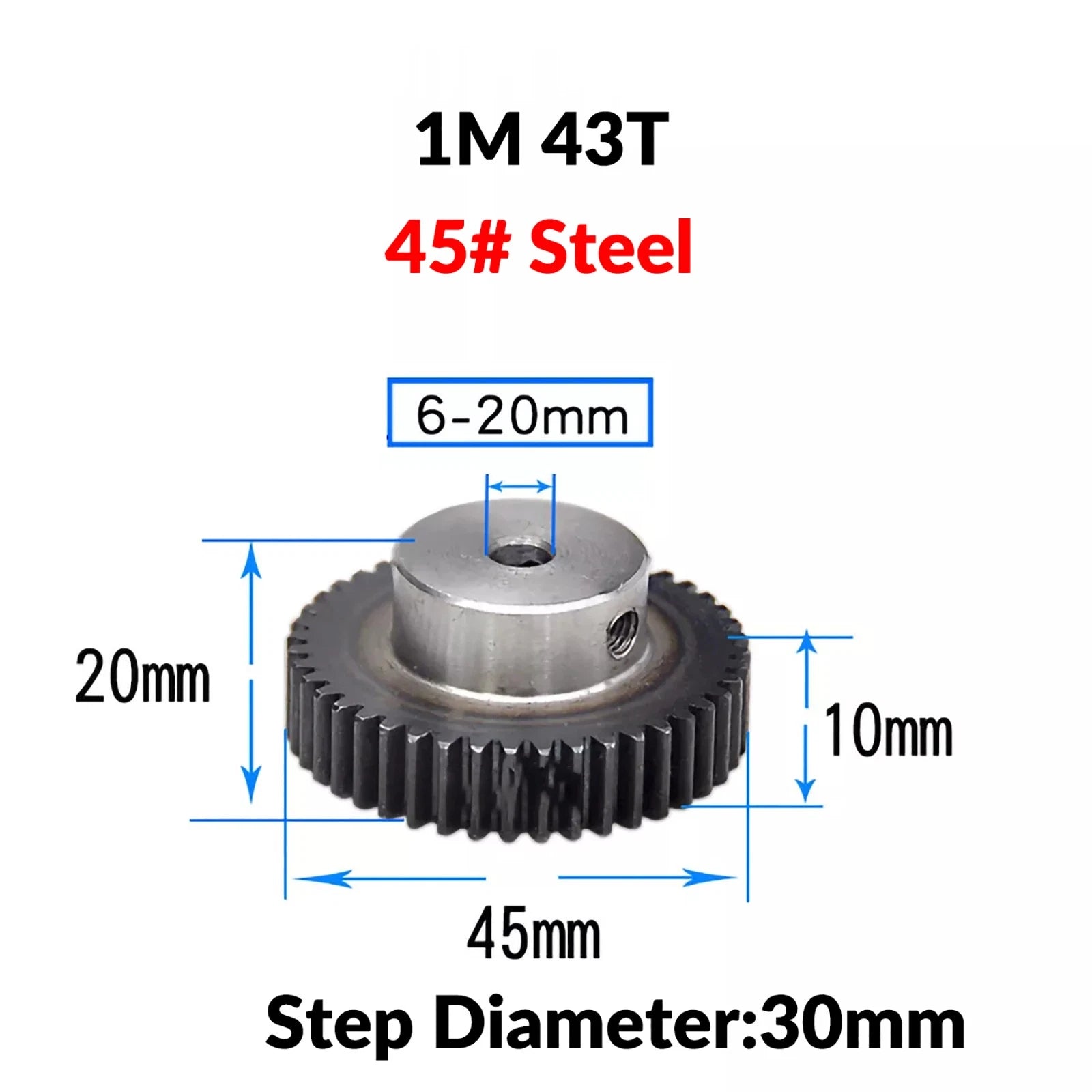
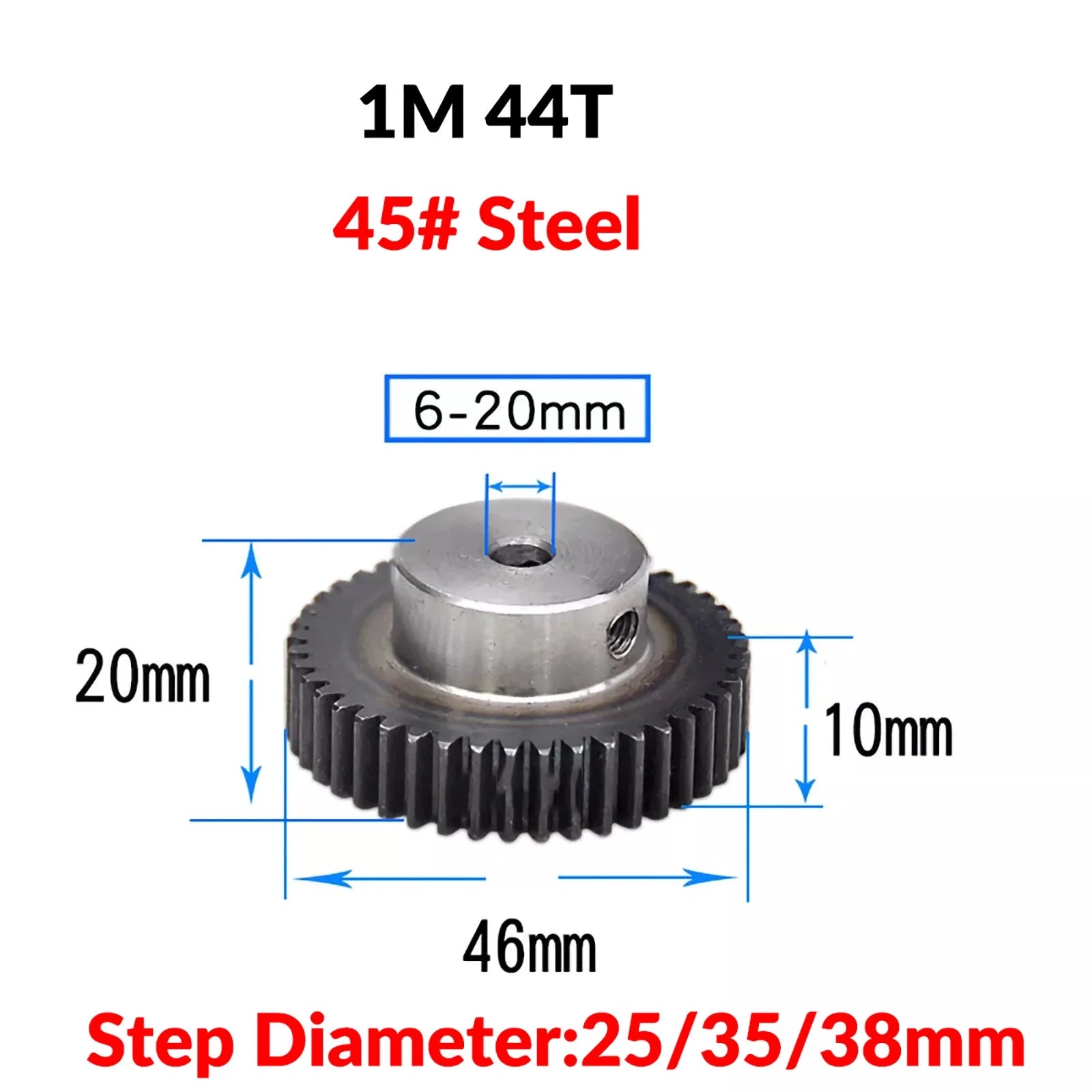
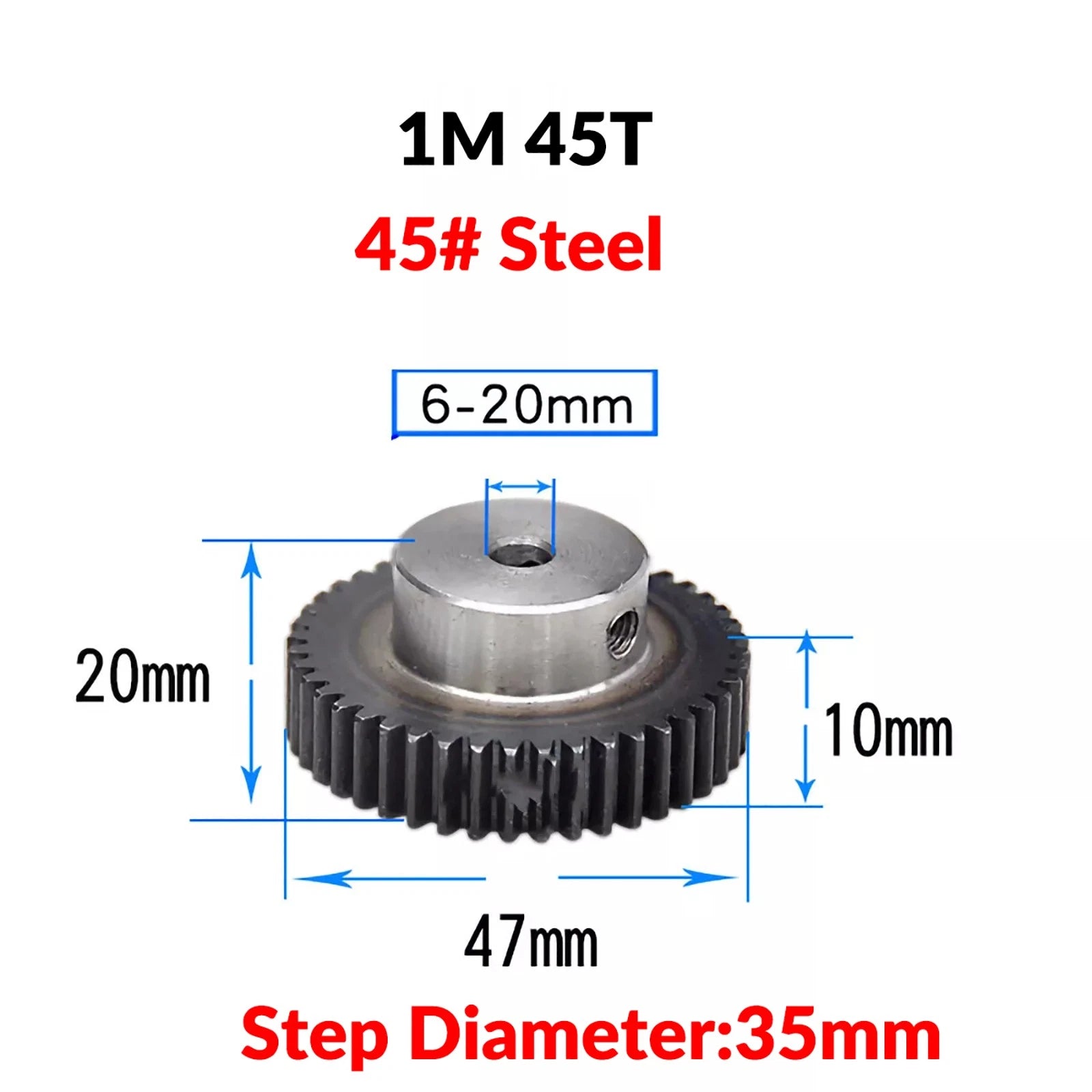
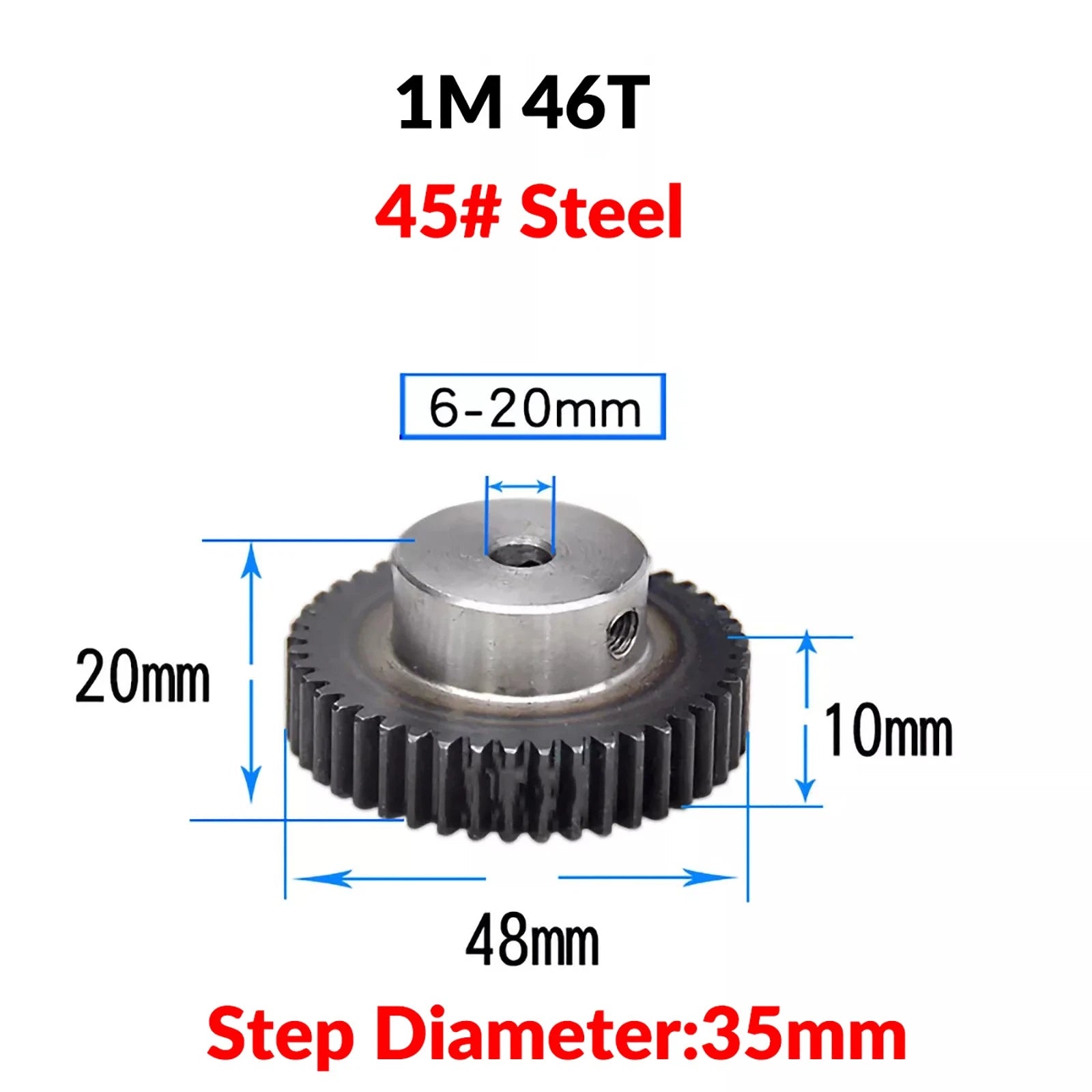
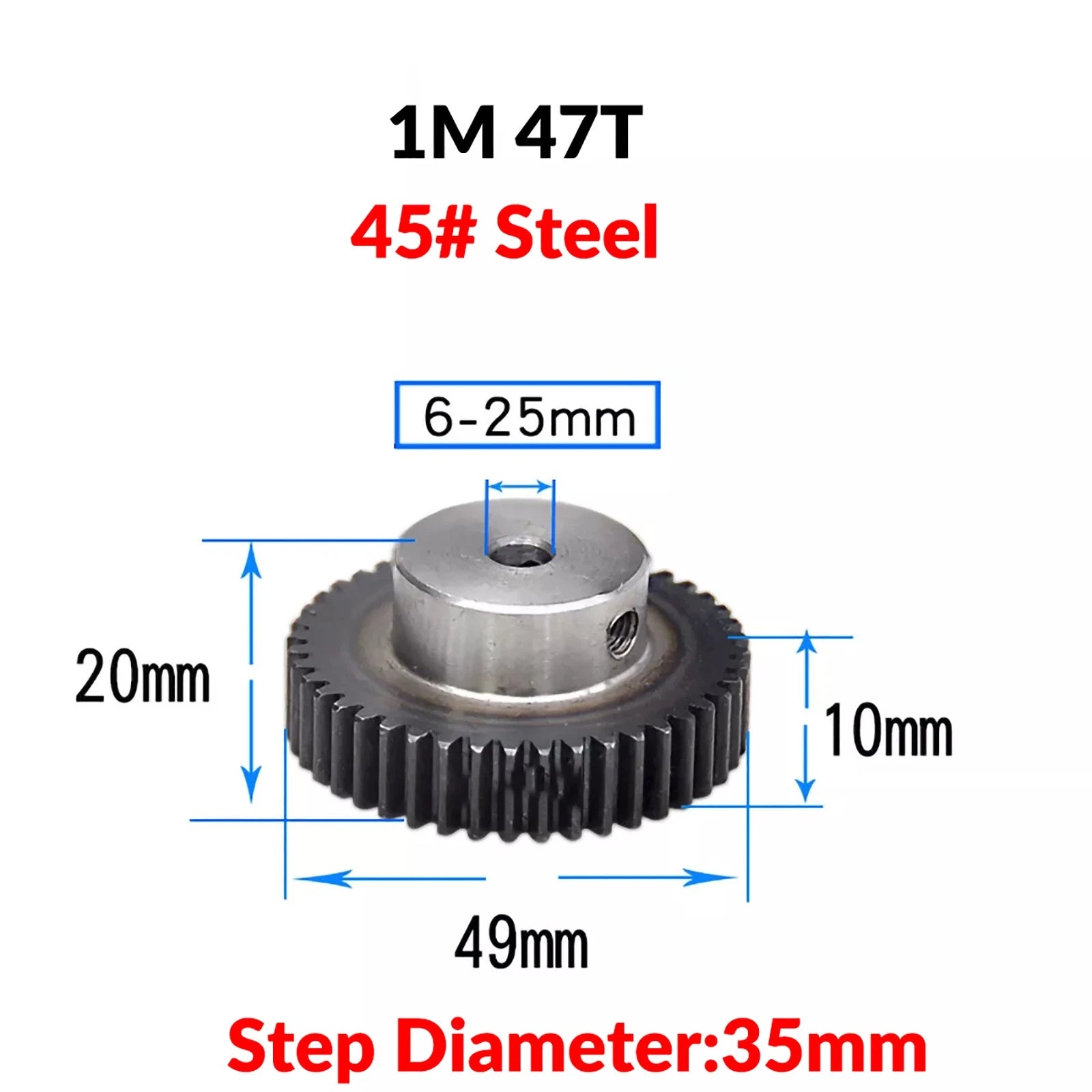
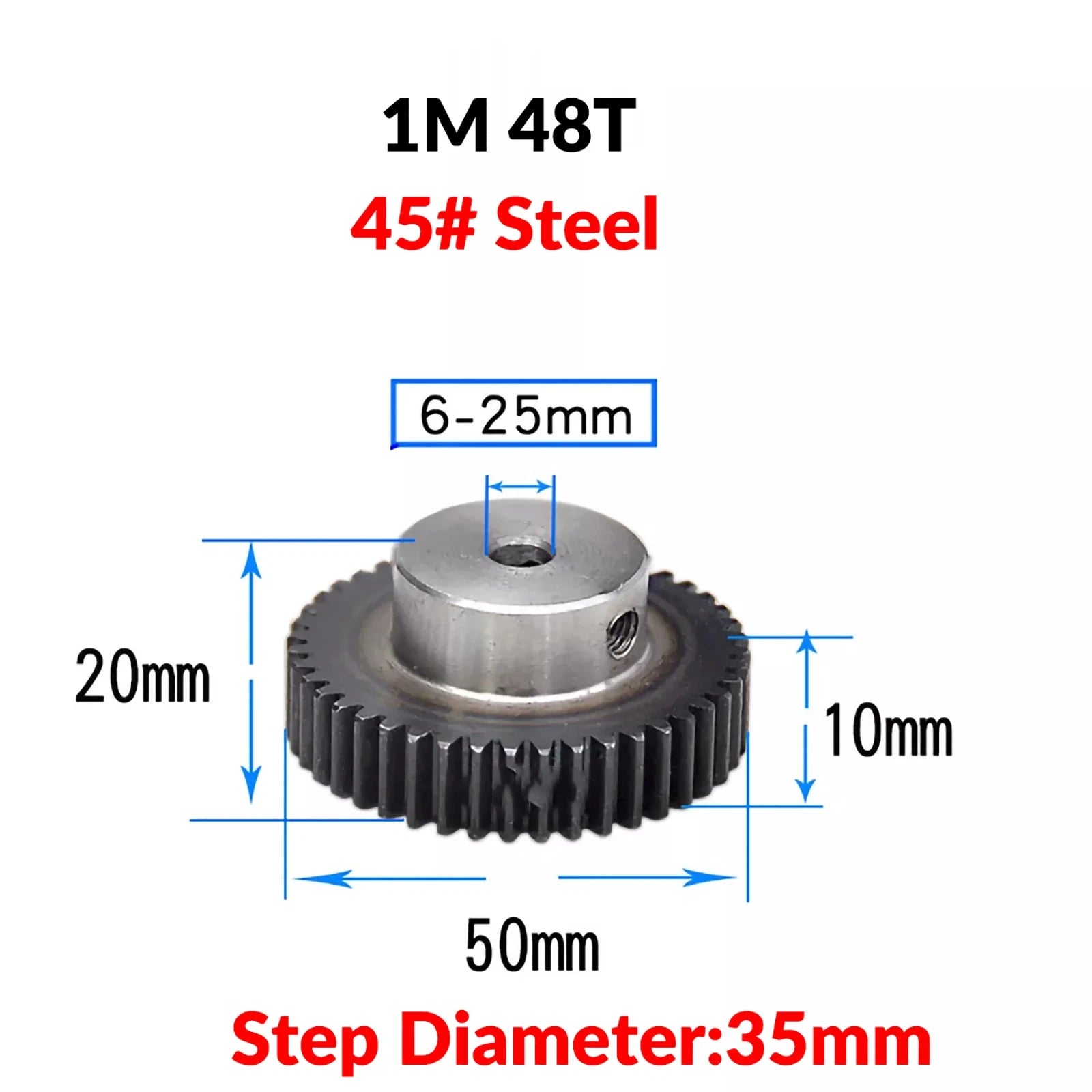
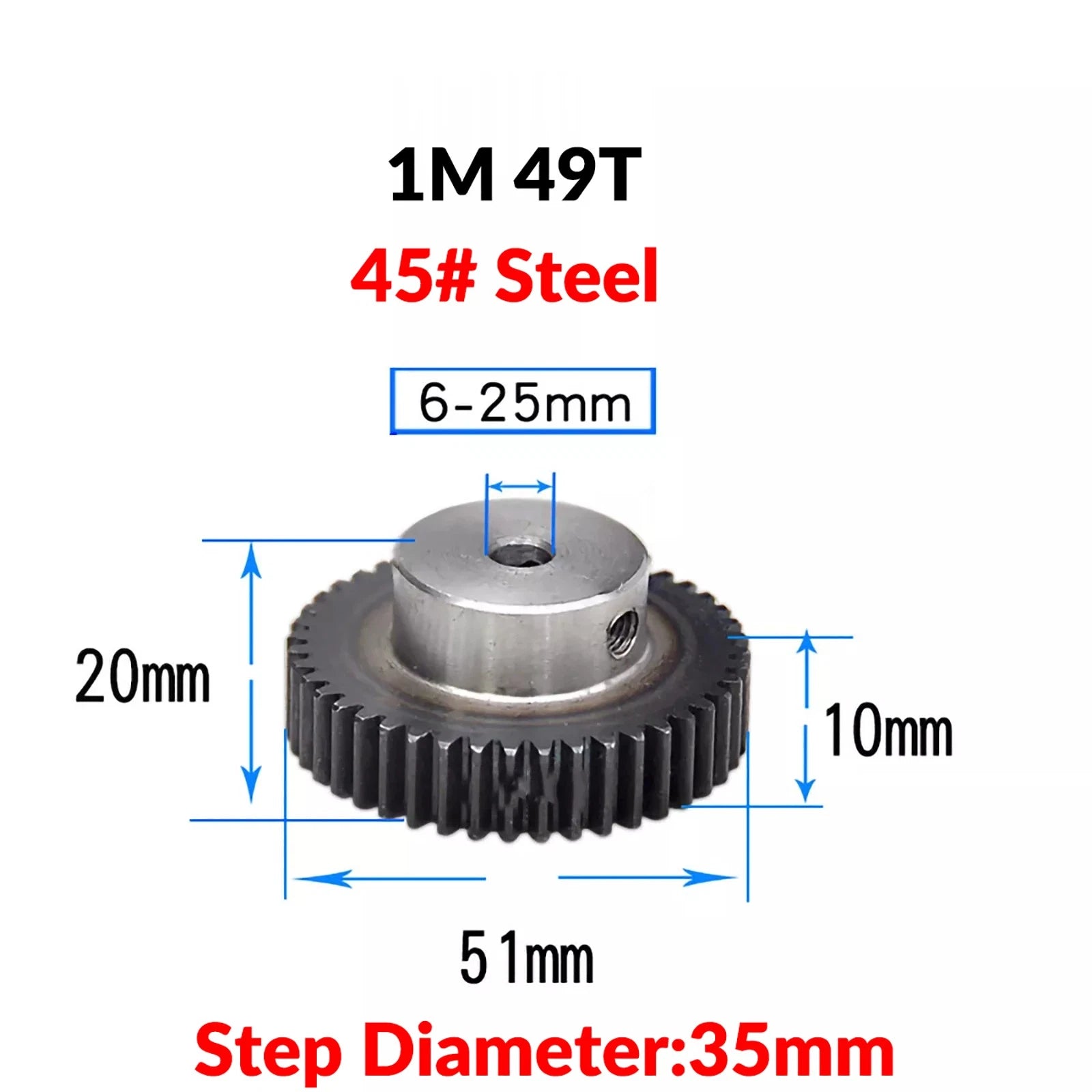
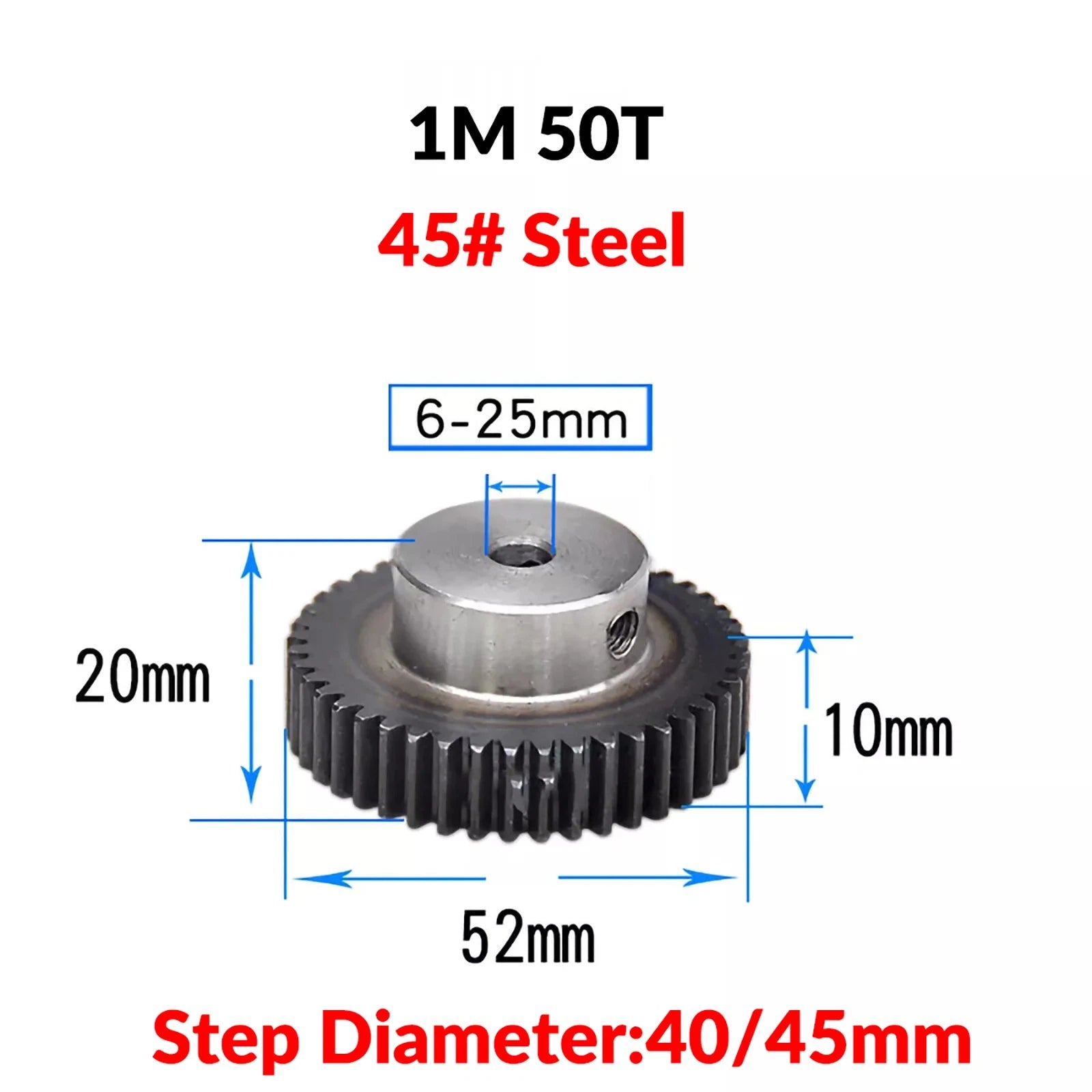
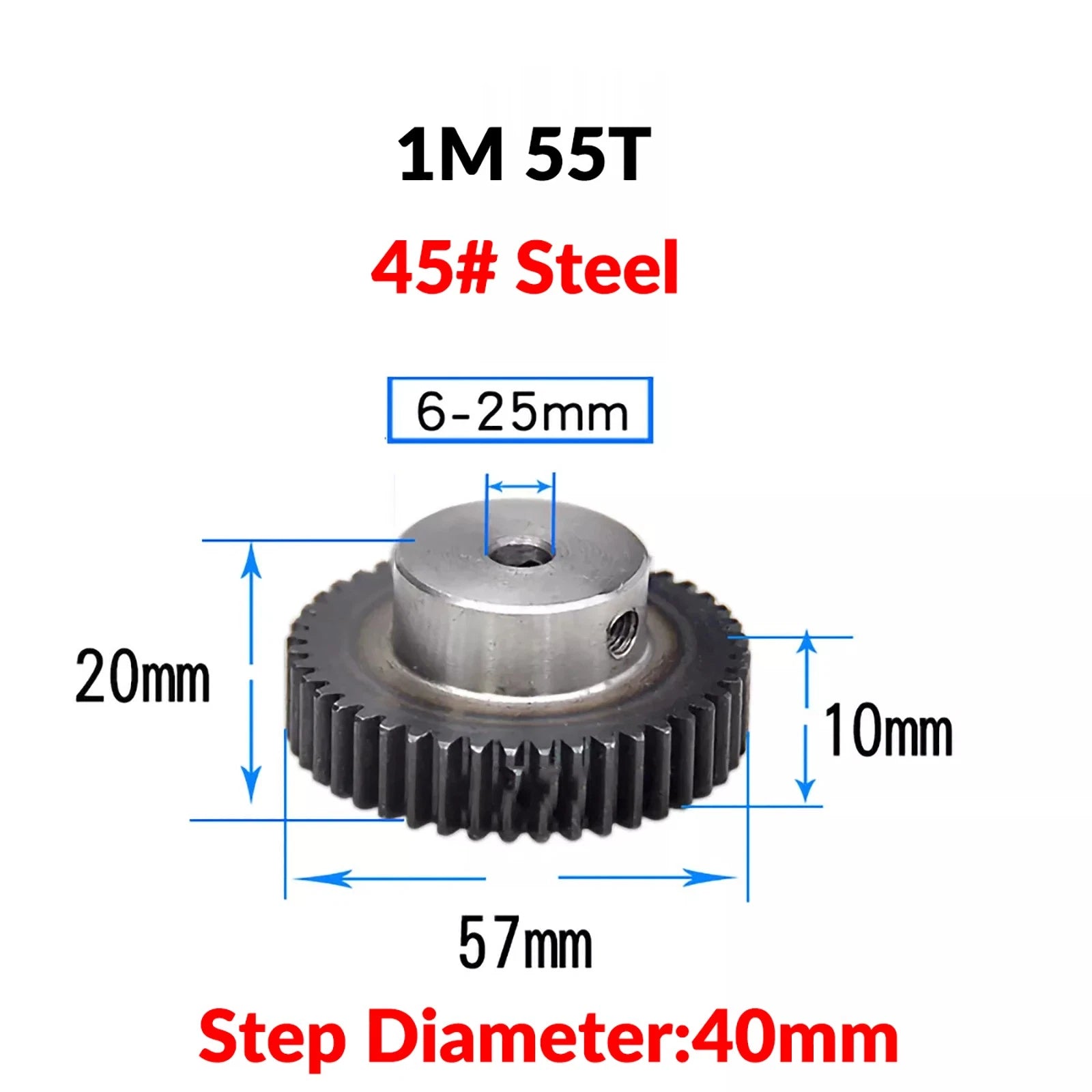
Each gear is machined from 45# medium-carbon steel, offering a balance of hardness and machinability. The module is 1 (1M), with tooth counts ranging from 10 T to 60 T and bore diameters from 4 mm (0.16 in) to 25 mm (0.98 in). Step variants add a precision-turned shoulder — ranging from 14 mm to 45 mm — that seats directly against a motor face or bearing housing for axial alignment. Overall gear width is typically 10–15 mm depending on tooth count.

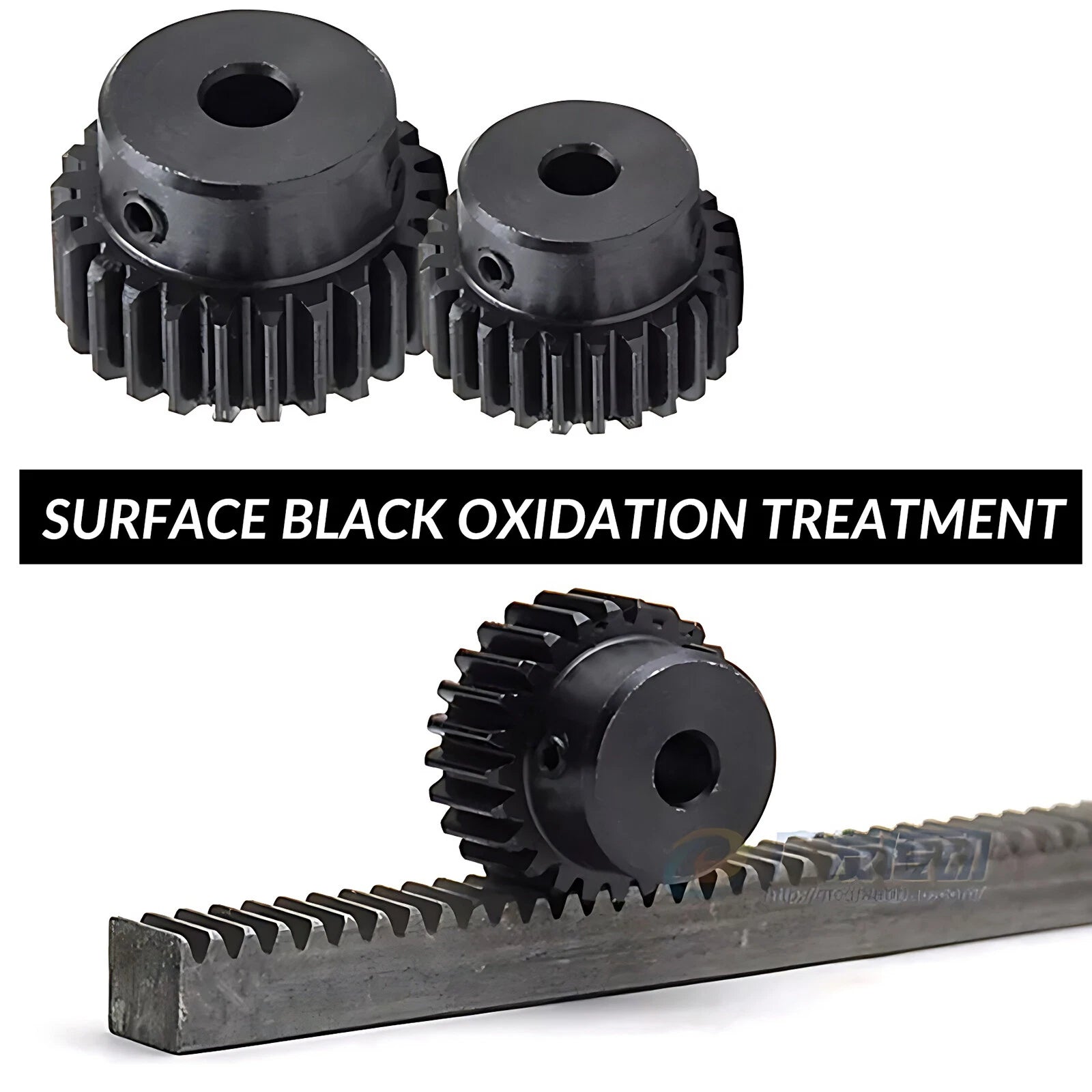
Typical use cases include stepper and servo motor pinion drives in CNC milling machines, rack-and-pinion linear actuators, gearbox reduction stages in robotics, and DIY automation projects requiring a standard Mod 1 spur gear interface.

⚙️ Compatibility: Fits any Mod 1 (1M) gear system. Verify bore diameter and step diameter match your motor shaft and housing before ordering. Pairs with Mod 1 racks, ring gears, and mating spur gears.

✅ Key Features of These Mod 1 Steel Pinion Spur Gears

🔩
45# Medium-Carbon Steel

Machined from 45# steel for a solid combination of surface hardness and core toughness — resisting tooth wear under continuous cyclic loading.

📐
Module 1 Standard

True Mod 1 tooth profile ensures interchangeability with any standard 1M rack, pinion, or mating gear in your drivetrain without custom modification.

🎯
Wide Tooth Count Range (10 T – 60 T)

Select from 10 to 60 teeth to dial in your gear ratio precisely — from high-speed, low-torque pinion drives to slower, higher-torque reduction stages.

🔧
Multiple Bore Diameters (4 – 25 mm)

Available in bore sizes from 4 mm to 25 mm to fit a wide range of motor shaft diameters, including common NEMA stepper and servo motor shafts.

📏
Optional Precision Step

Step variants (14 mm – 45 mm step diameter) provide a machined shoulder for axial positioning against motor faces or bearing housings, eliminating the need for separate spacers.

Low Backlash Tooth Form

CNC-hobbed tooth flanks maintain consistent mesh with mating Mod 1 gears, keeping positional error low in closed-loop CNC and robotics applications.

📐 Technical Specifications — Mod 1 Steel Spur Gear

Module 1 (Mod 1 / 1M)
Material 45# Medium-Carbon Steel
Tooth Count 10 T – 60 T (see variant options)
Bore Diameter 4 mm – 25 mm (see variant options)
Step Diameter 14 mm – 45 mm, or No Step (see variant options)
Pressure Angle 20°
Gear Face Width Typically 10–15 mm (varies by tooth count)
Surface Finish Machined, natural steel
Quantity 1 piece per order

❓ Frequently Asked Questions

How do I choose the right tooth count for my application?

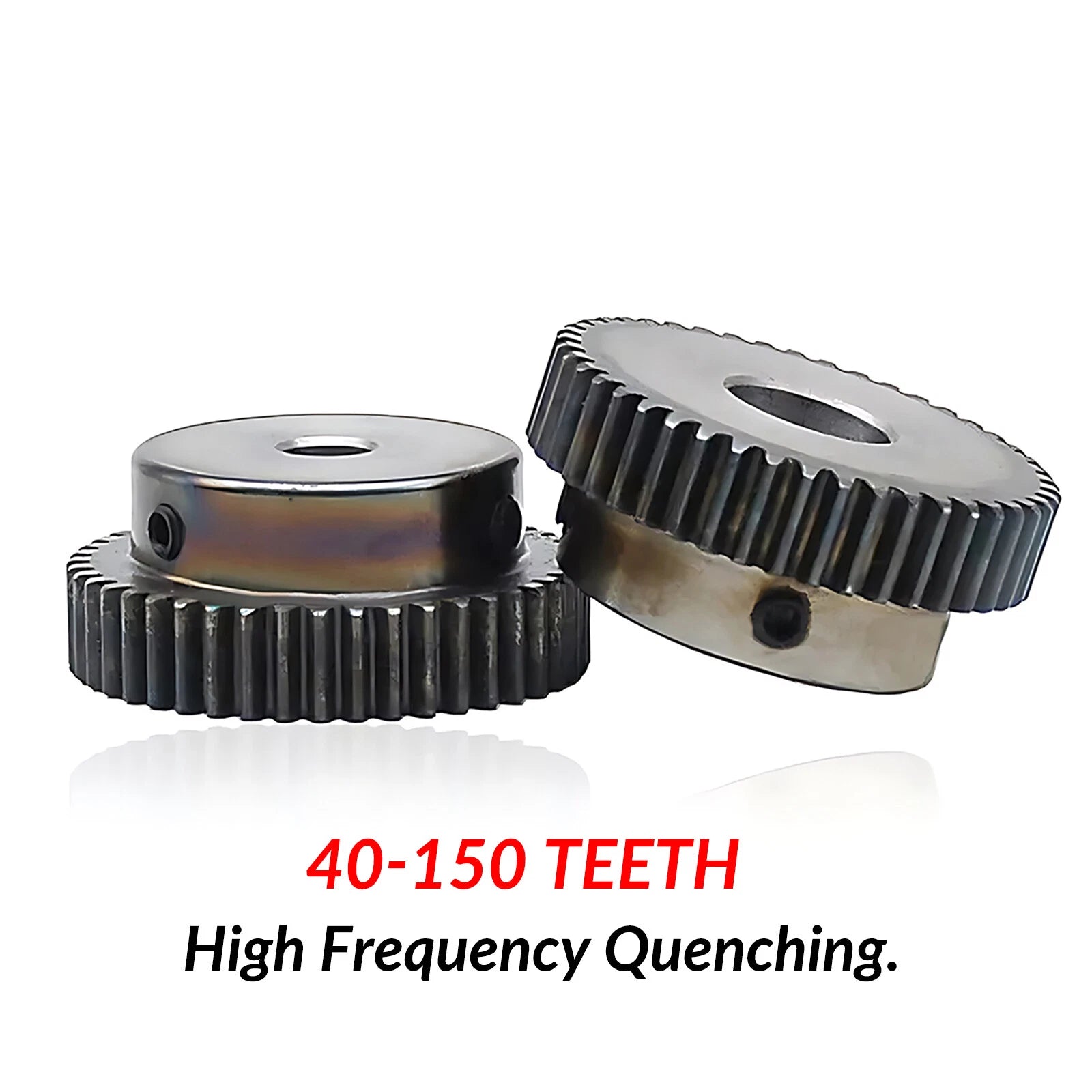
The gear ratio is determined by dividing the driven gear tooth count by the driving (pinion) gear tooth count. For a 3:1 reduction, pair a 15 T pinion with a 45 T gear. Lower tooth counts (10–15 T) suit high-speed, low-torque pinion drives; higher counts (40–60 T) are used where more torque multiplication is needed.

Which bore diameter should I select for my stepper motor shaft?

Measure your motor shaft diameter with calipers before ordering. Common NEMA 17 stepper shafts are 5 mm; NEMA 23 shafts are typically 6.35 mm or 8 mm; NEMA 34 shafts are often 12 mm or 14 mm. Select the bore that matches your shaft exactly — a loose bore will cause runout and backlash.

What is the step diameter, and do I need it?

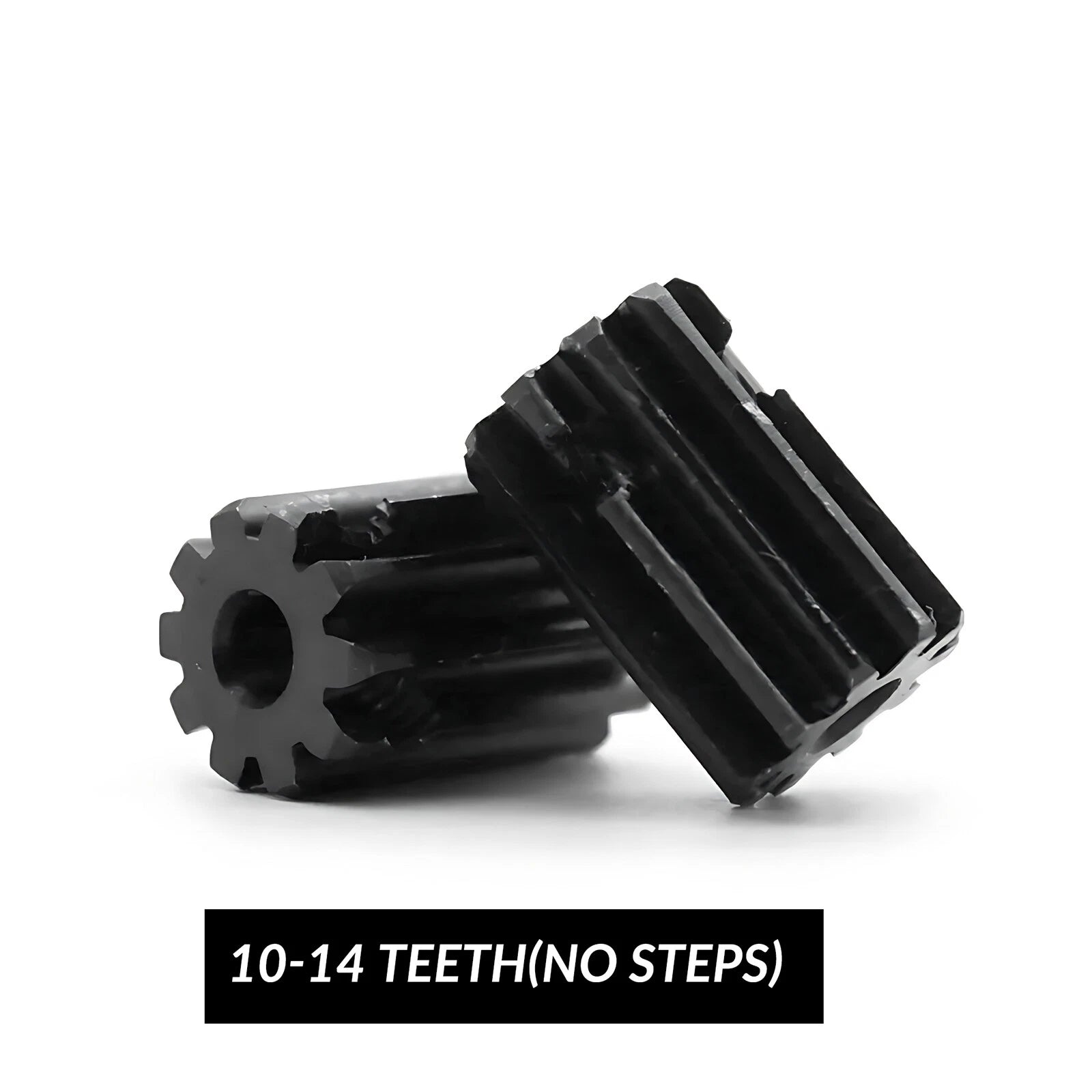
The step is a precision-turned shoulder on the back face of the gear that registers against a motor face plate or bearing housing for axial alignment. If your motor mount has a pilot bore or register, choose a step variant whose step diameter matches. If you are mounting the gear with a set screw or keyway only, the "No steps" variant is sufficient.

Is 45# steel strong enough for my CNC or robotics drive?

45# medium-carbon steel provides a tensile strength of approximately 600–800 MPa in the normalized condition, which is adequate for most light-to-medium duty CNC routers, 3D printer extruder drives, and robotic joint actuators. For heavy-duty industrial gearboxes or high-shock loads, consider case-hardened or alloy steel alternatives.

Will these gears corrode or rust?

45# steel is not stainless and will oxidize if left unprotected in humid environments. Apply a light coat of machine oil or grease to the tooth flanks and bore during installation and during storage. For outdoor or wet environments, consider a zinc-plated or stainless alternative.

Are these gears compatible with Mod 1 racks and ring gears from other suppliers?

Yes. Module 1 is an internationally standardized tooth profile (ISO 54 / DIN 780). Any Mod 1 gear, rack, or pinion from any supplier will mesh correctly with these gears, provided the pressure angle is also 20°, which is the global standard for Mod 1 components.

Can I use these gears without a keyway or set screw?

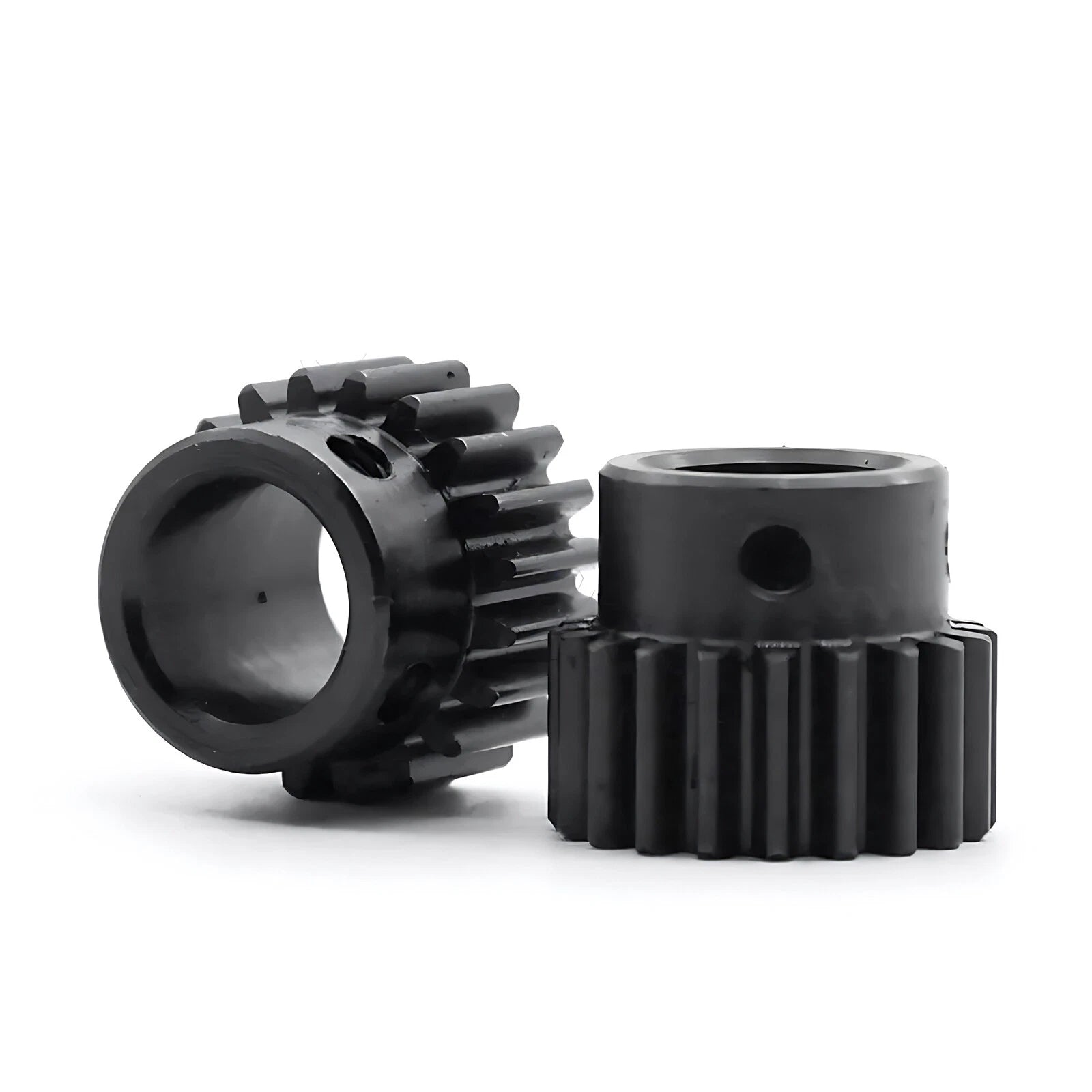
The bore is a plain (smooth) bore. You will need to drill and tap a set screw hole, or use a shaft collar, to secure the gear to your shaft. For high-torque applications, a flat on the shaft combined with a set screw is recommended to prevent slipping.

🛒 Select your tooth count, bore diameter, and step option above, then add to cart.

You may also like

Recently viewed