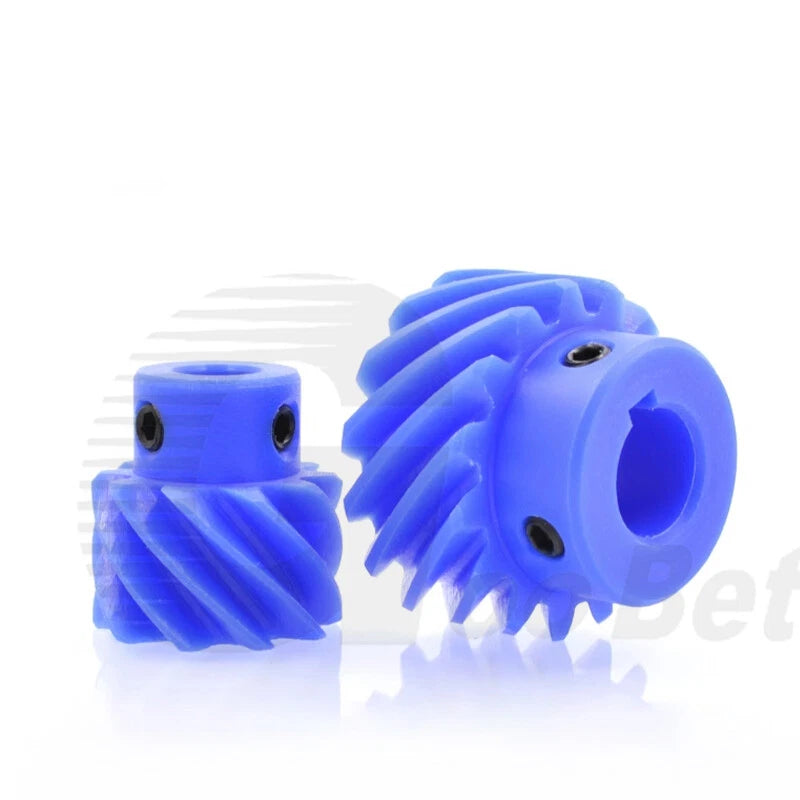
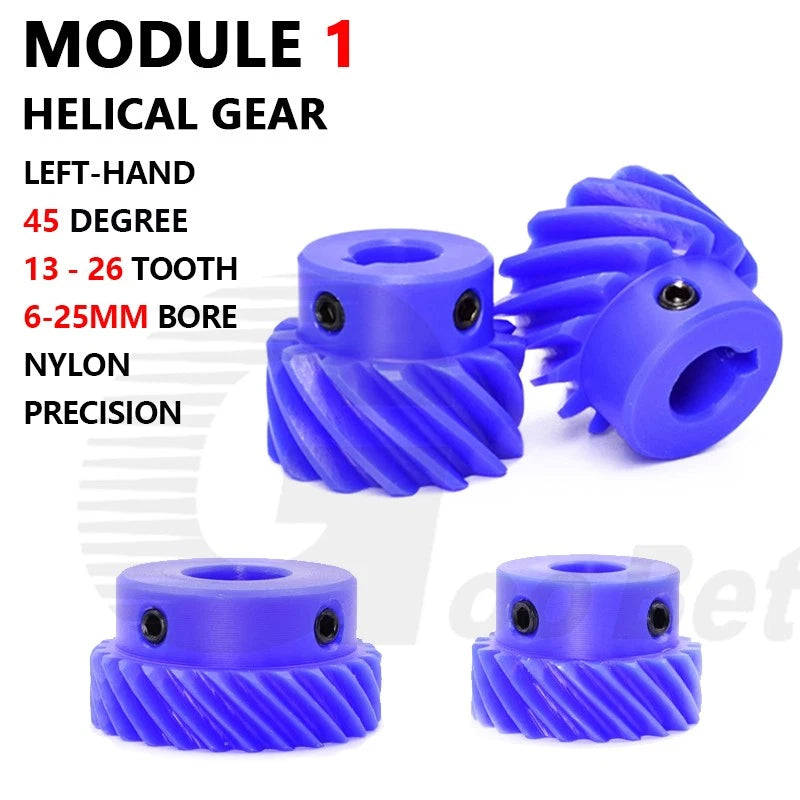
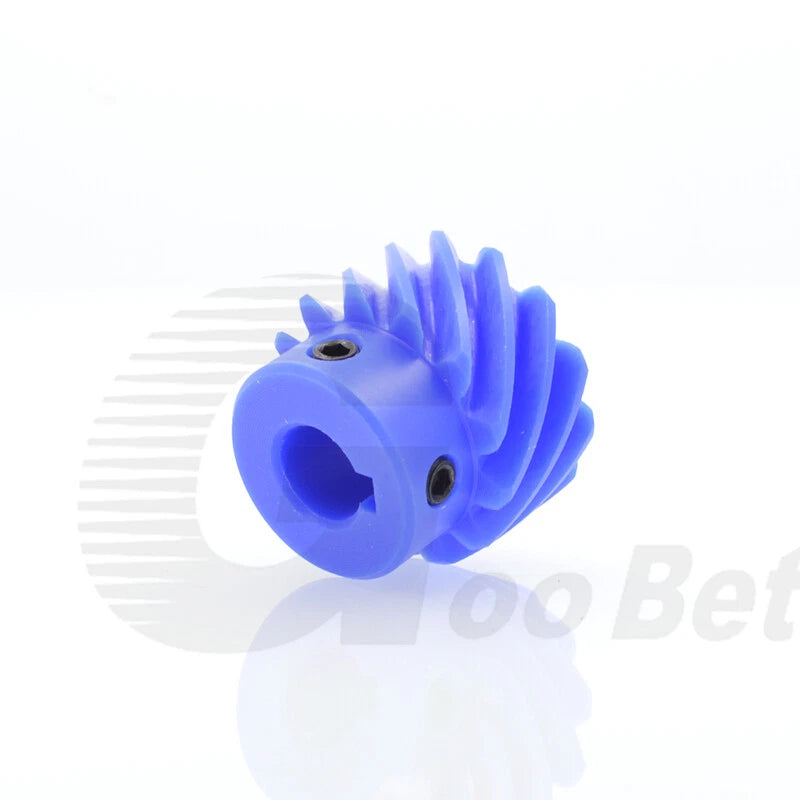
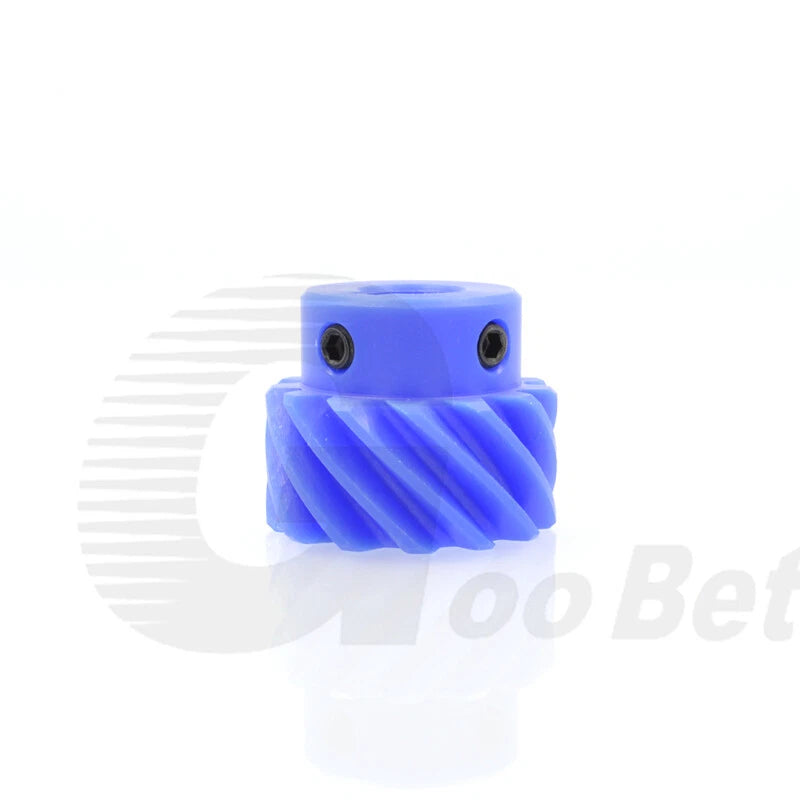
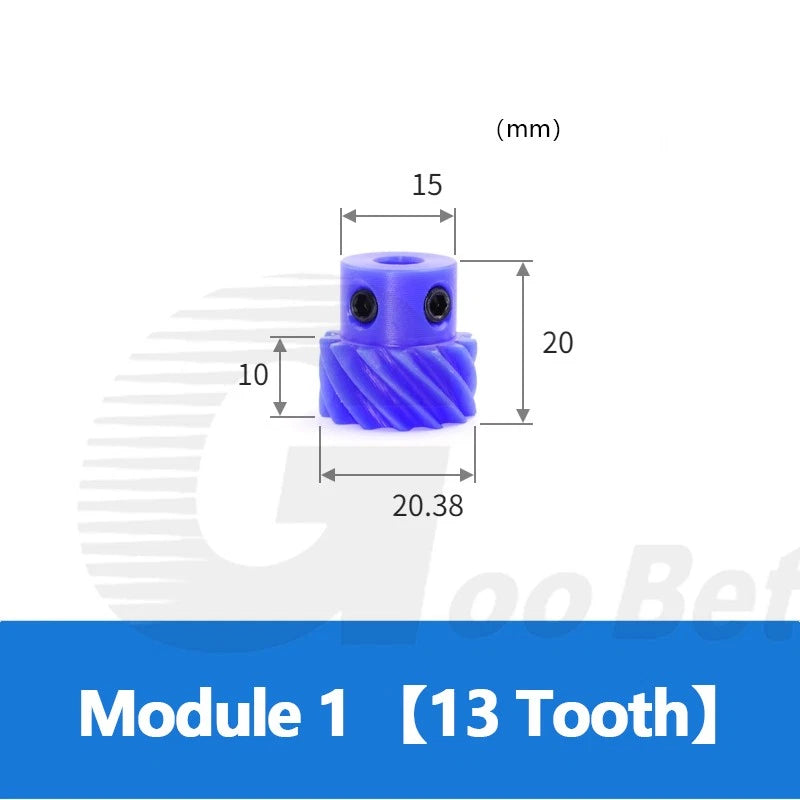
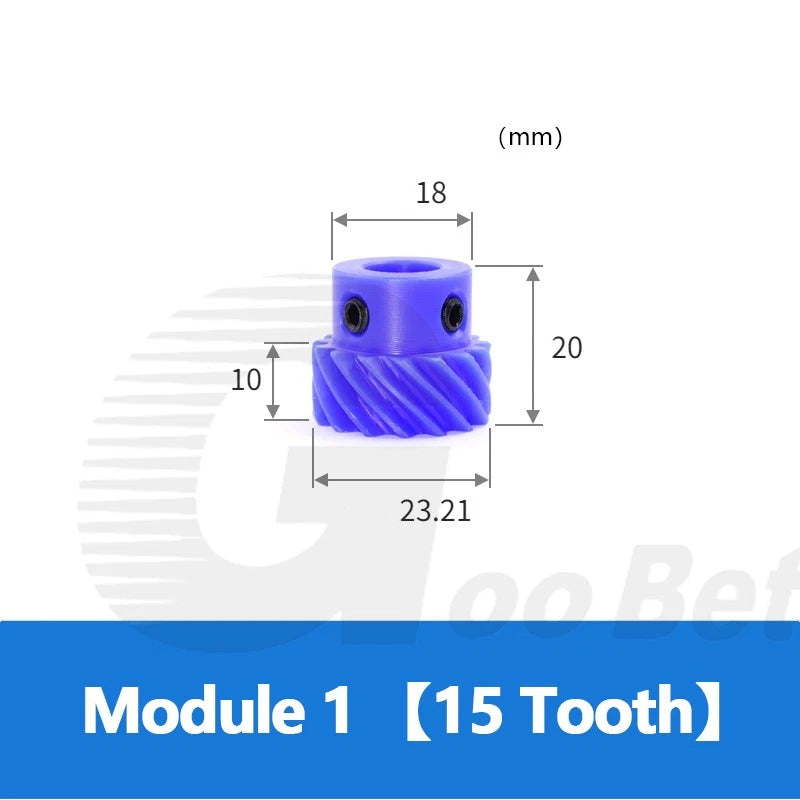
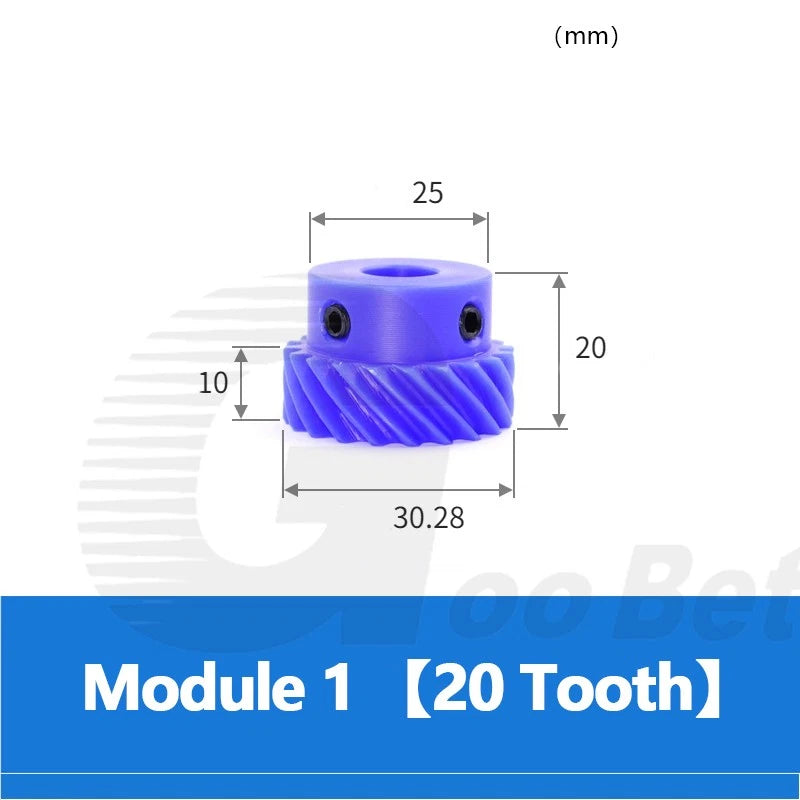
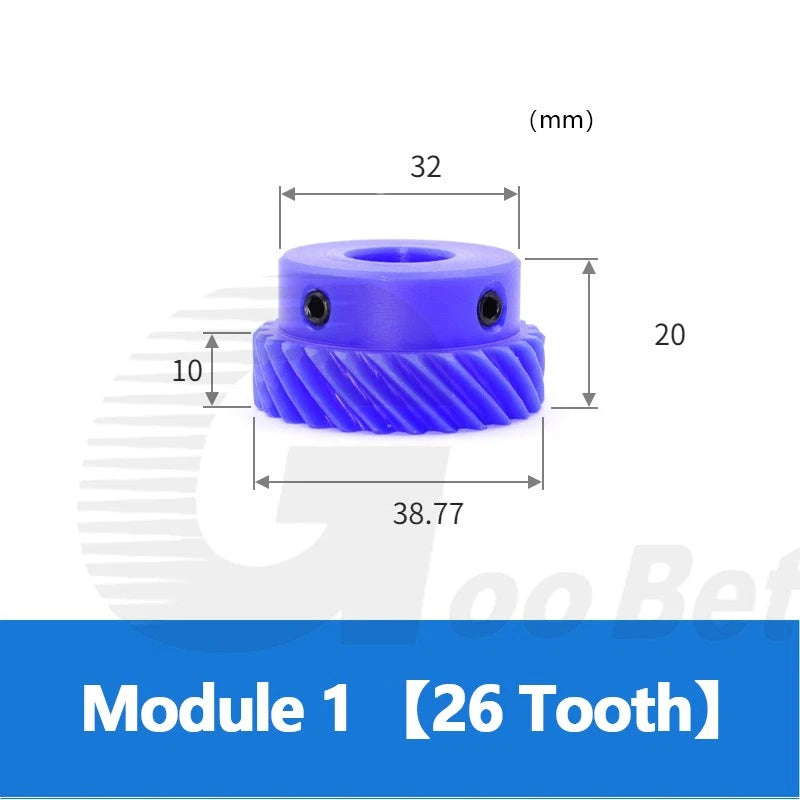
Mod 1 Helical Gear 45° Left-hand 13-26 Tooth Motor Pinion Bore 6-16mm Nylon Blue

No reviews

Price:
Sale price$10.32 USD
Stock:
In stock (500 units), ready to be shipped

Payment & Security

Ach Direct Debit Amazon American Express Apple Pay Bancontact BLIK Diners Club Discover EPS Google Pay iDEAL Wero JCB Maestro Mastercard Multibanco MobilePay PayPal Przelewy24 Shop Pay Twint Union Pay USDC Visa

Your payment information is processed securely. We do not store credit card details nor have access to your credit card information.

Limited Offer — Spend More, Save More
Spend $55+
Save $5
Spend $100+
Save $10
Spend $200+
Save $25
HomeDIYer DIY Expert Support

DIY Expert Support

Get fitment advice & recommendations

Mon–Fri  8:30 AM – 8:00 PM
24-Hour Fast Ship
Arrives in 3–14 Days
Worldwide Shipping
30-Day Returns
1 tree planted with every purchase

Description

Mod 1 Nylon Helical Gear — Quiet, Low-Backlash Motion for CNC & Robotics

Engineers and makers who need smooth, low-noise power transmission often struggle to find gears that fit compact motor shafts without custom machining. These Module 1 nylon helical gears are designed for builders of CNC routers, robotic arms, 3D printer extruder drives, and small automation rigs who demand consistent mesh quality and reduced vibration in tight spaces.

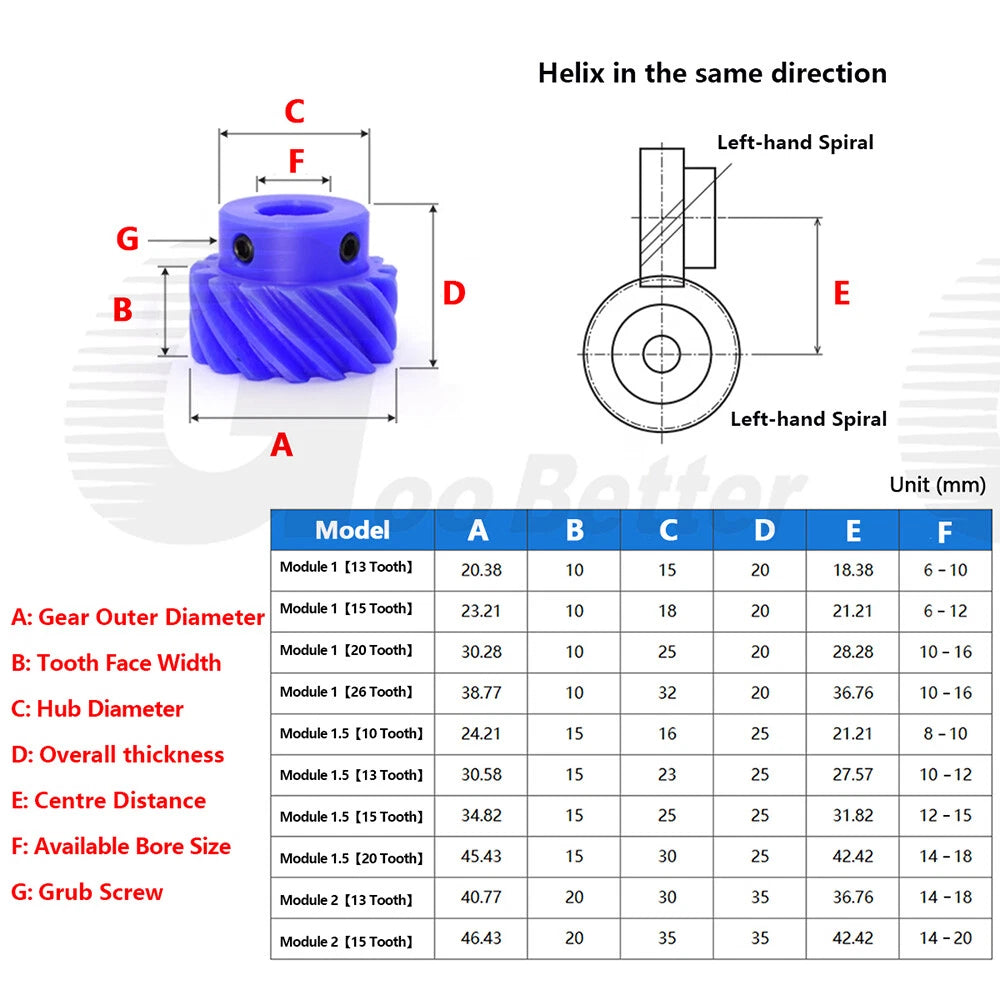
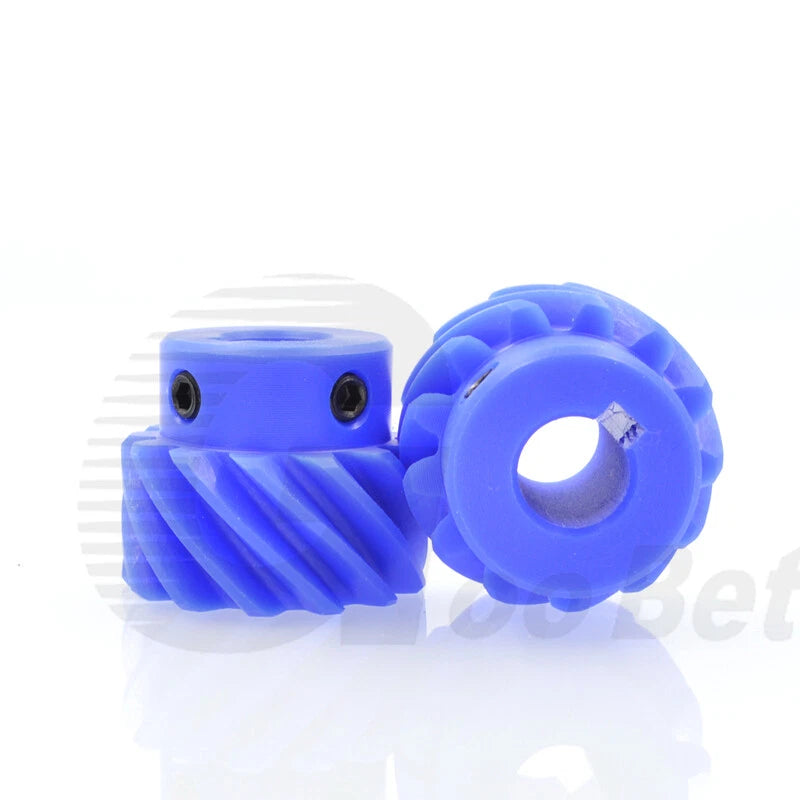
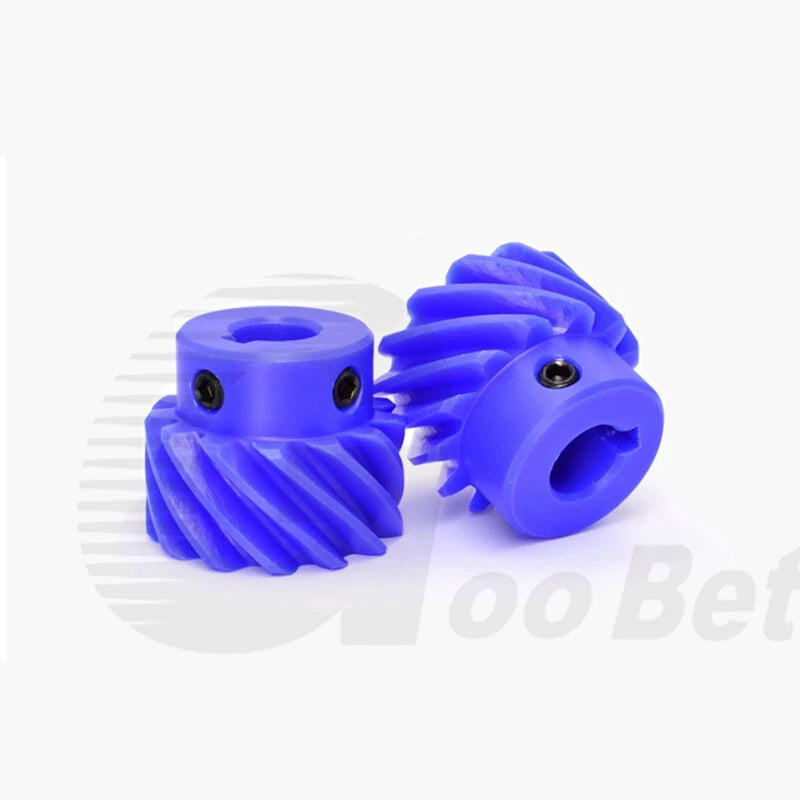
Each gear is machined from engineering-grade blue nylon (PA66 or equivalent), offering a good balance of light weight, self-lubrication, and corrosion resistance. The 45° left-hand helix angle delivers axial load distribution for quieter operation compared to spur gears. Tooth counts range from 13 to 26 teeth (Module 1), with bore options spanning 6 mm to 16 mm (approximately 0.24 in to 0.63 in) to suit a wide range of motor pinion shafts.

Typical use cases include stepper motor pinion drives in desktop CNC machines, servo-driven axis geartrains in robotic joints, and paired helical gear sets in small conveyor or indexing mechanisms — all applications where a nylon helical motor pinion gear with a precise bore fit reduces noise and extends service life.

⚙️ Compatibility: Module 1 (Mod 1) pitch system · 45° left-hand helix · Bore 6 / 8 / 10 / 12 / 14 / 15 / 16 mm · Pairs with Module 1 right-hand helical gears or matching rack

✅ Key Features of These Mod 1 Nylon Helical Gears

🔵 45° Left-Hand Helix Angle

Distributes tooth load across the face width for smoother engagement, reduced impact noise, and lower vibration versus straight spur gears.

🎯 Multiple Bore Sizes (6–16 mm)

Seven bore options — 6, 8, 10, 12, 14, 15, and 16 mm — let you match the gear directly to your motor shaft without a bushing adapter.

Four Tooth Count Options (13–26T)

Choose 13, 15, 20, or 26 teeth to dial in your gear ratio for torque multiplication or speed increase in your drivetrain.

🧱 Engineering Nylon Construction

PA-grade nylon provides self-lubrication, chemical resistance, and low density — ideal for dry-running or lightly lubricated environments.

📦 Flexible Pack Quantities (1–5 pcs)

Order 1 to 5 pieces per variant to prototype with a single gear or stock spares for production runs without overpaying for bulk minimums.

🔩 Module 1 Standard Pitch

Fully compatible with the international Module 1 gear standard, ensuring interchangeability with other Mod 1 components in your system.

📐 Technical Specifications — Mod 1 Helical Gear

Module (Pitch) Module 1 (Mod 1)
Helix Angle 45° Left-Hand
Tooth Count Options 13T / 15T / 20T / 26T
Bore Size Options 6 mm / 8 mm / 10 mm / 12 mm / 14 mm / 15 mm / 16 mm
Material Engineering Nylon (PA-grade)
Color Blue
Pitch Diameter (13T) 13 mm (0.51 in)
Pitch Diameter (15T) 15 mm (0.59 in)
Pitch Diameter (20T) 20 mm (0.79 in)
Pitch Diameter (26T) 26 mm (1.02 in)
Face Width See variant options
Hub Diameter See variant options
Pressure Angle 20°
Pack Quantity 1 / 2 / 3 / 4 / 5 pcs
Application CNC, robotics, automation, 3D printer drives

❓ Frequently Asked Questions

How do I choose the right tooth count for my application?

Select the tooth count based on your required gear ratio. Pair a 13T pinion with a larger driven gear for torque multiplication, or use a 26T pinion with a smaller gear for speed increase. For a 1:1 ratio, use matching tooth counts on both gears. Always verify the center distance matches your housing design.

Which bore size should I order for my motor shaft?

Measure your motor shaft diameter with calipers and select the matching bore: 6, 8, 10, 12, 14, 15, or 16 mm. The bore is a close-tolerance fit. If your shaft uses a keyway or set screw, confirm the hub wall thickness is sufficient for your fastening method before ordering.

Can this left-hand helical gear mesh with a right-hand helical gear?

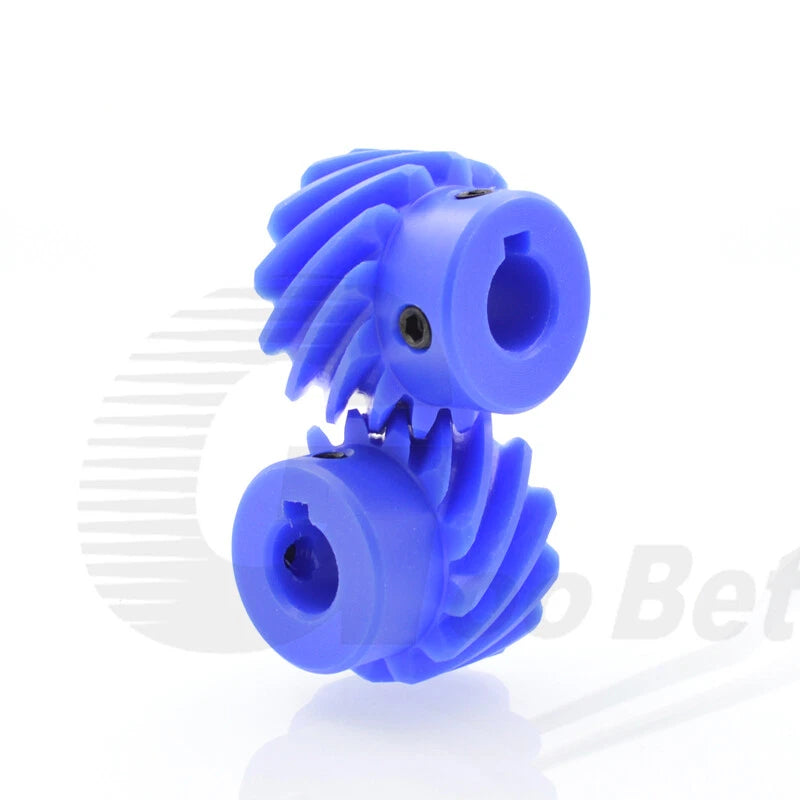
Yes — for parallel-axis helical gear pairs, a left-hand gear meshes with a right-hand gear of the same module and helix angle. Ensure both gears share the same Module 1 pitch and 45° helix angle for correct engagement. Do not pair with spur gears or different-module gears.

Is nylon strong enough for my CNC or robotics application?

Engineering nylon (PA-grade) handles moderate loads well in dry or lightly lubricated conditions. It is well-suited for stepper and servo motor pinion drives in desktop CNC, 3D printer extruders, and light robotic joints. For heavy-load or high-temperature environments (above ~80–100 °C continuous), consider metal gears instead.

Does nylon resist corrosion and moisture?

Nylon offers good resistance to oils, greases, and many common chemicals. It is inherently corrosion-free, unlike steel gears. Note that nylon can absorb moisture over time, which may cause slight dimensional changes. For high-humidity environments, allow for this in your tolerance stack-up or use a sealed housing.

Do I need lubrication for these nylon helical gears?

Nylon is self-lubricating and can run dry in many light-duty applications. For extended service life under continuous or higher-speed operation, a light application of PTFE-based or silicone grease is recommended. Avoid petroleum-based greases that may degrade nylon over time.

What is the difference between Module 1 and other gear modules?

The module number defines the ratio of pitch diameter to tooth count (Module = Pitch Diameter ÷ Tooth Count, in mm). Module 1 gears have a 1 mm pitch diameter per tooth — a common standard for small motors and precision drives. Gears of different modules cannot mesh together; always confirm your mating gear is also Module 1.

🛒 Select your Models (tooth count), Bore Size, and Amount above, then add to cart.

You may also like

Recently viewed