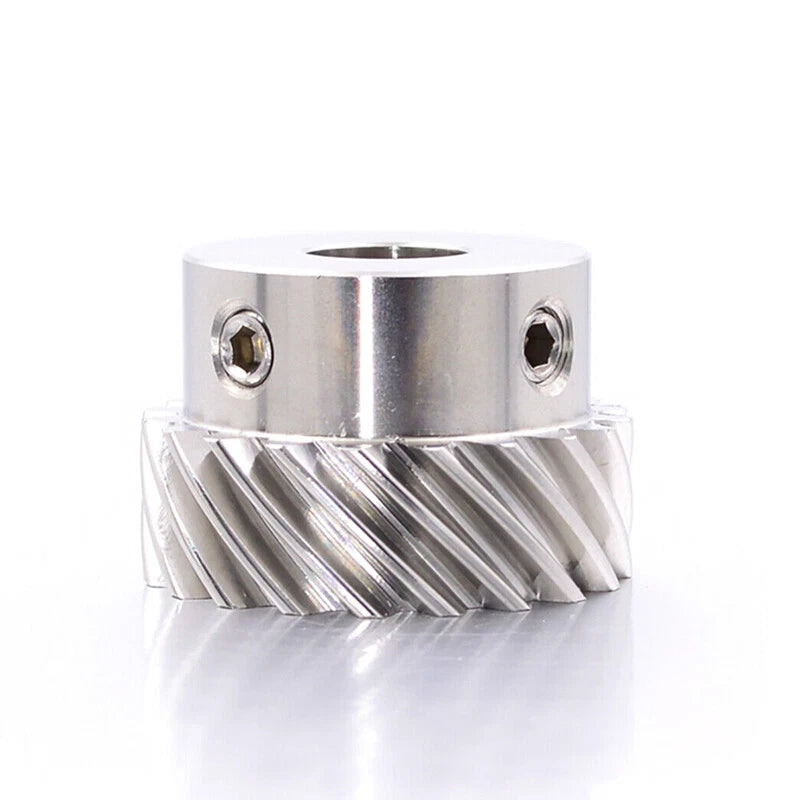
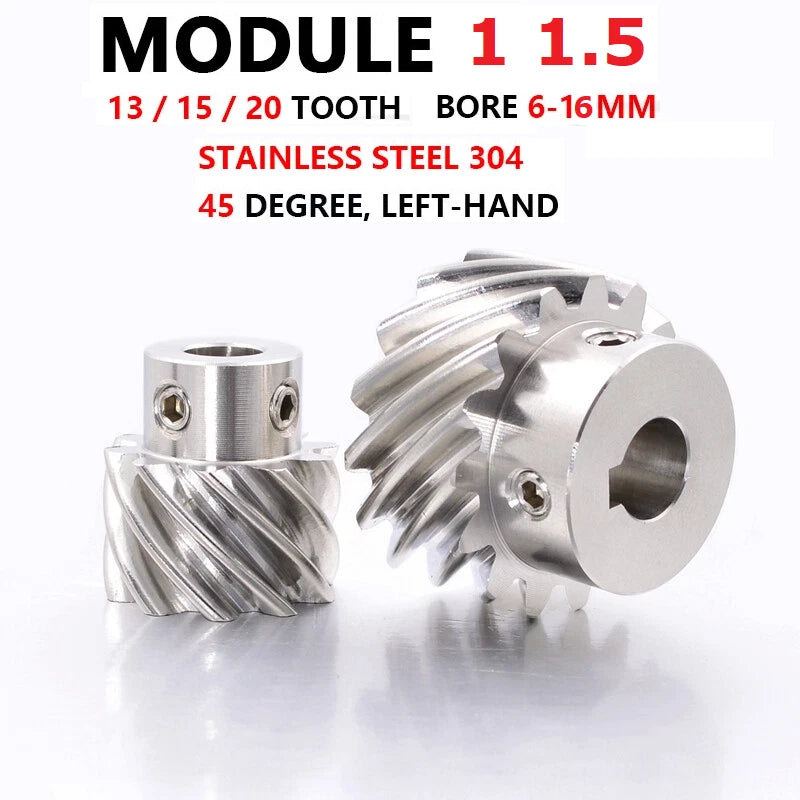
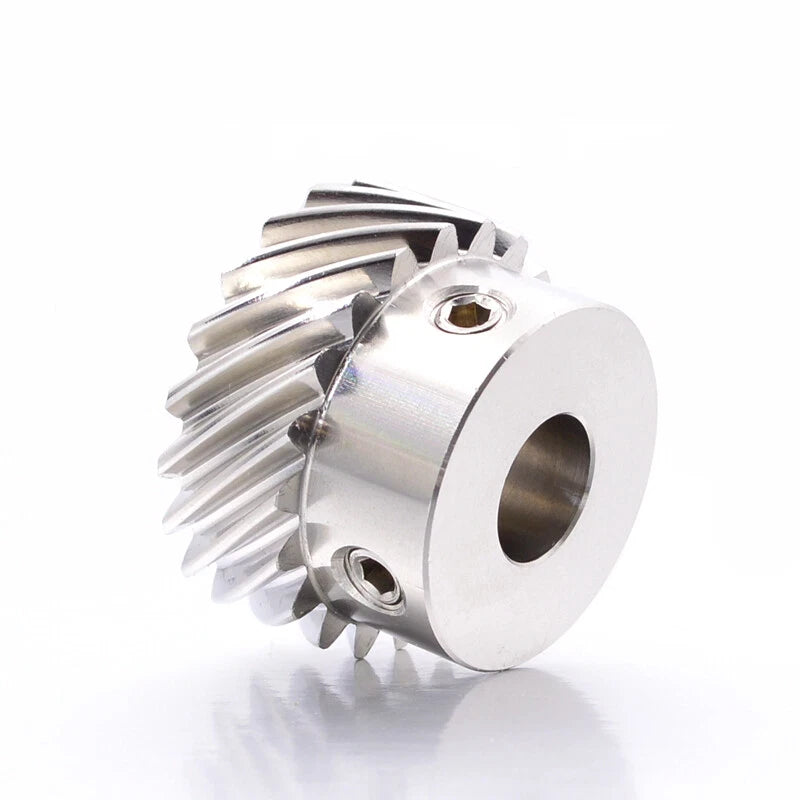
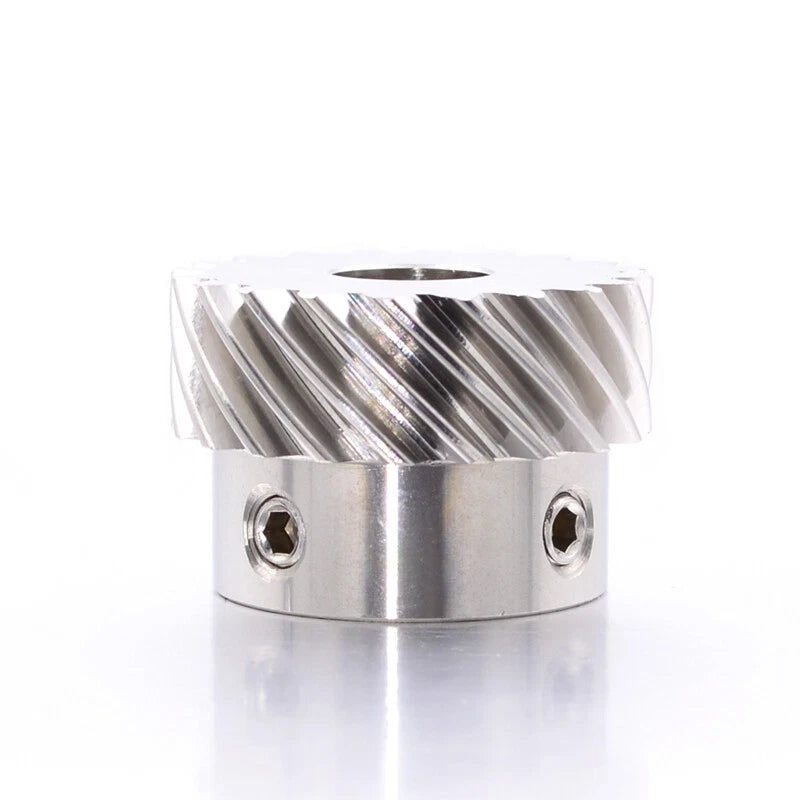
Module 1 1.5 Helical Gear 304 Stainless Steel 45° Left-hand 13/15/20T Teeth

No reviews

Price:
Sale price$27.99 USD
Stock:
In stock (500 units), ready to be shipped

Payment & Security

Ach Direct Debit Amazon American Express Apple Pay Bancontact BLIK Diners Club Discover EPS Google Pay iDEAL Wero JCB Maestro Mastercard Multibanco MobilePay PayPal Przelewy24 Shop Pay Twint Union Pay USDC Visa

Your payment information is processed securely. We do not store credit card details nor have access to your credit card information.

Limited Offer — Spend More, Save More
Spend $55+
Save $5
Spend $100+
Save $10
Spend $200+
Save $25
HomeDIYer DIY Expert Support

DIY Expert Support

Get fitment advice & recommendations

Mon–Fri  8:30 AM – 8:00 PM
24-Hour Fast Ship
Arrives in 3–14 Days
Worldwide Shipping
30-Day Returns
1 tree planted with every purchase

Description

Module 1 & 1.5 Left-Hand Helical Gear — 304 Stainless Steel for Precision Motion Control

When your drive system demands smooth, low-noise power transmission and standard spur gears fall short, a left-hand helical gear delivers the angular engagement that reduces backlash and vibration. Designed for engineers, CNC builders, robotics enthusiasts, and automation hobbyists who need reliable torque transfer in compact mechanical assemblies.

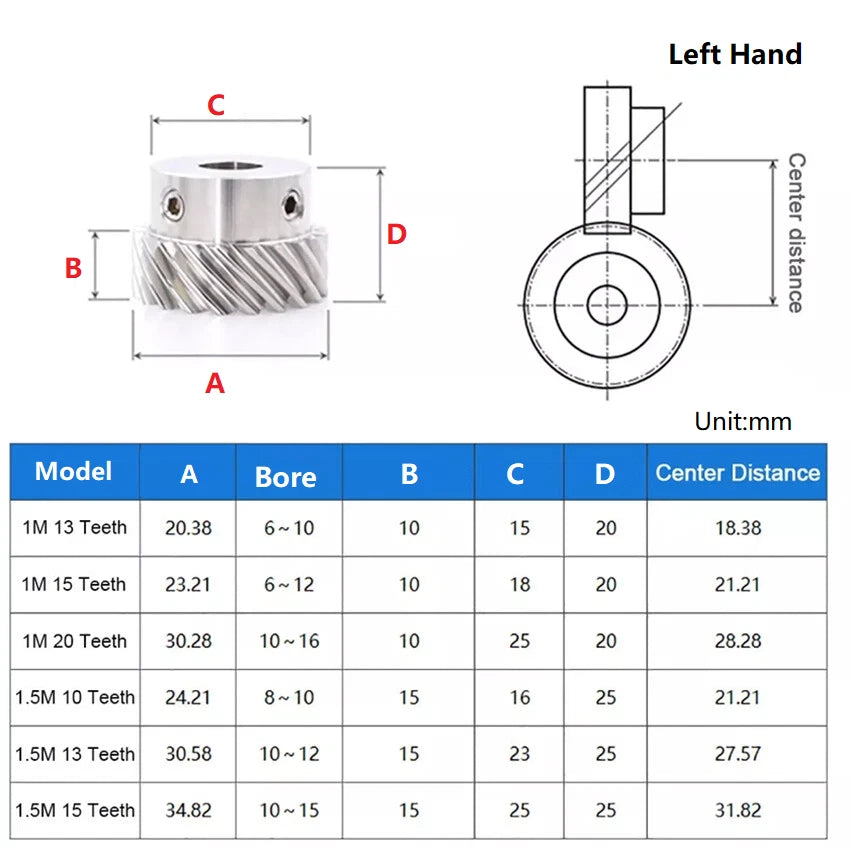
These module 1 and 1.5 helical gears are machined from 304 stainless steel, offering solid corrosion resistance for both indoor and light outdoor applications. Available in 13T, 15T, and 20T tooth counts across Module 1 (pitch diameter range approximately 13–20mm / 0.51–0.79 in) and Module 1.5 (pitch diameter range approximately 15–30mm / 0.59–1.18 in). Bore options span 6mm to 16mm plain bore, plus keyed variants with 4mm and 5mm keyways for shaft-locking applications.

Typical use cases include CNC router axis drives requiring left-hand helical pairing, robotics joint actuators where noise reduction is critical, and custom automation conveyor systems needing stainless-compatible gear trains.

⚙️ Compatible with standard Module 1 and Module 1.5 gear systems. Left-hand helix — must be paired with a right-hand helical gear or matching left-hand rack for correct mesh.

✅ Key Features of These Left-Hand Helical Gears

🔩304 Stainless Steel Construction

Resists rust and oxidation in humid or mildly corrosive environments, extending service life over carbon steel alternatives.

📐45° Left-Hand Helix Angle

Engineered 45-degree helix provides smoother tooth engagement, reduced operating noise, and improved load distribution compared to straight-cut spur gears.

🎯Multiple Tooth Counts: 13T / 15T / 20T

Three tooth count options across Module 1 and 1.5 allow flexible gear ratio selection for your specific speed and torque requirements.

🔧Wide Bore Range with Keyway Options

Plain bore from 6mm to 16mm, plus keyed bore variants (10mm+4mm keyway, 12mm+4mm, 14mm+5mm, 15mm+5mm) for positive shaft retention without set screws alone.

📏Module 1 & Module 1.5 Available

Both metric module standards covered in one listing — select the module that matches your mating gear or rack for correct pitch compatibility.

🏭Suitable for CNC, Robotics & Automation

Dimensionally consistent machining makes these gears a reliable drop-in for DIY CNC builds, robotic arms, conveyor drives, and custom motion control projects.

📐 Technical Specifications — Left-Hand Helical Gear

Material 304 Stainless Steel
Module 1 / 1.5 (select variant)
Helix Angle 45°
Helix Direction Left-Hand
Tooth Count 13T / 15T / 20T (select variant)
Bore Diameter 6 / 8 / 10 / 12 / 14 / 15 / 16mm plain; keyed options available (select variant)
Keyway 4mm (for 10–12mm bore) / 5mm (for 14–15mm bore) — See variant options
Pitch Diameter (M1) Approx. 13–20mm (0.51–0.79 in) depending on tooth count
Pitch Diameter (M1.5) Approx. 15–30mm (0.59–1.18 in) depending on tooth count
Face Width See variant options
Surface Finish Machined, natural stainless
Application CNC, robotics, automation, conveyor drives

❓ Frequently Asked Questions

How do I choose between Module 1 and Module 1.5?

Module (M) defines the tooth size and pitch. Module 1 gears have smaller teeth and suit lighter loads or compact assemblies, while Module 1.5 gears have larger teeth and handle higher torque. You must match the module of your gear to the module of its mating gear or rack — mixing modules will result in incorrect mesh and damage.

What does "left-hand" helix mean, and does it matter for my build?

Left-hand helix means the teeth spiral in a left-hand direction when viewed from the front. For parallel-shaft drives, a left-hand helical gear must mesh with a right-hand helical gear of the same helix angle and module. If you are replacing an existing gear, confirm the helix direction of the mating gear before ordering.

Which bore size should I select for my shaft?

Select a bore diameter that matches your shaft diameter exactly. For plain bore variants (6–16mm), the gear slides onto the shaft and is typically secured with a set screw or adhesive. For keyed variants, the keyway provides positive rotational locking — choose the keyway size that matches your shaft's key slot (4mm or 5mm).

Is 304 stainless steel strong enough for my application?

304 stainless steel offers good tensile strength (typically 515–620 MPa) and is well-suited for light-to-medium duty power transmission in CNC, robotics, and automation applications. For heavy industrial loads or high-impact environments, consider hardened steel or alloy steel gears instead. These gears are not rated for continuous high-torque industrial machinery.

Will these gears corrode or rust?

304 stainless steel provides solid corrosion resistance in most indoor environments and light outdoor or humid conditions. It is not fully immune to corrosion in chloride-rich or highly acidic environments. For marine or chemical exposure, 316 stainless steel would be a more appropriate choice.

Can I use these gears with a standard Module 1 or 1.5 rack?

These are helical gears, not spur gears. A helical gear meshes with a helical rack of the same module and matching helix angle/direction, or with another helical gear on a parallel shaft. They will not mesh correctly with a standard straight-tooth spur rack. Confirm your rack or mating gear is also helical with a 45° helix angle before purchasing.

What is the difference between plain bore and keyed bore variants?

Plain bore variants have a smooth cylindrical hole and rely on set screws or shaft collars for retention — easier to install but may slip under high torque. Keyed bore variants include a machined keyway slot that accepts a key inserted into a matching slot on the shaft, providing positive rotational locking and making them more suitable for higher-torque or reversing-load applications.

🛒 Select your Model (Module + Tooth Count) and Bore size above, then add to cart.

You may also like

Recently viewed