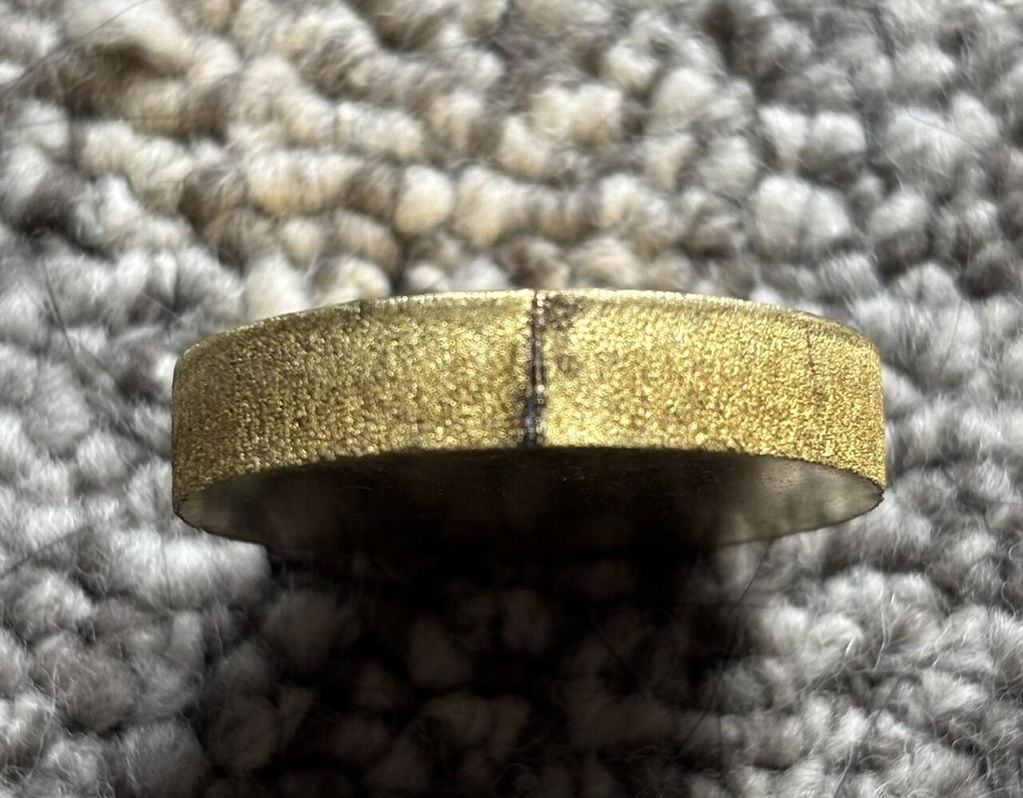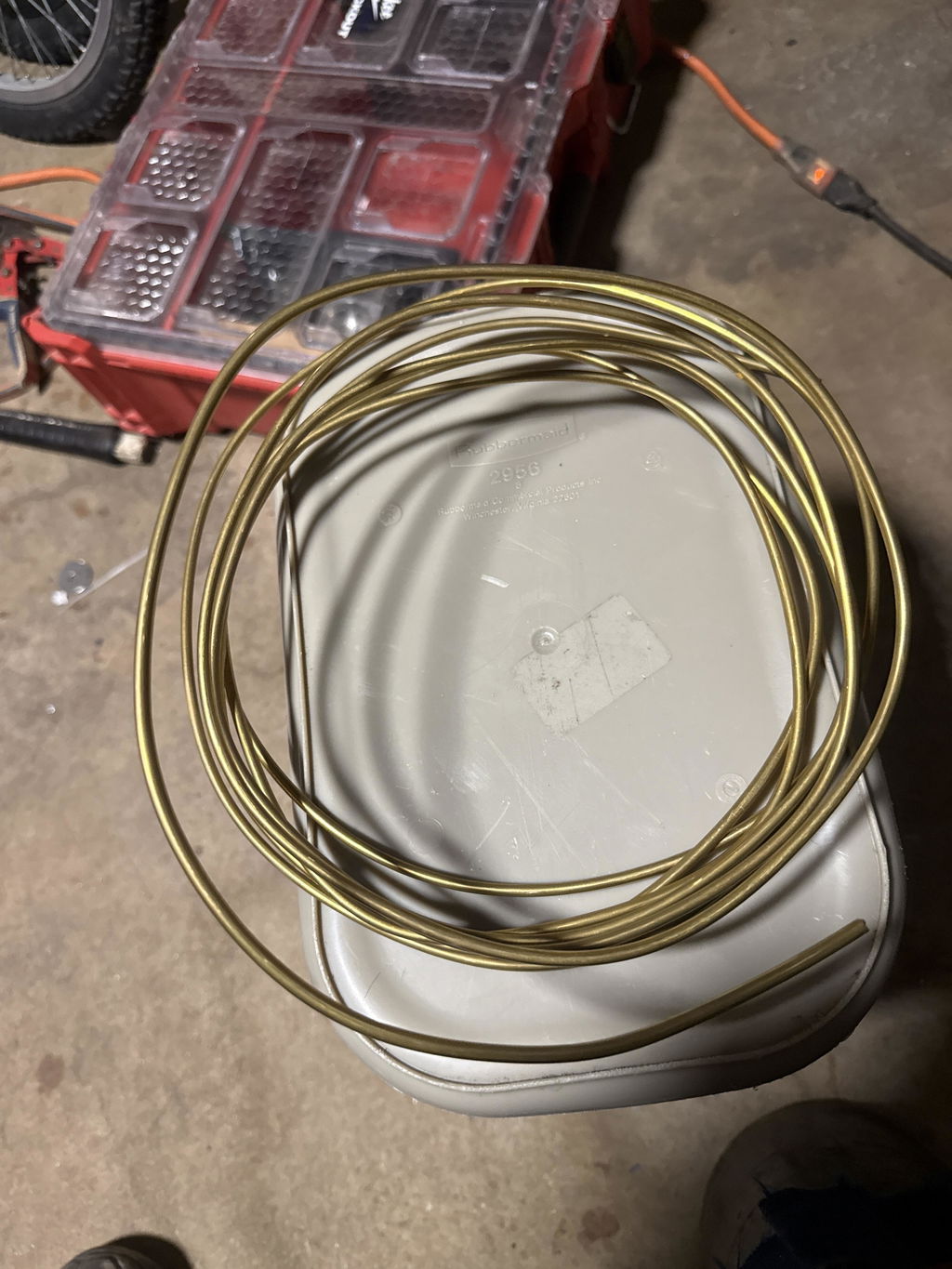
The chain is fine...but I ordered the wrong size. Nine links of the chain I ordered equals six of the size I wanted. My error...
How can I straighten out the springs? I can't use them coil uo as is.
Your payment information is processed securely. We do not store credit card details nor have access to your credit card information.
Get fitment advice & recommendations
When your drivetrain needs to change direction without losing torque, finding a gear set that runs quietly and fits a precise bore can be a real challenge. These Module 1.5 straight bevel gears are designed for makers, robotics enthusiasts, and mechanical hobbyists who need reliable 1:1 right-angle power transmission without the noise and weight of metal alternatives.
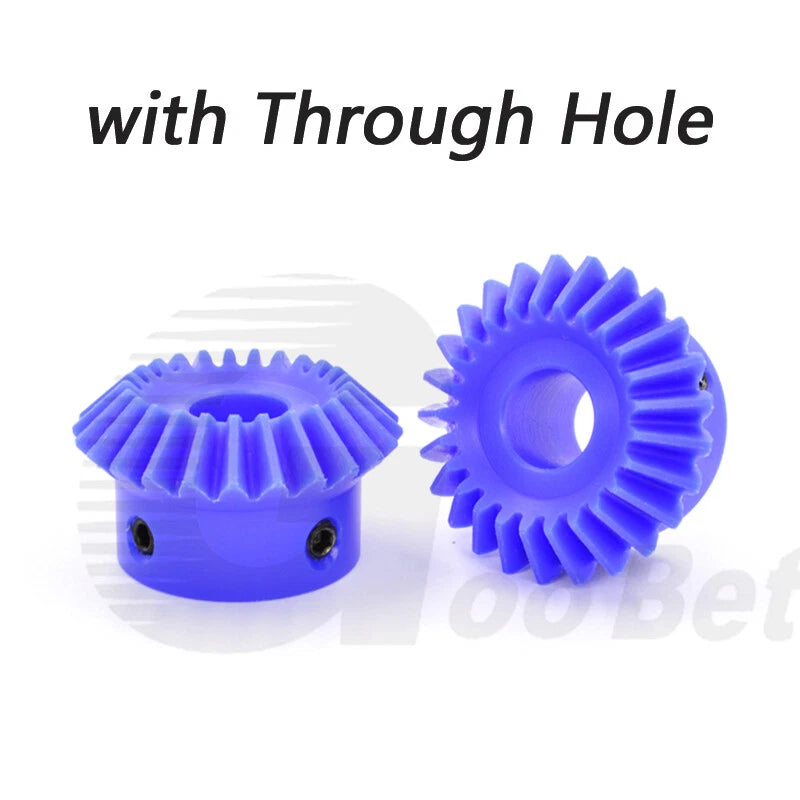
Each set consists of a matched 1:1 bevel gear pair machined from engineering-grade nylon in a distinctive blue finish. The module (pitch) is 1.5, with tooth counts ranging from 16 to 30 teeth and bore diameters spanning 6 mm (0.24 in) to 20 mm (0.79 in). Select variants include a precision-cut keyway (4 mm, 5 mm, or 6 mm depending on bore size) for positive shaft engagement and zero-slip torque transfer.
Typical use cases include DIY CNC axis drives requiring low-noise 90° redirection, custom robotics joints and actuator assemblies, and educational mechanical engineering projects where lightweight bevel gear sets for 3D-printed frames are needed.
Manufactured from reinforced nylon for a balance of mechanical strength, low friction, and reduced operating noise compared to metal bevel gears — ideal for indoor and precision applications.
Each listing ships as a matched bevel gear pair with identical tooth counts (16T, 20T, 25T, or 30T), ensuring accurate 1:1 speed and torque transmission at a 90° shaft angle.
Available bore sizes from 6 mm to 20 mm accommodate a broad range of shaft diameters. Keyway variants (4 mm, 5 mm, or 6 mm) provide positive shaft locking for torque-critical applications.
Nylon-on-nylon meshing significantly reduces gear noise and vibration, making these bevel gears well-suited for desktop robots, automated fixtures, and any build where acoustic performance matters.
Nylon's low density keeps rotating mass minimal — a meaningful advantage in robotic arms, drone mechanisms, and portable DIY machines where every gram counts.
Machined to Module 1.5 standards for consistent mesh quality and interchangeability with other M1.5 components in your drivetrain. Straight bevel tooth geometry simplifies alignment during assembly.
| Module (Pitch) | 1.5 |
|---|---|
| Gear Ratio | 1:1 |
| Tooth Count Options | 16T / 20T / 25T / 30T |
| Shaft Angle | 90° |
| Bore Diameter Range | 6 mm – 20 mm (0.24 in – 0.79 in) |
| Keyway Options | 4 mm / 5 mm / 6 mm (bore-dependent; see variant options) |
| Material | Engineering-grade nylon |
| Color / Finish | Blue |
| Tooth Profile | Straight bevel |
| Outer Diameter | See variant options |
| Face Width | See variant options |
| Package Contents | 1 matched bevel gear pair (2 gears) |
Since all variants are 1:1 ratio pairs, the tooth count primarily affects the physical size of the gear set and the pitch circle diameter. More teeth (e.g., 30T) produce a larger gear with a greater pitch circle, which can distribute load over more contact area. Fewer teeth (e.g., 16T) result in a more compact assembly. Choose based on the available space in your build and the shaft center distance you need to achieve.
A plain bore relies on a set screw or press fit to secure the gear to the shaft. A keyway variant adds a machined slot that accepts a key, creating a positive mechanical lock that prevents rotational slipping under load. If your application involves significant torque, reversing loads, or vibration, a keyway bore is strongly recommended. For light-duty or low-torque builds, a plain bore with a set screw is typically sufficient.
Engineering-grade nylon offers a good strength-to-weight ratio for moderate-load applications such as desktop robots, small CNC axes, and educational mechanisms. Nylon is not recommended for high-torque industrial drives or applications with sustained heavy loads. If your torque requirements exceed what nylon can handle, consider a metal bevel gear set instead. For typical maker and hobbyist builds, these gears perform reliably.
Nylon has inherent corrosion resistance and will not rust, making it suitable for humid environments where metal gears would degrade. However, nylon can absorb moisture over time, which may cause slight dimensional changes. For outdoor or wet environments, ensure the gear housing provides adequate protection. For fully waterproof applications, verify dimensional tolerances after moisture exposure.
Yes — Module 1.5 is a standardized tooth profile, so these nylon bevel gears are geometrically compatible with other Module 1.5 bevel gears regardless of material. However, mixing nylon and metal gears will cause the softer nylon gear to wear faster. For longest service life, pair nylon with nylon. If you must mix materials, treat the nylon gear as the replaceable wear component.
Plain bore variants have a smooth cylindrical hole sized to your shaft diameter and are typically secured with a set screw (not included). Keyway variants have an additional rectangular slot machined into the bore that accepts a standard key (sold separately), providing a positive rotational lock. The keyway dimensions vary by bore size: 4 mm keyway for 10–12 mm bores, 5 mm keyway for 14–16 mm bores, and 6 mm keyway for 18–20 mm bores.
Nylon bevel gears are suitable for moderate RPM ranges typical of maker and hobbyist applications. At very high RPMs, heat generated by friction can soften nylon and accelerate wear. Ensure adequate ventilation or intermittent duty cycles if operating at elevated speeds. For continuous high-speed operation, consult the specific load and speed ratings for your chosen tooth count and bore size.