The chain is fine...but I ordered the wrong size. Nine links of the chain I ordered equals six of the size I wanted. My error...
How can I straighten out the springs? I can't use them coil uo as is.
Your payment information is processed securely. We do not store credit card details nor have access to your credit card information.
Get fitment advice & recommendations
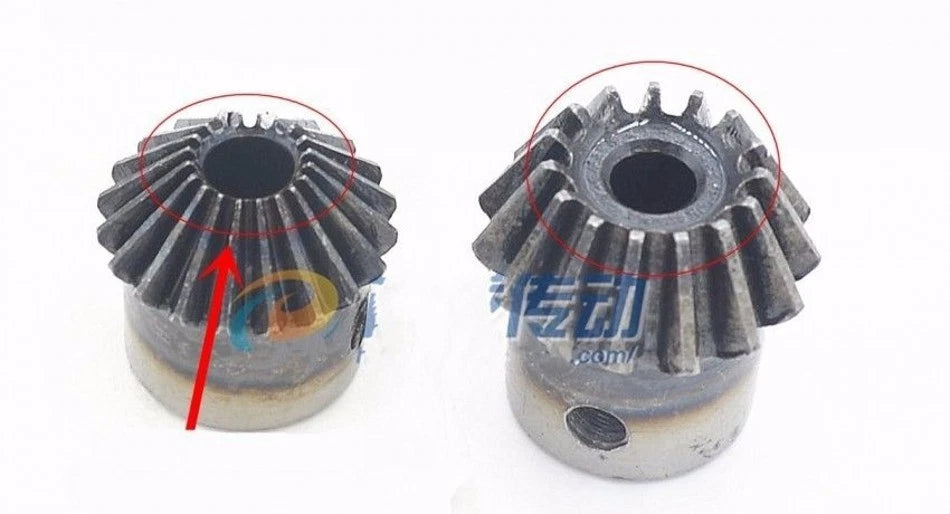
When your project demands a reliable right-angle power transfer and off-the-shelf gears just don't cut it, you need a bevel gear set engineered to spec. Whether you're a robotics hobbyist, a CNC builder, or a mechanical engineering student assembling a custom gearbox, mismatched or imprecise bevel gears cause backlash, noise, and premature wear. This 1.0 Module 20-tooth 90° mating bevel gear pair is designed to eliminate those headaches with consistent tooth geometry and a matched pairing angle.
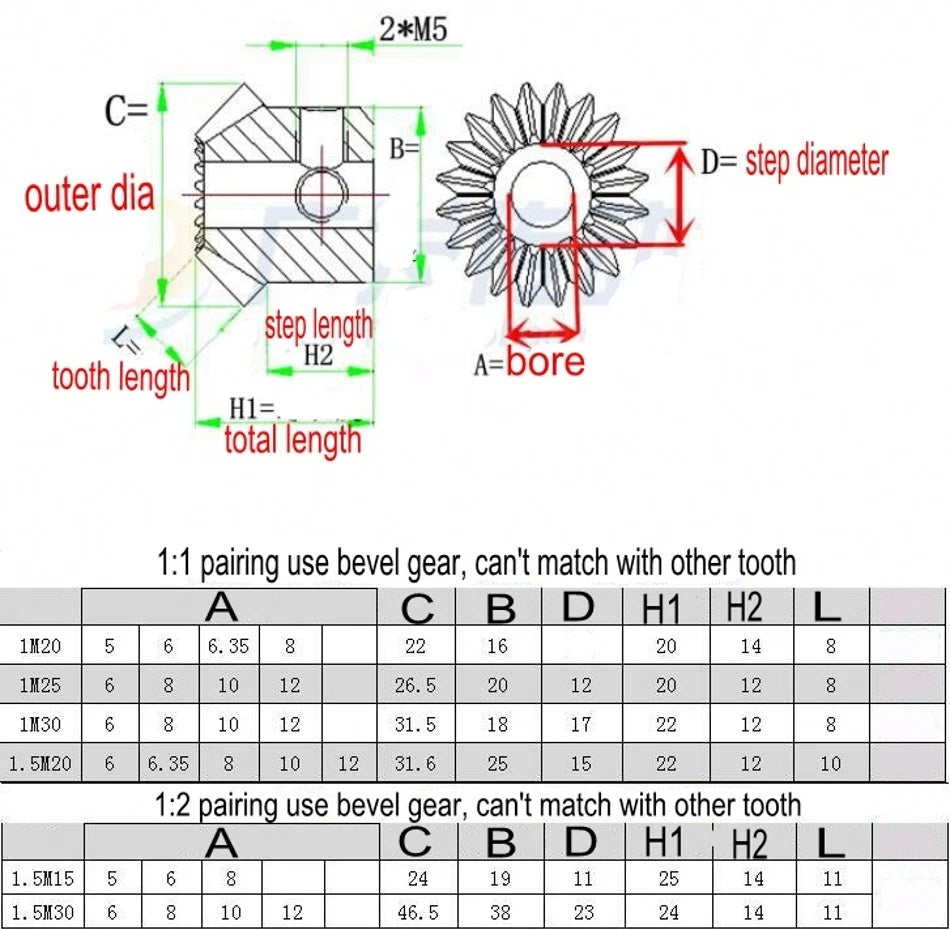
Each set consists of two identical 20-tooth bevel gears machined to 1.0 Module (Mod 1.0) specification, configured to mesh at a 90° shaft angle. The gears are manufactured from carbon steel with a natural metallic finish, offering a balance of strength and machinability. Bore options range from 5mm to 8mm (approximately 0.197" to 0.315"), covering the most common motor shaft and axle diameters used in hobby and light industrial applications. Tooth count is 20T per gear, and the pitch diameter is typically 20mm (≈0.787").
Typical use cases include: right-angle gearbox assemblies for DIY robotics and automation rigs; CNC router axis drives where a 90° direction change is required; and custom RC vehicle or conveyor drivetrain builds needing a compact, low-backlash bevel gear pair. Long-tail search terms this product addresses: "1 mod 20 tooth bevel gear pair", "90 degree bevel gear set 5mm bore", "metric bevel gear for stepper motor shaft".
| Module (Mod) | 1.0 |
|---|---|
| Tooth Count | 20 Teeth |
| Shaft Angle | 90° |
| Pitch Diameter | ≈ 20mm (0.787") |
| Bore Diameter | 5mm / 6mm / 6.35mm / 8mm (see variant options) |
| Material | Carbon Steel |
| Finish | Natural Metallic (uncoated) |
| Pressure Angle | See variant options |
| Hub Fixation | Set Screw |
| Gear Type | Straight Bevel Gear |
| Pack Quantity | 1 Piece (single gear) |
| Application | Robotics, CNC, DIY Gearbox, Automation |
Measure your motor or axle shaft diameter with a caliper. Common stepper motor shafts are 5mm or 6.35mm (1/4"); DC gear motor outputs are often 6mm or 8mm. Select the bore that matches your shaft diameter. If your shaft has a flat (D-cut), the set screw will grip it securely without a keyway.
Yes. A bevel gear pair requires two gears meshing at 90°. This listing sells one gear per unit (1Pcs). To build a complete right-angle drive, add two units to your cart — one for each shaft. Both gears are identical 1.0 Mod 20T, so they mesh correctly with each other.
These carbon steel Mod 1.0 bevel gears are rated for light-to-medium loads typical of hobby robotics, small CNC machines, and DIY automation. Exact torque ratings depend on operating speed, lubrication, and shaft alignment. For heavy industrial loads exceeding the hobby range, contact us to confirm suitability before ordering.
The gears are made from carbon steel with a natural (uncoated) finish, which provides moderate corrosion resistance suitable for indoor, dry environments. For applications exposed to moisture or mild chemicals, we recommend applying a light machine oil or grease to the tooth surfaces and bore after installation to extend service life.
In general, gears of the same module (Mod 1.0) and tooth count (20T) with the same pressure angle will mesh correctly. However, minor manufacturing tolerances between brands can affect backlash. For the most reliable mesh, we recommend pairing two gears from the same listing. If mixing brands, verify the pressure angle and pitch diameter match before assembly.
Yes. 6.35mm is the metric equivalent of 1/4 inch (0.250"), so the 6.35mm bore variant is designed specifically for standard 1/4" shafts commonly found in US-spec motors, hobby servos, and small gearboxes. The set screw secures the gear firmly on the shaft.
Mount each gear on its respective shaft so the tooth tips of both gears are flush and the apex of both pitch cones meets at the same point. Use a dial indicator or feeler gauge to check for even tooth contact across the full face width. Tighten the set screws to the manufacturer's recommended torque for your shaft diameter, and apply a thin layer of gear grease to the tooth faces before running under load.