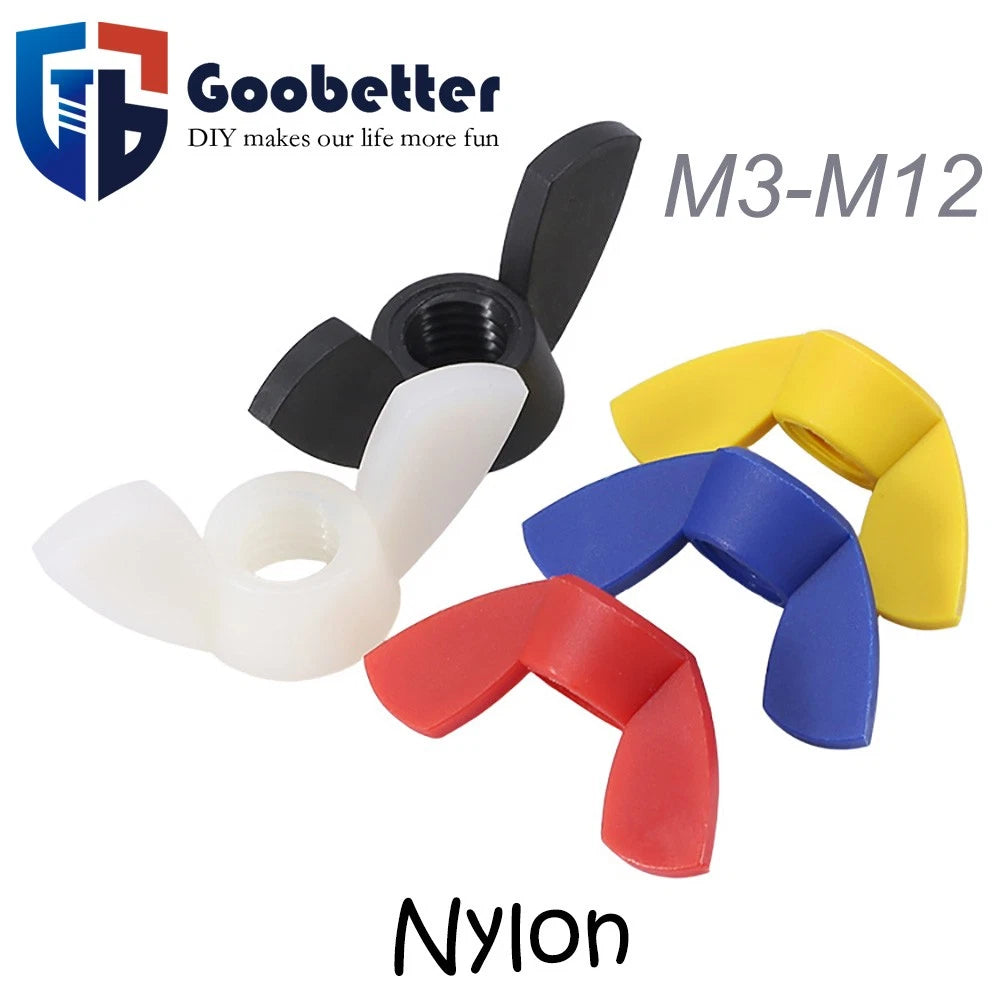
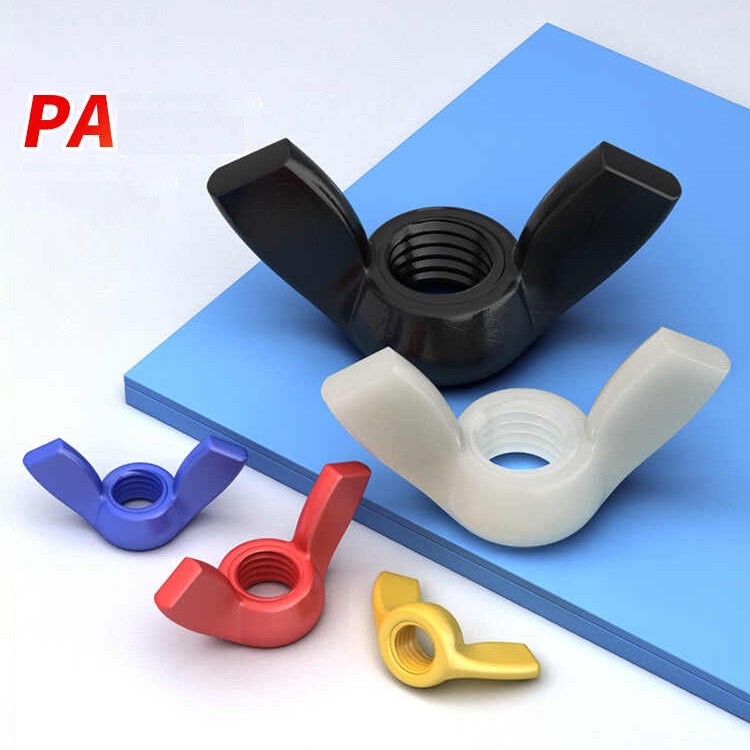
🧰 Premium Nylon Butterfly Wing Nuts – Tool-Free Fastening for Every DIY Project
Whether you're building a 3D printer enclosure, assembling a custom electronics case, or tackling a weekend workshop repair, these PA66 nylon butterfly wing nuts make hand-tightening fast, secure, and completely hassle-free. Unlike metal nuts that rust, conduct electricity, or require wrenches in tight spaces, our plastic wing nuts are lightweight, corrosion-proof, and electrically insulating — ideal for makers, hobbyists, and light-industrial users who need reliable fasteners they can adjust on the fly. Available in five bold colors and seven metric thread sizes from M3 to M12, they bring both function and a clean, organized look to your project.
🎨 Available Colors:
❓ Frequently Asked Questions About Plastic Butterfly Wing Nuts
💡 Are these nylon butterfly wing nuts strong enough for outdoor or marine use?
Absolutely. PA66 nylon is inherently resistant to moisture, salt spray, and UV degradation, making these wing nuts a smart alternative to stainless steel in many outdoor and marine fastening scenarios. They won't rust or corrode, and they maintain their mechanical integrity even after prolonged exposure to rain, humidity, or coastal air. For full submersion or extreme UV (desert sun year-round), gradual surface changes may occur over several years — but for typical outdoor enclosures, garden projects, and boat accessories, they perform exceptionally well.
💡 Do these plastic wing nuts fit standard metal bolts and threaded rods?
Yes — they are manufactured to the DIN 315 standard with metric thread pitches that match standard M3 through M12 bolts and rods. You can confidently pair them with steel, stainless steel, brass, or nylon threaded fasteners. The threads are cleanly formed and engage smoothly. Just be mindful that nylon-on-metal threading has slightly more friction than metal-on-metal; a tiny dab of light lubricant (like silicone spray) can make hand-tightening even smoother if desired.
💡 How much torque can a nylon wing nut handle before stripping?
These are designed primarily for hand-tightening and light-to-medium-duty clamping. As a general guideline, smaller sizes (M3–M5) are ideal for electronics, 3D printed parts, and light fixtures where fingertip pressure is sufficient. Larger sizes (M8–M12) can handle more substantial loads — for example, securing access panels, holding jig components, or clamping workpieces. If you need precise torque values for engineering calculations, we recommend referencing PA66 material datasheets. For critical structural joints, metal lock nuts remain the safer choice.
💡 Will the colors fade or chip over time?
The color pigment is compounded throughout the entire nylon body — it's not a surface paint or coating that can chip or peel. This means even if the surface gets scratched, the color remains consistent underneath. Indoor applications will retain their vibrant look for years. In high-UV outdoor settings, very gradual fading may occur over extended periods (similar to most colored plastics), but the nuts remain fully functional regardless of any subtle color shift.
💡 Can I use these with power tools, or should I stick to hand-tightening?
We strongly recommend hand-tightening only. The butterfly wing design is optimized for manual grip and quick finger adjustment. Power drivers or impact tools can easily over-torque the nylon threads, potentially causing stripping or wing deformation. If your application requires frequent assembly/disassembly with tools, consider using a metal nut for the initial torque and a nylon wing nut as a secondary lock or thumb-adjustment point.
💡 Are Goobetter nylon wing nuts resistant to chemicals and solvents?
PA66 nylon offers good resistance to many common chemicals including oils, greases, fuels, alcohols, and mild alkaline solutions — making them suitable for automotive workshops, home garages, and light industrial environments. However, they are not recommended for prolonged contact with strong acids (e.g., concentrated sulfuric acid), phenols, or boiling water, as these can degrade the nylon over time. For most everyday DIY and maker applications, chemical exposure is simply not a concern.