The chain is fine...but I ordered the wrong size. Nine links of the chain I ordered equals six of the size I wanted. My error...
How can I straighten out the springs? I can't use them coil uo as is.
Your payment information is processed securely. We do not store credit card details nor have access to your credit card information.
Get fitment advice & recommendations
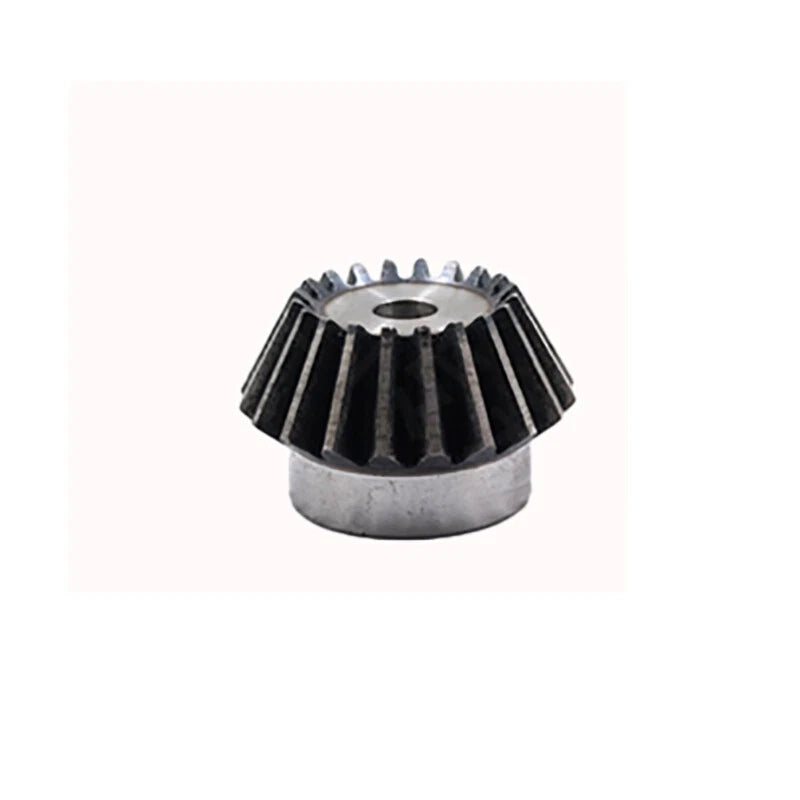
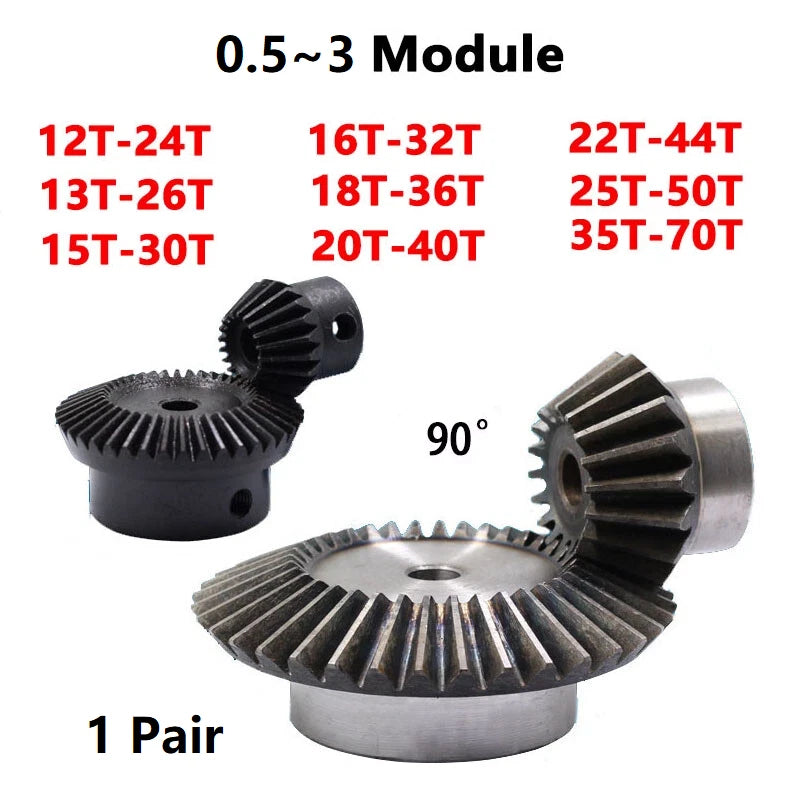
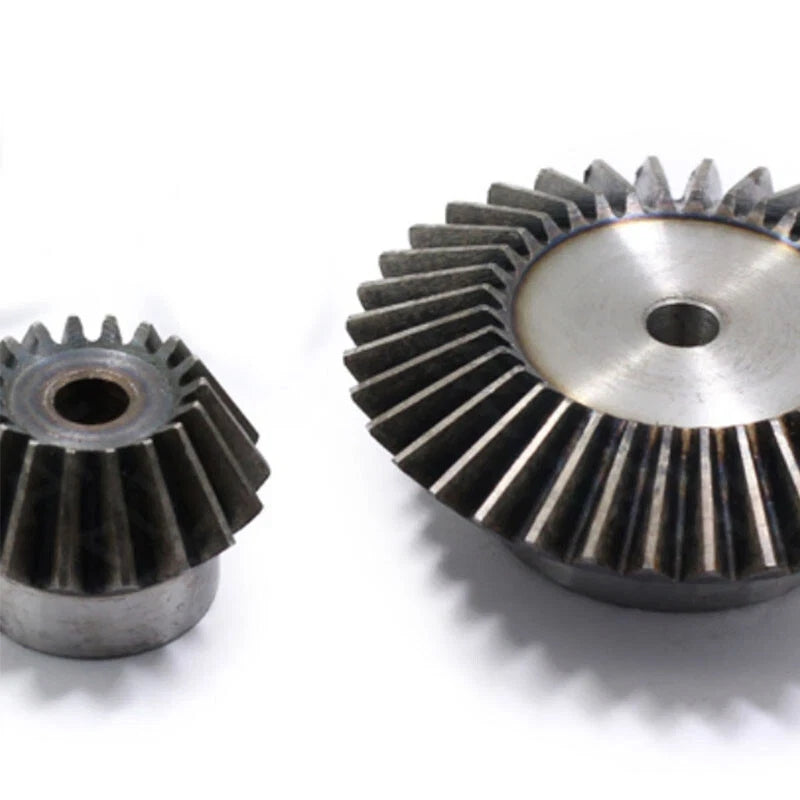
When your build demands a clean 90° power transfer without slippage or backlash, finding a matched bevel gear pair in the exact module and tooth count can be a real bottleneck. Whether you are a robotics hobbyist, a CNC machine builder, or a mechanical engineering student, these precision bevel gear sets give you a ready-to-run 1:2 ratio drive solution without the need for custom machining.
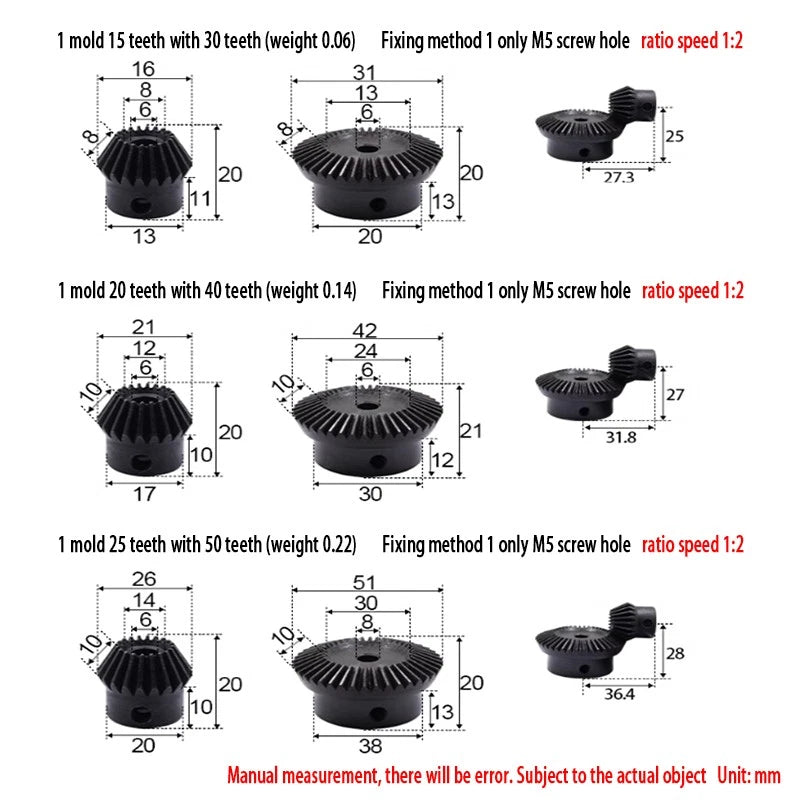
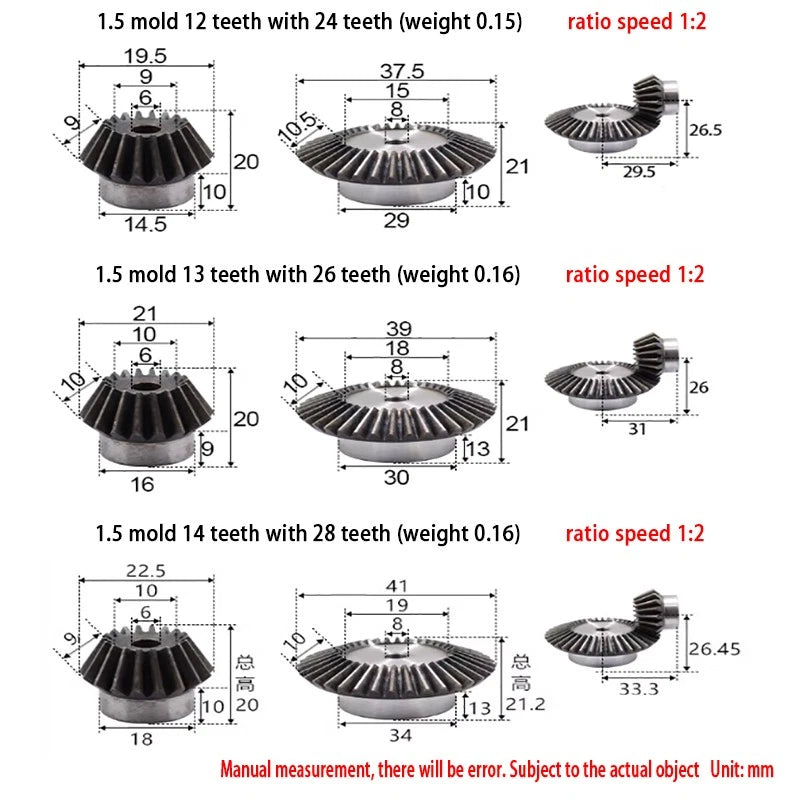
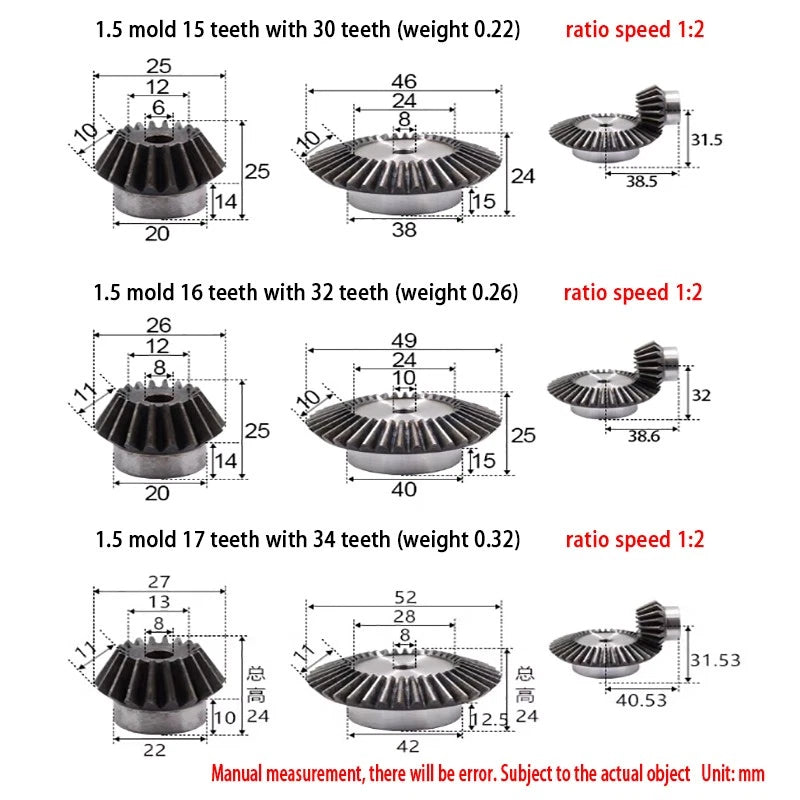
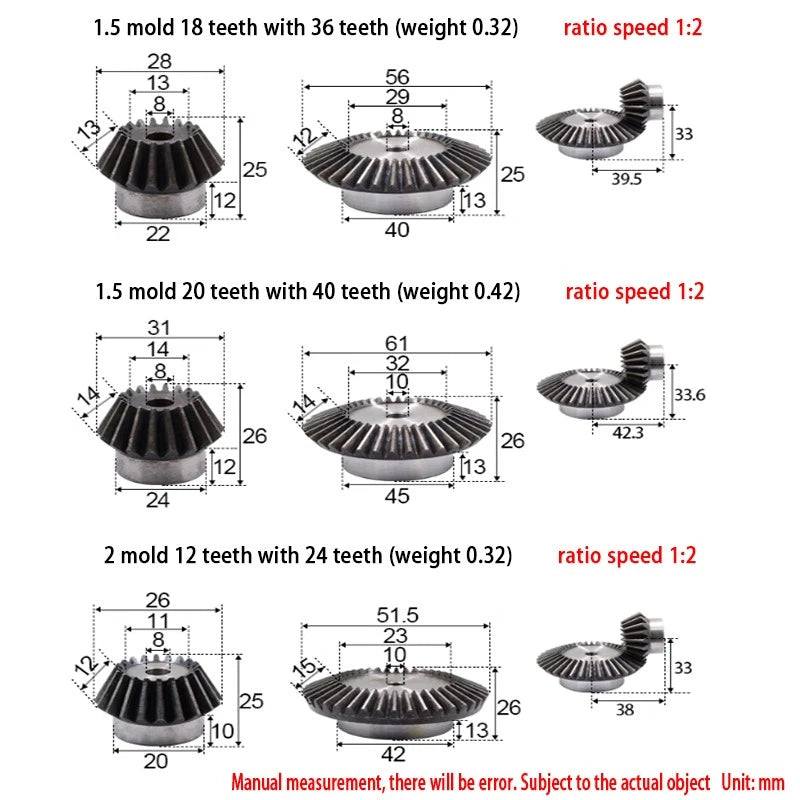
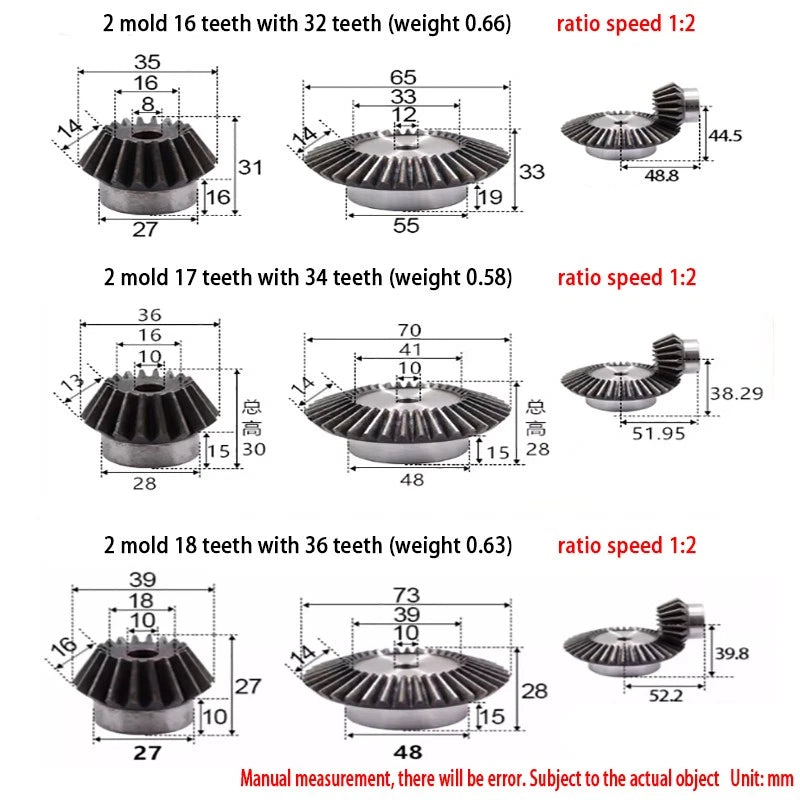
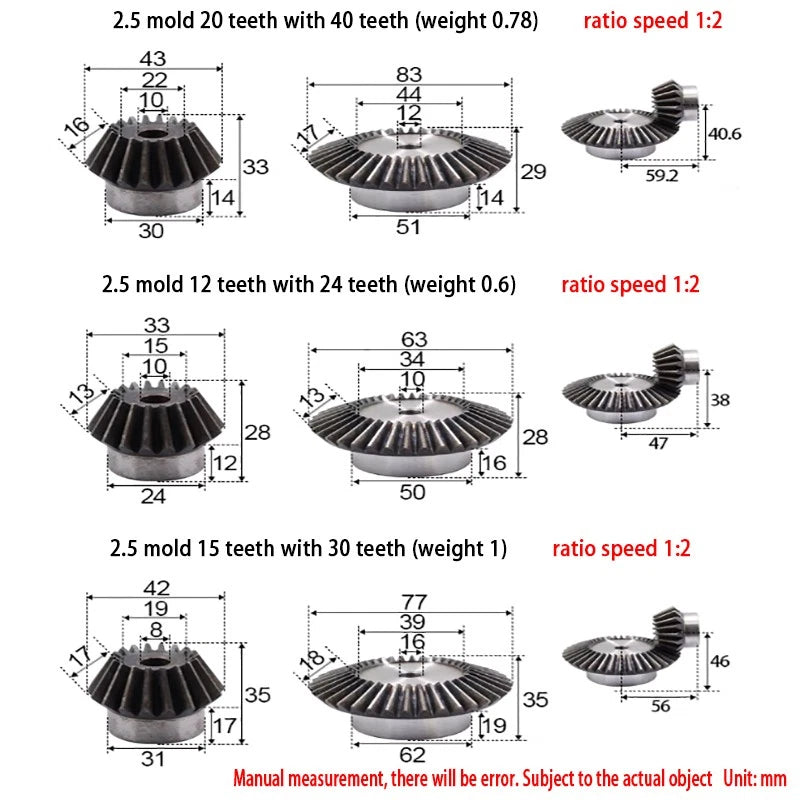
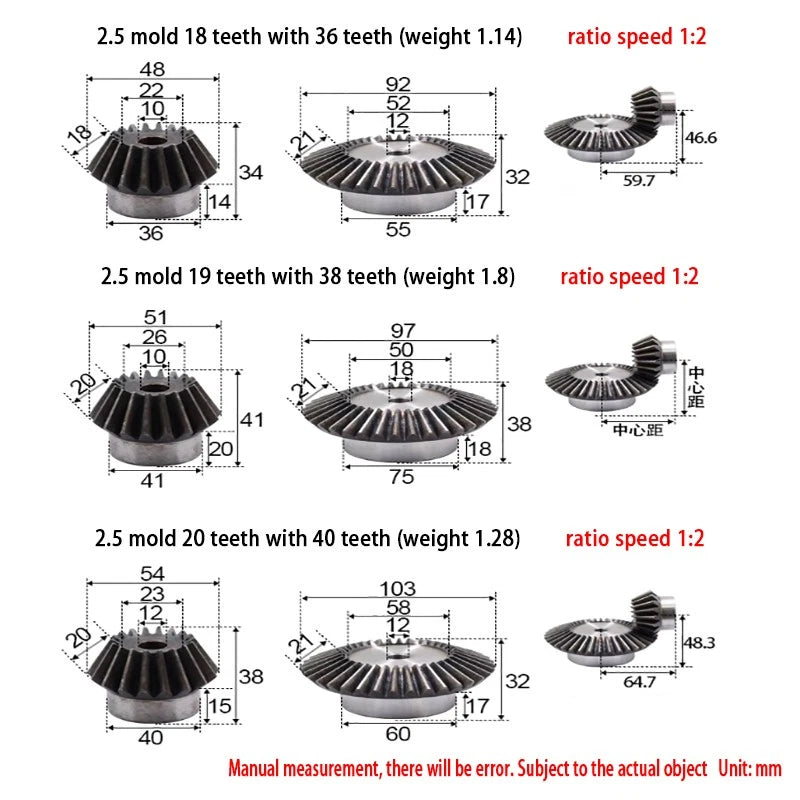
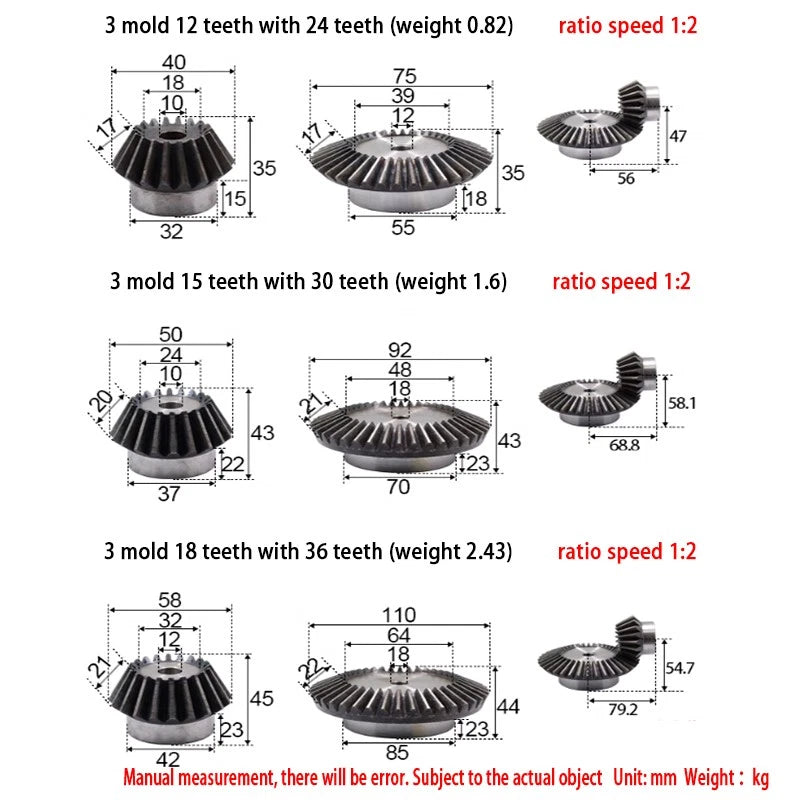
Each set consists of a matched pinion and wheel gear pair machined from carbon steel or brass (see variant options for material confirmation), with tooth profiles ground to standard metric module tolerances. Available modules span 0.5 through 3 (0.5 / 0.75 / 0.8 / 1 / 1.5 / 2 / 2.5 / 3), with gear outer diameters ranging from approximately 6 mm (0.24 in) for the smallest 0.5 Module 35T up to approximately 90 mm (3.54 in) for the largest 3 Module 30T wheel. Bore diameters vary by module and tooth count — see variant options for exact bore specifications.
These bevel gear pairs are well suited for DIY gearbox builds requiring a 1:2 speed reduction, small robotic arm joints needing compact right-angle drives, and tabletop CNC or 3D printer extruder mechanisms where precise torque multiplication is critical. Long-tail use cases include model engineering, scientific instrument drives, and custom automation rigs.
25 variants spanning 0.5, 0.75, 0.8, 1, 1.5, 2, 2.5, and 3 module sizes let you match the gear set to your torque and space requirements without compromise.
Every set ships as a factory-matched pinion-and-wheel pair with a precise 1:2 tooth ratio, ensuring consistent speed reduction and smooth meshing right out of the box.
Teeth are cut to standard metric module tolerances, making these gears interchangeable with other metric-module components in your drivetrain for straightforward system integration.
The 90° bevel geometry transfers rotational motion between intersecting shafts efficiently, enabling compact gearbox layouts in robotics, automation, and model engineering applications.
Larger module numbers mean larger, stronger teeth — select a higher module (2, 2.5, or 3) for heavier-duty torque loads, or a smaller module (0.5–1) for lightweight, high-speed applications.
Each gear arrives with a machined center bore sized for the corresponding module, reducing setup time and allowing direct shaft mounting in most standard DIY and prototyping builds.
| Product Type | Matched Bevel Gear Pair (Pinion + Wheel) |
|---|---|
| Gear Ratio | 1:2 |
| Available Modules | 0.5 / 0.75 / 0.8 / 1 / 1.5 / 2 / 2.5 / 3 |
| Tooth Count (Pinion + Wheel) | See variant options (12T+24T up to 35T+70T depending on module) |
| Pressure Angle | 20° (standard metric) |
| Shaft Angle | 90° |
| Bore Diameter | See variant options |
| Outer Diameter | See variant options |
| Material | See variant options |
| Finish / Surface Treatment | See variant options |
| Weight (per set) | See variant options |
| Tooth Profile Standard | Metric Module (DIN / ISO) |
Module size determines tooth size and load capacity. Smaller modules (0.5–1) are suited for lightweight, compact, or high-speed applications such as small robots or instrument drives. Larger modules (2–3) handle heavier torque loads in more robust builds like CNC gearboxes or motorized mechanisms. As a rule of thumb, match the module to the torque your motor produces — higher torque requires a larger module to avoid tooth failure.
Each listing ships as a factory-matched pair — one pinion (smaller gear) and one wheel (larger gear) — already confirmed to mesh correctly at the specified module and 1:2 ratio. You do not need to source or match them separately. Do not mix gears from different module sets, as mismatched modules will not mesh.
Bore diameter varies by module and tooth count. Please refer to the variant options or contact us to confirm the exact bore size for your chosen specification before ordering. If your shaft diameter differs from the standard bore, the gear can typically be re-bored by a local machine shop.
These bevel gear sets are designed for moderate-duty, intermittent-to-continuous operation typical of DIY robotics, prototyping, and light automation. For sustained high-speed or high-load industrial applications, please contact us to confirm suitability. Proper lubrication (light gear grease) is recommended for continuous-duty use to extend service life.
Corrosion resistance depends on the material variant selected. Carbon steel gears offer good strength but require lubrication and protection from moisture in humid environments. If your application involves exposure to water or corrosive agents, select a brass or stainless variant where available, or apply a protective coating after installation. Contact us to confirm material options for your chosen specification.
No — these gears are manufactured to the metric module standard (DIN/ISO) and are not compatible with imperial diametral pitch (DP) gears. Metric module and DP gears use different tooth geometries and will not mesh correctly. Ensure your entire drivetrain uses the same metric module standard before ordering.
For optimal meshing, mount both gears so their pitch cone apexes meet at a single point on the shaft intersection axis. Use set screws or shaft collars to secure each gear axially. Adjust the axial position of each gear until backlash is minimal but the gears rotate freely without binding. Apply a small amount of gear grease to the tooth faces before first use.