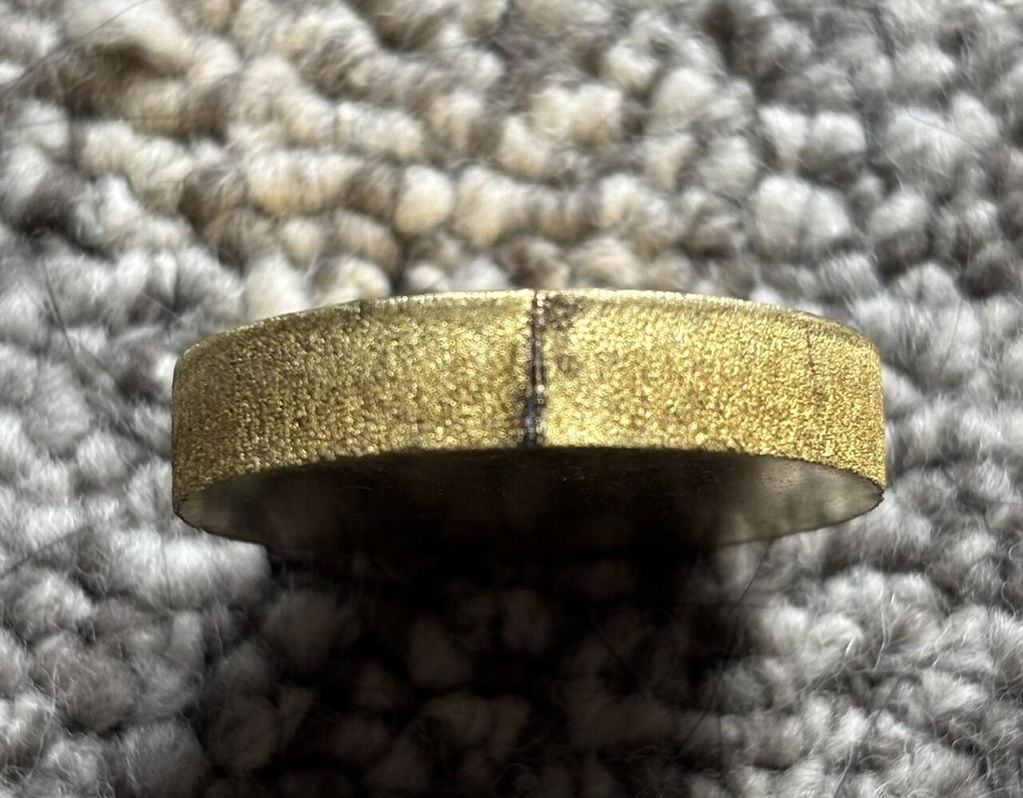
The chain is fine...but I ordered the wrong size. Nine links of the chain I ordered equals six of the size I wanted. My error...
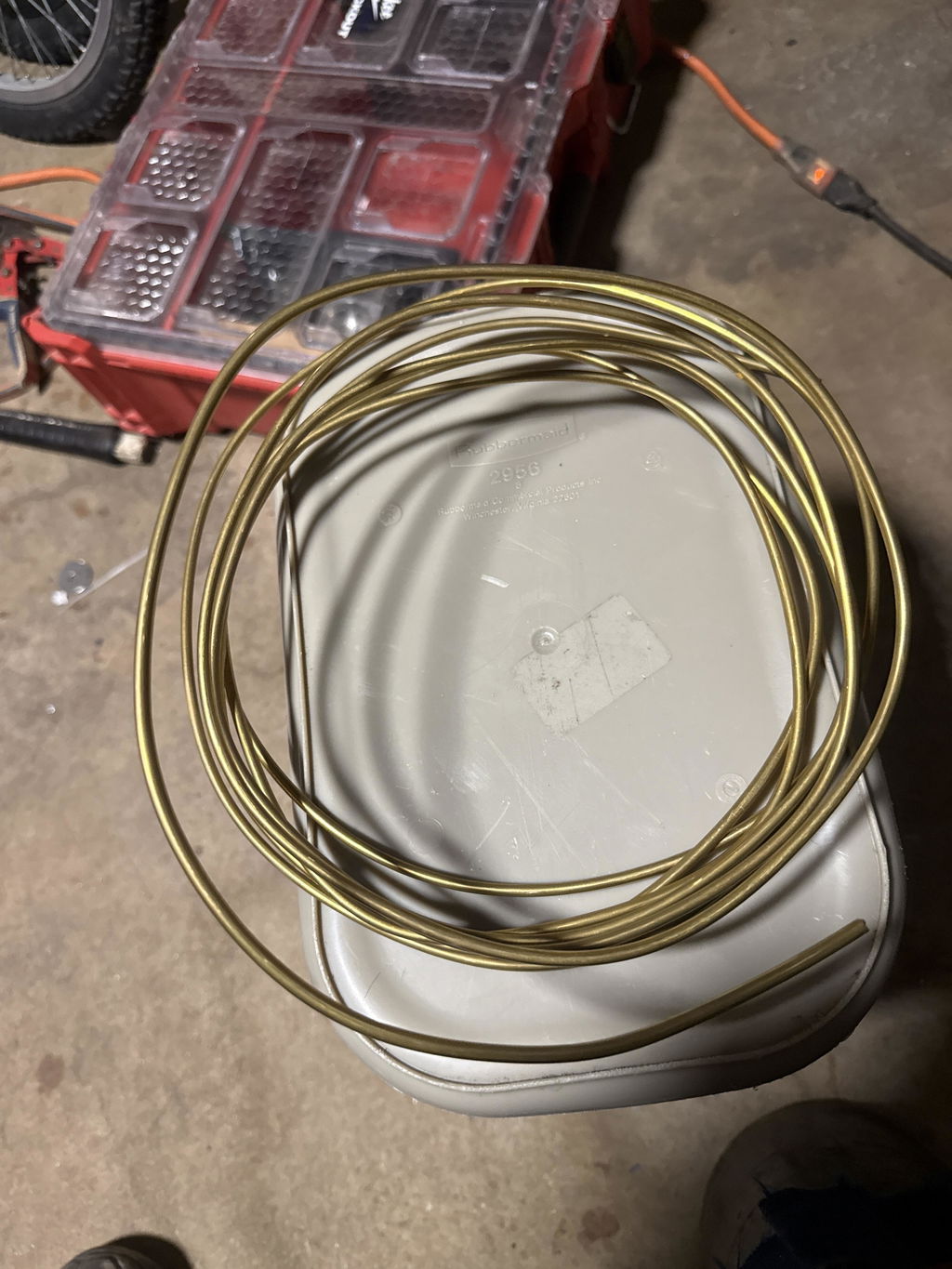
How can I straighten out the springs? I can't use them coil uo as is.
Your payment information is processed securely. We do not store credit card details nor have access to your credit card information.
Get fitment advice & recommendations
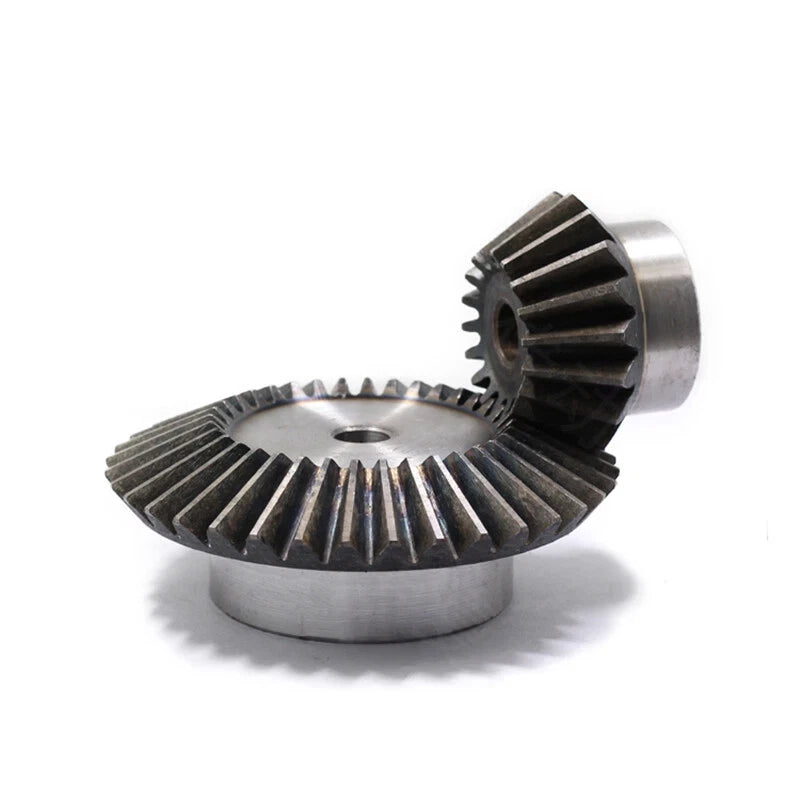
When your drivetrain needs to change direction without losing torque, a mismatched or imprecise bevel gear set becomes the weakest link in the entire mechanism. Engineers, robotics builders, and serious DIY makers who demand repeatable, low-backlash motion need bevel gears machined to exact module tolerances — not rough castings that wear out after a few hundred cycles.
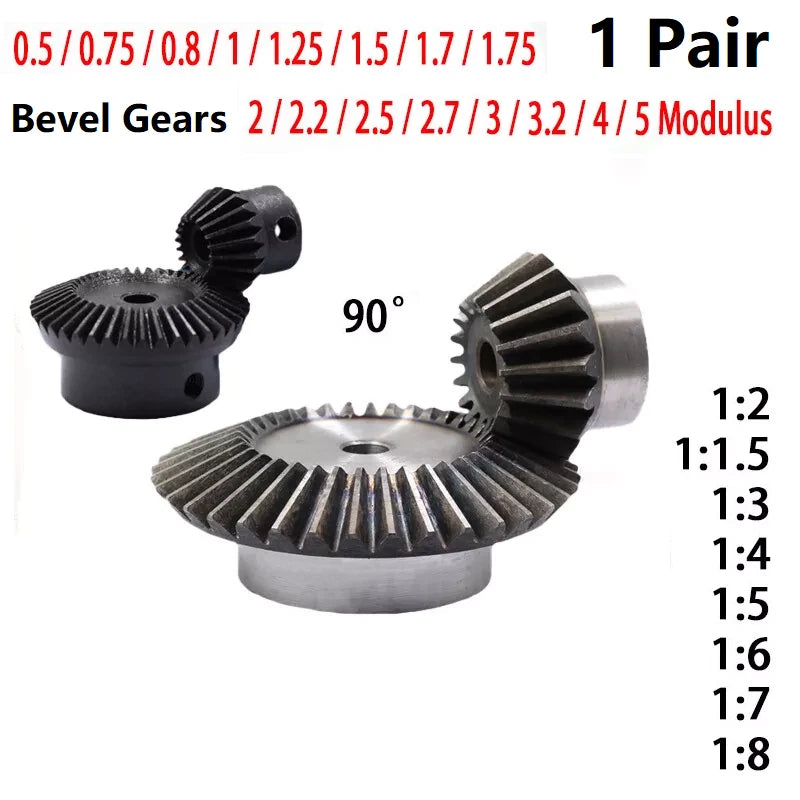
These precision bevel gears are available in module sizes from 0.5 to 3 (pitch measured in millimeters per tooth), with pinion and gear tooth counts spanning 12 to 160 teeth across ratios of 1:1.5, 1:2, 1:3, 1:4, 1:5, 1:6, 1:7, and 1:8. Each set is machined from metal alloy stock and finished to consistent tooth profile geometry. Gear face widths and bore diameters vary by module — see variant options for exact dimensional data per specification.
Typical applications include CNC axis drives requiring 90° direction change, robotic joint actuators where compact gear reduction is critical, custom gearbox builds for go-karts and electric vehicles, and precision instrument mechanisms where angular transmission accuracy matters. Long-tail use cases include DIY lathe cross-slide drives, telescope focuser gear trains, and small-scale conveyor angle drives.
| Product Type | Bevel Gear Set (Pinion + Gear) |
|---|---|
| Module Range | 0.5 / 0.75 / 0.8 / 1 / 1.2 / 1.25 / 1.5 / 1.7 / 1.75 / 2 / 2.2 / 2.25 / 2.5 / 2.7 / 3 |
| Tooth Count (Pinion) | 12–35 teeth (varies by specification) |
| Tooth Count (Gear) | 24–160 teeth (varies by specification) |
| Gear Ratio | 1:1.5 / 1:2 / 1:3 / 1:4 / 1:5 / 1:6 / 1:7 / 1:8 |
| Pressure Angle | See variant options |
| Bore Diameter | See variant options |
| Face Width | See variant options |
| Material | Metal alloy (contact us to confirm grade for specific module) |
| Finish | See variant options |
| Shaft Angle | 90° |
| Sold As | 1 matched pair (pinion + gear) |
Module is the fundamental sizing unit for metric gears — it equals the pitch diameter divided by the number of teeth. Smaller modules (0.5–1) suit fine-pitch, low-torque mechanisms like instrument drives and small robotics. Larger modules (2–3) handle higher torque loads in gearboxes and drivetrain applications. Both mating gears in a set must share the same module; mixing modules will result in non-meshing teeth.
Yes. Each variant listing represents a complete matched set — one pinion (smaller gear) and one gear (larger gear) — pre-selected for the specified tooth count combination and ratio. You do not need to source them separately.
The ratio indicates how many turns the input (pinion) makes for each turn of the output (gear). A 1:4 ratio means the output shaft turns once for every four input shaft rotations, reducing speed by 4× and multiplying torque by approximately 4× (minus friction losses). Choose a higher ratio for more torque and lower output speed, or a lower ratio (e.g., 1:1.5 or 1:2) when you need near-unity speed transfer with a direction change.
These bevel gears are machined from metal alloy and are appropriate for moderate-to-high duty cycle applications such as robotics joints, CNC axis drives, and custom gearboxes. For very high-speed or extreme-load environments, contact us to confirm the material grade and surface hardness for your specific module and tooth count before ordering.
Bore diameter varies by module and tooth count. Please refer to the variant-specific dimensional data or contact us with your shaft diameter before placing your order. A bore that is too small cannot be installed without machining, and a bore that is too large will require a bushing or set-screw collar to secure the gear to the shaft.
The standard finish on these gears is not rated for immersion or prolonged exposure to corrosive chemicals. For outdoor, marine, or washdown environments, we recommend applying a compatible gear lubricant and considering a protective coating. Contact us to confirm the surface finish for your selected module if corrosion resistance is a critical requirement.
The 1:1.5 ratio set provides a modest 1.5× speed reduction (or 1.5× torque increase) and is useful when you need a slight gear-down with a 90° direction change — common in differential-style mechanisms. The 1:2 ratio doubles the torque and halves the output speed, making it the most common choice for general right-angle reduction drives in robotics and automation.
A larger module means physically bigger teeth, which increases load-carrying capacity and makes the gear set more robust under shock loads. However, larger module gears are also physically larger and heavier. If your design has tight space constraints, a smaller module with a higher tooth count can achieve the same ratio in a more compact envelope — at the cost of lower individual tooth strength. Match the module to your torque requirement first, then verify the resulting gear diameter fits your housing.